Artwork
At the Black Rocks (Aux roches noires)
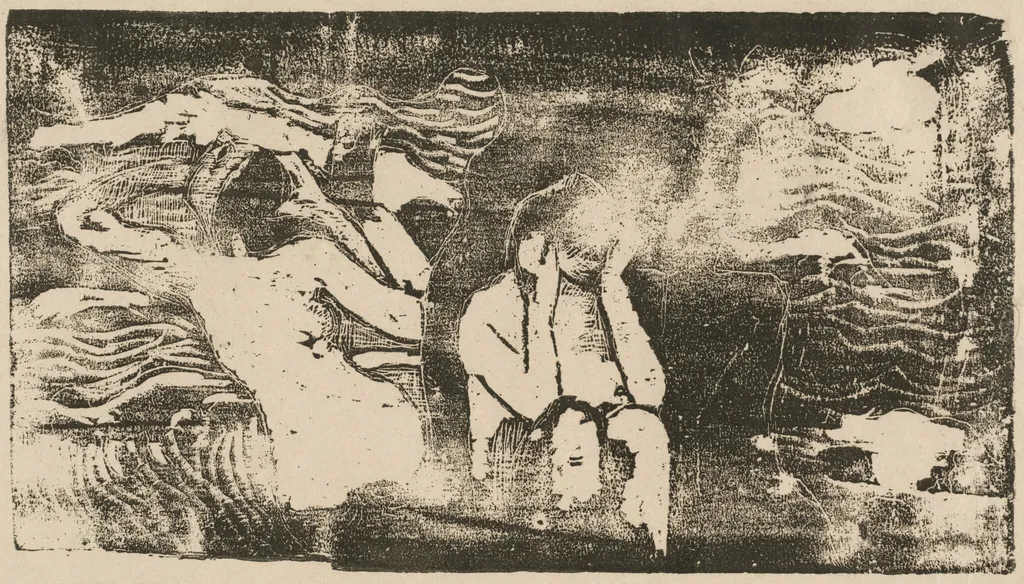
At the Black Rocks (Aux roches noires) is an ink print by the Impressionist artist Paul Gauguin. It dates from 1895 and is held in the collection of the National Gallery of Art.
About this work
Overview
At the Black Rocks (Aux roches noires), a 1895 woodcut by Paul Gauguin, exemplifies the artist's exploration of printmaking alongside his painting and sculptural pursuits.
Subject & Meaning
The print depicts two figures on a rocky shoreline, one with a basket, the other in a contemplative pose, set against a turbulent sea and sky, evoking a sense of raw intensity.
Technique & Style
Characterized by bold, uneven lines and a textured appearance, the work reflects Gauguin's adherence to Synthetist principles, emphasizing expressive form over naturalistic representation.
History & Provenance
Created in 1895, this woodcut is part of Gauguin's experimental foray into wood engraving and woodcuts, distinguishing his practice from Impressionist norms.
Context
Within Gauguin's broader oeuvre, At the Black Rocks sits at the intersection of Post-Impressionism and Symbolism, reflecting his innovative and expressive approach to art.
Legacy
This woodcut contributes to Gauguin's legacy as a versatile artist who pushed the boundaries of multiple mediums, influencing subsequent generations of artists.
Artist & collection
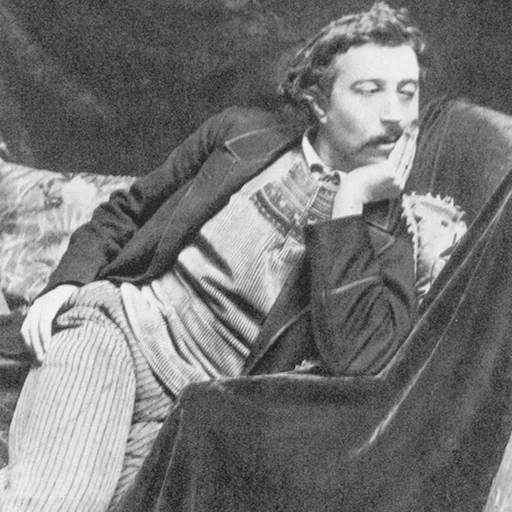
Artist
Eugène Henri Paul Gauguin (; French:; 7 June 1848 – 8 May 1903) was a French painter, sculptor, printmaker, ceramist, and writer, whose work has been primarily associated with the Post-Impressionist and Symbolist movements.

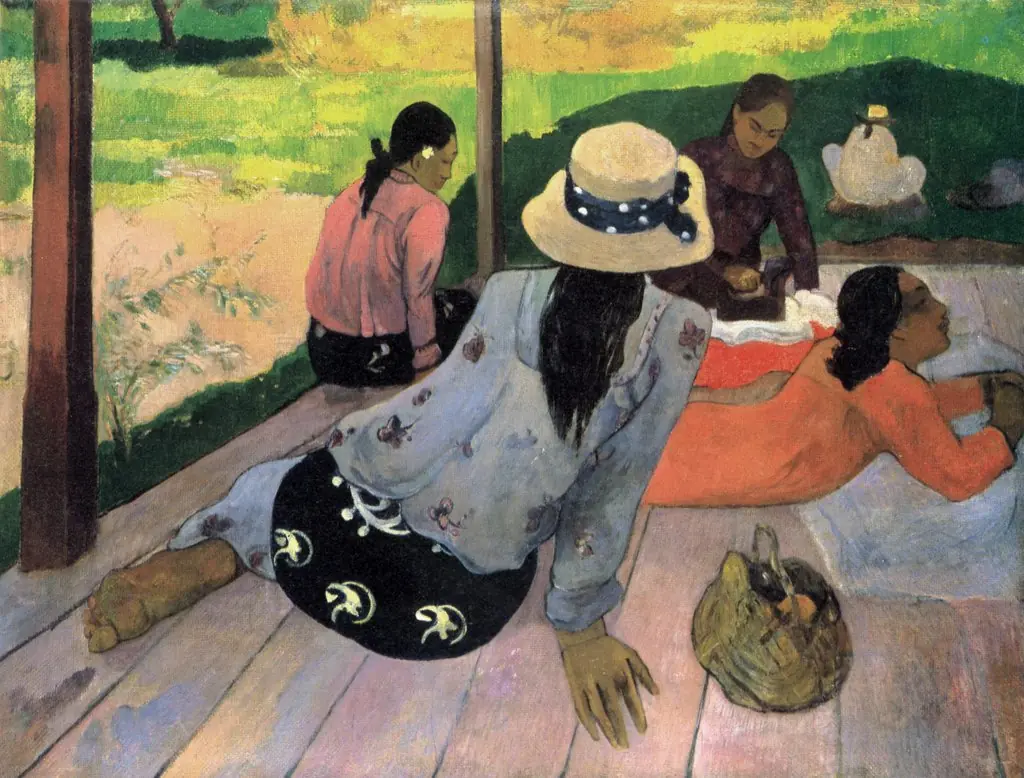
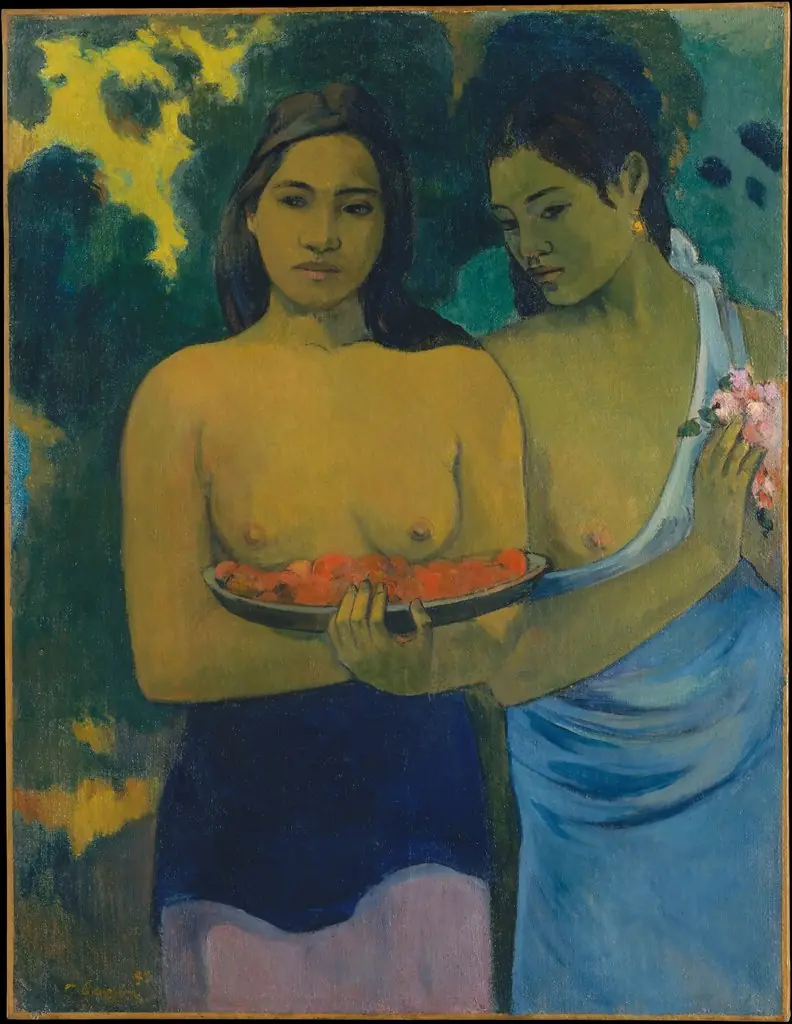
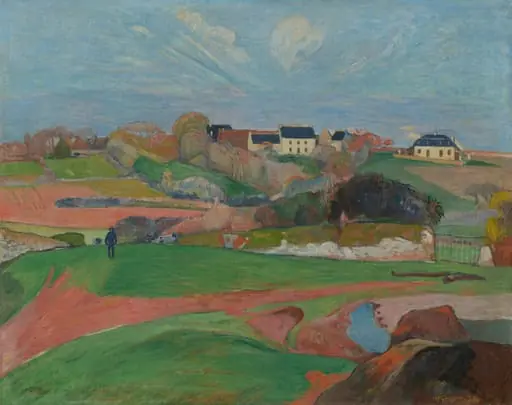
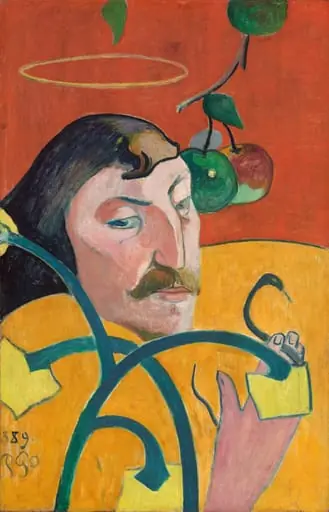
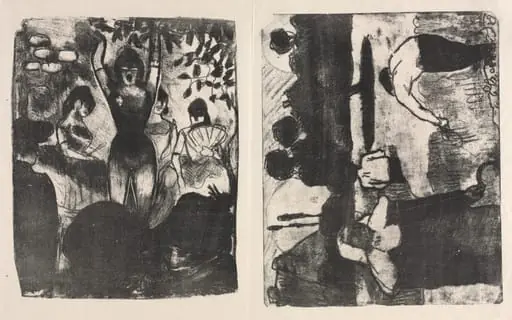 Singer at the Café-Concert and The Harvesters (Les Moissonneurs)
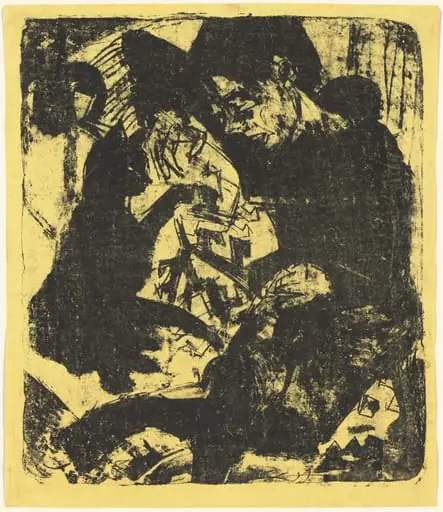 Boy with Cat (Knabe mit Katze)
![Mahna no Varua Ino (The Demon Speaks) [verso], by Paul Gauguin](https://artifactworldgallery.com/img/paul-gauguin--mahna-no-varua-ino-the-demon-speaks-verso--4d5371963e3166cc-w320.webp) Mahna no Varua Ino (The Demon Speaks) [verso]
Mahna no Varua Ino (The Demon Speaks) [verso]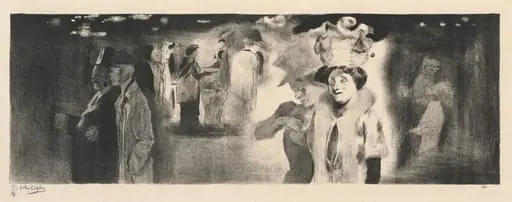 A Night Scene
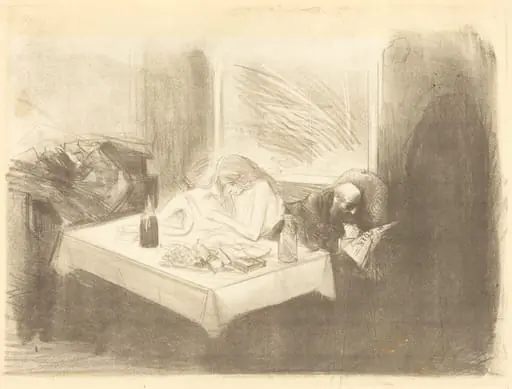 Le cabinet particulier (4e planche) (The Private Room) (fourth plate)
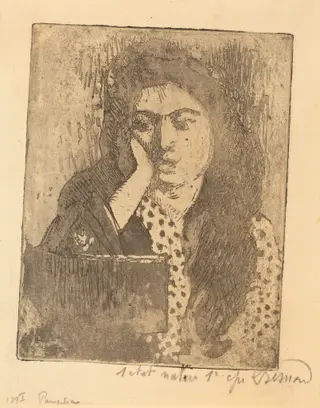 Pompilia
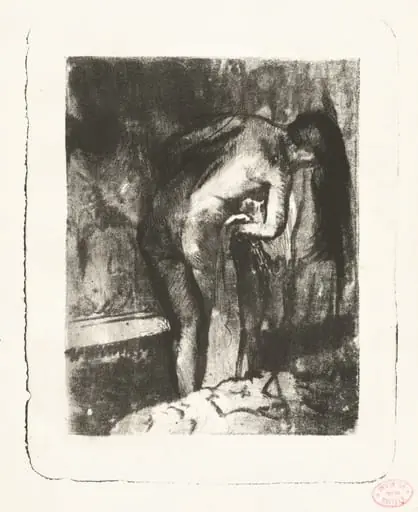 Après le Bain II (After the Bath II)
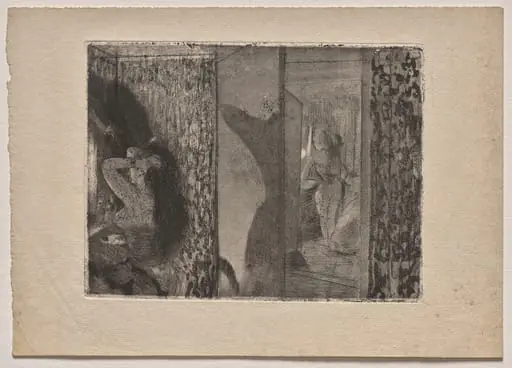 Actresses in Their Dressing Rooms
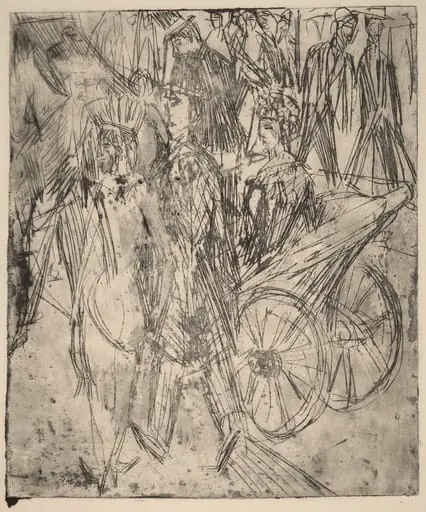 Couple in Front of a Carriage
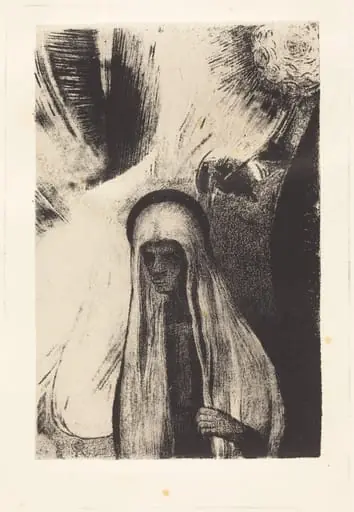 La Vieille: Que Crains-tu? Un large trou Noir! Il est vide peut-etre? (What are you afraid of? A wide black hole! It is empty, perhaps!)