Artwork
Madonna and Child
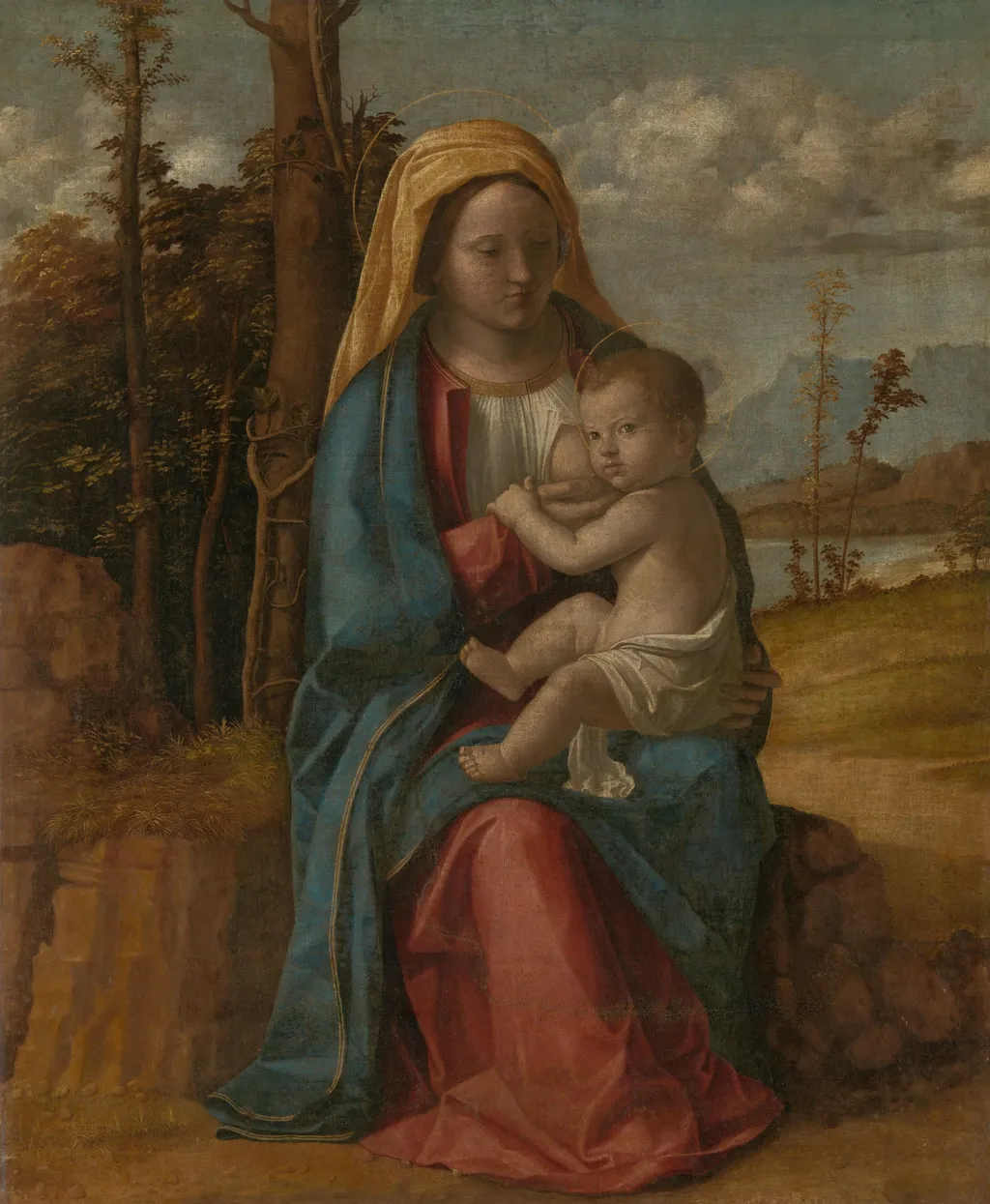
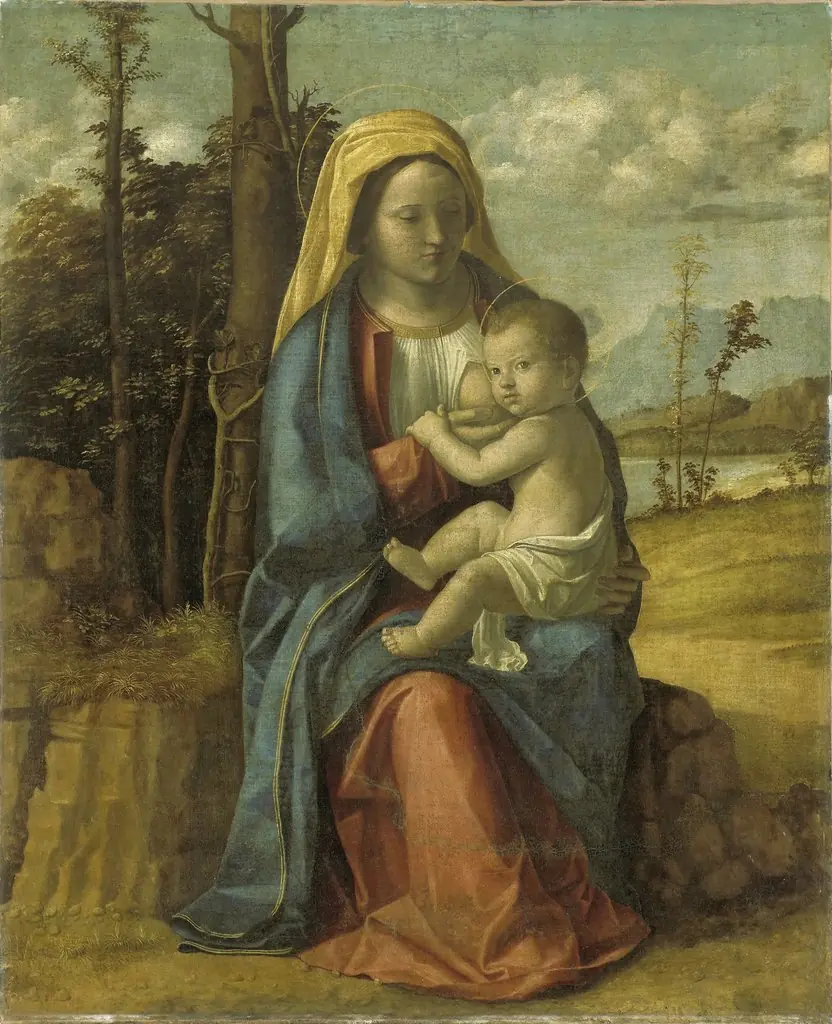
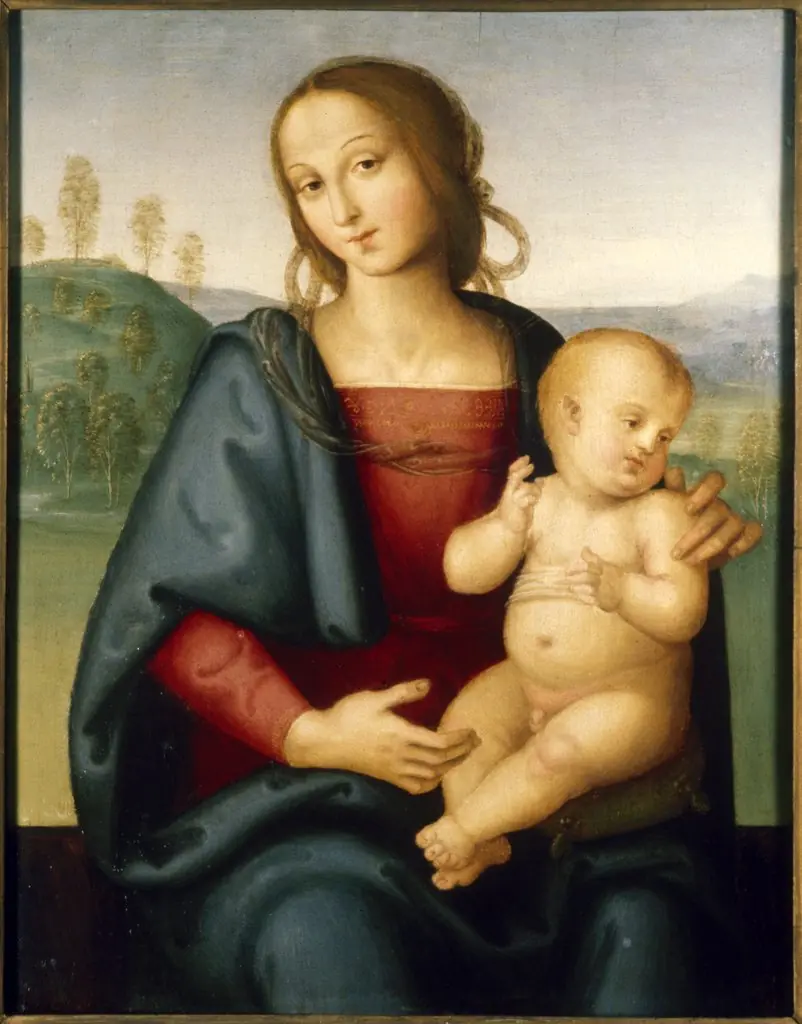
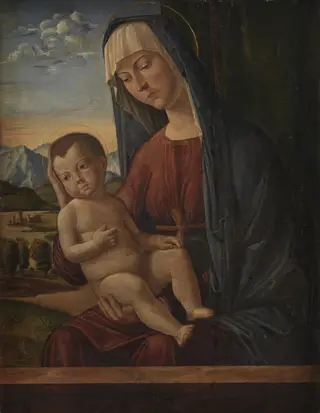
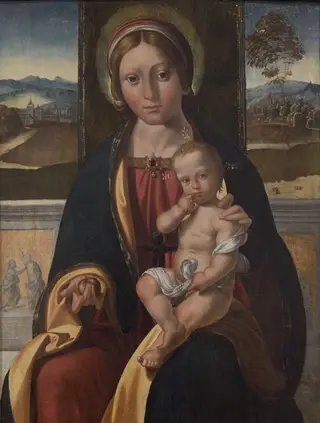
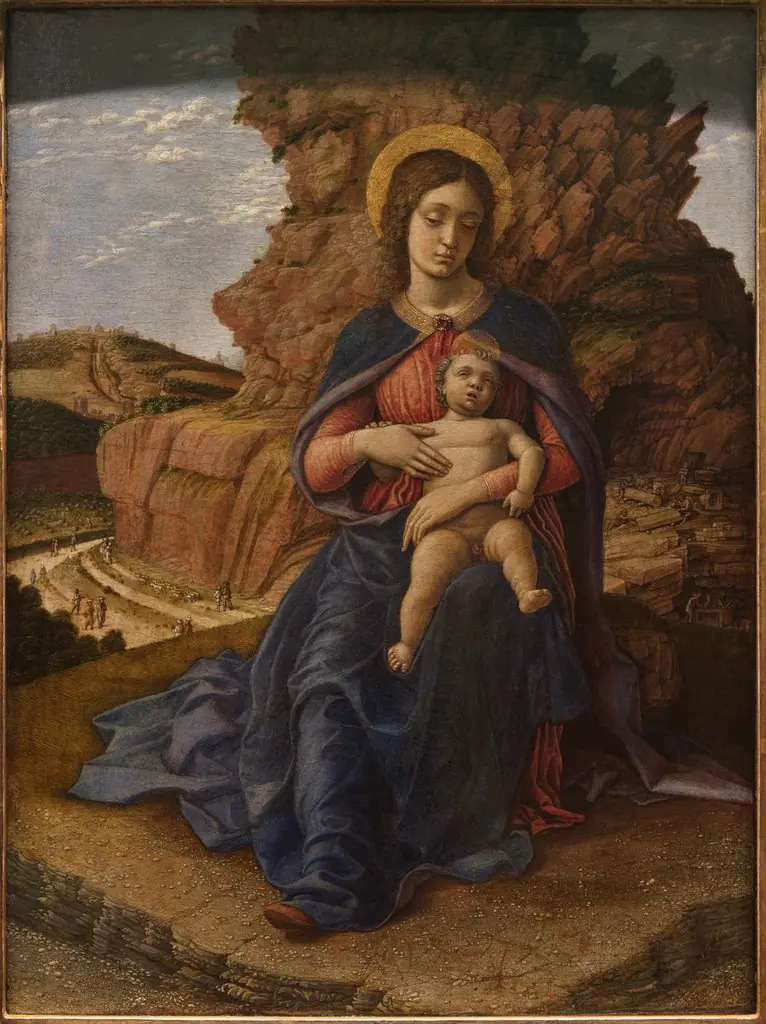
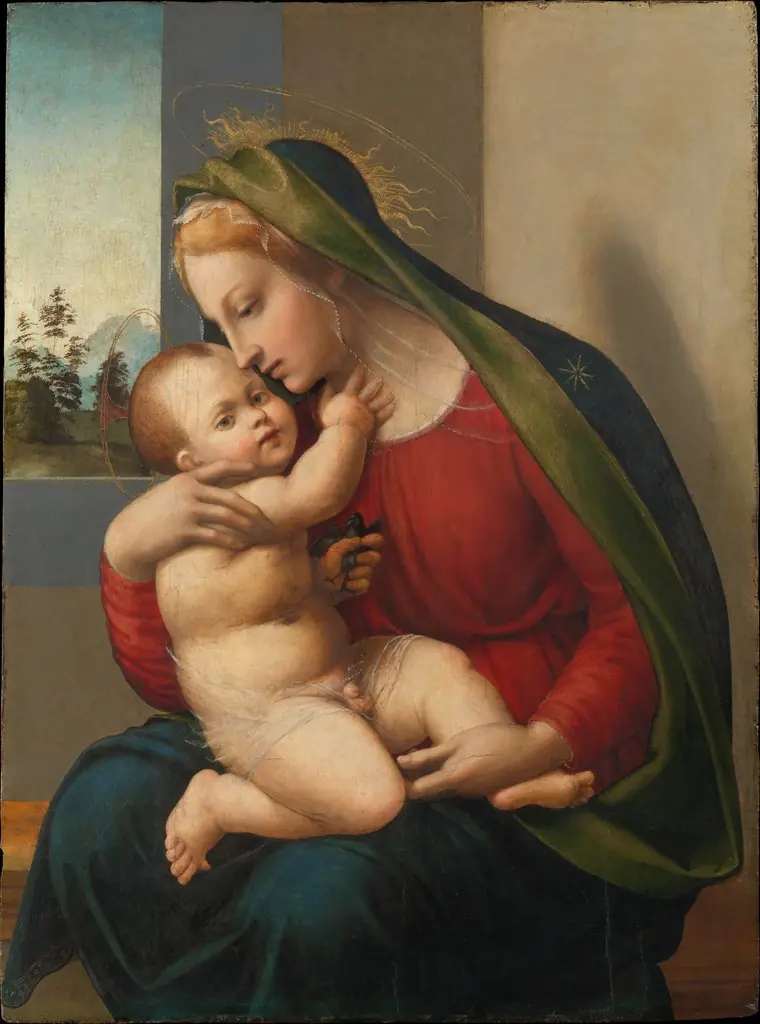
Madonna and Child is an unspecified painting by the High Renaissance artist Giovanni Battista Cima da Conegliano. It dates from 1514 and is held in the collection of the Rijksmuseum. The work depicts a seated woman on a rock, cradling an infant who nurses from her breast.
About this work
The artist is unknown, but the colors, deep reds, blues, and greens, are typical of the time.
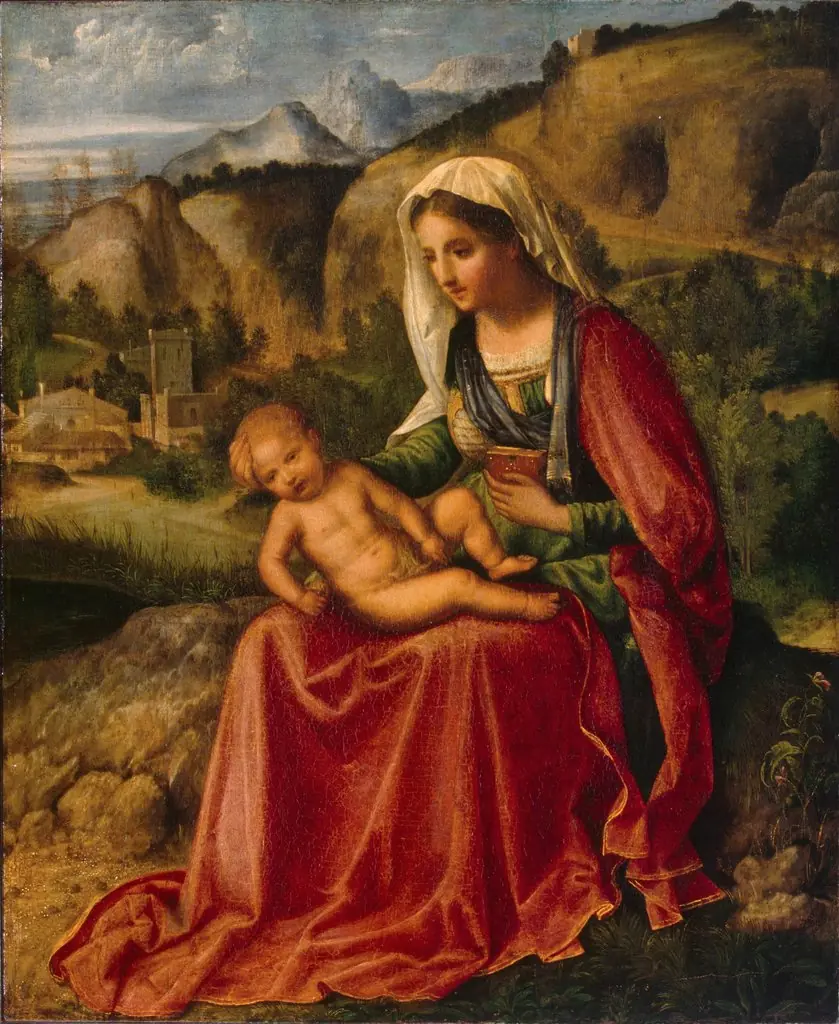
A woman sits on a rock, holding a baby who nurses from her. Behind them, a soft landscape glows with warm light.
This painting was made in Venice around 1512. The artist is unknown, but the colors, deep reds, blues, and greens, are typical of the time. The way the light falls on their faces feels gentle, almost like a quiet moment in real life.
To see more paintings like this, look up the Venetian school.
Subject & Meaning
The work depicts the Virgin Mary holding the infant Jesus, a central subject in Cima da Conegliano's religious oeuvre. These compositions frequently feature a standing infant Christ, a specific variation the artist repeated with slight alterations across multiple versions. The imagery often integrates the figures into tranquil landscape backgrounds, reflecting the artist's emphasis on atmospheric harmony and the mountains of his native region.
In many instances, the Madonna and Child are presented as part of a sacra conversazione, where they are enthroned among saints or within idealized architectural settings like pergolas. This arrangement creates an impression of unspeakable peace and gentle animation rather than dramatic action. The subject matter was typically produced on a small scale for private domestic devotion rather than large church altars, embodying a calm, undramatic spirituality characteristic of the Venetian school.
Technique & Style
Cima da Conegliano employed oil paint on wooden panels, often using tempera in combination for layered effects. His Madonnas and Child compositions feature a standing infant Jesus rendered with delicate modeling and tranquil atmosphere, emphasizing soft chiaroscuro and silvery tonal transitions that merge into gold in later works. The figures are arranged in gently animated symmetry within sacra conversazione frameworks, often framed by idealized landscapes and architectural elements that reflect Venetian school innovations in atmospheric perspective and naturalistic detail.
Works like the Virgin and Child Enthroned with Saints (c. 1495–1497) demonstrate his use of rich, right coloring and delicate gold tones, while pieces such as the Presentation of the Virgin Mary at the Temple (c. 1497–1500) showcase his mastery of balanced composition and devotional stillness.
History & Provenance
Madonna and Child by Giovanni Battista Cima da Conegliano is held in several institutions, including the National Gallery of Art, Washington (inventory details not specified), the Gemäldegalerie, Berlin, and the Hermitage Museum, St. Petersburg (inventory details not specified). It has been featured in exhibitions such as Cima da Conegliano: poeta del paesaggio (1962, Palazzo dei Trecento, Treviso), Cima da Conegliano (2010, Palazzo Sarcinelli, Conegliano), and Cima da Conegliano – Maître de la Renaissance vénitienne (2012, Musée du Luxembourg, Paris).
Context
Giovanni Battista Cima da Conegliano is recognized as a significant figure of the Venetian school, acting as a bridge between Giovanni Bellini and Titian. His artistic development shows an early adherence to the style of Bartolomeo Montagna, followed by a mature synthesis of influences from Antonello da Messina and Bellini, particularly in his treatment of landscape and atmospheric light. Scholars note that Cima was among the first Italian painters to elevate landscape backgrounds to a position of equal importance with the figures, often placing sacred groups within idealized, capriccio-like architectures.
Although his style remained relatively consistent, he frequently repeated popular compositions, such as the standing Infant Jesus, adapting them for both large altarpieces and smaller domestic devotional images. His work is characterized by a tranquil, undramatic spirit and a distinctive silvery tonality that later shifted toward a delicate gold in his final years.
Legacy
Cima da Conegliano's Madonna and Child compositions established a template that shaped Venetian sacra conversazione painting well into the 16th century. His treatment of standing infants within classical architectural settings, combined with luminous coloration and landscape integration, was widely emulated by followers such as Carlo da Conegliano and influenced Bellini’s later altarpieces. The typology persisted in Baroque interpretations of maternal tenderness, particularly through the repeated motif of the Madonna enthroned among saints, which became a standard compositional device for devotional imagery.
The work's technical approach to oil glazing and atmospheric perspective informed later Venetian painters' handling of light, while the repeated Madonna and Child variations provided a visual vocabulary that persisted in European religious art through the 18th century. Contemporary records indicate the composition was frequently copied in workshops, ensuring its transmission across artistic centers.
Overview
The work depicts a seated woman on a rock, cradling an infant who nurses from her breast. Behind them a gently illuminated landscape spreads, suffused with warm, diffused light that creates an intimate, domestic atmosphere.
Own this work as a print
Artist & collection
Artist
Giovanni Battista Cima da Conegliano
Giovanni Battista Cima, also called Cima da Conegliano (c. 1459 – c. 1517), was an Italian Renaissance painter, who mostly worked in Venice. He can be considered part of the Venetian school, though he was also…

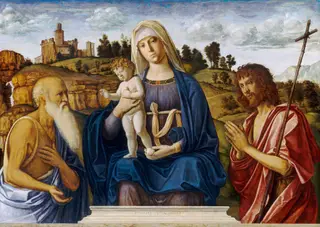 Madonna and Child with Saint Jerome and Saint John the Baptist
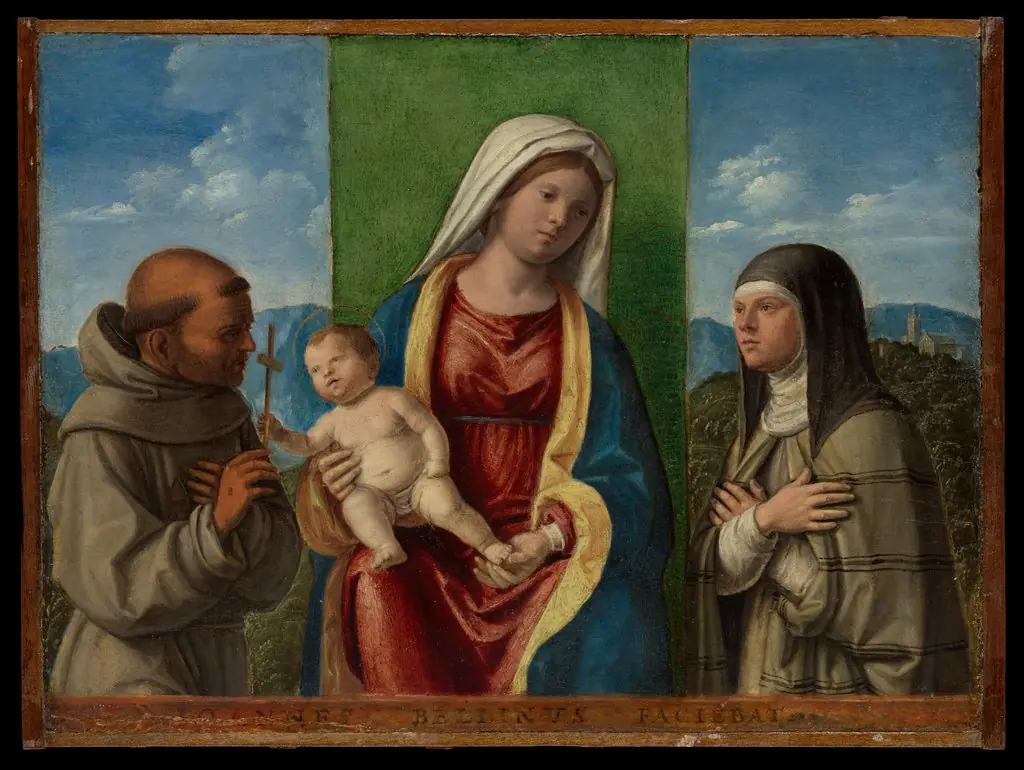 Madonna and Child with Saints Francis and Clare
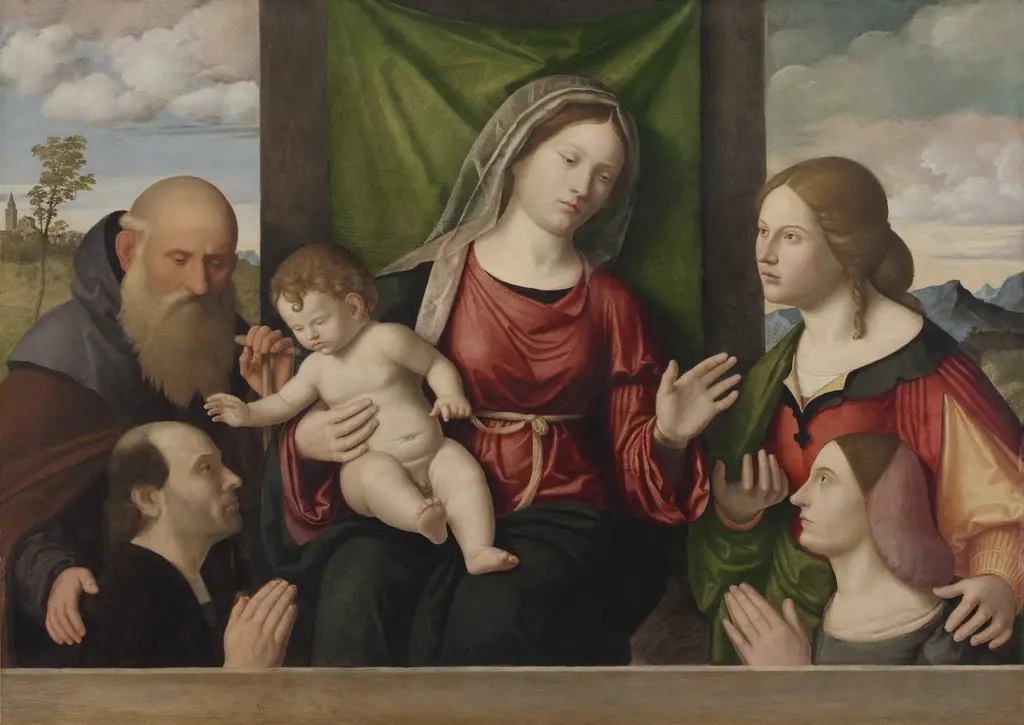 Virgin and Child with Saints and Donors
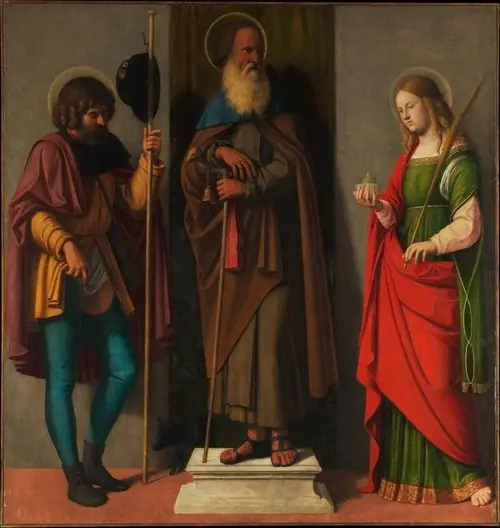 Saints Roch, Anthony Abbot and Lucy
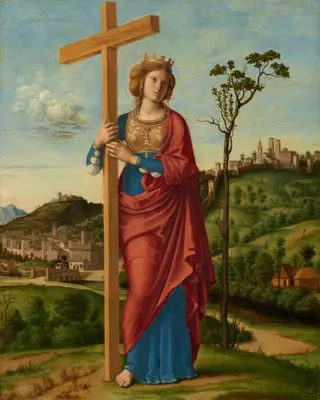 Saint Helena
 Saint Jerome in the Wilderness
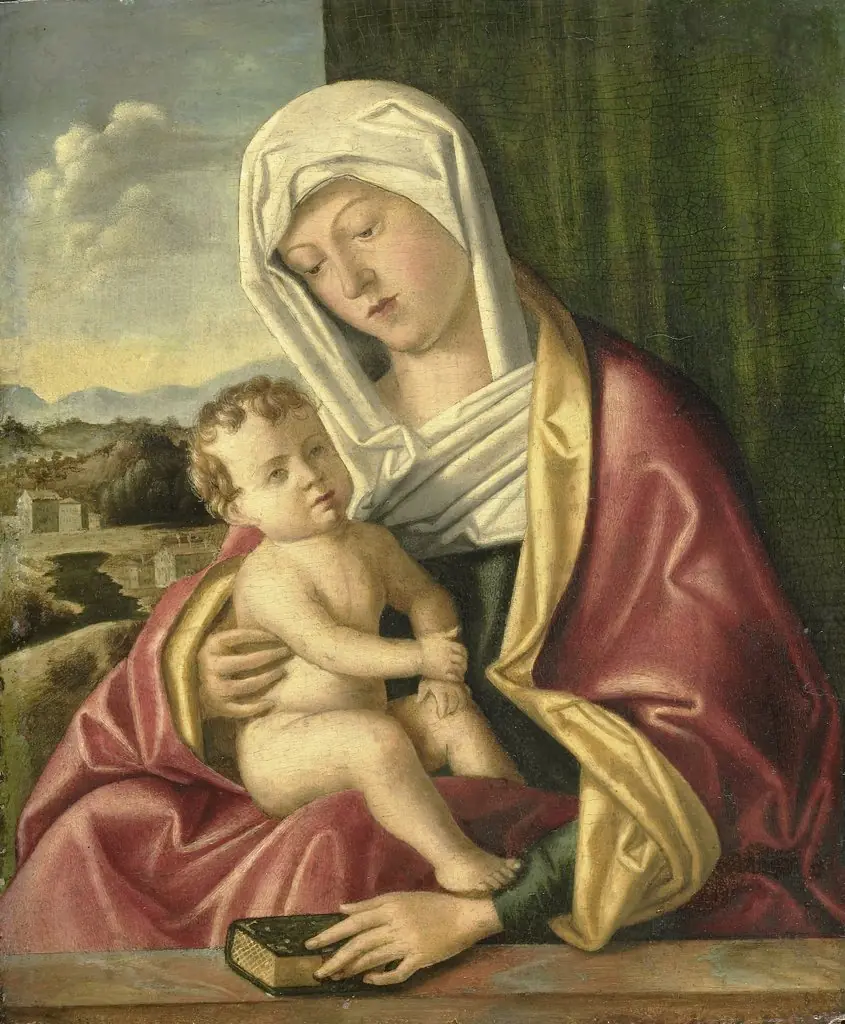 Virgin and Child
 The Judgement of Midas. The Musical Contest between Apollo and Marsyas