Artwork
Christ in the Wilderness
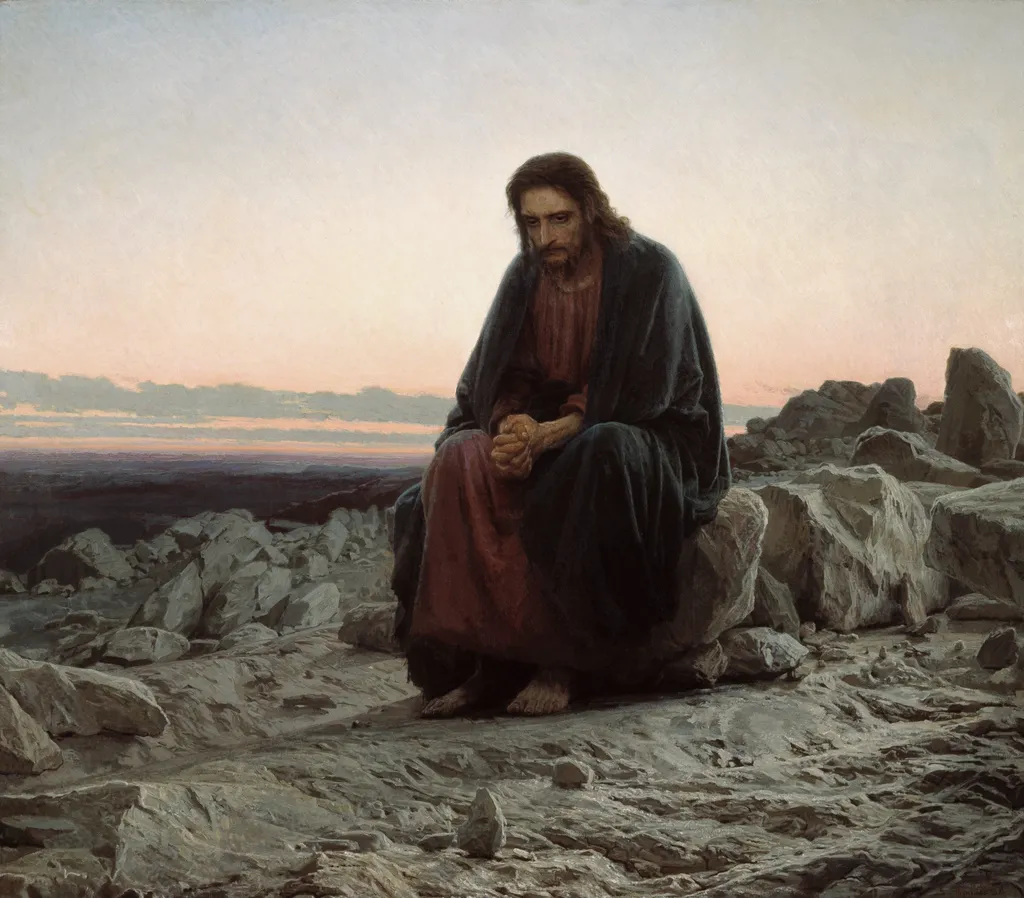
Christ in the Wilderness is an oil painting by the Realist artist Ivan Kramskoi. It dates from 1872 and is held in the collection of the Tretyakov Gallery.
About this work
Pavel Tretyakov liked the painting so much that he bought it for his collection the same year it was finished.
Christ in the Wilderness is an oil painting by Russian artist Ivan Kramskoi. He completed it in 1872.
The Russian Academy of Arts offered him a professorship for this work, but he turned it down in early 1873. He had been expelled from the Academy before, and wanted to stay independent. Pavel Tretyakov liked the painting so much that he bought it for his collection the same year it was finished.
You might also check out the Tretyakov Gallery today.
Subject & Meaning
The painting depicts the biblical episode of the Temptation of Christ in the desert, focusing on the moment of spiritual struggle rather than triumph. Kramskoi presents Christ seated on a stone in a barren landscape, wearing a dark wrap over a red tunic, his hands clasped at the compositional centre. The work underscores the humanity of Christ, portraying his inner moral conflict against the cold dawn of the wilderness, while a low horizon divides the canvas and amplifies his contemplative presence.
Contemporary critics highlighted the moral force and psychological depth of the figure, interpreting the scene as a meditation on humble, suffering humanity.
Technique & Style
Created in 1872, Christ in the Wilderness is an oil painting on canvas measuring 180 cm in height and 210 cm in width. Kramskoi first attempted a vertical format in 1867 but abandoned it as unsuited to the subject, adopting a horizontal orientation for the final work. The composition features a low horizon line that divides the canvas almost equally, juxtaposing a cold, stony desert against a dawn sky.
The artist employed a palette of cold colours to evoke the chill of early morning, contrasting with Christ's dark wrap and red tunic. The handling is static and highly finished, concentrating on the expressive face and clasped hands to convey internal spiritual struggle rather than external action.
History & Provenance
Ivan Kramskoi painted Christ in the Wilderness in 1872. The work was rejected by the Council of the Russian Academy of Arts, and Kramskoi declined an accompanying professorship to preserve his independence from the institution. Pavel Tretyakov purchased the painting directly from the artist for 6,000 rubles, and it was shown at the second exhibition of the Peredvizhniki (Wanderers) in 1873. It has been held by the State Tretyakov Gallery in Moscow since its acquisition.
Context
Completed in 1872, the work marked a pivotal moment in Russian religious art by shifting focus from divine glory to human psychological struggle. Kramskoi declined a professorship from the Imperial Academy of Arts to maintain his independence, aligning himself with the Peredvizhniki movement, at whose second exhibition the painting debuted in 1873. It drew mixed public reaction but strong support from the collector Pavel Tretyakov.
Critics such as Vladimir Stasov and Vsevolod Garshin praised its depiction of moral force and sorrow, while Ivan Goncharov emphasized the figure's humble simplicity over heroic grandeur. The work belongs to a broader effort by artists including Nikolai Ge and Ilya Repin to renew religious painting with contemporary ethical relevance.
Legacy
The painting's legacy rests on its psychological depth and influence on Russian art. Kramskoi's refusal of the Academy's professorship and his insistence on artistic independence set a precedent for later realist artists, while Tretyakov's acquisition affirmed the work's importance. Critics such as Stasov and Garshin emphasized its moral intensity, with Garshin describing its 'immense moral force,' and its depiction of Christ's inner struggle became a model for later interpretations of spiritual conflict in Russian art.
Its enduring presence in the Tretyakov Gallery has ensured continued scholarly attention to its place in the transition of Russian religious painting toward humanistic realism.
Overview
Ivan Kramskoi completed the oil painting Christ in the Wilderness in 1872. The work portrays the biblical episode of Christ’s temptation in the desert, rendered in a sober, realist manner characteristic of the artist’s mature period. Its dimensions and composition focus on a solitary figure against a stark landscape, emphasizing psychological intensity over narrative detail.
Own this work as a print
Artist & collection
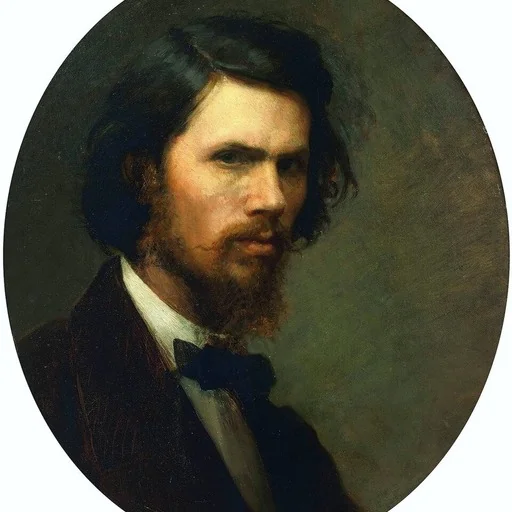
Artist
Ivan Nikolayevich Kramskoi (Russian: Иван Николаевич Крамской; 8 June 1837 – 5 April 1887) was a Russian Realist painter and art critic.

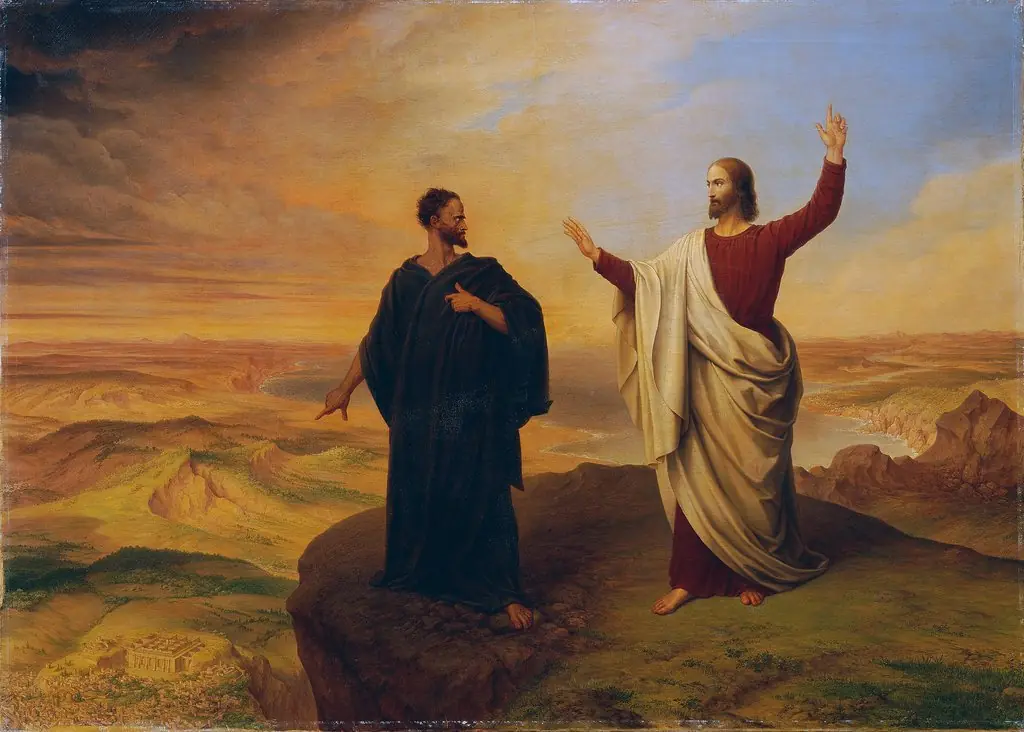
- Die Versuchung Christi
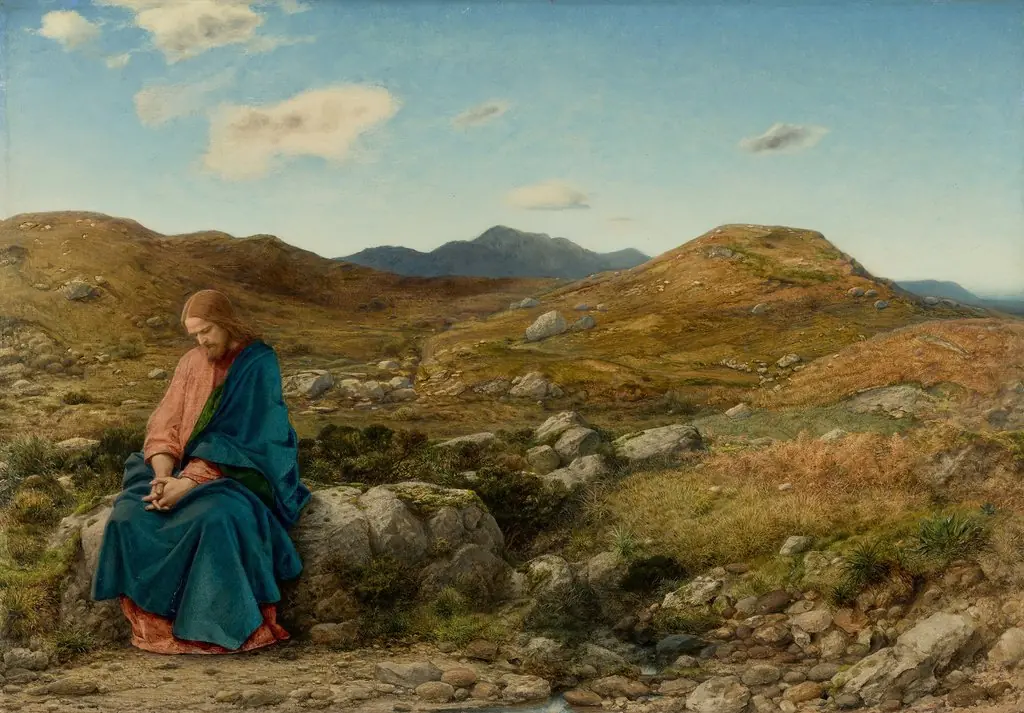 Man of Sorrows
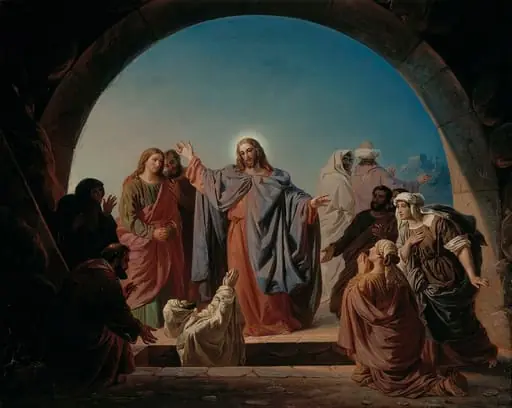 Jeesus herättää Lasaruksen, repliikki Turun Tuomiokirkon freskomaalauksesta
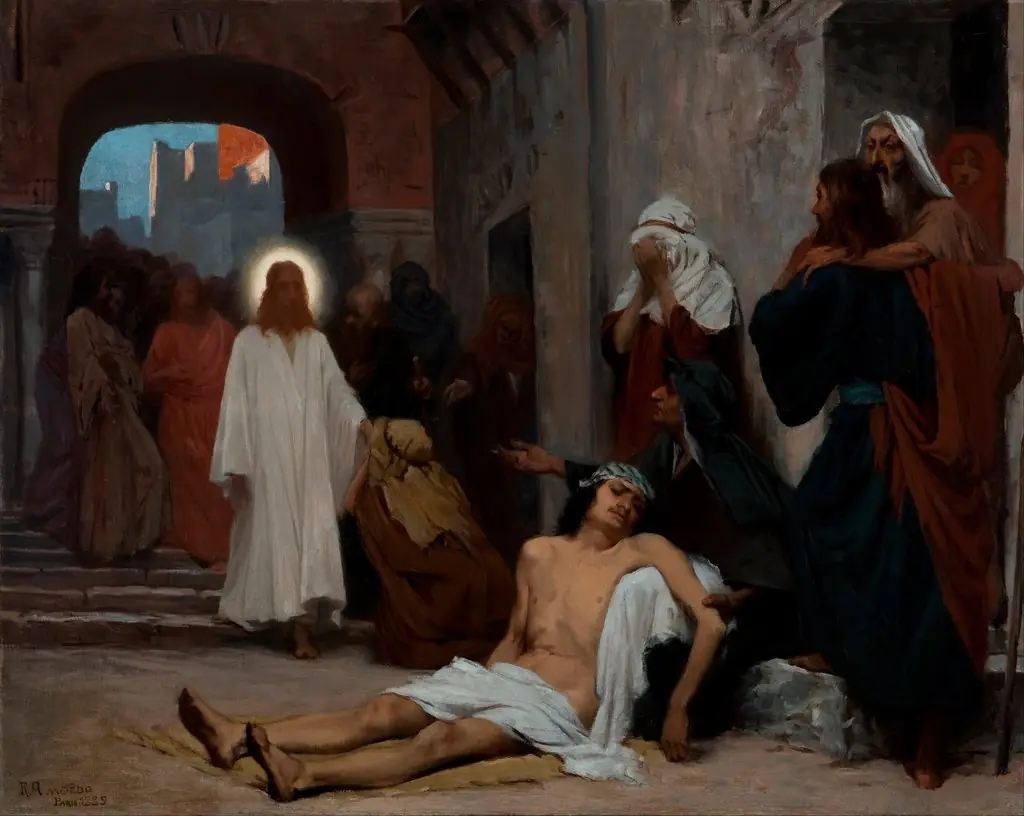 Study for "Jesus in Capernaum"
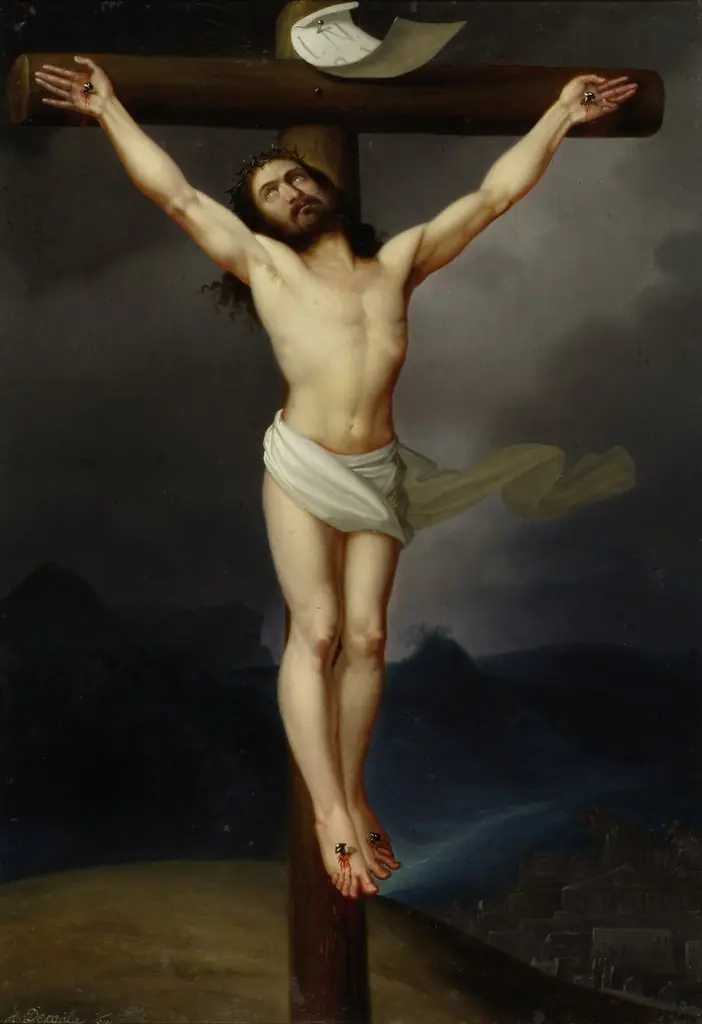 Christ on the Cross (after Van Dyck)
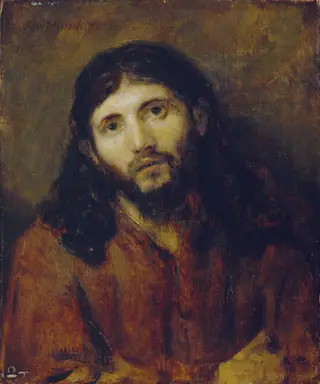 Head of Christ (after 'Dinner at Emmaus' in Louvre)
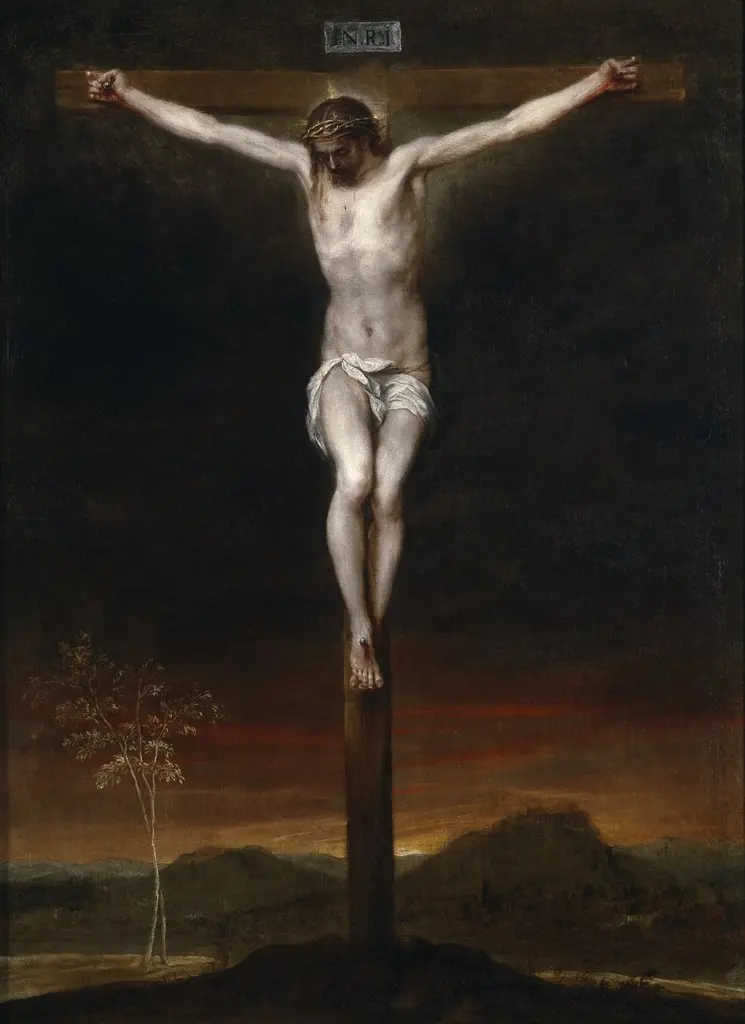 The Crucifixion
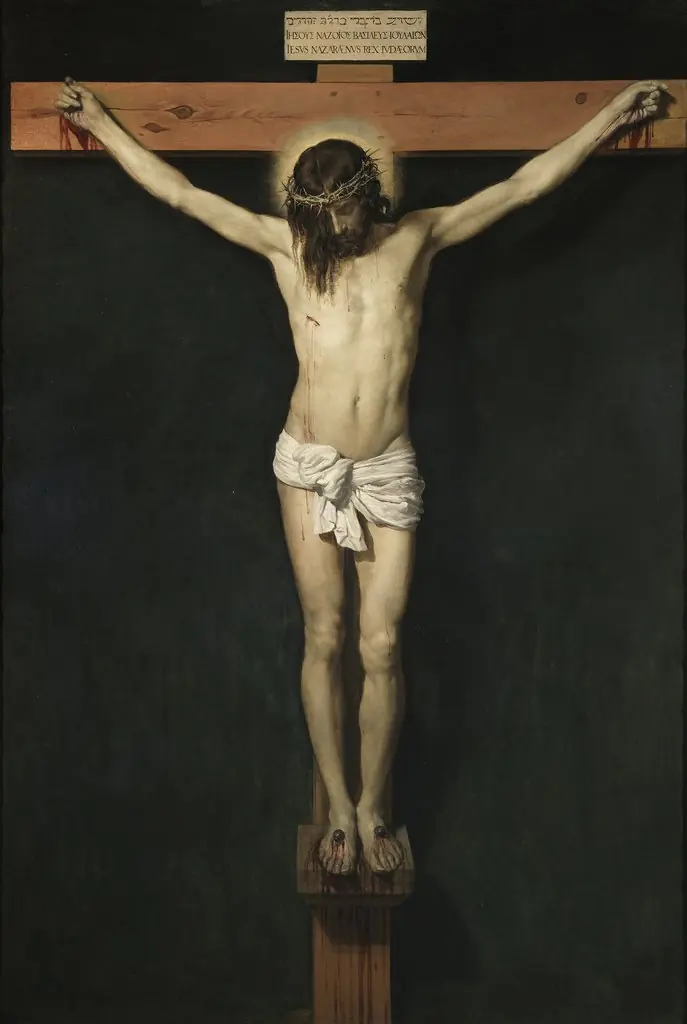 Christ Crucified
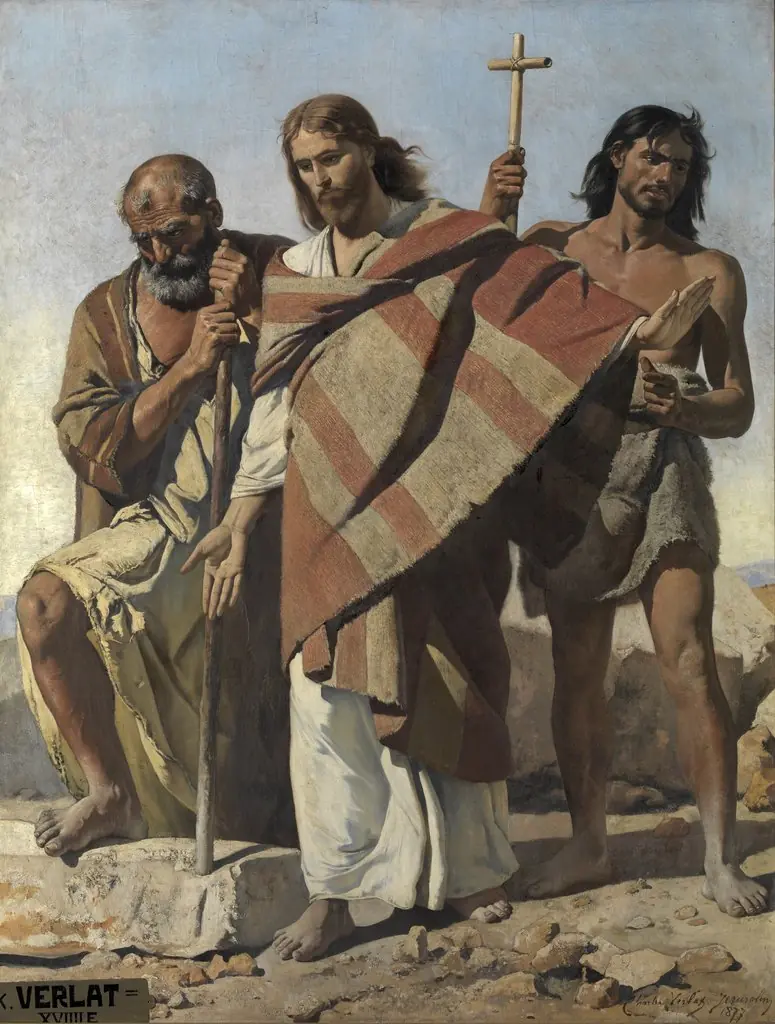 Jesus between Saint Peter and Saint John Baptist
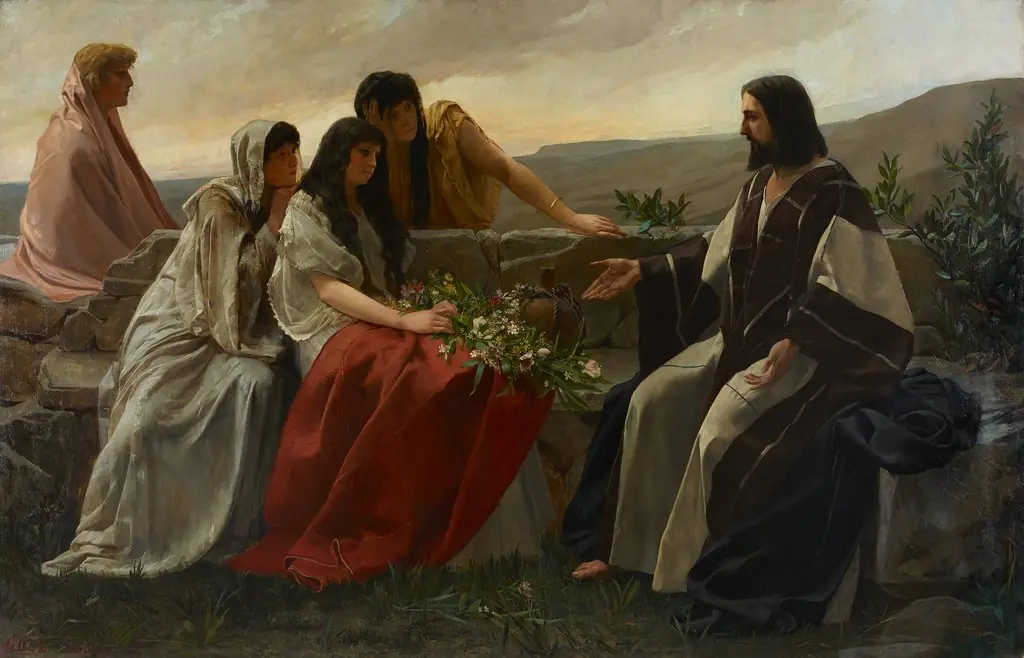 Christus und die Frauen
 Christ on the Cross
 Christ crucified