Artwork
Self-Portrait with Parents, Brothers and Sisters
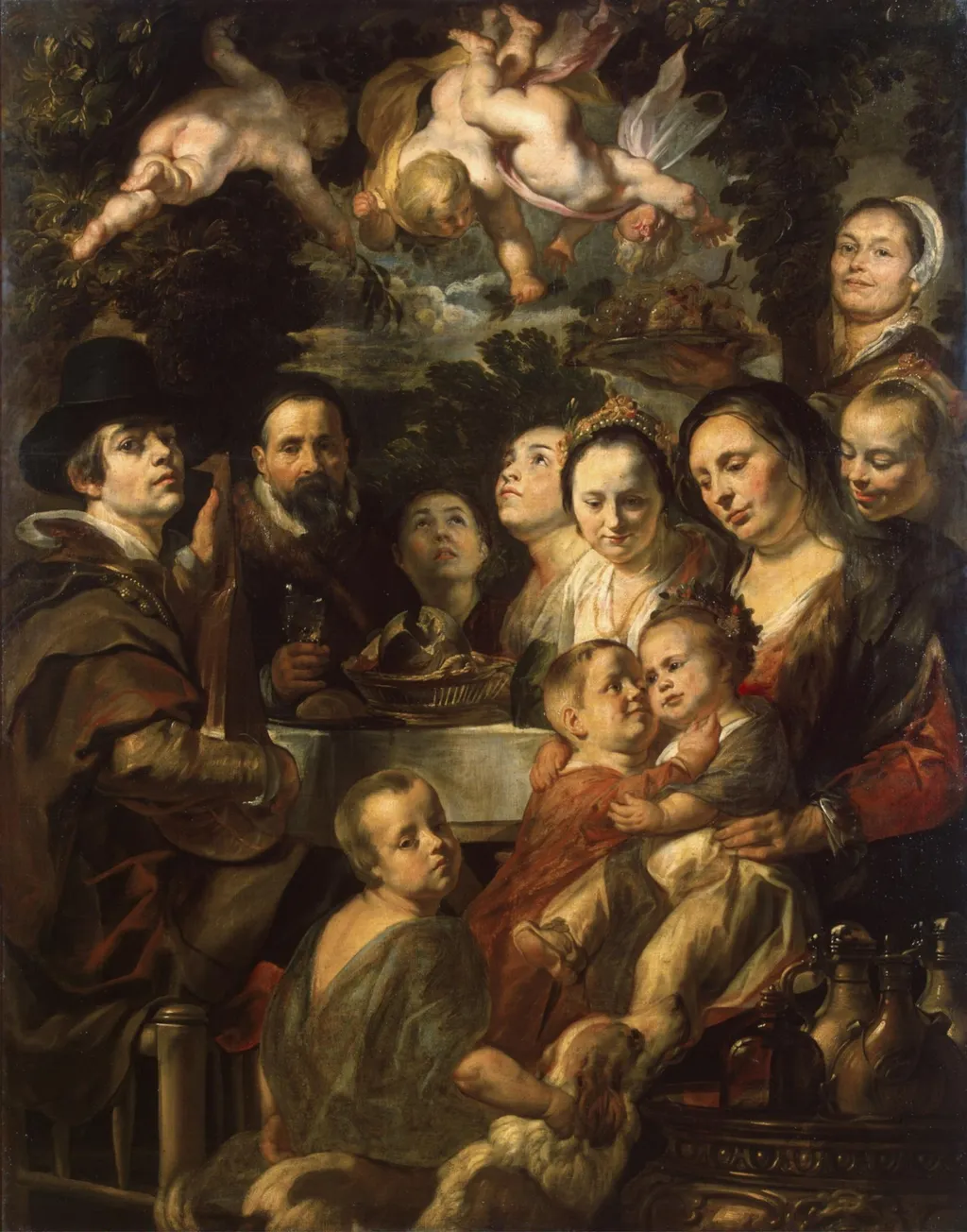
Self-Portrait with Parents, Brothers and Sisters is an oil painting by the Flemish Baroque painting artist Jacob Jordaens. It dates from 1615 and is held in the collection of the Hermitage Museum.
About this work
Technique & Style
The painting reflects contemporary Flemish portraiture and shows clear influence from Peter Paul Rubens' altarpiece The Circumcision.
The work is an oil painting on canvas, executed circa 1615 when Jordaens was approximately twenty-two years old. According to the sources, it measures 175 cm in height and 137.5 cm in width. The composition depicts ten figures arranged around a table in a garden setting, with the artist himself portrayed playing a lute on the left, his father holding a glass of wine, and various family members including his mother seated with a younger sister on her lap.
Symbolic elements include a dog and grapevine motifs representing marital fidelity, bread and wine evoking the Eucharist, and three cherubic putti above the sisters that are interpreted as the souls of deceased daughters. The painting reflects contemporary Flemish portraiture and shows clear influence from Peter Paul Rubens' altarpiece The Circumcision. It was later owned by the Duke of Portland, Robert Walpole, and acquired by the Hermitage Museum in 1779.
History & Provenance
The work entered the Hermitage collection in 1779 under Catherine II, having previously been owned by Robert Walpole at Houghton Hall and before that by the Duke of Portland. Earlier ownership is recorded as belonging to the Jordaens family in the 18th century, with a sale to Walpole noted in 1722 by George Vertue. The painting was misattributed to Adam van Noort at the time of acquisition but was later recognized as a Jordaens work. It remains in the Hermitage Museum today.
The painting is held in the Hermitage Museum in Saint Petersburg, Russia. It was acquired in 1779 during the reign of Catherine II, having previously belonged to the Duke of Portland and then to Robert Walpole at Houghton Hall, where it was recorded by George Vertue in 1722. At the time of its sale to the Hermitage it was misattributed to Jordaens' teacher and father-in-law Adam van Noort; the sitter identification was only corrected in 1940 by Julius S. Held.
Documented exhibitions include a 1968–1969 Jacob Jordaens showing in Ottawa and a 1972 presentation in Leningrad titled "L'Art du portrait."
Context
Painted around 1615, the work is regarded as an unusually mature achievement for Jordaens at roughly twenty-two years of age, demonstrating his early mastery of the Flemish Baroque portrait tradition. The composition draws on Peter Paul Rubens's altarpiece The Circumcision in the Chiesa di S. Ambrogio, Genoa, and is often paired with Jordaens's closely related Portrait of the Master with the Family of Adam van Noort (1616), now in the Staatliche Kunstsammlungen in Kassel, which depicts his teacher and father-in-law's household in a similar format.
The painting's provenance shaped its critical reception. Long held within the Jordaens family, it passed in the eighteenth century to the Duke of Portland and then to Robert Walpole at Houghton Hall, where George Vertue correctly identified it in 1722. After its 1779 sale to the Hermitage under Catherine II, it was misattributed to Adam van Noort, and the sitter's identities were only re-established in 1940 through Julius S. Held's article "Jordaens' Portraits of his Family" in The Art Bulletin, a study later expanded by Kristi Nelson in 1989.
Legacy
The painting has been recognized as a significant early example of a family portrait genre in Flemish Baroque art, influencing later artists in their treatment of multi-figure domestic scenes. Its iconography, particularly the lute symbolizing harmony, the dog and grapevines representing marital fidelity, and the putti associated with deceased children, has been widely cited in scholarly analyses of 17th-century symbolic portraiture. The work's provenance through the Walpole collection and acquisition by the Hermitage Museum contributed to its early misattribution to Adam van Noort, a confusion later resolved in the 20th century, reinforcing its role in re-evaluations of Jordaens' artistic legacy.
Contemporary sources, including 19th- and 20th-century art historical literature, have underscored its importance as a rare large-scale group portrait by a Flemish master from the early 1600s, reflecting both technical mastery and complex symbolic narrative in a domestic context.
Overview
Created around 1615, this oil painting by Flemish artist Jacob Jordaens portrays the painter alongside his mother, father and siblings. The family is gathered in a single space, the adults clothed in dark, sumptuous garments while the children wear simpler attire. Above the group, winged angels hover, bearing a cross and a crown, lending a subtle religious overtone to the domestic scene.
Subject & Meaning
The work functions as both a personal record and a symbolic statement. By placing himself among his relatives, Jordaens emphasizes familial bonds and lineage, while the inclusion of celestial figures suggests divine favor or protection over the household. The varied gazes, some directed upward, others downward, convey a contemplative atmosphere, hinting at humility and reverence within the family unit.
Own this work as a print
Artist & collection
Artist
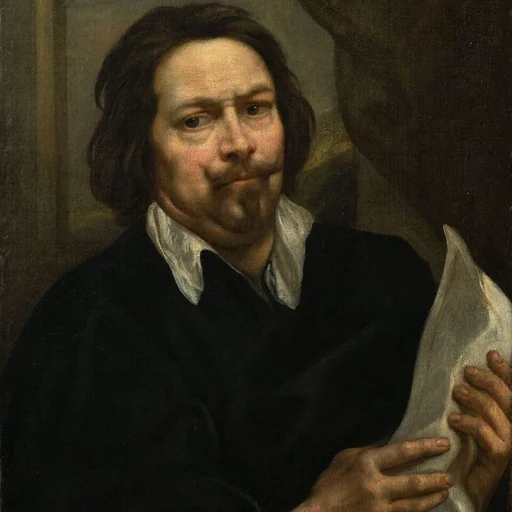
Jacques (Jacob) Jordaens (19 May 1593 – 18 October 1678) was a Flemish painter, draughtsman and a designer of tapestries and prints.

 The Holy Family with Shepherds
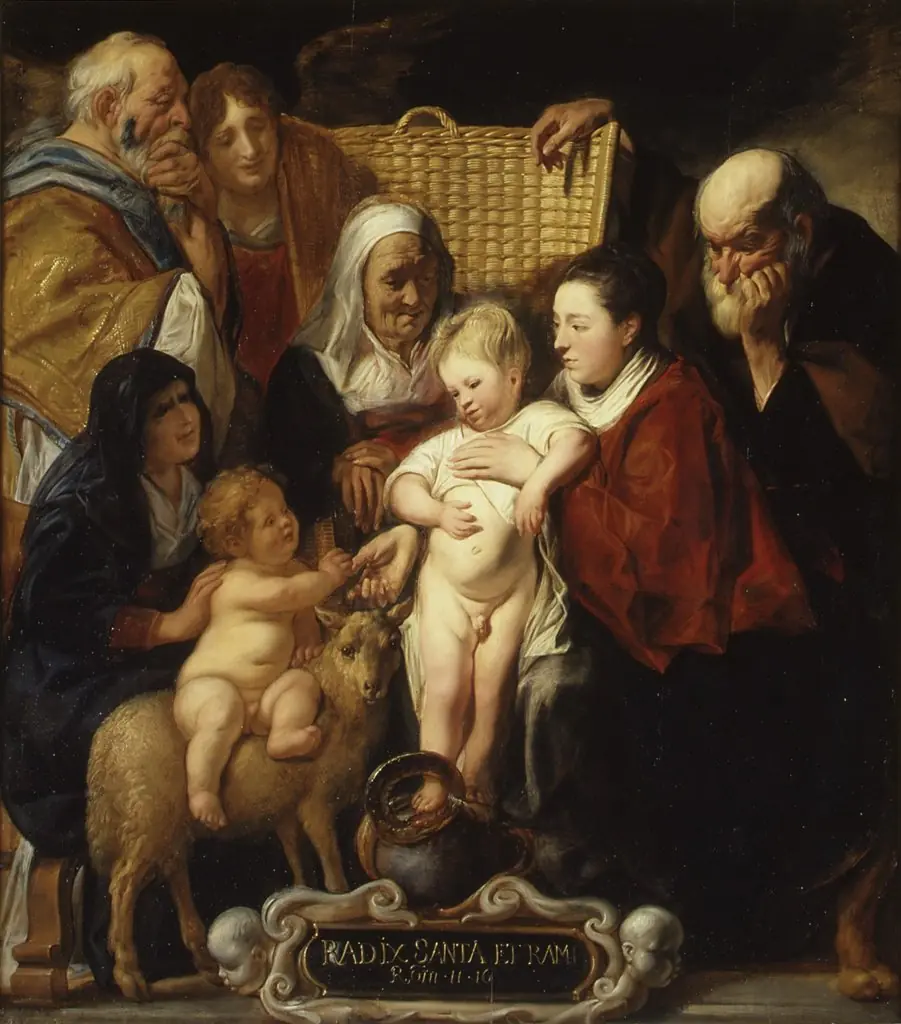 The Holy Family with Saint Anne and the Young Baptist and His Parents
 Untitled
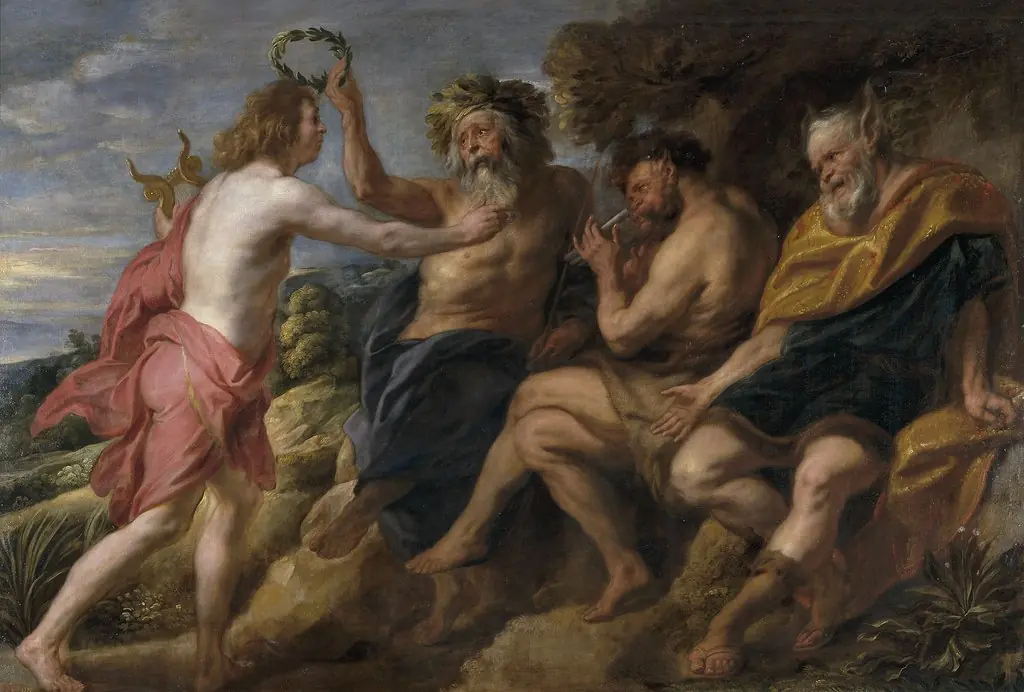 Apollo as Victor over Pan
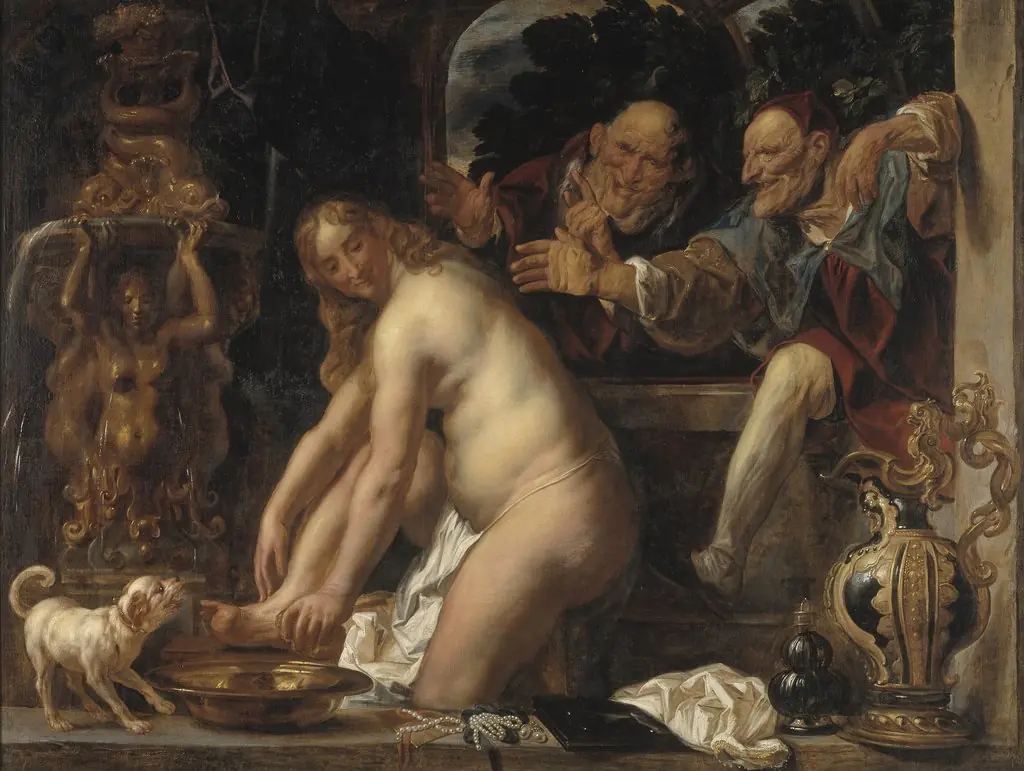 Susanna and the Elders
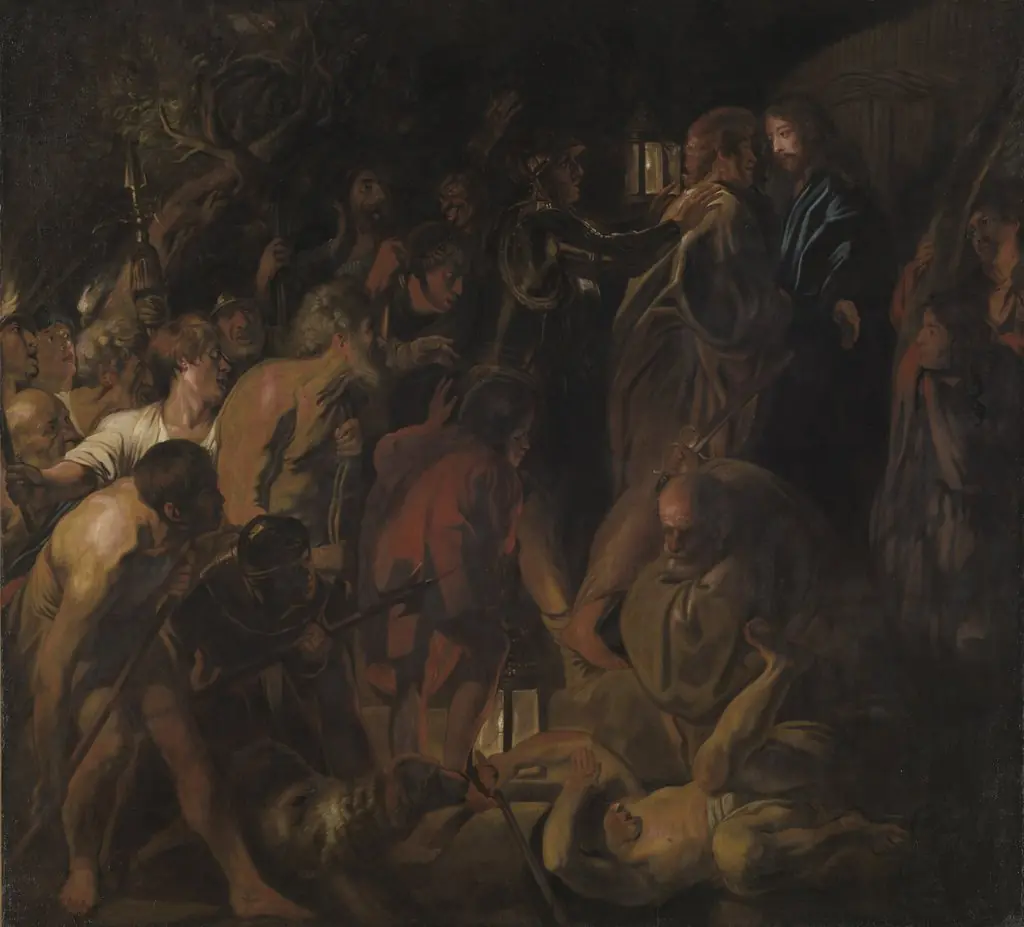 The Betrayal of Christ
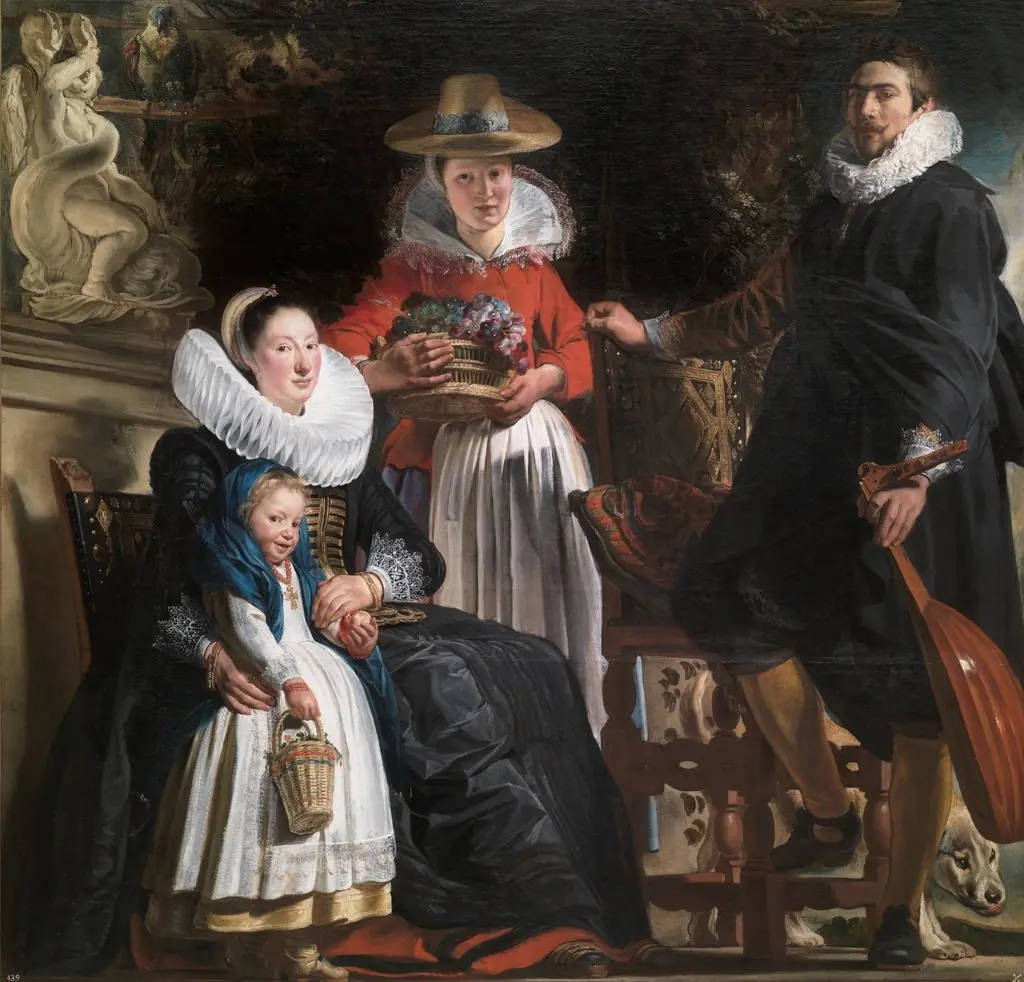 Portrait of the artist with his family
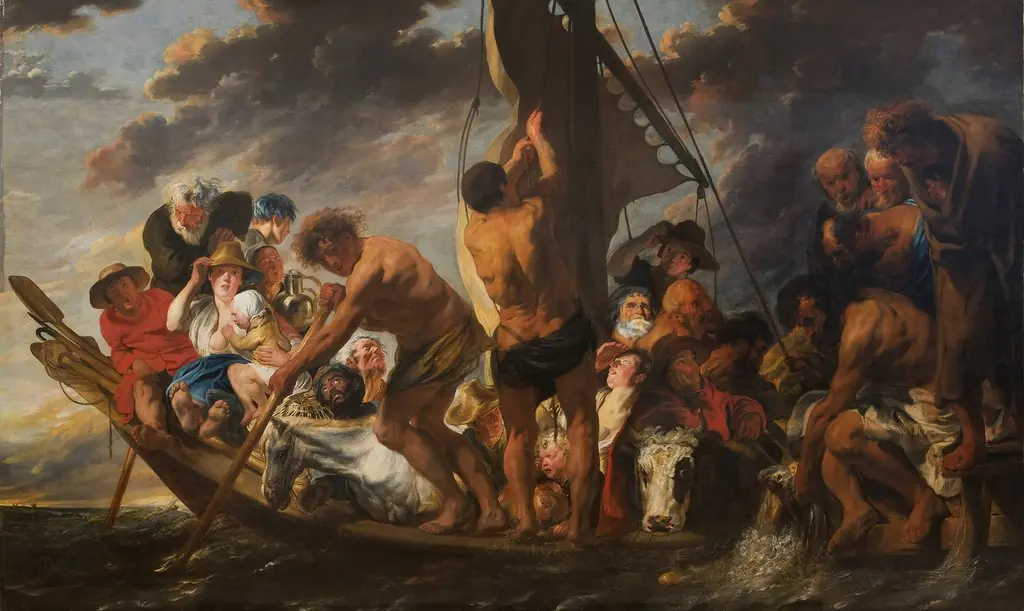 The Tribute Money. Peter Finding the Silver Coin in the Mouth of the Fish. Also called "The Ferry Boat to Antwerp"
- The Holy Family with St. Elizabeth, St. John, and a Dove
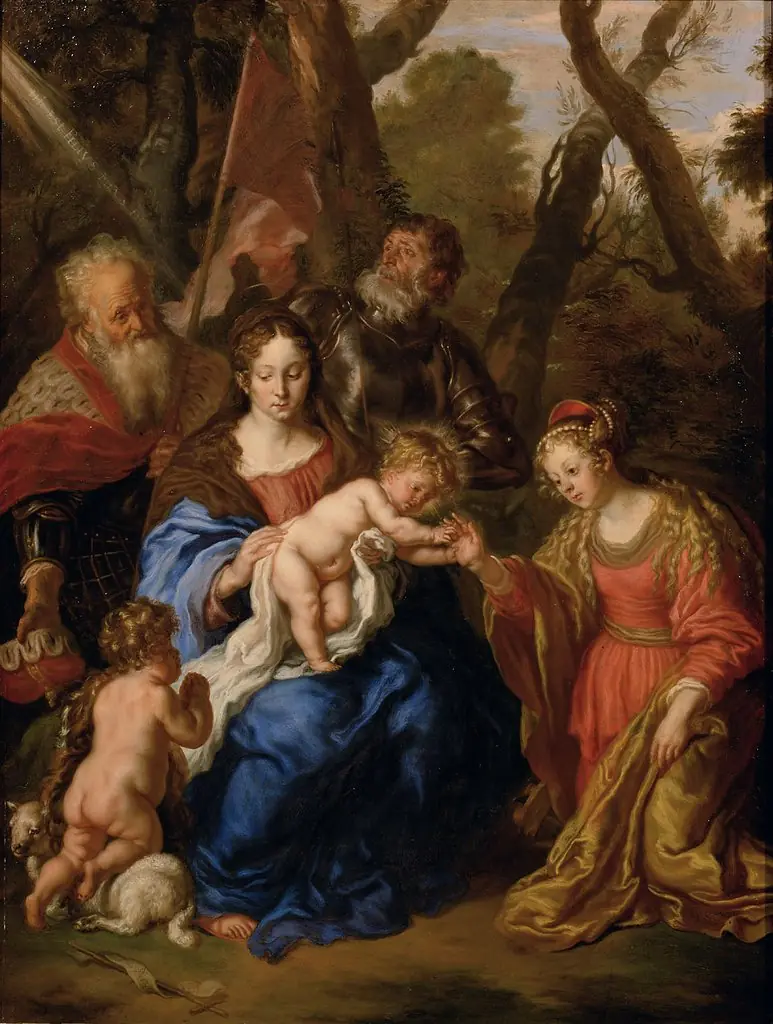 The Mystic Marriage of Saint Catherine of Alexandria with Saints Leopold and William
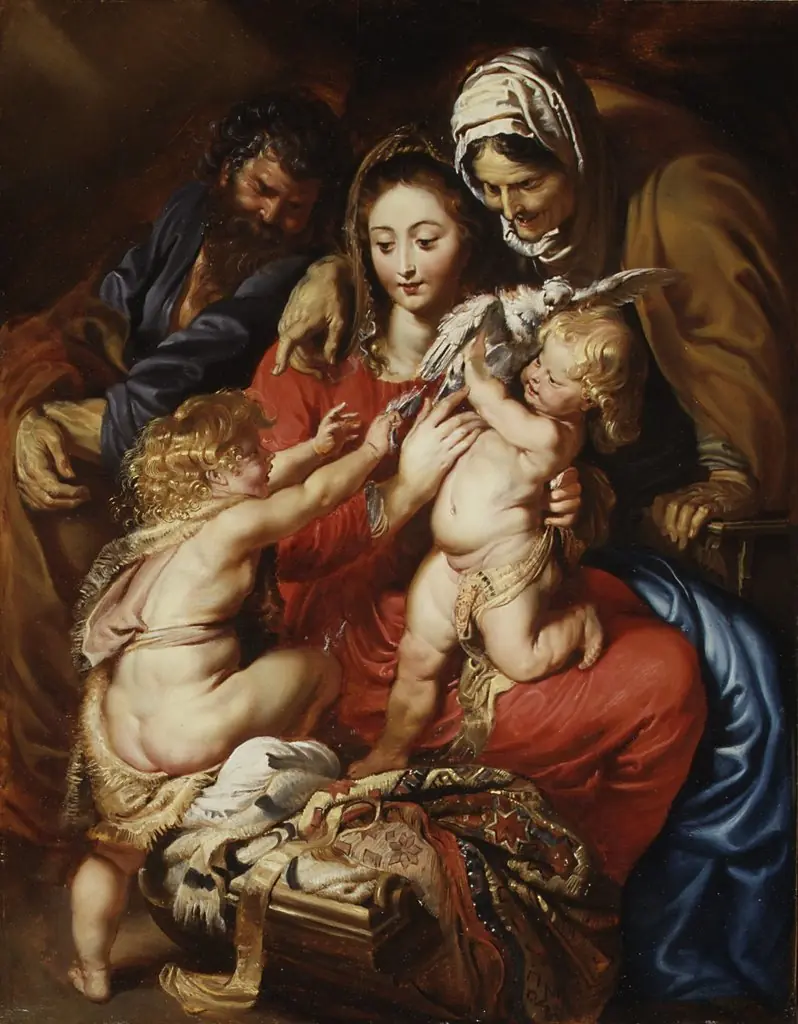 The Holy Family with Saint Elizabeth, Saint John, and a Dove
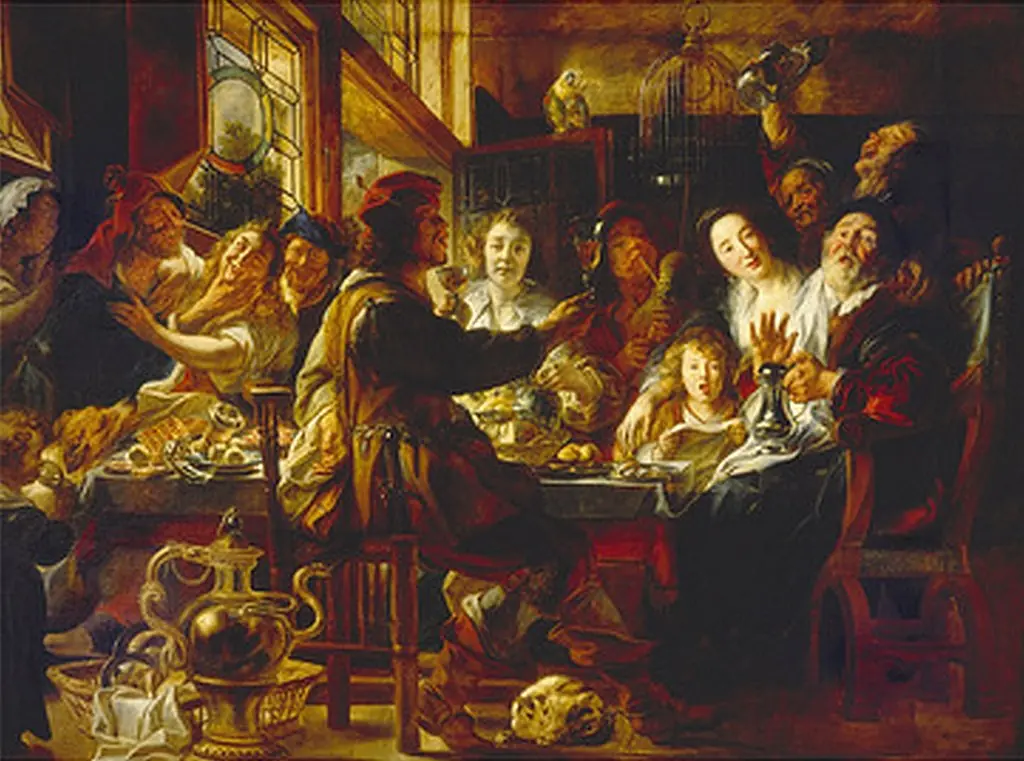 As the old sing so the young chirp
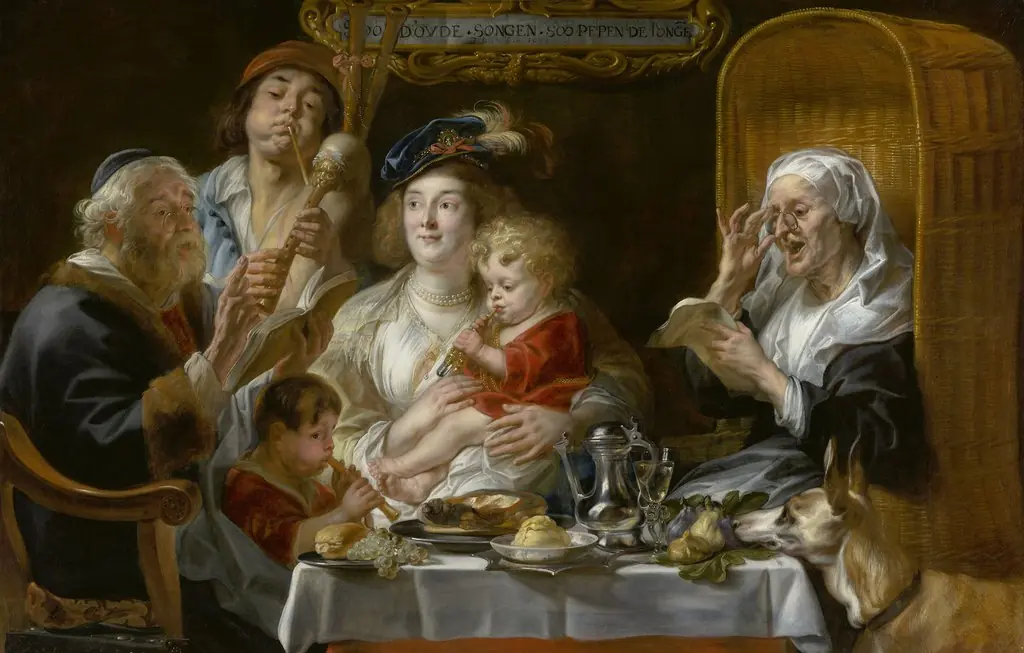 As the Old Sing, So Pipe the Young
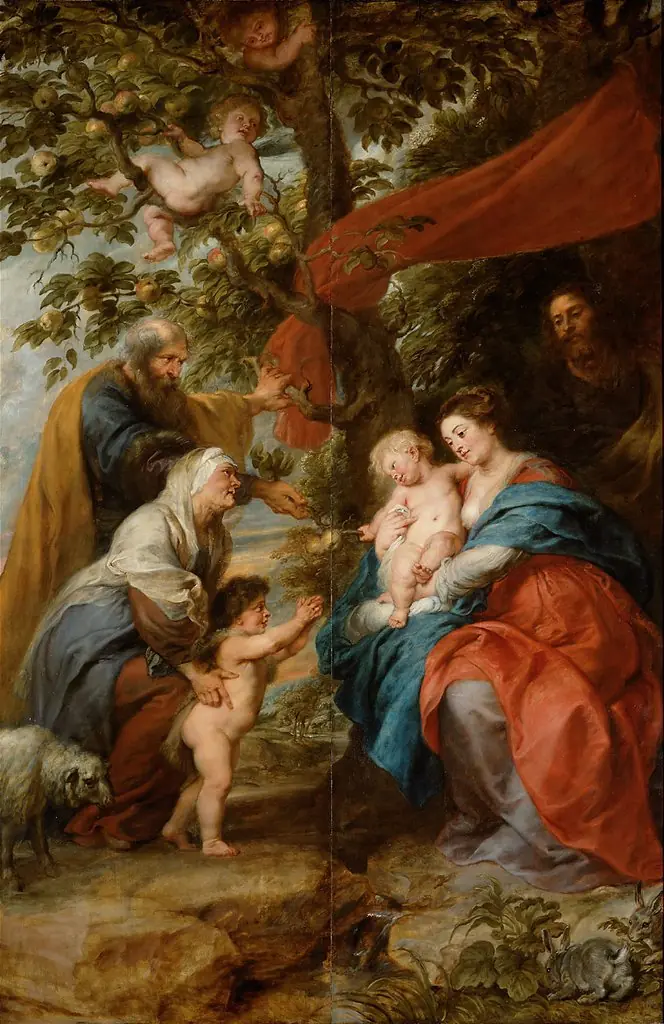 The Holy Family under the Apple Tree
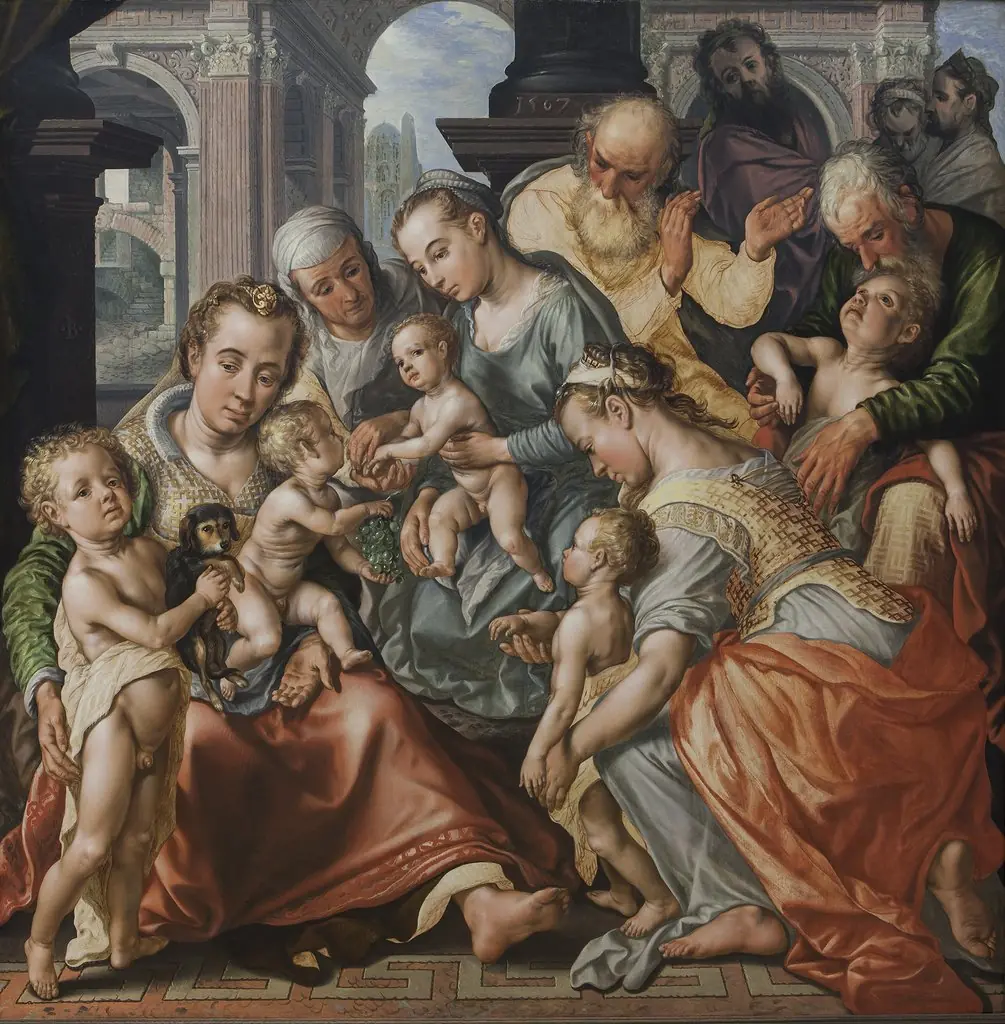 The Holy Kinship
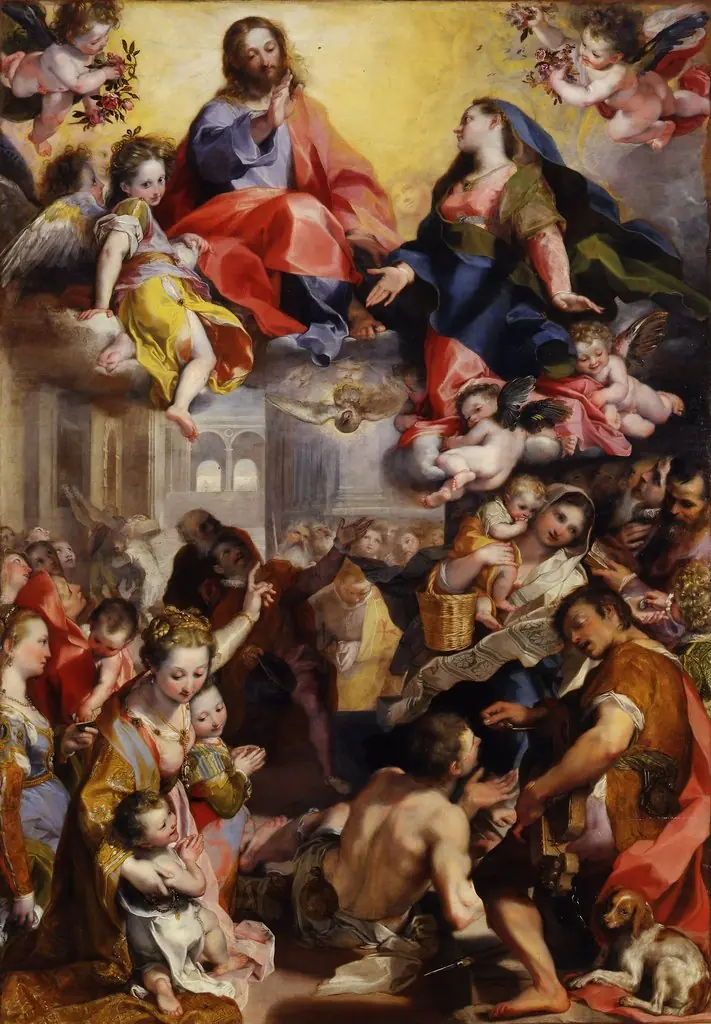 Madonna of the people
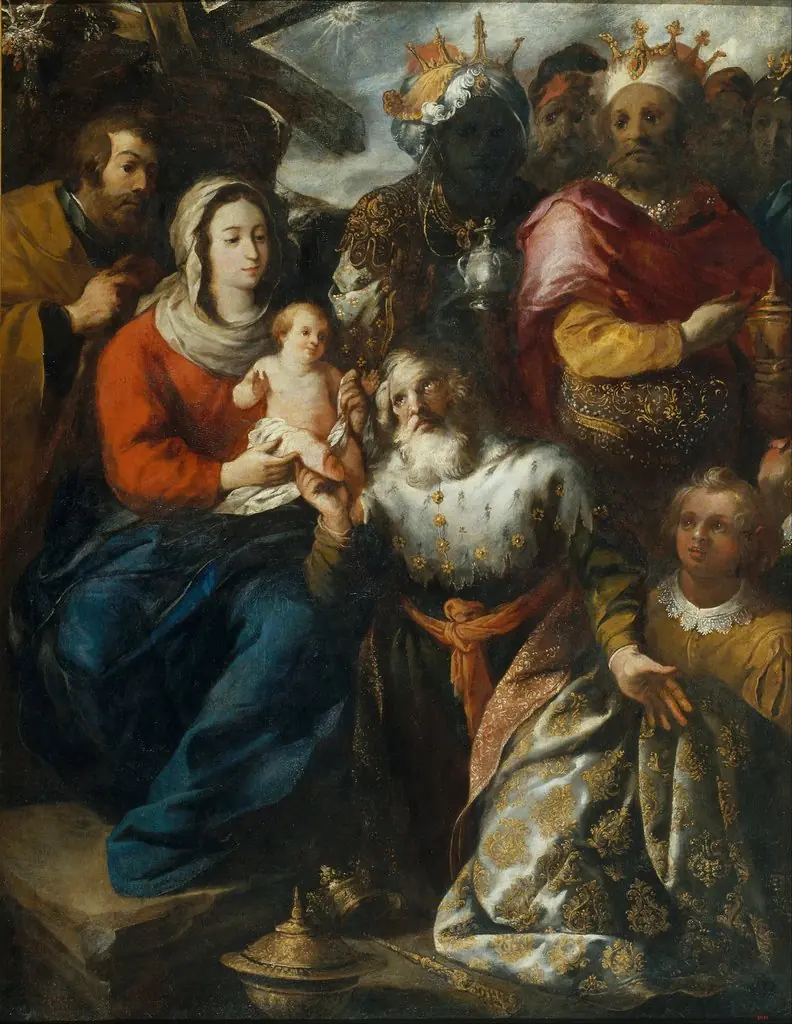 Epiphany
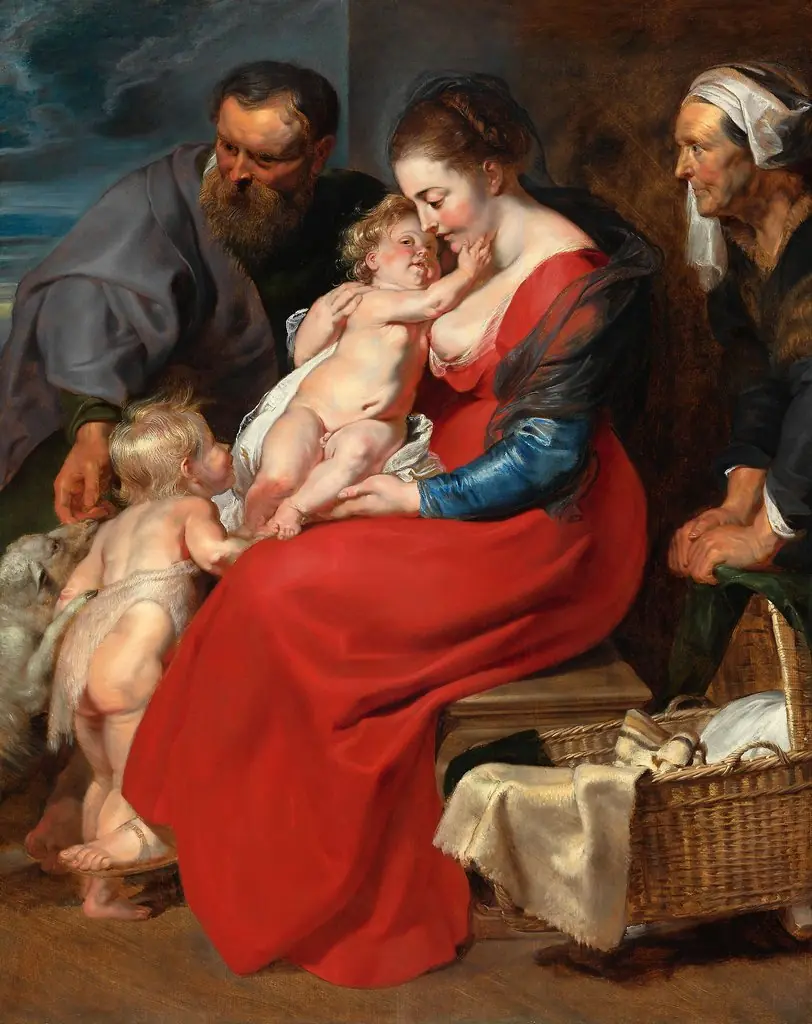 The Holy Family with Saint Elizabeth and Saint John
 The Adoration of the Shepherds
 The Rest on the Flight into Egypt