Artwork
Ecce Homo
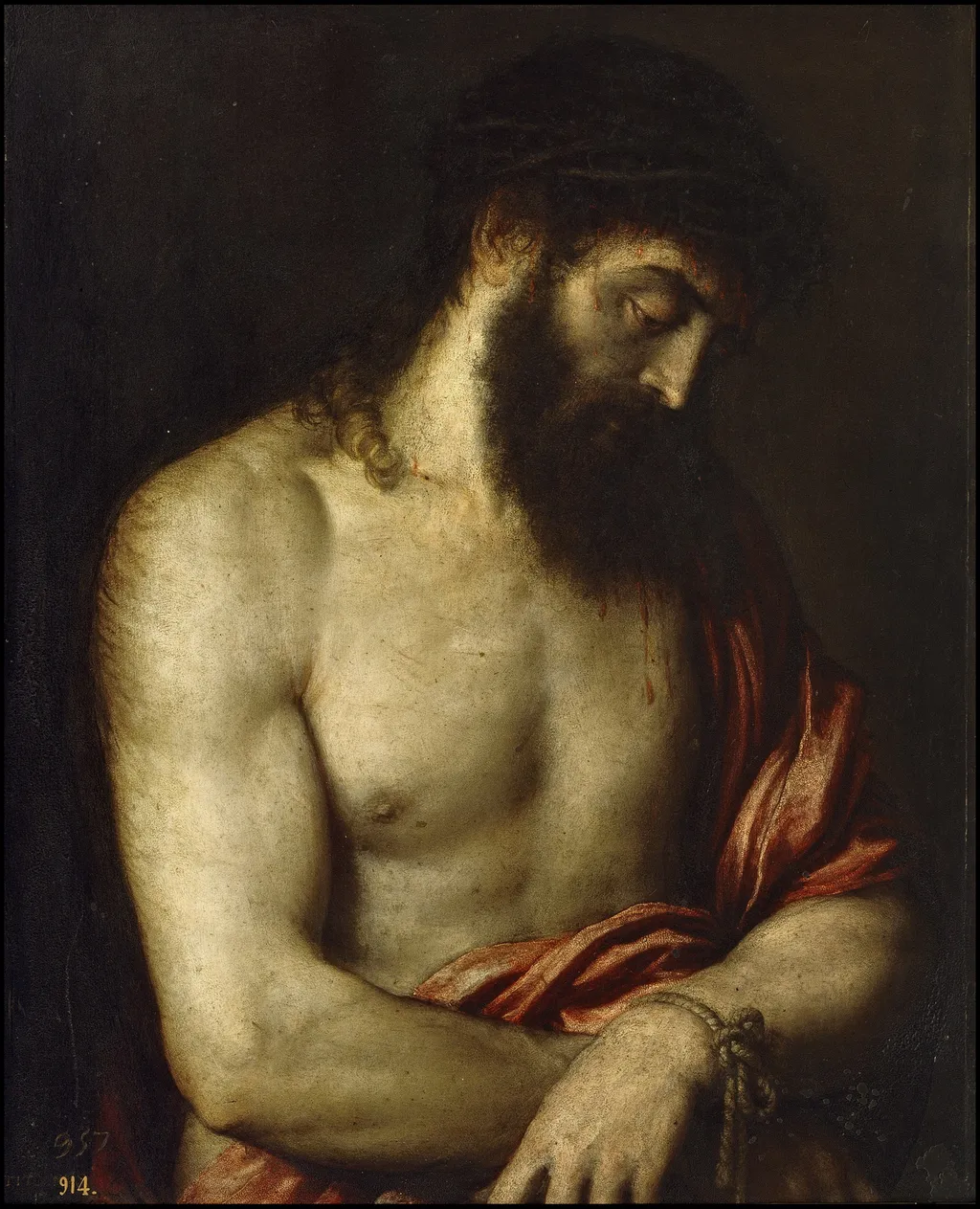
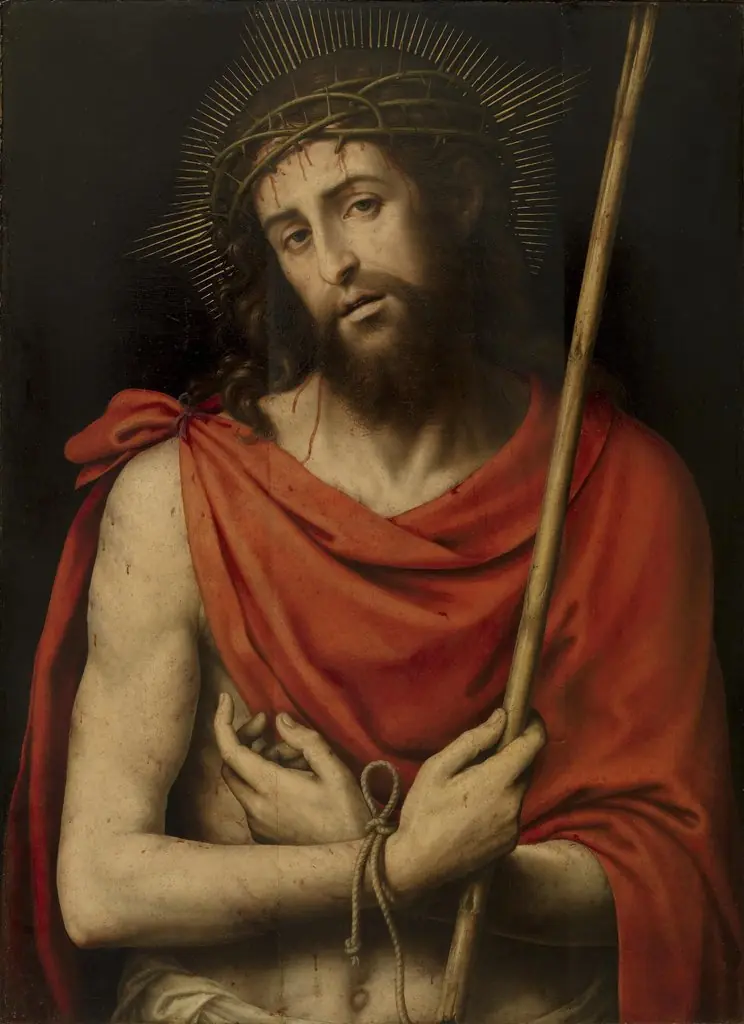
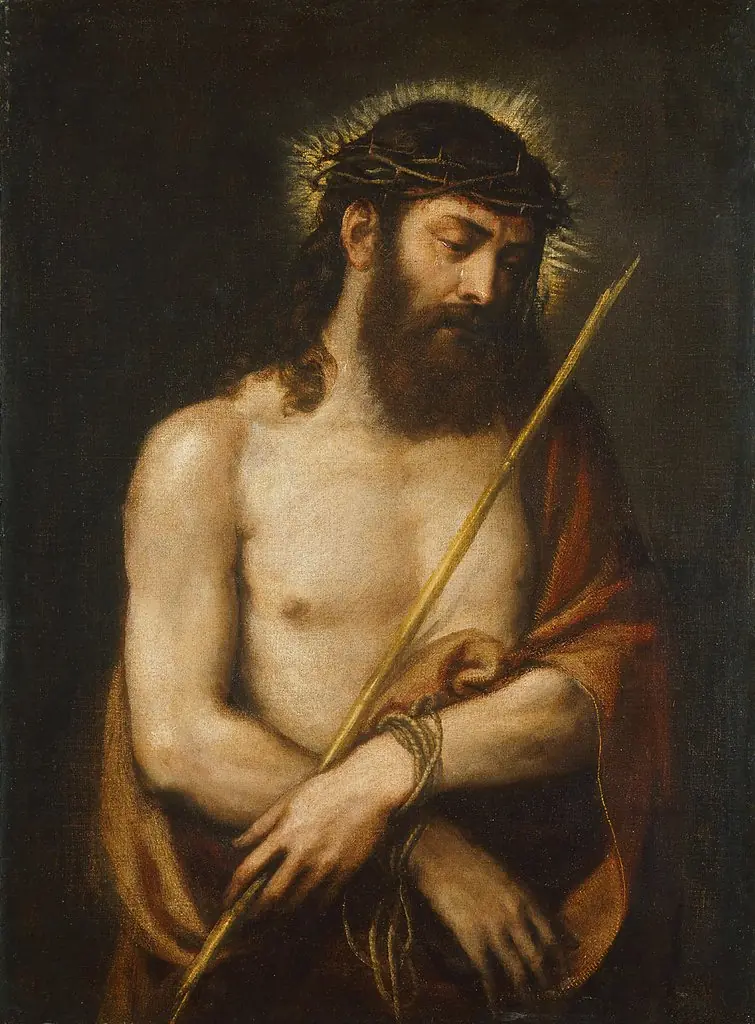
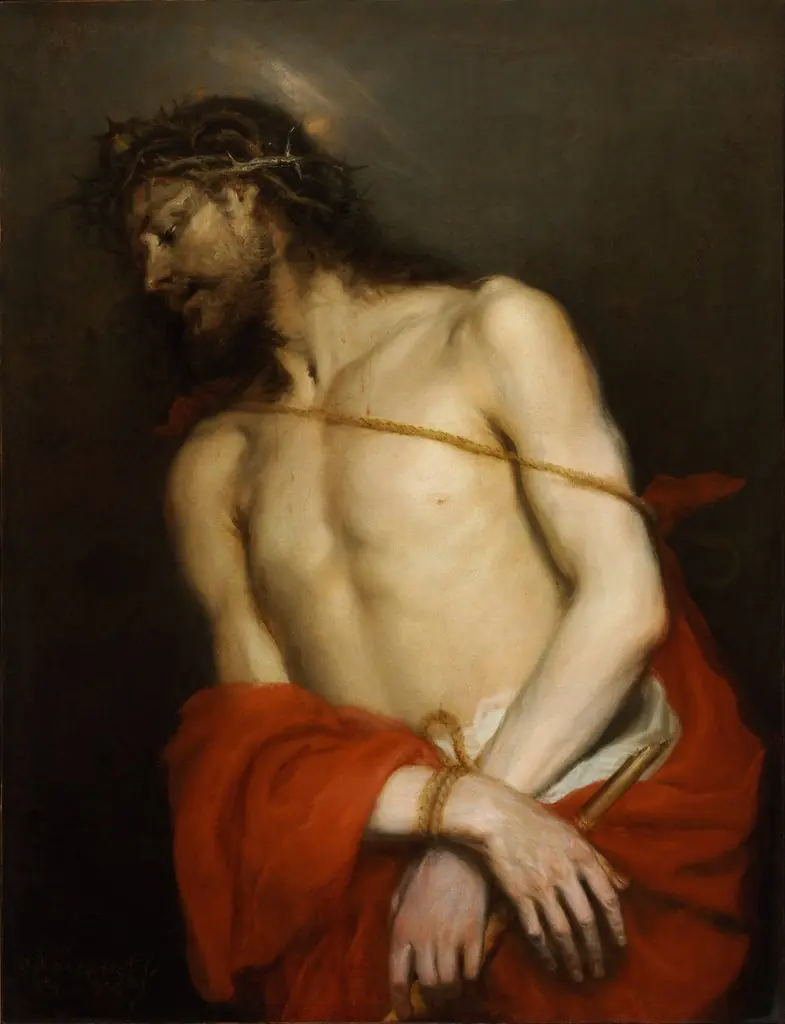
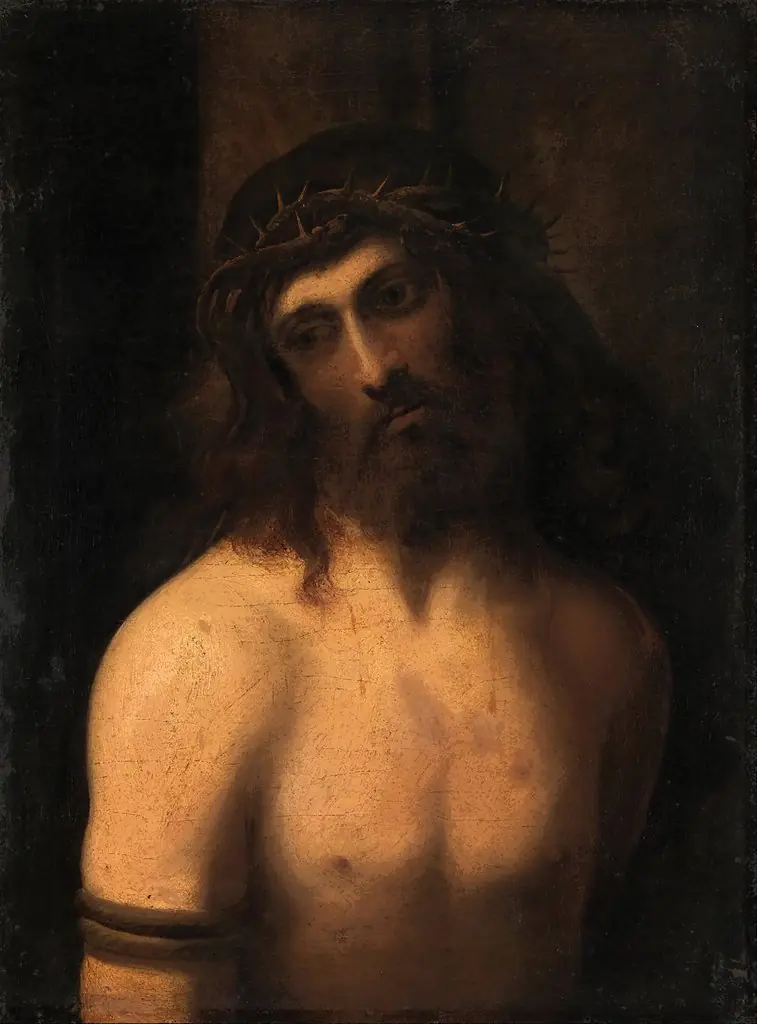
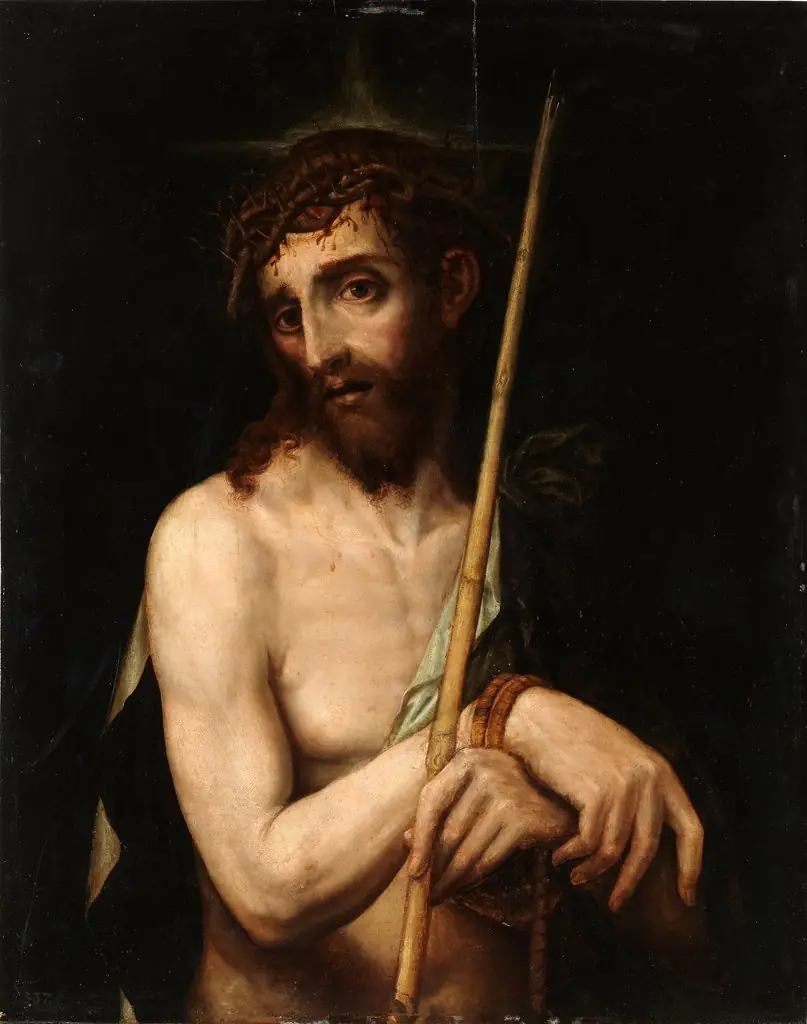
Ecce Homo is an oil painting by the Mannerist artist Titian. It dates from 1546 and is held in the collection of the Museo del Prado.
About this work
Subject & Meaning
The work's main subject is identified as the Ecce Homo scene, with Jesus Christ as the central figure.
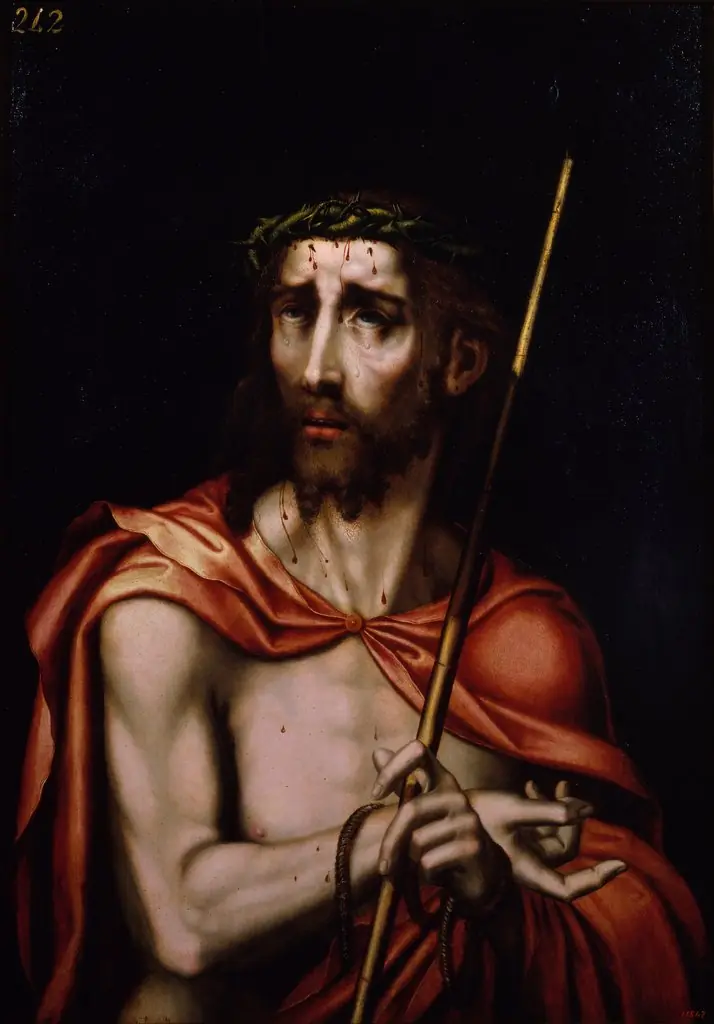
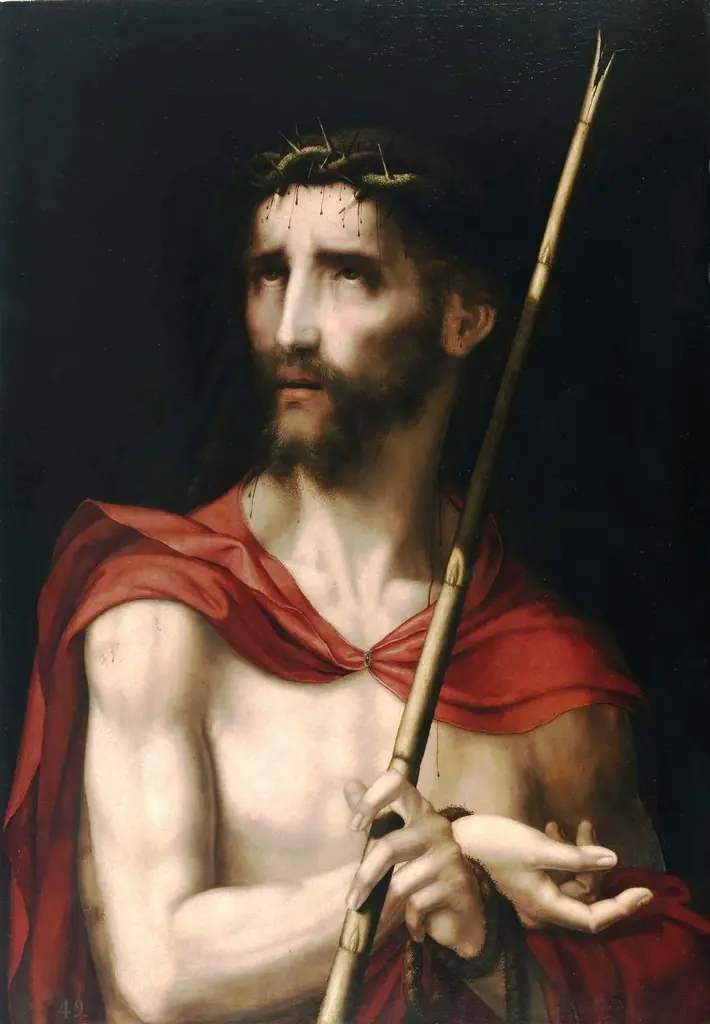
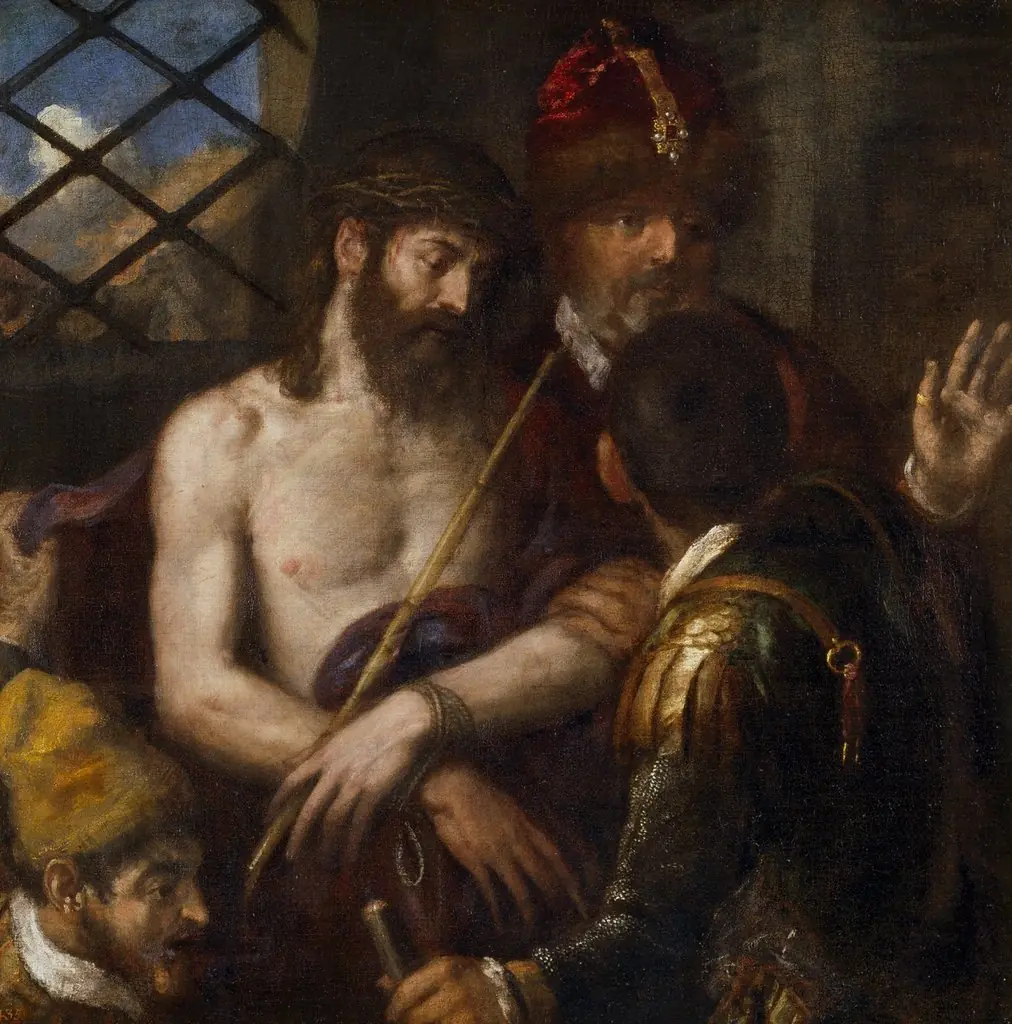
Titian's 1546 slate painting depicts the Ecce Homo, the moment when Pontius Pilate presented the scourged Jesus Christ to a hostile crowd, as recorded in the Gospel of John. The work's main subject is identified as the Ecce Homo scene, with Jesus Christ as the central figure. Classified as religious art, the image belongs to a long devotional tradition in which the episode served as a focal point for meditation on Christ's Passion, suffering, and unjust condemnation.
By concentrating on this particular narrative moment, Titian engaged with one of the most frequently represented episodes of the Passion cycle, inviting viewers to contemplate the theological meaning of Christ's public humiliation and his role as a sacrificial figure.
Technique & Style
Executed in 1546, the work is painted in oil on slate, exploiting the stone’s dark, fine-grained surface to heighten the figure’s presence. Titian’s handling emphasizes luminous modeling and subtle chiaroscuro, using the slate’s cool tonality to frame Christ’s form under a narrow, dramatic light. The composition remains restrained, with the half-length figure centrally placed and the surrounding area left deliberately plain, focusing attention on the poised gesture and pensive expression.
Condition reports note stable preservation of the paint layer with only minor, localized retouching along edges; the slate support shows no significant fractures.
History & Provenance
Titian created the religious painting Ecce Homo in 1546 while working in Rome. Executed in oil paint on a slate support, the work measures 69 cm in height and 56 cm in width. The artwork, which depicts Jesus Christ in the context of the Ecce Homo narrative, eventually entered the collection of the Museo del Prado, where it remains held.
The work is held in the Museo del Prado, Madrid, where it is recorded under inventory number P00421.
It has been exhibited in major Titian retrospectives, notably appearing in the exhibition “Tiziano” held at the Museo del Prado in 2003 (cat. no. 42).
Overview
Created in 1546, Titian’s Ecce Homo is a religious composition rendered on a slate panel. The work belongs to the later phase of the artist’s career, when his approach to color and spatial organization had reached a sophisticated maturity. Currently it is part of the collection of the Museo del Prado in Madrid.
Context
Ecce Homo reflects the Mannerist tendency toward heightened drama and complex composition that followed the High Renaissance. Titian, a leading figure of Venetian painting, applied his knowledge of color and atmospheric effects to a traditional biblical subject, illustrating the evolving tastes of mid‑16th‑century patrons.
Own this work as a print
Artist & collection
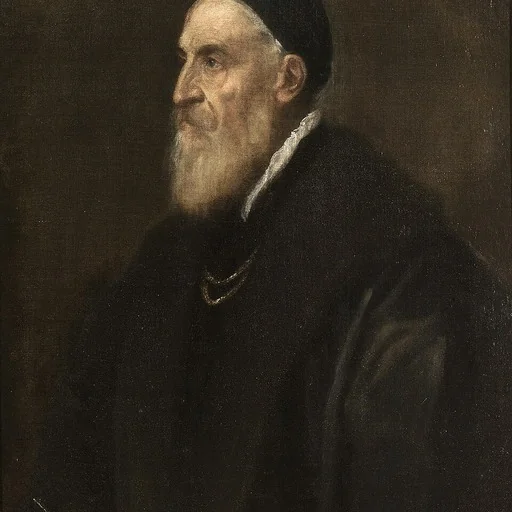
Artist
Tiziano Vecellio (Italian:; c. 1488/1490 – 27 August 1576), Latinized as Titianus, hence known in English as Titian ( TISH-ən), was an Italian Renaissance painter. The most important artist of Renaissance Venetian…