Artwork
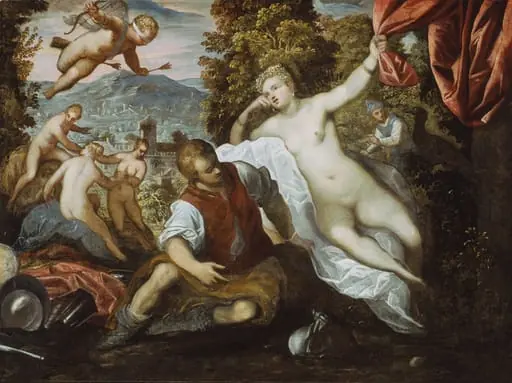
Mars and Venus, surprised by Vulcan
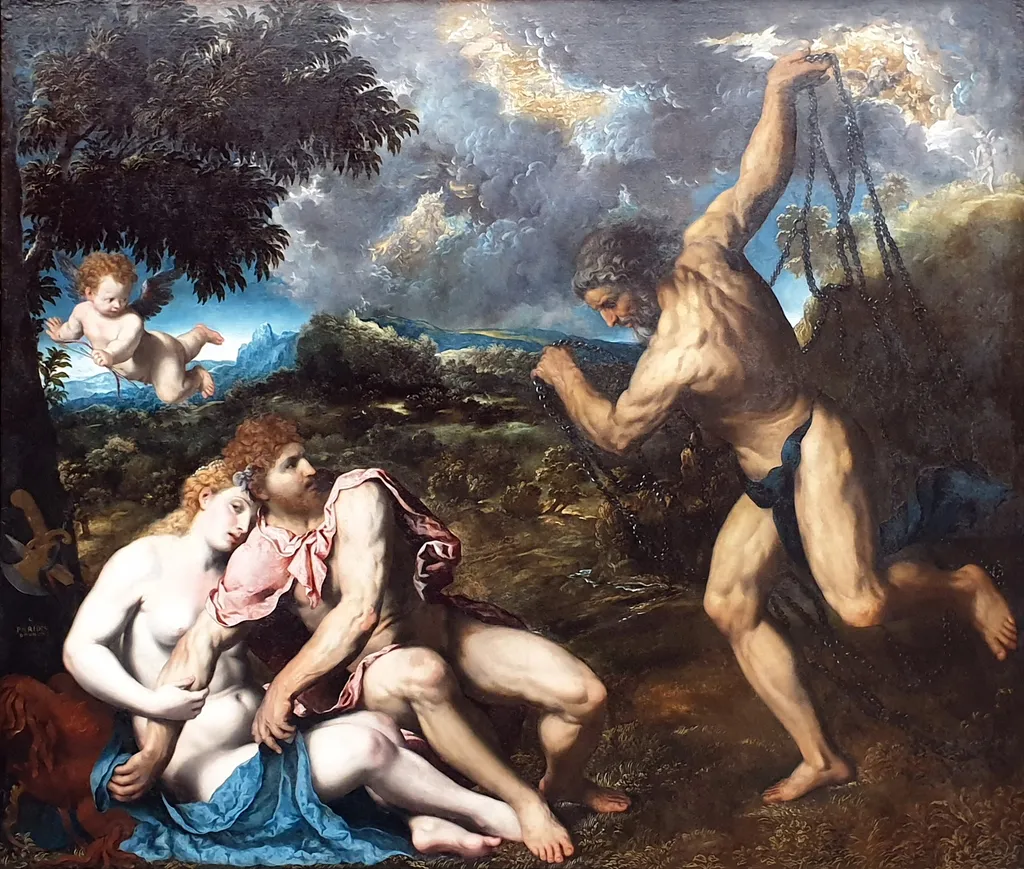
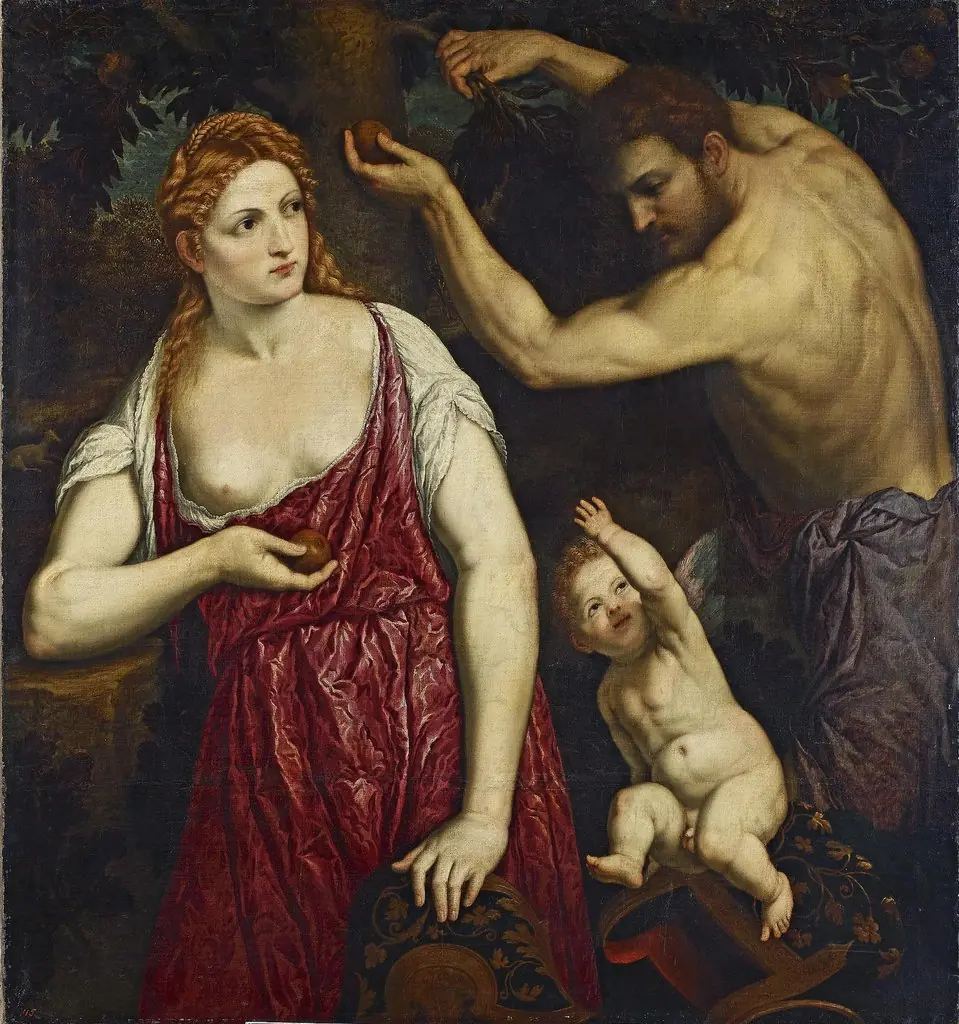
Mars and Venus, surprised by Vulcan is a paint painting by the Early Baroque Italian artist Paris Bordone. It dates from 1525 and is held in the collection of the Gemäldegalerie Berlin.
About this work
Overview
The painting is part of the Gemäldegalerie Berlin’s collection and reflects the enduring interest in mythological narratives among 16th-century Italian patrons.
Painted in 1525 by Paris Bordone, this oil on canvas work illustrates a moment from classical mythology. Bordone, a Venetian artist trained in Titian’s studio, rendered the scene with a distinctive fusion of Mannerist detail and a more earthy, regional aesthetic. The painting is part of the Gemäldegalerie Berlin’s collection and reflects the enduring interest in mythological narratives among 16th-century Italian patrons.
Subject & Meaning
The scene captures Vulcan, the god of fire and forge, discovering his wife Venus in the arms of Mars, the god of war. The moment is one of exposure and humiliation, as Vulcan holds chains, symbols of entrapment, while the lovers remain entwined, unaware or indifferent. The presence of a cherub above suggests the playful or ironic tone often associated with such mythological vignettes, underscoring the tension between desire and consequence.
Technique & Style
Bordone employs rich, saturated colors typical of Venetian painting, with soft transitions between flesh tones and fabric. The figures are rendered with sculptural volume, yet the composition lacks the idealized harmony of High Renaissance models. The background, with its distant landscape and hazy sky, recedes subtly, drawing focus to the central trio.
The handling of drapery and musculature reveals a blend of Titian’s influence and Bordone’s own more direct, less refined approach.
History & Provenance
The painting entered the Gemäldegalerie Berlin’s collection in the 19th century, having previously been held in private European collections. Its attribution to Bordone has been consistently supported by stylistic analysis and documentary evidence from the early 1500s. While not widely exhibited in its time, it was recognized by later collectors for its vivid narrative and distinctive Venetian character.
Context
In early 16th-century Venice, mythological subjects were favored by aristocratic patrons seeking to display classical learning and refined taste. Bordone’s interpretation diverges from the grandeur of Titian’s mythologies, offering instead a more intimate, almost domestic portrayal. This shift reflects broader trends in Mannerism, where emotional nuance and narrative tension took precedence over classical balance.
Legacy
Though less celebrated than his contemporaries, Bordone’s work contributed to the evolution of Venetian narrative painting. His handling of mythological themes influenced regional artists who favored expressive immediacy over idealization. Mars and Venus, Surprised by Vulcan remains a key example of how classical stories were reimagined in the decades following the High Renaissance, bridging stylistic transitions in Italian art.
Own this work as a print
Artist & collection

Artist
Paris Bordone (Paris Paschalinus Bordone; 5 July 1500 – 19 January 1571) was an Italian painter of the Venetian Renaissance who, despite training with Titian, maintained a strand of Mannerist complexity and provincial vigor.

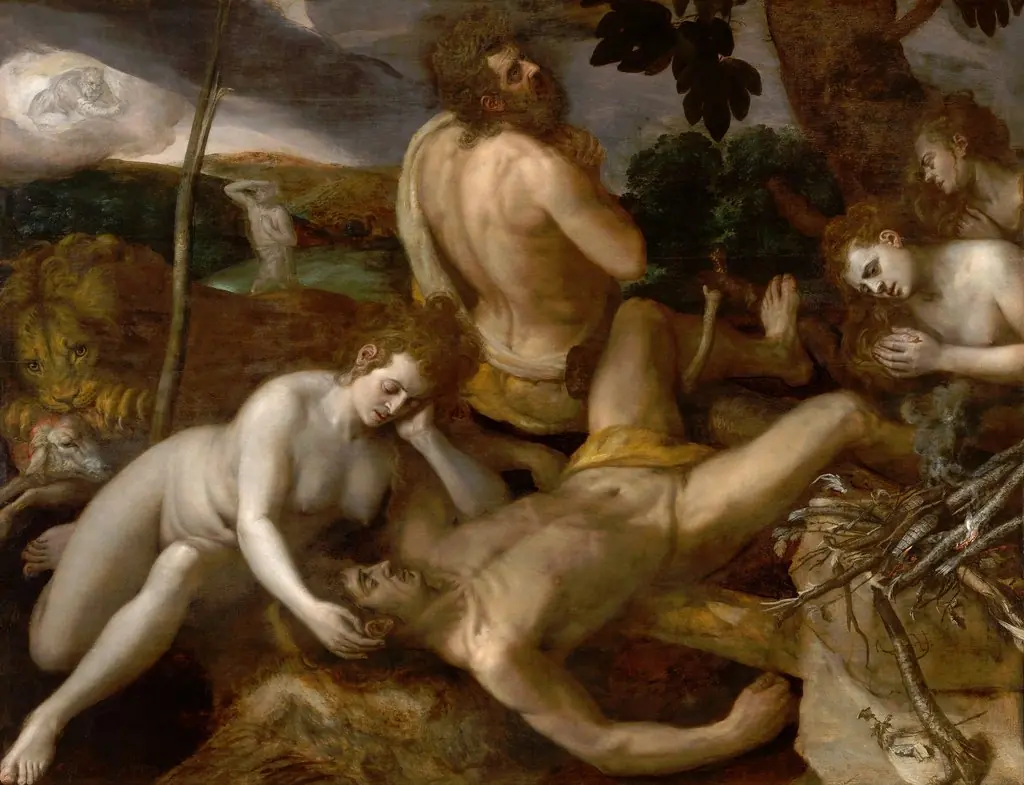 Adam and Eve grieve over the Dead Body of Abel
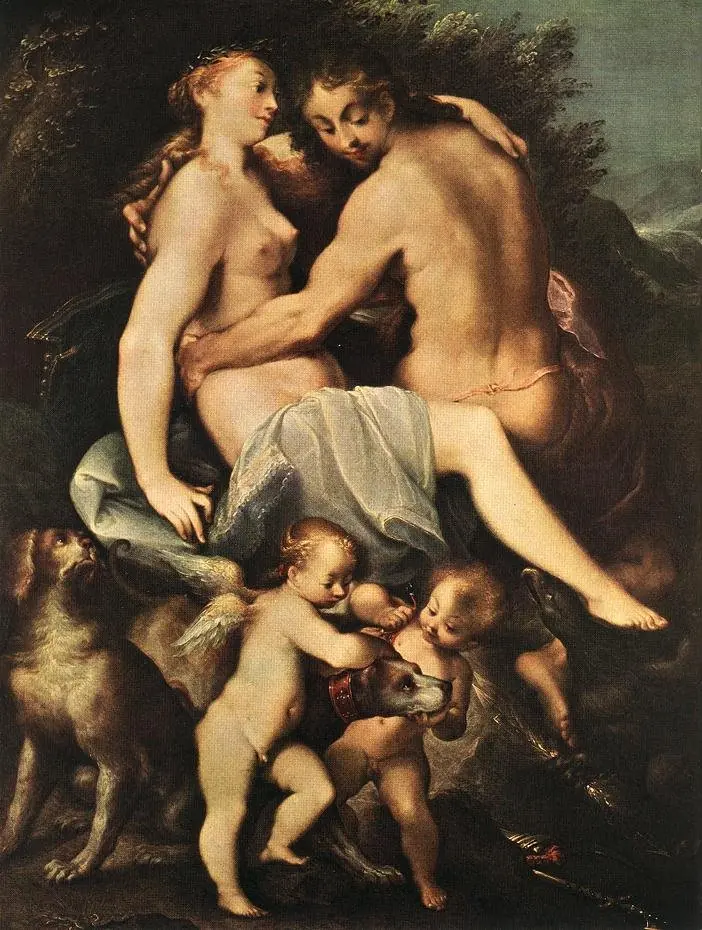 Zeus and Kallisto
 The apotheosis of Emperor Leopold I
 Venus and Adonis
 Mercury Killing Argus
 Meleager presents the head of the Calydonian boar to Atalanta
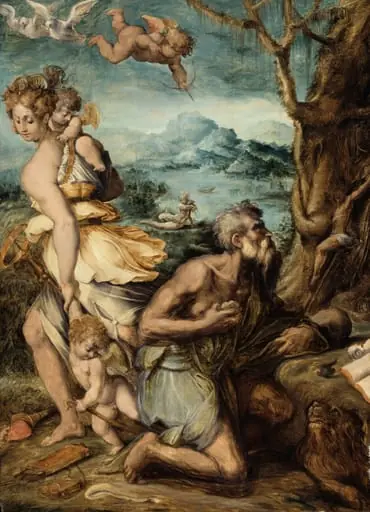 The Temptation of Saint Jerome
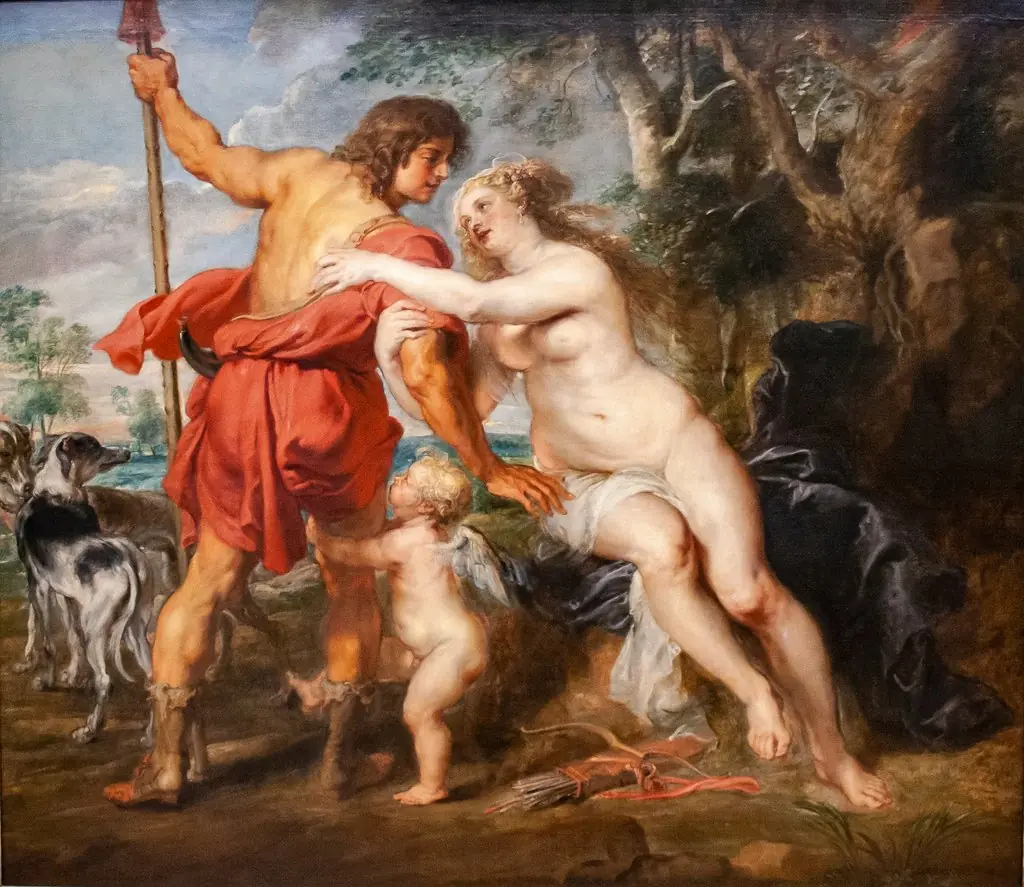 Venus and Adonis
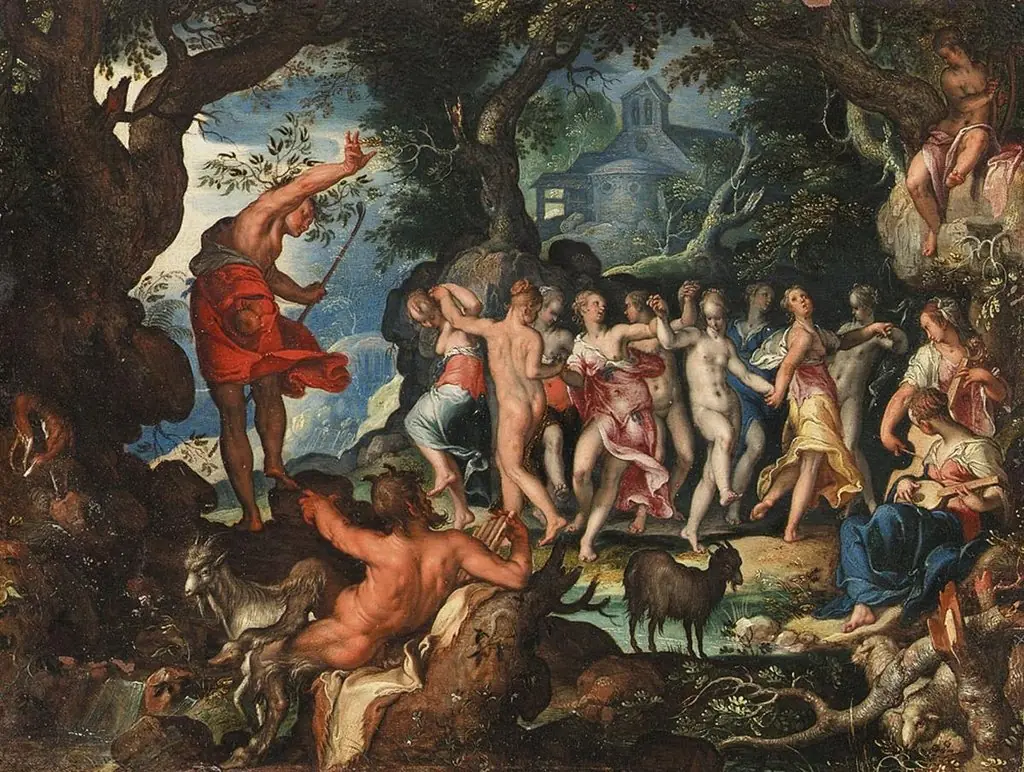 The Apulian Shepherd
 Pan en Syrinx
 Venus and Mars with Cupid and the Three Graces in a Landscape
- Venus and Mars