Artwork
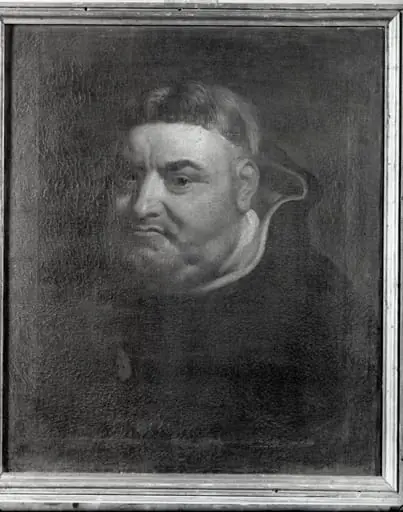
A Monk
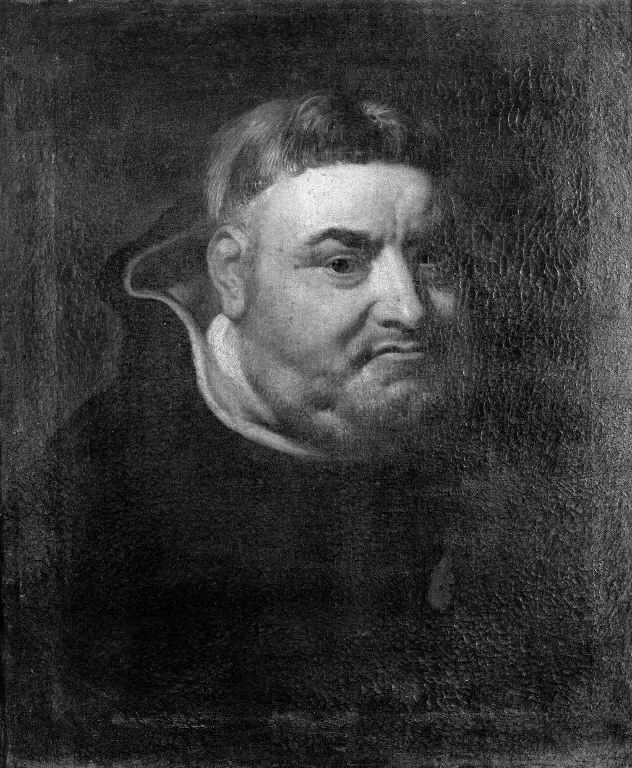
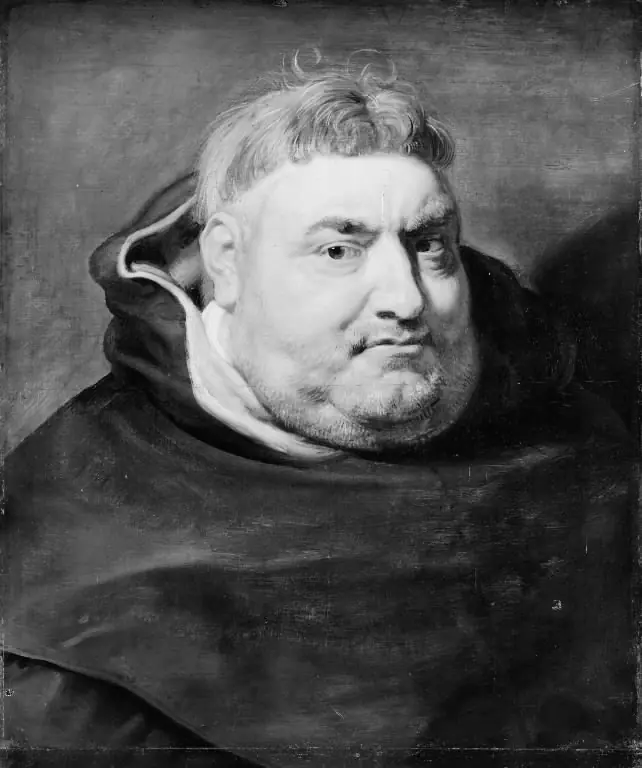
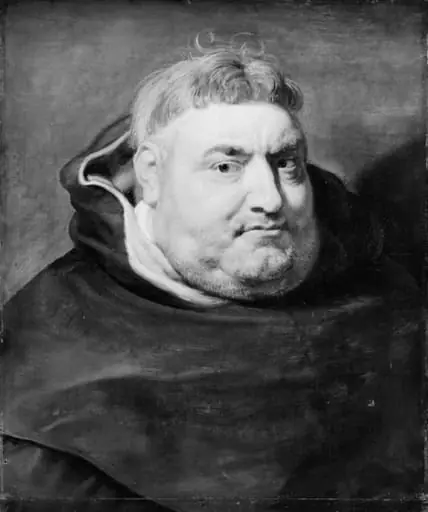
A Monk is an oil painting by the Flemish Baroque painting artist Peter Paul Rubens. It is held in the collection of the Statens Museum for Kunst.
About this work
Overview
A Monk is an oil-on-canvas portrait by Peter Paul Rubens, dated 1683, now held in the Statens Museum for Kunst in Copenhagen.
A Monk is an oil-on-canvas portrait by Peter Paul Rubens, dated 1683, now held in the Statens Museum for Kunst in Copenhagen. Measuring 565 by 475 millimetres, the painting presents a bust-length depiction of a male religious figure, rendered in the restrained palette and dramatic illumination characteristic of Baroque tenebrism. Though modest in scale and ostensibly simple in composition, the work exemplifies Rubens's capacity for psychological penetration and his engagement with the spiritual currents of the Catholic Reformation. The painting belongs to a period when Rubens, as a committed Catholic in the Southern Netherlands, produced numerous works supporting the Church's devotional and pastoral mission.
Subject & Meaning
The subject is a Capuchin monk, identifiable by his simple dark habit and the white collar that curves around his neck. The Capuchins were a reform branch of the Franciscan order, founded in the sixteenth century with emphasis on poverty, austerity, preaching, and direct contact with ordinary people, making them significant figures in the Catholic Reformation. Rubens portrays the monk without idealization: his face is weathered, with heavy brows, a broad nose, full lips, and a receding hairline, the skin showing wrinkles and subtle scarring that speak to lived experience. A small sunburst-like emblem on the chest likely refers to a devotional symbol or specific confraternity affiliation, perhaps alluding to the Divine Sun or Sacred Heart. The composition strips away all narrative or environmental context, presenting the monk against an undefined dark void. This absence of setting focuses attention entirely on the figure's presence, creating an intimate encounter between viewer and subject that mirrors the Capuchin vocation of listening, counseling, and prayer. The gaze is direct yet slightly averted, suggesting watchfulness, gentleness, and melancholy rather than confrontation, embodying the tension between worldly experience and spiritual detachment.
Technique & Style
Rubens employs oil on canvas with a severely restricted palette of blacks, grays, and browns, the pale skin and white collar providing the only luminosity against enveloping darkness. Light falls from the left, illuminating the left side of the face while the right dissolves into shadow, a pronounced chiaroscuro that models the three-dimensional structure of the head and enhances the psychological mood. The brushwork varies across the surface: relatively smooth in the face, with more textured handling in the background and garments. The paint surface shows pronounced craquelure throughout, particularly visible in the darker passages. The curator of artera.ae notes the thick application of paint, or impasto, which creates a tactile surface contrasting with the smooth gradations of light on the face. The monk's habit is painted with broad, economical strokes, the fabric absorbing rather than reflecting light, becoming a dark mass that throws the illuminated face into relief. The figure fills nearly the entire canvas space, the close cropping creating immediacy and conversational proximity. This formal restraint, unusual for an artist celebrated for exuberant color and dynamic movement, demonstrates Rubens's mastery of tonal modulation and his ability to achieve dramatic effect through limitation rather than abundance.
History & Provenance
The painting is dated 1683 according to the corpus record, though this presents a chronological difficulty given that Rubens died in 1640. The work is currently located at the Statens Museum for Kunst in Copenhagen, having entered the collection through standard museum acquisition channels. Specific details of the commission, original patron, and early ownership chain are not recorded in the available sources. The painting's exhibition history likewise remains undocumented in the provided materials. The attribution to Rubens has been accepted by the holding institution, and the work is catalogued under his name in their collection.
Context
Rubens worked in the Southern Netherlands during a period of intense religious conflict, and as a committed Catholic he frequently collaborated with religious orders, creating altarpieces and devotional images that supported the Counter-Reformation's aim of engaging the faithful emotionally and intellectually. His large studio in Antwerp functioned as a production hub for paintings popular with nobility and collectors throughout Europe, employing many artists and apprentices to accomplish a prolific volume of work. Within this context, a portrait of a Capuchin monk aligns with Rubens's broader engagement with the renewed spiritual fervor of his age. The Capuchins' emphasis on radical simplicity and pastoral activism made them apt subjects for an artist whose work often moved between courtly splendor and devotional directness. The painting has been discussed in art historical literature primarily through online analytical platforms rather than in extensive monographic scholarship, with attention focusing on its psychological intensity and its value as a character study within Rubens's portraiture. The work stands in relation to other Rubens portraits of religious figures, including his Saint Felix of Cantalice, another Capuchin friar portrait featuring symbolic attributes of charity and poverty.
Legacy
The painting's cultural afterlife has been shaped by its function as an accessible example of Rubens's portraiture for contemporary audiences encountering his work through digital platforms and museum collections. It has served as a focal point for discussions of Baroque tenebrism, psychological portraiture, and the representation of religious vocation in early modern European art. The work's emphasis on humble subject matter, stripped of the mythological grandeur or courtly opulence that dominate much of Rubens's reputation, has allowed it to function as a counterpoint to conventional understandings of his oeuvre. In museum contexts, it demonstrates the breadth of Rubens's engagement across social and spiritual strata, from aristocratic patrons to ascetic religious. The painting continues to be reproduced and analyzed in online art educational resources, where its apparent simplicity makes it a useful entry point for discussing Baroque techniques of light, texture, and psychological presence. Its residence in the Statens Museum for Kunst ensures its availability to scholars and publics in northern Europe, contributing to the international distribution of Rubens's work beyond the concentrations in Belgium, Spain, and Italy.
Artist & collection
Artist
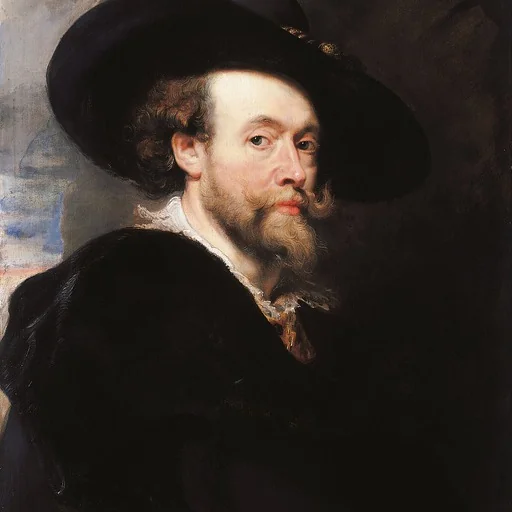
Sir Peter Paul Rubens ( ROO-bənz; Dutch:; 28 June 1577 – 30 May 1640) was a Flemish artist and diplomat.