Artwork
Mars, Venus and Amor
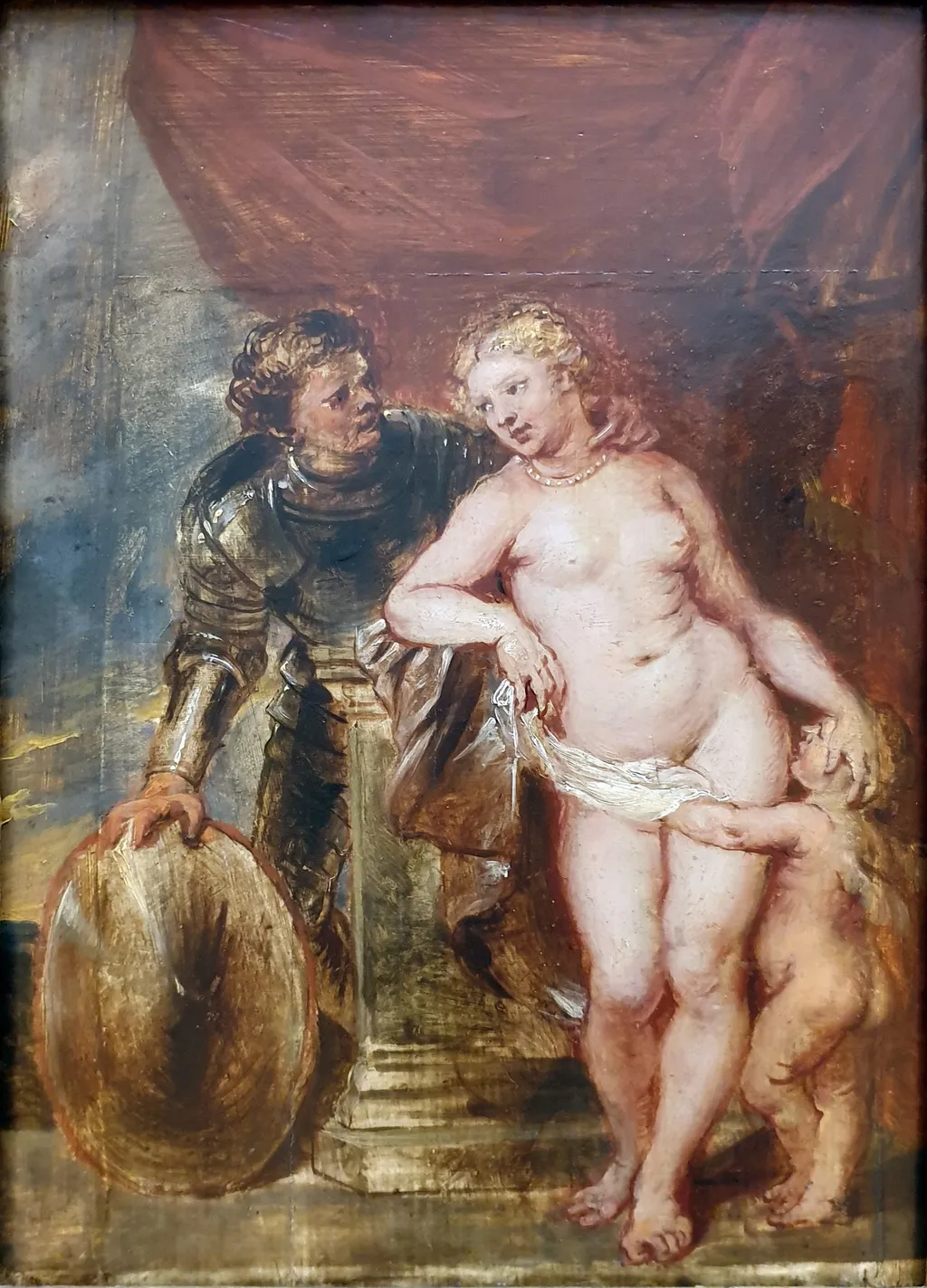
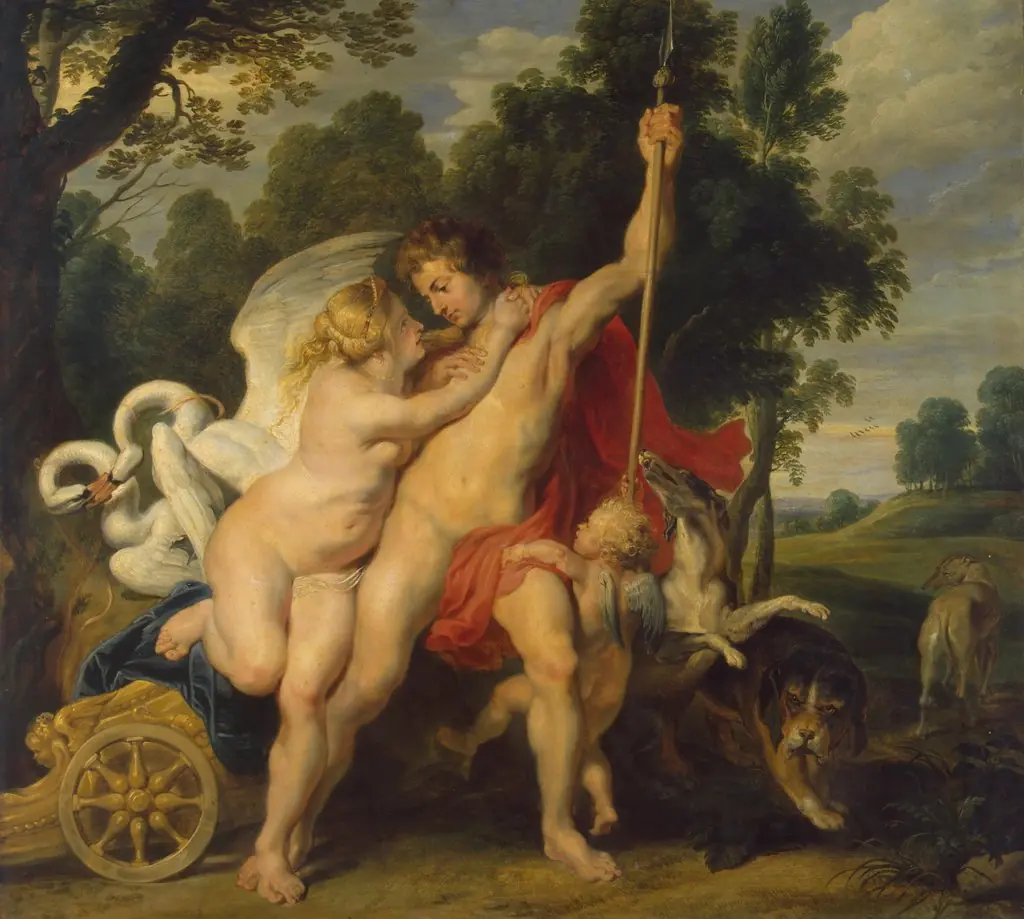
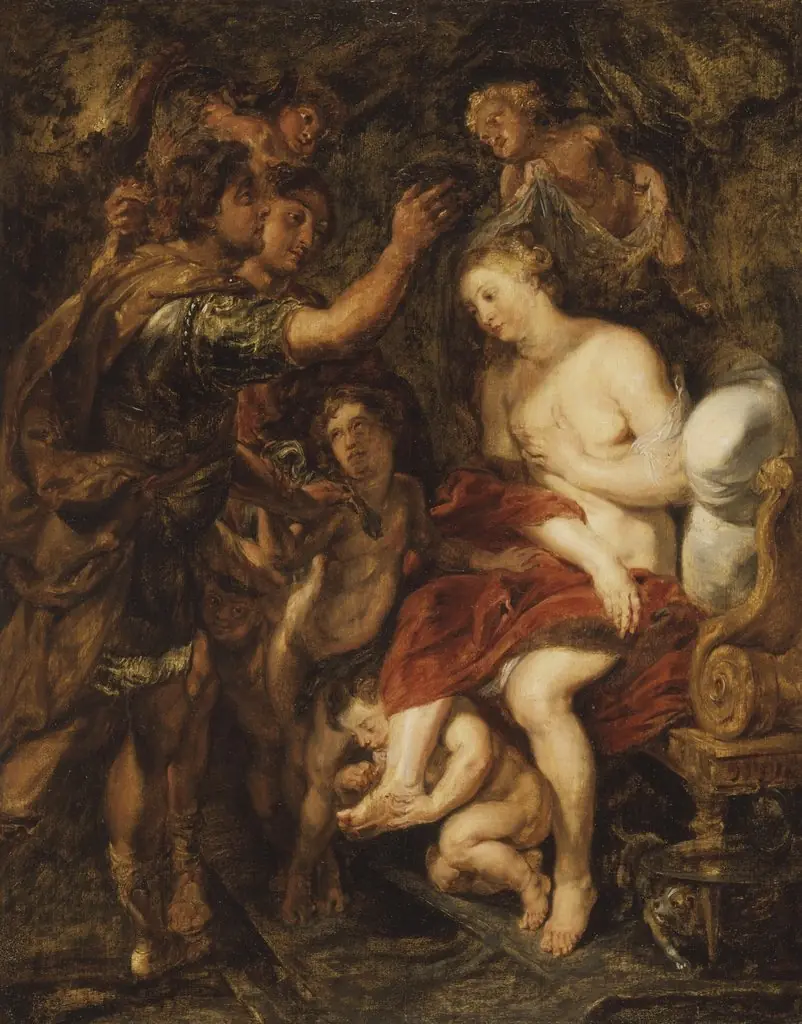
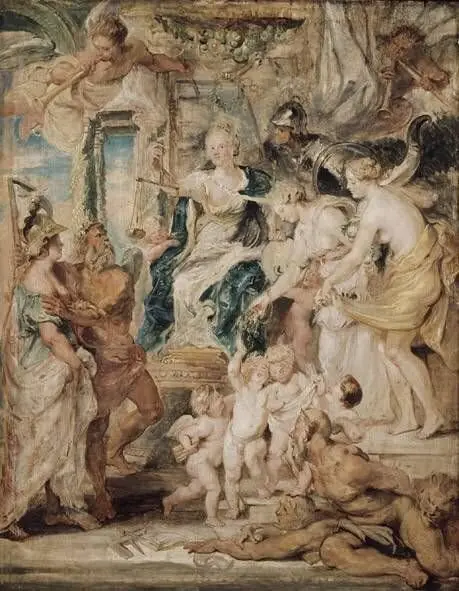
Mars, Venus and Amor is a paint painting by the Flemish Baroque painting artist Peter Paul Rubens. It dates from 1637 and is held in the collection of the Gemäldegalerie Berlin.
About this work
Subject & Meaning
Mars, the god of war, and Venus, the goddess of love, are shown together with their son Cupid, framing the union of martial power and erotic desire.
The painting depicts the mythological triad of Mars, Venus, and Cupid (Amor), presenting a classical love-and-war theme rooted in Greco-Roman myth. Mars, the god of war, and Venus, the goddess of love, are shown together with their son Cupid, framing the union of martial power and erotic desire. Such groupings were a recurring subject in Peter Paul Rubens's mythological output, where the divine couple embodied both sensual allure and the disruptive force of passion.
The intimate scale of the panel, 34.2 by 26.1 centimeters, suits the private, devotional character typical of small-format mythologies, inviting close contemplation of the allegorical interplay between love, conflict, and their offspring.
Technique & Style
The work is executed in oil paint on wooden panel. Its dimensions are 34.2 cm in height and 26.1 cm in width. The composition depicts the mythological figures Mars, Venus and Cupid in a tightly arranged, dynamic grouping that emphasizes sensual interaction and chiaroscuro modeling characteristic of Rubens' mature style.
History & Provenance
Painted in 1637, Rubens’s Mars, Venus and Amor is a mythological panel now in the Gemäldegalerie, Berlin.
The work entered the Berlin collection as part of the museum’s holdings by at least the late nineteenth century, where it remains today.
Overview
Mars, Venus and Amor is a 1637 painting by Peter Paul Rubens, a prominent Flemish Baroque artist. Executed in oil paint, the work belongs to the mythological genre, featuring the Roman deities Mars, Venus, and Cupid.
Context
As a product of the Flemish Baroque, Mars, Venus and Amor reflects Rubens' ability to merge classical themes with the intense emotional and visual drama required by the Counter-Reformation. This blend was characteristic of his diplomatic and artistic approach.
Legacy
While the painting's direct influence is not broadly highlighted in the provided context, it contributes to Rubens' reputation for masterful use of light, color, and composition in exploring mythological subjects, influencing subsequent artistic explorations of classical themes in a Baroque context.
Own this work as a print
Artist & collection
Artist
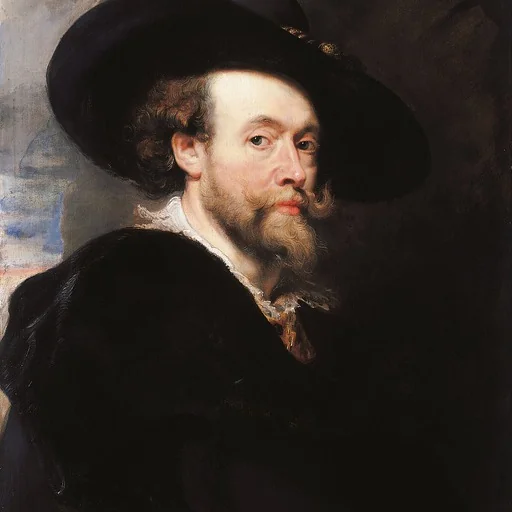
Sir Peter Paul Rubens ( ROO-bənz; Dutch:; 28 June 1577 – 30 May 1640) was a Flemish artist and diplomat.