Artwork
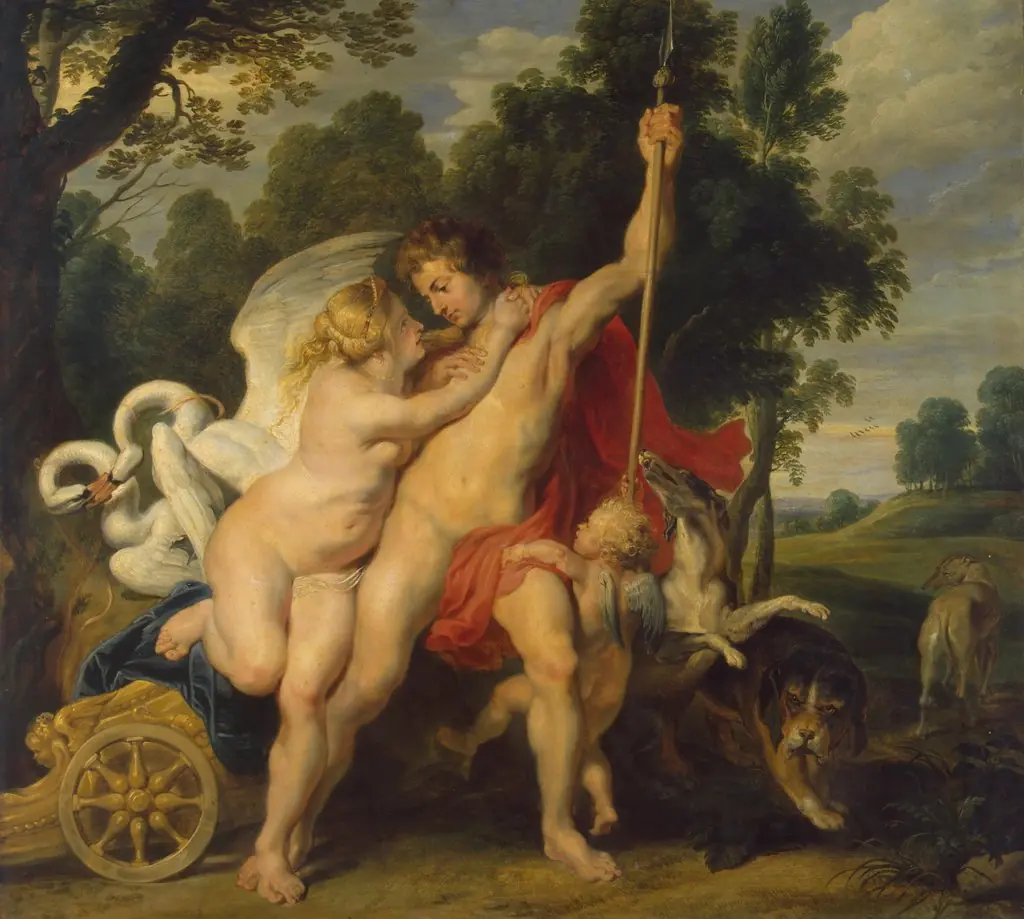
Venus trying to prevent Adonis from going hunting
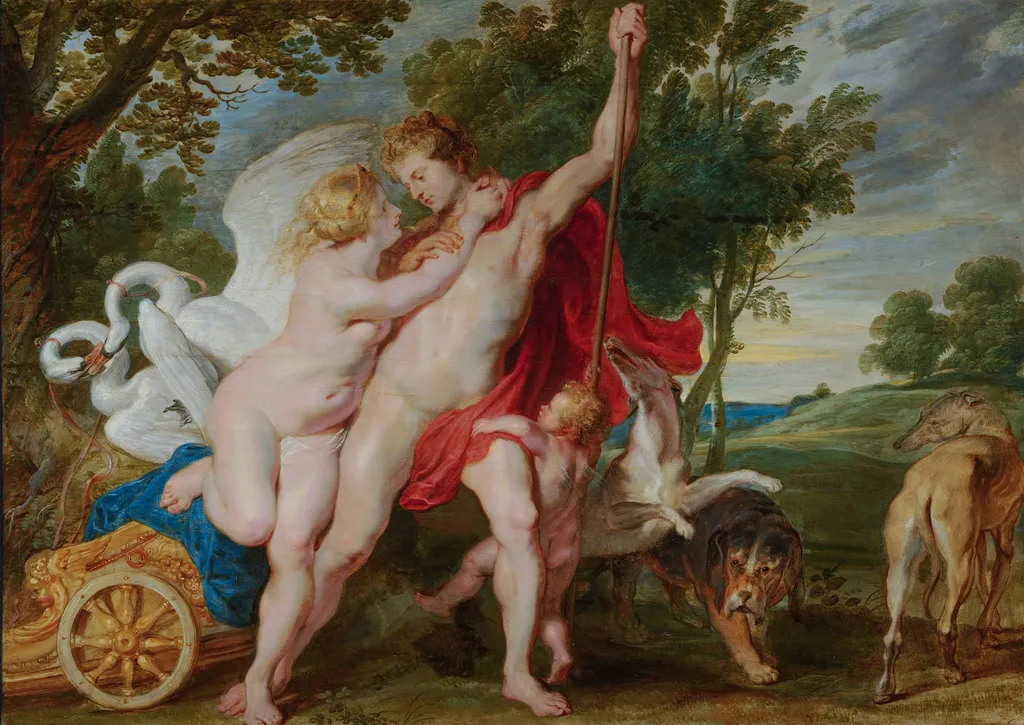
Venus trying to prevent Adonis from going hunting is an oil painting by the Flemish Baroque painting artist Peter Paul Rubens. It dates from 1611 and is held in the collection of the Mauritshuis.
About this work
Subject & Meaning
Symbolically, the scene underscores the tension between love and mortality, for Adonis's eventual death in the hunt is foretold.
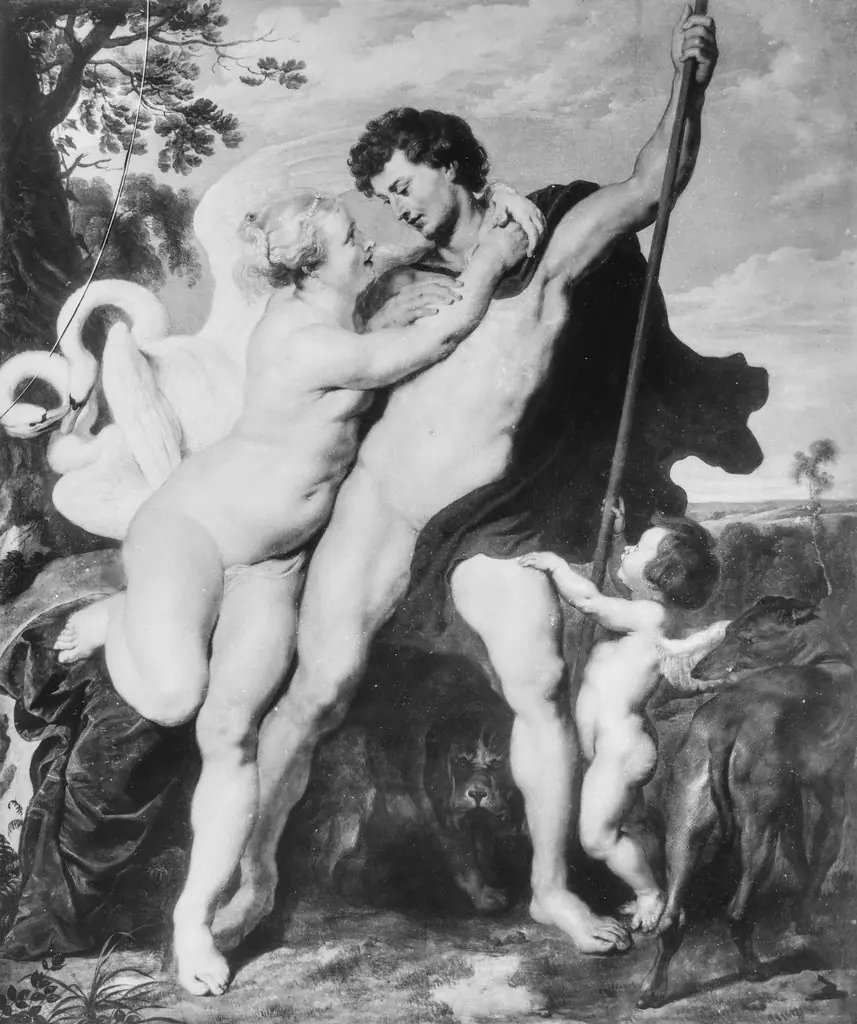
The painting depicts the classical myth in which Venus (Aphrodite) attempts to dissuade her lover Adonis from joining a hunt, a narrative drawn from Ovid's Metamorphoses. Rubens shows Venus seated beside Adonis, her right hand grasping his arm in a gesture of restraint while her left rests on his shoulder, conveying both affection and urgency. Cupid (Eros), her son, clings to her side, reinforcing the theme of maternal intervention.
Symbolically, the scene underscores the tension between love and mortality, for Adonis's eventual death in the hunt is foretold. The presence of Venus's swan-drawn chariot and the tranquil rural setting contrast with the implied peril of the chase, emphasizing her futile effort to preserve life and happiness.
Technique & Style
Executed in oil paint on a vertically grained oak panel, the composition blends fluid brushwork with precise modeling to render mythological figures in a warm, luminous palette. Rubens employs loose, energetic handling in the foliage and drapery, contrasting with the tighter finish on figures such as Venus and Adonis. The panel support is prepared with a light ground, allowing the underlayers and glazes to contribute to the overall glow and depth.
Figures are arranged in a dynamic diagonal that guides the viewer's eye from the seated Venus to the departing Adonis, while Cupid's intervention and attendant swans add narrative emphasis.
History & Provenance
Peter Paul Rubens created the oil-on-panel painting Venus trying to prevent Adonis from going hunting in 1611. The work depicts the mythological couple from Ovid's Metamorphoses, capturing the moment Venus attempts to dissuade Adonis from hunting. The painting measures 59 cm in height and 81 cm in width.
It entered the collection of Willem V, Prince of Orange-Nassau, before becoming part of the holdings of the Mauritshuis in The Hague.
Overview
Peter Paul Rubens painted this oil work in 1611, placing it within the Flemish Baroque period. The canvas captures a dramatic encounter from classical mythology, featuring Venus, the god of love, attempting to restrain the youthful Adonis as he prepares to depart for a hunt. The composition is held by the Mauritshuis museum in The Hague.
Context
Rubens frequently revisited mythological subjects, using them to explore human passions and divine intervention. This work aligns with his broader interest in classical literature and the visual language of antiquity, where chariots and swans often symbolized love and the fleeting nature of life.
Own this work as a print
Artist & collection
Artist
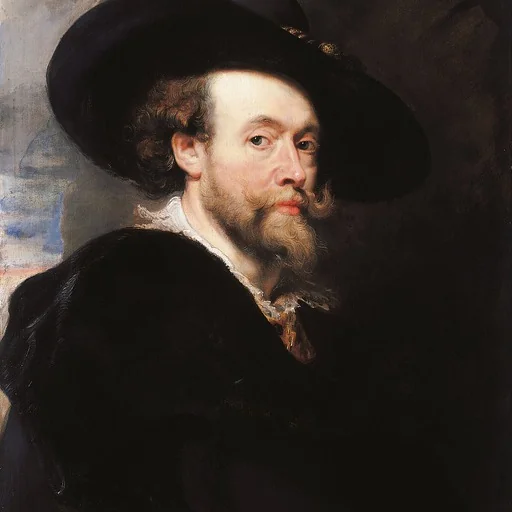
Sir Peter Paul Rubens ( ROO-bənz; Dutch:; 28 June 1577 – 30 May 1640) was a Flemish artist and diplomat.