Artwork
Hercules defeats King Geryon
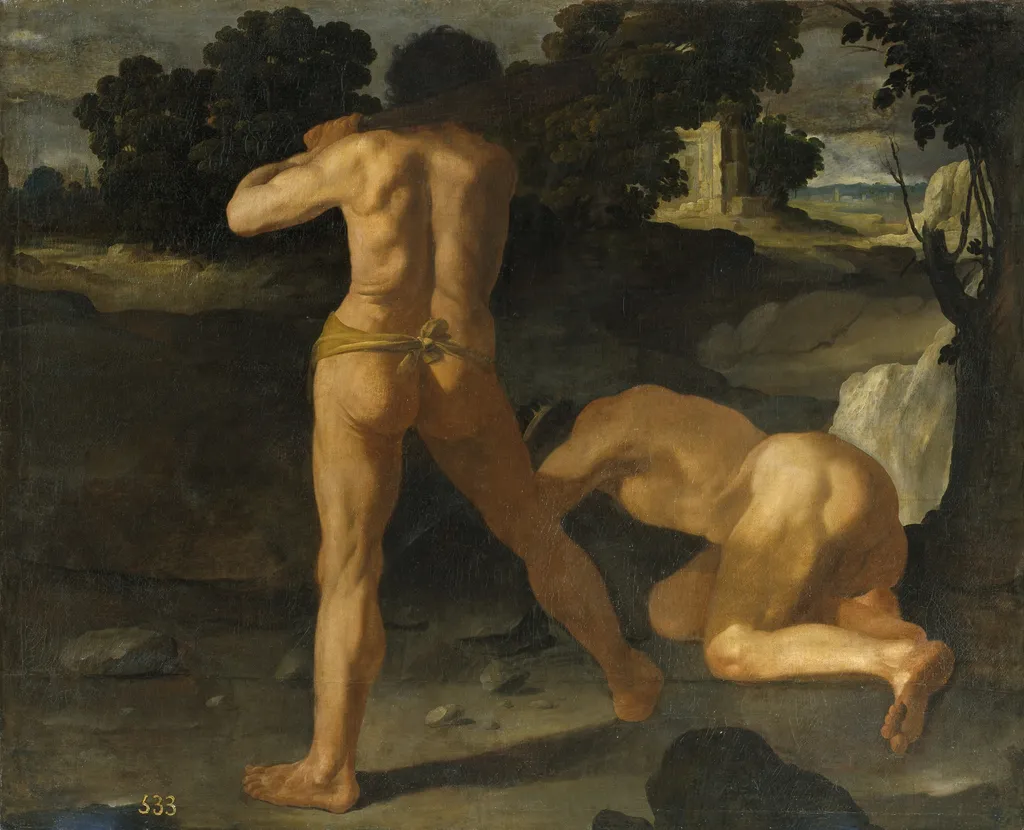
Hercules defeats King Geryon is an oil painting by the Baroque artist Francisco de Zurbarán. It dates from 1634 and is held in the collection of the Museo del Prado.
About this work
Subject & Meaning
The landscape integrates classical ruins and a lighthouse motif, suggesting Hercules’ mythic role in marking the Strait of Gibraltar.
The painting depicts the tenth labor of Hercules, in which he defeats King Geryon to steal his cattle. Zurbarán portrays Geryon as a single-headed monarch crowned and lying prone, his body foreshortened and one arm visible, while Hercules, shown from behind, raises his club in a decisive strike. The scene avoids idealization, emphasizing the figures’ mature, muscular forms and the raw violence of the encounter.
The landscape integrates classical ruins and a lighthouse motif, suggesting Hercules’ mythic role in marking the Strait of Gibraltar. This architectural element, rare in the series, may symbolize guidance and order emerging from mythic strife, aligning with the broader allegorical program of the Buen Retiro cycle.
Technique & Style
Hercules defeats King Geryon is an oil painting on canvas, measuring 136 by 167 cm, executed by Francisco de Zurbarán around 1634 and restored in 1967. The work belongs to a series of ten canvases depicting the Labours of Hercules and is catalogued as inventory number P001242 at the Museo del Prado.
Stylistically, the composition is anchored by two unidealized nude figures studied from nature, whose mature bodies, with folds at the waist revealing their age, lend the violent encounter a deliberate roughness. Geryon is shown fallen on the ground in a bold foreshortening, with a single crowned head and one visible arm, while Hercules stands with his back to the viewer, gripping his club aloft with both hands. The handling of the figures is sober and sculptural, set against a softer brown-green landscape that is more harmonious than in most of the other canvases in the series.
In the background at the right appear distant ruins and the only classical architecture in the cycle, possibly alluding to the lighthouse legend associated with Hercules at Gibraltar.
History & Provenance
Francisco de Zurbarán executed this oil on canvas around 1634 as part of a ten-painting series depicting the Labors of Hercules. The work was originally commissioned for the Salón de Reinos at the Palacio del Buen Retiro in Madrid, where it was recorded in a 1701 inventory describing the scene of Hercules killing Geryon. Following its initial placement, the painting was transferred to the Palacio de Buenavista, where it remained between approximately 1810 and 1819.
In 1819, the canvas entered the collection of the Real Museo de Pintura y Escultura, now known as the Museo del Prado, where it has been housed since. The piece underwent restoration in 1967 and is currently cataloged under inventory number P001242.
The painting is held by the Museo del Prado in Madrid, where it is catalogued under inventory number P001242. It was originally commissioned for the Palacio del Buen Retiro in Madrid in 1634, specifically for the Salón de Reinos. The work was later moved to the Palacio de Buenavista between 1810 and 1819, before being transferred to the Real Museo de Pintura y Escultura (now the Museo del Prado) in 1819.
The painting was included in the Zurbarán exhibition held at the Museo del Prado from May to July 1988.
Context
The work has been understood as depicting the tenth of Hercules' labors, the retrieval of Geryon's cattle, a narrative derived from classical myth and highlighted in a 1701 inventory of the Palacio del Buen Retiro that records the scene as 'when Hercules slew Geryon'. Contemporary scholarship situates the painting within Zurbarán's Baroque oeuvre and his documented series of ten mythological canvases, a project confirmed by cataloguing references from Delenda and Frati;. Technical analysis recorded by the Museo del Prado notes an oil-on-canvas execution circa 1634, measuring 136 × 167 cm, and its provenance traces from the Royal Palace of Buen Retiro to the Museo del Prado in 1819.
The composition shows Geryon lying prone with a crown, while Hercules stands in profile brandishing his club, a treatment that scholars link to Zurbarán's broader naturalistic approach and his engagement with Counter‑Reformation visual strategies;.
Overview
Francisco de Zurbarán’s oil on canvas, dated 1634, depicts the mythic encounter in which Hercules overcomes King Geryon. The work is part of the collection of the Museo del Prado in Madrid. It presents a dramatic tableau of the hero standing triumphantly over a defeated opponent, set against a muted, rocky backdrop that recedes toward distant foliage and architecture.
Own this work as a print
Artist & collection
Artist
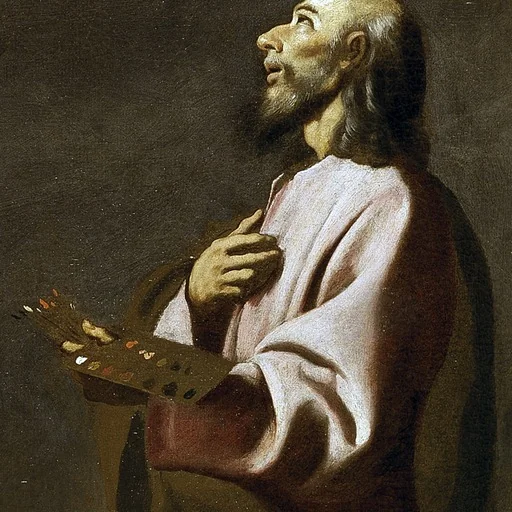
Francisco de Zurbarán was a Spanish Baroque painter. He is known primarily for his religious paintings depicting monks, nuns, and martyrs, and for his still-lifes. Zurbarán gained the nickname "Spanish Caravaggio",…

 Cain Slaying Abel
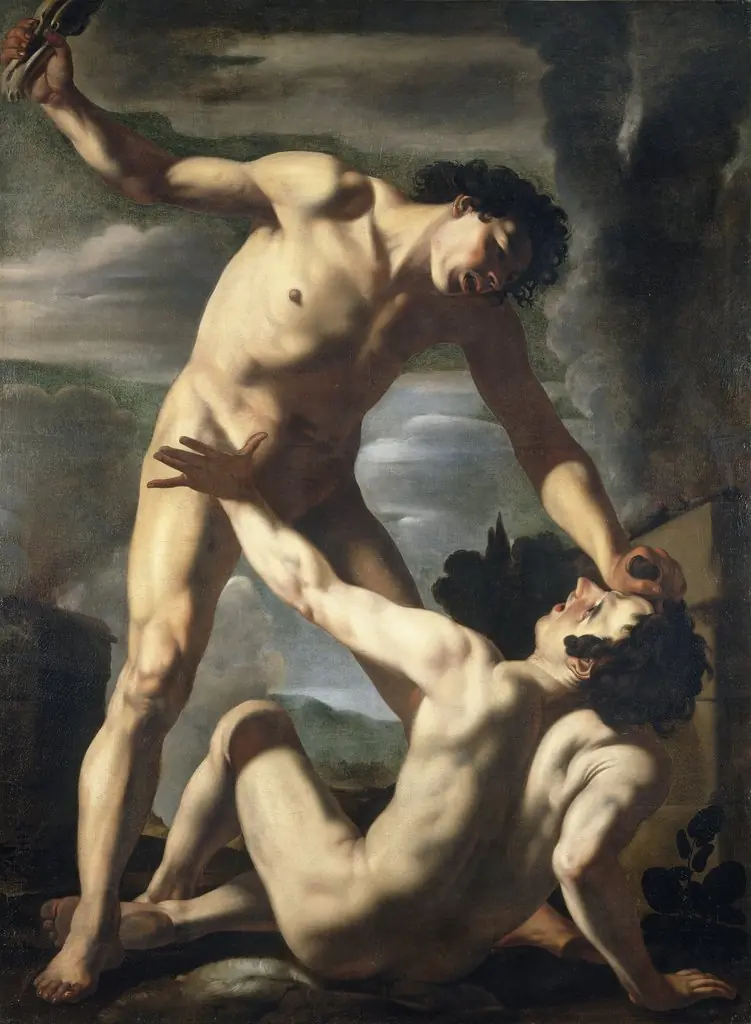 Cain and Abel
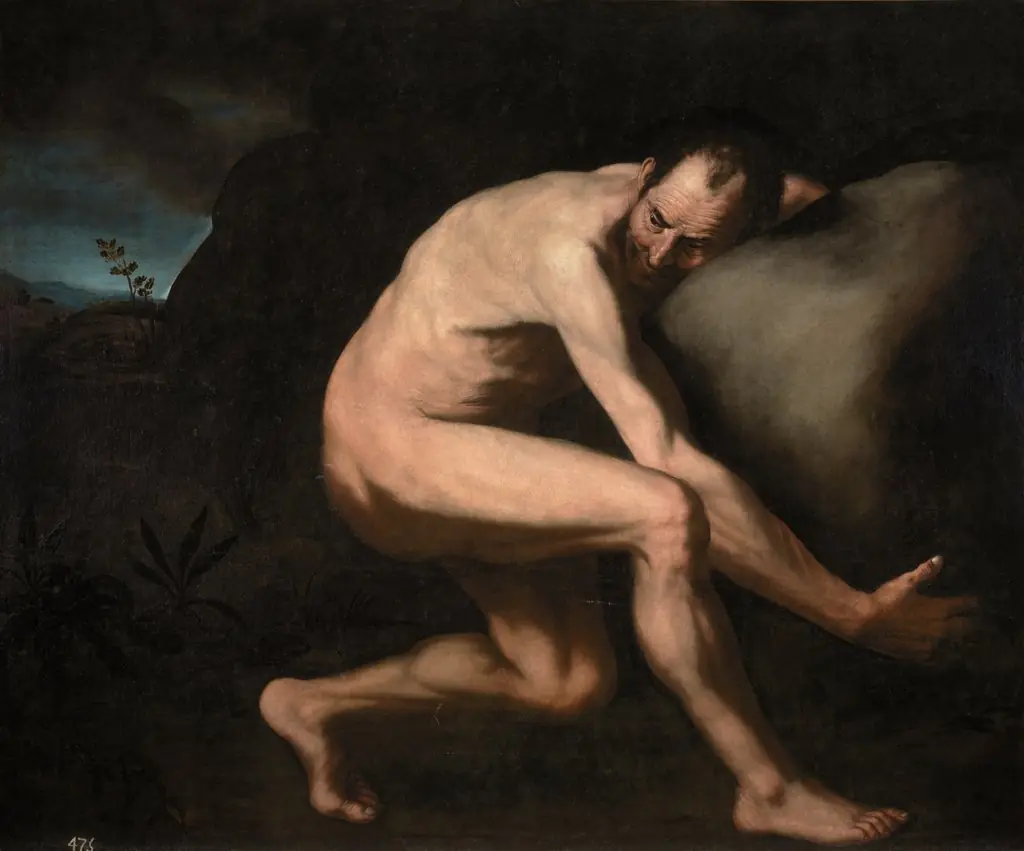 Sísifo
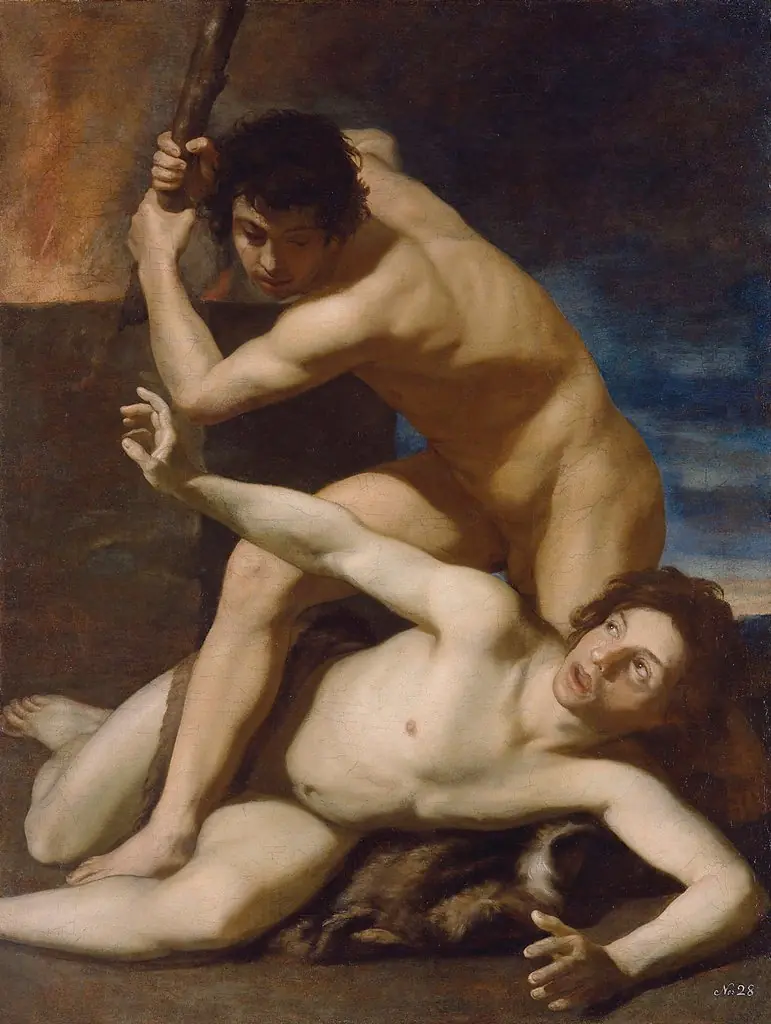 Cain kills Abel
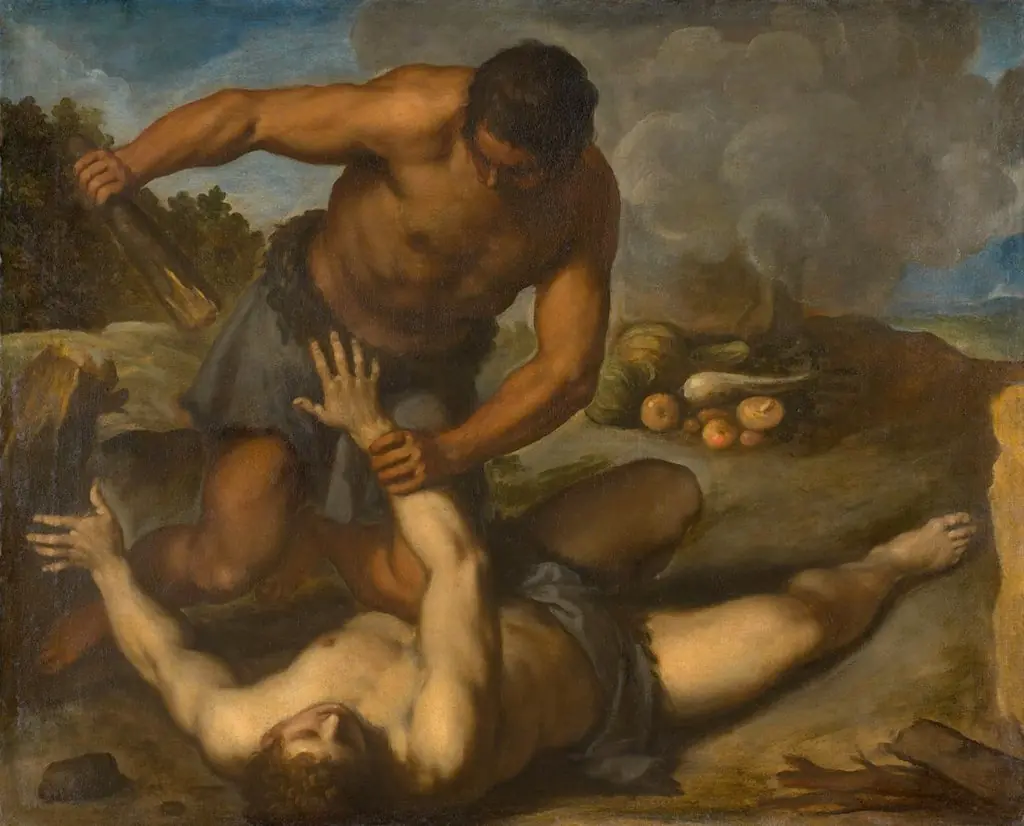 Cain and Abel
 Nude Warrior with a Spear
 Hercules tötet den Riesen Cacus und raubt die Rinder des Geryoneus
 The Fall of the Giants
 David Contemplating the Head of Goliath
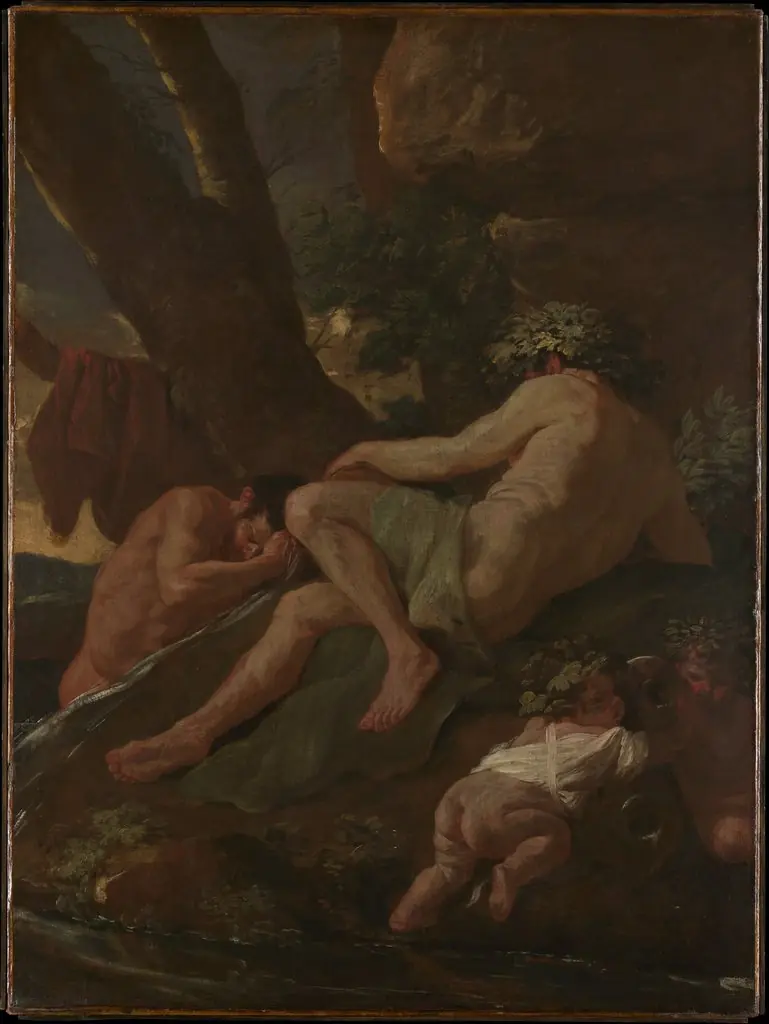 Midas Washing at the Source of the Pactolus
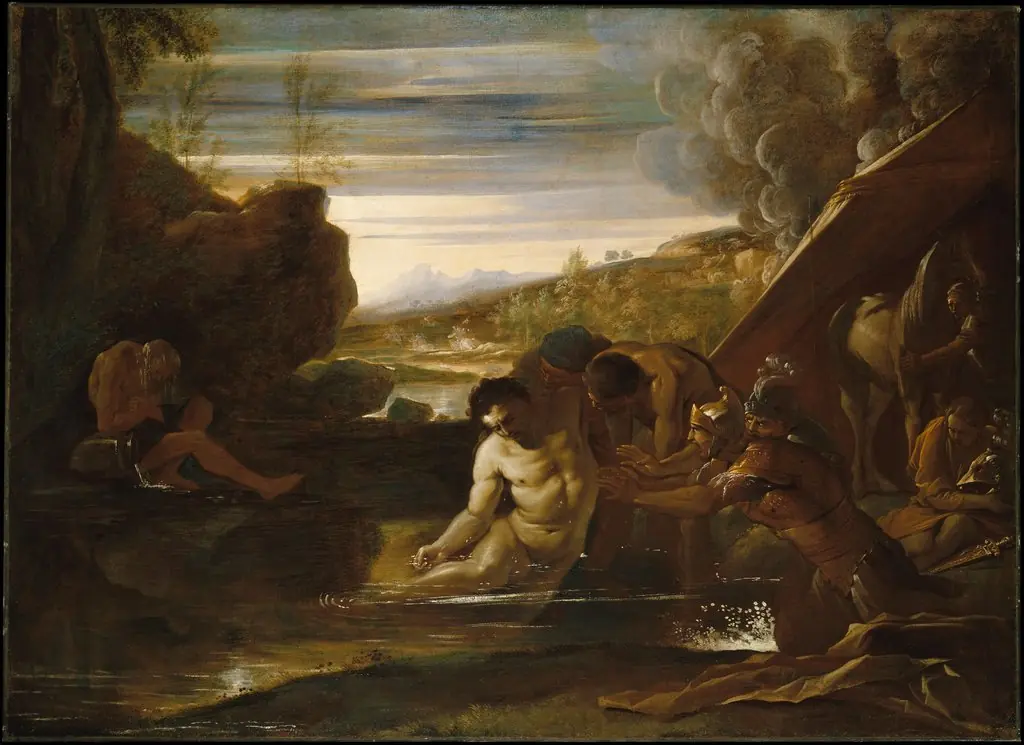 Alexander the Great Rescued from the River Cydnus
- Hercules Killing the Centaur Nessus