Artwork
Faust
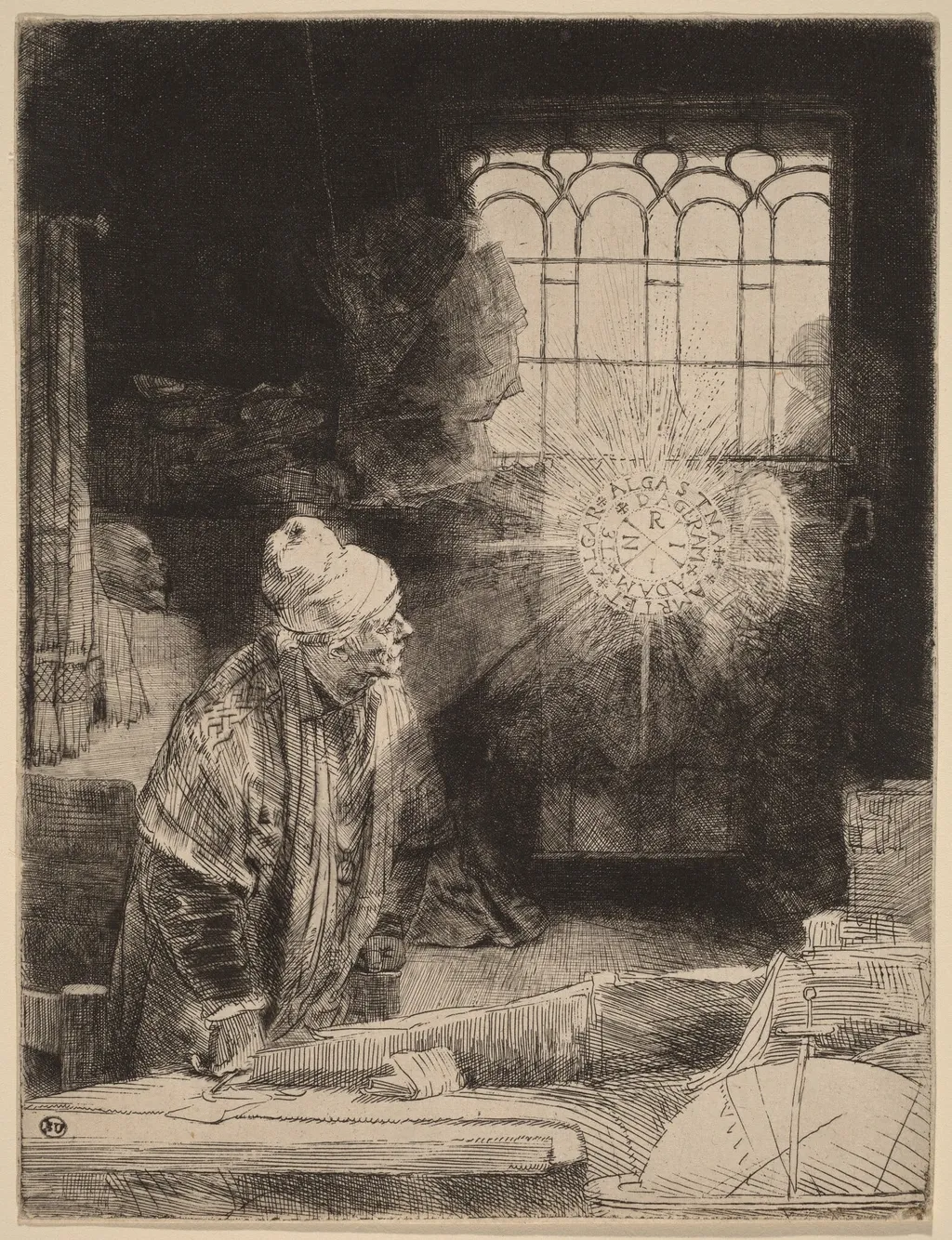
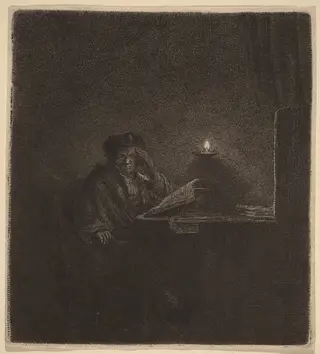
Faust is an ink print by the Baroque artist Rembrandt van Rijn. It dates from 1652 and is held in the collection of the National Gallery of Art.
About this work
Overview
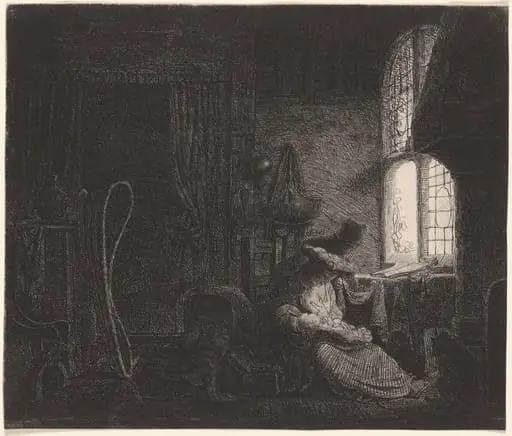
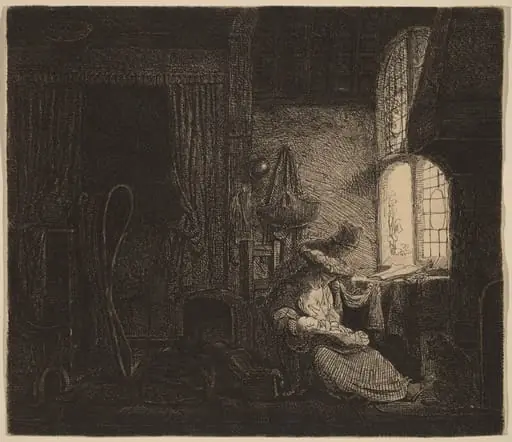
The composition depicts a solitary figure kneeling in a dim interior, illuminated by a narrow window whose light spreads in a radiating, star‑like pattern.
Rembrandt’s print titled Faust, executed around 1652, combines etching, drypoint and burin on a thick white paper. The composition depicts a solitary figure kneeling in a dim interior, illuminated by a narrow window whose light spreads in a radiating, star‑like pattern. The scene is rendered in stark contrasts, with the man’s half‑lit face and simple garments set against rough stone flooring and scattered objects.
Subject & Meaning
The kneeling figure appears absorbed in contemplation, his gaze directed toward the luminous window. The word “Algorismus” is incised within the beam of light, suggesting an intellectual or scholarly pursuit rather than a devotional moment. The halo‑like illumination functions as a visual metaphor for insight or revelation, aligning the work with the literary theme of Faust’s quest for knowledge.
Technique & Style
Rembrandt employed a layered approach: primary outlines were etched with acid, while finer details and tonal variations were added through drypoint and burin work. The artist’s hand is evident in the scratched lines that build texture and depth, creating a tactile surface where light and shadow emerge from the paper itself rather than from applied pigment.
History & Provenance
Created in the mid‑seventeenth century, Faust belongs to a period when Rembrandt explored complex narrative prints. The work has remained in the holdings of several European collections before entering its present museum, where it is displayed as part of the artist’s late print series, illustrating his mature handling of chiaroscuro in graphic media.
Own this work as a print
Artist & collection

Artist
Rembrandt Harmenszoon van Rijn, known mononymously as Rembrandt, was a Dutch Golden Age painter, printmaker, and draughtsman.