Artwork
Self-Portrait Etching at a Window
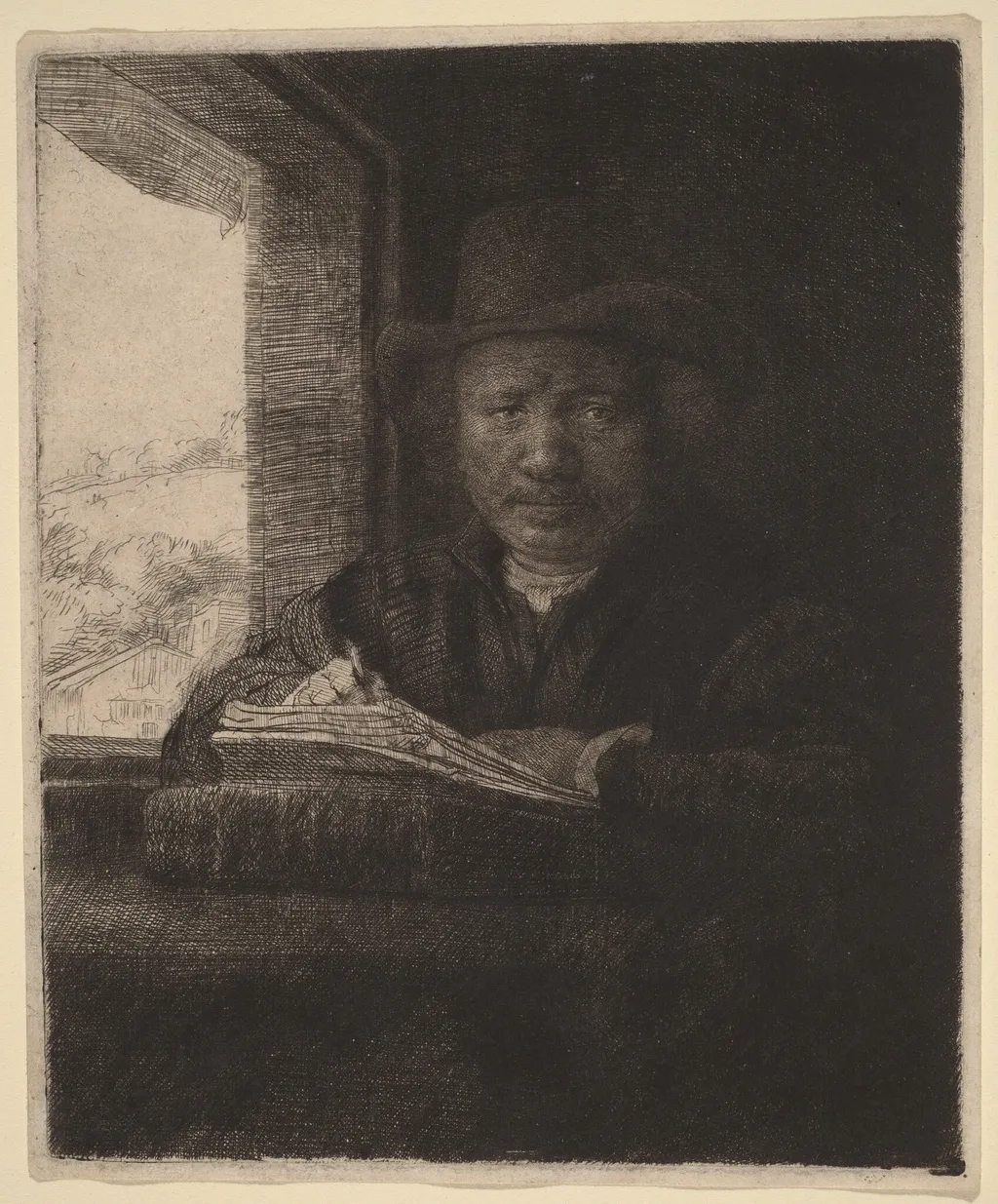
Self-Portrait Etching at a Window is an ink print by the Baroque artist Rembrandt van Rijn. It dates from 1648 and is held in the collection of the National Gallery of Art.
- Inscription
- Inscribed:upper left in plate: Rembrandt f 1648
About this work
Overview
Rembrandt employs a dramatic contrast between the dark, shadowed interior and the lighter exterior, where faint, sketchy lines suggest trees and a building.
Self-Portrait Etching at a Window (1648) is a significant print by Rembrandt van Rijn, executed in etching, drypoint, and engraving on laid paper. The composition features the artist seated at an open window, gazing outward while holding a white cloth in his hands. Rembrandt employs a dramatic contrast between the dark, shadowed interior and the lighter exterior, where faint, sketchy lines suggest trees and a building.
His face is partially obscured by a low-pulled hat, emphasizing the play of light and shadow characteristic of his mature style. This work exemplifies Rembrandt's mastery of the etching medium, utilizing varied line weights and textures to create depth and atmosphere. Created during a period of intense experimentation with printmaking, the piece reflects the artist's ongoing exploration of self-representation and his ability to convey psychological depth through subtle tonal variations.
It stands as a testament to his innovative approach to light and form, solidifying his reputation as a leading figure in 17th-century European art.
Technique & Style
Rembrandt employed a hybrid of intaglio methods: acid‑etched lines establish the overall structure, while drypoint adds rich, velvety shadows through burr‑generated strokes. Engraving deepens texture in the clothing and curtain, allowing a wide tonal range from deep black to delicate highlights. This combination, innovative for its time, showcases his mastery of line work to convey both material surface and atmospheric depth.
Subject & Meaning
The sitter, likely a self‑portrait, is rendered with a low‑brimmed hat obscuring the forehead, his face emerging from shadow. The white cloth, held loosely, may symbolize contemplation or the artist’s tools. The blurred landscape beyond the window serves as a visual counterpoint, suggesting an inner focus that outweighs the external world.
History & Provenance
The print was produced in Rembrandt’s later period, when he increasingly explored complex chiaroscuro in printmaking. Surviving impressions are held in several major collections, including the Rijksmuseum and the British Museum, reflecting its continued scholarly interest and the artist’s enduring influence on the development of graphic arts.
Own this work as a print
Artist & collection

Artist
Rembrandt Harmenszoon van Rijn, known mononymously as Rembrandt, was a Dutch Golden Age painter, printmaker, and draughtsman.

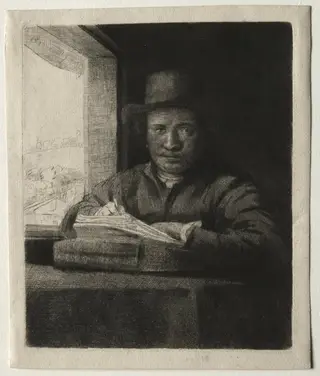 Self-Portrait Drawing at a Window
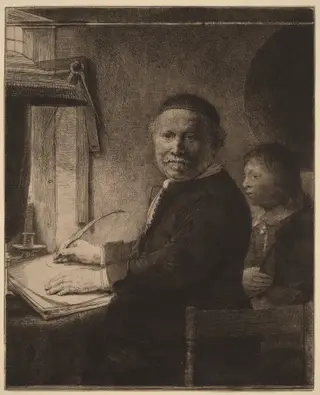 Lieven Willemsz van Coppenol: the Smaller Plate
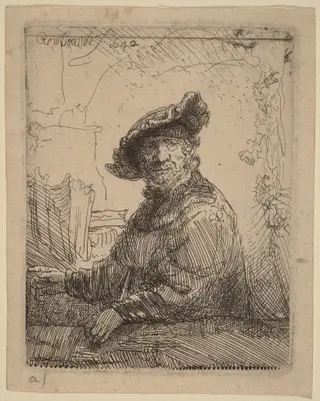 Man in an Arbor
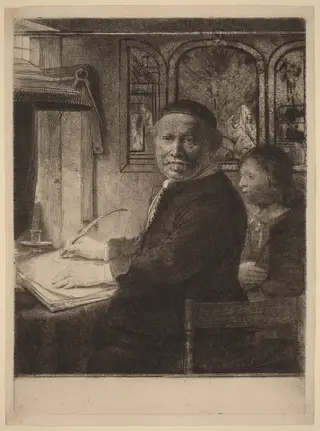 Lieven Willemsz van Coppenol: the Smaller Plate
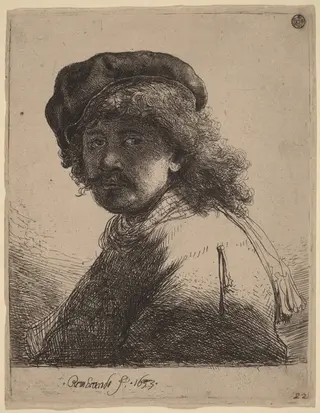 Self-Portrait in a Cap and Scarf with the Face Dark
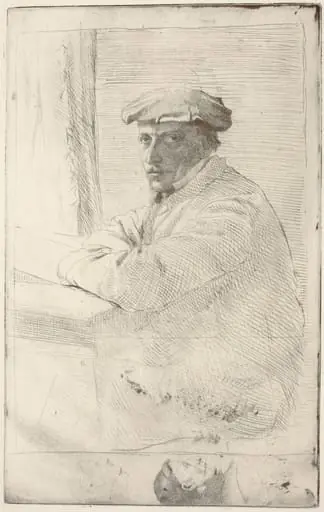 The Engraver Joseph Tourny (Le graveur Joseph Tourny)
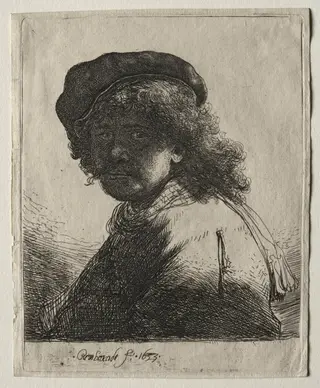 Self-Portrait in a Cap and Scarf with the Face Dark: Bust
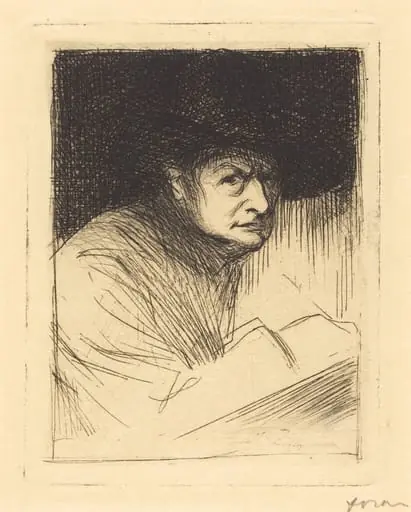 Portrait de Forain (Portrait of Forain)