Artwork
Two Figures (most likely Ryo Douhin receiving the Taoist law from Shou Rikken)
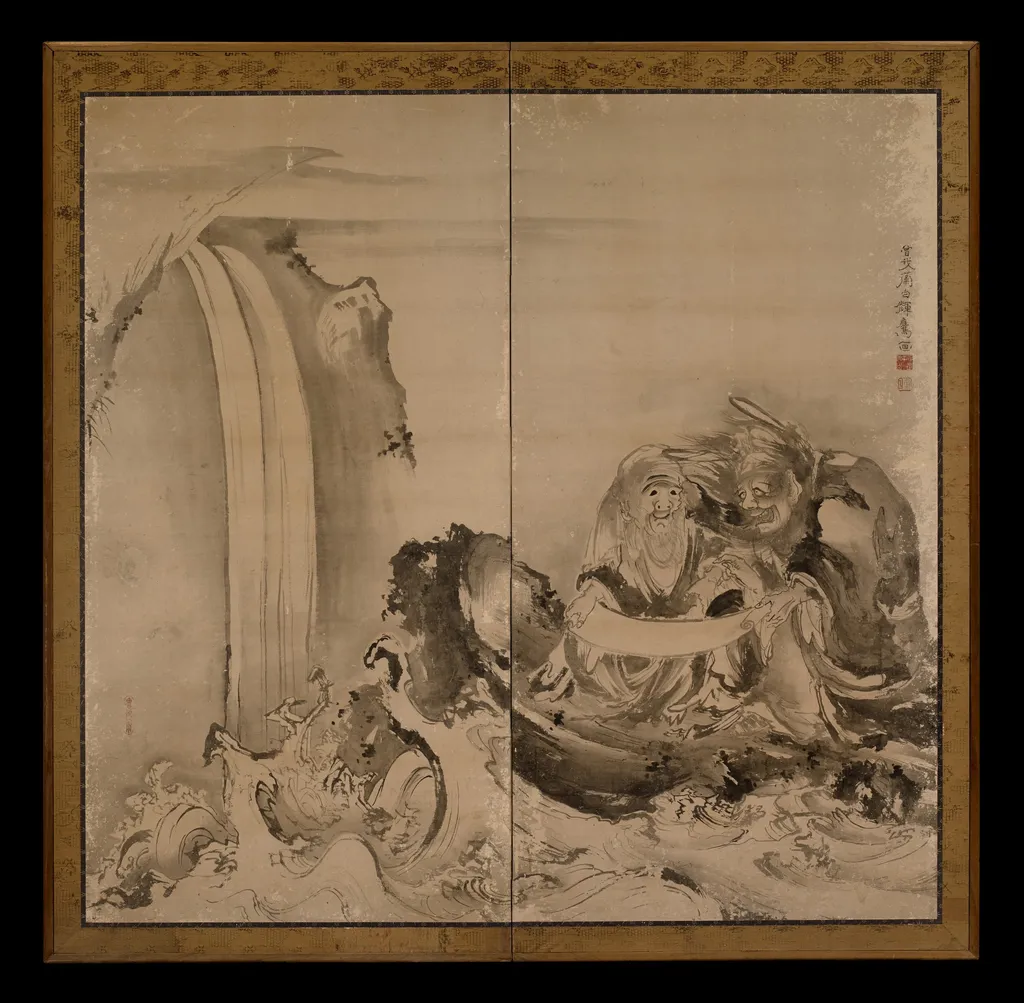
Two Figures (most likely Ryo Douhin receiving the Taoist law from Shou Rikken) is an unspecified painting by the Nanga artist Soga Shōhaku. It dates from 1765 and is held in the collection of the Museum of Fine Arts, Houston.
About this work
Overview
Painted around 1765 by Soga Shōhaku, this ink-on-paper work depicts a moment of spiritual transmission between two figures.
Painted around 1765 by Soga Shōhaku, this ink-on-paper work depicts a moment of spiritual transmission between two figures. It is part of the collection at the Museum of Fine Arts, Houston. The composition emphasizes dynamic movement and expressive brushwork, characteristic of Shōhaku’s unconventional style. The scene unfolds against a minimal background, focusing attention on the figures and their interaction.
Subject & Meaning
The painting likely illustrates Ryo Douhin receiving the Taoist teachings from Shou Rikken, a legendary Daoist master. The seated figure on the right, with disheveled hair and an open smile, embodies the unrestrained spirit of Taoist sages. The looming dark form behind him may represent a guardian spirit or symbolic presence of the unseen forces of the Dao. The waterfall to the left suggests purification and the flow of cosmic energy.
Technique & Style
Shōhaku employed bold, fluid ink strokes to convey motion and emotion. The figures are rendered with loose, almost spontaneous brushwork, contrasting with the controlled, flowing lines of the waterfall. The dark, ambiguous shape behind the seated figure is suggested with minimal ink, leaving room for interpretation. The plain, pale background isolates the subjects, heightening their psychological intensity.
History & Provenance
The painting was created during the Edo period, a time when Japanese artists increasingly drew from Chinese Daoist and Chan Buddhist traditions. It entered the Museum of Fine Arts, Houston’s collection through documented acquisition, though its earlier ownership history remains largely unrecorded. Its survival in good condition reflects careful preservation within private and institutional hands.
Context
Soga Shōhaku worked outside the dominant academic schools of his time, embracing eccentricity and emotional expression in art. His depictions of Daoist immortals reflected a broader cultural interest in heterodox spiritual figures among literati and urban patrons. This painting aligns with a trend of reimagining Chinese religious themes through a distinctly Japanese lens, blending reverence with irreverent energy.
Legacy
Shōhaku’s approach influenced later generations of Japanese painters who valued individual expression over formal convention. This work exemplifies his ability to fuse spiritual narrative with visceral brushwork, challenging classical norms. While not widely exhibited, it remains a key example of Edo-period ink painting that prioritizes inner experience over external realism.
Own this work as a print
Artist & collection

Artist
Shōhaku spent his life in Kyoto, the creative heart of Japan, where he painted scrolls and screens that looked nothing like the soft landscapes of his day.

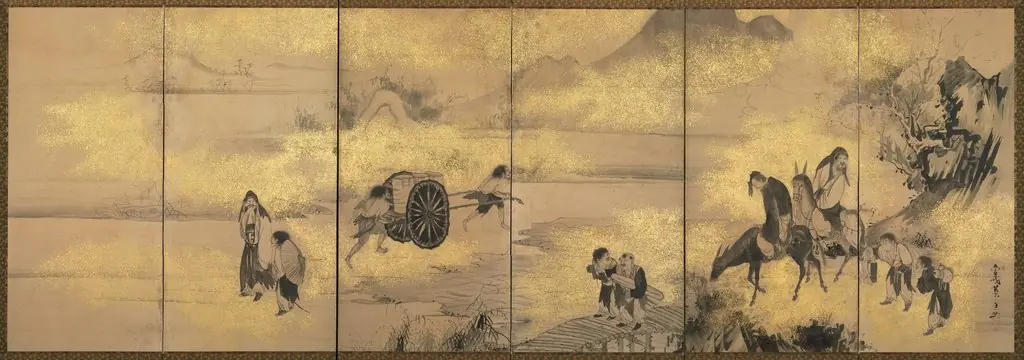
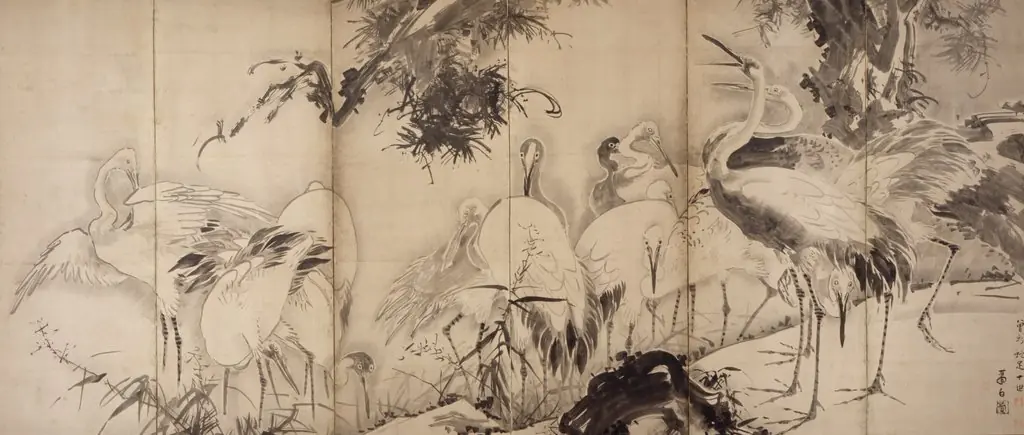
- Summer and Winter Landscapes
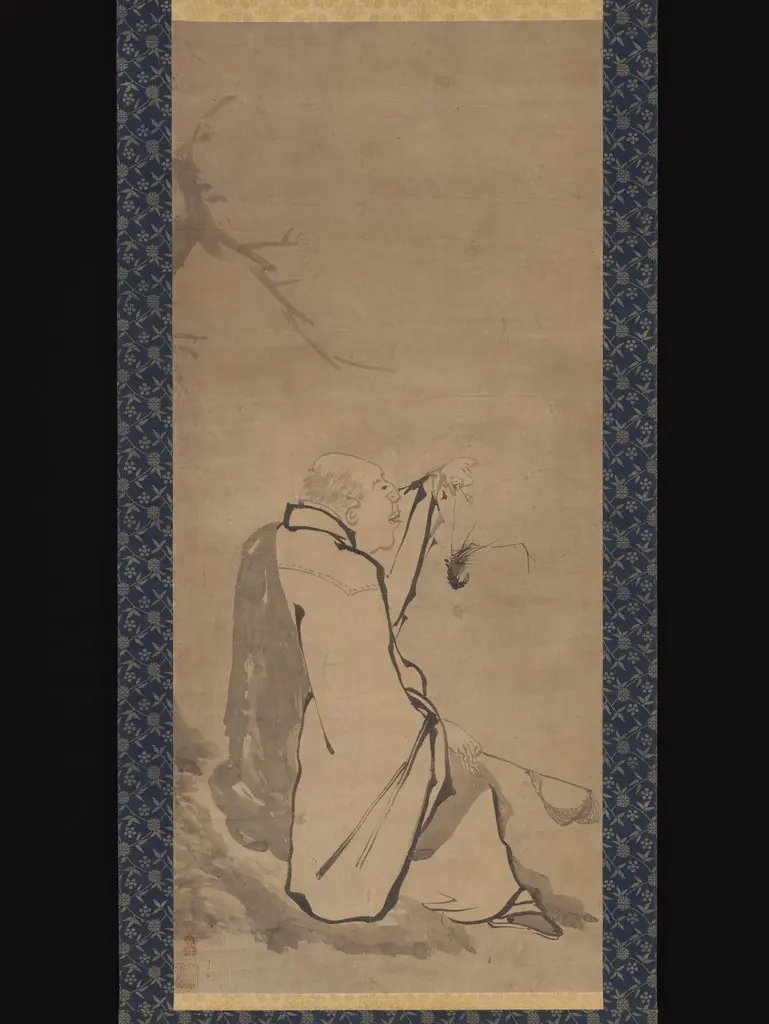 Priest Xianzi
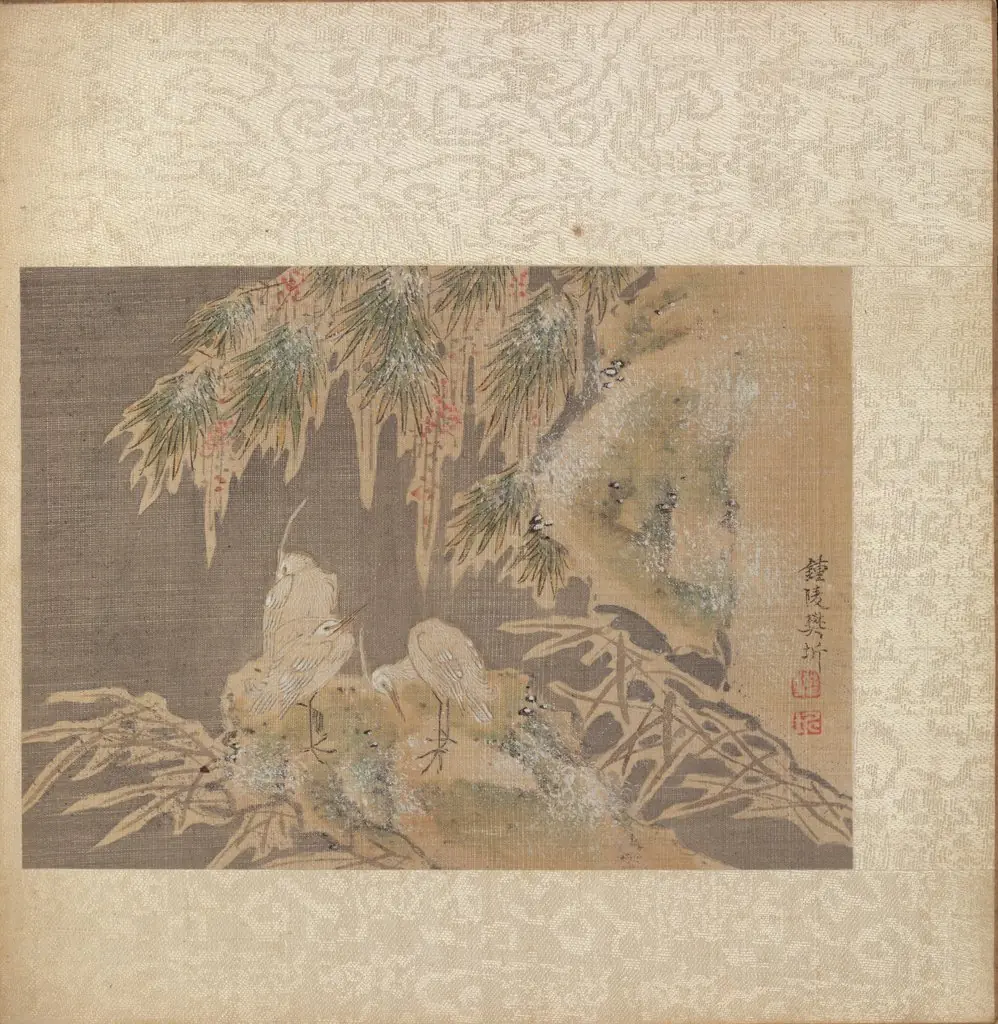 Album of Miscellaneous Subjects, Leaf 10
 Untitled
 Eight Views of the Xiao and Xiang Rivers
 Daoist immortal Li Tieguai receiving a visitor
 南宋 佚名 倣夏珪 觀瀑圖 團扇|Men Watching a Waterfall
 Untitled
 Emperor Enyū’s Outing to Funaokayama on the First Day of the Rat in the New Year
 列子御風図扇面 (Resshi gyofū zu senmen)|The Daoist Immortal Liezi Flying on a Cloud
 Landscape in the Style of Juran