Artwork
Portrait of Clarissa Strozzi
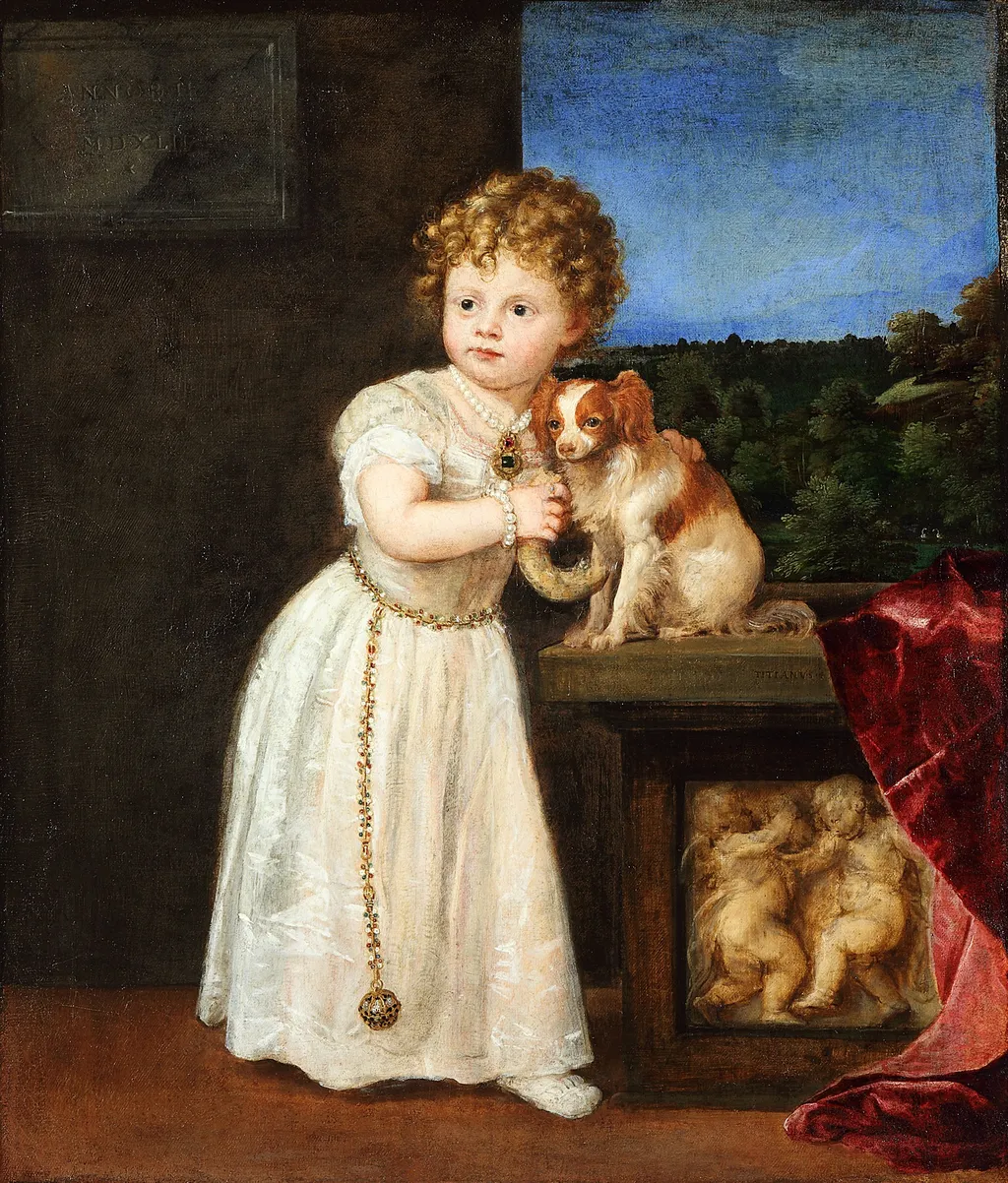
Portrait of Clarissa Strozzi is an oil painting by the Mannerist artist Titian. It dates from 1542 and is held in the collection of the Gemäldegalerie Berlin.
About this work
Subject & Meaning
The dog serves as both a symbol of fidelity and a source of emotional comfort for the child.
The painting depicts Clarissa (or Clarice) Strozzi, a young girl from the old Florentine Strozzi family and daughter of Roberto Strozzi and Maddalena di Pierfrancesco de' Medici, who lived in exile in Venice from 1540 to 1542. She appears slightly frightened or startled, her attention seemingly caught by something outside the picture frame, and clutches or draws near to her small Phalene dog as if seeking protection while also offering it food.
The dog serves as both a symbol of fidelity and a source of emotional comfort for the child. The portrait's significance rests largely on its celebrated coloristic achievement, particularly the combination of carmine red, blue, and golden yellow, which has led some to consider it among the finest child portraits in the world. The work also represents a notable example of the state portrait of a child, and later served as inspiration for paintings by the Flemish artist Anthony van Dyck.
Technique & Style
Executed in 1542, the work is an oil painting on canvas measuring 115 by 98 centimeters. It belongs to the Venetian school and is noted for its balanced color composition. The formal style is characterized by a specific palette combining carmine red, blue, and golden yellow, which contributes to its reputation as one of the most beautiful child portraits in existence. The handling of the medium captures the subject's slightly frightened expression as she clings to a small Phalene dog for protection. This approach to depicting a distracted child subject is considered a precursor that inspired later works by Anthony van Dyck.
History & Provenance
The work was painted in 1542 in Venice for Clarissa Strozzi, a member of a prominent Florentine exile family residing in the city during that period. It entered the Gemäldegalerie Berlin collection shortly after its creation and has remained there continuously, forming part of the museum's core holdings of Venetian Renaissance portraiture. The painting was executed as an oil on canvas portrait by Titian, depicting Clarissa Strozzi alongside a small dog, and was completed during the same year as another documented portrait of Ranuccio Farnese.
The painting is held in the Gemäldegalerie, Berlin, where it is inventoried as Titian’s Portrait of Clarissa Strozzi (1542).
It has been exhibited in major Titian surveys, including the 2007 presentation Titian, Titian and the Renaissance in Venice held in Venice.
Context
The portrait has been widely cited in scholarship as a canonical example of Titian’s mature Venetian style and its psychological nuance in child portraiture. Commentators repeatedly single out its color harmony, carmine red, deep blue, and golden yellow, as decisive to its renown, noting how the palette elevates a private commission to a paradigm of pictorial beauty. The composition’s interplay between Clarissa’s guarded expression and the small dog she embraces has been read as an emblem of both aristocratic status and psychological depth, a synthesis that informed later Flemish treatments of childhood by Anthony van Dyck. The painting’s reception also rests on its dual status as a personal record and a public statement: Clarissa Strozzi’s Florentine lineage and her family’s Venetian exile in 1540-42 contextualize the work within the political and cultural networks of mid-sixteenth-century Italy.
Legacy
The painting’s refined color harmony, carmine red, deep blue, and golden yellow, has repeatedly been cited across modern sources as a paradigm of child-portraiture, influencing later northern artists who sought Venetian chromatic sophistication. Anthony van Dyck is specifically named in multiple accounts as having drawn inspiration from Titian’s composition and palette when depicting youthful sitters, linking the Berlin canvas to Flemish portrait practice of the early seventeenth century.
Own this work as a print
Artist & collection
Artist
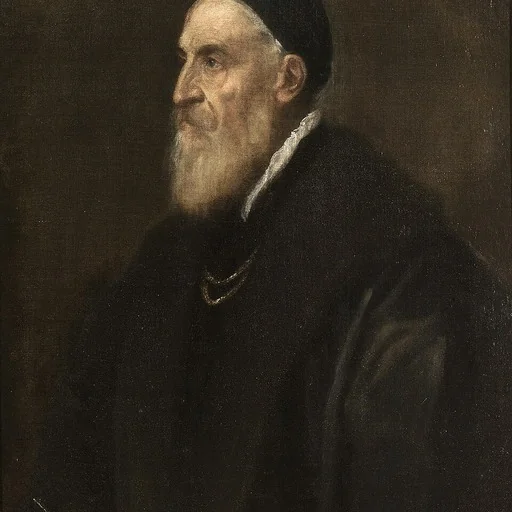
Tiziano Vecellio (Italian:; c. 1488/1490 – 27 August 1576), Latinized as Titianus, hence known in English as Titian ( TISH-ən), was an Italian Renaissance painter. The most important artist of Renaissance Venetian…

- Knabe mit Hund
 Maddalena Cattaneo
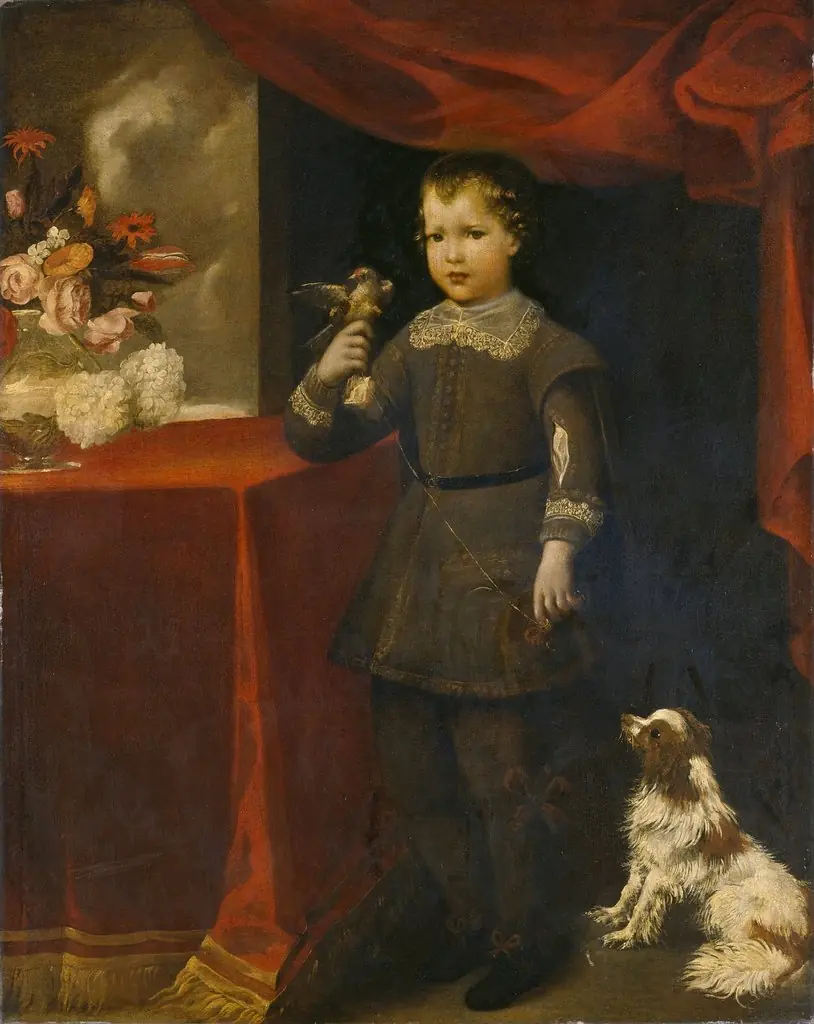 El príncipe Baltasar Carlos
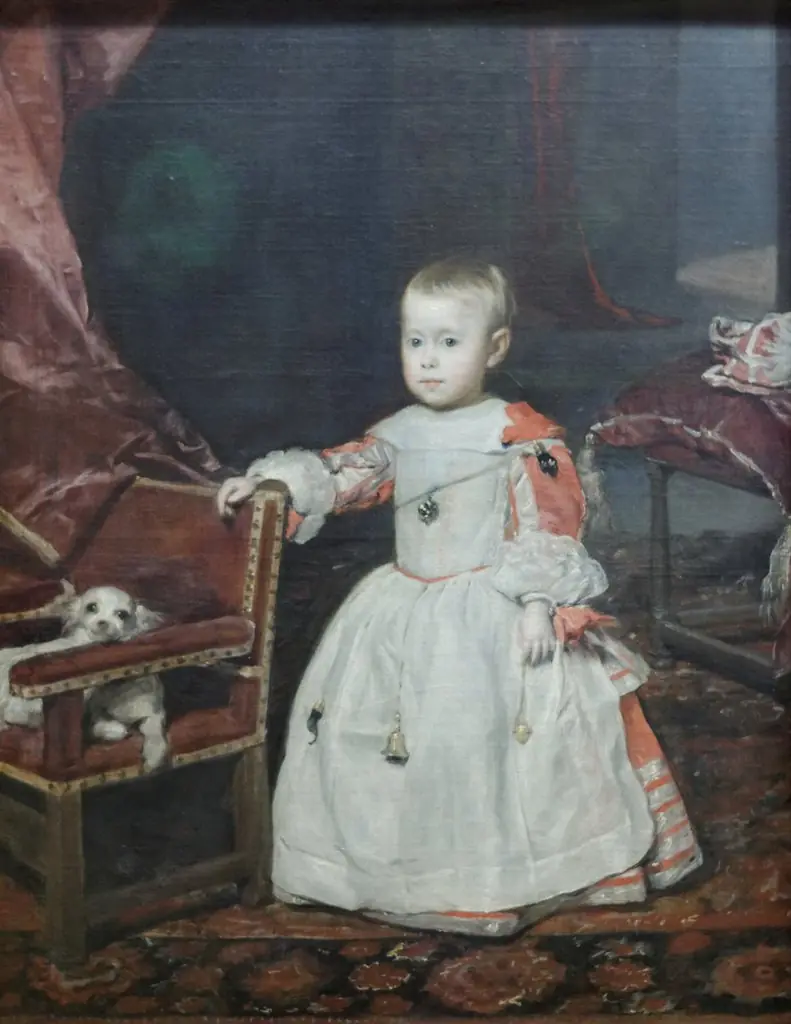 Portrait of Prince Philip Prospero
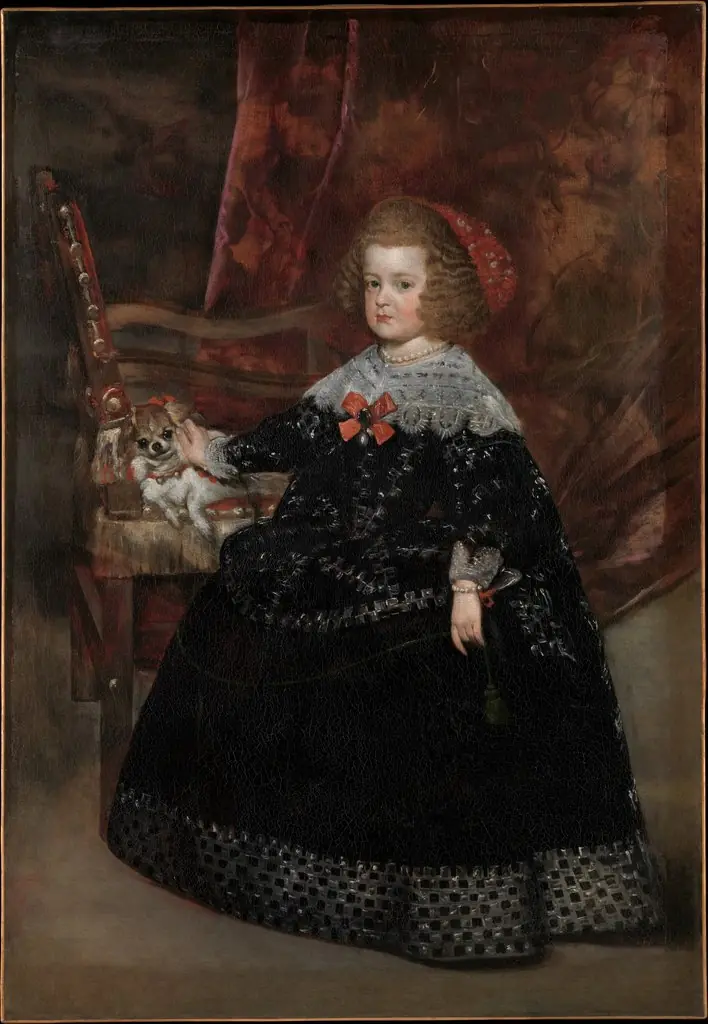 María Teresa (1638–1683), Infanta of Spain
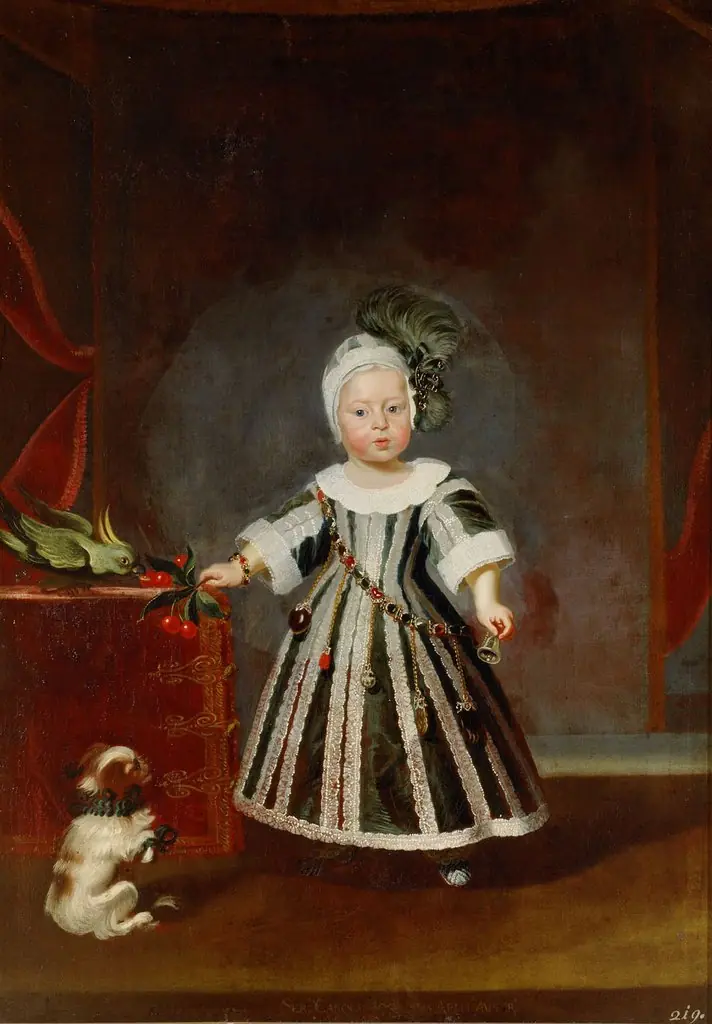 Portrait of Charles Joseph, Archduke of Austria (1745-1761)
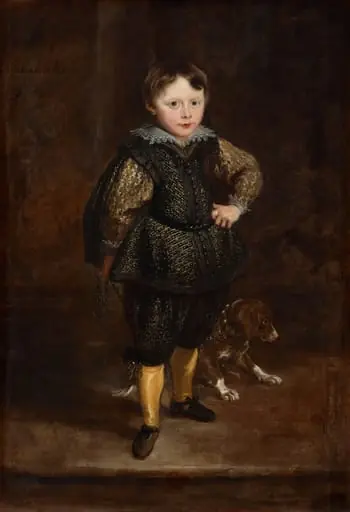 Filippo Cattaneo
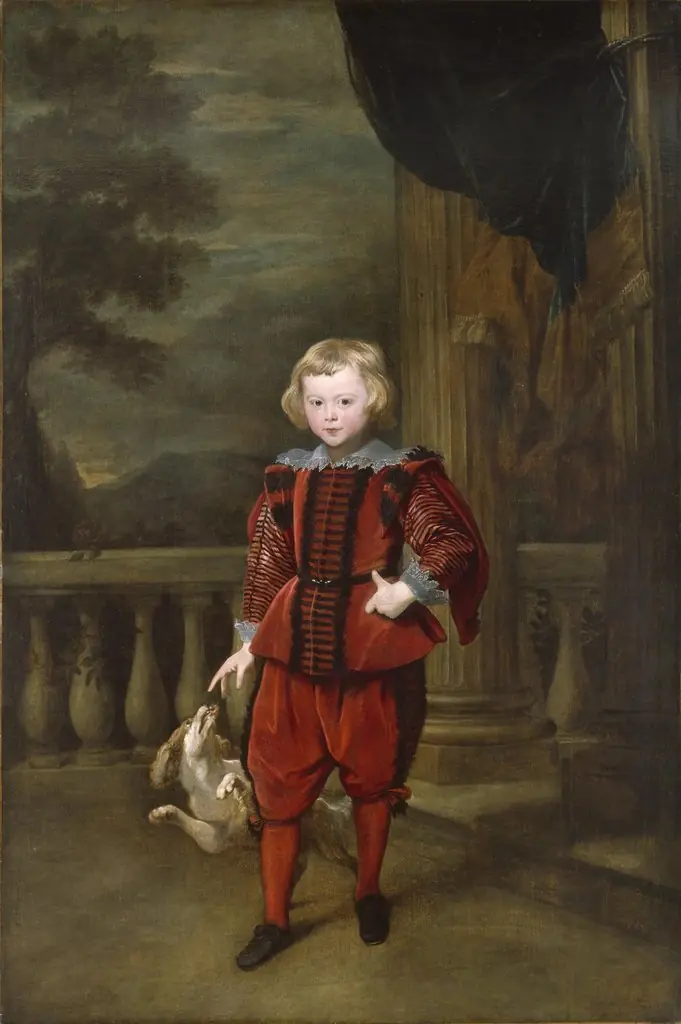 A Boy Standing on a Terrace
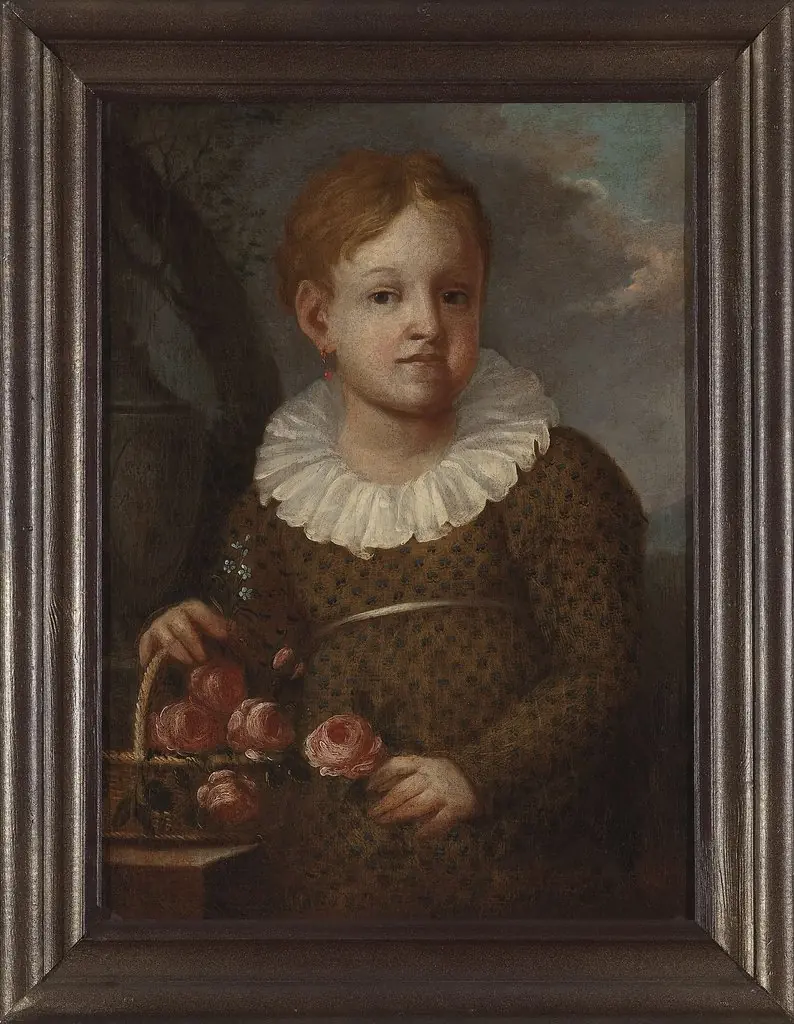 Posthumous portrait of Elżbietka Pade (1811–1818), daughter of Elżbieta and Marcin
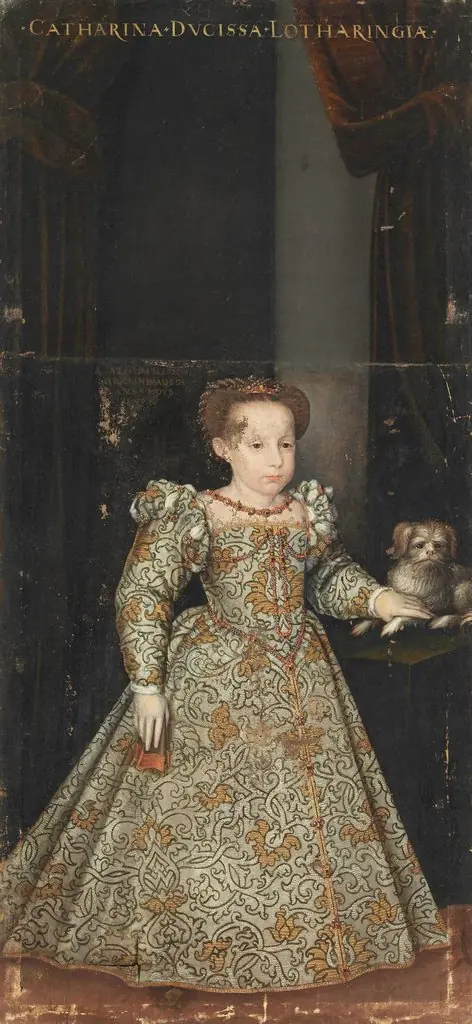 Katharina, Tochter Karls III. von Lothringen (1573-1648)
 Erzherzogin Maria Christierna (1574-1621) im Alter von drei Jahren, in ganzer Figur
 A Little Girl Nursing a Kitten