Artwork
The Three Ages of Man
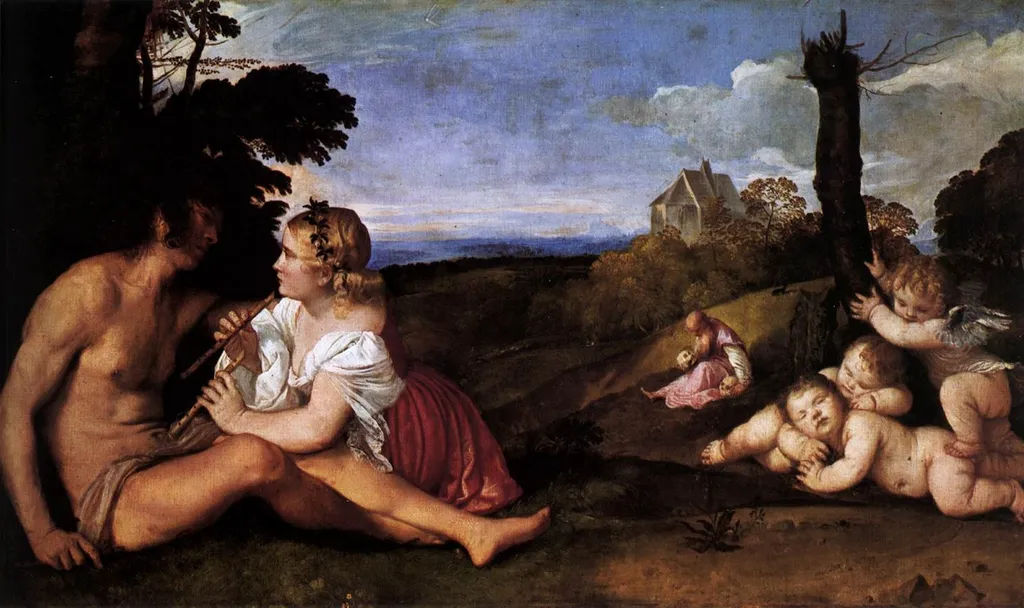
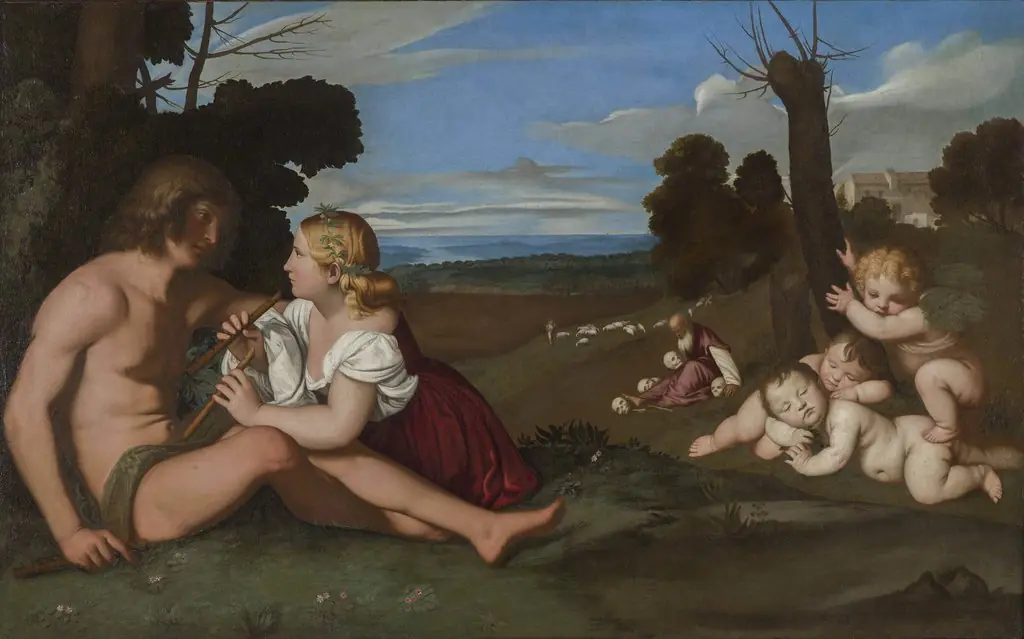
The Three Ages of Man is an oil painting by the High Renaissance artist Titian. It dates from 1513 and is held in the collection of the Orleans Collection.
About this work
Overview
The Three Ages of Man is a painting by Titian, created between 1512 and 1514, and is now held at the Scottish National Gallery in Edinburgh. The oil on canvas work measures 90 cm high by 151 cm wide.
Subject & Meaning
The painting depicts three figures in a wooded landscape, representing the stages of human life. A muscular man, a woman playing a harp, and a sleeping infant are shown, symbolizing manhood, a moment of calm, and childhood, respectively. The figures are associated with themes of earthly love and mortality.
Technique & Style
Titian's use of chiaroscuro creates depth in the painting, with light and shadow defining the forms of the figures. The soft greens and blues of the background fade into the distance, creating a sense of atmosphere. The woman's harp is rendered in detail, contrasting with her calm demeanor.
History & Provenance
Titian was influenced by Giorgione's style and themes, having completed some of Giorgione's unfinished works after his death in 1510. The painting reflects this influence in its use of landscape and nude figures.
Context
The Ages of Man was a common theme in art history, and Titian's interpretation is an example of his allegorical approach to this subject. The painting represents the artist's conception of the life cycle, with the three figures embodying different stages of human existence.
Artist & collection
Artist
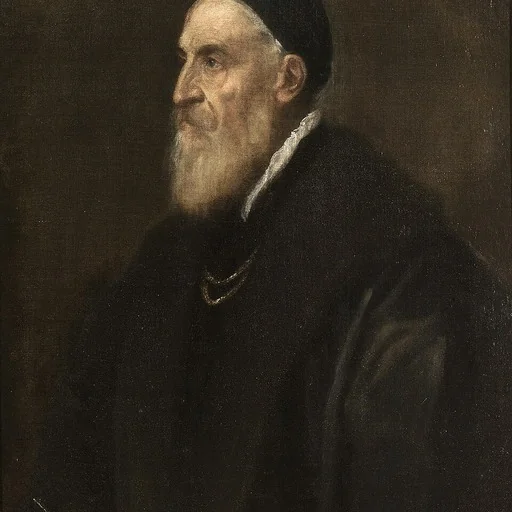
Tiziano Vecellio (Italian:; c. 1488/1490 – 27 August 1576), Latinized as Titianus, hence known in English as Titian ( TISH-ən), was an Italian Renaissance painter. The most important artist of Renaissance Venetian…