Artwork
Allegory of Venus and Cupid
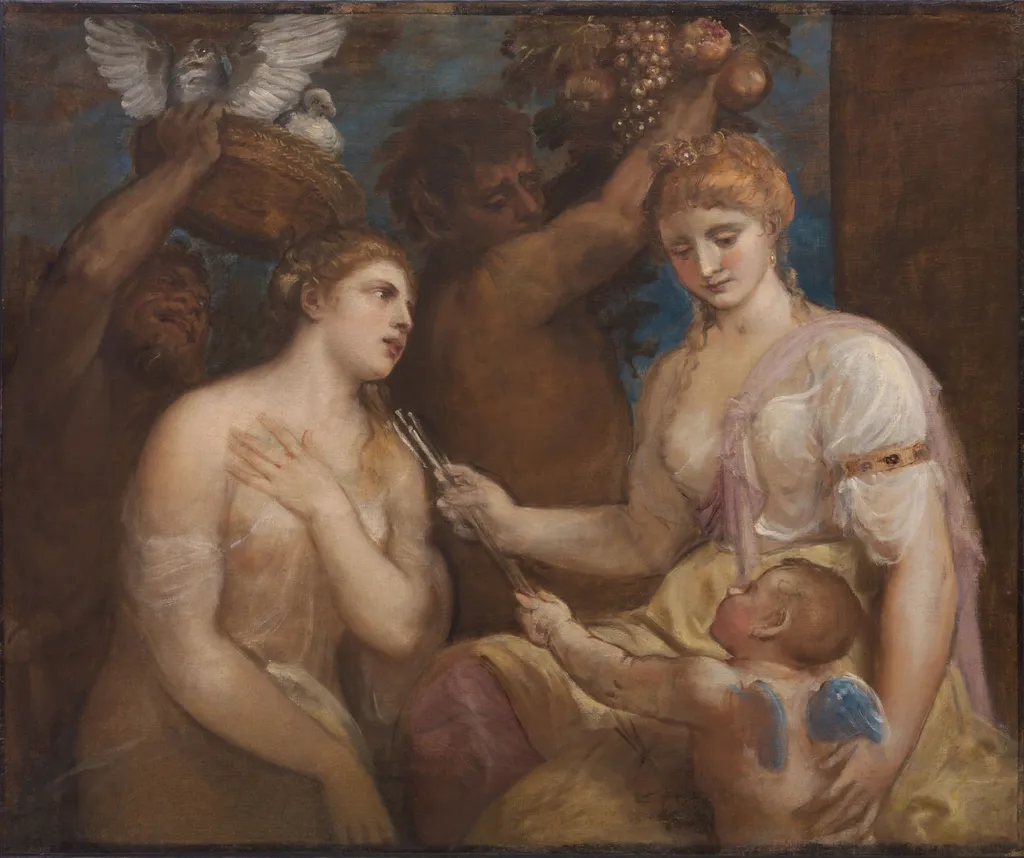
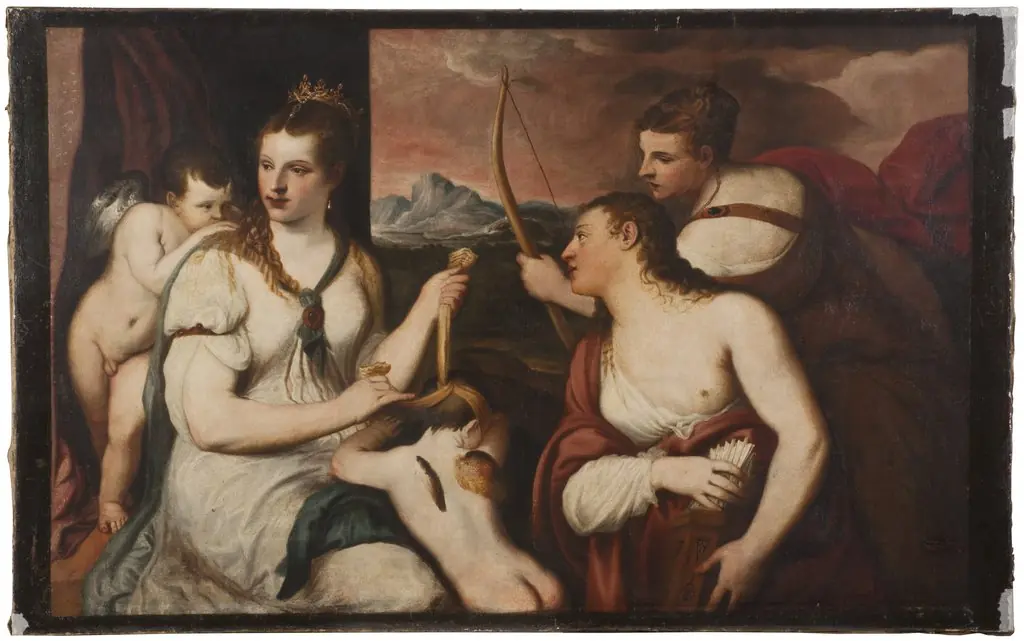
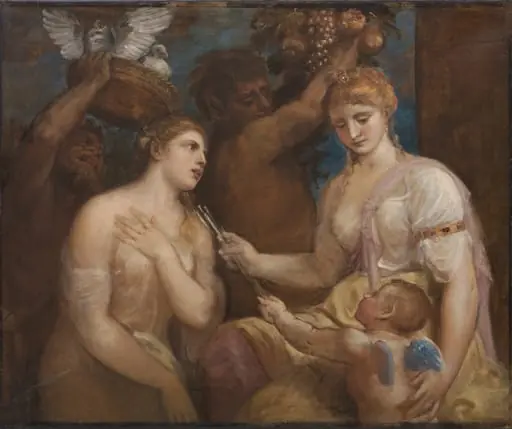
Allegory of Venus and Cupid is an oil painting by Unknown. It dates from 1600 and is held in the collection of the Art Institute of Chicago. This oil painting presents an ambiguous mythological scene centered on two principal female figures and an infant.
About this work
Technique & Style
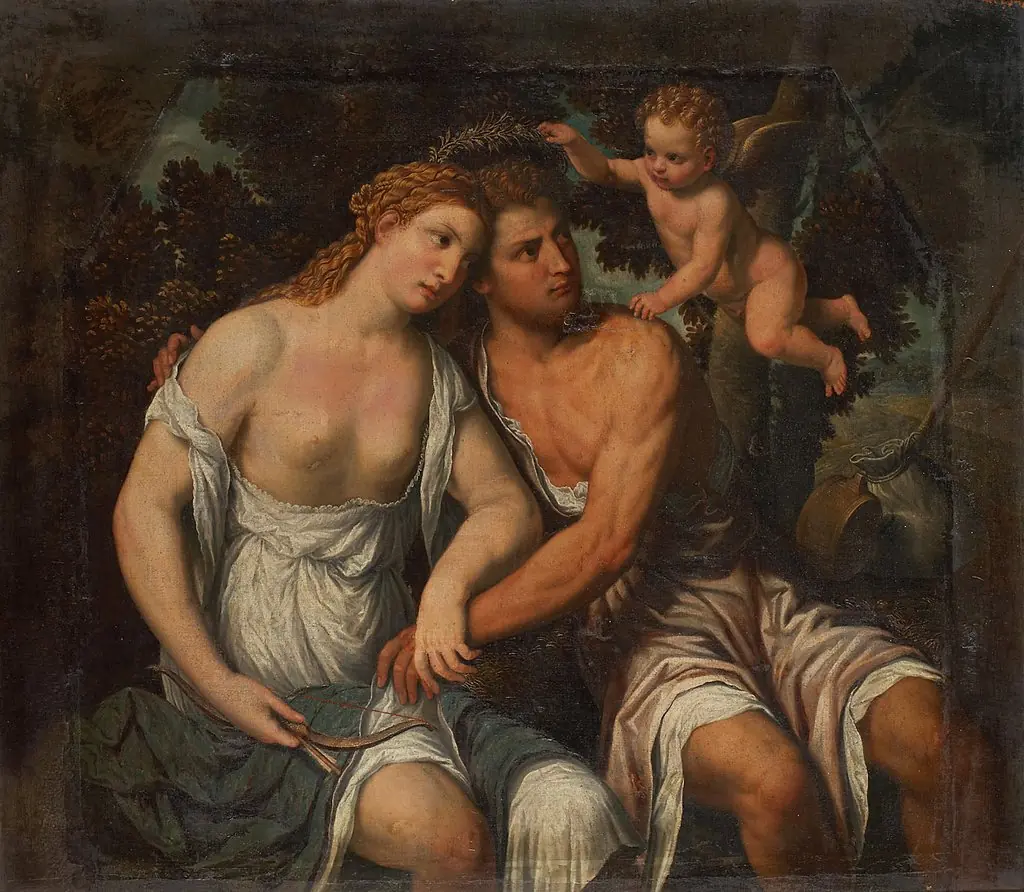
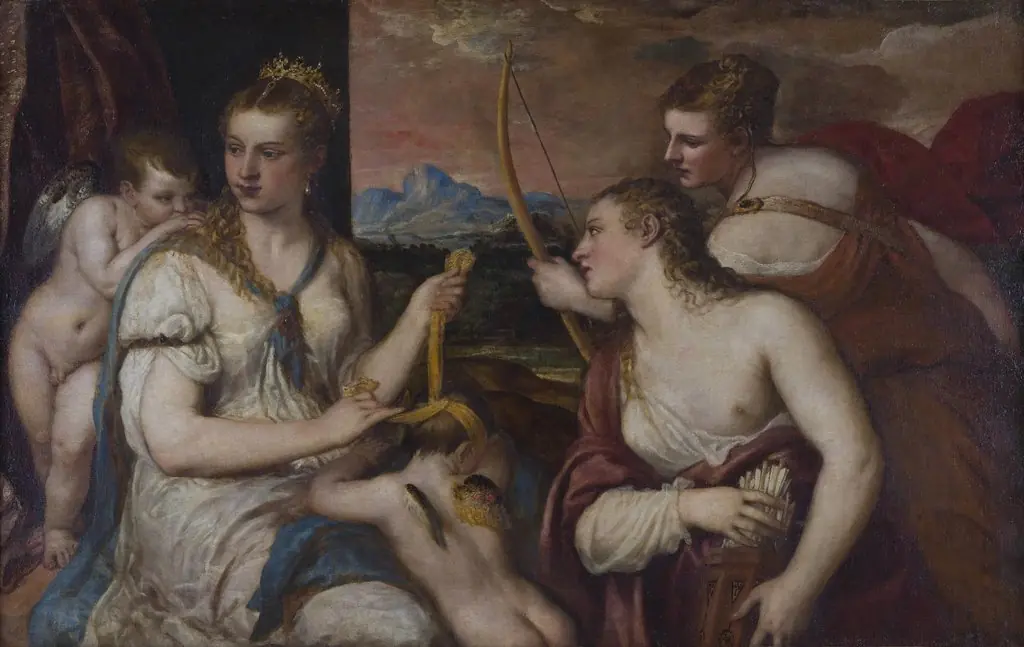
The composition depicts Venus and Cupid, utilizing the medium to render the figures within a narrative context typical of the period's mythological genre.
Created around 1600, this allegorical painting is executed in oil paint on a canvas support. The work measures 129.9 cm in height and 155.3 cm in width. Stylistically, it is attributed to a follower or imitator of Titian, reflecting the Venetian tradition of mythological allegory.
The composition depicts Venus and Cupid, utilizing the medium to render the figures within a narrative context typical of the period's mythological genre.
History & Provenance
The painting titled Allegory of Venus and Cupid was created in 1600 as an oil on canvas work depicting Venus and Cupid in an allegorical scene. It belongs to the genre of allegory and mythological painting, reflecting compositional and stylistic influences associated with a follower or imitator of Titian. The work measures 129.9 cm in height and 155.3 cm in width and has been part of the collection at the Art Institute of Chicago since its acquisition.
Its provenance and ownership history are tied to this institution, where it remains on display as part of its European paintings collection.
The painting is held in the collection of the Art Institute of Chicago, according to Wikidata records documenting the work's location and collection.
No specific inventory or accession number is provided in the available sources, and no exhibition history is documented.
Context
The painting is recognized as a late Renaissance allegory that draws on Titian's compositional strategies while reflecting the shift toward more intimate mythological subjects in early 17th-century Italian art. Scholarship emphasizes its role as a bridge between High Renaissance ideals and the emerging Baroque sensibility, noting the nuanced treatment of Venus and Cupid that anticipates later symbolic explorations of love. Its placement in the Art Institute of Chicago's collection situates it within a broader narrative of how European allegories were received and preserved in American institutions, underscoring its significance in both art historical discourse and museum narratives.
Overview
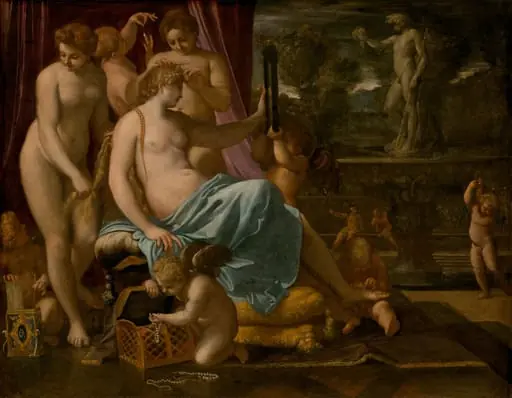
This oil painting presents an ambiguous mythological scene centered on two principal female figures and an infant. The composition unfolds in a shadowed interior, where figures emerge through selective illumination. The artist employs a restrained palette and subtle tonal transitions to create depth, directing attention to the interplay between revealed and concealed forms.
Subject & Meaning
The work depicts Venus, identifiable by her exposed torso and mirror, alongside a seated woman and Cupid as an infant. Additional figures, including a winged presence and a garland-bearing attendant, occupy the background, their roles left open to interpretation. The scene resists a single narrative, instead inviting reflection on themes of beauty, vanity, and the complexities of desire.
Legacy
The painting’s enigmatic quality has sustained scholarly debate, particularly regarding its iconography and authorship. Its treatment of light continues to draw attention, illustrating the period’s preoccupation with optical illusion and spatial ambiguity. Later artists and critics have cited such works as precursors to Baroque developments in chiaroscuro.
Artist & collection