Artwork
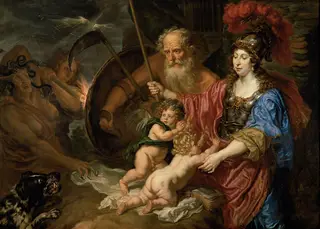
Chronos, Mars, Cupid and Venus (copy)
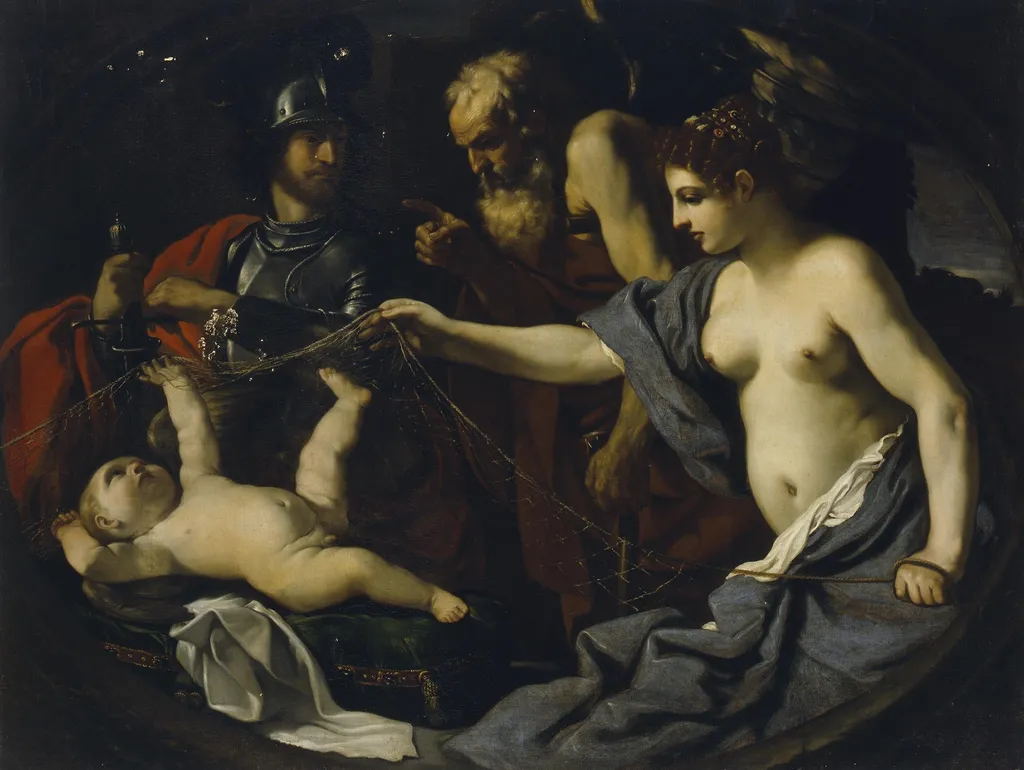
Chronos, Mars, Cupid and Venus (copy) is an oil painting by Unknown. It is held in the collection of the Hermitage Museum. This oil painting is a copy of a lost original, likely from the late Renaissance or early Baroque period.
About this work
Overview
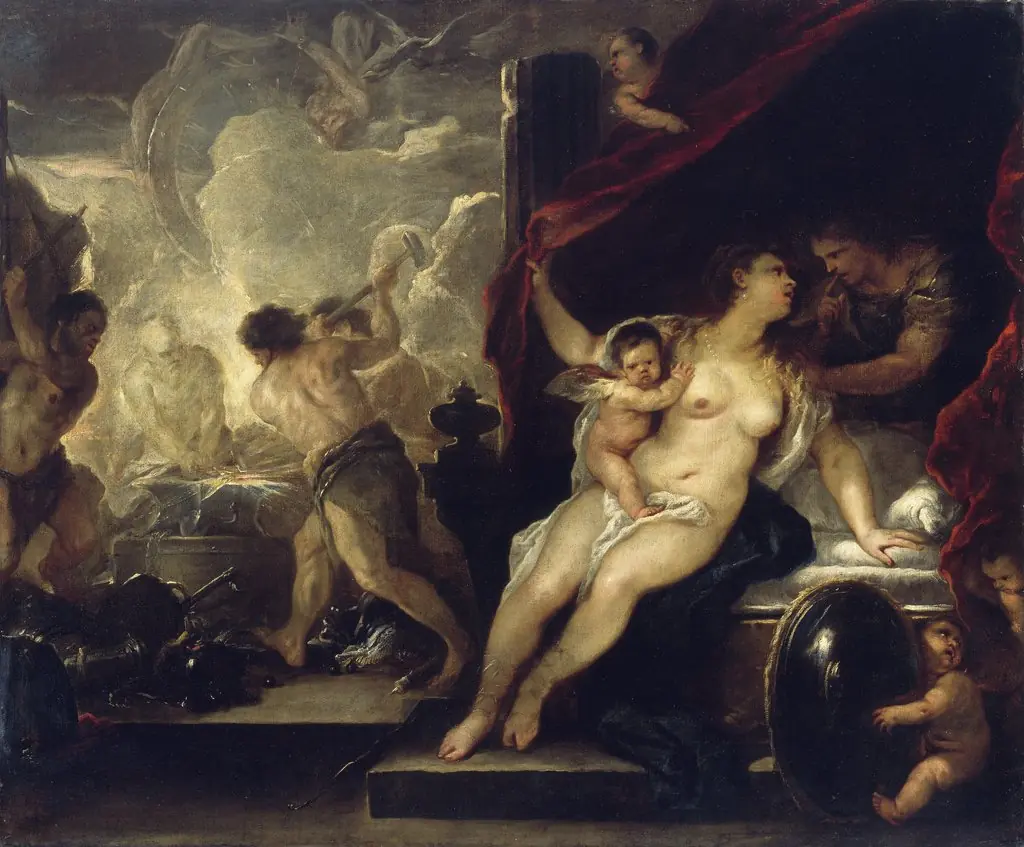
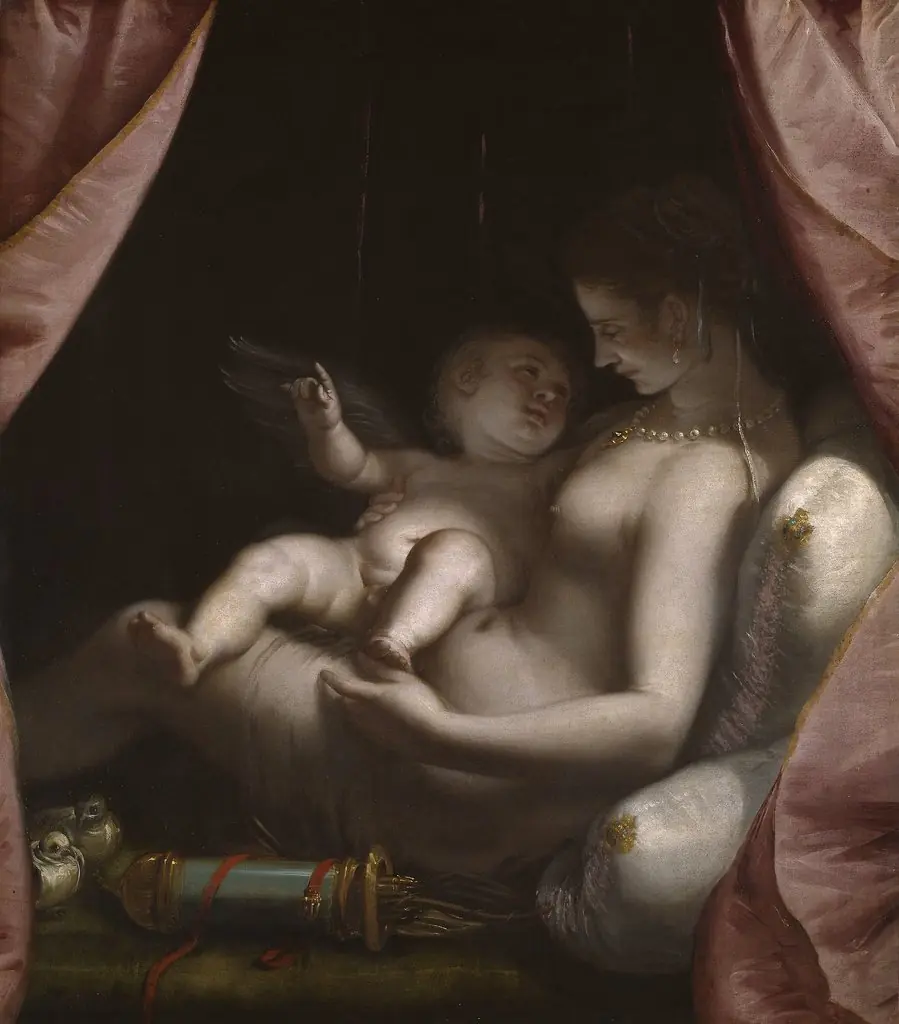
This oil painting is a copy of a lost original, likely from the late Renaissance or early Baroque period. It portrays four figures in a dim, enclosed space, rendered with strong contrasts of light and shadow. The composition centers on a woman and infant, flanked by two male figures, one armored, the other bearded, creating a narrative tension within a confined, theatrical setting.
Subject & Meaning
The figures are interpreted as mythological: Venus, Cupid, Mars, and Chronos. The woman, Venus, reaches toward her child, Cupid, while Mars, in armor, stands guard. Chronos, the bearded elder, gestures toward the infant, possibly alluding to time’s dominion over love and war. The scene suggests a moment of vulnerability, where divine forces intersect with the fragility of youth.
Technique & Style
The artist employs chiaroscuro to model forms and deepen spatial illusion, drawing attention to the infant and the woman’s outstretched hand. Shadows swallow the background, isolating the figures in a stage-like void. Brushwork is controlled, with soft transitions between light and dark, emphasizing emotional gravity over decorative detail.
History & Provenance
The painting is a later reproduction of a now-lost composition, possibly by a Northern Mannerist or early Baroque master. Its origins are undocumented, but its style aligns with 17th-century workshop practices in Italy or the Low Countries. It entered institutional collections in the 19th century, valued for its dramatic composition and technical execution.
Context
During the 16th and 17th centuries, mythological scenes were frequently reinterpreted by artists to explore human emotion and cosmic order. This work reflects a trend of combining classical allegory with intimate, psychologically charged moments, influenced by Caravaggio’s lighting and the emotional intensity of Mannerist traditions.
Legacy
Though not an original masterpiece, the painting preserves the visual language of its source, offering insight into how mythological narratives were transmitted and adapted in later periods. Its survival underscores the enduring appeal of allegorical themes and the role of copies in sustaining artistic traditions before widespread reproduction techniques.
Artist & collection