Artwork
Democritus, the Laughing Philosopher
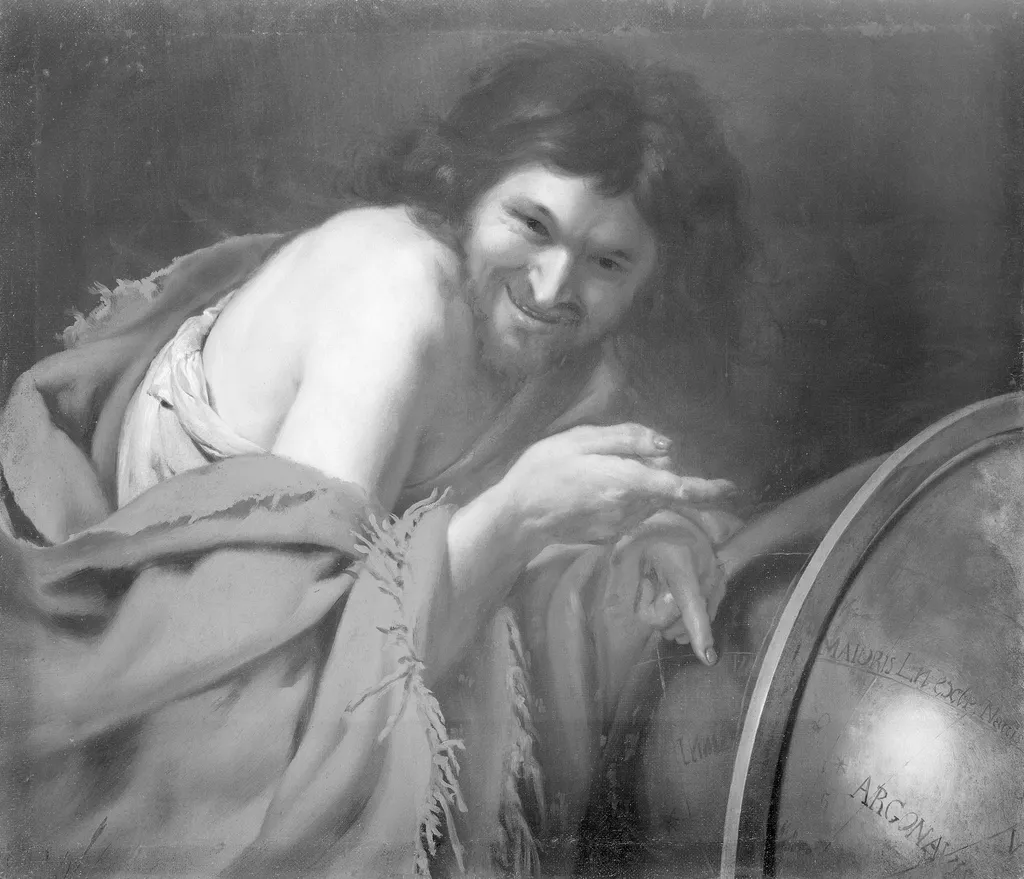
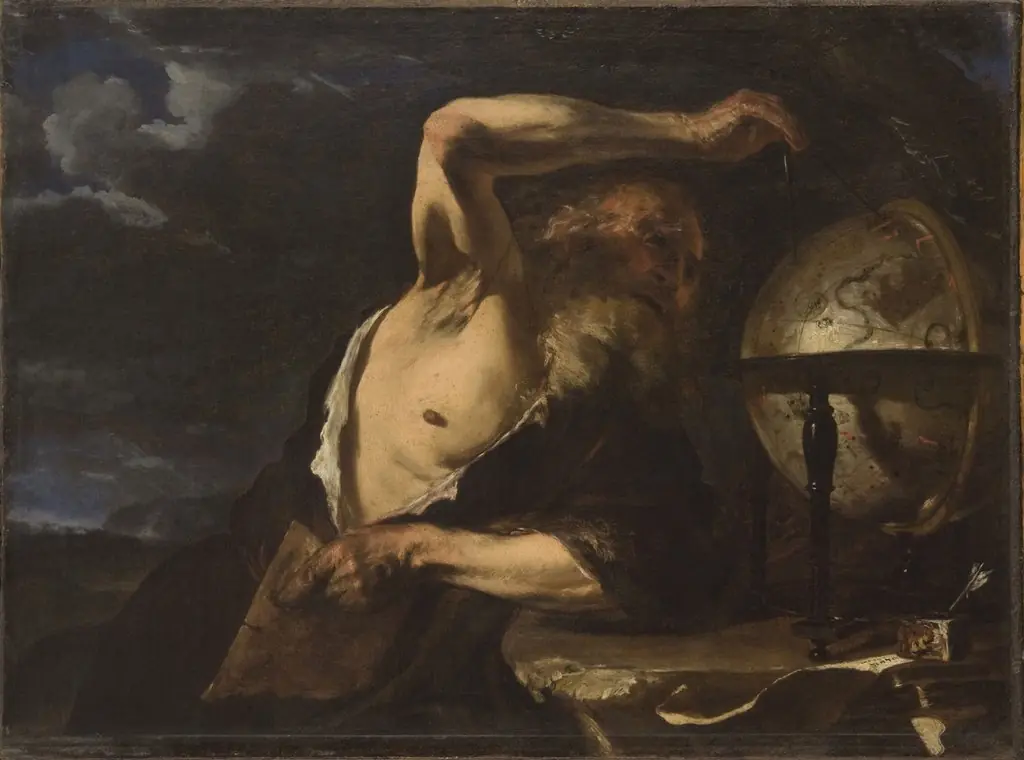
Democritus, the Laughing Philosopher is an oil painting by the Early Baroque Italian artist Unknown. It dates from 1630 and is held in the collection of the Art Institute of Chicago. This oil painting portrays the ancient Greek philosopher Democritus in a contemplative yet amused pose.
About this work
Overview
The composition emphasizes his expression of quiet laughter, contrasting with the gravity typically associated with philosophical inquiry.
This oil painting portrays the ancient Greek philosopher Democritus in a contemplative yet amused pose. Dressed in a white toga, he leans against a globe that resembles a leather-bound volume, its surface marked with symbolic engravings. The composition emphasizes his expression of quiet laughter, contrasting with the gravity typically associated with philosophical inquiry. Chiaroscuro modeling gives the figure and object a tangible presence against a darkened background.
Subject & Meaning
Democritus, known for his belief in atomic theory and his tendency to laugh at human folly, is depicted not as a solemn thinker but as one amused by the world’s absurdities. The globe, treated as a book, suggests his intellectual engagement with the Earth’s geography and human affairs. His gesture implies he is about to reveal or turn to a passage that underscores his worldview, laughter as a response to the contradictions of existence.
Technique & Style
The artist employs oil paint with careful attention to chiaroscuro, using strong contrasts between light and shadow to model the figure’s form and draw focus to the face and globe. The texture of the toga, the grain of the leather-bound globe, and the softness of the beard are rendered with subtle gradations. The background recedes into near darkness, isolating the philosopher and heightening the psychological intensity of his expression.
History & Provenance
The painting’s origins are not definitively recorded, but its style and subject align with early modern European traditions that revived classical figures as moral or intellectual symbols. It likely emerged in the 17th century, a period when philosophers were frequently depicted in allegorical contexts. No documented ownership chain or exhibition history is known, suggesting it may have been a private commission or studio work.
Context
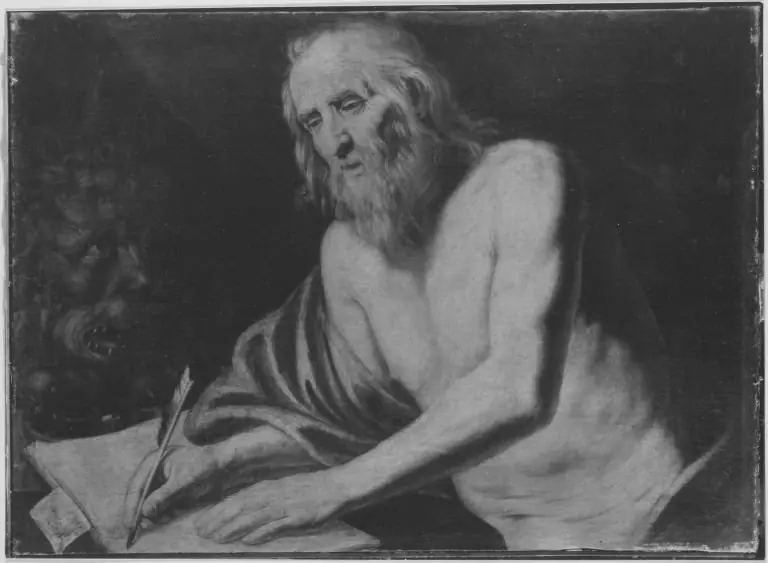
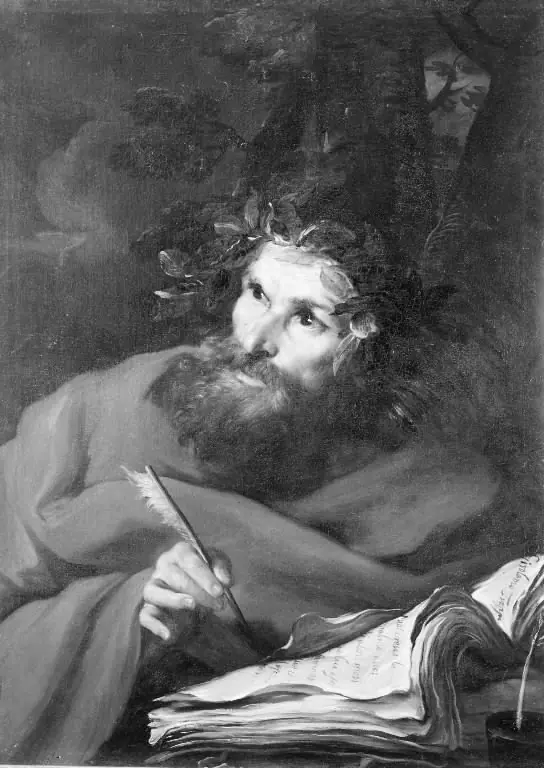
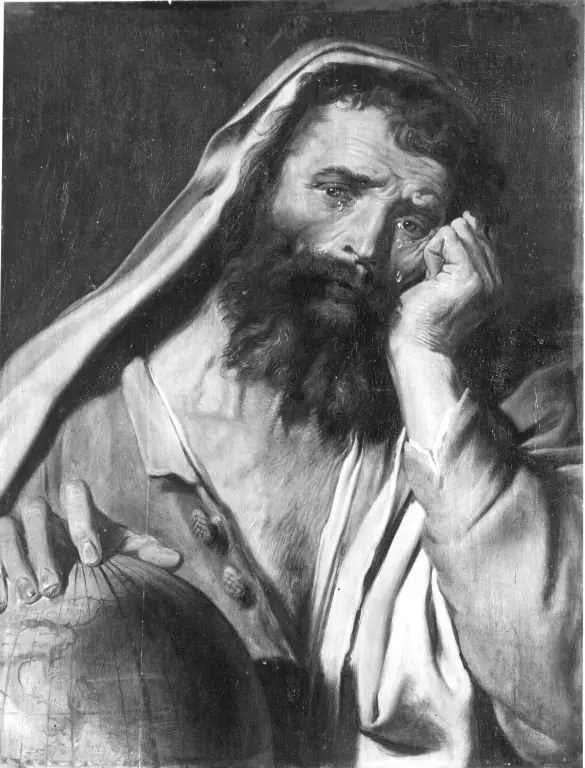
During the Renaissance and Baroque eras, ancient philosophers were frequently reimagined to reflect contemporary values. Democritus, often contrasted with the weeping Heraclitus, symbolized rational detachment and the absurdity of human concerns. This painting fits within a broader visual tradition that used classical figures to explore themes of knowledge, folly, and the human condition through symbolic objects and expressive physiognomy.
Legacy
Though not widely exhibited or reproduced, the painting contributes to a persistent iconographic tradition of portraying Democritus as the laughing sage. Its emphasis on intellectual amusement over solemnity distinguishes it from more austere depictions of philosophers. The work remains a quiet example of how early modern artists blended classical antiquity with psychological realism to convey complex philosophical ideas through visual narrative.
Artist & collection