Artwork
Hunting Scene
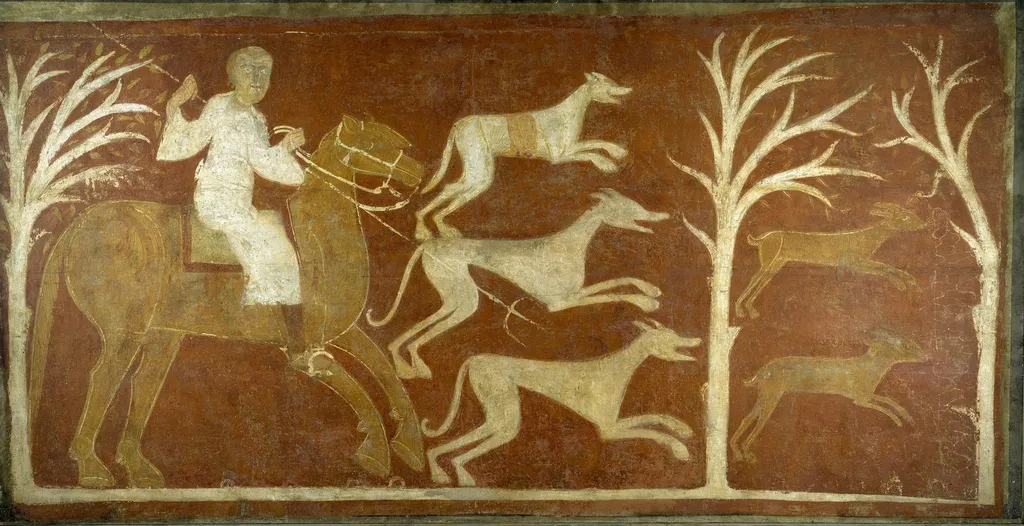
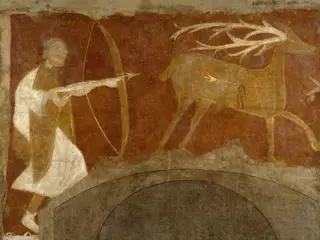
Hunting Scene is an unspecified painting. It dates from 1125 and is held in the collection of the Metropolitan Museum of Art. This painting depicts a mounted hunter pursuing three deer within a natural setting.
About this work
Subject & Meaning
Classified within the religious painting genre, the work depicts the act of hunting, a subject that medieval imagery sometimes linked to spiritual themes.
The painting shows a solitary male figure in a landscape that suggests a hunt, rendered in a style associated with early medieval religious art. Classified within the religious painting genre, the work depicts the act of hunting, a subject that medieval imagery sometimes linked to spiritual themes. Executed in 1125, the composition measures 182.2 cm by 358.1 cm and is housed in the Metropolitan Museum of Art.
History & Provenance
Hunting Scene is dated to 1125 and is held by the Metropolitan Museum of Art, where it is catalogued under accession number 57.97.1. The work is attributed to an anonymous artist rather than a named maker. It measures 182.2 cm in height and 358.1 cm in width and belongs to the religious painting genre, depicting a man in a hunting context.
The available sources record only the inception year and the present institutional home. They do not document where the painting was held before entering the Metropolitan Museum of Art, whether it was commissioned, or how it was acquired, and no exhibition history is cited.
Overview
This painting depicts a mounted hunter pursuing three deer within a natural setting. A central figure on horseback, armed with a spear and carrying a small satchel, is surrounded by the startled animals. The composition is framed by two prominent trees, while the background recedes into a flat, monochromatic expanse of earthy brown, emphasizing the figures in the foreground.
Technique & Style
The artist employed a distinctive visual language characterized by simplified forms and strong, definitive outlines. Figures are rendered with minimal internal modeling, relying on these clear contours rather than extensive shading to define volume and shape. The limited use of tonal variation contributes to a flattened perspective, emphasizing the graphic quality of the composition and its direct visual impact.
Artist & collection

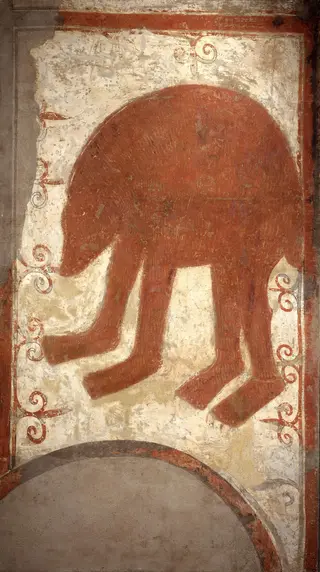 Bear
Bear Profane paintings from Sigena: Retinue of pilgrims and assault on a castle (Saint John of Acre?)
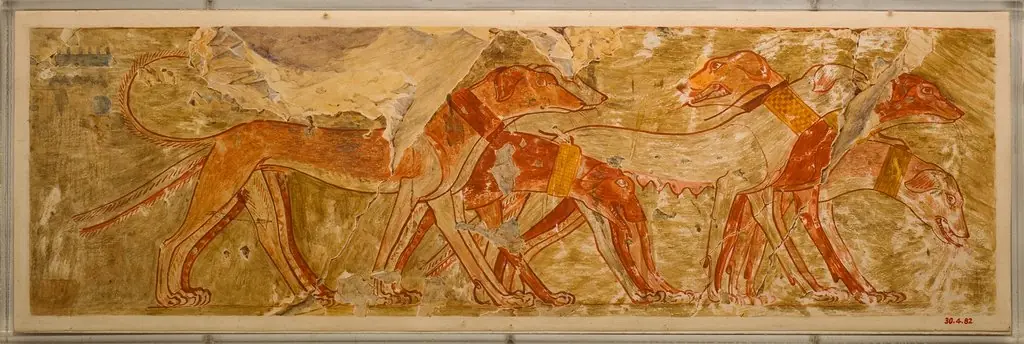 Hounds from Nubia, Tomb of Rekhmire
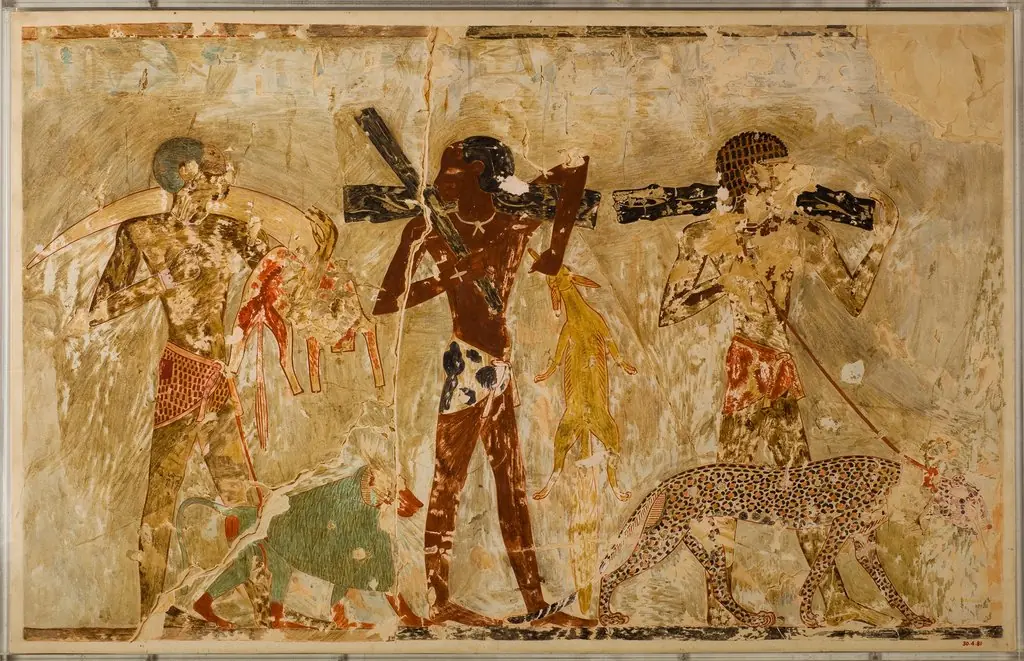 Facsimile painting from the tomb of Rekhmire
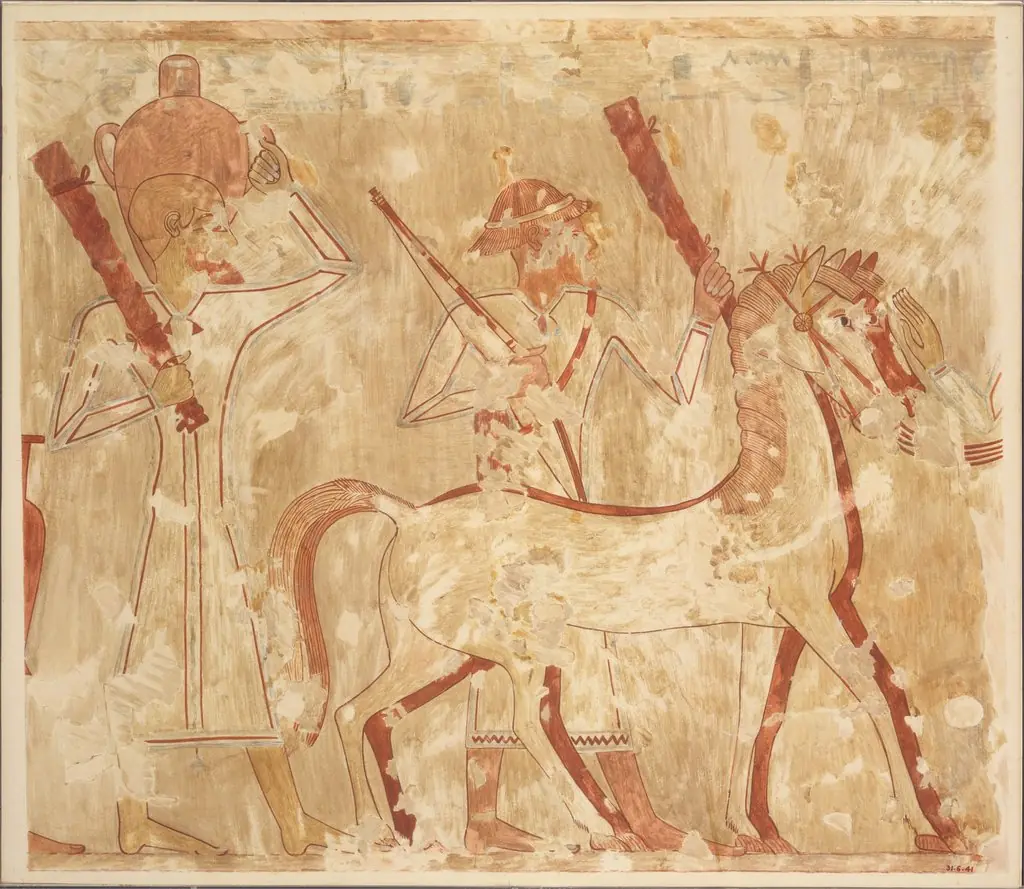 Syrians Bringing Horses, Tomb of Rekhmire
 Profane paintings from Sigena: Deer eating fruit from a tree, lion holding a naked man and dismounted knight kneeling before a lady on a throne
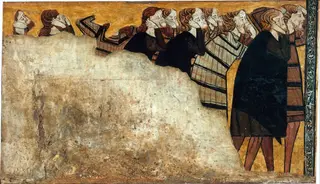 Pleurants
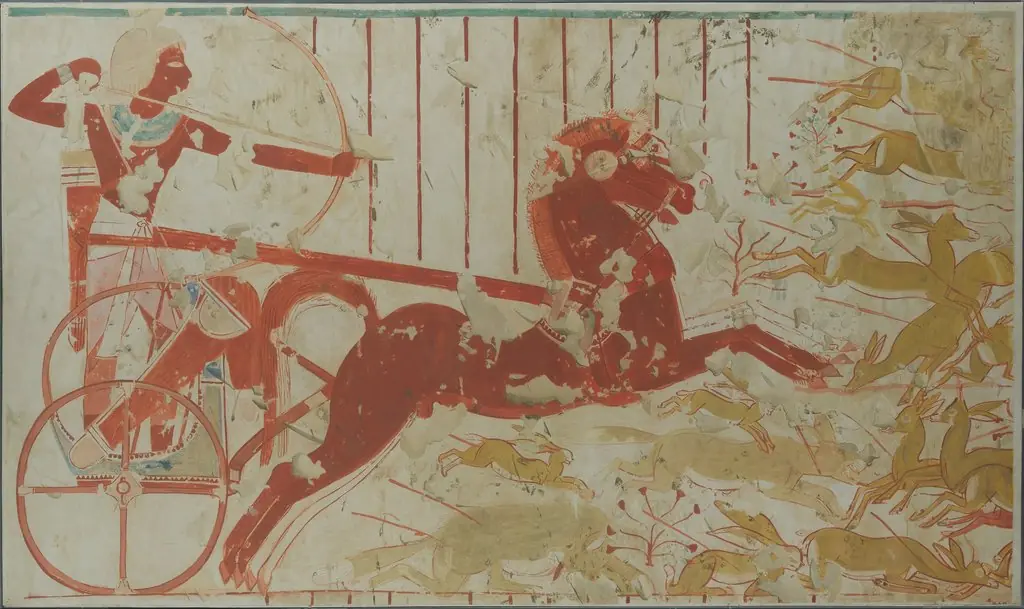 Hunting from a Chariot, Tomb of Userhat
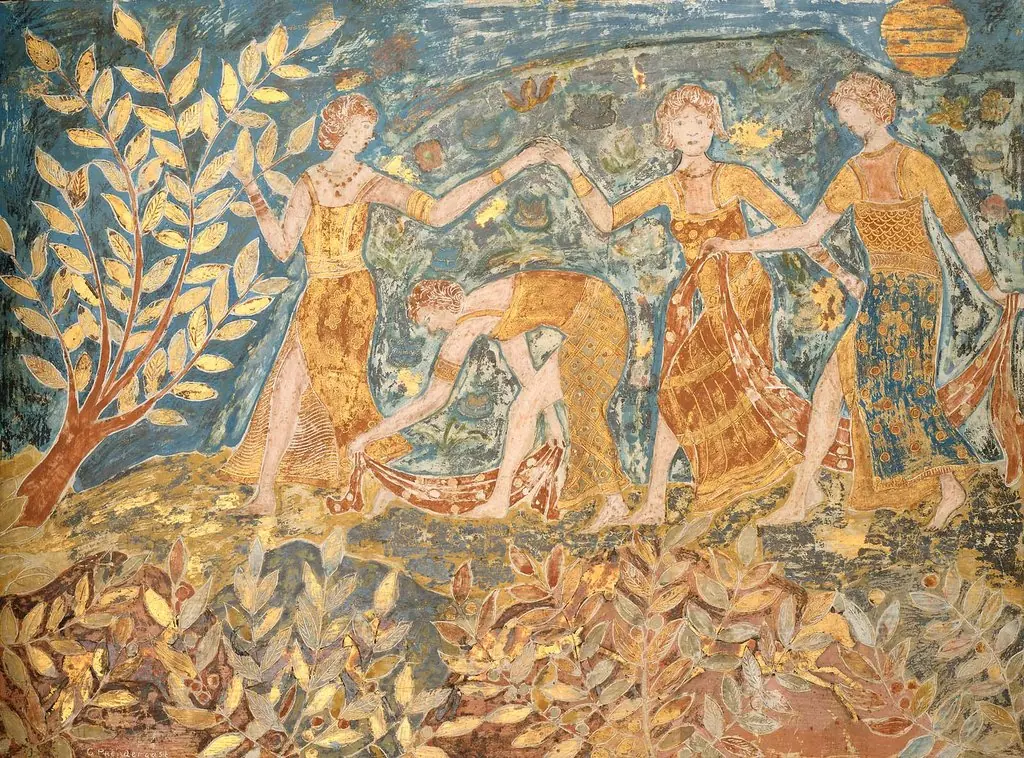 Dancers
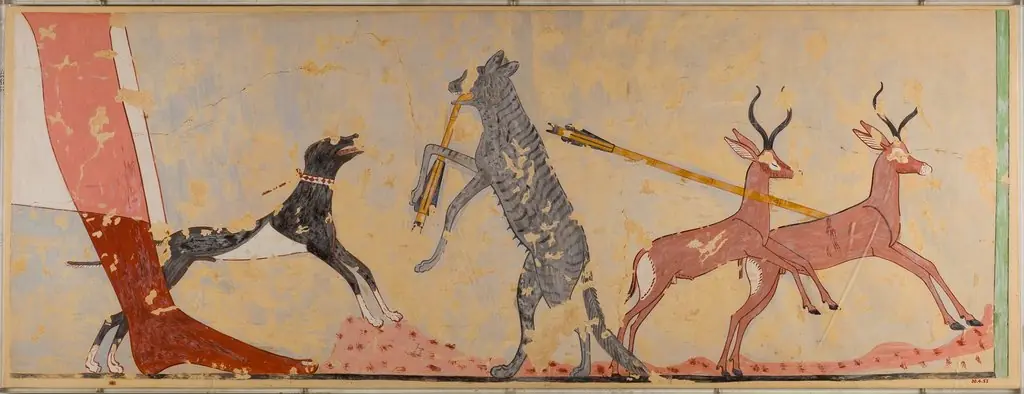 Hunting Scene, Tomb of Ineni
 Profane paintings from Sigena: Knights in battle and soldier attacked by a lion
- Hunting Scene