Artwork
Luis Vives
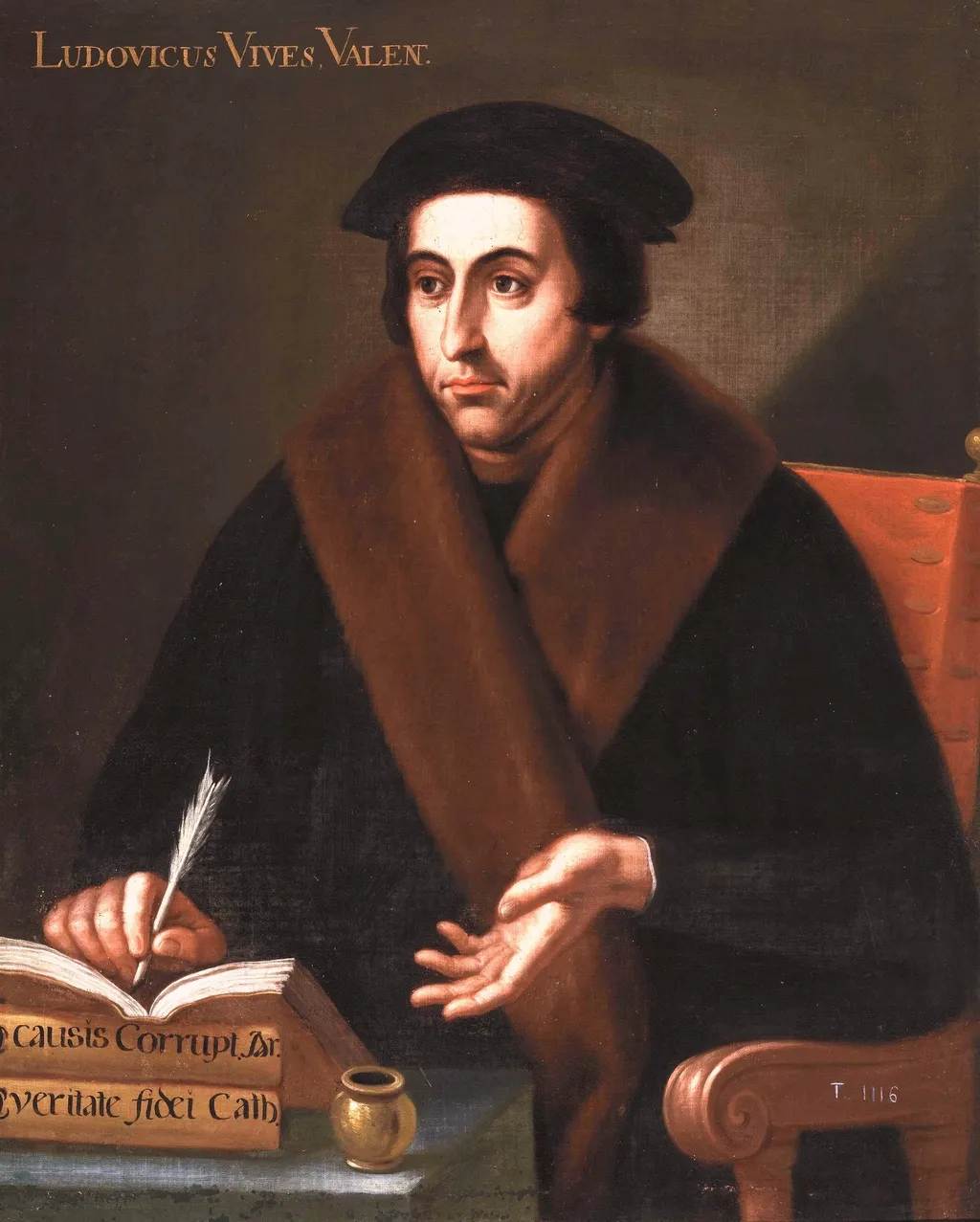
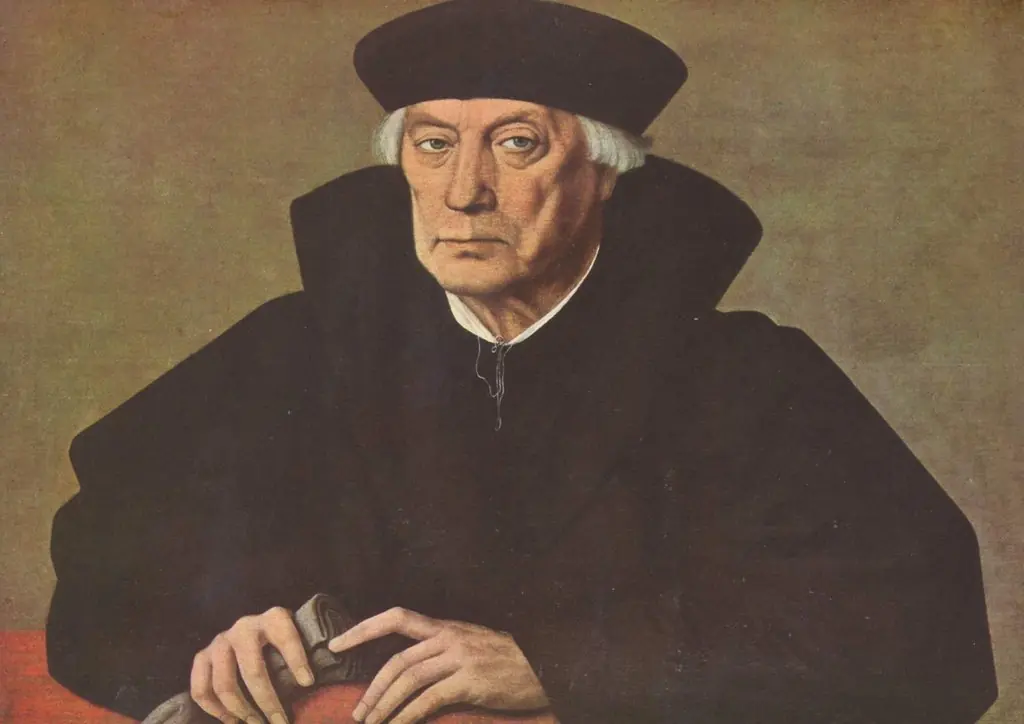
Luis Vives is an oil painting by the Early Baroque Italian artist Unknown. It dates from 1601 and is held in the collection of the Museo del Prado. The oil painting portrays a solemn figure wearing a dark hat and a brown robe, seated at a desk.
About this work
Subject & Meaning
The portrait shows Juan Luis Vives, a Spanish humanist and physician of the 16th century, rendered in oil on canvas. He is depicted in conventional portrait attire of his era, embodying the intellectual gravitas associated with learned men of the Spanish Renaissance. The work was created in 1601 and is housed in the Museo del Prado, where it remains part of the permanent collection.
Technique & Style
The formal qualities align with early Baroque portraiture, characterized by naturalistic rendering and restrained composition.
The work is an oil painting on canvas, measuring 88 cm by 72 cm, depicting Juan Luis Vives. Executed in 1601, it is classified as a portrait and was created using oil paint as the medium, applied to a canvas support. The formal qualities align with early Baroque portraiture, characterized by naturalistic rendering and restrained composition. The painting is housed in the Museo del Prado, where it remains part of the permanent collection.
History & Provenance
The painting was created in 1601 as an oil on canvas portrait of Juan Luis Vives, commissioned within the circle of the sitter’s family. It entered the collection of the Museo del Prado, where it has been displayed since its acquisition, maintaining continuous ownership by the institution since the early twentieth century. The work’s dimensions, recorded as 88 cm in height and 72 cm in width, reflect its original canvas size, and its genre is classified as a portrait.
The portrait is held by the Museo del Prado in Madrid, where it is inventoried as oil on canvas with dimensions of 88 cm in height and 72 cm in width.
No exhibition history is recorded in the provided sources.
Overview
The oil painting portrays a solemn figure wearing a dark hat and a brown robe, seated at a desk. He holds a quill poised above an open book inscribed with Latin text, while a small golden inkwell rests nearby. A fragment of a red chair appears on the right, and the dark background accentuates the man's facial features.
Context
If the portrait indeed represents the humanist Luis Vives, it situates the work within the Renaissance period’s emphasis on learning and moral inquiry, reflecting the era’s interest in the relationship between knowledge and ethical conduct.
Artist & collection









 Portrait of Luther
 Portrait of Luther
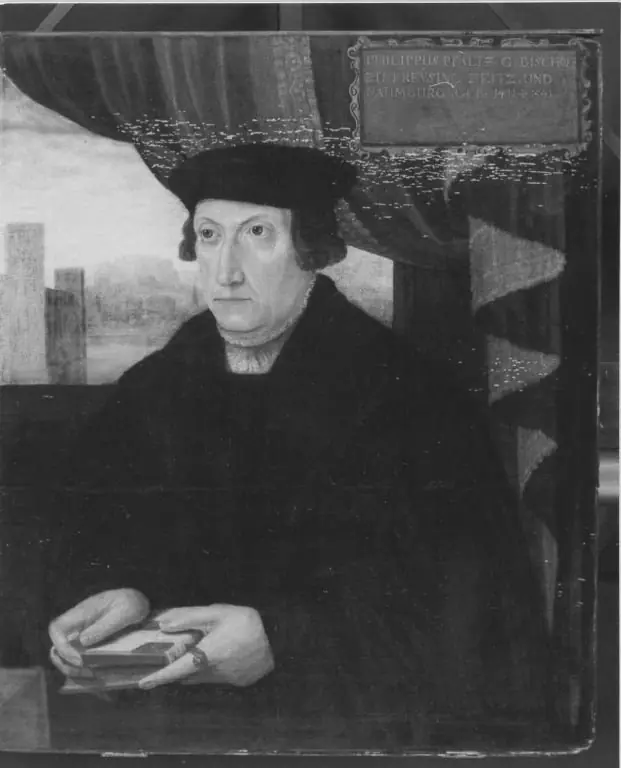 Portrait of Count Palatine Philip, Bishop of Freising
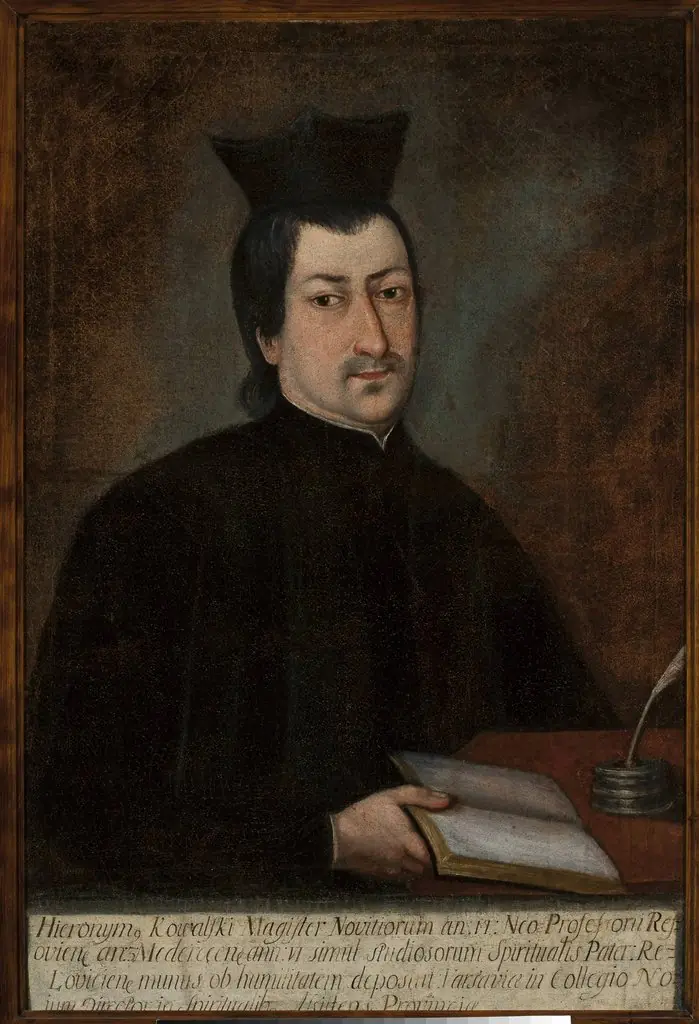 Portrait of Hieronim Kowalski
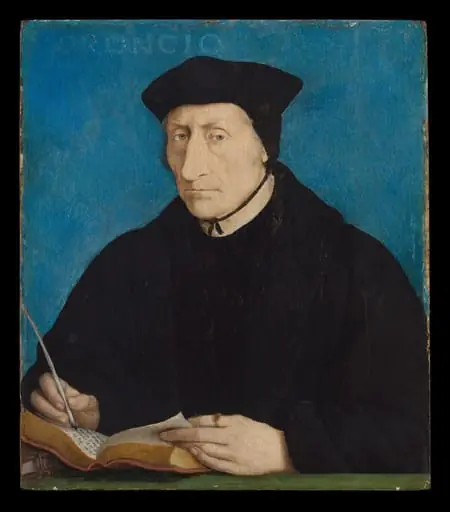 Portrait of Guillaume Budé
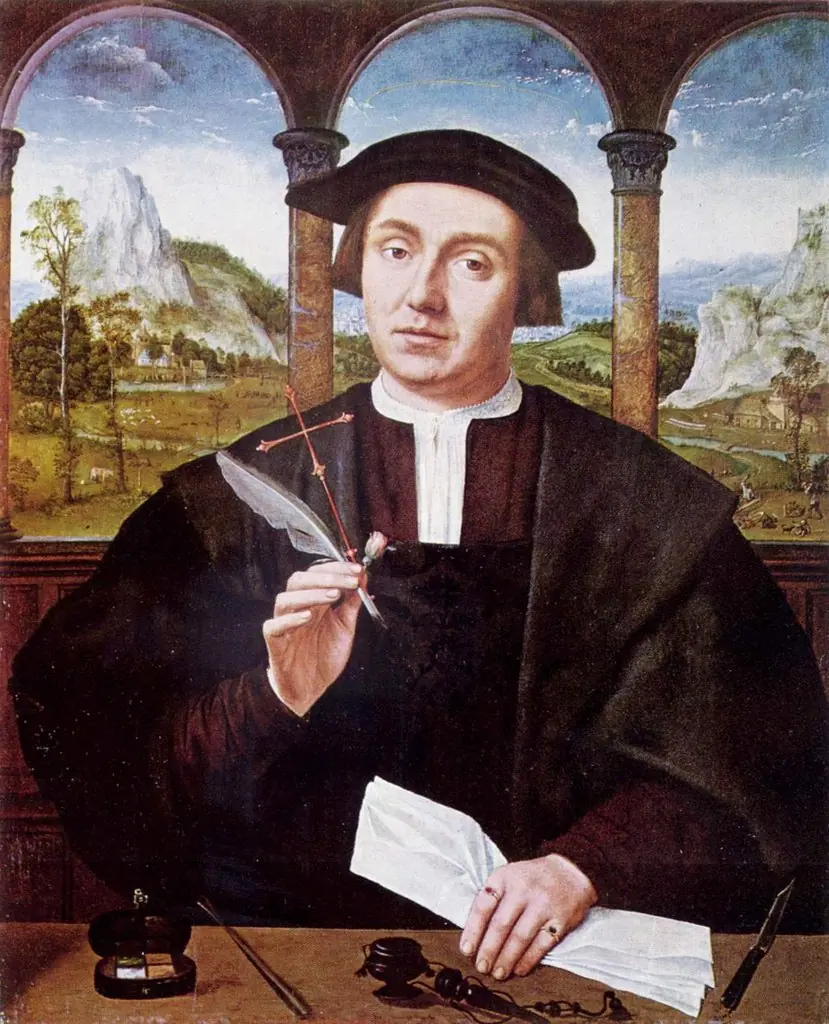 Portrait of a Man
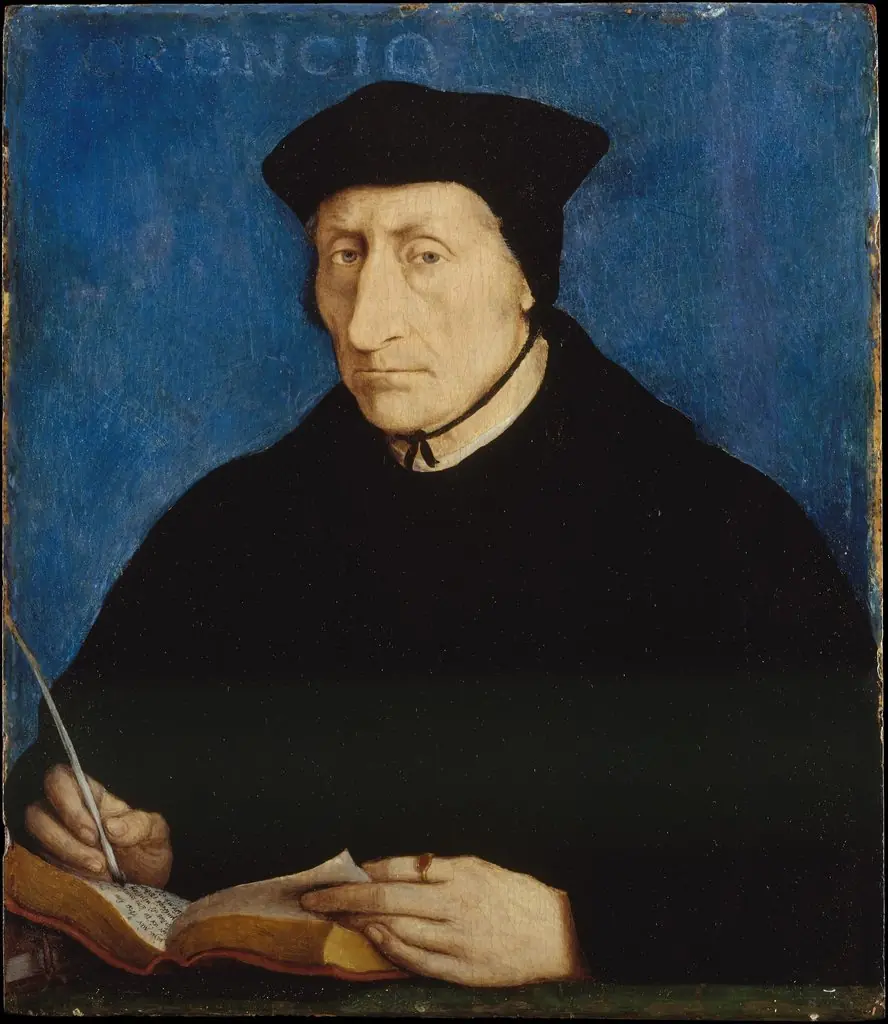 Guillaume Budé (1467–1540)
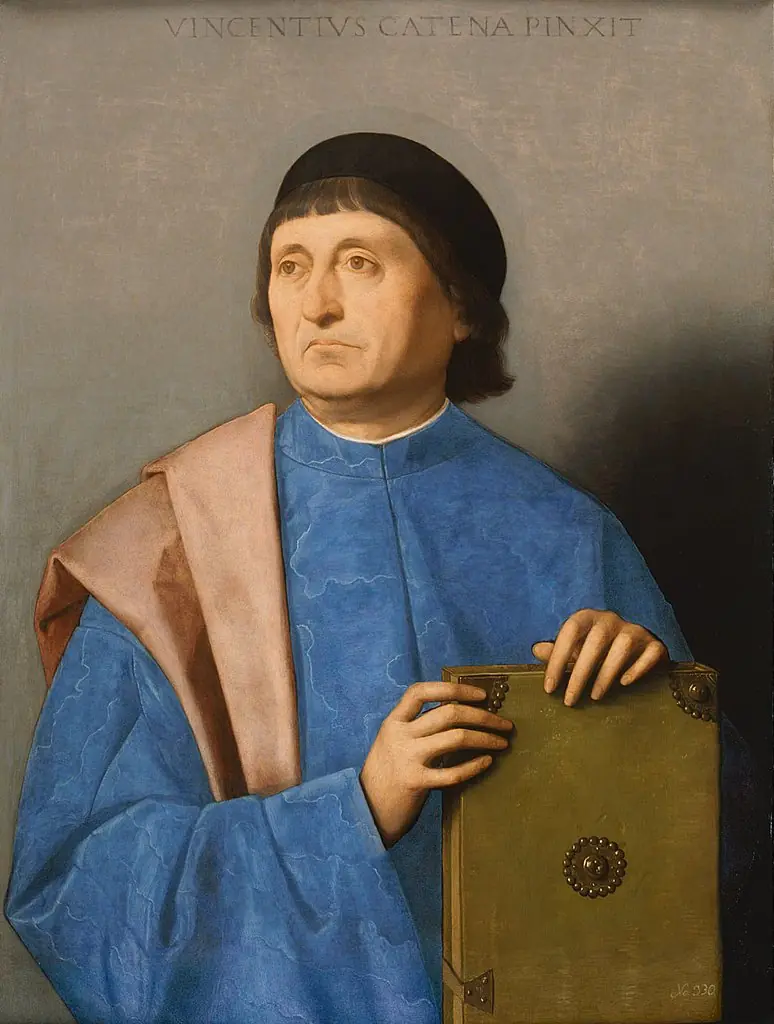 Portrait of a man with a book
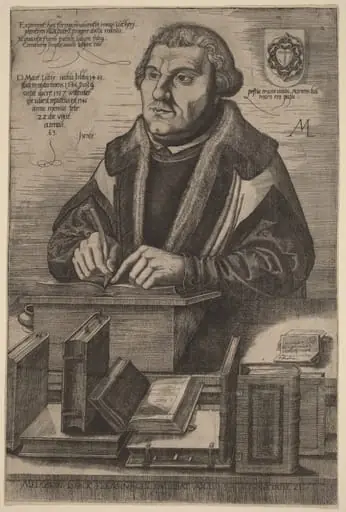 Martin Luther
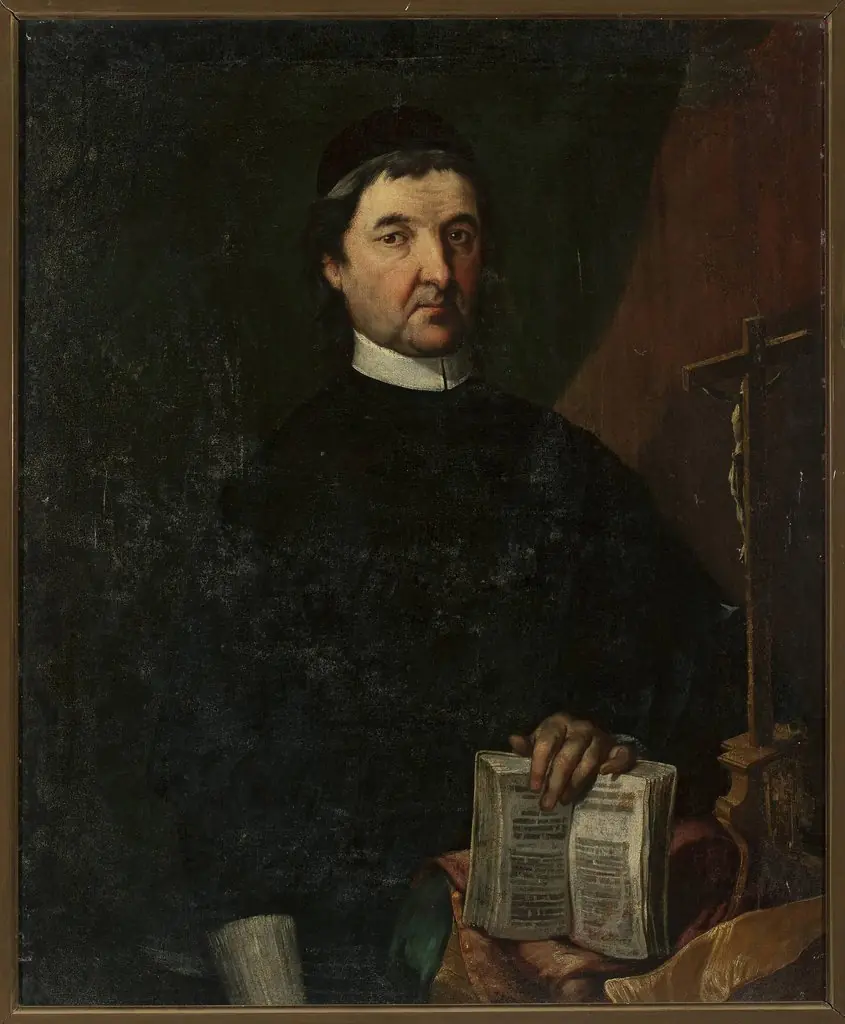 Portrait of a priest (Piarist?)
 Portrait of Jean de Carondelet (1469-1544)
- El padre Remigio