Artwork
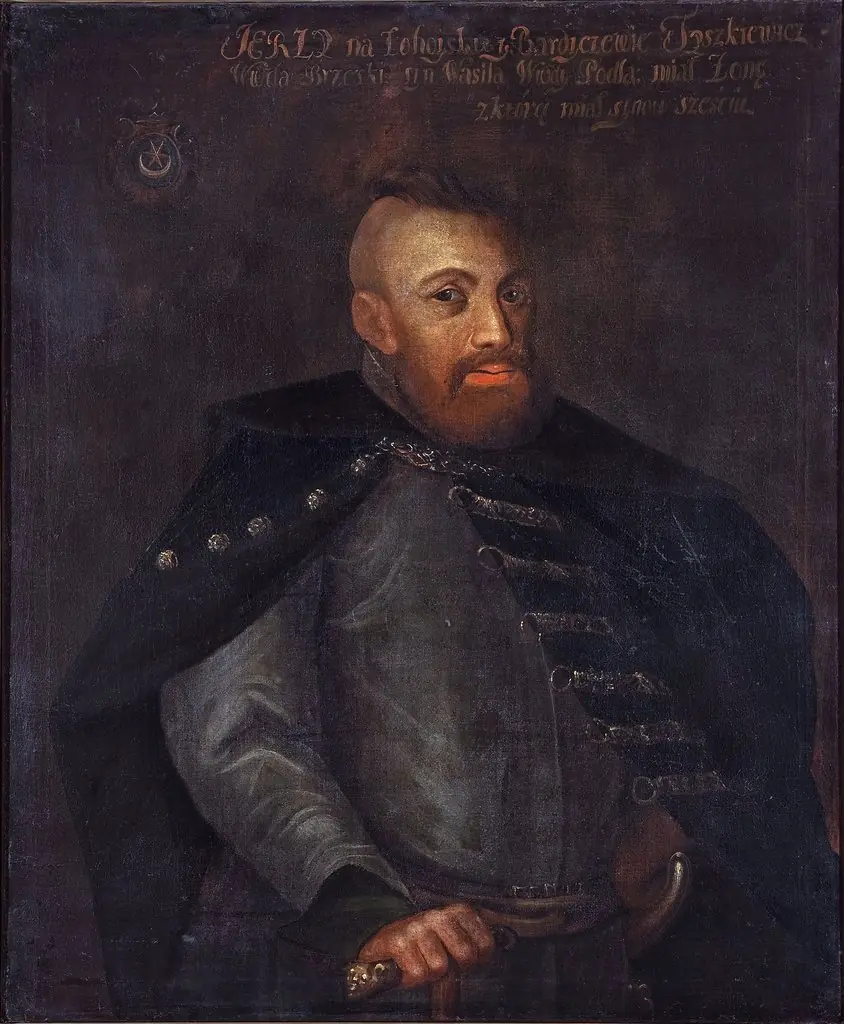
Portrait of Catul (Kalinik?) Tyszkiewicz, Leliwa coat of arms, starosta of Chernihiv
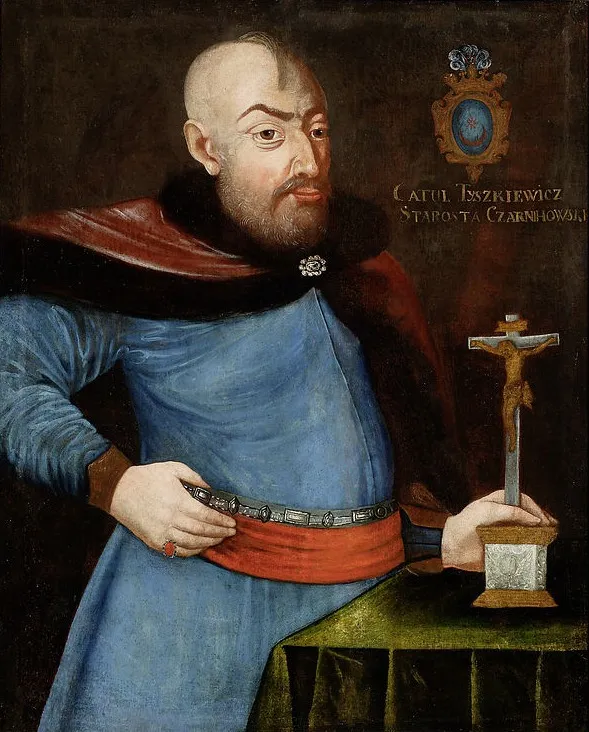
Portrait of Catul (Kalinik?) Tyszkiewicz, Leliwa coat of arms, starosta of Chernihiv is an oil painting by the Neoclassicist artist Unknown. It dates from 1797 and is held in the collection of the National Museum in Warsaw.
About this work
Overview
) Tyszkiewicz, Leliwa coat of arms, starosta of Chernihiv is an oil on canvas painting dated 1793, attributed to an unknown artist.
The Portrait of Catul (Kalinik?) Tyszkiewicz, Leliwa coat of arms, starosta of Chernihiv is an oil on canvas painting dated 1793, attributed to an unknown artist. Measuring 91 by 72.5 centimeters, the work is held in the collection of the National Museum in Warsaw. It is a representative portrait of a Polish-Lithuanian nobleman that combines contemporary late-eighteenth-century dress with retrospective Sarmatian iconography, reflecting the enduring cultural memory of the Polish-Lithuanian Commonwealth's aristocratic traditions. The painting's uncertain attribution and its deliberate evocation of earlier noble customs make it a significant document of post-Partition Polish identity formation.
Subject & Meaning
The portrait depicts Catul Tyszkiewicz, also identified in sources as Kalinik, who held the office of starosta of Chernihiv, an administrative position in the Polish-Lithuanian Commonwealth. The sitter appears in three-quarter length, turned slightly to the right against a dark brown background. His shaved head with a small central tuft of hair, beard, and mustache deliberately evoke the appearance of a Ruthenian bojar, a reference to the sixteenth- and seventeenth-century Sarmatian fashion that remained powerfully symbolic of Polish-Lithuanian noble identity. The Leliwa coat of arms displayed in a decorative cartouche in the upper right corner proclaims his noble lineage. His costume, a blue tunic with red sash, dark red or brown cloak with black fur trim, and ornate belt, reinforces this aristocratic self-presentation. The small crucifix mounted on a rectangular base, held in his left hand and positioned on a green draped table, signals piety, while the gold ring with a red stone on his right hand indicates status. The overall effect is a carefully constructed image of noble authority, religious devotion, and ancestral pride at a moment of political crisis for the Commonwealth.
Technique & Style
The painting is executed in oil on canvas with smooth brushwork that demonstrates particular care in rendering textile textures and metallic surfaces. Lighting falls from the left, illuminating the face, hands, and fabrics against the dark ground in a manner consistent with European Baroque and late Baroque portraiture, though the handling suggests a late-eighteenth-century execution of an essentially retrospective style. The dark brown background, the dramatic contrast between light and shadow, and the formal pose all align with the conventions of Sarmatian portraiture, a genre that persisted in Polish-Lithuanian art long after its stylistic analogues had faded elsewhere in Europe. The careful attention to the fur trim, the sheen of the fabrics, and the metallic details of the belt and ring indicate a skilled, if unidentified, practitioner working within established conventions of representative portraiture.
History & Provenance
The painting is dated 1793, a year of particular significance as it preceded the final Third Partition of Poland (1795) that eliminated the Commonwealth. One source suggests a broader dating range of 1793 to 1800, indicating some scholarly uncertainty about precise execution. The work's provenance includes the Tyszkiewicz family collection and Łohojsko Palace in Belarus, the family seat. It was later held by the Society for the Care of the Monuments of the Past in Warsaw from 1906 to 1944, an organization dedicated to preserving Polish cultural heritage during a period of intense political pressure. The painting subsequently entered the collection of the National Museum in Warsaw, where it remains today. No exhibition history is recorded in the available sources.
Context
The portrait occupies a significant place within the tradition of Sarmatian portraiture, a genre that flourished in the Polish-Lithuanian Commonwealth from the sixteenth through the eighteenth centuries and persisted as a cultural marker even after the Commonwealth's political dissolution. The year 1793 places its creation in the immediate aftermath of the Second Partition and during the period of the Targowica Confederation, when Polish-Lithuanian nobles were divided between reformist and conservative factions, many of the latter looking to traditional noble prerogatives as a bulwark against Russian domination. The retrospective evocation of Ruthenian bojar appearance, associated with the fifteenth-century figure Kalenik Mishkavich according to one source, suggests a deliberate archaism that positioned contemporary nobles within an imagined continuum of ancestral virtue and regional autonomy. The painting's unknown authorship is itself characteristic of much Polish-Lithuanian portraiture of this period, where workshop production and the demands of heraldic accuracy often took precedence over individual artistic identity. The work's preservation by the Society for the Care of the Monuments of the Past during the early twentieth century reflects its significance as a document of national heritage during the era of partitioned Poland.
Legacy
The portrait's afterlife is inseparable from the broader fate of Polish cultural patrimony across the tumultuous twentieth century. Its passage from the Tyszkiewicz family seat at Łohojsko Palace in Belarus to the Society for the Care of the Monuments of the Past in Warsaw, and ultimately to the National Museum in Warsaw, traces the geographical and political displacements of Polish art collections through war, revolution, and border changes. The painting continues to serve as a significant document of Sarmatian visual culture, a field that has received renewed scholarly attention as historians have sought to understand the complex identities of the early modern Polish-Lithuanian elite. Its specific resonance lies in its demonstration of how visual conventions of nobility persisted and were strategically deployed even as the political structures that had sustained them collapsed. The unresolved parenthetical in its very title, Catul (Kalinik?), signals the ongoing work of historical reconstruction that surrounds objects of this period, as scholars grapple with incomplete documentation and the layered identities of a multi-ethnic Commonwealth.
Artist & collection









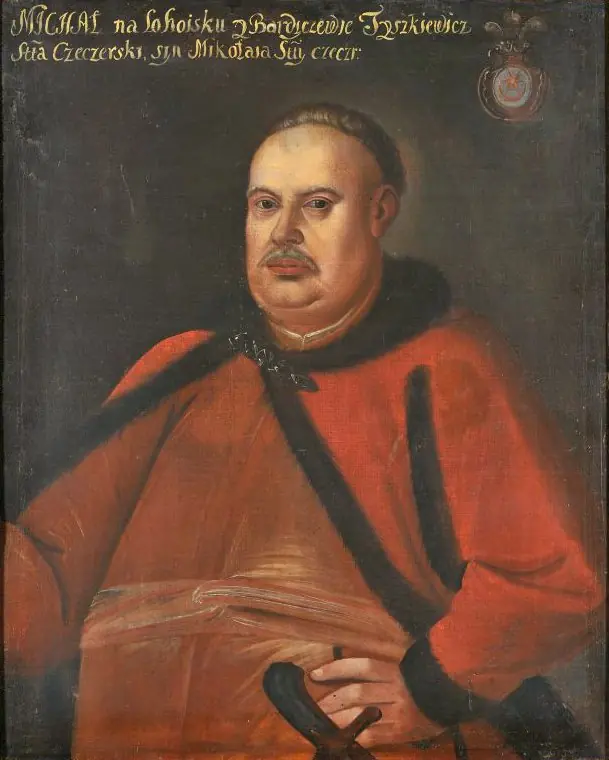
- Portrait of Michał Tyszkiewicz, Leliwa coat of arms (?–before 1703), starosta of Chachersk
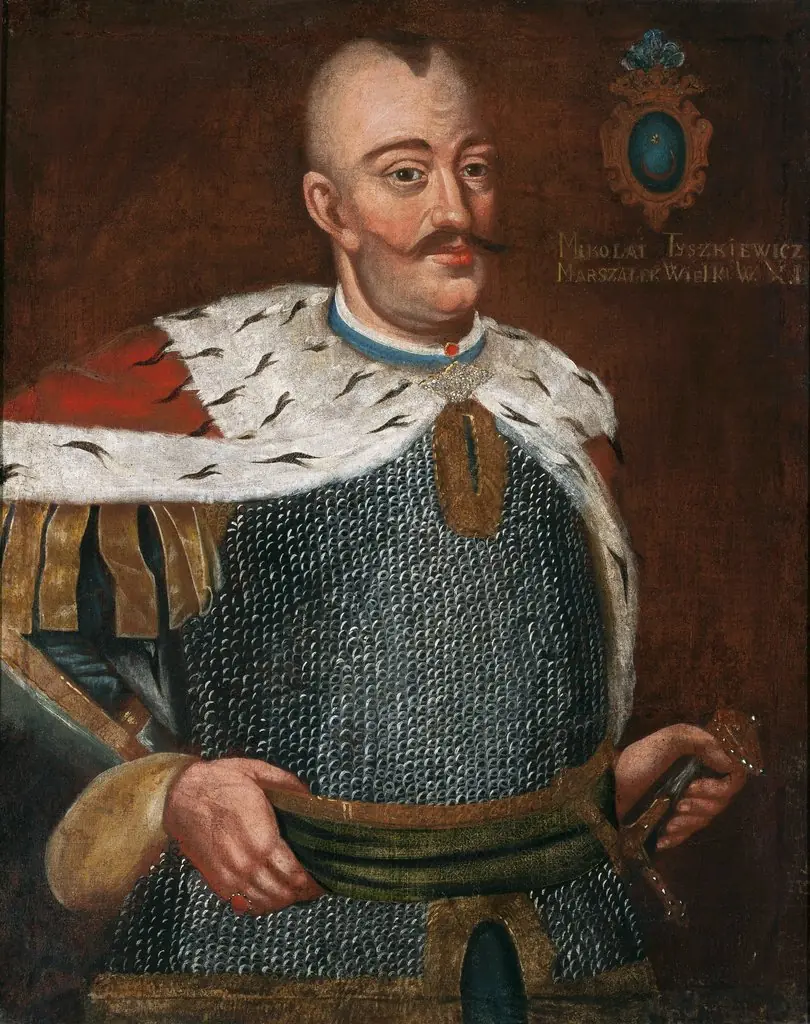 Portrait of Mikołaj Tyszkiewicz, Leliwa coat of arms, marshal of the Grand Duchy of Lithuania
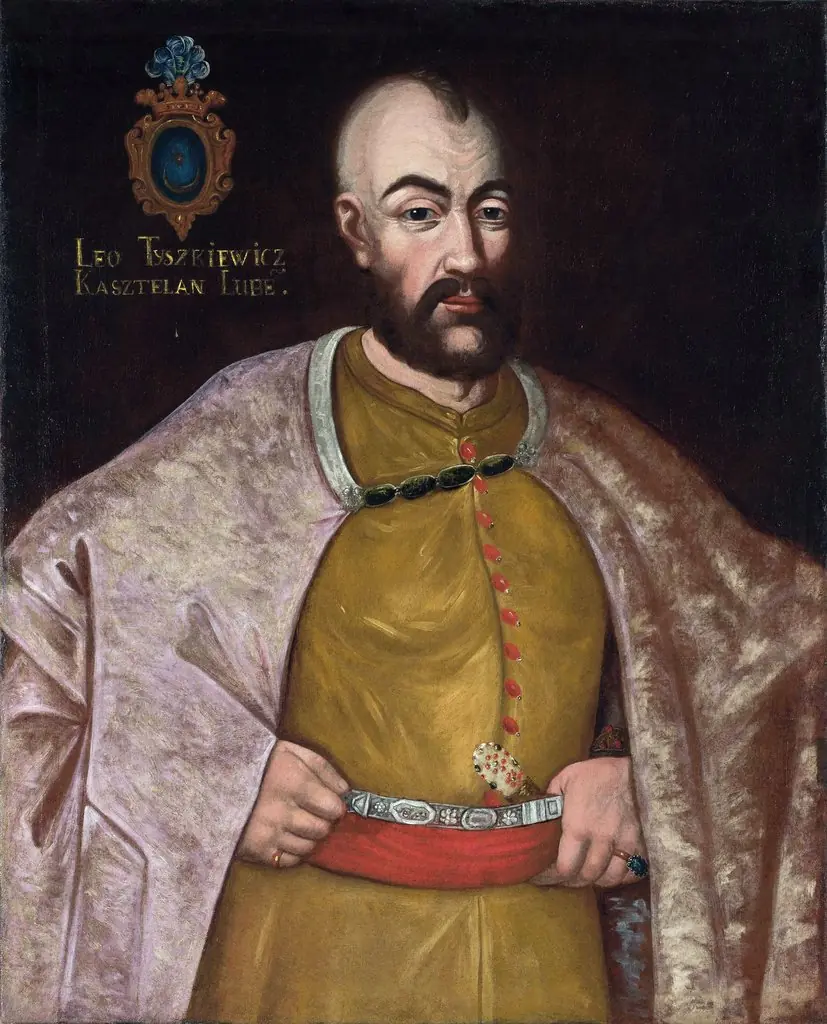 Portrait of Leo (Lew) Tyszkiewicz, Leliwa coat of arms (?–before 1515), castellan of Liubech (?)
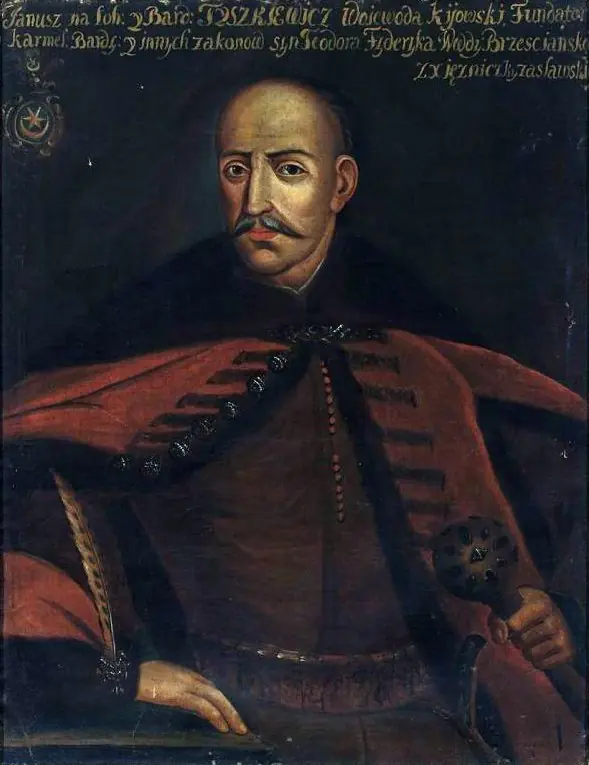 Portrait of Janusz Tyszkiewicz (1570–1649), Leliwa coat of arms, voivode of Kiev
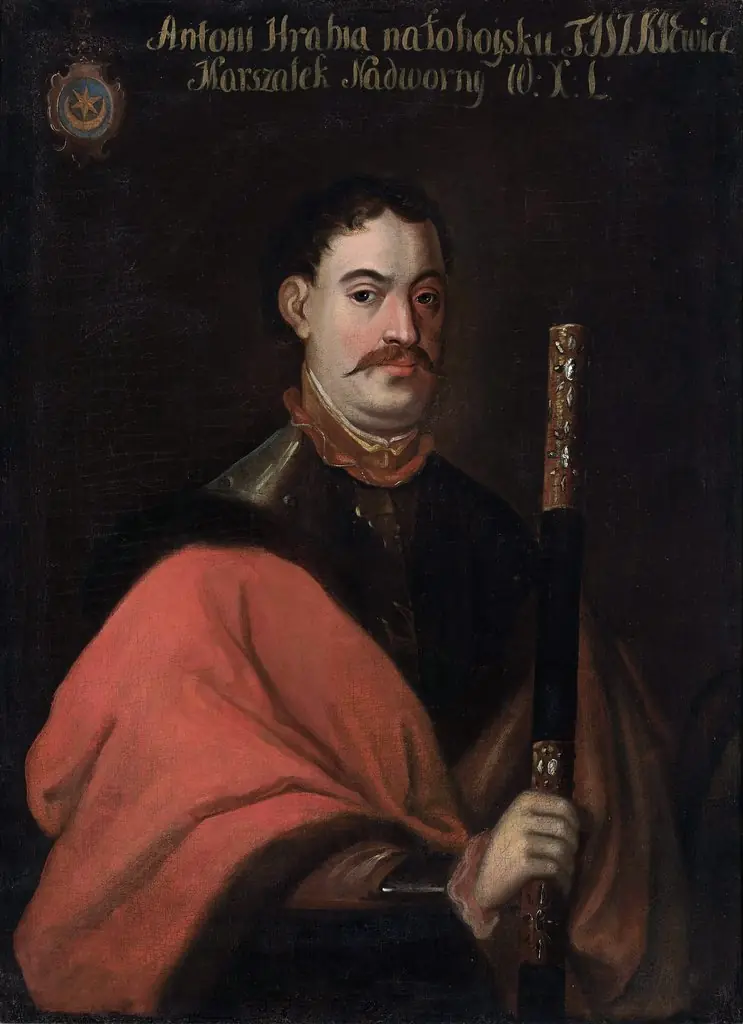 Portrait of Antoni Jan Tyszkiewicz (1609–1649), Leliwa coat of arms, court marshal of the Grand Duchy of Lithuania
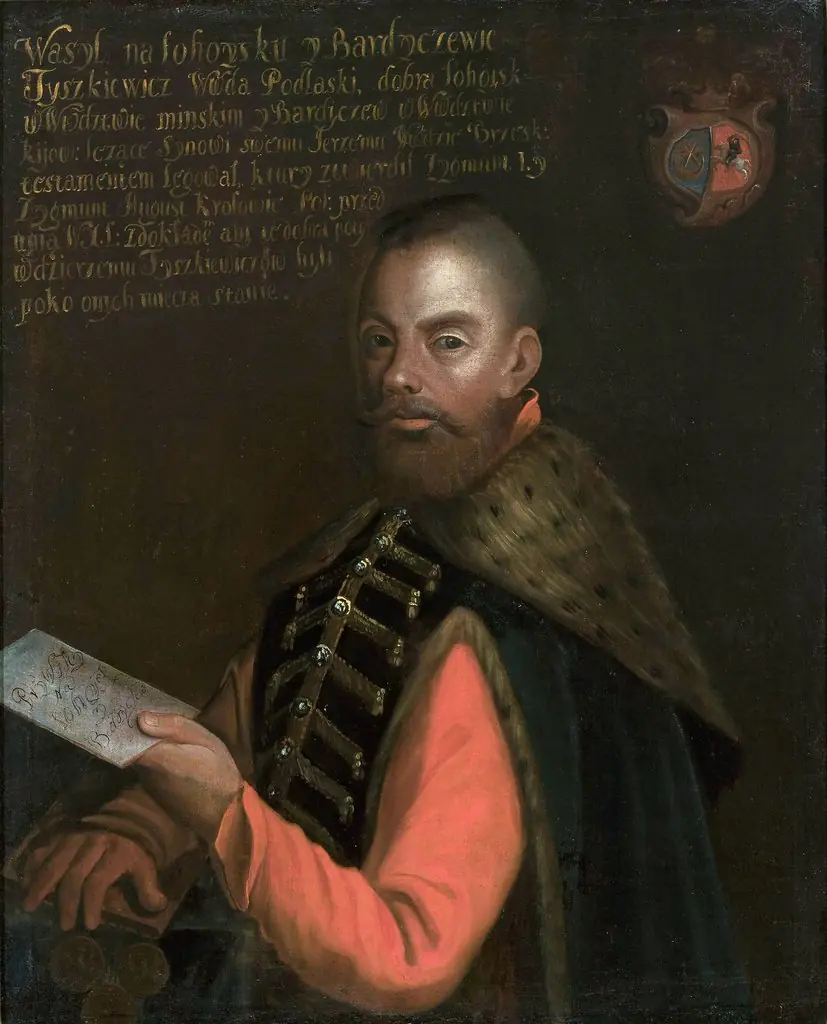 Portrait of Wasyl Tyszkiewicz, Leliwa coat of arms (?–1571), voivode of Podlasie
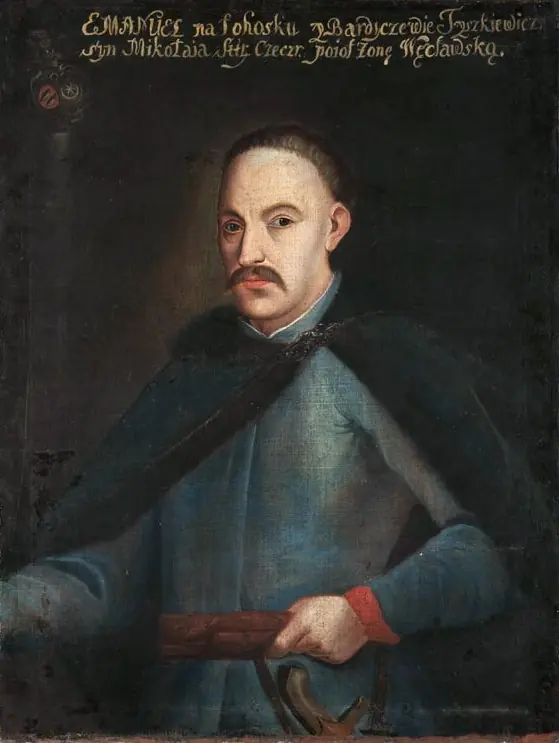 Portrait of Emanuel Władysław Tyszkiewicz, Leliwa coat of arms (?–1704), lord high steward of Brest
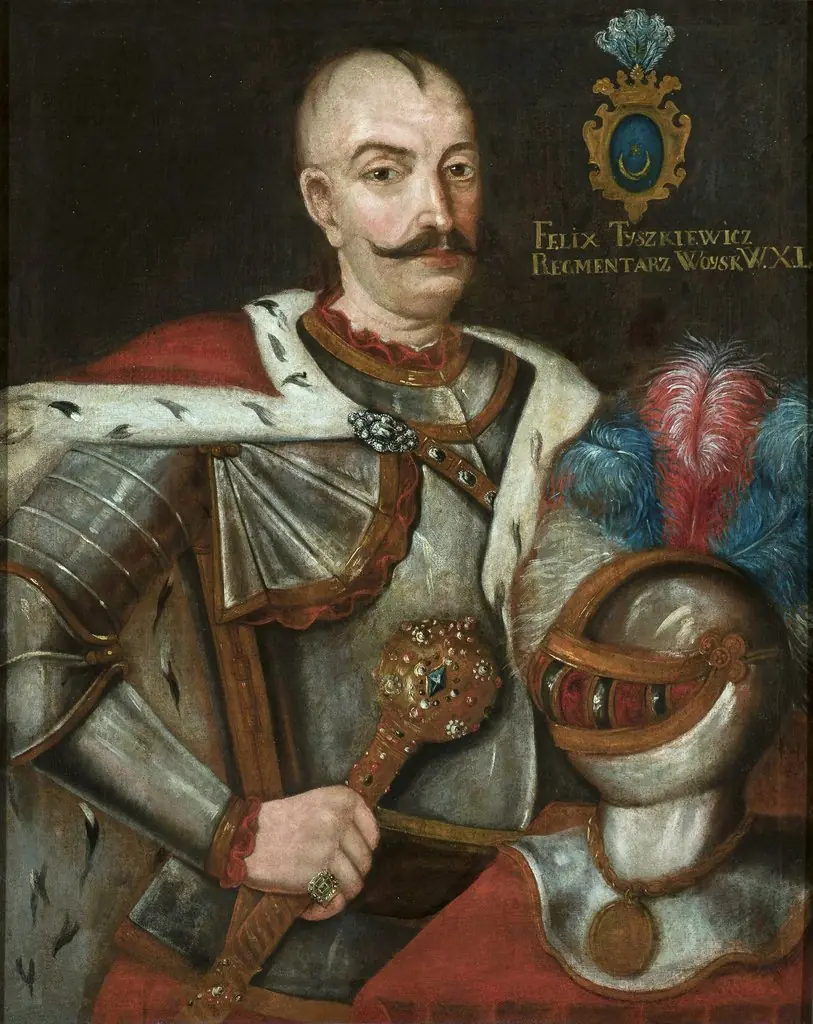 Portrait of Felix Tyszkiewicz (?–1649), Leliwa coat of arms, regimentarius (deputy hetman) of the Grand Duchy of Lithuania
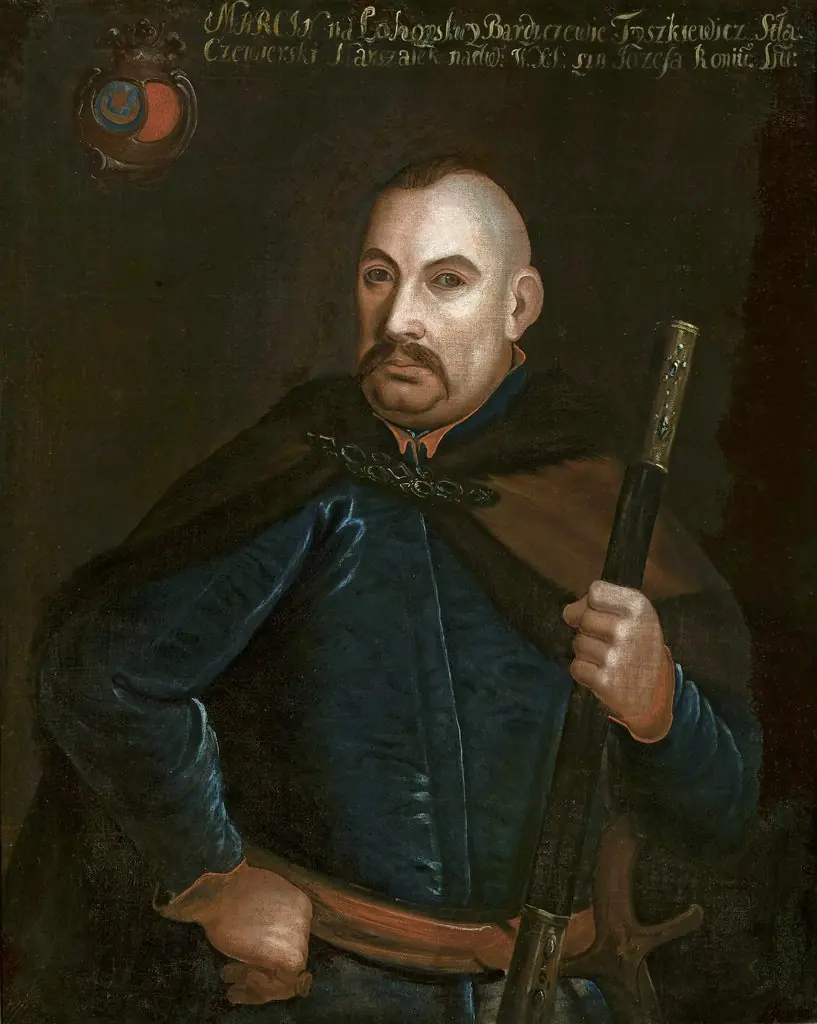 Portrait of Marcin Tyszkiewicz, Leliwa coat of arms (?–after 1631), court marshal of the Grand Duchy of Lithuania
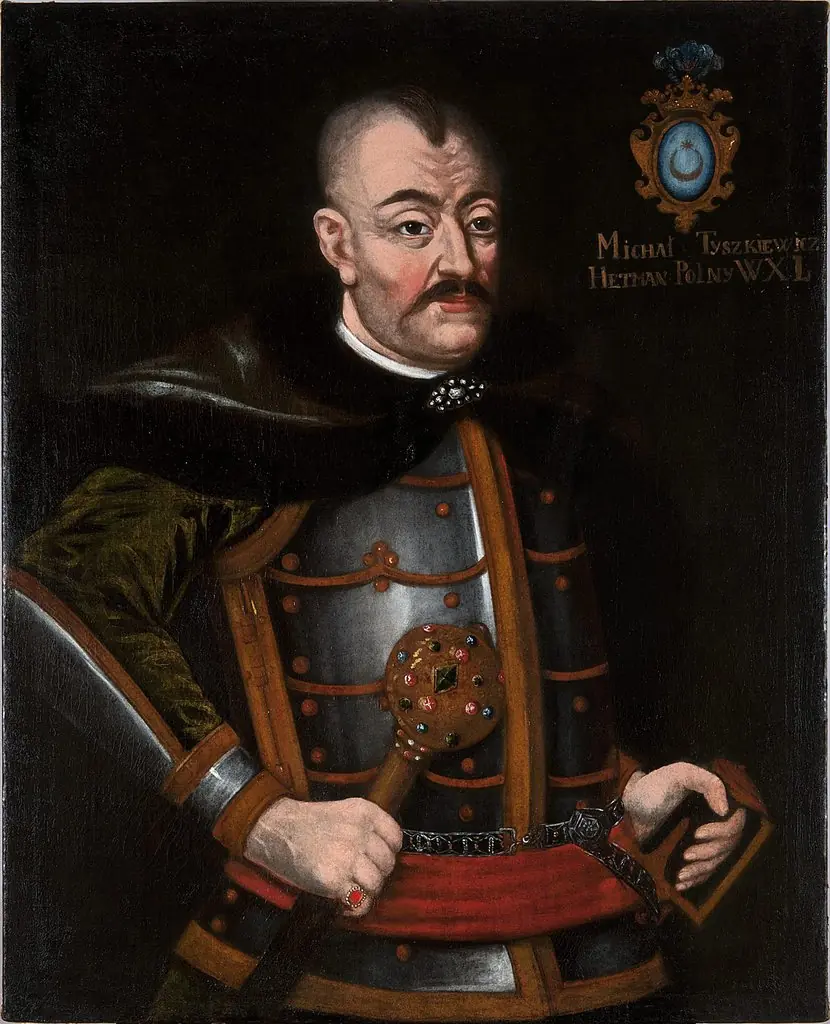 Portrait of Michał Tyszkiewicz, Leliwa coat of arms (?–after 1549), field hetman of the Grand Duchy of Lithuania
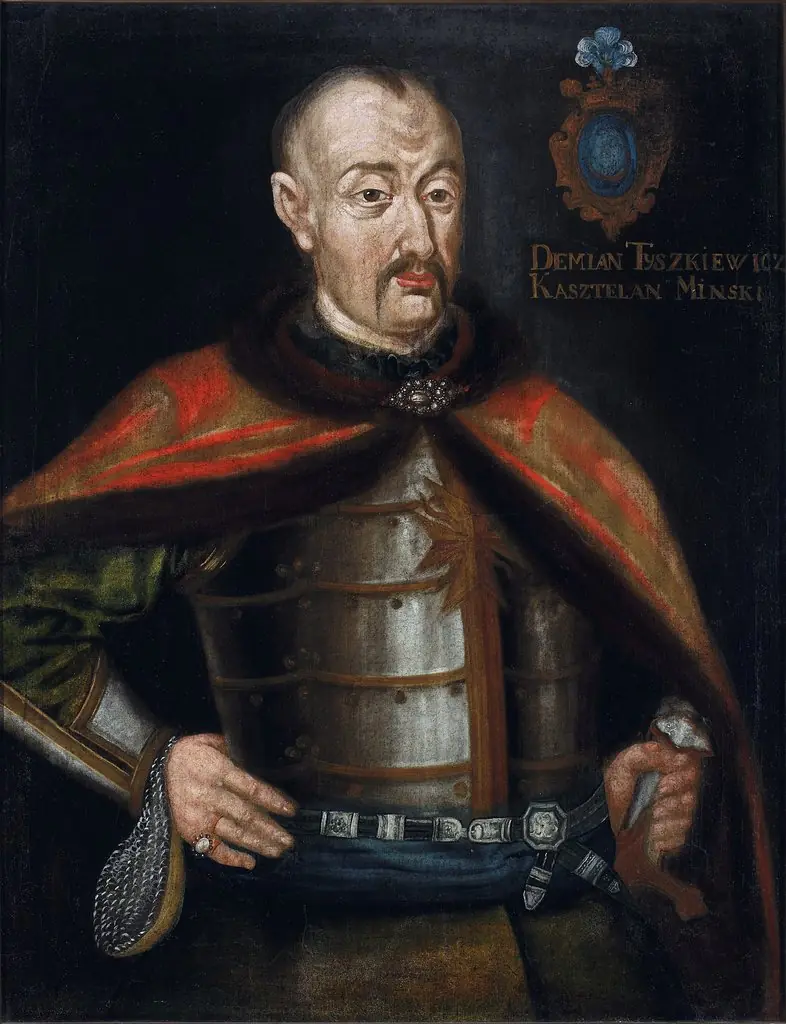 Portrait of Demian (Dmitri) Skumin Tyszkiewicz, Leliwa coat of arms (?–1609), castellan of Minsk
 Portrait of Jerzy Tyszkiewicz, Leliwa coat of arms (?–1576), voivode of Brest