Artwork
Portrait of Count Palatine Ottheinrich
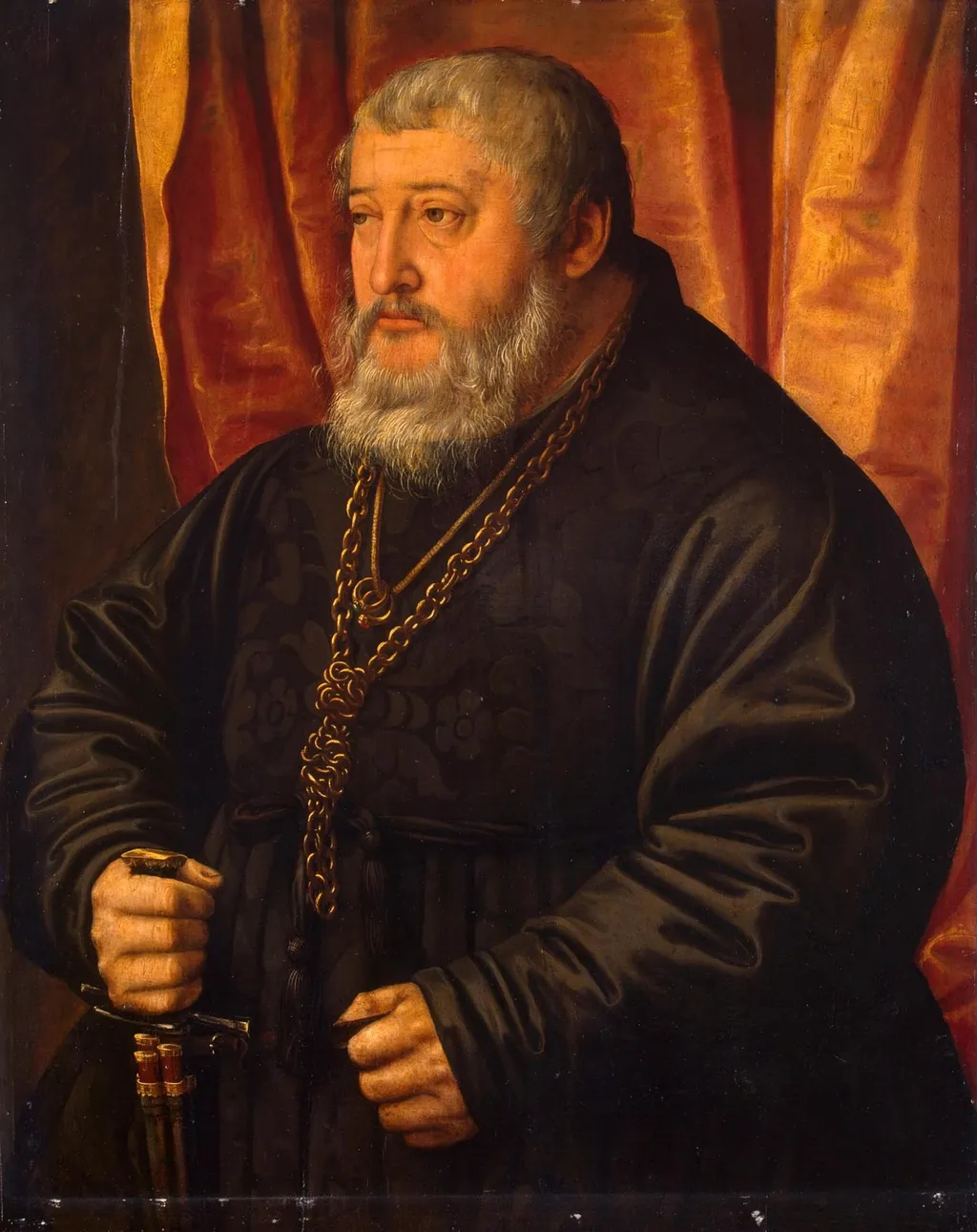
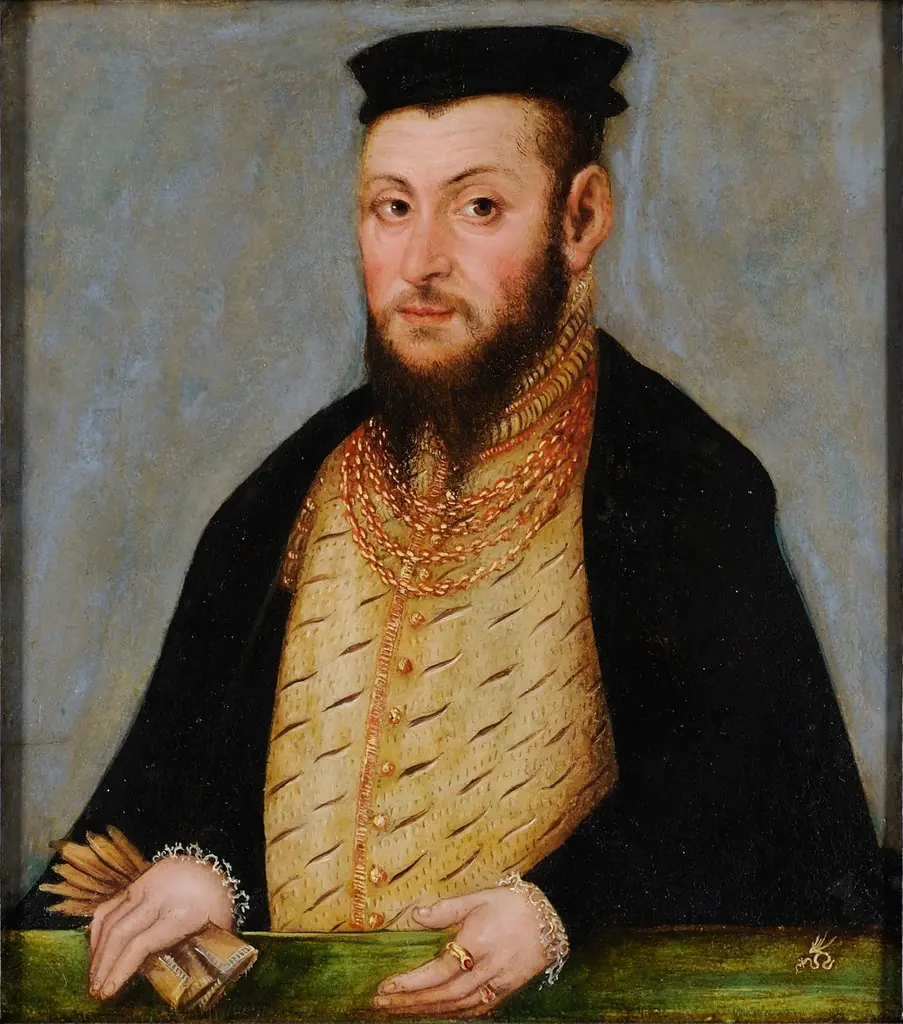
Portrait of Count Palatine Ottheinrich is an oil painting by the Mannerist artist Unknown. It dates from 1550 and is held in the collection of the Hermitage Museum.
About this work
Overview
5 centimetres, the work is held in the collection of the Hermitage Museum in Saint Petersburg.
The Portrait of Count Palatine Ottheinrich is an oil painting on panel depicting Otto Henry (1502-1559), Count Palatine of Palatinate-Neuburg and later Elector Palatine, executed in 1550 by an unknown artist. Measuring 94 by 72.5 centimetres, the work is held in the collection of the Hermitage Museum in Saint Petersburg. The painting belongs to the robust tradition of German Renaissance princely portraiture, a genre that served as a critical instrument of political representation for the Wittelsbach dynasty during a period of religious upheaval and territorial consolidation. Its attribution to an anonymous hand, rather than to a documented court artist, underscores the collaborative and often workshop-based nature of aristocratic portrait production in mid-sixteenth-century Germany.
Subject & Meaning
The sitter, Otto Henry of the Wittelsbach dynasty, ruled as Count Palatine of Palatinate-Neuburg from 1505 to 1557 and as Elector Palatine from 1556 until his death in 1559. Born in Amberg on 10 April 1502, he was a grandson of Philip, Elector Palatine, and a prominent convert to Lutheranism in 1541, whose palace chapel at Neuburg Castle became the first newly built Protestant church, consecrated in 1543. The portrait presents him half-length, turned three-quarters to the left with his head slightly profiled, his right hand gripping the hilt of a sword and his left hand resting lower with fingers curled. The sword functions as an emblem of military prowess and princely authority, a convention consistent with other Ottheinrich portraits such as the Neuburg tapestry series where the left hand grasps the rapier handle as a demonstration of strength. The heavy gold chain with ornate links across his torso proclaims his high nobility and wealth, while the voluminous black garment with wide sleeves and subtle tonal patterning conveys sober magnificence appropriate to a ruler who established the Bibliotheca Palatina and patronised the arts extensively. The rich orange-red curtains with deep folds behind him create a warm, theatrical backdrop that elevates the sitter through chromatic contrast, focusing attention on his dignified presence and the insignia of rank.
Technique & Style
The painting is executed in oil on panel, a support that allowed for the smooth, controlled brushwork evident in the careful modelling of flesh and fabric. The palette is dominated by blacks, warm browns, and glowing orange-reds, with light falling from the left to illuminate the face, hands, and gold chain while leaving much of the costume in shadow. This dramatic chiaroscuro creates a polished finish throughout, with meticulous attention to textural differentiation between the soft sheen of the chain, the heavy drapery of the black garment, and the subtle tonal pattern across the chest. The composition is frontal and stable, the figure occupying most of the frame in a manner typical of official portraiture conventions. The handling reveals the influence of Italian Renaissance monumentality adapted to Germanic taste for detail, with subtle modelling of flesh that recalls the technical precision associated with the Danube School tradition. The warm tones and controlled lighting focus attention on the sitter's presence while the dark clothing absorbs light, creating a visual hierarchy that guides the viewer from the illuminated face down through the chain to the sword.
History & Provenance
The painting dates to 1550, during the final years of Otto Henry's life and near the end of his reign as Count Palatine of Palatinate-Neuburg; he would inherit the Electoral Palatinate only in 1556. The work was produced in Germany, though the specific circumstances of its commission remain undocumented. Its subsequent provenance before entering the Hermitage Museum is not recorded in the available sources. The painting is currently located in the Hermitage Museum, where it is accessioned as part of the museum's collection of European painting. No exhibition history is documented in the provided sources. The work's preservation in a major Russian museum, rather than in German collections where much of Ottheinrich's patronage and tapestries remained, suggests it may have entered imperial collections through later acquisition or diplomatic channels, though this cannot be confirmed from the available documentation.
Context
Otto Henry's extensive patronage of portraiture formed part of a deliberate strategy of self-representation that scholars have increasingly recognised as central to princely power in the Holy Roman Empire. As documented in a 2003 University of Texas at Austin dissertation, he commissioned dozens of portraits in multiple media throughout his adult life, motivated by urgent political necessity in his struggle to become Elector Palatine against considerable opposition. This anonymous panel painting belongs to a broader corpus that includes tapestry portraits designed by his Neuburg court painter Peter Gertner, bookbindings, medals, and other formats, each medium carrying distinct expressive possibilities. The portrait tradition intersected with his religious transformation: his conversion to Lutheranism in 1541 and establishment of the first newly built Protestant church at Neuburg Castle in 1543 positioned him as a leading Protestant prince, though his earlier Catholic allegiance and the demands of imperial politics complicated any simple confessional reading of his imagery. The Hermitage painting stands apart from the better-documented Neuburg tapestry series, which he acquired before becoming Elector and which he stipulated in his will should remain forever as inalienable property of the Palatinate Kurhaus in Heidelberg. Scholarship on German Renaissance portraiture has traditionally focused on bourgeois and civic commissions, with princely portraiture receiving less attention except where it reveals Lutheran attitudes; the study of Otto Henry's images has helped rectify this imbalance by demonstrating how elite viewers would have understood the nuanced formulas of rank, lineage, and authority embedded in such works.
Legacy
The Portrait of Count Palatine Ottheinrich occupies a significant if understudied position within the history of German Renaissance portraiture, representing the anonymous workshop production that sustained princely image-making alongside the named masters of the period. While Barthel Beham's 1535 bust-format portrait of Ottheinrich in the Alte Pinakothek, Munich, has received greater scholarly attention for its technical excellence and fusion of Northern precision with Italian monumentality, the Hermitage panel demonstrates the broader dissemination of aristocratic likenesses through less documented channels. Otto Henry's cultural legacy proved more durable through his bibliophilia and establishment of the Bibliotheca Palatina in the 1550s than through any single painted portrait, yet the persistent demand for his image across media testifies to the political value of visual representation in an age of confessional conflict and territorial competition. The tapestry portraits he commissioned, with their unprecedented life-sized full-length format and meticulous detail, established a model of representative princely portraiture that influenced subsequent German court art. The Hermitage painting's survival in a major museum collection ensures its continued availability for study, even as questions of attribution, workshop practice, and precise dating remain open to further investigation. Its existence alongside the better-known tapestries and the Beham portrait offers scholars a valuable point of comparison for understanding the range of stylistic options and political functions available to German princes in the mid-sixteenth century.
Artist & collection









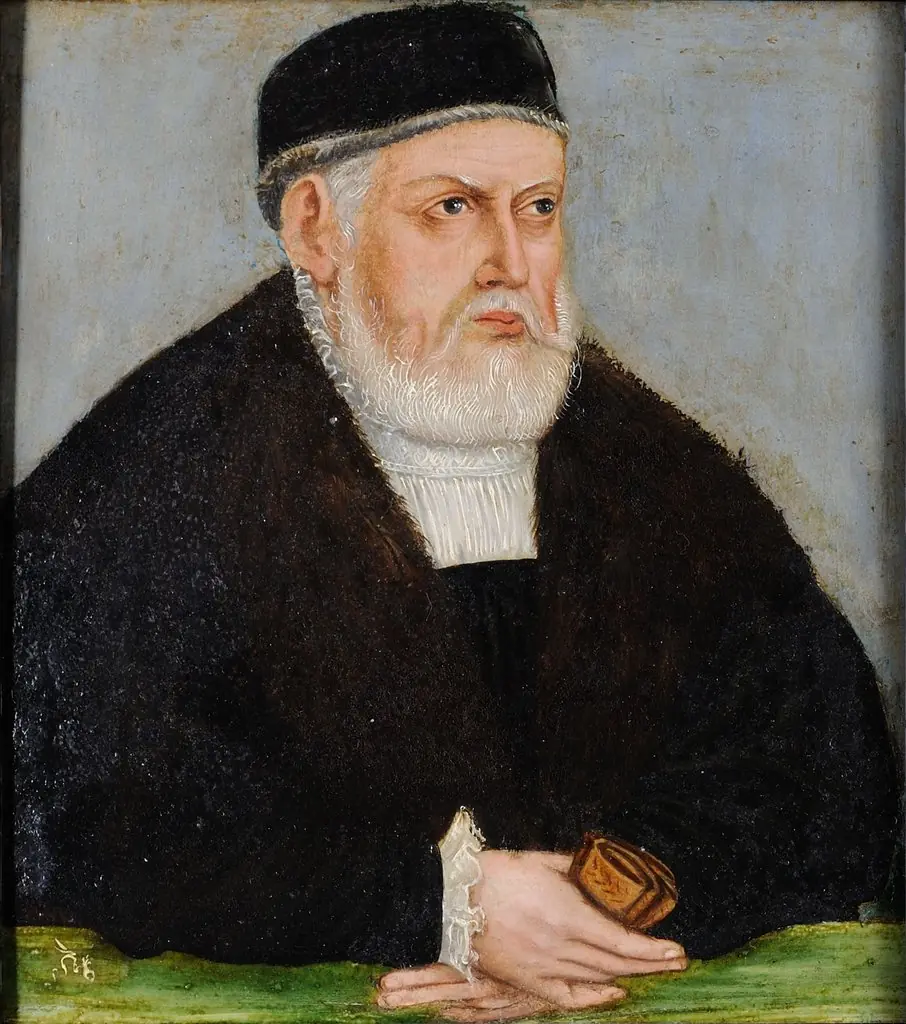
- Portrait of Sigismund I the Old
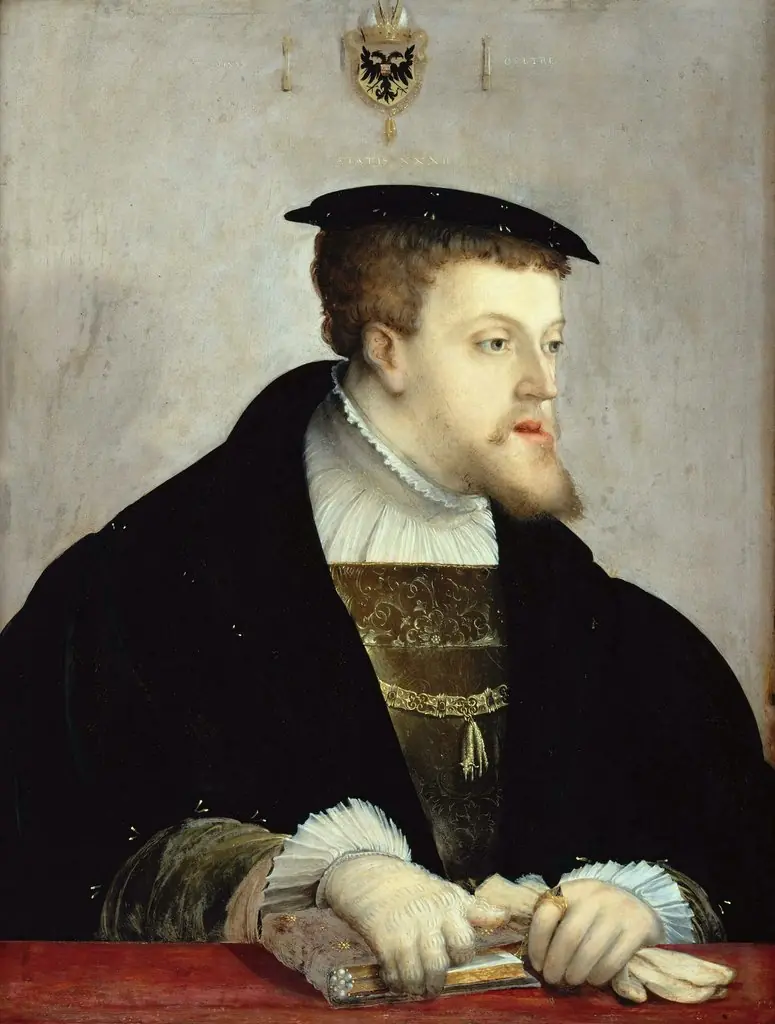 Portrait of Charles V (1500-1558)
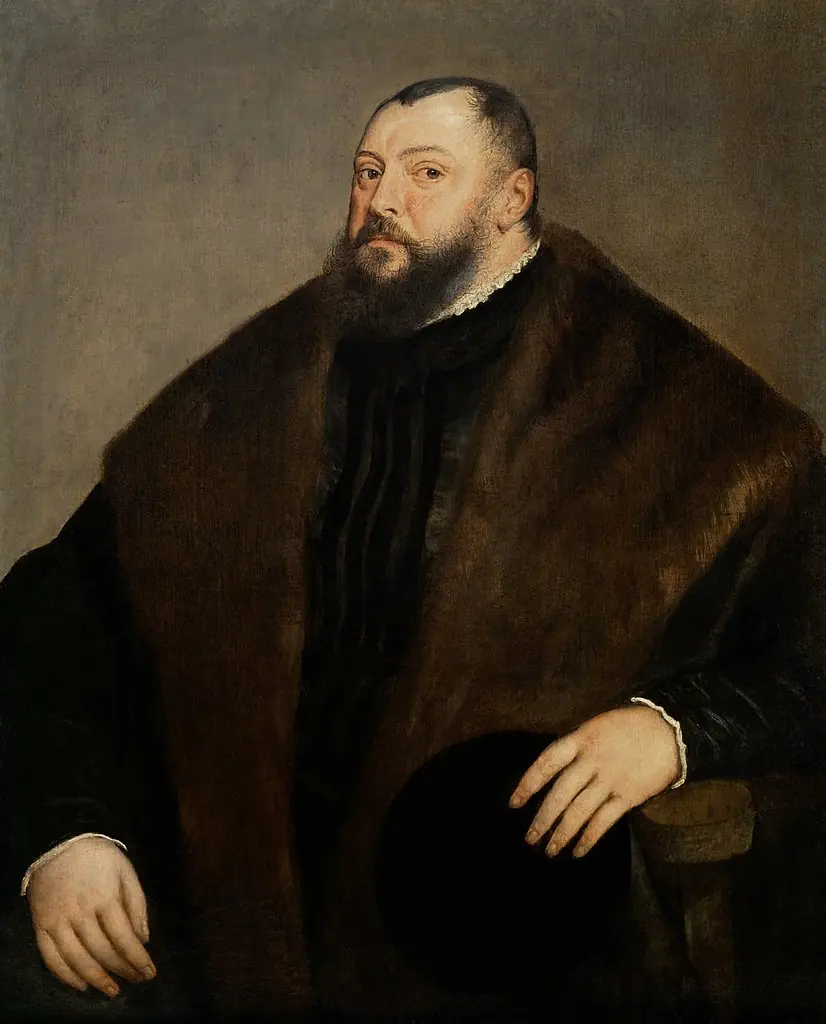 John Frederick, Elector of Saxony
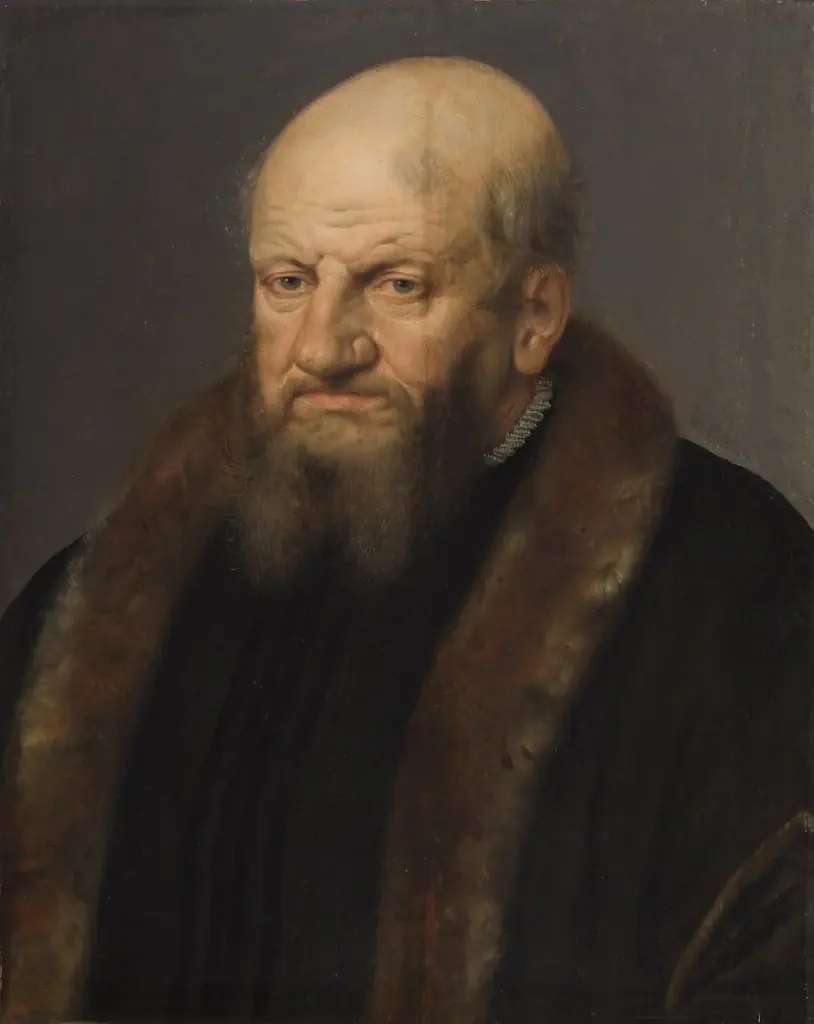 Männliches Bildnis
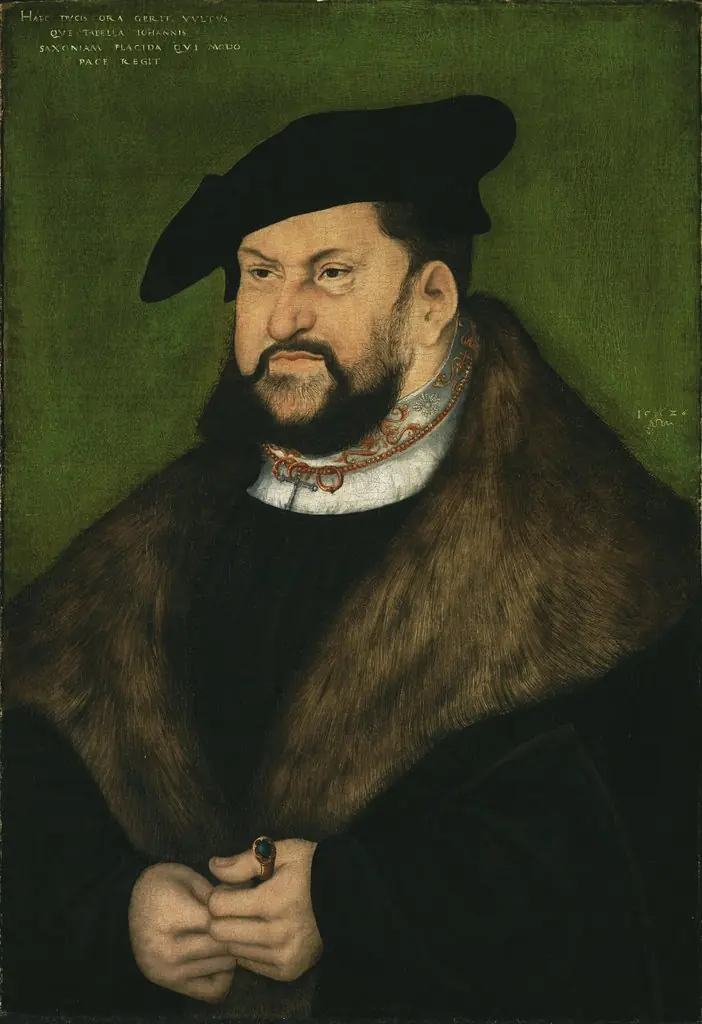 Portrait of Johannes the Steadfast, Elector of Saxony
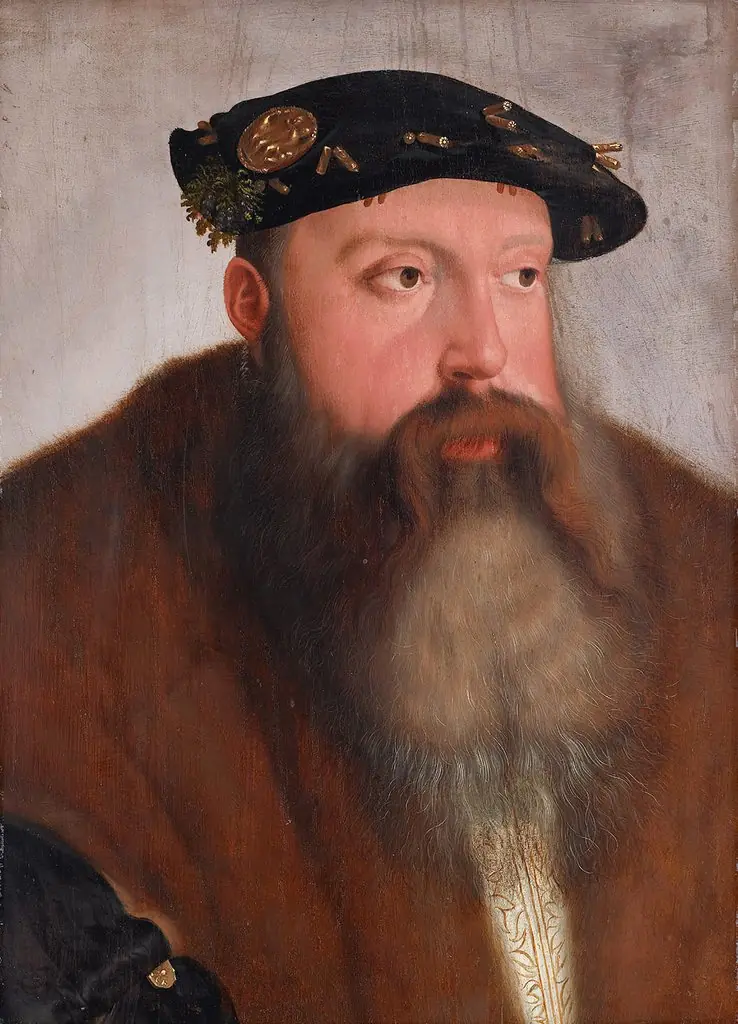 Louis X, Duke of Bavaria
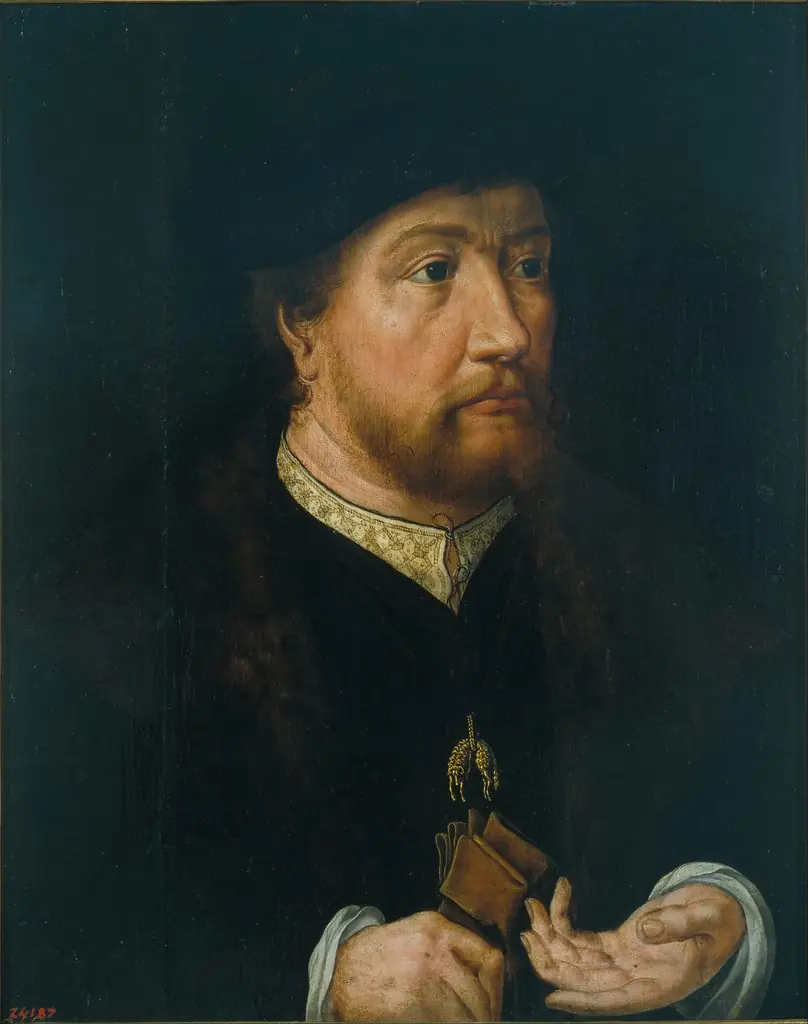 Portrait of Henry III, Count of Nassau
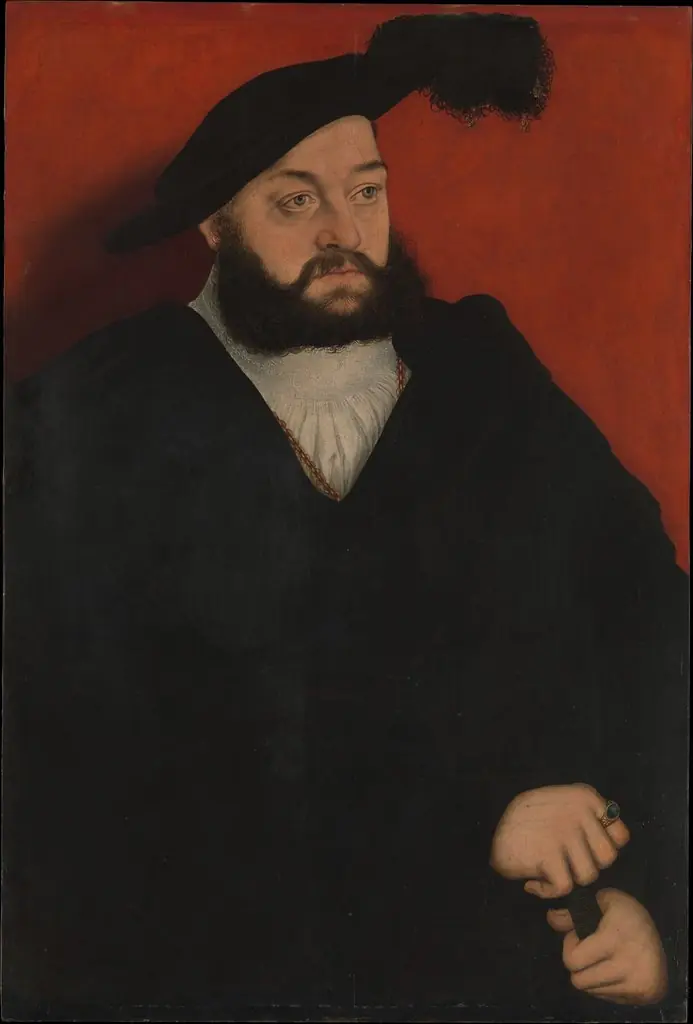 Johann (1498–1537), Duke of Saxony
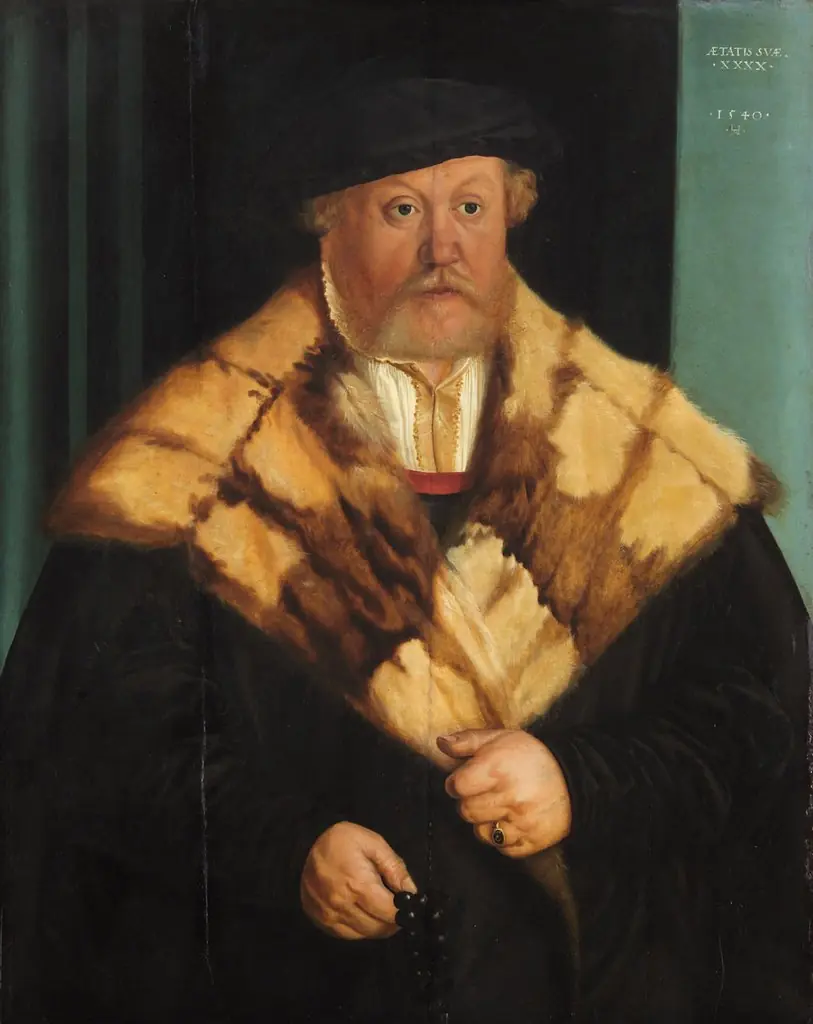 Hanns Mädl
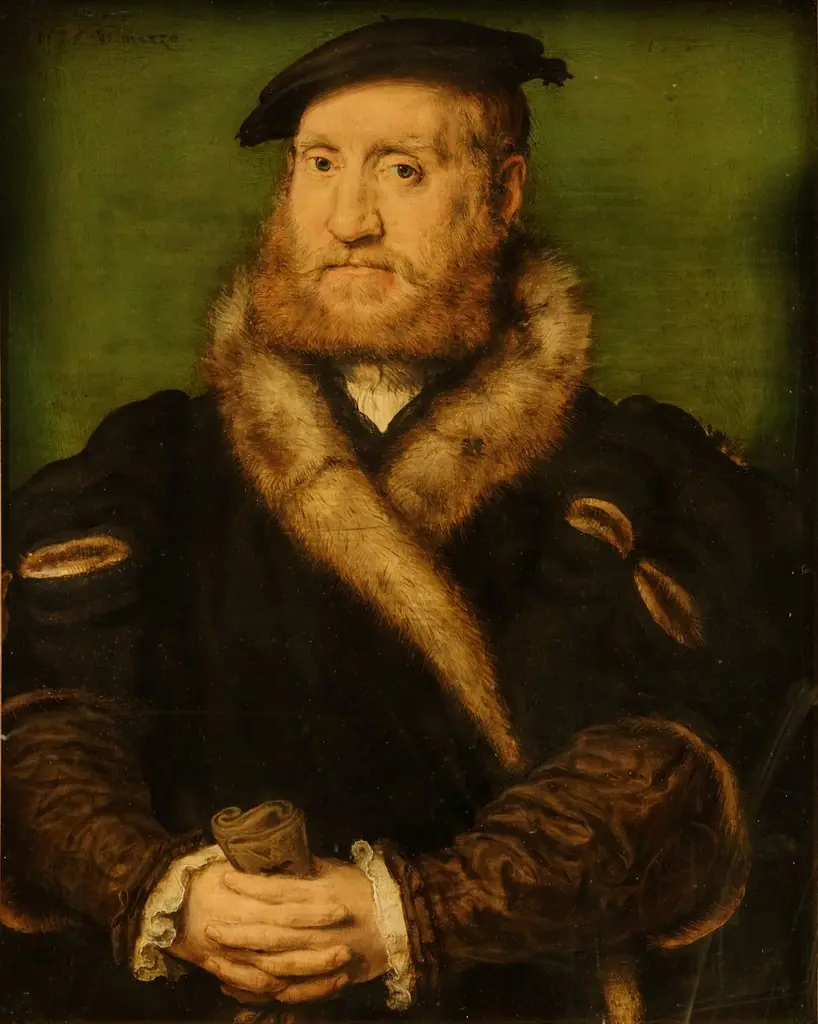 Bearded Man in a Fur Coat
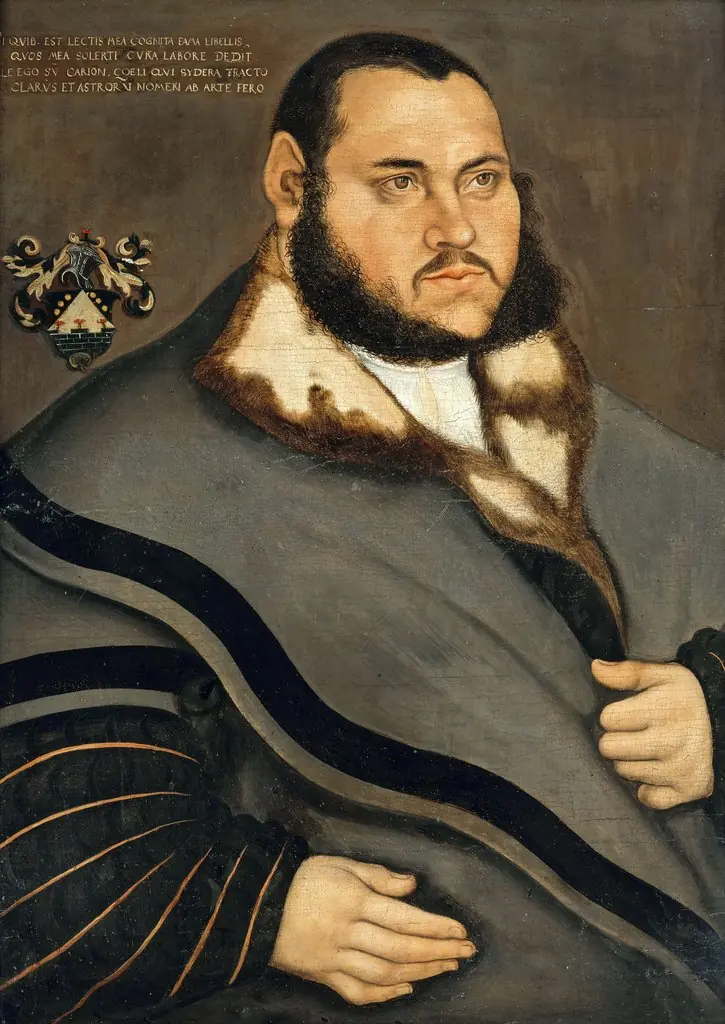 Portrait of Johannes Carion
 Sigismund II. August, King of Poland