Artwork
Shri (Palden Lhamo)
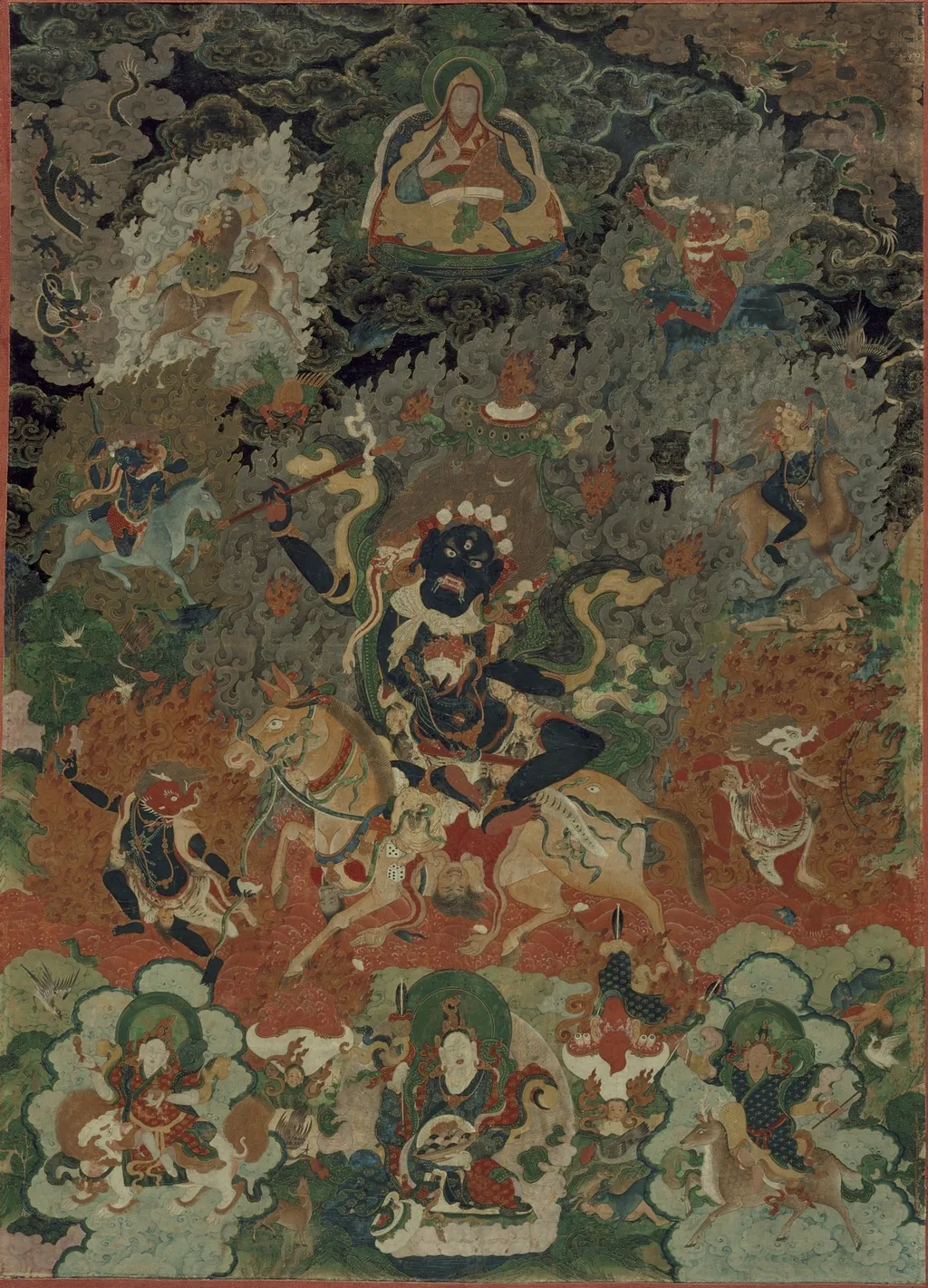
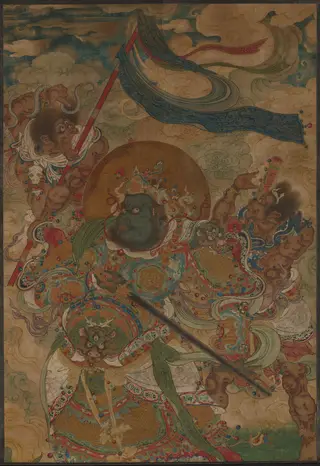
Shri (Palden Lhamo) is an unspecified painting by Unknown. It dates from 1800 and is held in the collection of the Los Angeles County Museum of Art. This painting, dated to around 1800, depicts Shri, also known as Palden Lhamo, a protective deity in Tibetan Buddhist tradition.
About this work
The painting is titled Shri (Palden Lhamo) and was created in 1800.
I don't know what the painting looks like, but I can tell you it's held at a museum. The Los Angeles County Museum of Art has a collection of diverse artworks.
You can learn more about this painting by visiting the museum: Los Angeles County Museum of Art.
Overview
This painting, dated to around 1800, depicts Shri, also known as Palden Lhamo, a protective deity in Tibetan Buddhist tradition. It is part of the collection at the Los Angeles County Museum of Art, where it is preserved as an example of Himalayan religious art. The work reflects the devotional practices of Tibetan monastic culture and was likely used in ritual contexts.
Subject & Meaning
Shri (Palden Lhamo) is a fierce female guardian deity associated with the protection of the Dharma and the Tibetan state.
Shri (Palden Lhamo) is a fierce female guardian deity associated with the protection of the Dharma and the Tibetan state. She is often portrayed riding a mule across a sea of blood, surrounded by symbolic elements like skulls and weapons. Her imagery conveys power over negative forces and the transformation of suffering into spiritual insight, serving as a focus for meditation and ritual invocation.
Technique & Style
The painting follows the traditional thangka format, executed in mineral pigments on cotton with gold detailing. Figures are rendered with precise linear clarity, set against richly patterned backgrounds. The composition adheres to iconometric guidelines passed through monastic lineages, emphasizing symbolic accuracy over naturalism. The palette is vivid yet restrained, typical of 18th- to 19th-century Tibetan devotional art.
History & Provenance
The painting was likely created in Tibet during the late 18th or early 19th century, possibly within a monastic workshop. It entered the Los Angeles County Museum of Art’s collection through documented acquisition, though its earlier ownership history remains undocumented. Its presence in a Western institution reflects broader 20th-century efforts to preserve and study Himalayan religious artifacts.
Context
During the period of its creation, Tibetan Buddhism was deeply intertwined with political and spiritual authority. Deities like Palden Lhamo were invoked to safeguard monastic institutions and regional stability. Paintings such as this were not merely decorative but functional, used in ceremonies and personal practice to invoke protection and spiritual clarity within a structured cosmology.
Legacy
This painting contributes to the understanding of how Tibetan Buddhist iconography was transmitted and preserved across centuries. As part of a major museum’s collection, it enables scholarly study and public access to a tradition often inaccessible outside monastic settings. Its continued display supports cross-cultural dialogue and the recognition of Himalayan art as a distinct visual heritage.
Artist & collection









 Mahakala Panjarnata (Lord of the Pavilion)
 Mahakala and Companions
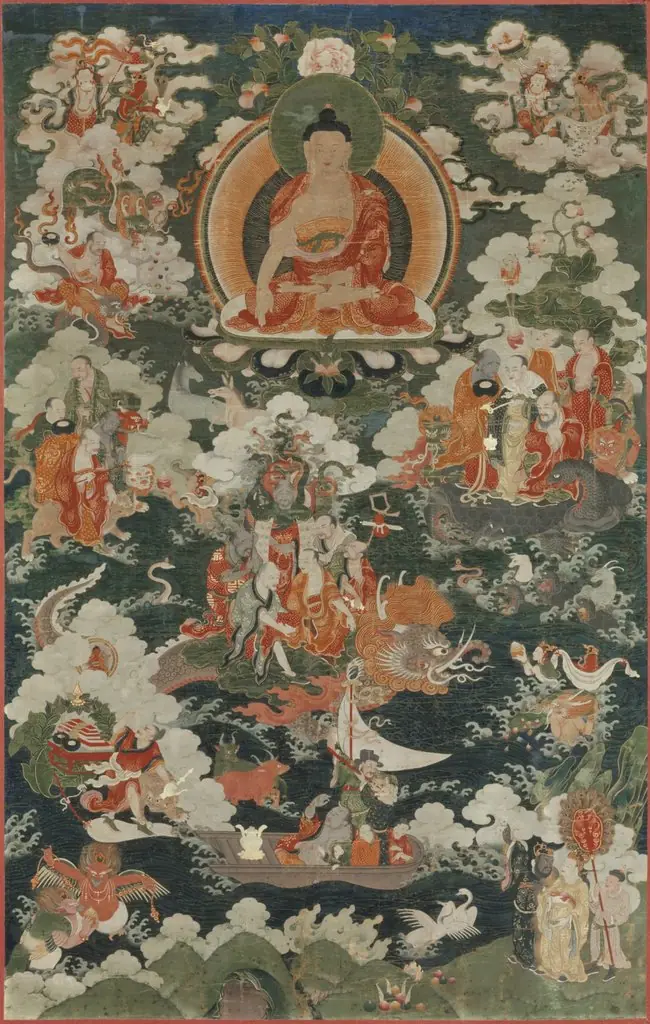 Buddha Shakyamuni and the Eighteen Arhats
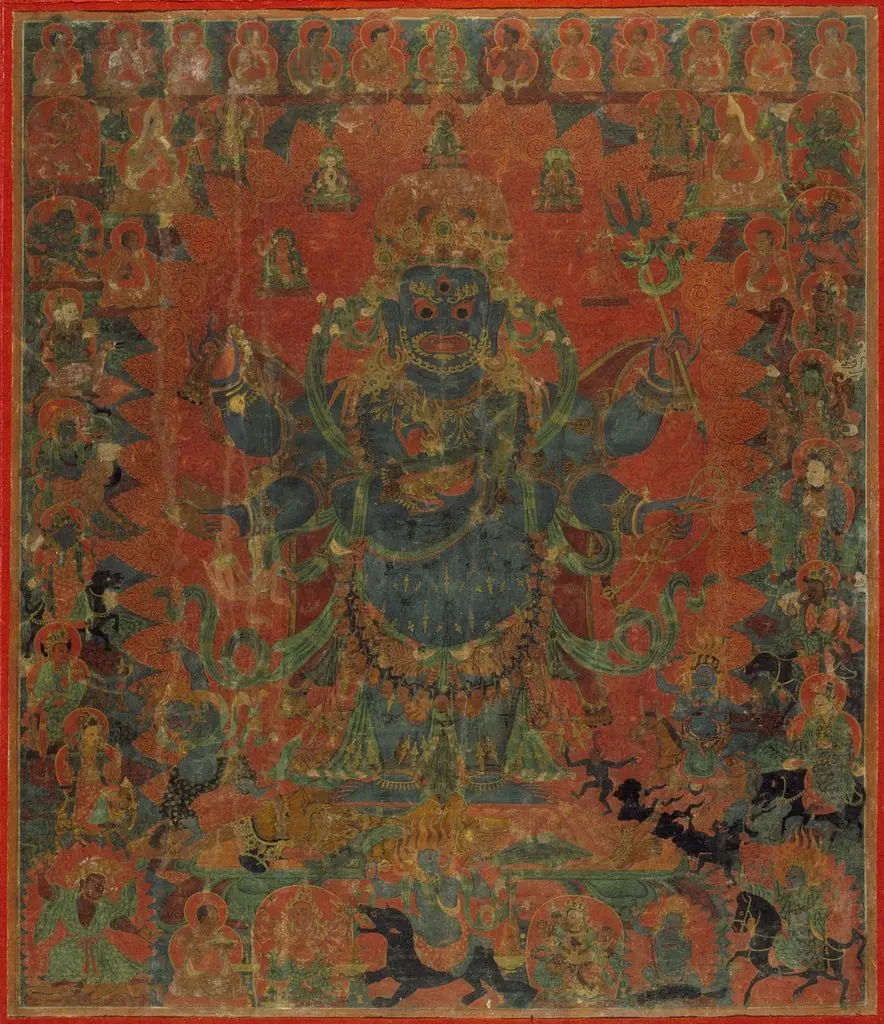 Mahakala and his Entourage
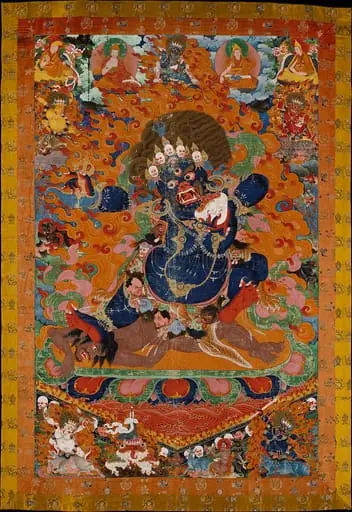 Untitled
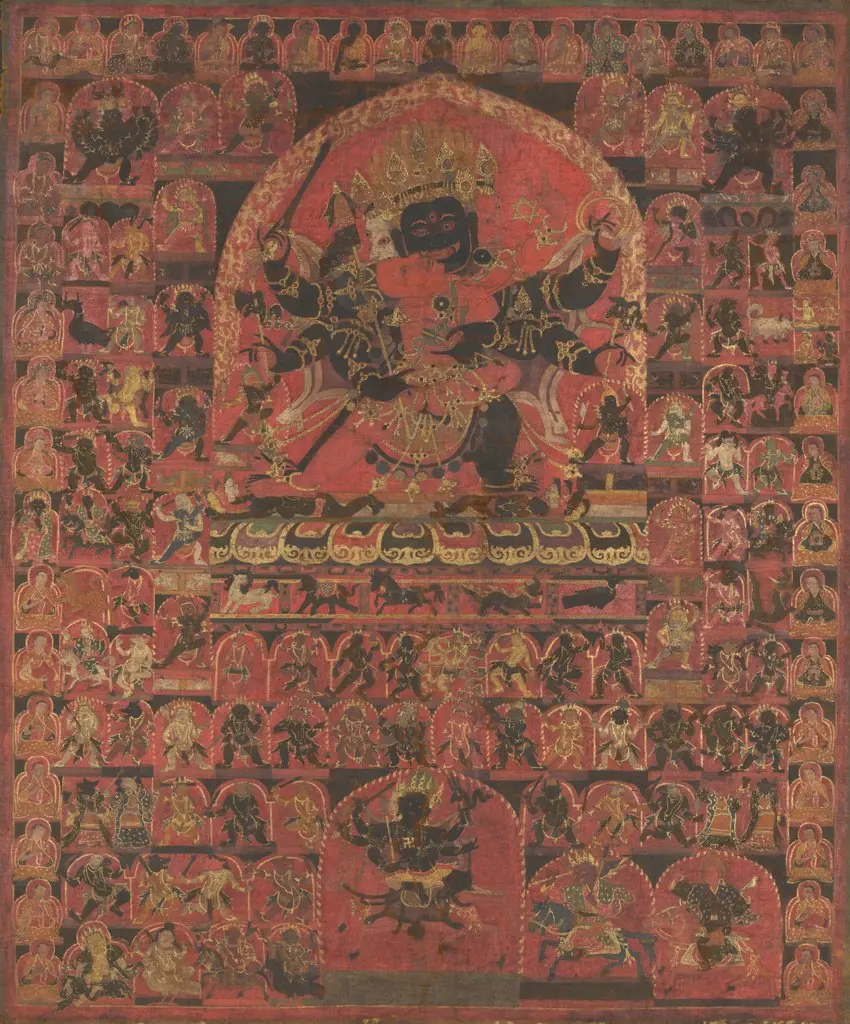 Bon Deity Trowo Tsochog Khagying
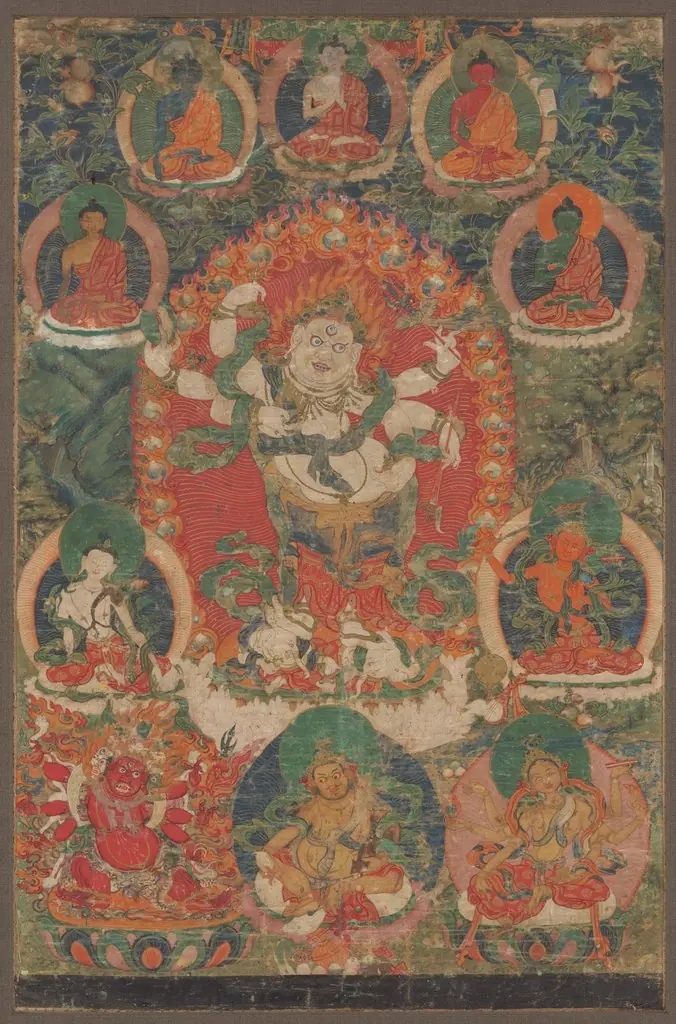 White Mahakala
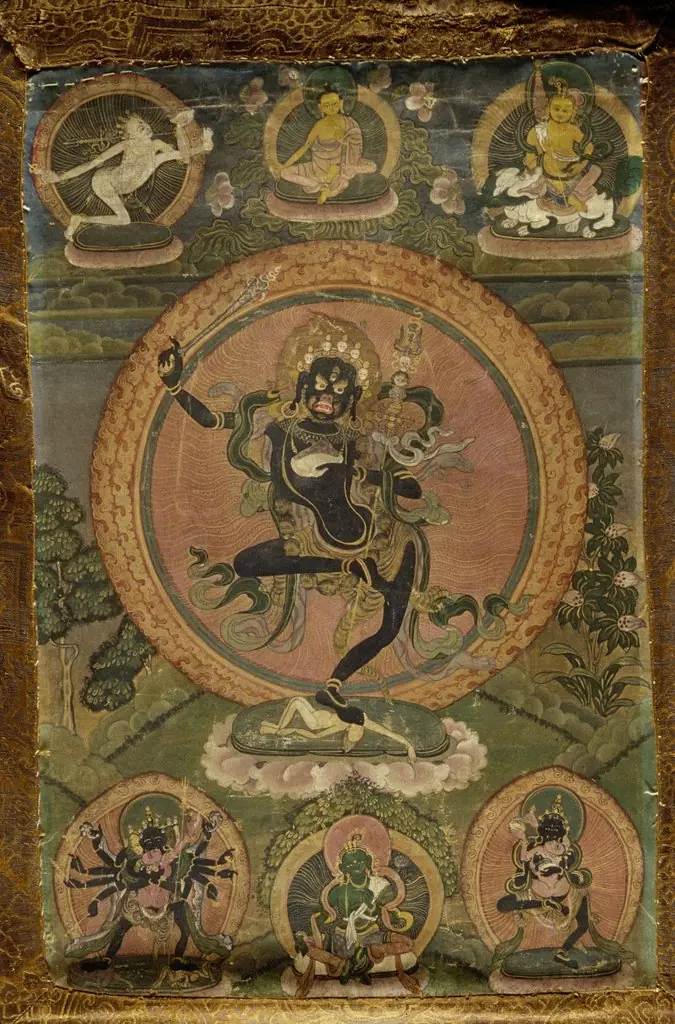 Khadgayogini
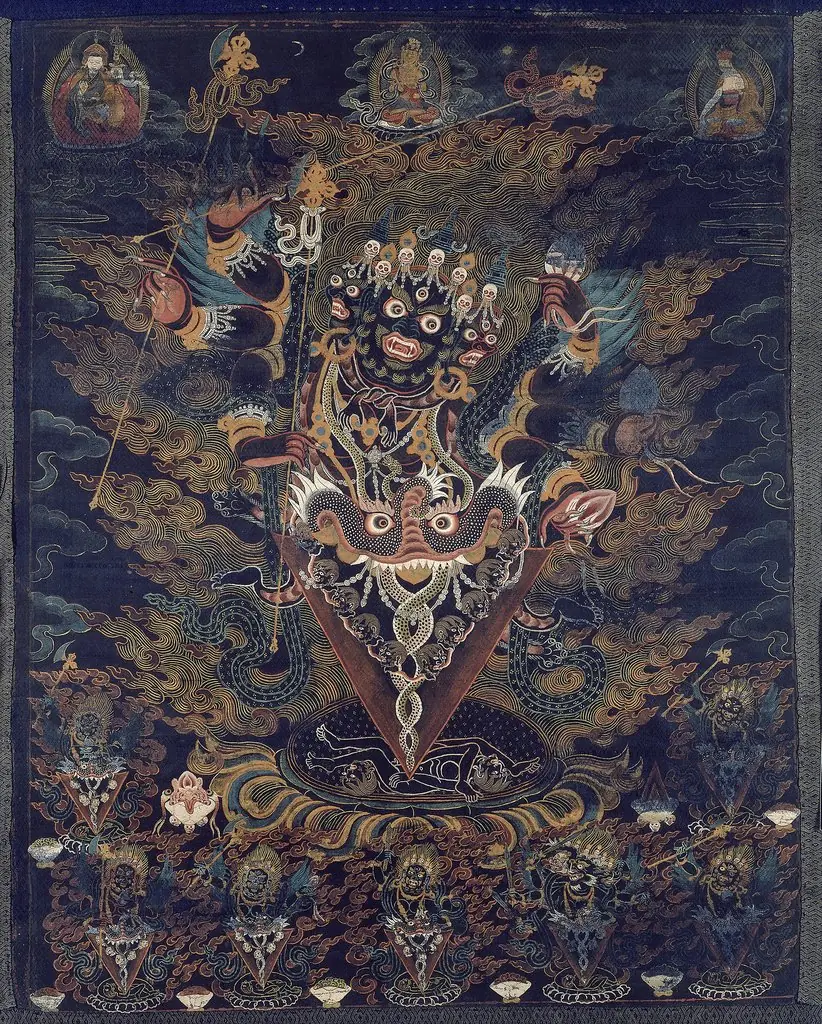 Painted Banner (Thangka) with Guru Dragpur or Vajrakila, a Wrathful Form of Guru Padmasambhava
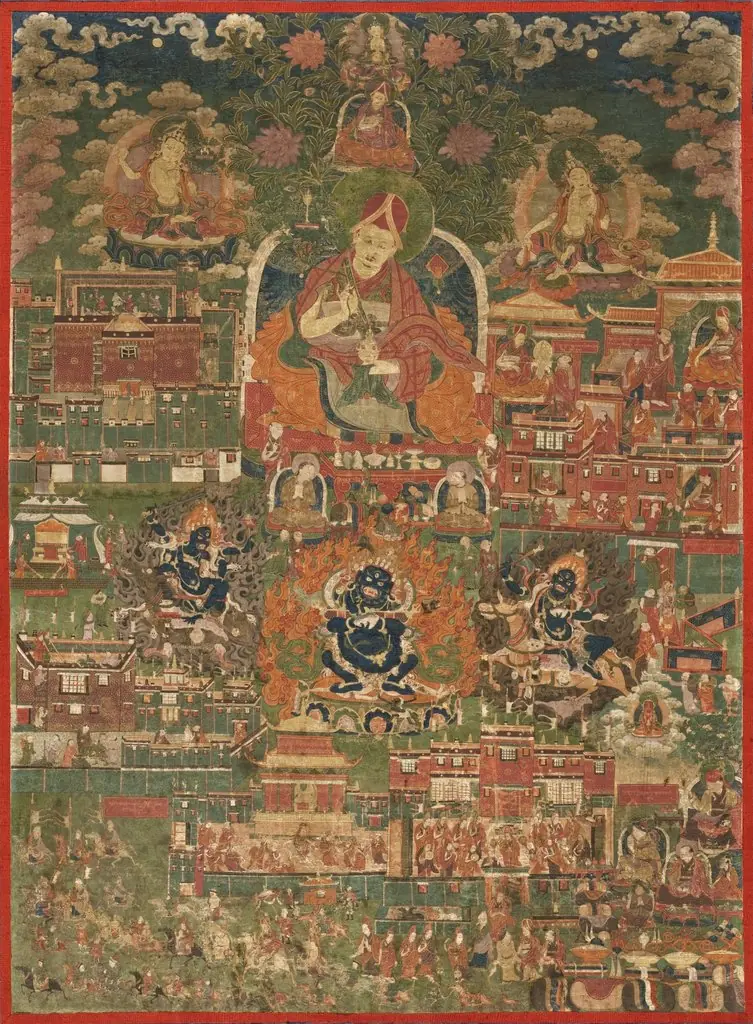 Kunga Tashi and Incidents from His Life (Abbot of Sakya Monastery, 1688-1711)
 Heavenly King Virudhaka
- The Great Renunciation of Siddhartha