Artwork
Sudama and Krishna
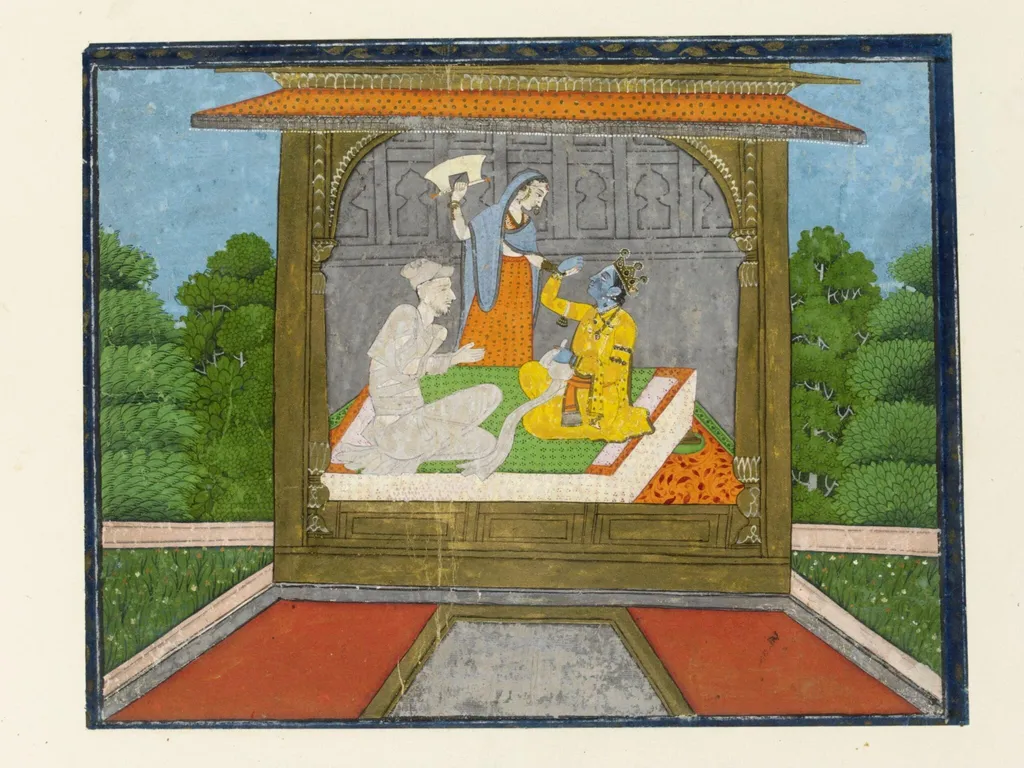
Sudama and Krishna is a paint painting by the Impressionist artist Unknown. It dates from 1860 and is held in the collection of the Victoria and Albert Museum.
About this work
Overview
Created in 1860, this opaque watercolor on paper depicts a scene from the legend of Sudama and Krishna. The composition is set within a modest, raised pavilion topped with a red roof, suggesting an outdoor garden setting. Four figures occupy the space, each rendered in vivid, flat areas of color that give the work a lively immediacy.
Subject & Meaning
The central narrative involves the friendship between the impoverished Sudama and the divine Krishna. Sudama, shown seated in white, is approached by a woman in orange, while Krishna, dressed in blue, stands near a doorway. A bright yellow figure kneels before them, offering a bundle, a gesture that underscores themes of hospitality and devotion.
Technique & Style
The artist employs an opaque watercolor medium, allowing for saturated hues and solid shapes rather than delicate washes. The palette is dominated by primary and secondary colors, red, blue, orange, and yellow, applied in broad, uncomplicated forms that emphasize the figures over detailed background rendering.
History & Provenance
The work dates to the mid‑nineteenth century, a period when Indian mythological subjects were increasingly rendered for both local and colonial audiences. Its provenance traces to the Victoria and Albert Museum, where it forms part of a broader collection of South Asian narrative paintings.
Context
During the 1860s, depictions of Hindu epics and Puranic stories were popular in both courtly and public art circles. This painting reflects that trend, presenting a devotional episode in a format accessible to viewers familiar with the visual language of Indian miniature traditions, yet adapted to a Western watercolor technique.
Artist & collection









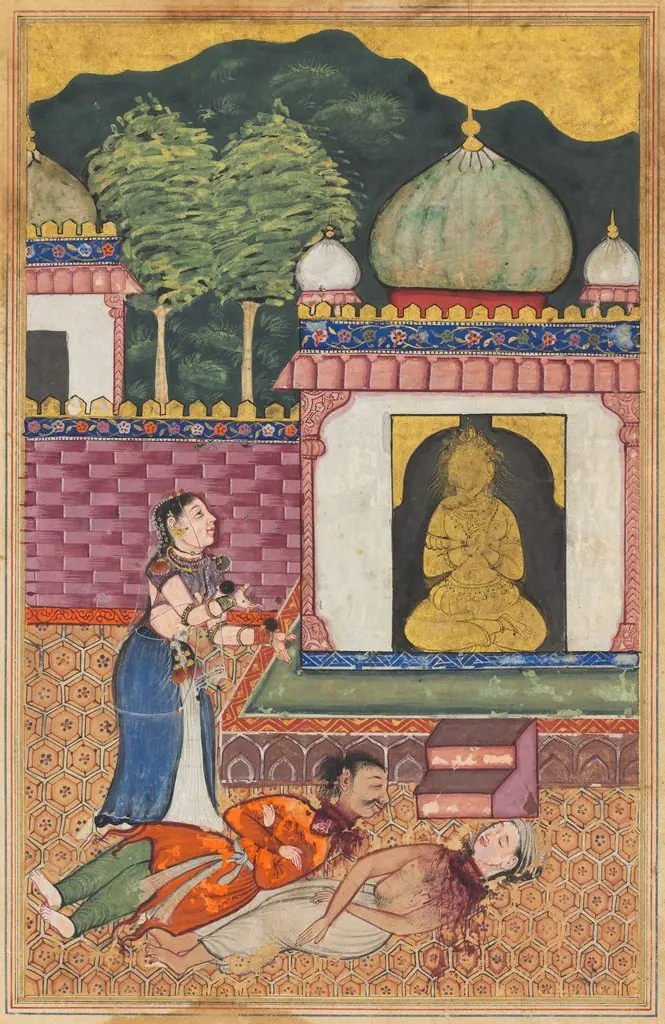 The princess discovers the dead bodies, with heads severed, of her husband and his Brahman friend, from a Tuti-nama (Tales of a Parrot): Thirty-fourth Night
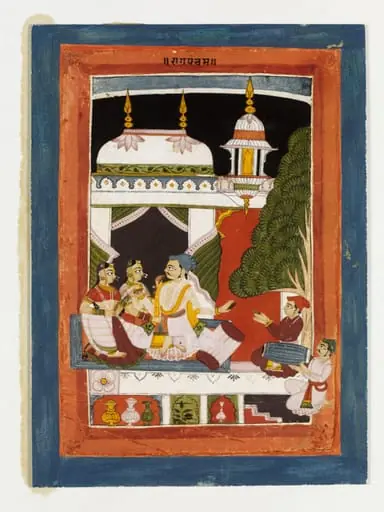 Pancham Raga
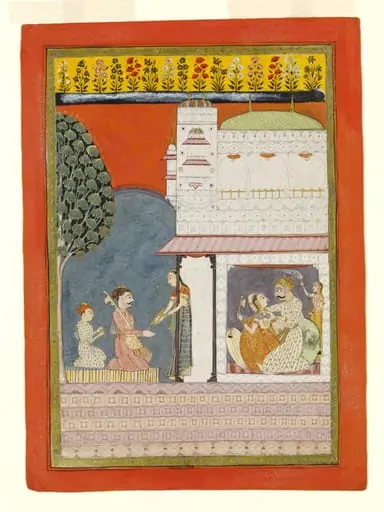 Pancham Ragini
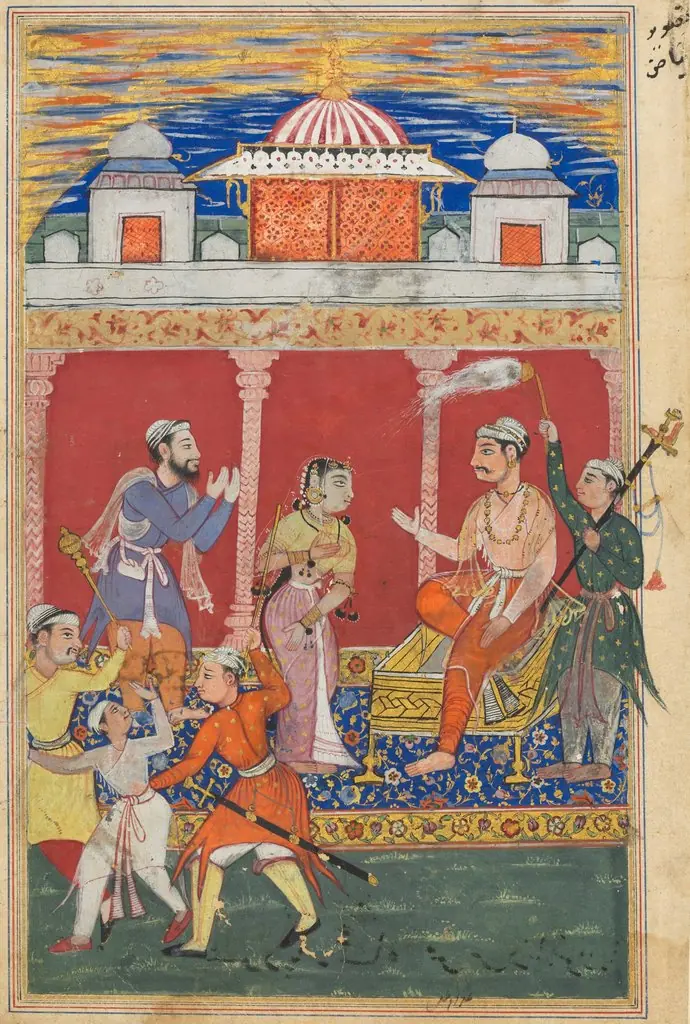 The prince’s ordeal continues, he is ordered away to be executed for the fifth time, from a Tuti-nama (Tales of a Parrot): Eighth Night
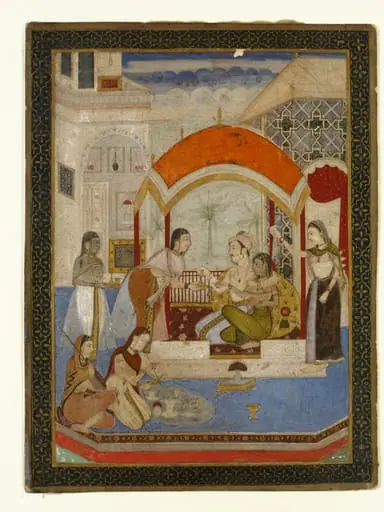 Pancham Raga
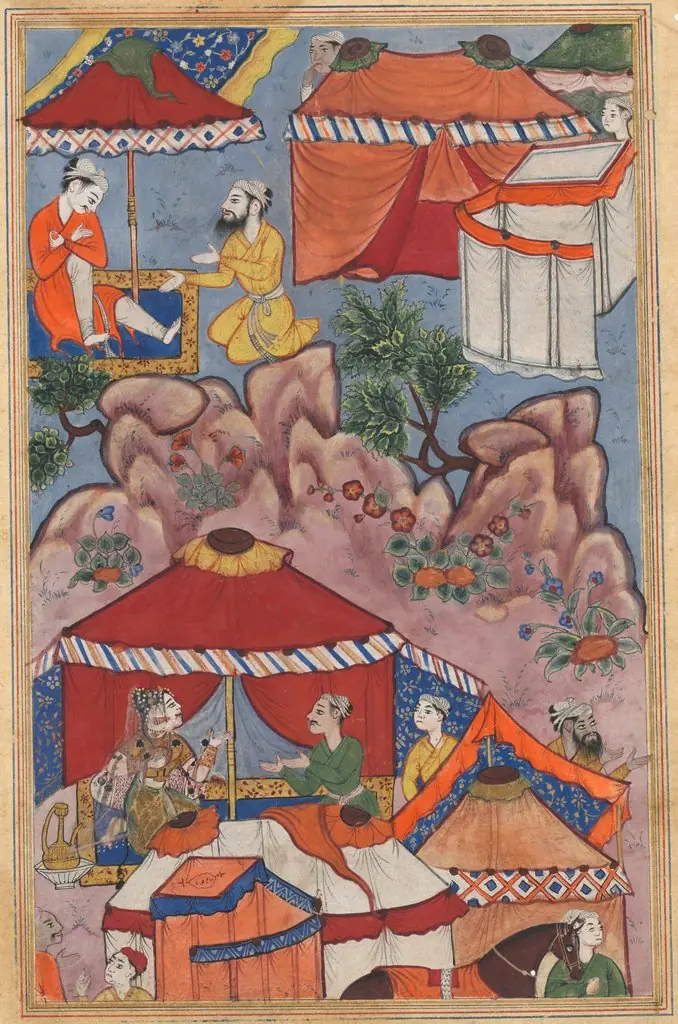 Bashir confides his love for Habbaza to an Arab friend, and sends him to her with a message, from a Tuti-nama (Tales of a Parrot): Twenty-fourth Night
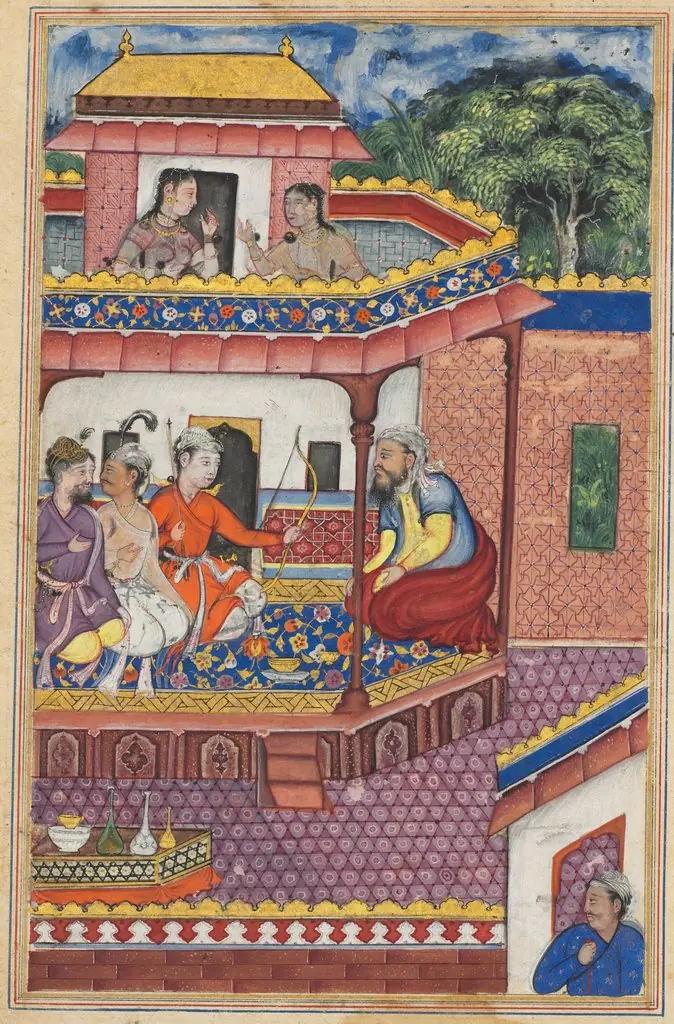 The three young men present themselves as suitors for the hand of Zuhra, the daughter of the merchant of Kabul, from a Tuti-nama (Tales of a Parrot): Thirty-fourth Night
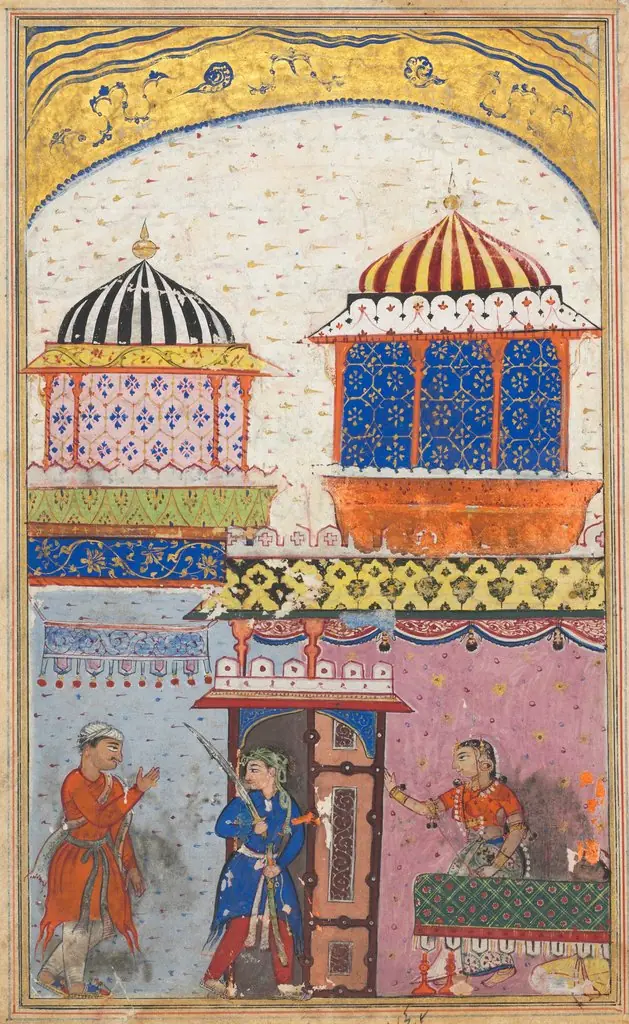 A woman asks her lover to leave her house, brandishing his sword and feigning rage in order to deceive her husband who has just arrived, from a Tuti-nama (Tales of a Parrot): Eighth Night