Artwork
The Adoration of the Christ Child
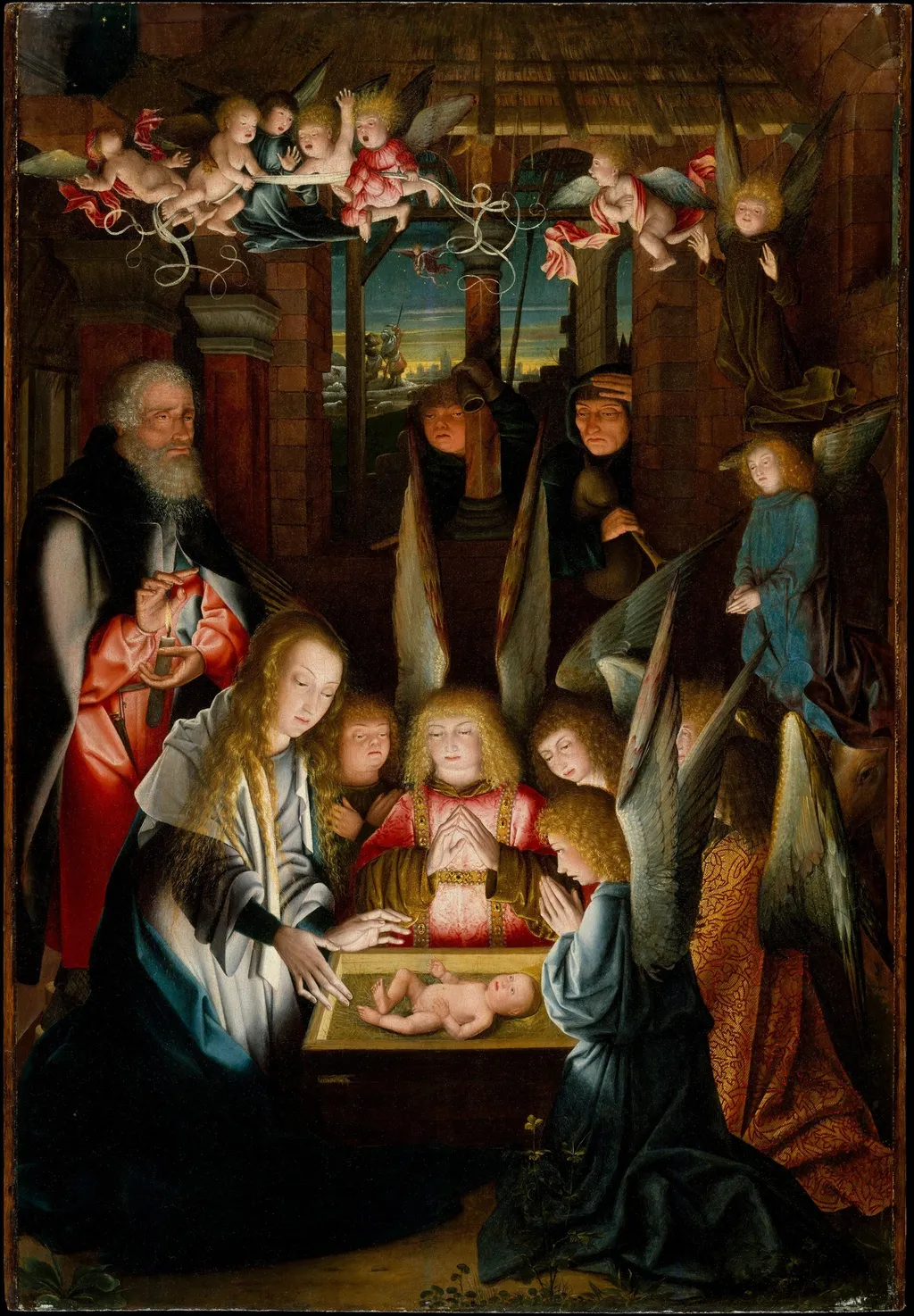
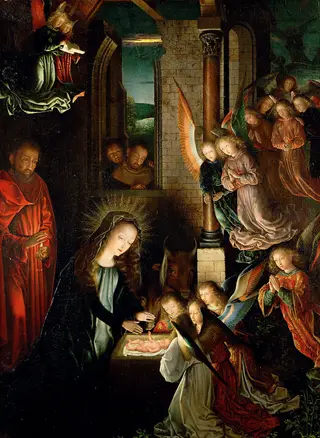
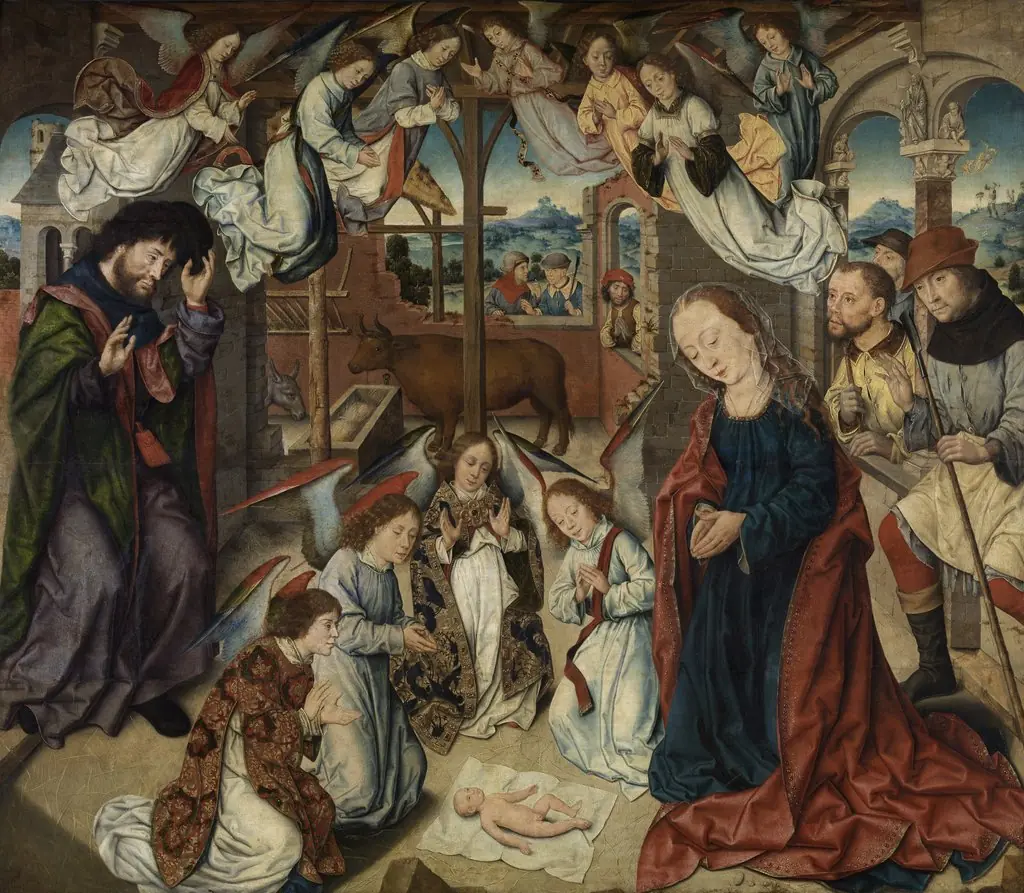
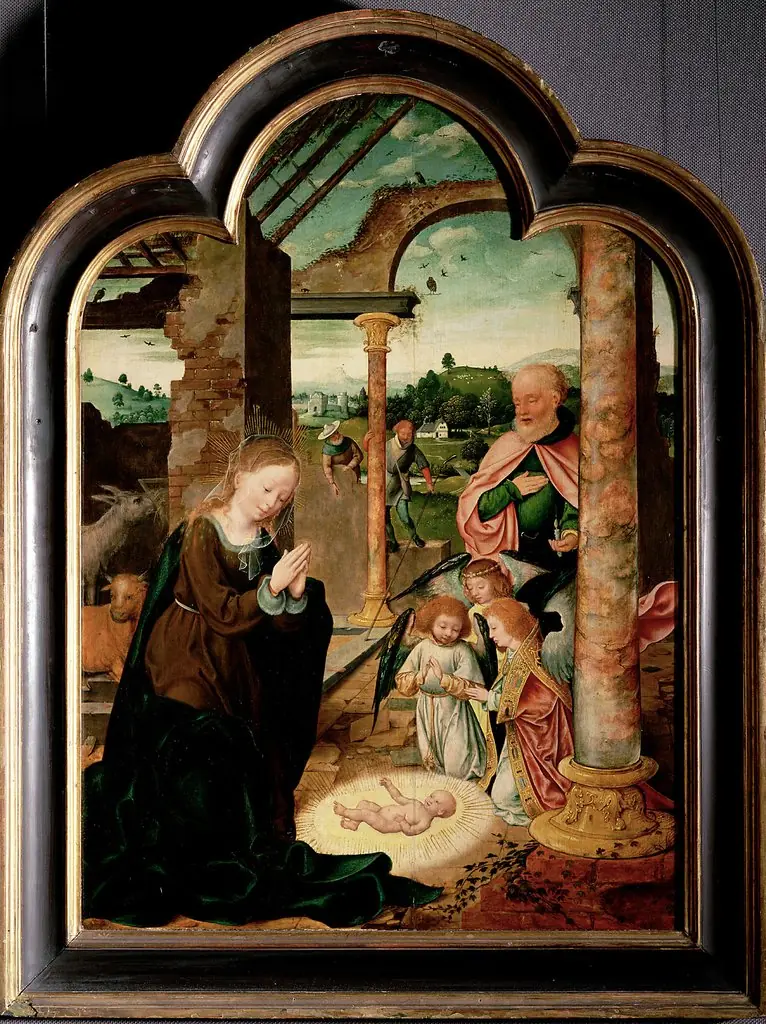
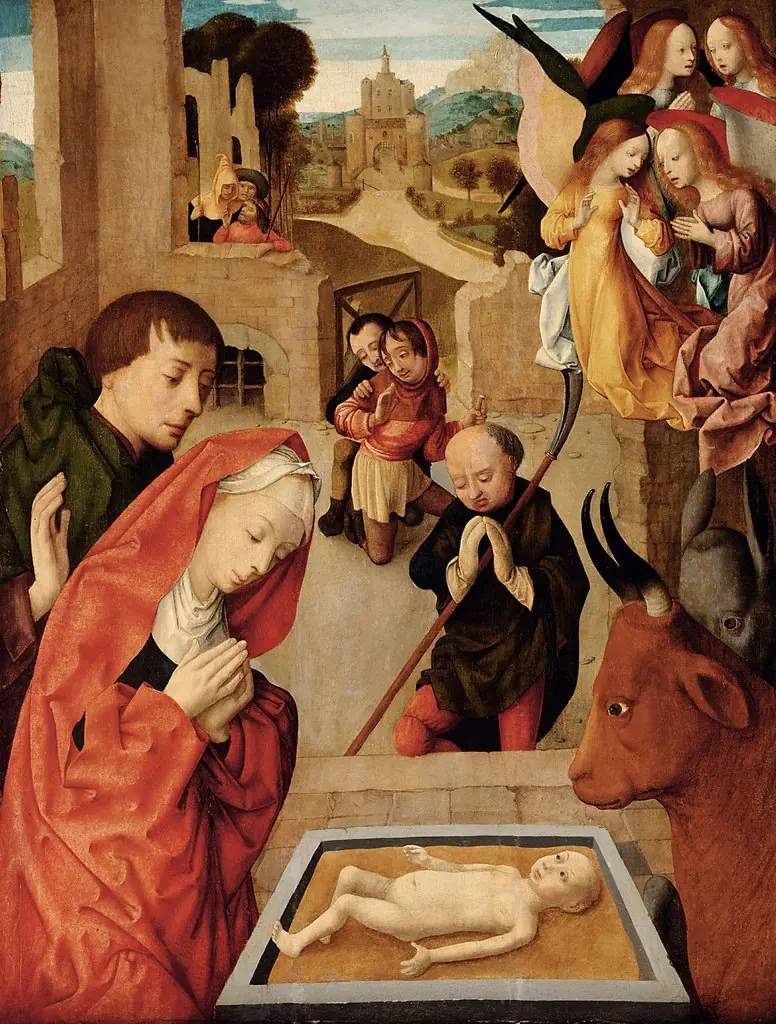
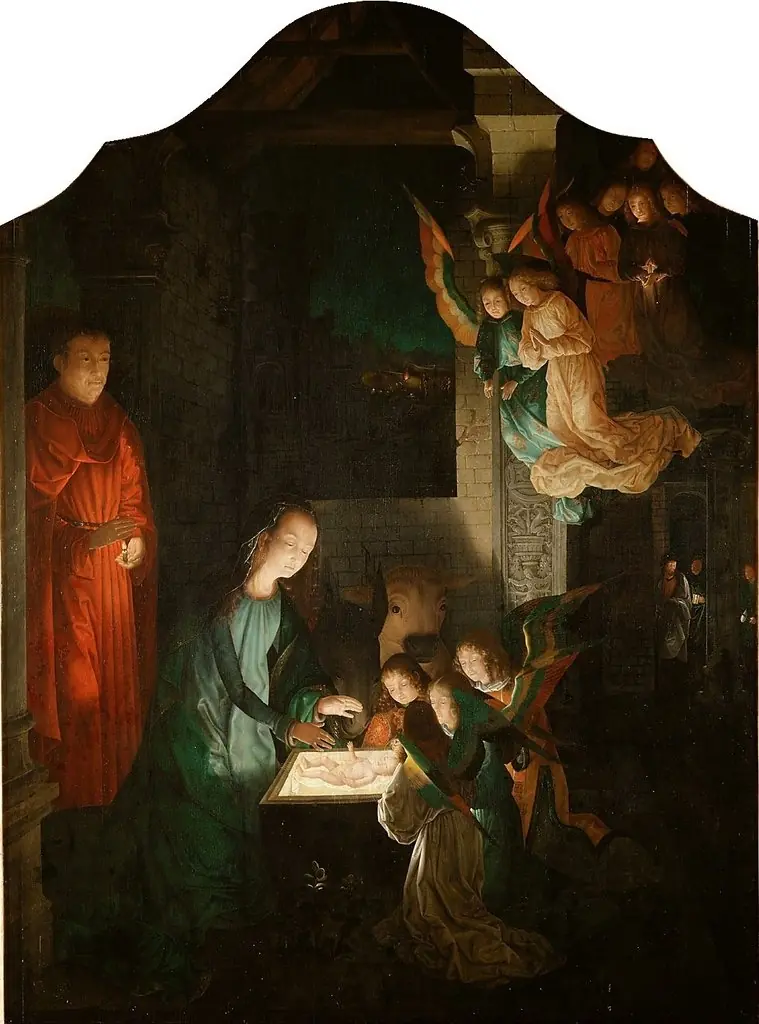
The Adoration of the Christ Child is an oil painting. It dates from 1515 and is held in the collection of the Metropolitan Museum of Art.
About this work
Subject & Meaning
The inclusion of angels alongside the human figures underscores the sacred nature of the event, emphasizing the child's identity as Jesus Christ.
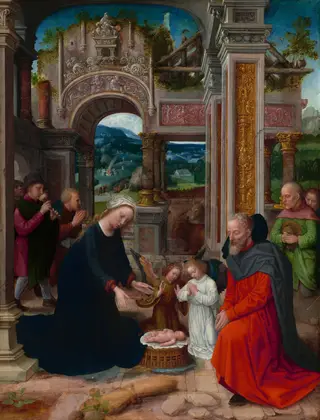
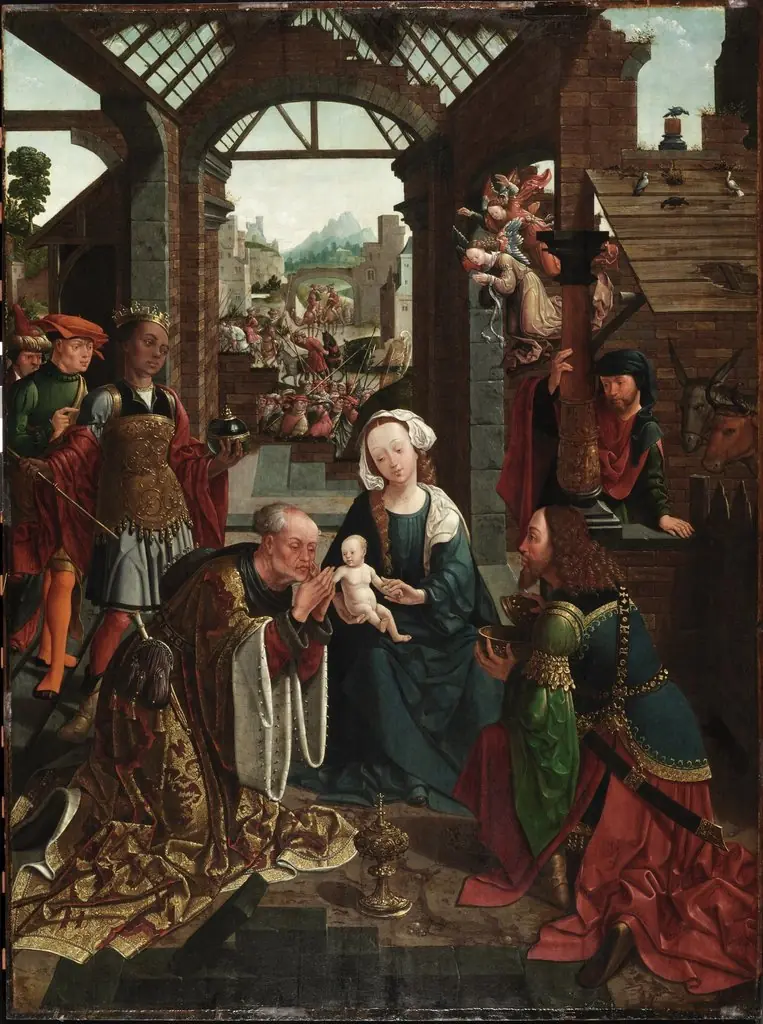
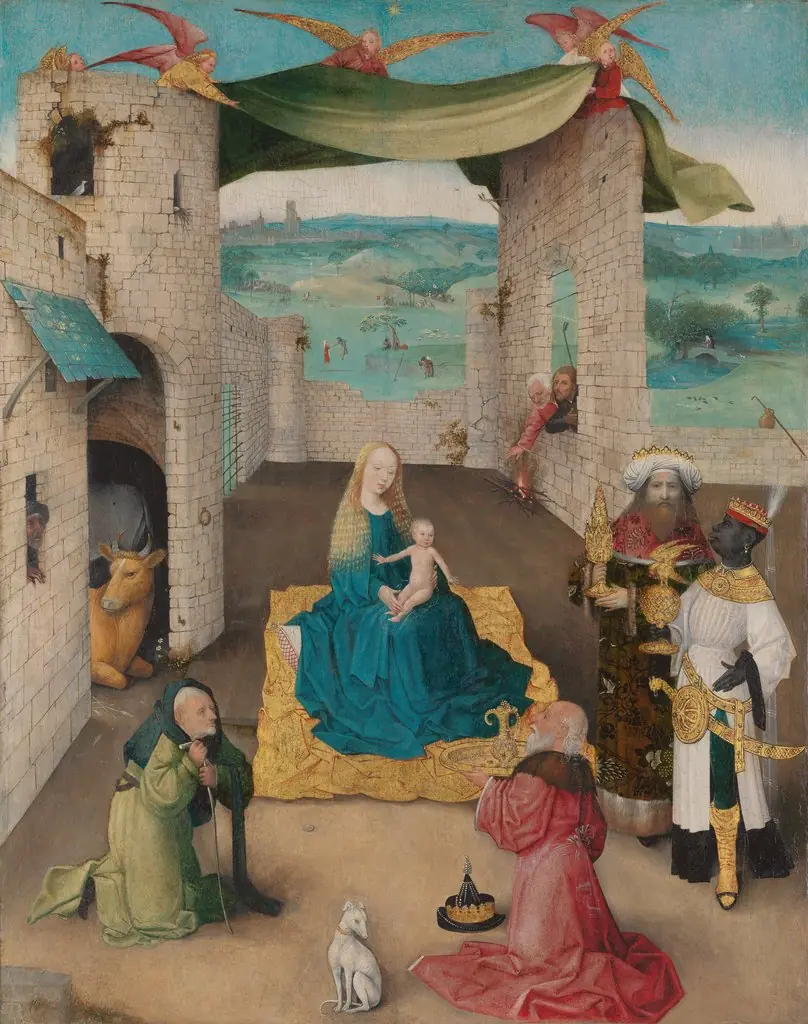
The painting depicts the Adoration of the Christ Child, a religious scene centered on the infant Jesus being venerated by the surrounding figures, Mary, Joseph, and angels. The composition features the Christ Child as the focal point of reverence, attended by human and celestial witnesses. As a work of religious art, the piece represents the theological significance of the Incarnation, illustrating the moment of divine recognition and worship by both earthly and heavenly beings.
The inclusion of angels alongside the human figures underscores the sacred nature of the event, emphasizing the child's identity as Jesus Christ.
Technique & Style
Executed in 1515, this religious painting utilizes oil paint applied to a wooden panel support. The work measures 104.1 cm in height and 70.2 cm in width. Stylistically, the piece is attributed to a follower of Jan Joest of Kalkar.
The composition depicts the Adoration of the Christ Child, featuring the Christ Child, Mary, Joseph, and an angel. While specific details regarding the current physical condition or surface handling techniques are not explicitly recorded in the available sources, the medium and support define its material character as a traditional early sixteenth-century Netherlandish panel painting.
History & Provenance
The Adoration of the Christ Child is an oil-on-panel painting attributed to a follower of Jan Joest of Kalkar and dated to 1515. Its provenance traces through several private owners, Richard von Kaufmann, then Friedhelm Haniel, followed by Jack and Belle Linsky, before passing to the Jack and Belle Linsky Foundation, which donated it to the Metropolitan Museum of Art. It is now part of the Jack and Belle Linsky Collection in New York.
The available records confirm its location and ownership lineage but do not list a specific accession number or a history of public exhibitions.
Context
The Adoration of the Christ Child, painted in 1515, exemplifies early Northern Renaissance religious art. Executed in oil on panel, the work depicts the Virgin Mary, Saint Joseph, the infant Christ, and attendant angels in a domestic yet devotional composition. Stylistic analysis identifies the hand of a follower of Jan Joest of Kalkar, situating the piece within the workshop traditions of the Low Countries.
Its inclusion in the Jack and Belle Linsky Collection at the Metropolitan Museum of Art highlights both its provenance from private German collections and its significance as a representative example of sixteenth-century devotional imagery.
Overview
This oil painting, titled "The Adoration of the Christ Child," presents a devotional scene centered on an infant. A group of figures gathers around the baby, who rests on a simple wooden table, their gazes directed towards him in prayer. Above, several angels hover, completing the sacred tableau.
The artwork is notable for its intricate details and the rich visual textures achieved through the medium of oil paint.
Artist & collection