Artwork
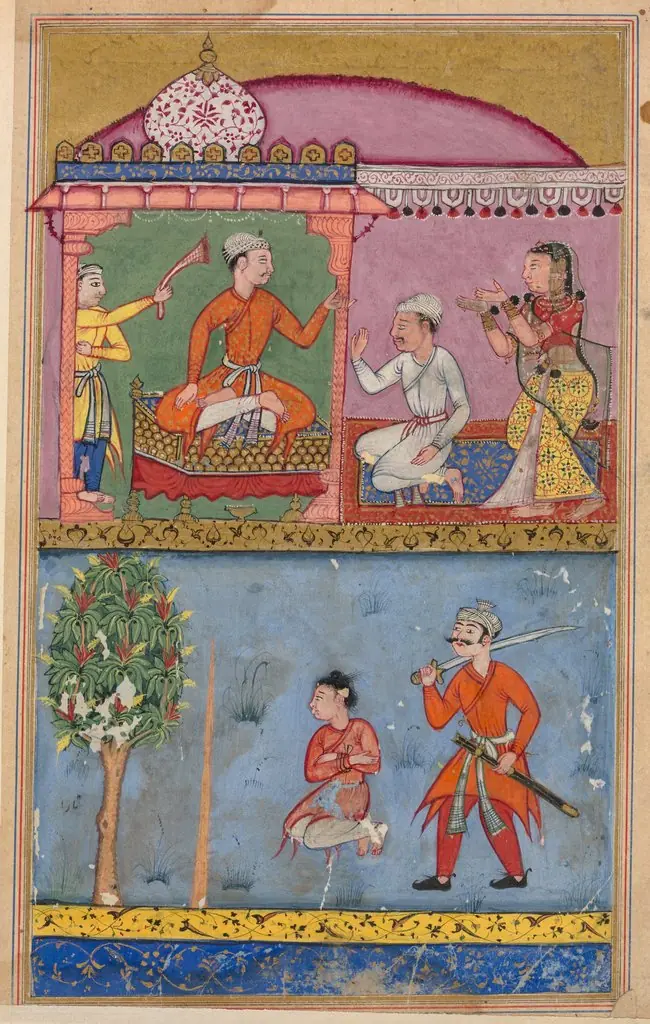
The handmaiden appeals for justice and the prince is taken to the execution site for the fourth time, from a Tuti-nama (Tales of a Parrot): Eighth Night
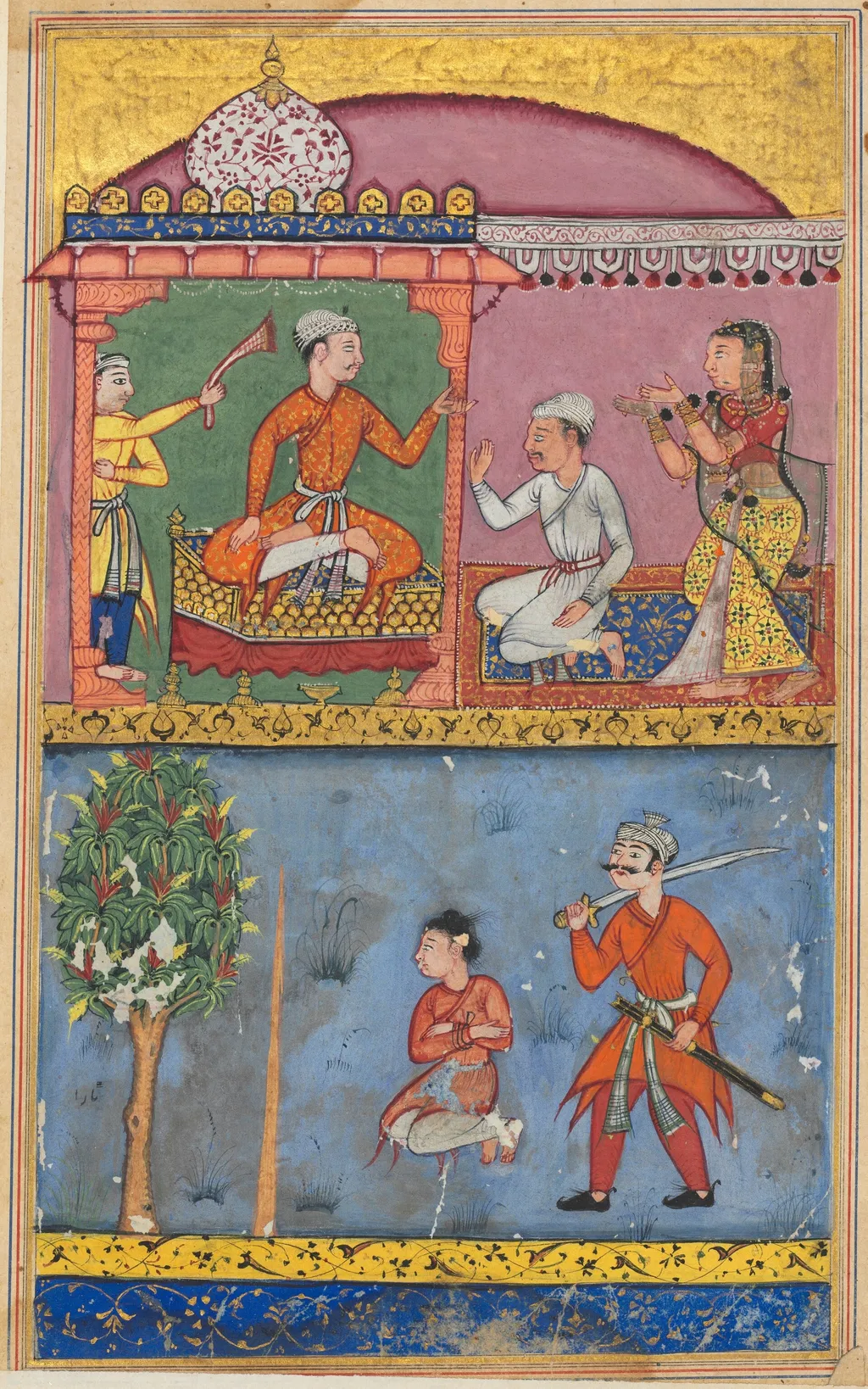
The handmaiden appeals for justice and the prince is taken to the execution site for the fourth time, from a Tuti-nama (Tales of a Parrot): Eighth Night is an unspecified painting. It dates from 1560 and is held in the collection of the Cleveland Museum of Art. The work illustrates a narrative episode from the Persian collection known as the Tuti‑nama, or Tales of a Parrot.
About this work
Subject & Meaning
The handmaiden's gesture and the prince's subdued posture serve as visual symbols of pleading innocence and the arbitrariness of royal punishment.
The painting illustrates a scene from the Eighth Night of the Tuti-nama in which a handmaiden fervently appeals for justice while a prince is led to the execution site for the fourth time. As a Mughal miniature dating to circa 1560, the work uses the narrative to highlight themes of injustice, the plea for mercy, and the moral instruction embedded in the parrot's tales. The handmaiden's gesture and the prince's subdued posture serve as visual symbols of pleading innocence and the arbitrariness of royal punishment.
History & Provenance
The painting was produced in 1560 in the Mughal Empire and is attributed to an unknown artist. It belongs to the illustrated manuscript tradition of the Tuti-nama (Tales of a Parrot), specifically illustrating the Eighth Night. The work is held in the Cleveland Museum of Art under accession number 1962.279.63.b. No details about its early ownership, the circumstances of its commission, its exhibition history, or its path into the museum's collection are documented in the available sources.
Context
The painting illustrates a narrative from the Eighth Night of the Tuti-nama, depicting the handmaiden's plea for justice and the prince's repeated journey to the execution site. Executed circa 1560 in the Mughal Empire, it belongs to the broader tradition of Indian miniature painting, reflecting the courtly storytelling and narrative cycles characteristic of the period. The work is held in the Cleveland Museum of Art collection, among its Indian miniature holdings.
Overview
The work illustrates a narrative episode from the Persian collection known as the Tuti‑nama, or Tales of a Parrot. It is divided into two horizontal registers: an upper scene of a court audience and a lower scene of a martial encounter. Bright pigments dominate, with orange, red, yellow and blue establishing a vivid visual rhythm that underscores the dramatic tension of the moment.
Technique & Style
The painter employs a flat, decorative approach typical of manuscript illustration, with bold outlines and saturated colors that flatten spatial depth. Figures are rendered in profile and three‑quarter views, their gestures exaggerated to convey narrative action. Fine brushwork delineates textiles and accessories, while the compositional division into two scenes creates a continuous story within a single frame.
Legacy
As a visual record of Persian narrative art, the illustration demonstrates the integration of literary storytelling with vivid pictorial representation. Its preservation offers insight into the aesthetic conventions of manuscript painting and the cultural values embedded in the Tuti‑nama’s moral instruction.
Artist & collection

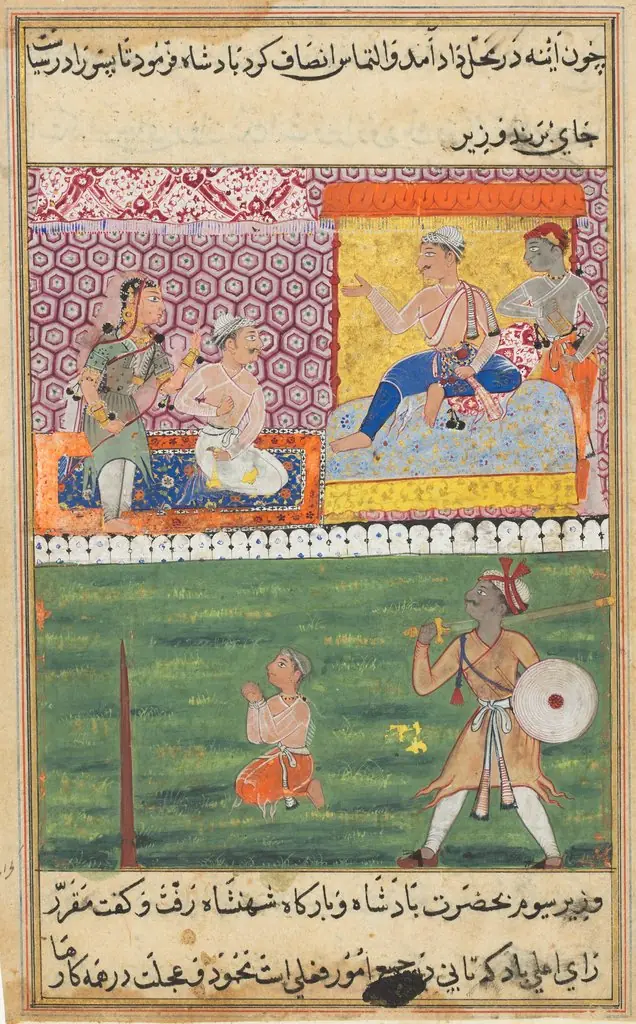
- The handmaiden again appeals for justice and the prince is led to the place of execution for the third time, from a Tuti-nama (Tales of a Parrot): Eighth Night
 The handmaiden appeals for justice and the prince is taken to the execution site for the fourth time, from a Tuti-nama (Tales of a Parrot): Eighth Night
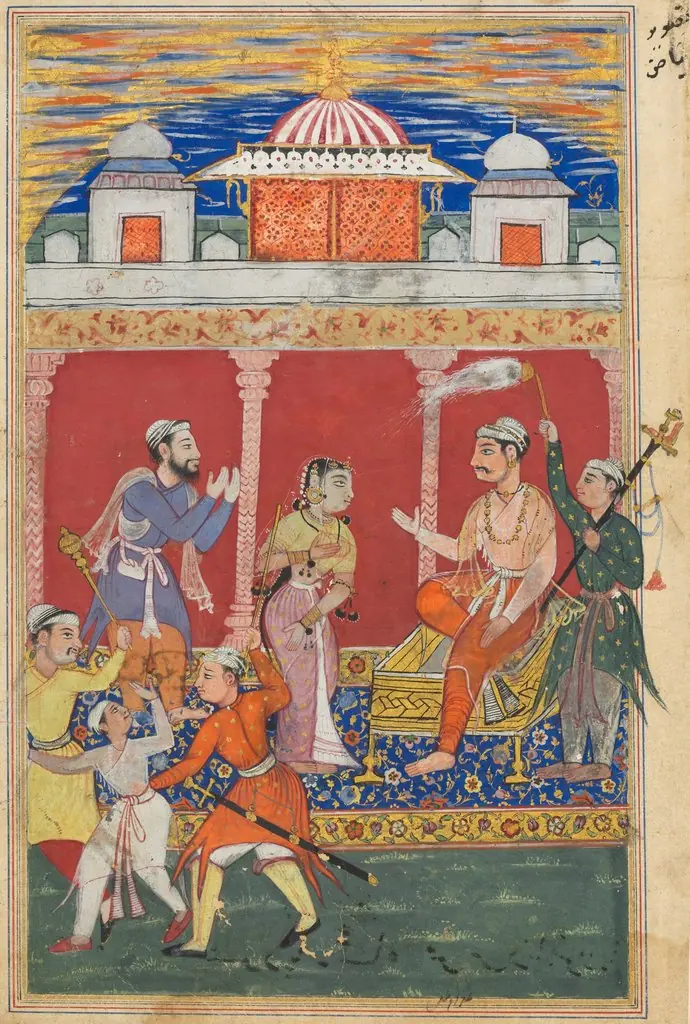 The prince’s ordeal continues, he is ordered away to be executed for the fifth time, from a Tuti-nama (Tales of a Parrot): Eighth Night
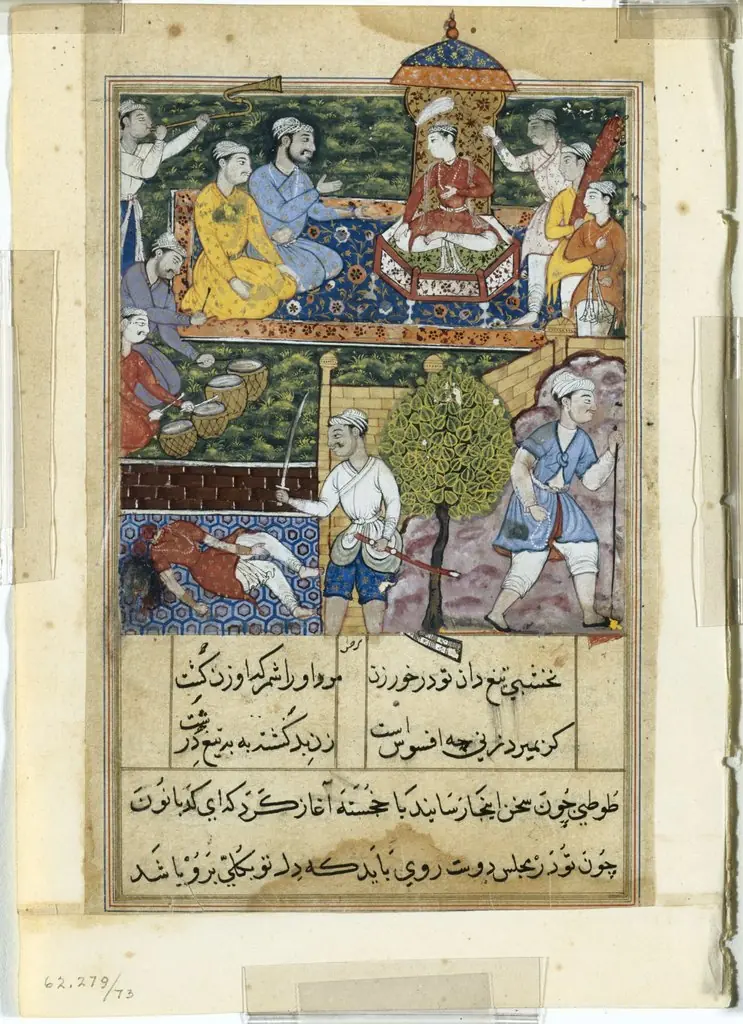 The young prince is crowned and the wicked handmaiden is executed, from a Tuti-nama (Tales of a Parrot): Eighth Night
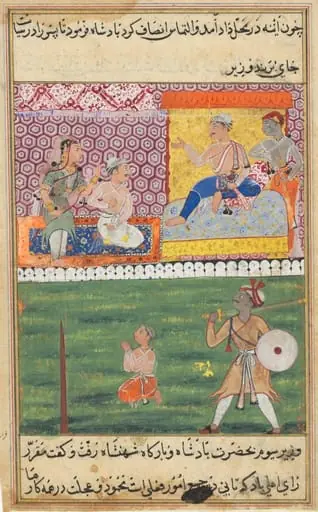 The handmaiden again appeals for justice and the prince is led to the place of execution for the third time, from a Tuti-nama (Tales of a Parrot): Eighth Night
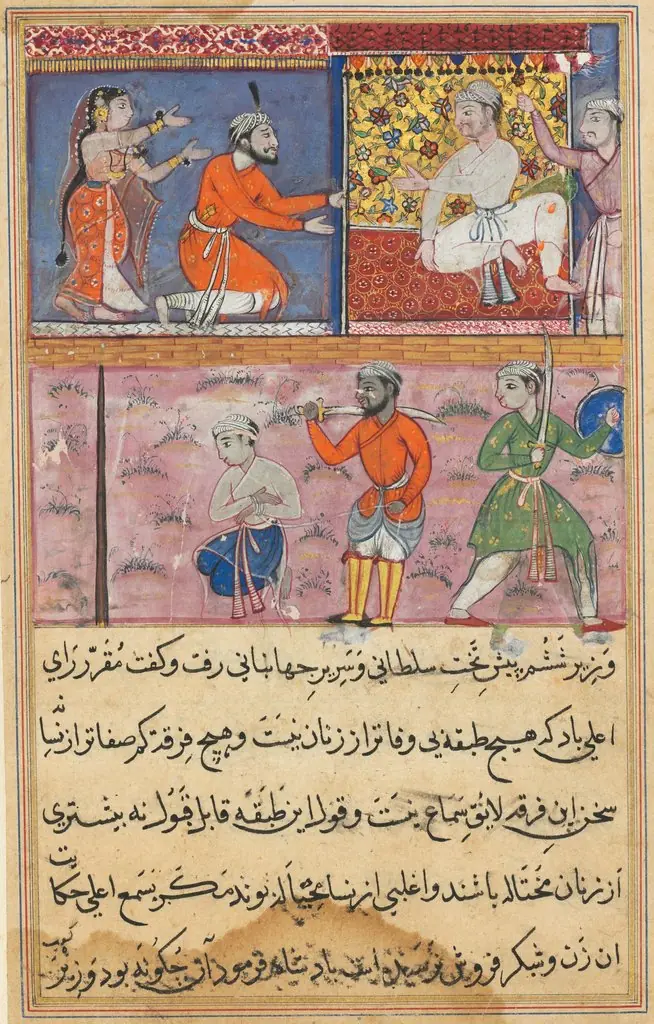 The prince sent back to the place of execution for the sixth time, from a Tuti-nama (Tales of a Parrot): Eighth Night
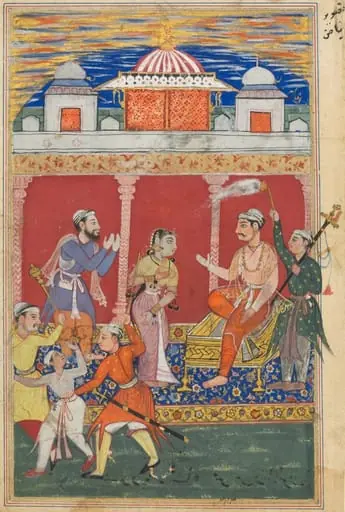 The prince’s ordeal continues, he is ordered away to be executed for the fifth time, from a Tuti-nama (Tales of a Parrot): Eighth Night
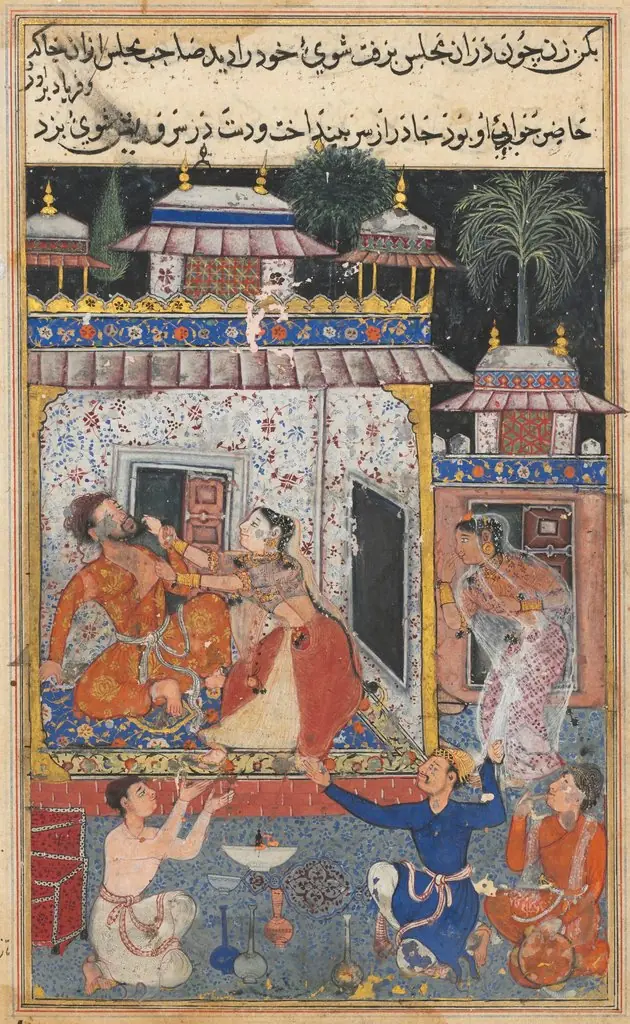 The deceitful wife assaults her erring husband, from a Tuti-nama (Tales of a Parrot): Eighth Night
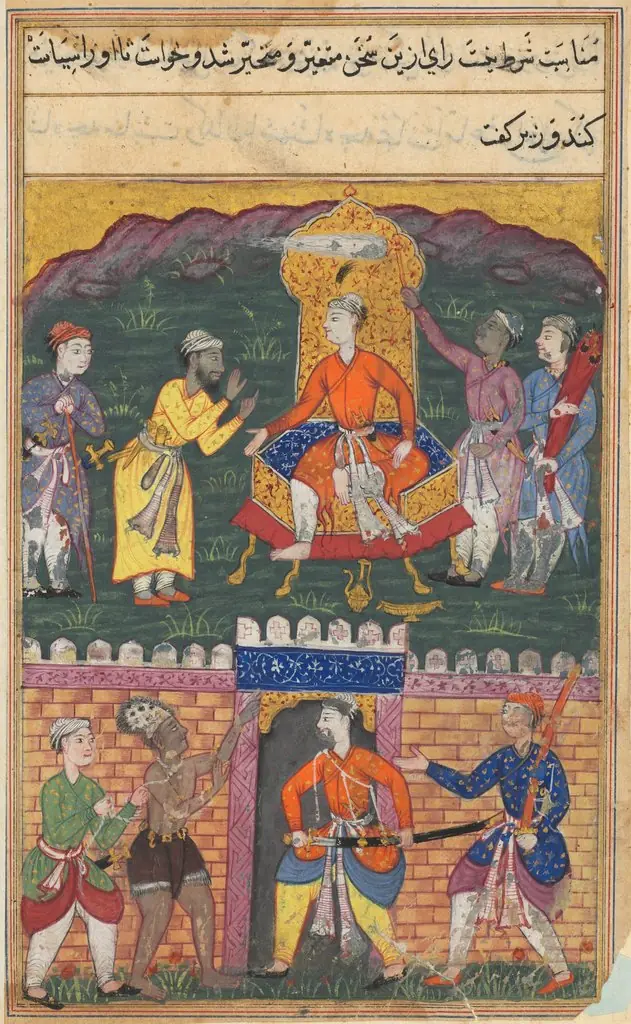 The vizier dissuades the king of Bahilistan from executing the dervish who asks for his daughter’s hand in marriage, from a Tuti-nama (Tales of a Parrot): Seventh Night
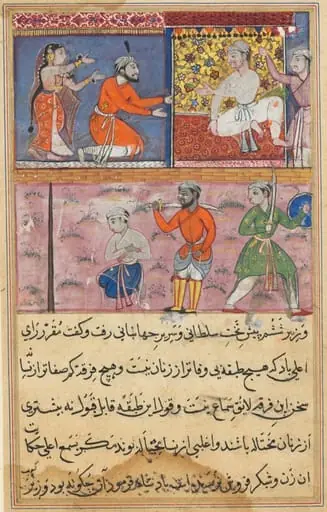 The prince sent back to the place of execution for the sixth time, from a Tuti-nama (Tales of a Parrot): Eighth Night
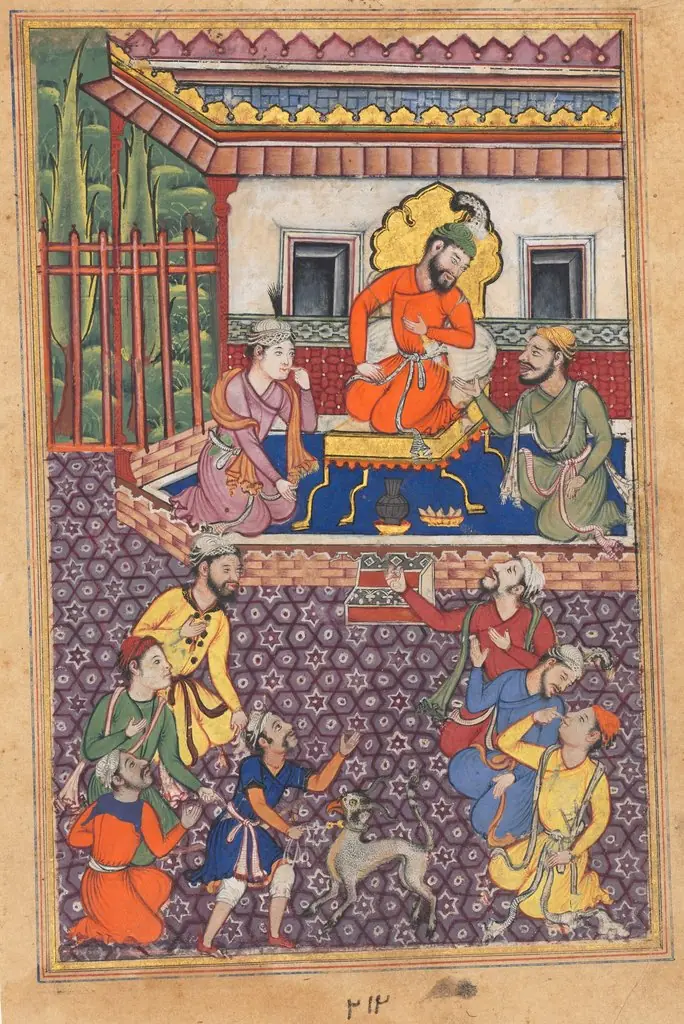 The court of the Raja of Ujjain, from a Tuti-nama (Tales of a Parrot): Forty-sixth Night
 Page from Tales of a Parrot (Tuti-nama): text page
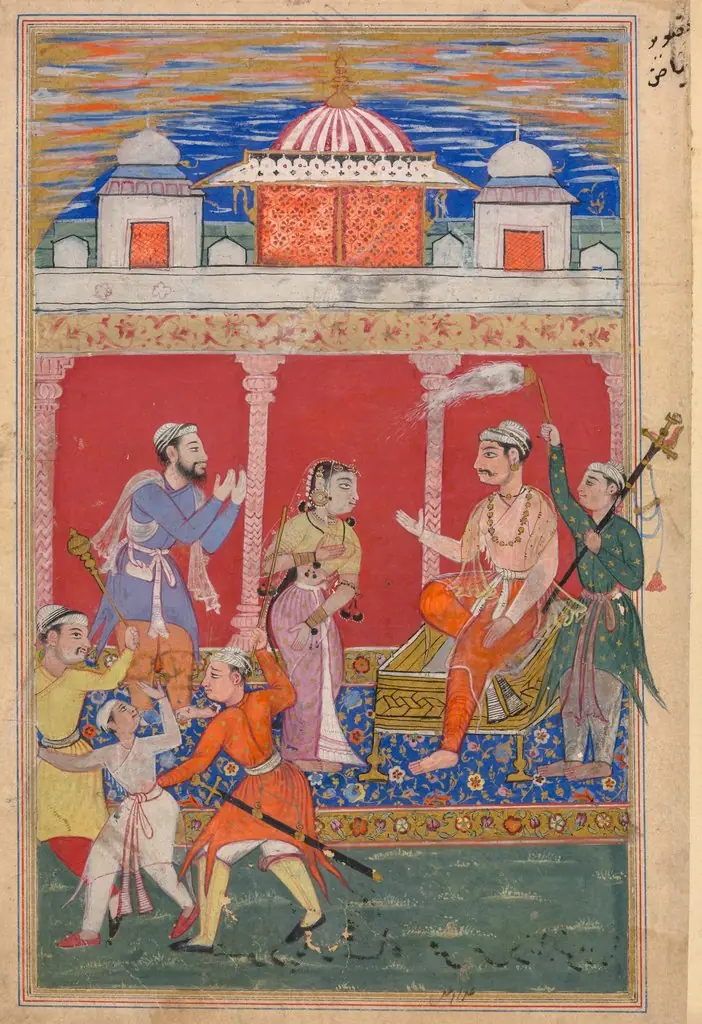 Page from Tales of a Parrot (Tuti-nama): text page
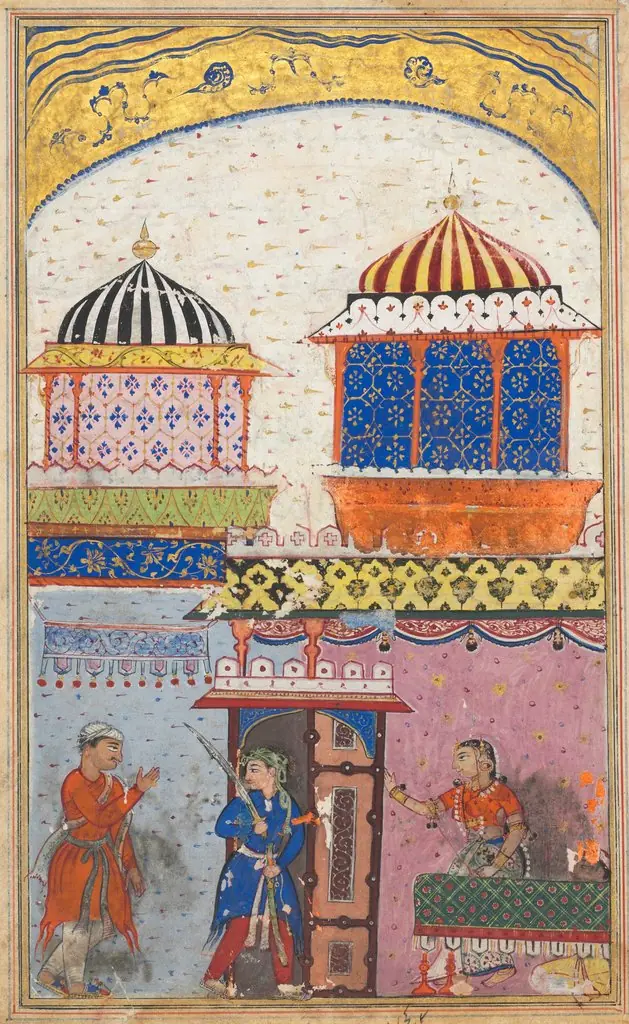 A woman asks her lover to leave her house, brandishing his sword and feigning rage in order to deceive her husband who has just arrived, from a Tuti-nama (Tales of a Parrot): Eighth Night
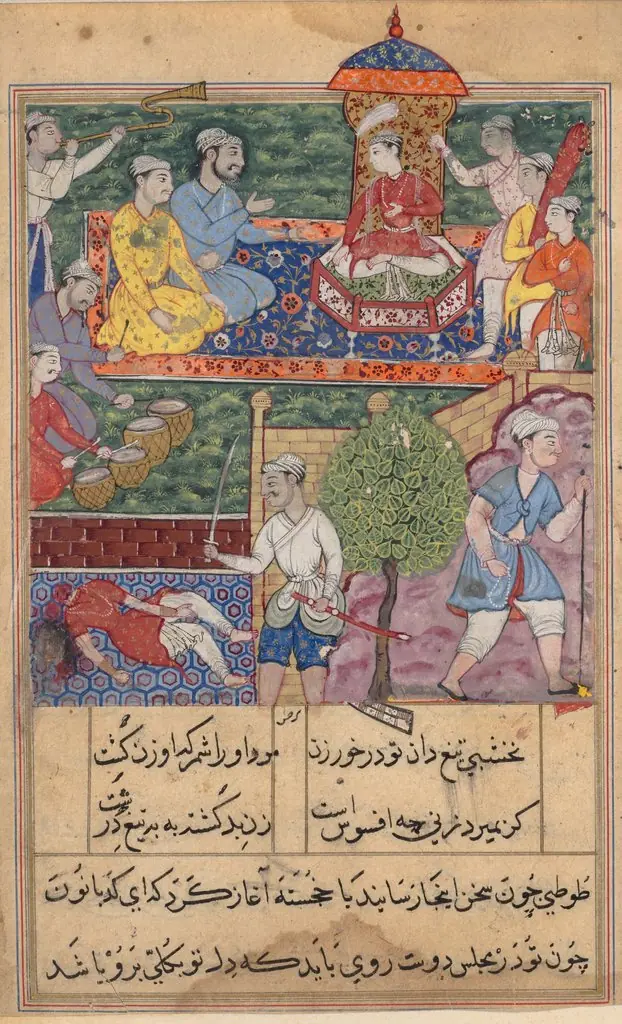 Page from Tales of a Parrot (Tuti-nama): text page
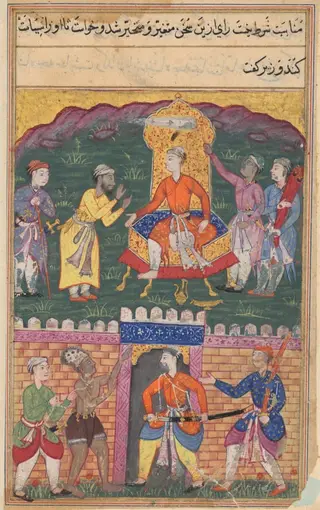 The vizier dissuades the king of Bahilistan from executing the dervish who asks for his daughter’s hand in marriage, from a Tuti-nama (Tales of a Parrot): Seventh Night
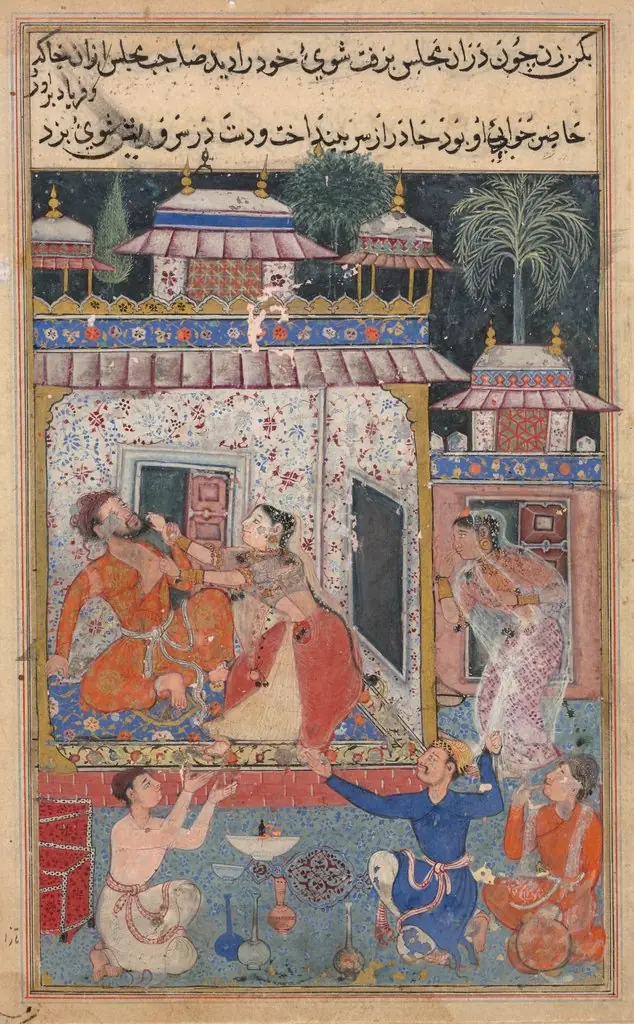 Page from Tales of a Parrot (Tuti-nama): text page
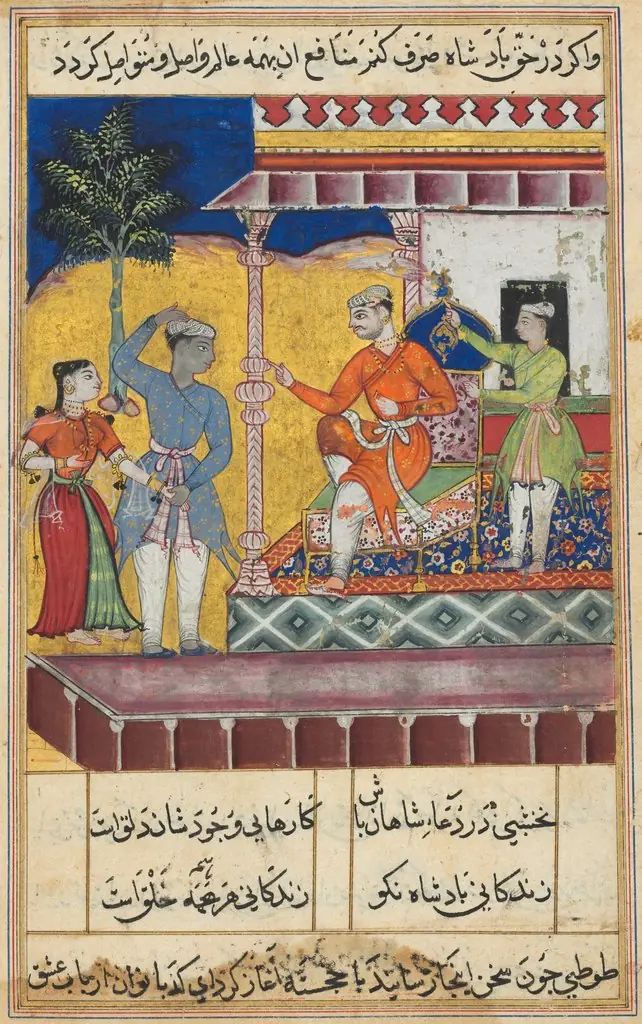 The rejuvenated old man and the daughter of the king of the jinns take leave of the King of Kings, from a Tuti-nama (Tales of a Parrot): Seventh Night