Artwork
Vasant Ragini
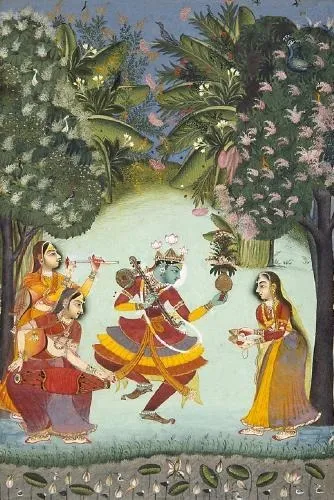
Vasant Ragini is an unspecified painting by the Rajput painting artist Unknown. It dates from 1770 and is held in the collection of the Art Gallery of New South Wales.
About this work
Overview
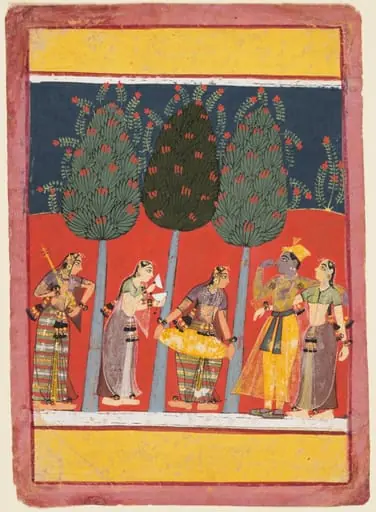
This painting belongs to the Vasant Ragini series, a subset of Rajasthani miniature art that personifies musical modes through seasonal and emotional imagery.
This painting belongs to the Vasant Ragini series, a subset of Rajasthani miniature art that personifies musical modes through seasonal and emotional imagery. It captures a moment of communal celebration tied to spring, blending human figures with natural elements to evoke the mood of the raga. The composition centers on a dynamic pair, surrounded by attendants, all integrated into a tranquil landscape.
Subject & Meaning
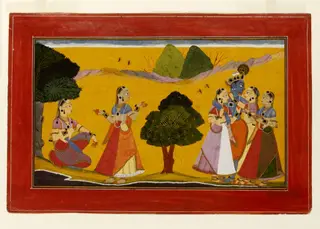
The central figures represent the essence of Vasant, the spring season, embodied in a male dancer and his female companion, both holding ritual pots. Their movement suggests a ceremonial dance, while the three surrounding women engage in varied actions, perhaps offering flowers, music, or incense. Together, they symbolize the renewal and joy associated with spring’s arrival, linking human ritual to natural cycles.
Technique & Style
Executed in opaque watercolor on paper, the painting employs fine brushwork and bold, saturated hues, particularly reds and yellows, to emphasize vitality. Figures are rendered with delicate contours and stylized features, typical of Rajasthani miniatures. The landscape is simplified yet evocative, with flowering trees and soft gradients that frame the scene without overwhelming it, enhancing its lyrical tone.
History & Provenance
Created in the 17th or 18th century, likely in a Rajput court workshop, this work was part of a larger set illustrating the Ragamala tradition, musical modes visualized as poetic scenes. Its survival suggests it was valued within royal collections, possibly commissioned for private contemplation or seasonal rituals. Later, it entered institutional holdings, where it remains a key example of North Indian miniature painting.
Context
The painting reflects the broader Ragamala tradition, which paired musical ragas with visual narratives rooted in poetry and devotional practice. Vasant Ragini, specifically, was associated with courtly celebrations of spring, often performed during festivals. These works served both aesthetic and spiritual purposes, bridging music, nature, and human emotion in a structured, symbolic language familiar to elite audiences.
Legacy
As part of the Ragamala corpus, this painting contributes to a visual lexicon that influenced later Indian art and Western collections of miniature painting. Its integration of movement, color, and symbolism helped define the expressive potential of the genre. Today, it is studied for its cultural synthesis and as a testament to the sophisticated interplay between music and visual art in pre-modern India.
Artist & collection









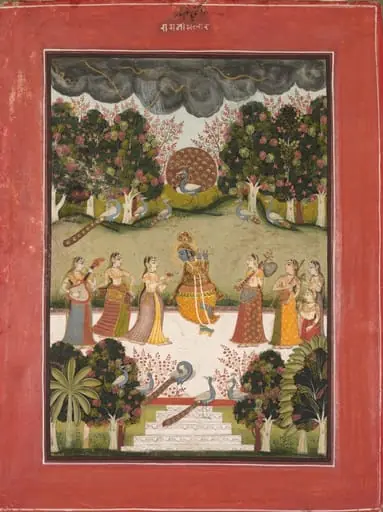 Malar Ragini: Krishna Playing the Flute to Seven Gopis Holding Musical Instruments, from the Ragamala Series
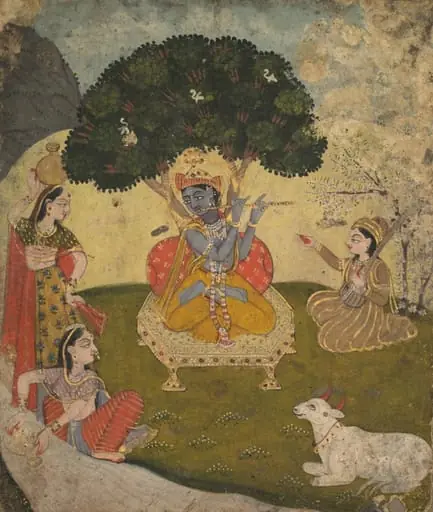 Krishna and Gopis
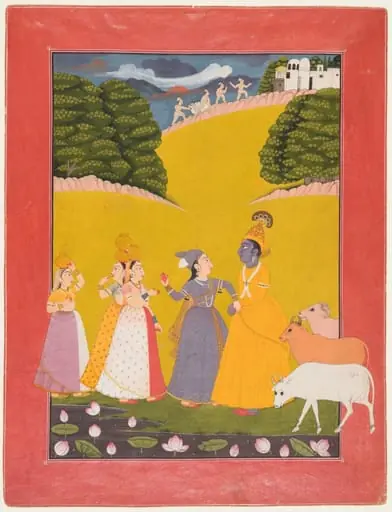 Taking of the toll, Dana-Lila
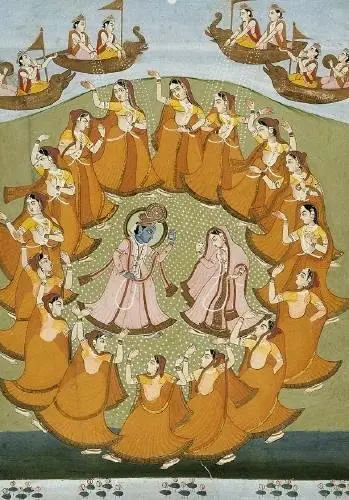 Krishna and Radha dancing the Rasalila
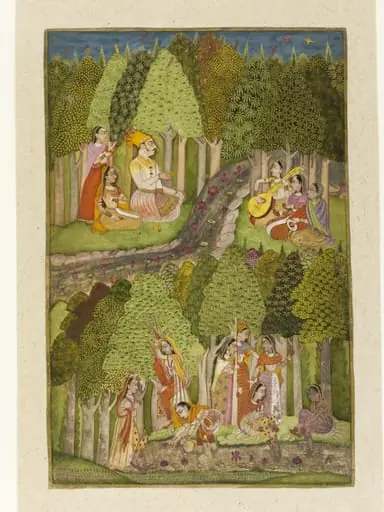 Maharaja Raj Singh
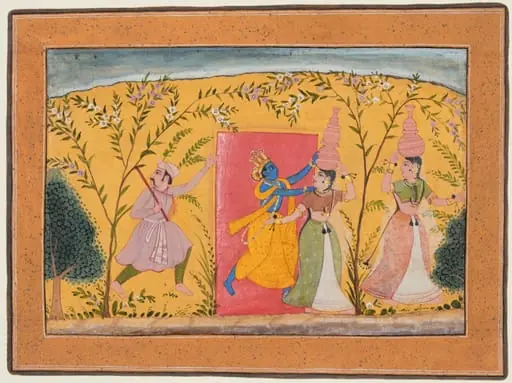 Krishna Exacts a Toll from the Milkmaids: Dana-Lila, from a Bhagavata Purana
 Radha and Krishna seated on a balcony
 "Krishna and the Gopis on the Bank of the Yamuna River", Folio from the "Second" or "Tehri Garhwal" Gita Govinda (Song of the Cowherd)
 Radha and Krishna
 Untitled
 Women Play Music for Radha and Krishna: Chitrini Nayika, from a Rasikapriya
- Vasant Ragini