Artwork
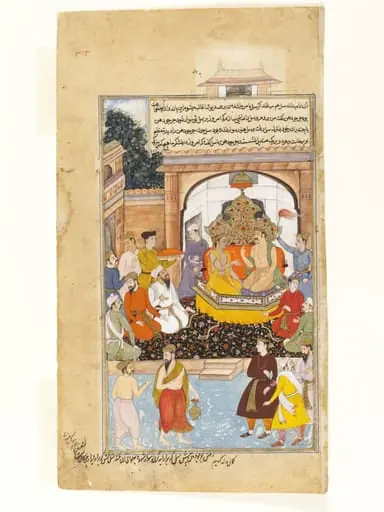
Yaja and Upayaja perform a sacrifice for the emergence of Dhrishtadyumna from the fire, from Adi-parva (volume one) of the Razm-nama (Book of Wars) adapted and translated into Persian by Mir Ghiyath al-Din Ali Qazvini, known as Naqib Khan (Persian, d
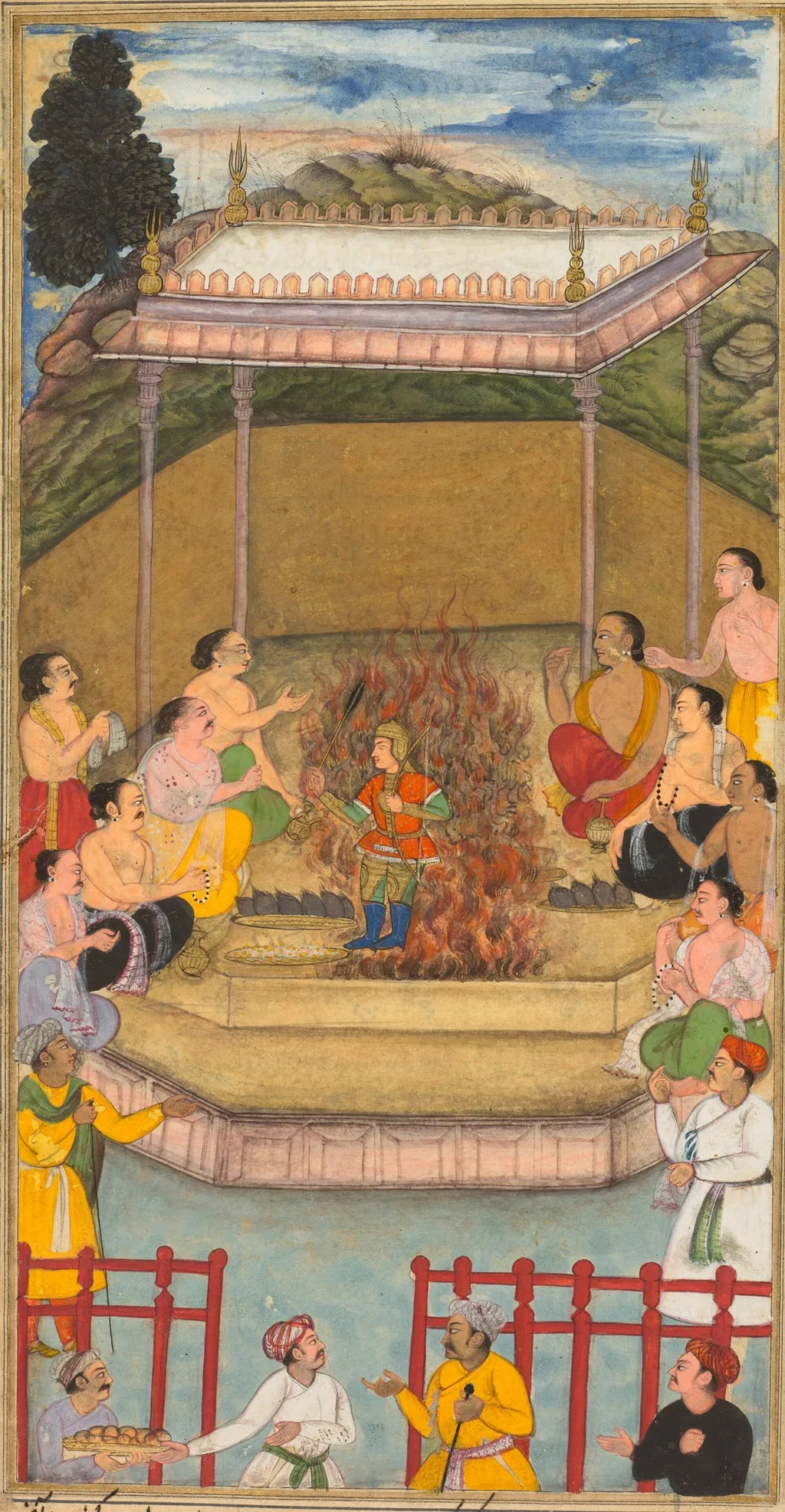
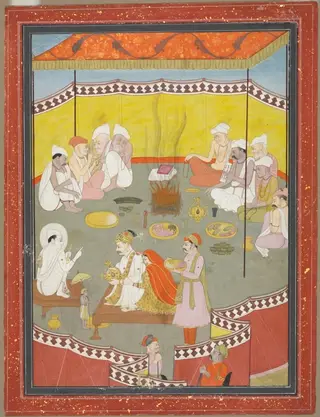
Yaja and Upayaja perform a sacrifice for the emergence of Dhrishtadyumna from the fire, from Adi-parva (volume one) of the Razm-nama (Book of Wars) adapted and translated into Persian by Mir Ghiyath al-Din Ali Qazvini, known as Naqib Khan (Persian, d is an unspecified painting. It dates from 1600 and is held in the collection of the Cleveland Museum of Art. The work depicts a ceremonial sacrifice in an open pavilion, centered on a vivid fire.
About this work
Subject & Meaning
It depicts the brothers Yaja and Upayaja conducting a sacrificial ritual from which Dhrishtadyumna miraculously emerges from the sacred fire.
The painting illustrates an episode from the Adi-parva, the opening book of the Mahabharata as rendered in the Persian Razm-nama. It depicts the brothers Yaja and Upayaja conducting a sacrificial ritual from which Dhrishtadyumna miraculously emerges from the sacred fire. The scene visualizes a pivotal mythic moment of divine birth through ritual offering, a recurring theme in Hindu epic literature that the Mughal imperial translation project conveyed to its Persian-speaking patrons.
The work belongs to a broader illustrated manuscript tradition in which episodes from the Sanskrit epics were adapted into Persian and furnished with pictorial imagery, allowing courtly audiences to engage with the narrative through both text and image. The sacrifice-and-emergence motif functions as a visual statement of supernatural origin, signaling Dhrishtadyumna's destined role as a warrior born specifically to confront a great adversary.
History & Provenance
The painting is dated to 1598 and was produced in the Mughal Empire. While one source lists the artist as unknown, another attributes the work to Bilal Habshi, an Ethiopian painter active in the late 1500s. The artwork entered the Cleveland Museum of Art’s collection in 2013, where it is catalogued under accession number 2013.305.
No further details about its original commission, earlier owners, or subsequent transfers are provided in the available sources.
Overview
The work depicts a ceremonial sacrifice in an open pavilion, centered on a vivid fire. Figures in bright yellow, red and green garments gather around the flames, some seated on steps, others standing, while a staff‑bearing individual tends the blaze. Two observers positioned beyond a red railing watch the ritual, emphasizing the fire’s focal role in the composition.
Technique & Style
Executed in a miniature painting tradition, the piece employs fine brushwork and a luminous palette to render the flickering flames and richly colored costumes. Delicate linear detailing defines the figures and architectural elements, while the use of perspective creates a shallow depth that draws attention to the central fire.
Context
As a visual interpretation of a cross‑cultural literary work, the painting reflects the exchange between Indian epic narratives and Persian artistic conventions. It serves as an example of how mythological themes were adapted for courtly audiences, influencing subsequent illustrated manuscripts in the region.
Artist & collection

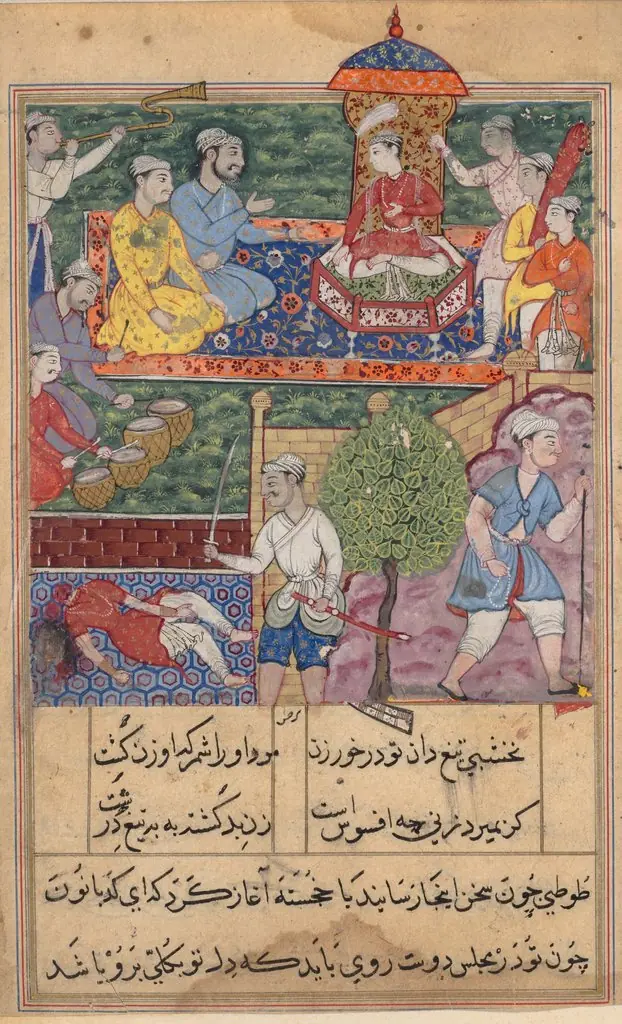
 Page from Tales of a Parrot (Tuti-nama): text page
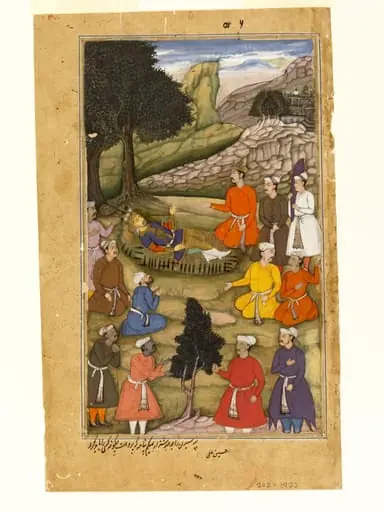 Bhisma
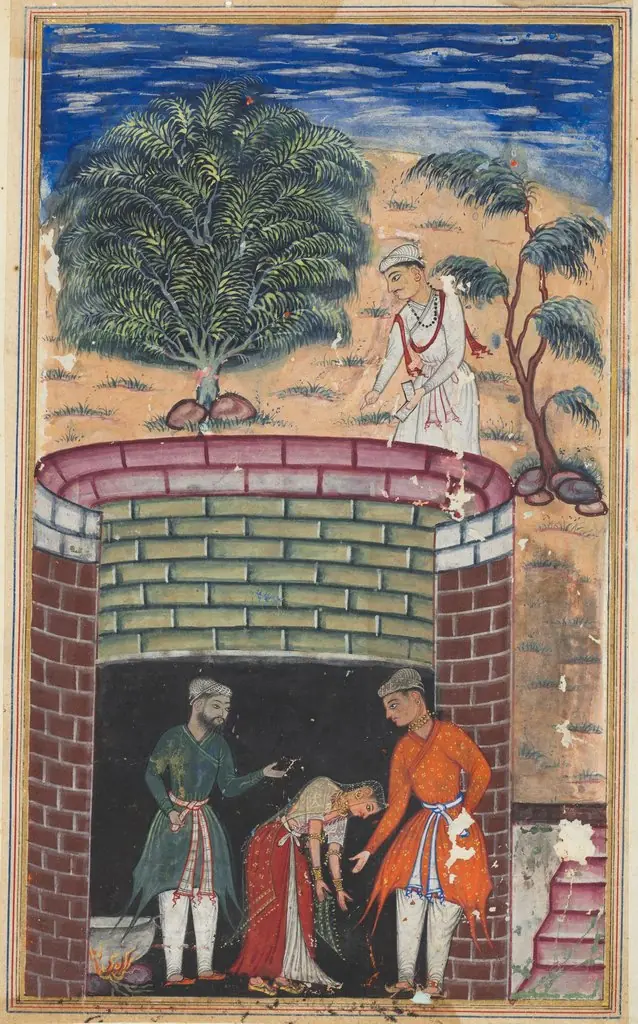 The daughter of the king of the jinns bows before the King of Kings who has just undergone the ordeal of passing through the boiling oil to emerge as a youth, from a Tuti-nama (Tales of a Parrot): Seventh Night
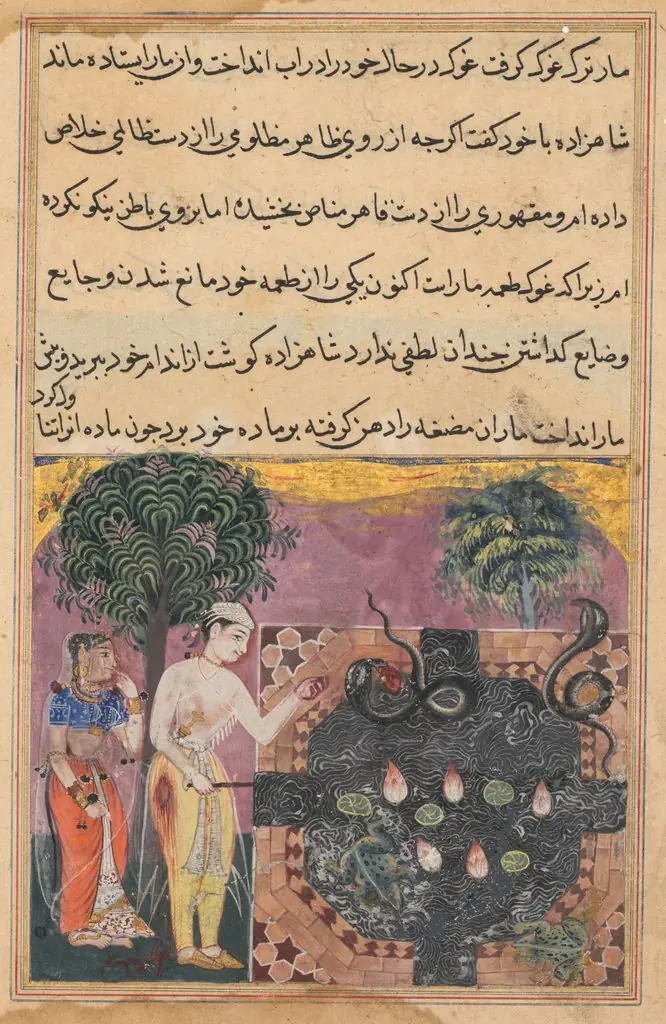 The prince, having deprived the snake of its natural food, a frog, feeds it with a piece of his own flesh, from a Tuti-nama (Tales of a Parrot): Eighteenth Night
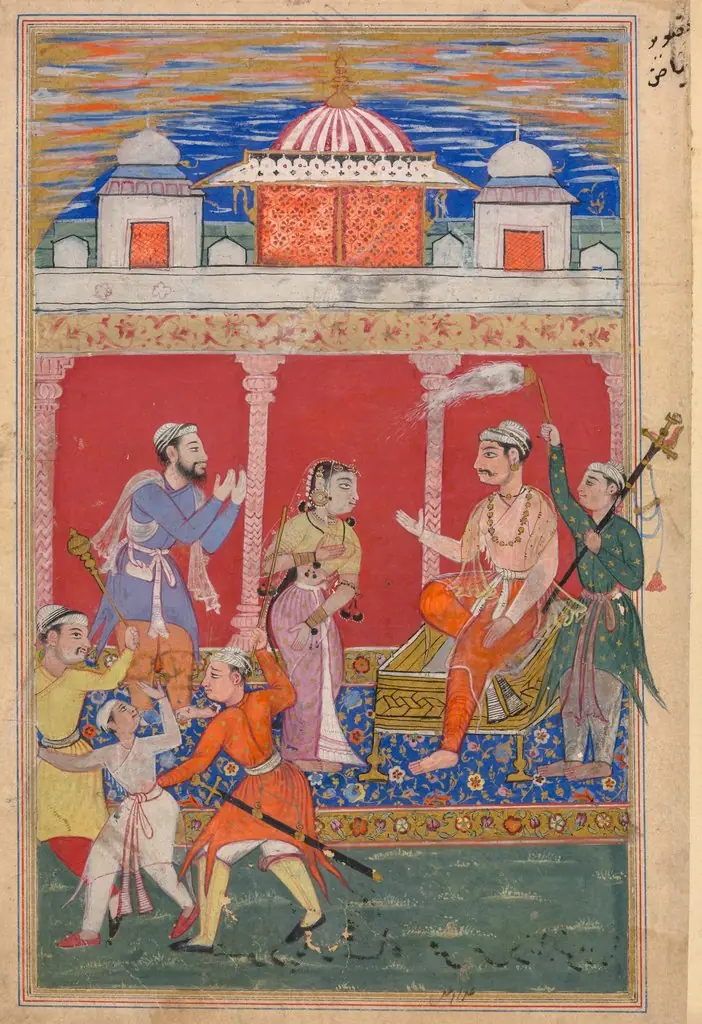
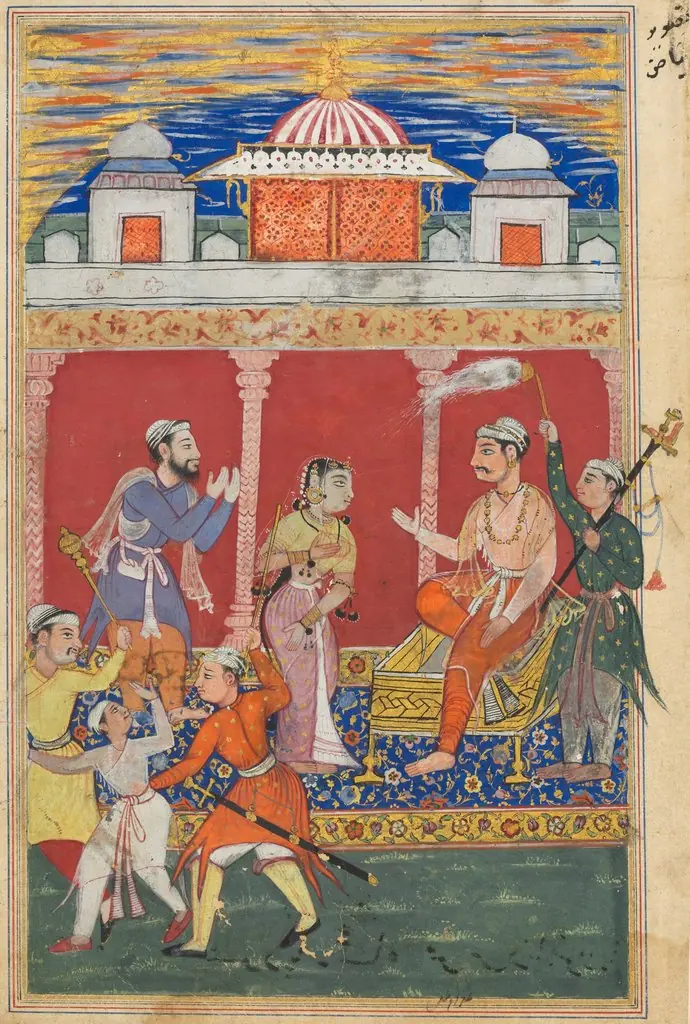
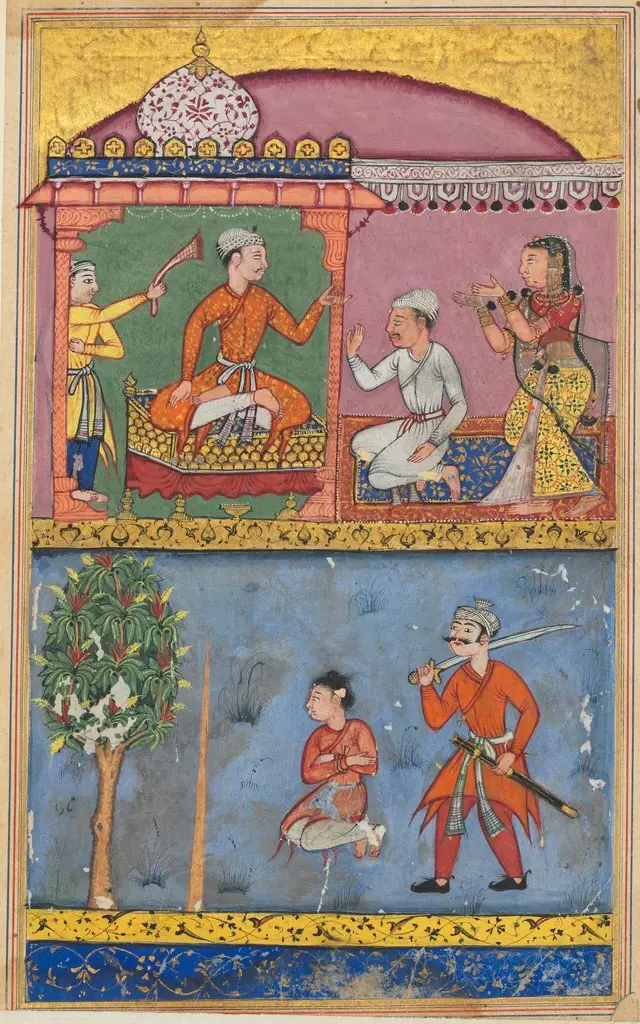 The handmaiden appeals for justice and the prince is taken to the execution site for the fourth time, from a Tuti-nama (Tales of a Parrot): Eighth Night
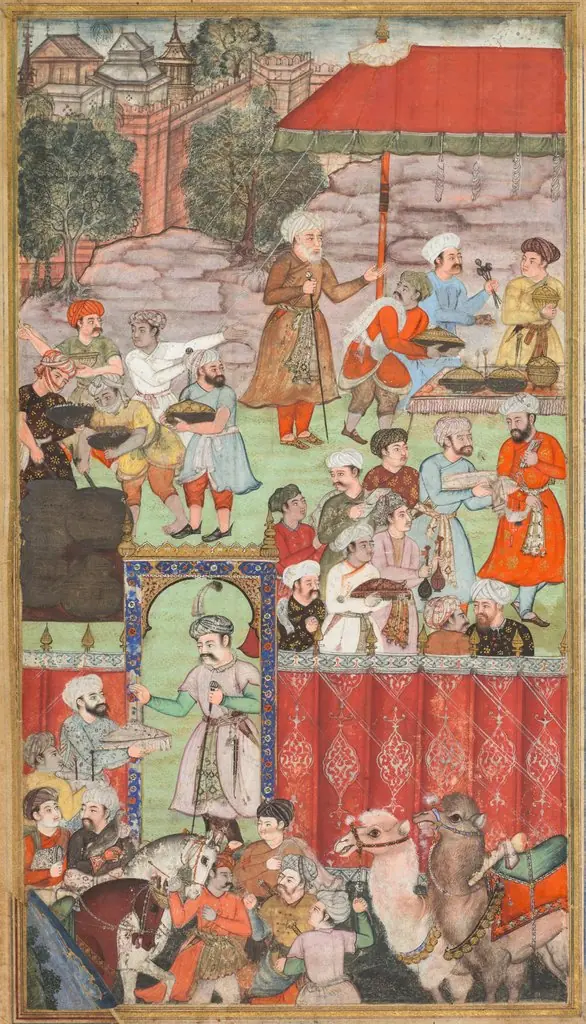 A feast for Babur hosted by his half-brother Jahangir Mirza in Ghazni in May 1505, from a Babur-nama (Memoirs of Babur)
 King Bali gives a gift of land to Vamana
 Page from Tales of a Parrot (Tuti-nama): text page
 The prince’s ordeal continues, he is ordered away to be executed for the fifth time, from a Tuti-nama (Tales of a Parrot): Eighth Night
- Yaja and Upayaja perform a sacrifice for the emergence of Dhrishtadyumna from the fire, from Adi-parva (volume one) of the Razm-nama (Book of Wars) adapted and translated into Persian by Mir Ghiyath al-Din Ali Qazvini, known as Naqib Khan (Persian, d. 1614) from the Sanskrit Mahabharata
 Sacrificial Fire, from the "Tula Ram" Bhagavata Purana
 Duryodhana and Salya