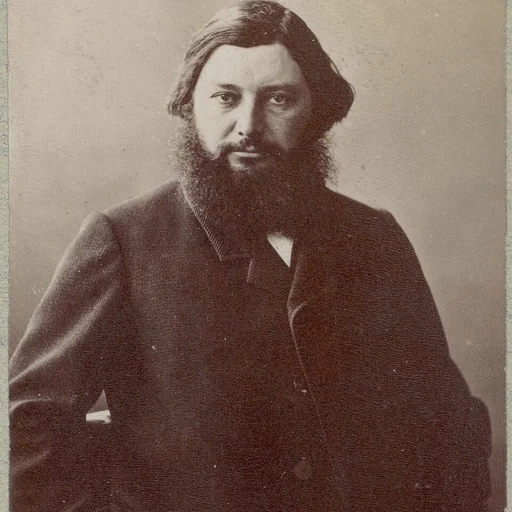
Subject
Wind Wave
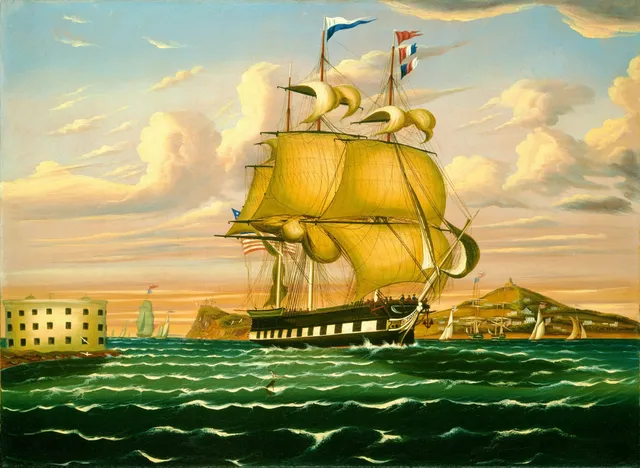
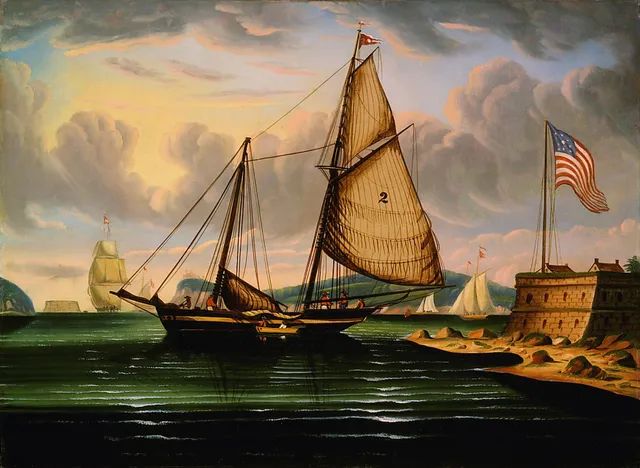
Wind Wave is a subject in art. The gallery holds 86 works in this subject in art, including works by Gustave Courbet, Édouard Manet and Thomas Chambers.
Before "wind wave" entered the vocabulary of oceanographers—who define it as a surface wave raised by wind dragging across open water over a distance called the fetch—the breaking, wind-driven wave was already one of the oldest and most charged subjects in Western art. Its rise as an independent motif belongs to the Dutch Golden Age. In the seventeenth-century Netherlands, a maritime nation whose wealth, defense, and daily life depended on the sea, marine painting flourished as a distinct genre prized by collectors. Specialists such as Willem van de Velde the Younger and Ludolf Bakhuizen built careers on white-capped swells buffeting ships, and scenes of vessels in distress carried an allegorical charge, standing for the precariousness of human existence at the mercy of forces beyond control.
Visually, the subject crystallized into a recognizable grammar: a horizontal canvas divided into bands of shore, churning sea, and a sky often given the greatest share of the surface, with a foaming crest caught at the instant before it collapses. Rendering moving water demanded technical invention. Gustave Courbet, working with a palette knife, troweled thick layers of dark green and slate over which he dragged ribbons of white foam, giving the water a dense, almost geological physicality. In Japan, Katsushika Hokusai exploited the newly imported pigment Prussian blue for his woodblock masterpiece The Great Wave off Kanagawa (c. 1831).
The genre's defining campaign came in 1869, when Courbet spent the summer at Étretat on the Normandy coast and produced a series of wave studies, exhibiting The Stormy Sea (also called The Wave) and The Cliff at Étretat after the Storm—both now in the Musée d'Orsay—at the 1870 Salon. The catalogue's holdings trace the subject's reach: Courbet's The Woman in the Waves; the luminist coastal scenes of Alfred Thompson Bricher (1837–1908) and Martin Johnson Heade's Rio de Janeiro Bay; and the bold, flat-colored harbor marines of the self-taught English-American painter Thomas Chambers (1808–1869), including Threatening Sky, Bay of New York.
The motif's legacy is one of cross-cultural exchange. Hokusai's wave—itself indebted to Dutch sea pictures—flowed back into Europe through Japonisme, shaping Monet, van Gogh, and even Debussy's orchestral La Mer. Bracketed by Romanticism's taste for the sublime and Impressionism's pursuit of fleeting light, the wind wave endures as art's emblem of nature's unmasterable energy.
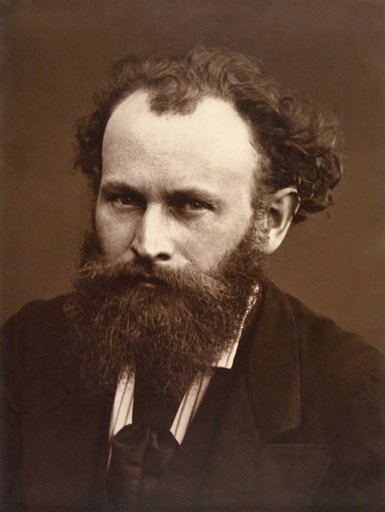
Key artists

Works
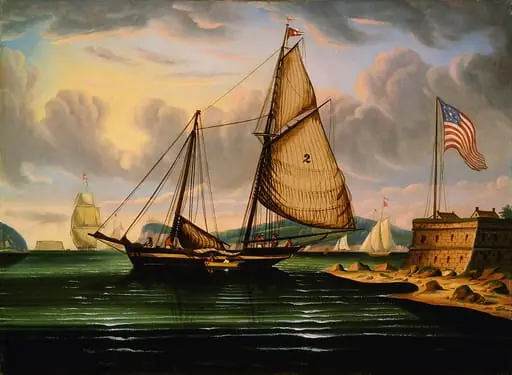 New York Harbor with Pilot Boat "George Washington"
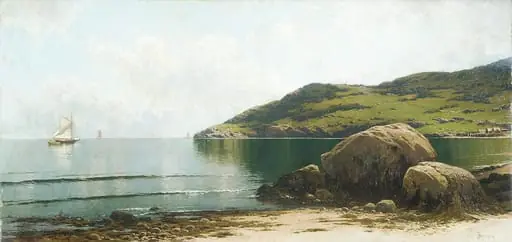 Marine Landscape
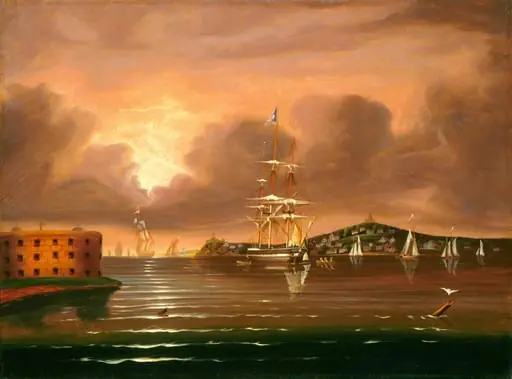 Threatening Sky, Bay of New York
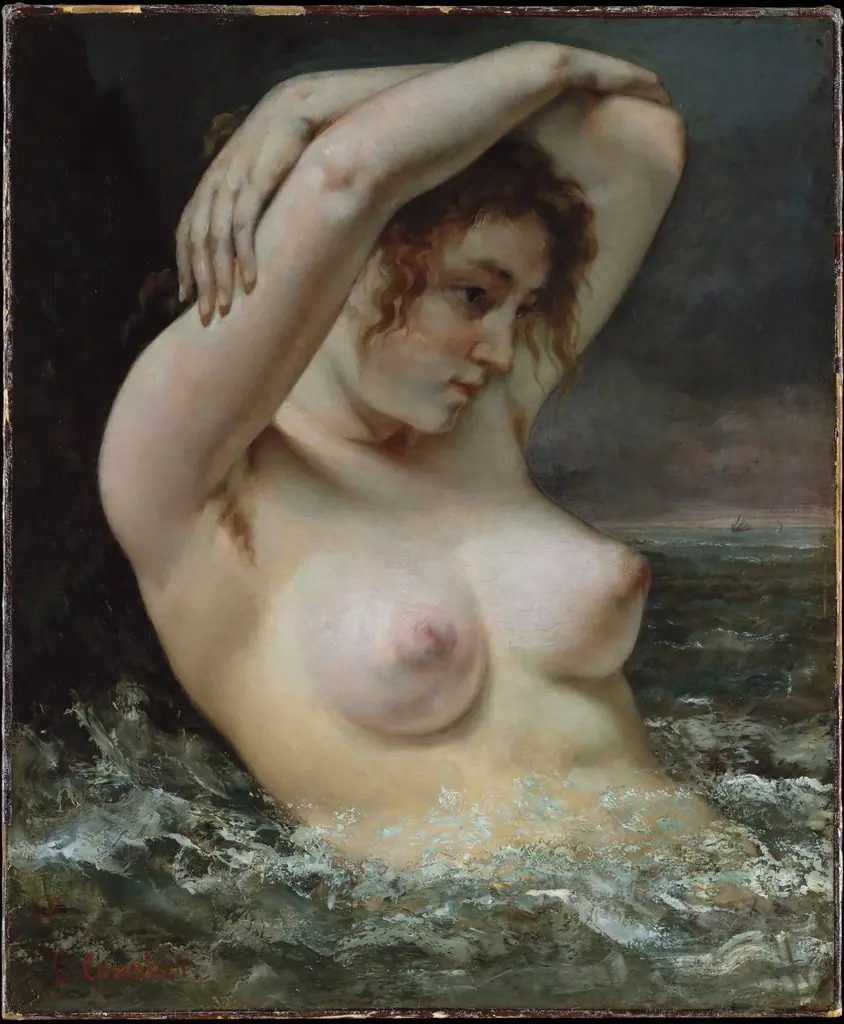 The Woman in the Waves
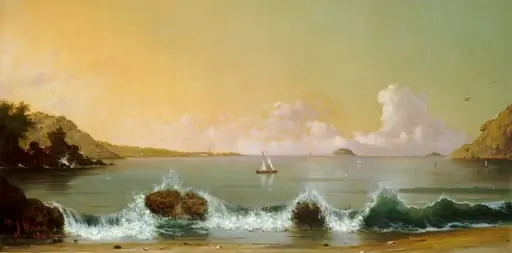 Rio de Janeiro Bay
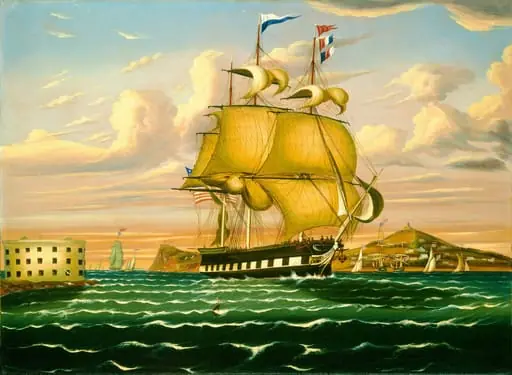 Packet Ship Passing Castle Williams, New York Harbor
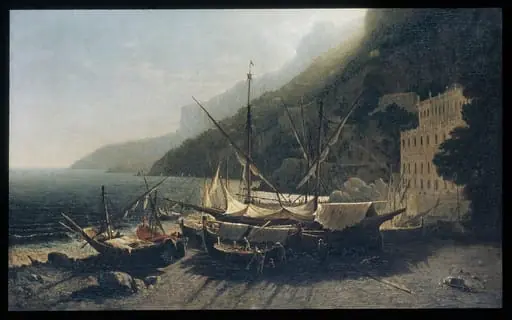 View at Amalfi, Bay of Salerno
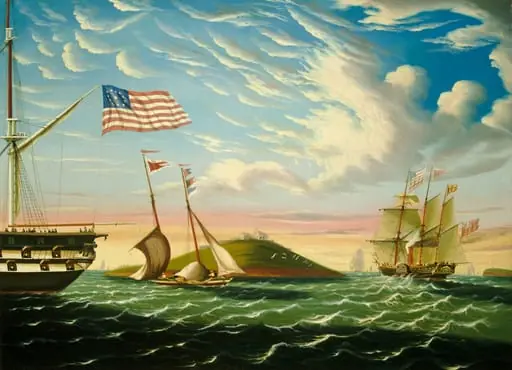 Boston Harbor
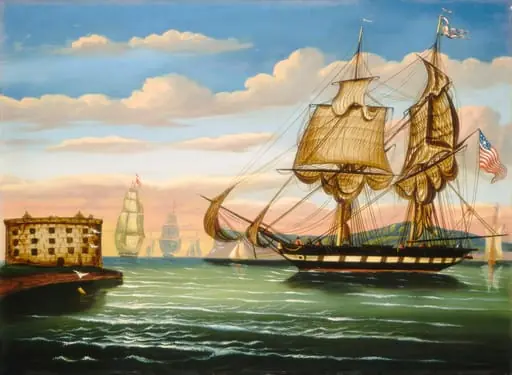 Bay of New York, Sunset
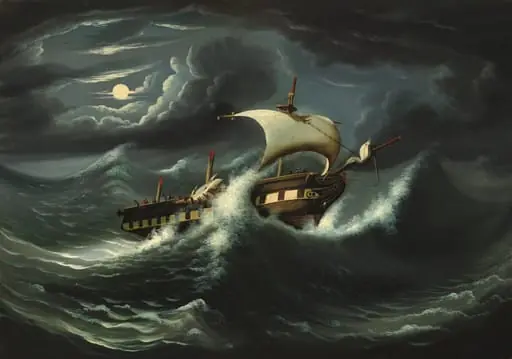 Storm-Tossed Frigate
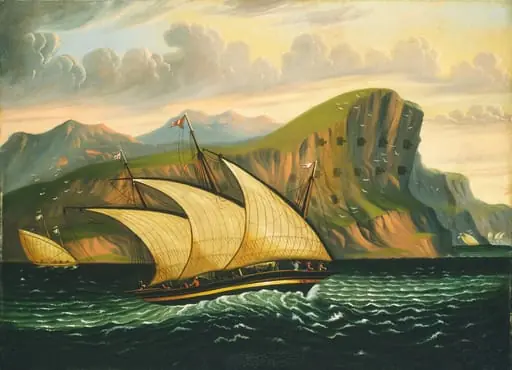 Felucca off Gibraltar
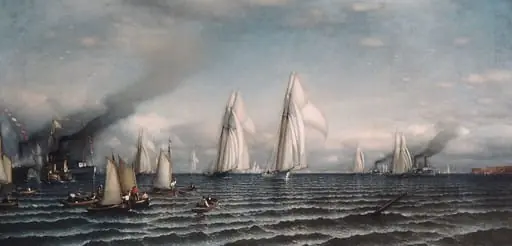 Finish—First International Race for America's Cup, August 8, 1870
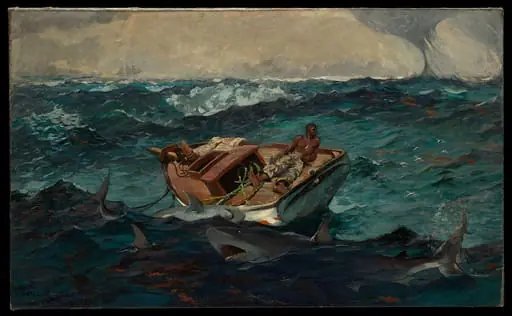 The Gulf Stream
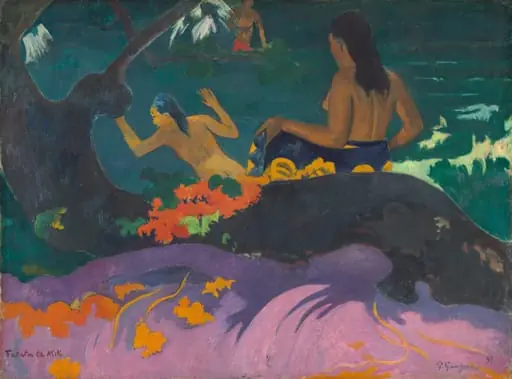 Fatata te Miti (By the Sea)
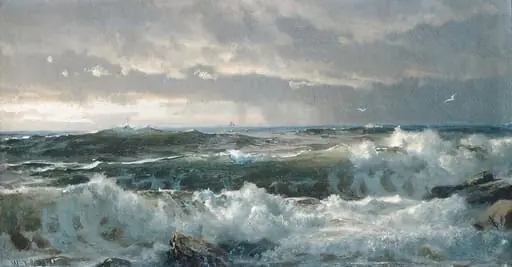 Surf on Rocks
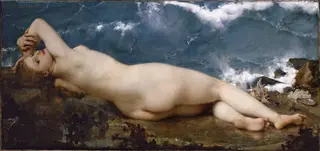 The Pearl and the Wave
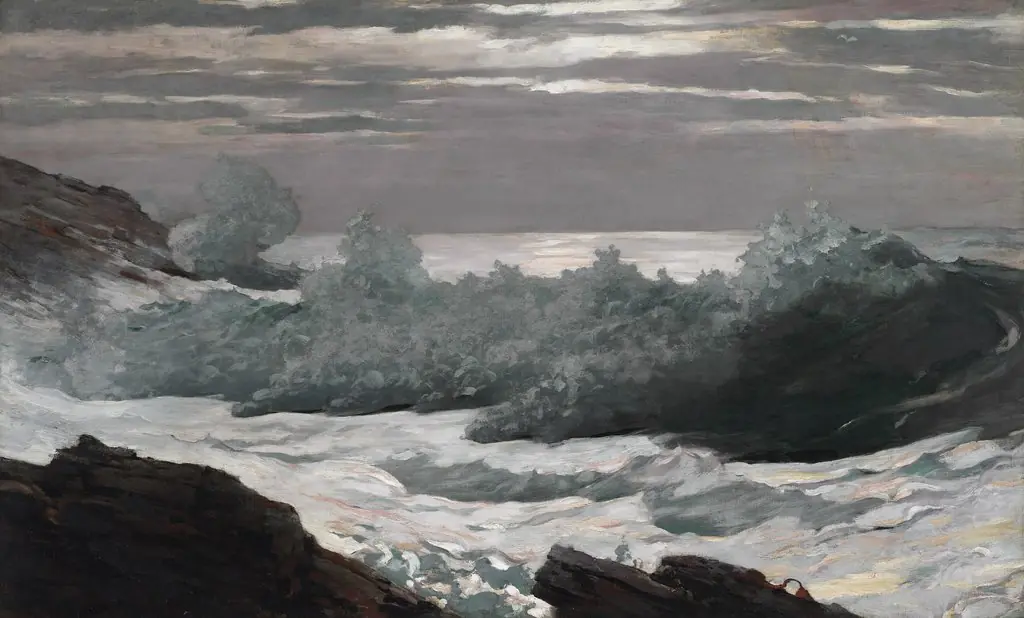 Early Morning After a Storm at Sea
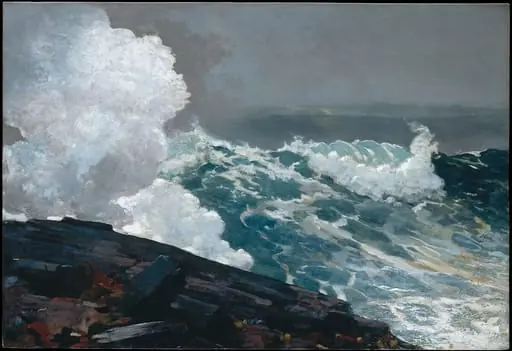 Northeaster
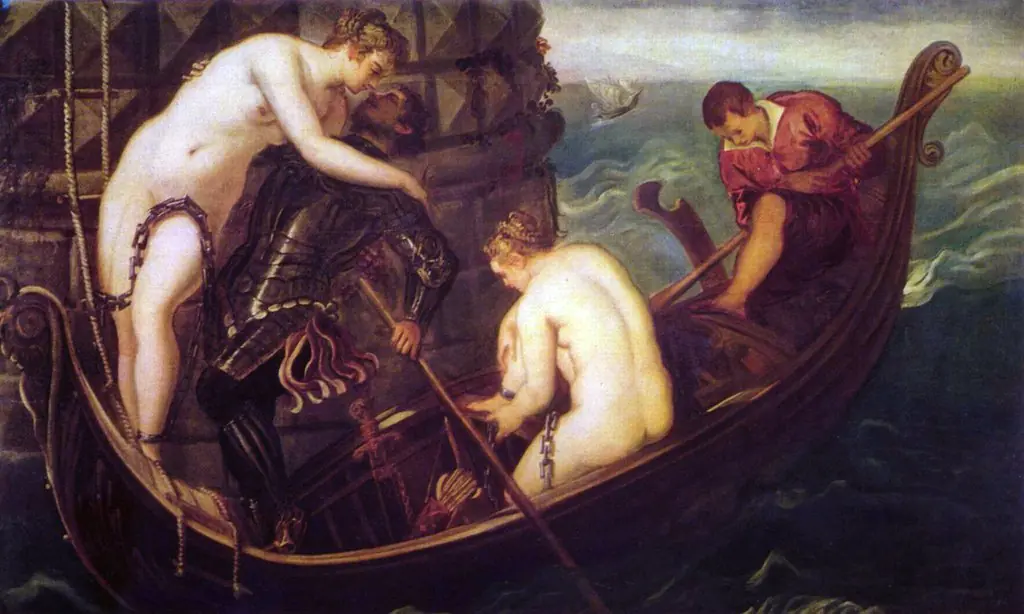 The Deliverance of Arsinoe
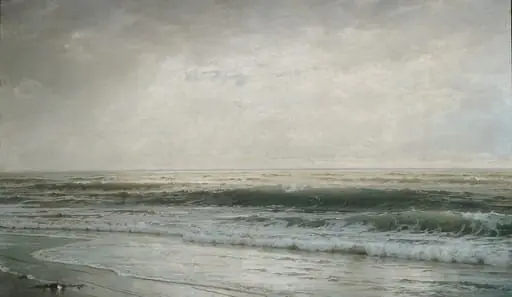 New Jersey Beach
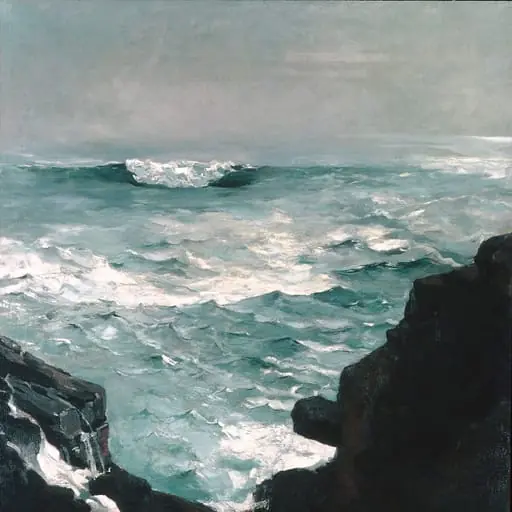 Cannon Rock
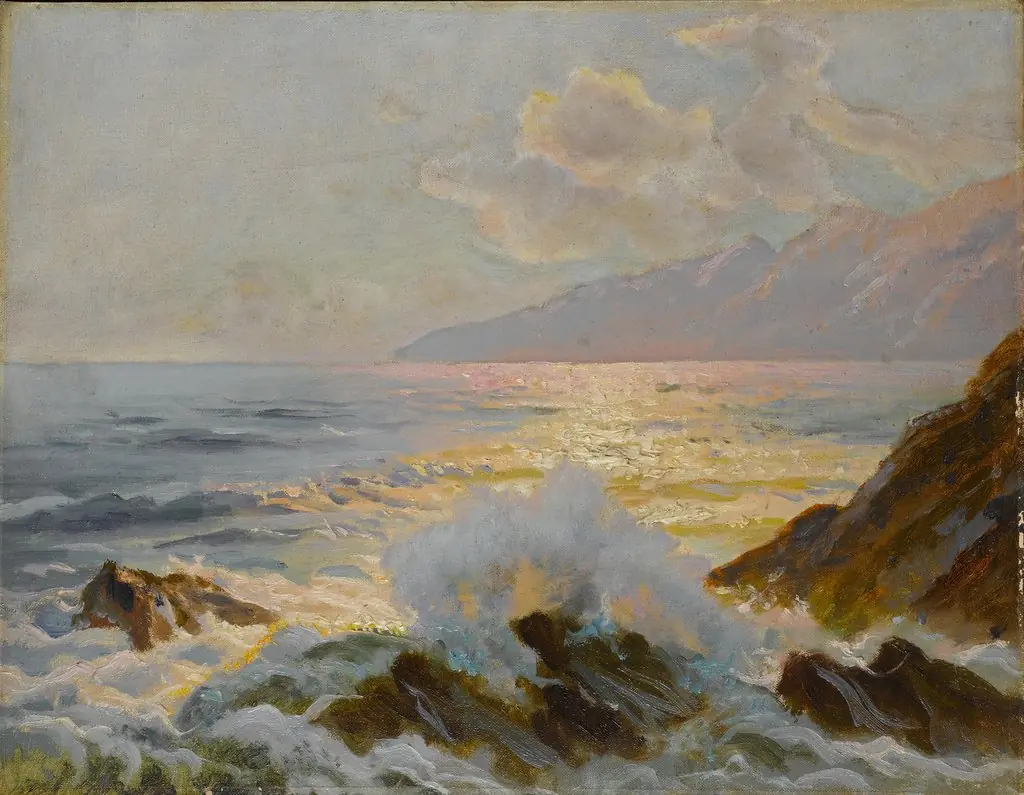 Maine Seascape
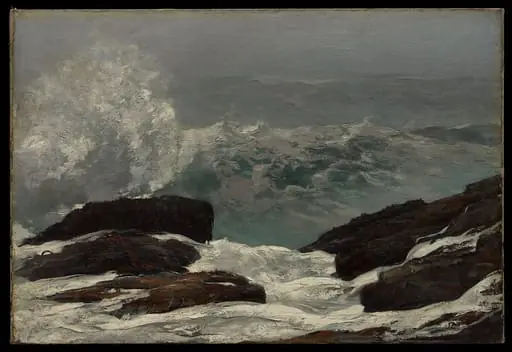 Maine Coast
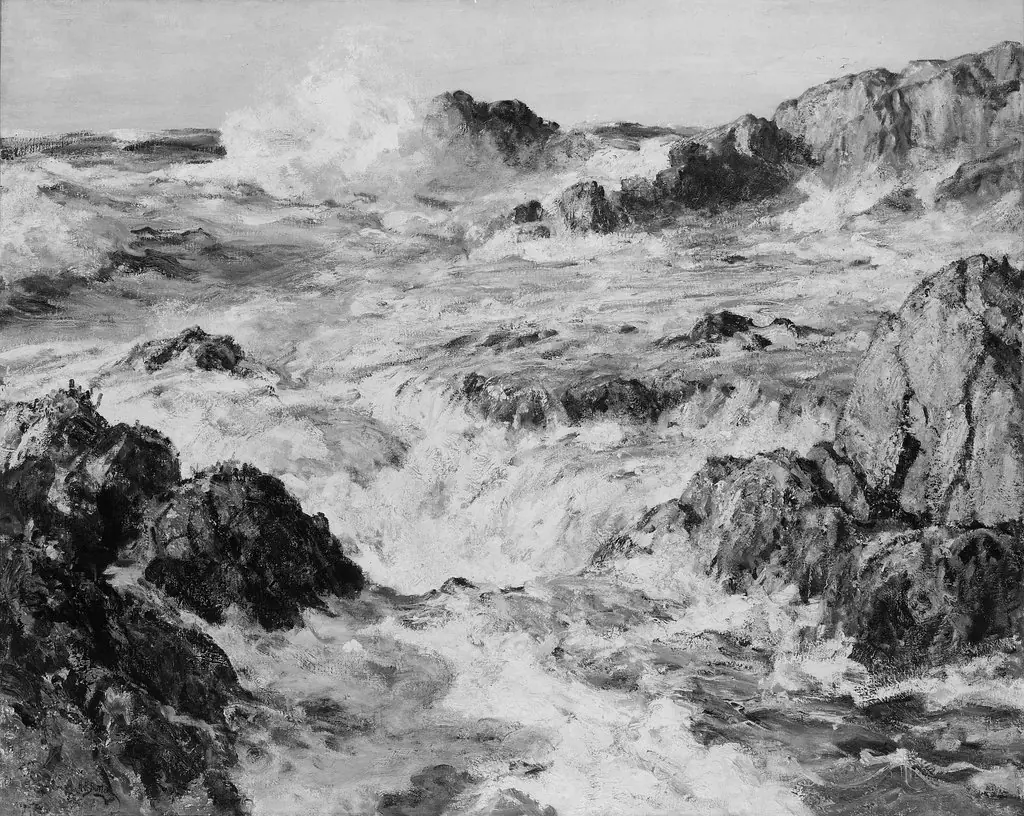 Yankee Point, Monterey
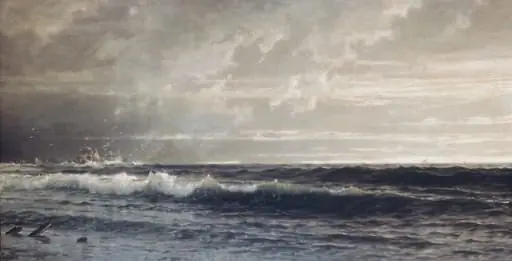 Near Land's End, Cornwall
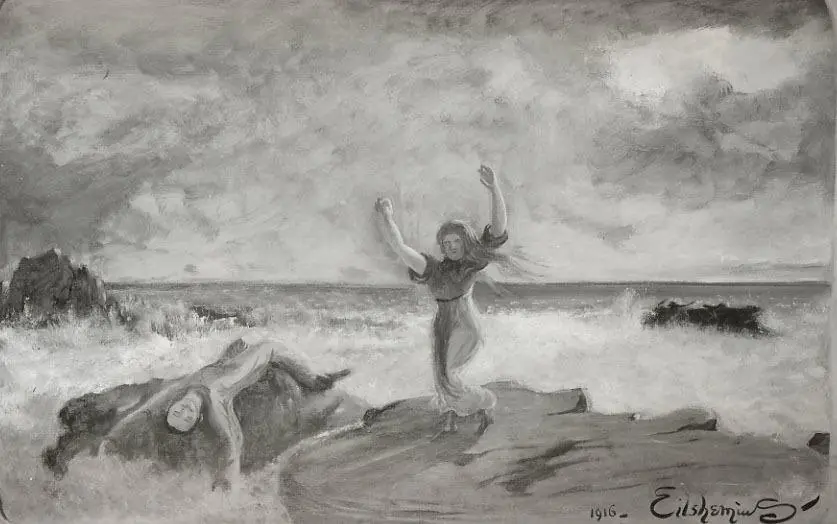 Tragedy of the Sea
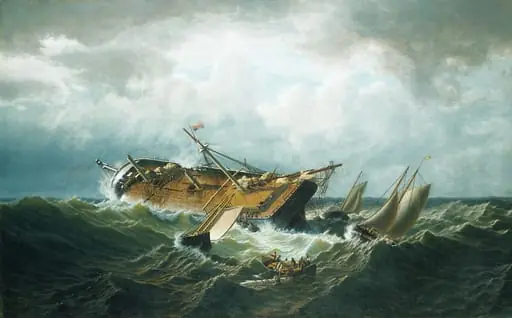 Shipwreck off Nantucket (Wreck off Nantucket after a Storm)
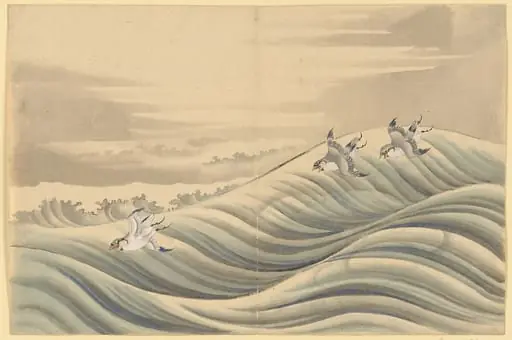 Untitled
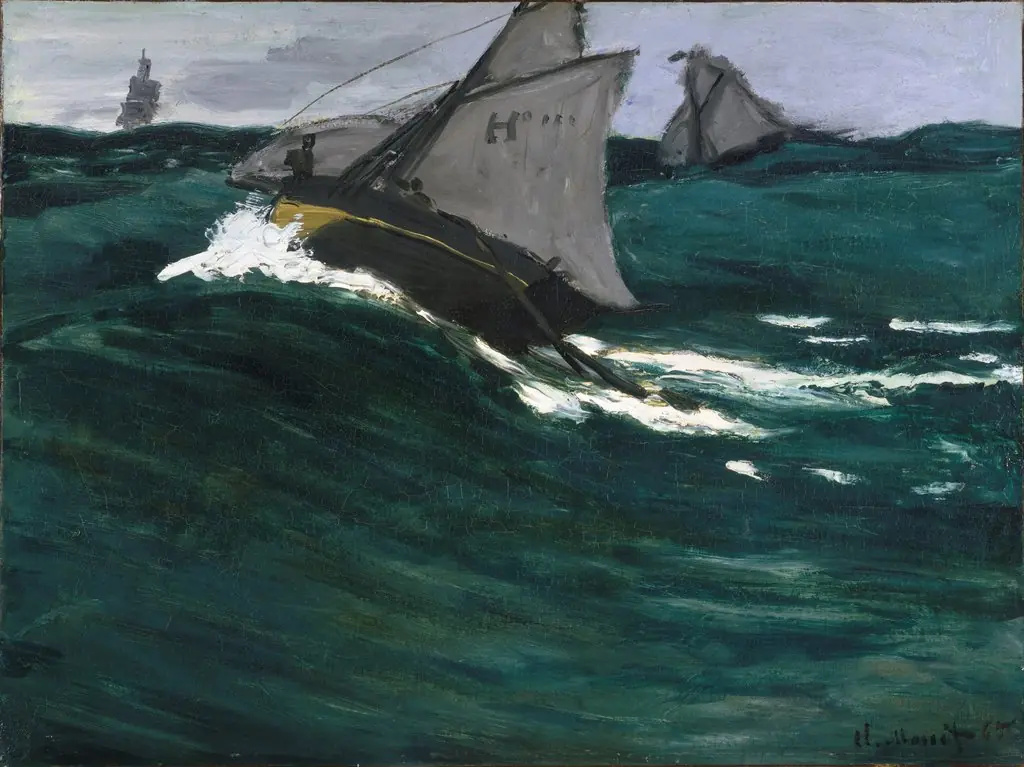 The Green Wave
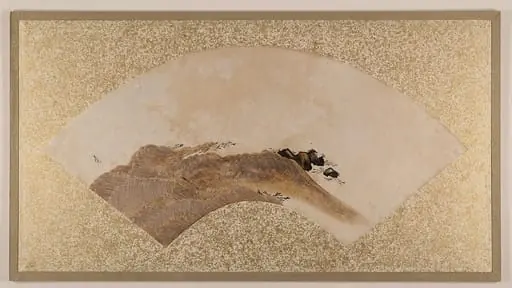 Untitled
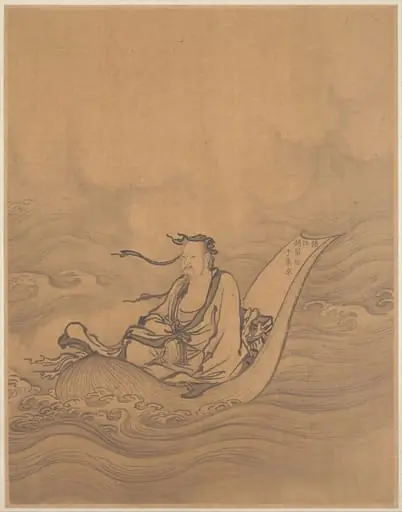 明/清 佚名 舊傳趙芾 乘蓮渡江 冊頁|Sage Floating on Lotus Leaf
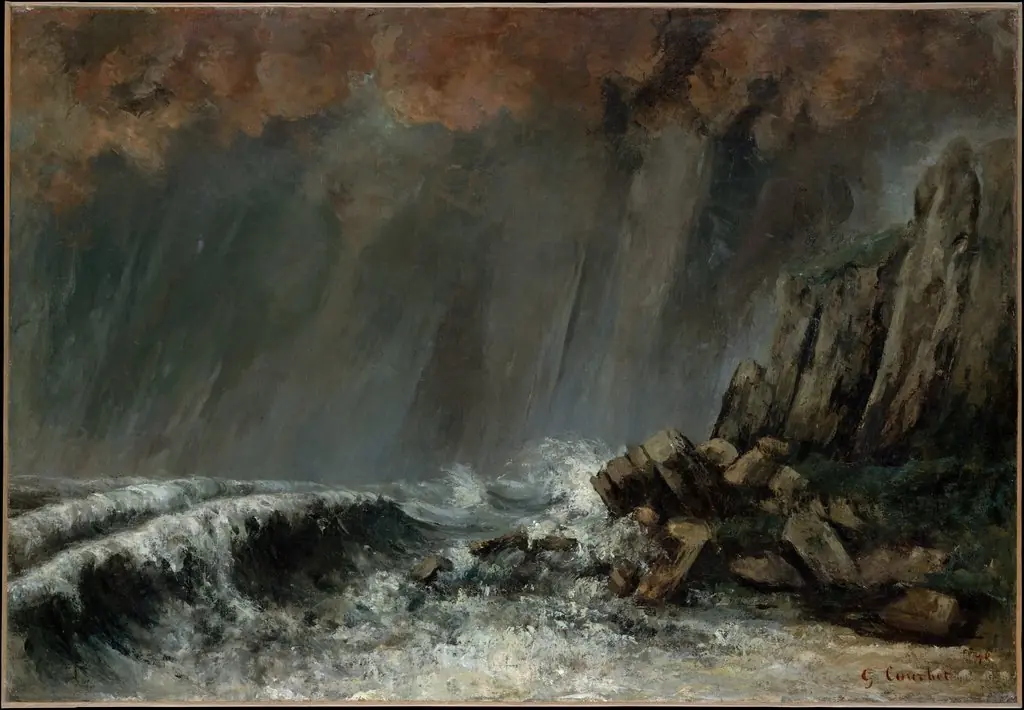 Marine: The Waterspout
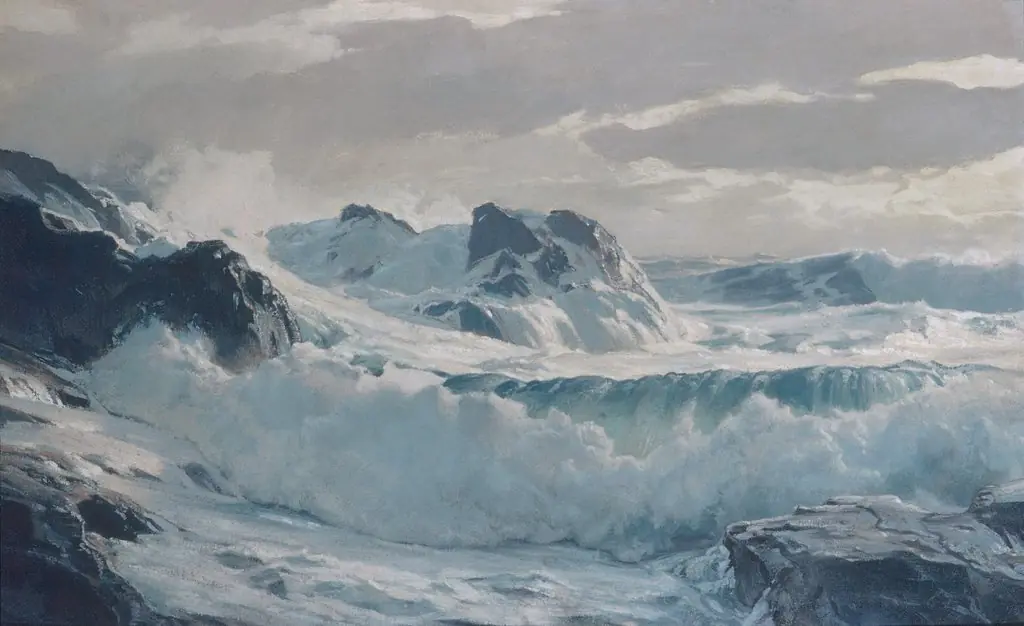 Wild Weather
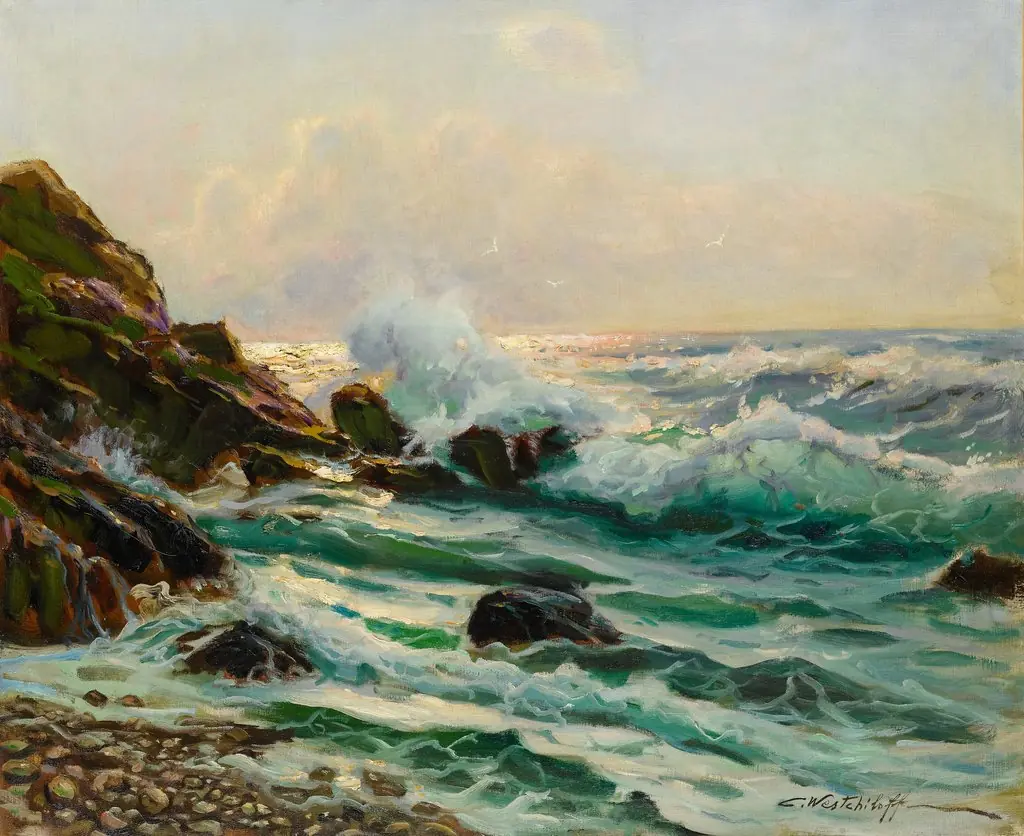 Maine Seascape
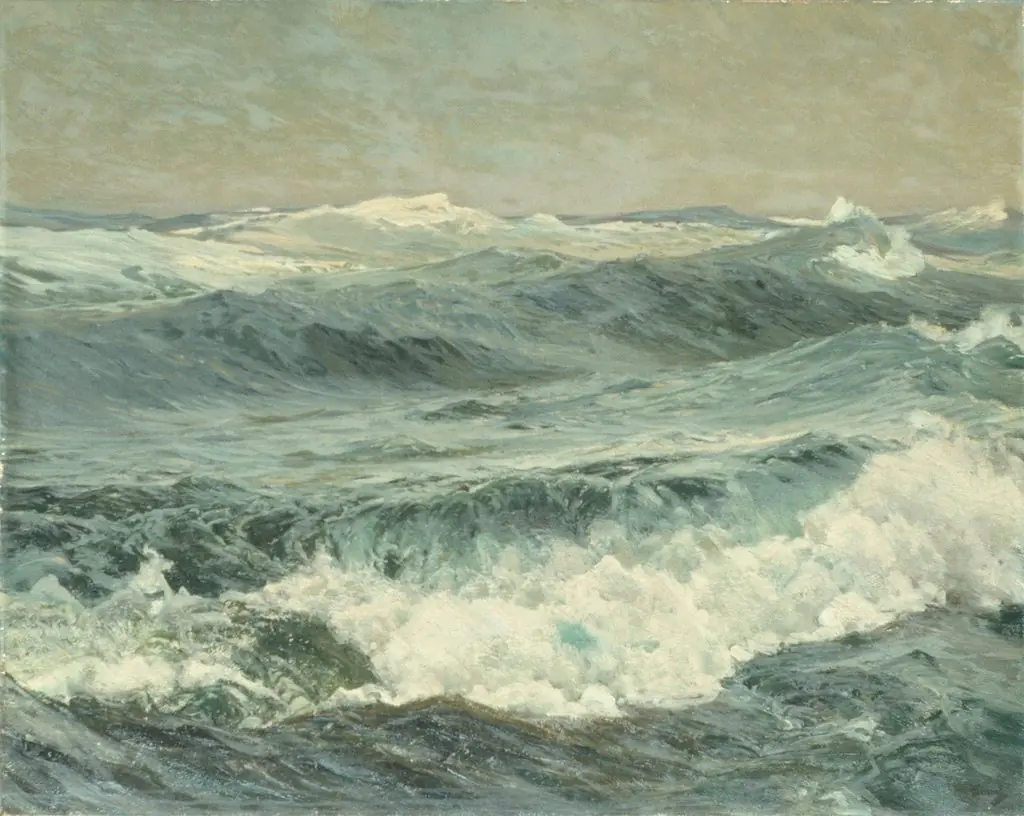 The Roaring Forties
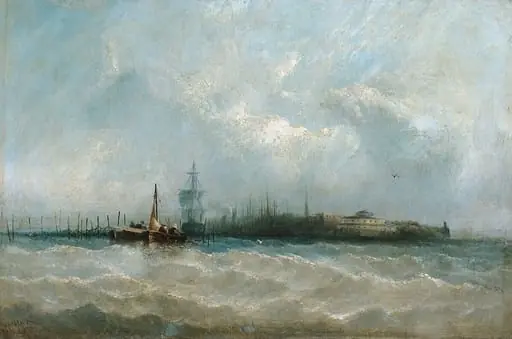 New York from the Harbor Showing the Battery and Castle Garden
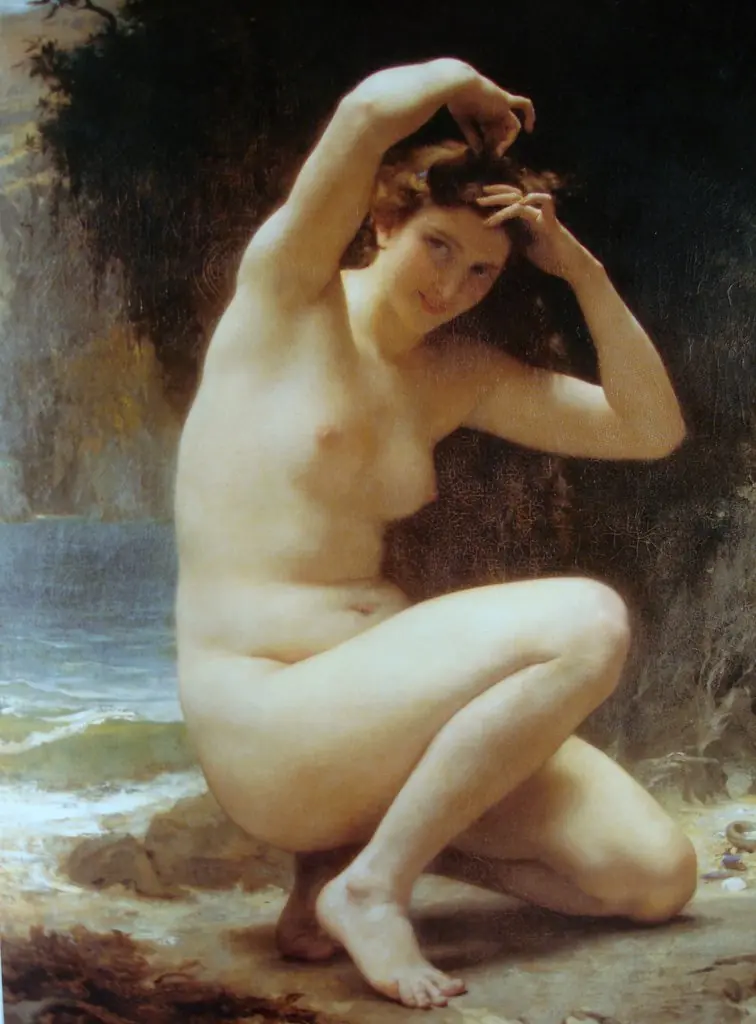 The toilette of Venus
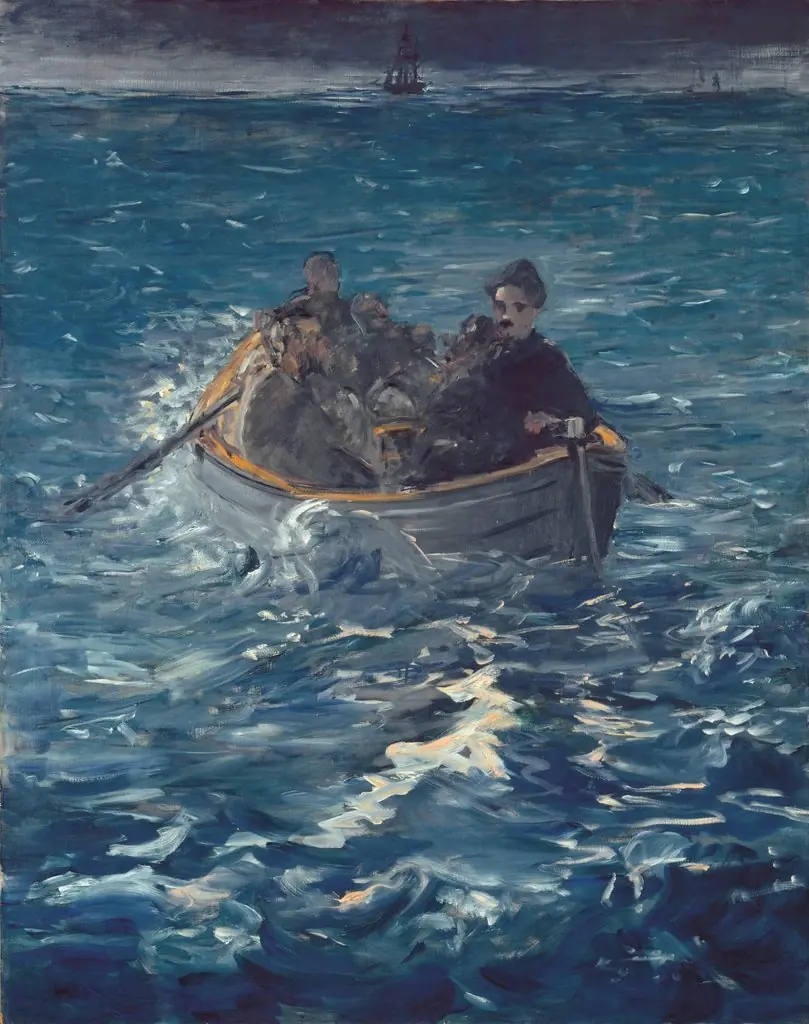 Rochefort's Escape
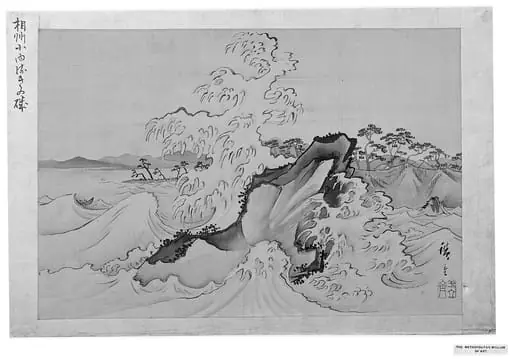 Untitled
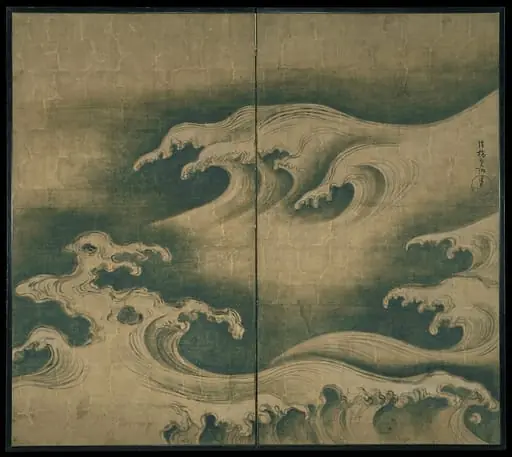 波濤図屏風|Rough Waves
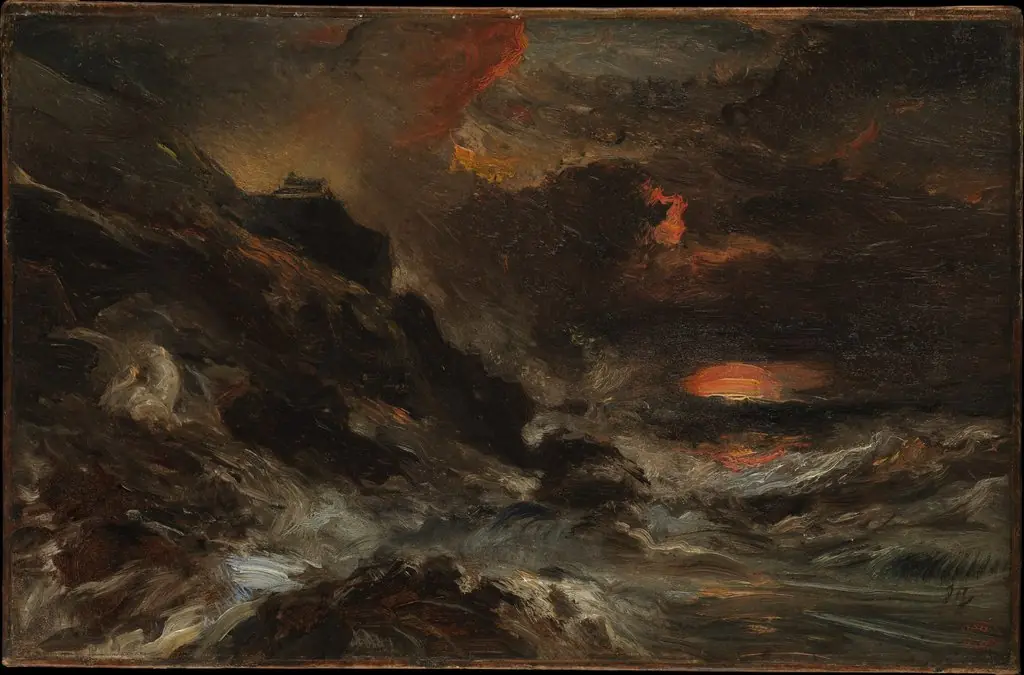 A Storm off the Normandy Coast
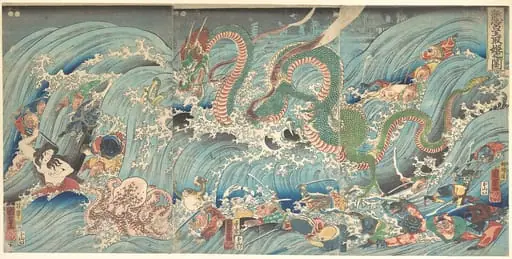 Ryugu Tamatori Hime no su|Recovering the Stolen Jewel from the Palace of the Dragon King
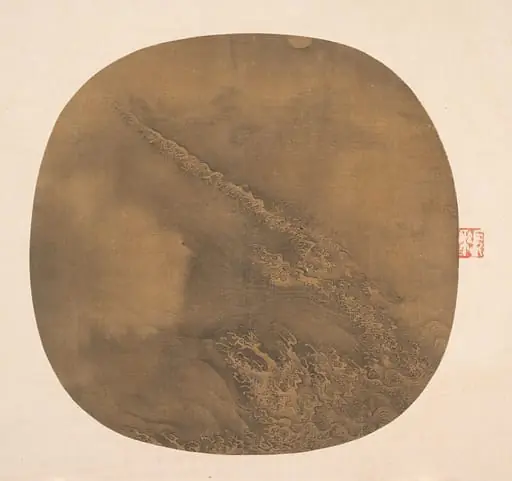 南宋 佚名 月下波浪圖 團扇|Waves in the moonlight
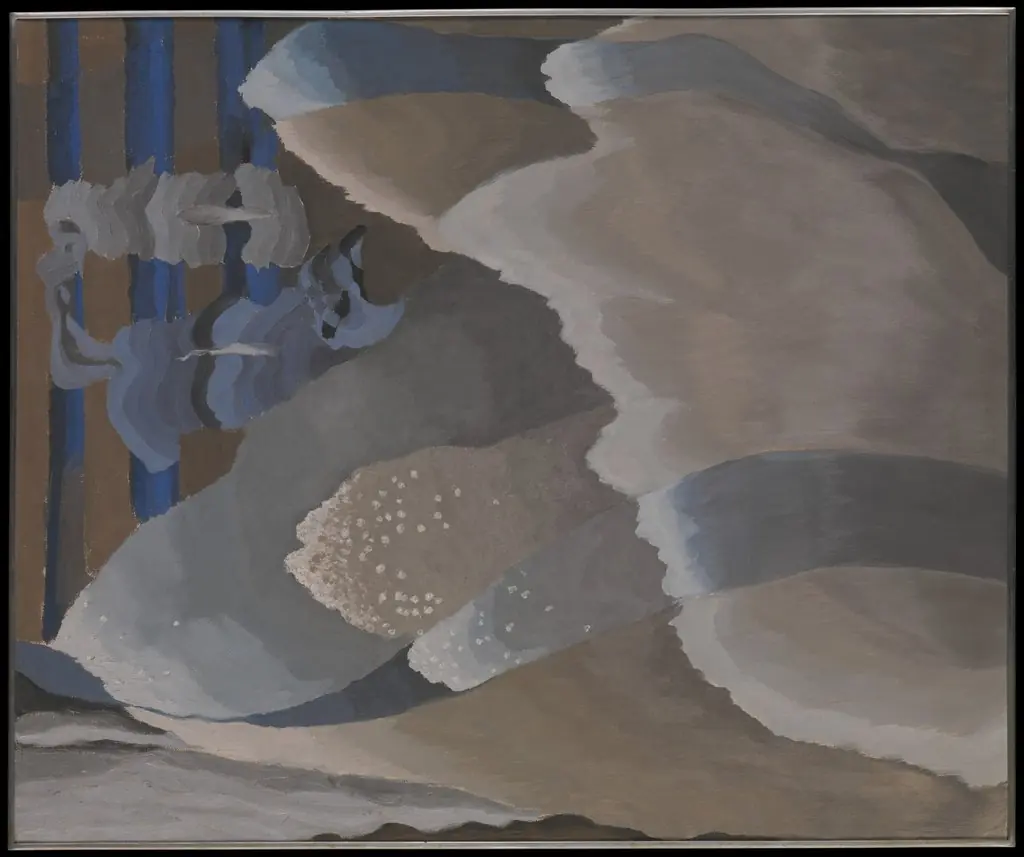 Reaching Waves
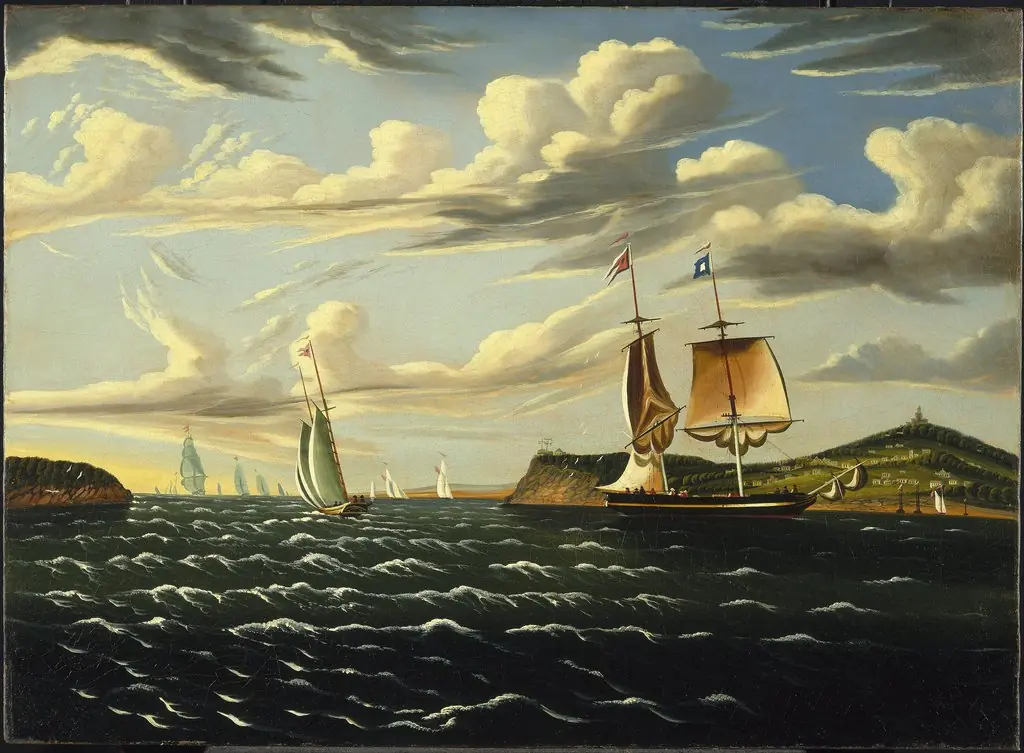 Staten Island and the Narrows
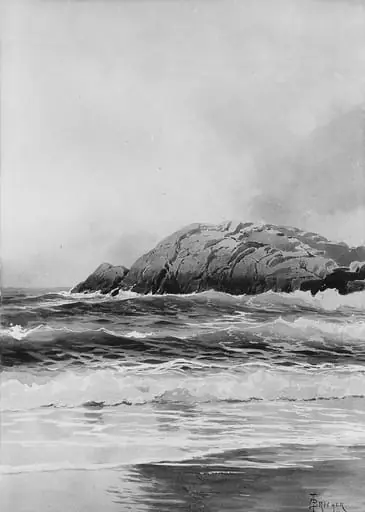 Rocks and Sea
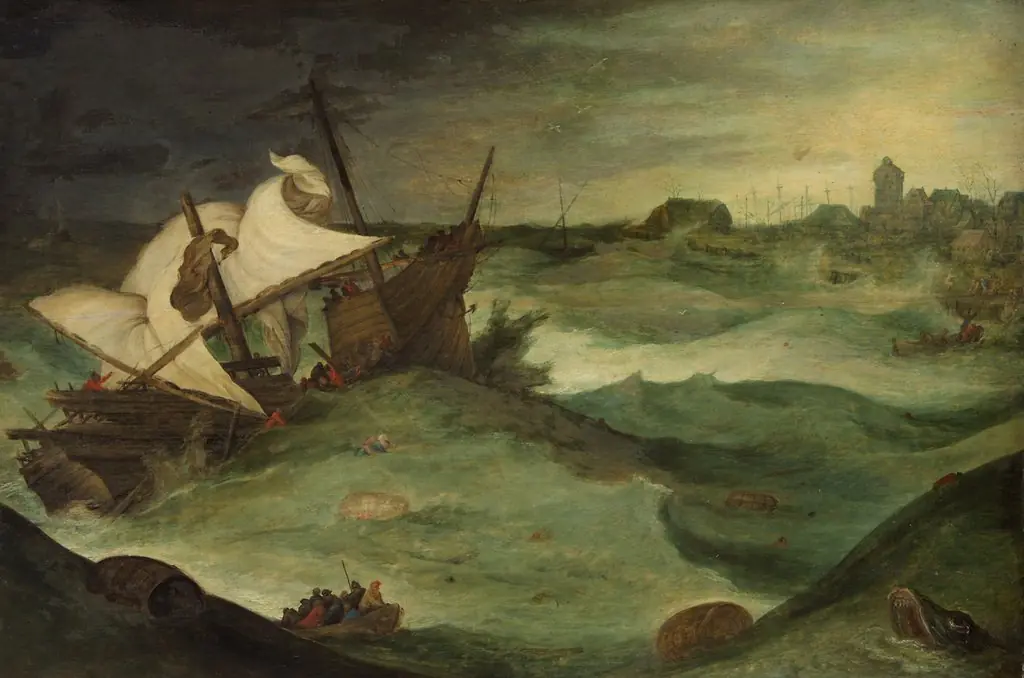 Storm at sea
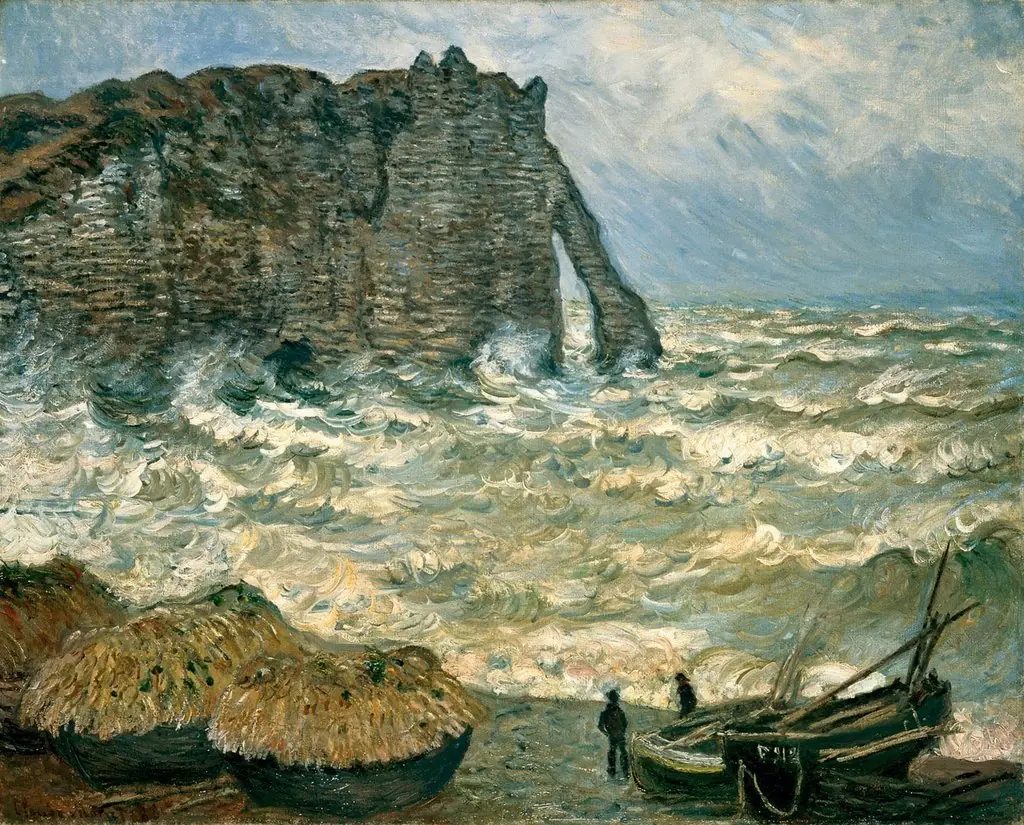 Etretat, Rough Seas
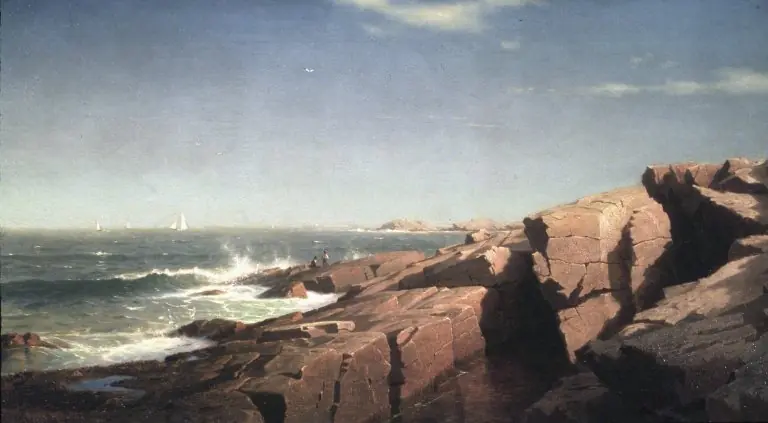 Rocks at Nahant
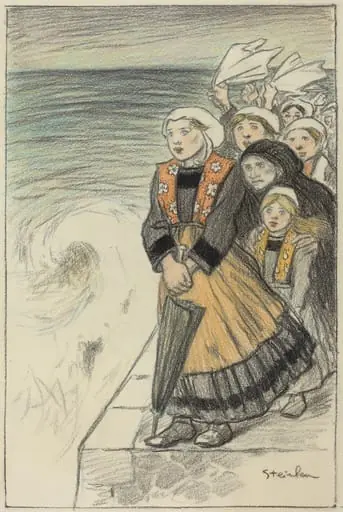 Sailors' Wives
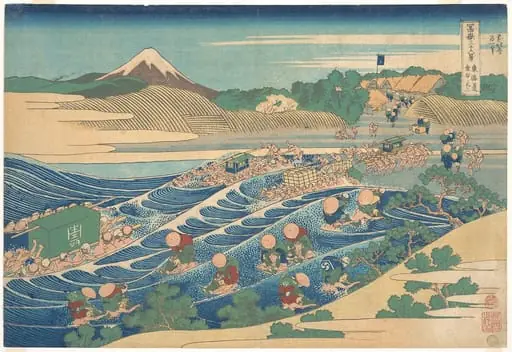 冨嶽三十六景 東海道金谷の不二|Fuji Seen from Kanaya on the Tōkaidō (Tōkaidō Kanaya no Fuji), from the series Thirty-six Views of Mount Fuji (Fugaku sanjūrokkei)
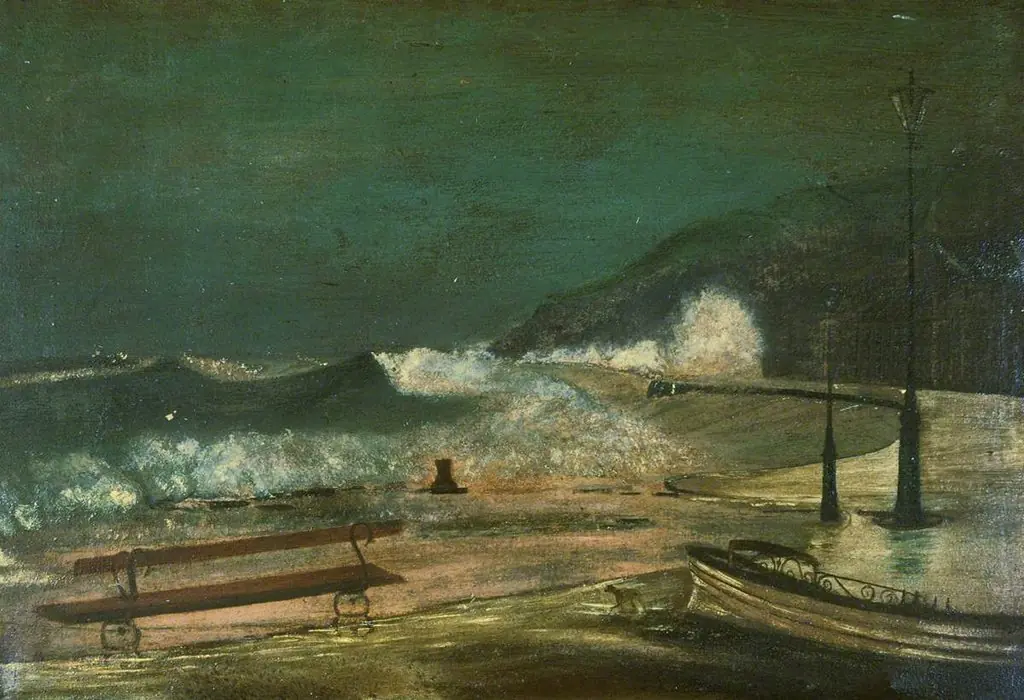 Aberystwyth
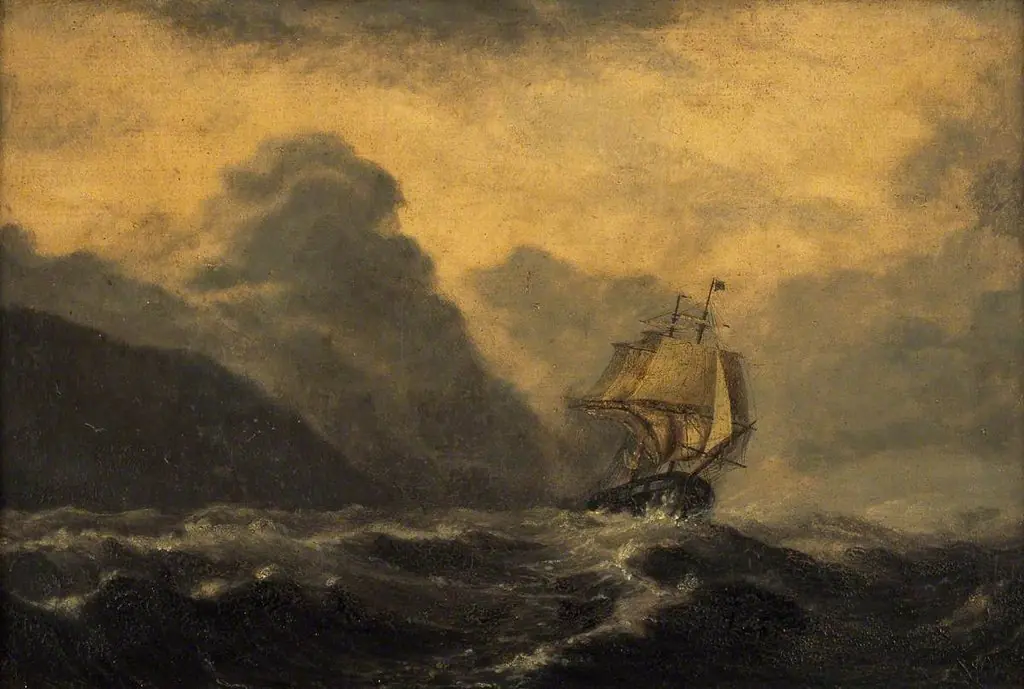 Ship off Carmel Head
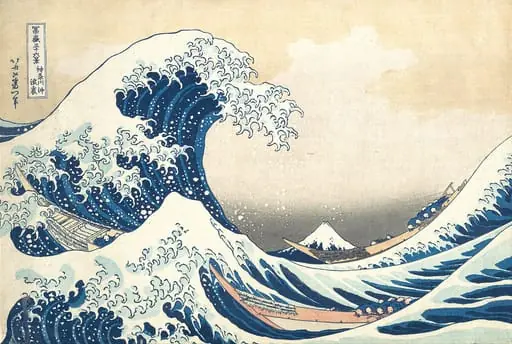 「富嶽三十六景 神奈川沖浪裏」|Under the Wave off Kanagawa (Kanagawa oki nami ura), also known as The Great Wave, from the series Thirty-six Views of Mount Fuji (Fugaku sanjūrokkei)
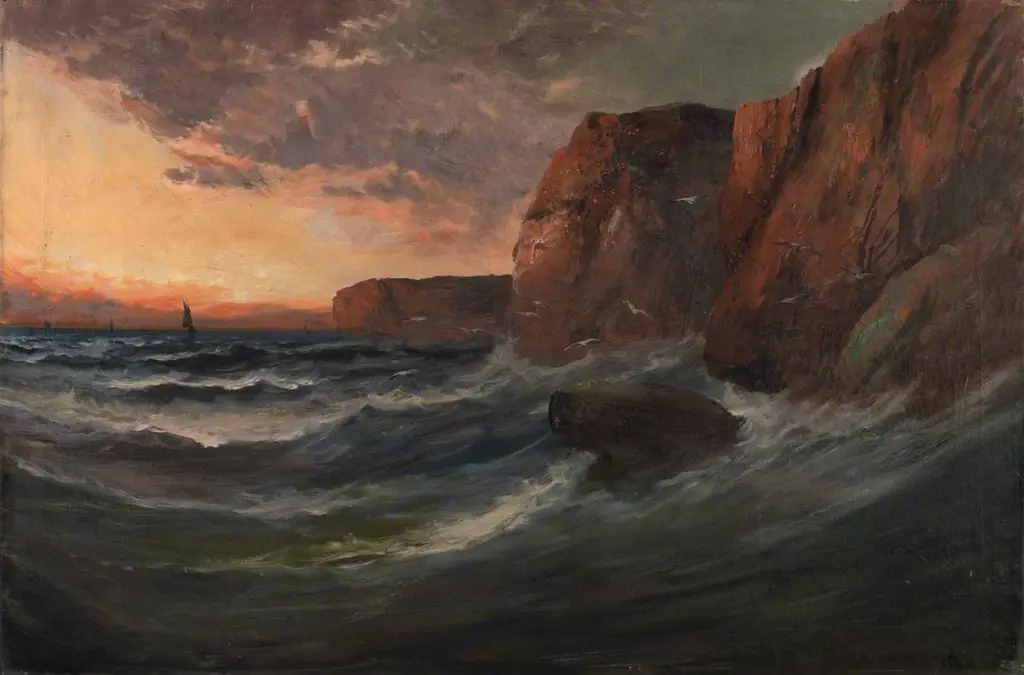 Seascape
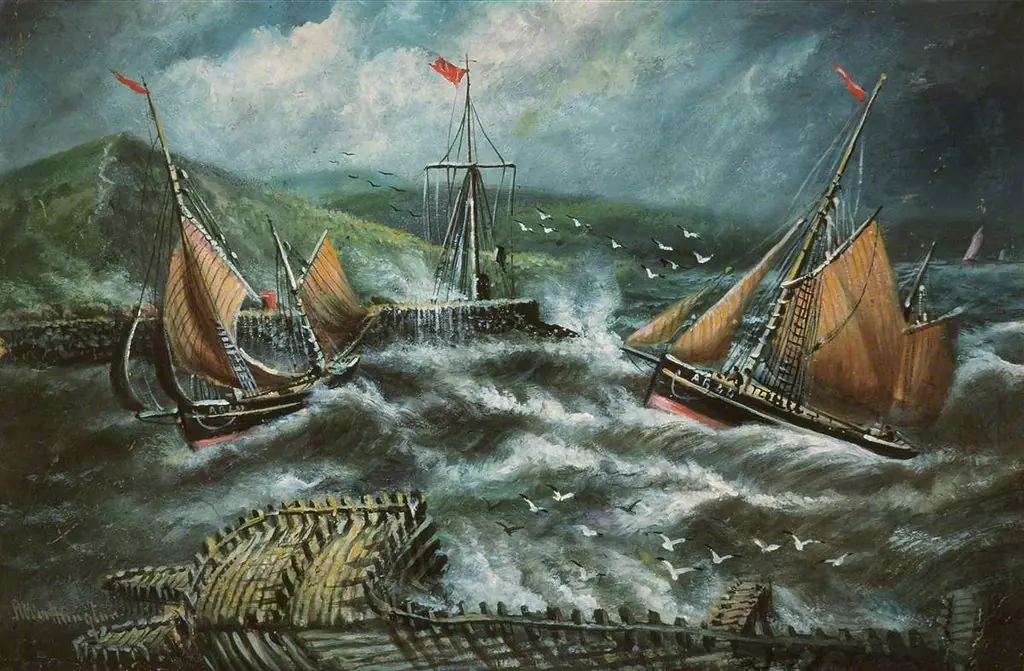 Trawlers Entering Aberystwyth
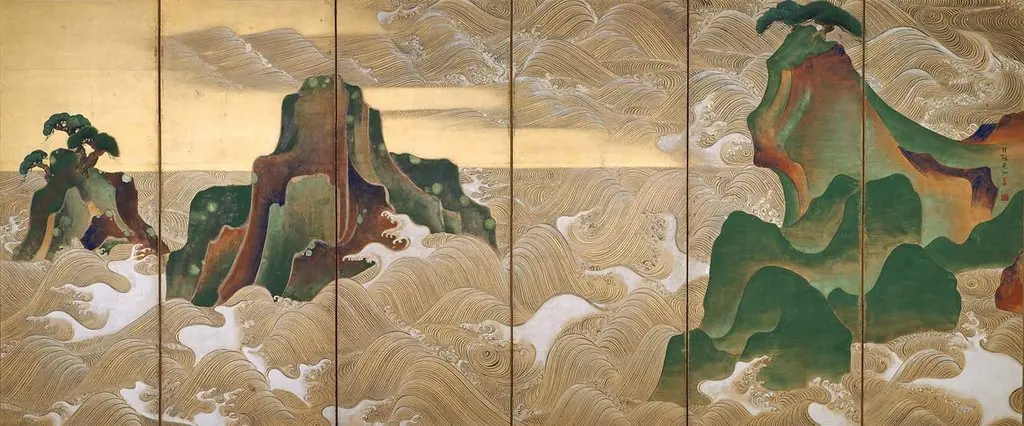 Waves at Matsushima
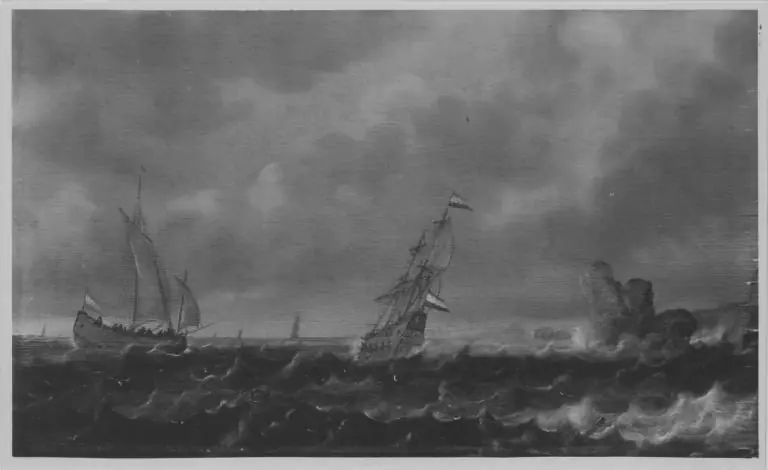 Seestück
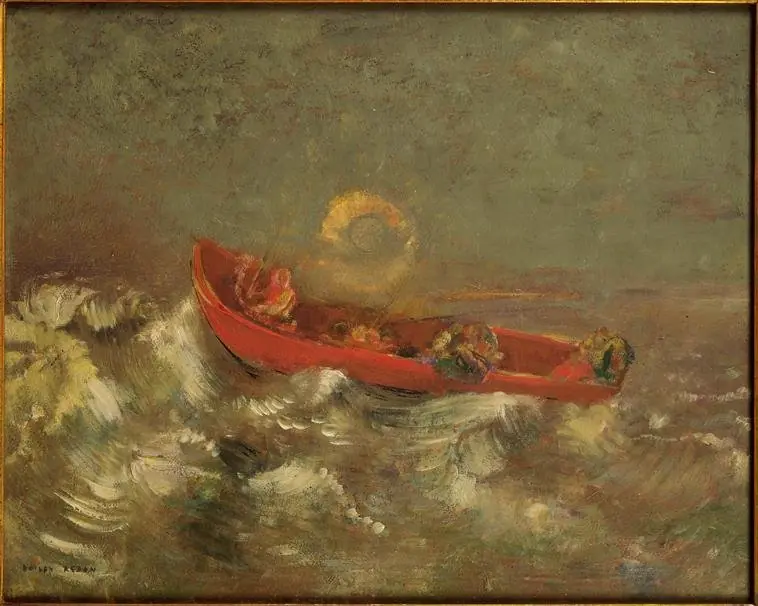 La Barque rouge
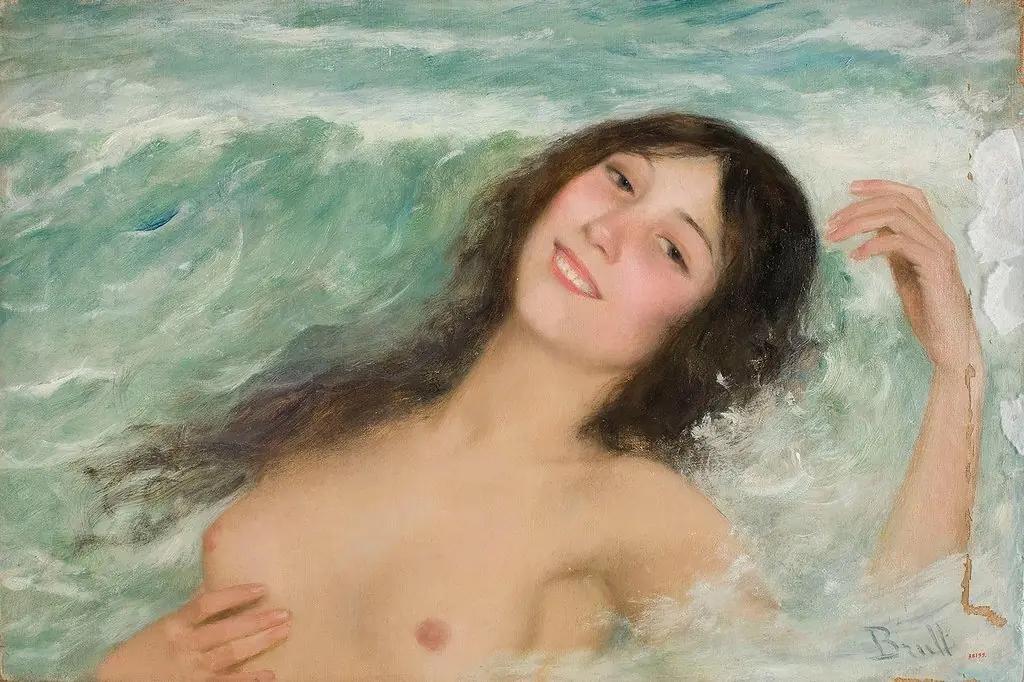 Naked Female Bust Between the Waves
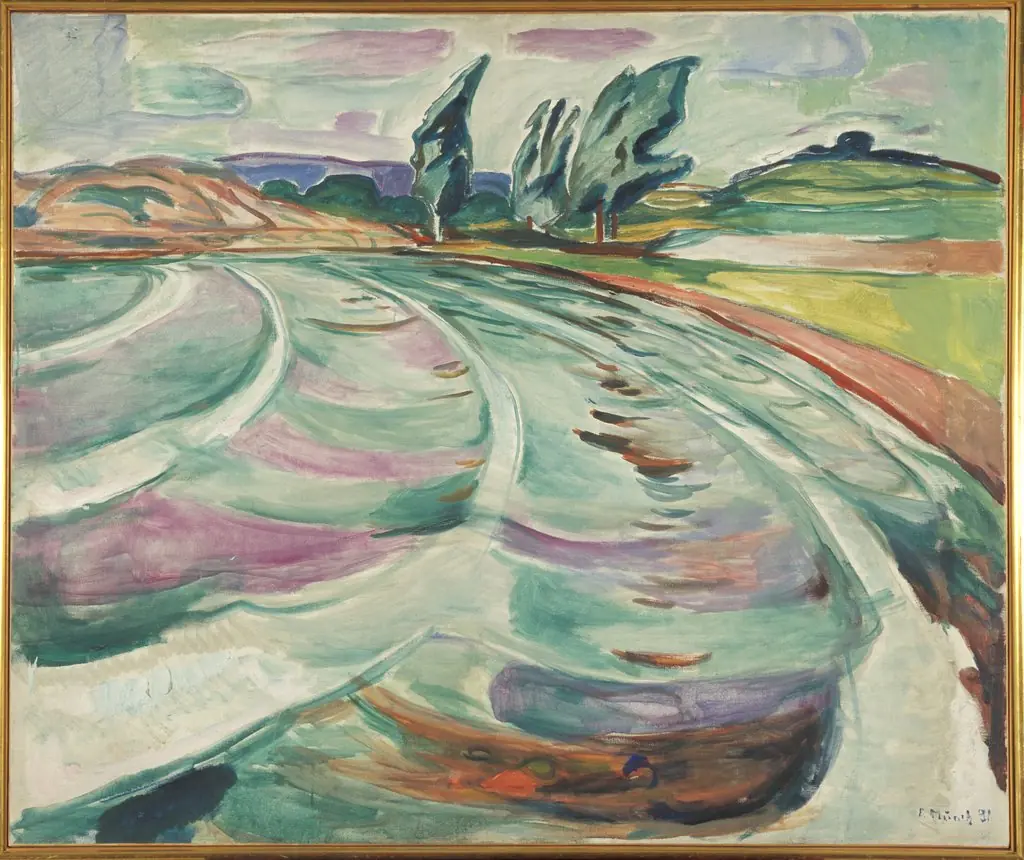 The Waves
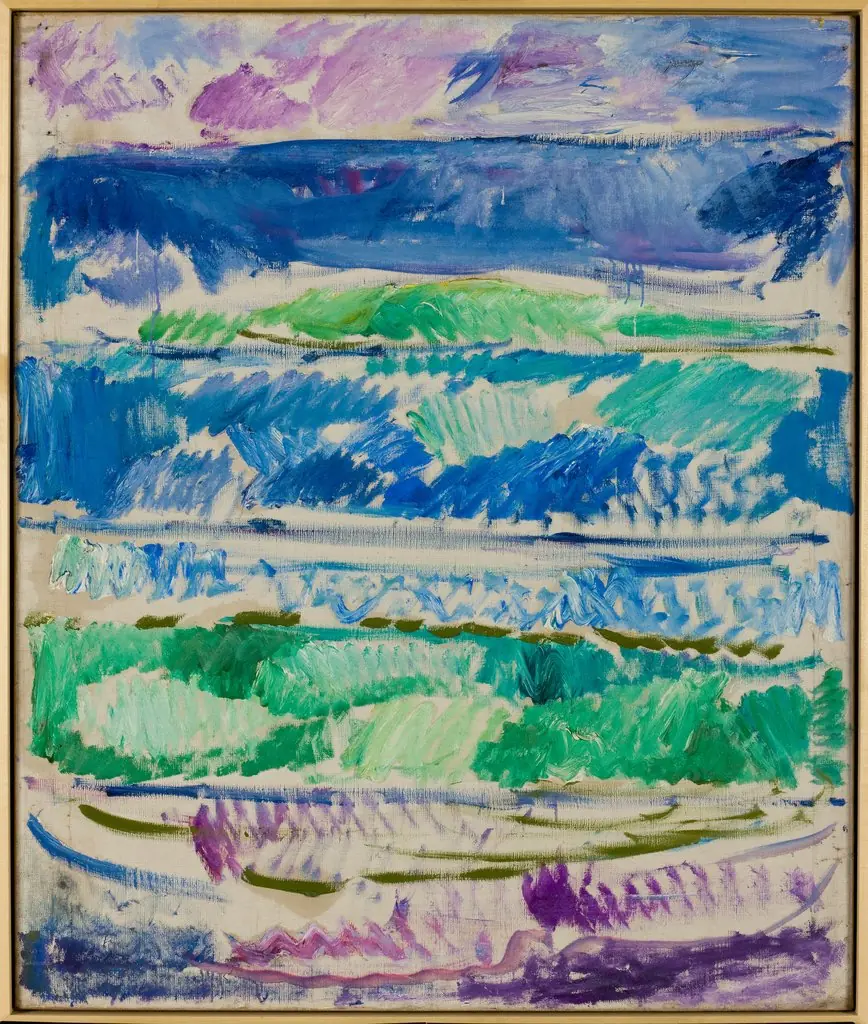 Waves
Waves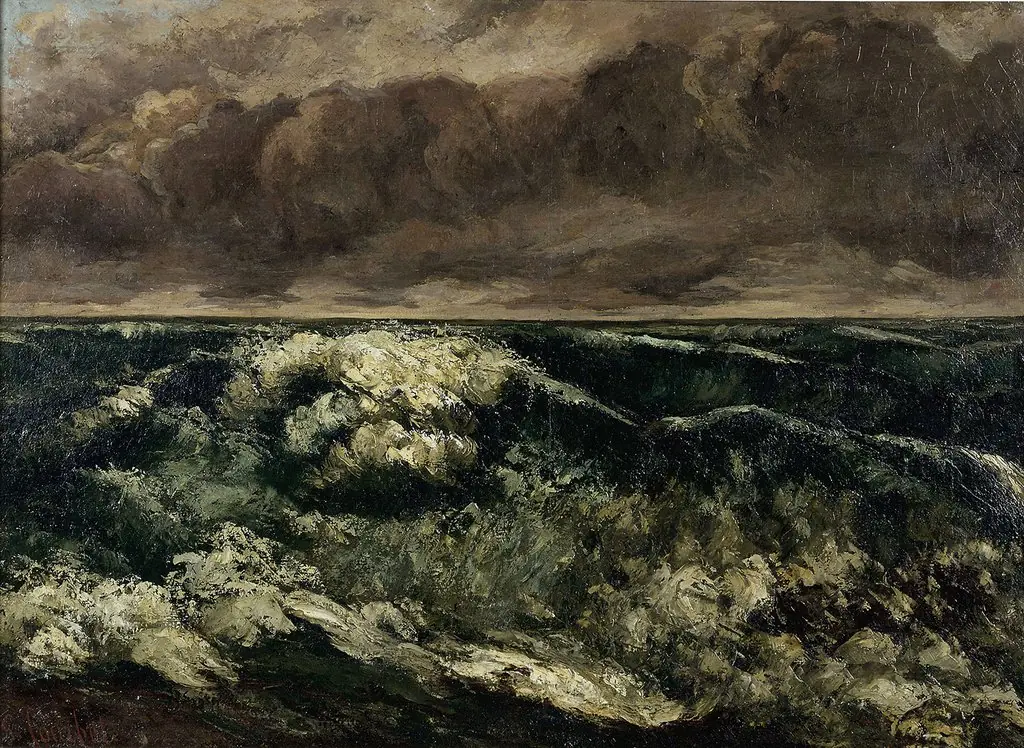 The Wave
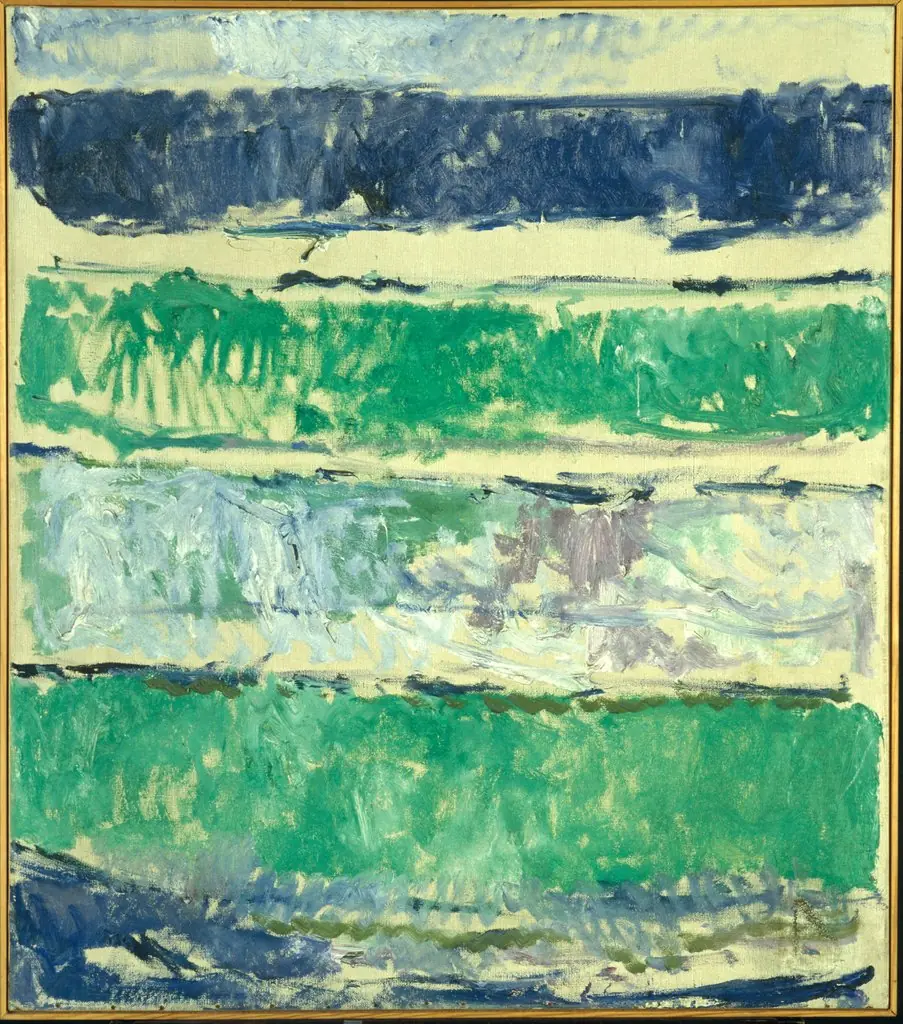 Waves
Waves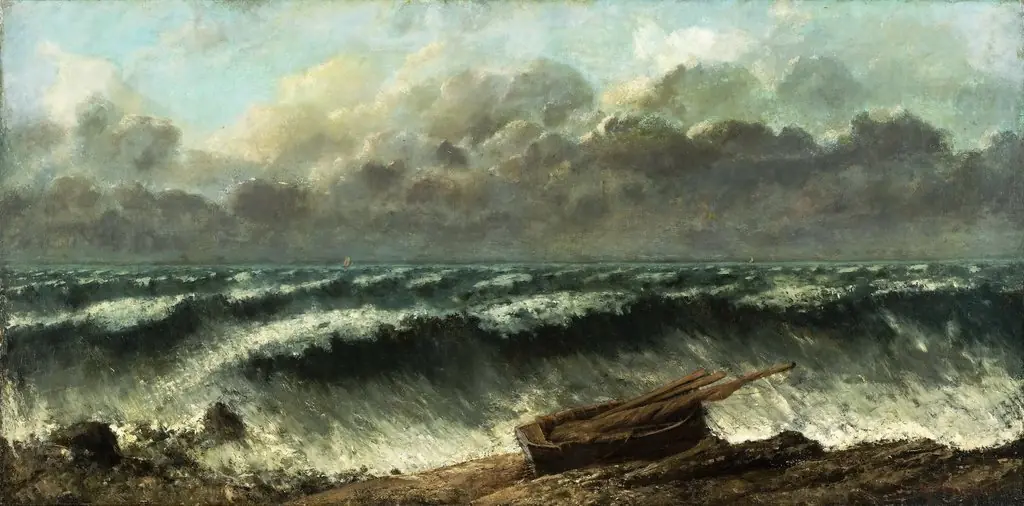 Waves
Waves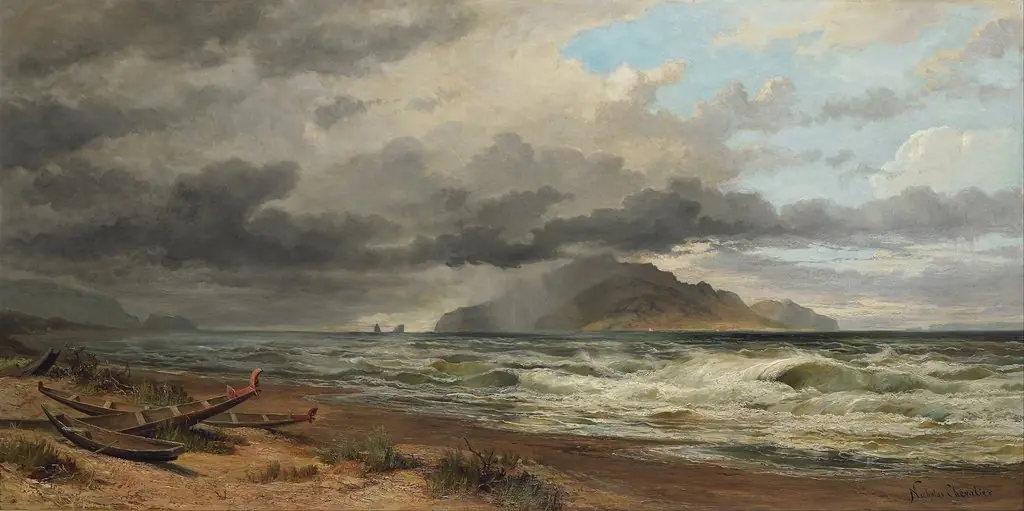 Cook Strait, New Zealand
 Sea view
 Ocean
Ocean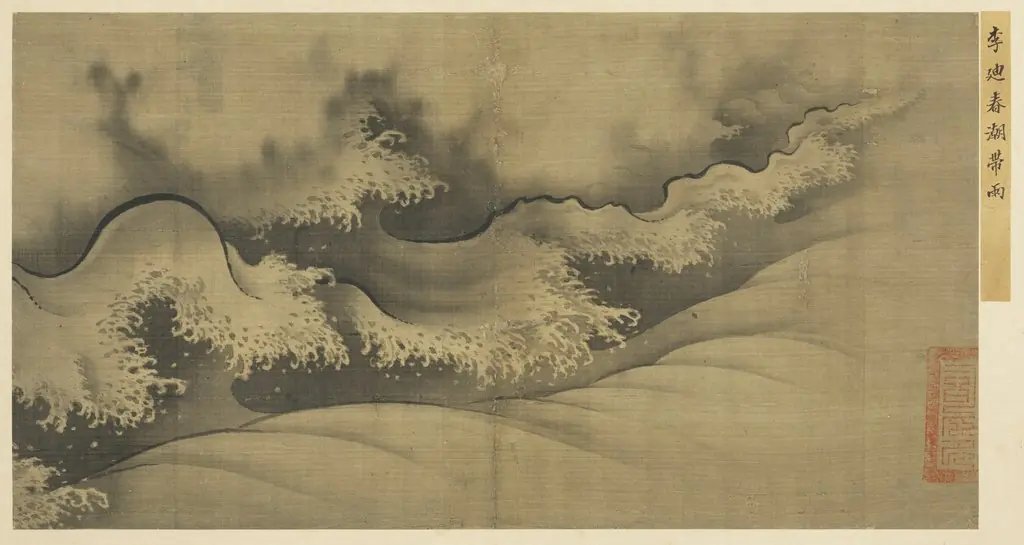 名繪集珍 冊 宋李迪春潮帶雨
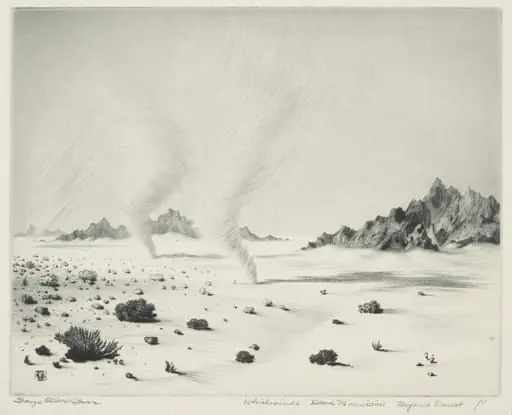 Whirlwinds, Dead Mountains, Mojave Desert, California
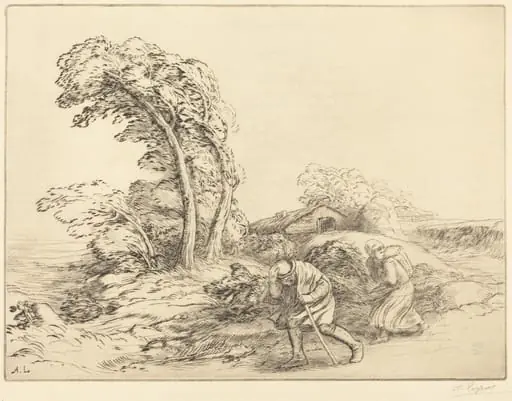 Gust of Wind (Un coup de vent)
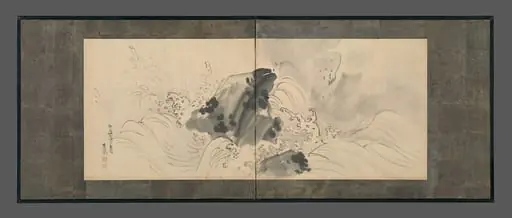 Untitled
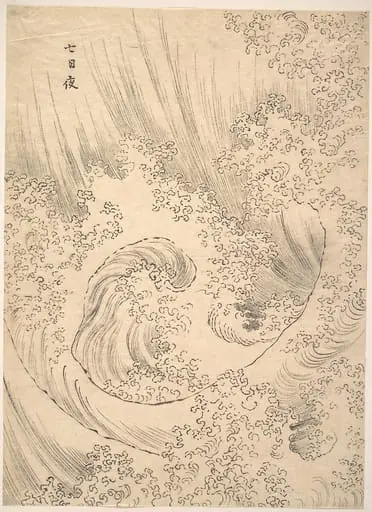 七日夜|Wave
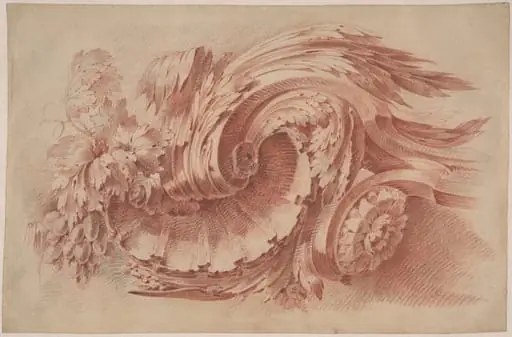 Acanthus Ornament
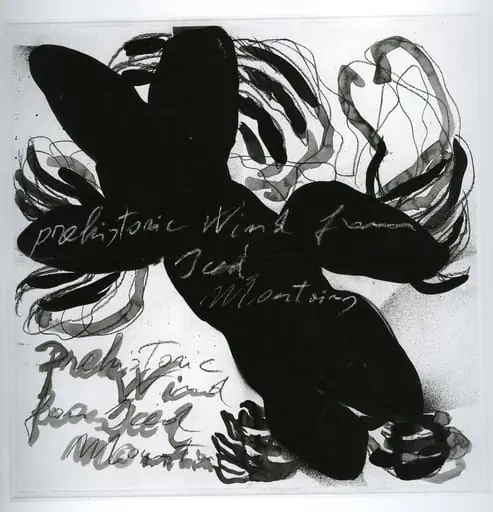 Untitled
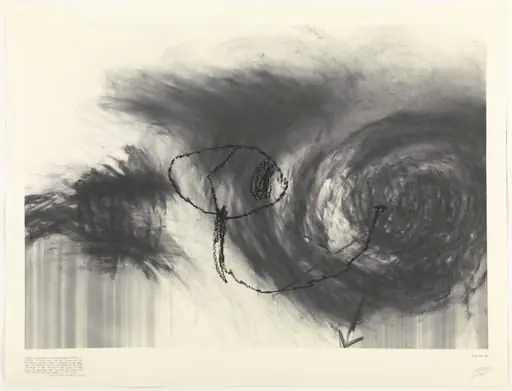 Untitled
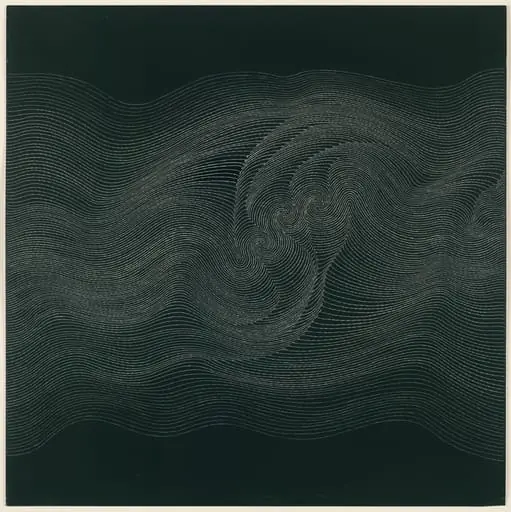 Untitled
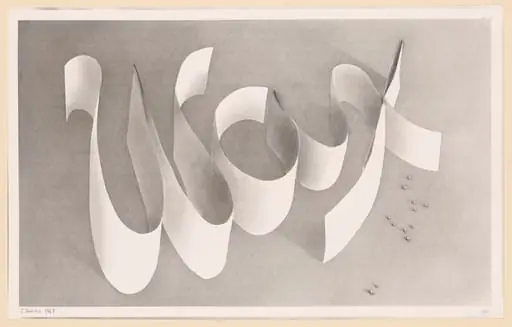 Untitled
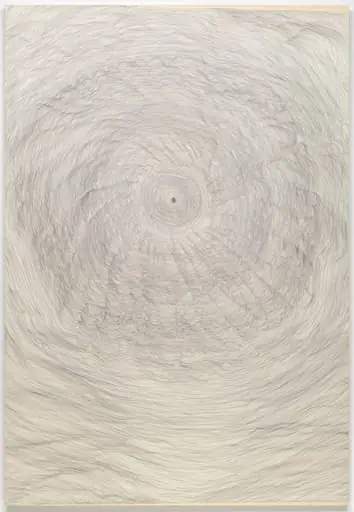 Untitled
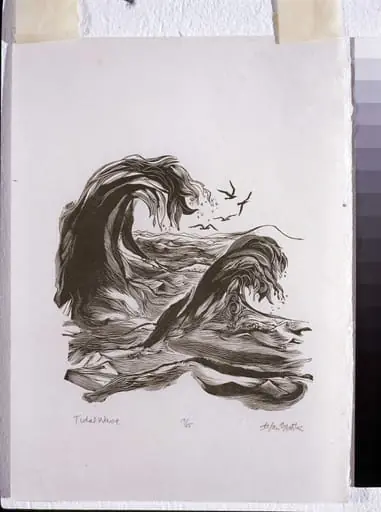 Παλιρροϊκό κύμα
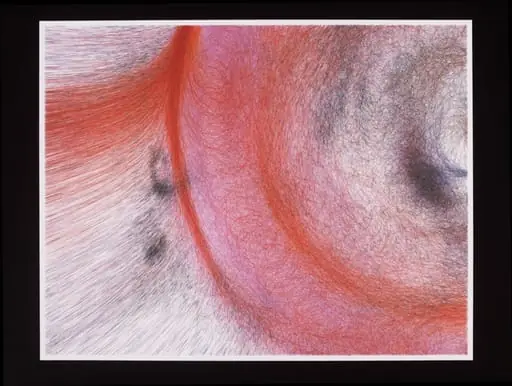 MicroImage
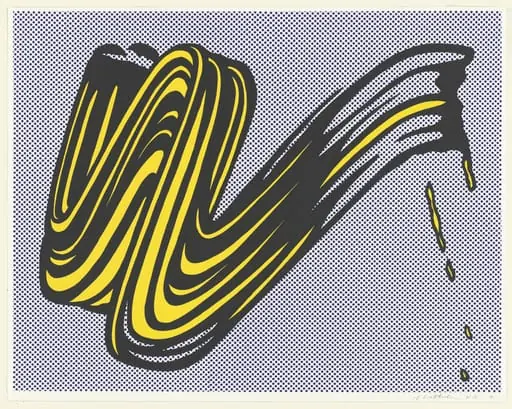 Untitled
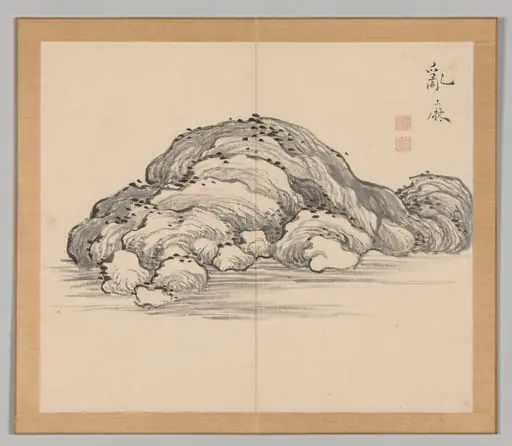 Reverberations of Taiga, Volume 1 (leaf 12)
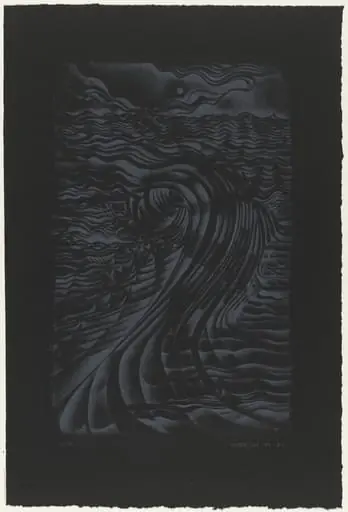 Untitled
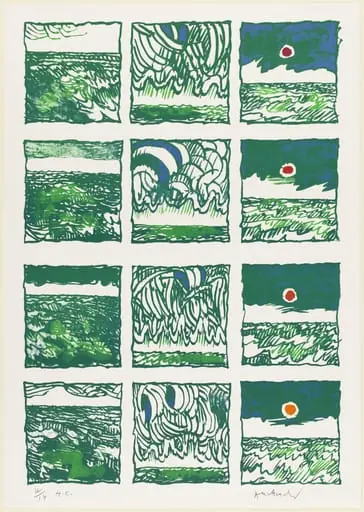 Untitled
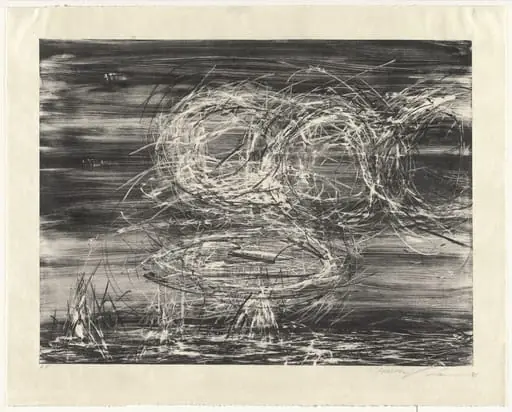 Untitled
Frequently asked questions
What is Wind Wave?
Wind Wave is a subject in art. In fluid dynamics, a wind wave, or wind-generated water wave, is a surface wave that occurs on the free surface of bodies of water as a result of the wind blowing over the water's surface.
How many Wind Wave works does Artifact World Gallery have?
Artifact World Gallery holds 86 public-domain Wind Wave works, all free to view and download.
Who are the key Wind Wave artists?
Key Wind Wave artists in the collection include Gustave Courbet, Édouard Manet and Thomas Chambers.
Where can I see Wind Wave works?
Wind Wave works in the collection are held by Metropolitan Museum of Art, National Gallery of Art and Museum of Modern Art.