Subject
Latin Cross
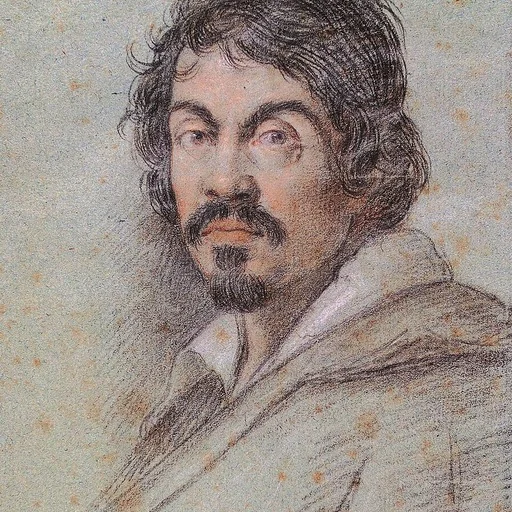
Latin Cross is a subject in art. The gallery holds 102 works in this subject in art, including works by Caravaggio, Saint George Hare and Johannes Hanias.
The Latin cross, or crux immissa, is the dominant form of the Christian cross: an upright with a transverse beam set high on the shaft, so that the lower arm is markedly longer than the other three. Though the right-angled crossing of two lines long predates Christianity across both East and West, the form acquired its specific meaning from the Roman practice of execution by crucifixion. Tradition holds that Christ died on a crux immissa rather than a T-shaped crux commissa, and the shape became shorthand for his sacrifice and his triumph over death.
Strikingly, the cross was largely avoided in the earliest Christian art; only in the 4th century, after Constantine legalised the faith and his mother Helena was said to have found the True Cross, did it emerge openly—often as the crux invicta, a sign of victory. Its most splendid early form was the crux gemmata, a jewelled cross studded with gems. In the apse mosaic of Santa Pudenziana in Rome (c. 384–389), such a cross rises on the hill of a heavenly Jerusalem, recasting an instrument of death as an emblem of divine majesty. The same proportions governed sacred space: the Latin-cross plan, with its long nave and shorter transept, organised countless churches and cathedrals.
As theology dwelt on the Passion, the bare cross gave way to the crucifix bearing Christ's body, and the Latin cross became the standard armature for the subject. Among canonical treatments, Diego Velázquez's serene Christ Crucified (1632, Prado) fixes Christ to the cross with four nails and a trilingual titulus, while Caravaggio's Crucifixion of Saint Andrew (c. 1607, Cleveland)—a work in this collection—departs from the saint's usual X-shaped cross, following a 16th-century belief that he died on an ordinary Latin cross.
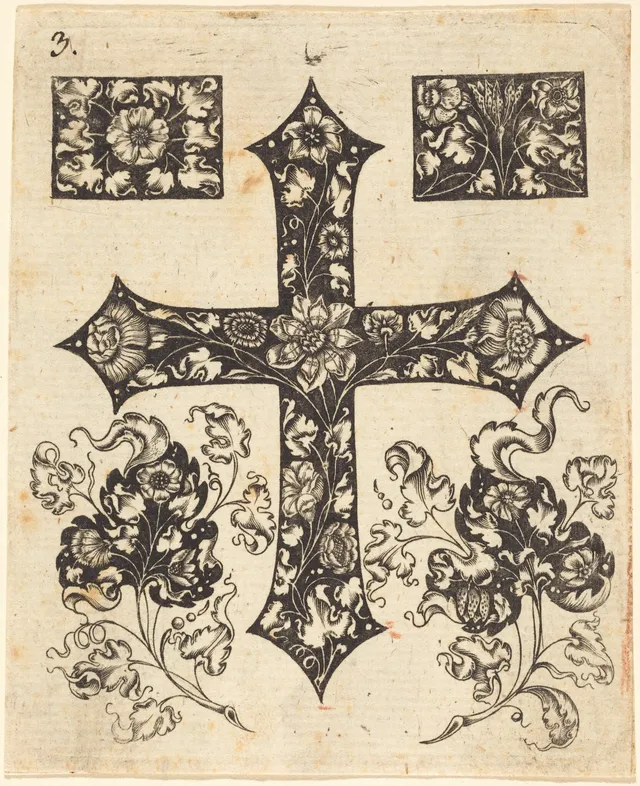
The form's reach extends from Byzantine and medieval iconography through Baroque drama into folk and devotional objects, such as the carved Cross from Bagergue and works like Johannes Hanias's Cross Embellished with Flowers. Distinguished chiefly from the equal-armed Greek cross favoured in the Eastern Church, the Latin cross remains the most widely recognised Christian symbol, and, inverted, becomes the Cross of Saint Peter.
Key artists

Overview
The Latin cross, or crux immissa, is a Christian cross form distinguished by a vertical beam that extends above the crossbeam, producing four arms of unequal length. The lower vertical arm is always substantially longer than the other three, which are typically equal. This configuration makes it the most widespread form of the Christian cross in Western art and architecture. The motif appears in 151 works in the collection, ranging from crucifixion scenes and devotional objects to architectural elements and heraldic designs. Its visual prevalence reflects its role as the central symbol of Christianity, representing the crucifixion of Jesus and, by extension, the faith as a whole.
Iconography & meaning
The Latin cross carries layered symbolic meanings that have evolved across centuries. Its form evokes the actual instrument of Christ's crucifixion, making it the standard type for crucifixes in Western Christian tradition. The German tradition elaborates a cosmological reading: the vertical beam signifies the divine and heavenly realm, while the horizontal crossbeam represents earthly existence and humanity, thus picturing the union of heaven and earth. When inverted, the Latin cross becomes Saint Peter's Cross, commemorating the apostle's martyrdom by inverted crucifixion according to Catholic tradition; turned sideways, it becomes Saint Philip's cross for analogous reasons. In contemporary usage, it functions broadly as an emblem of Christianity across Roman Catholic, Anglican, Lutheran, Methodist, Reformed, Baptist, Pentecostal, and other Western denominations. The symbol also carries funerary connotations, with its typographic near-relative, the obelus or dagger mark, used to indicate death in biographical, bibliographic, and genealogical contexts.
Across movements & periods
The Latin cross achieved visual prominence from the fourth century onward, with early attestations on sarcophagi of the fourth and fifth centuries showing the cross without the crucified figure. Its adoption as the standard crucifix form accompanied the consolidation of Western Christian art. In architecture, the Latin cross plan became dominant during the Romanesque period and remained fundamental through the Gothic era, with the nave forming the long arm, the transept crossing it near the altar, and the apse completing the eastern end. Renaissance architects pursued ideal symmetry around a central point, yet retained the cruciform scheme. The plan appears in major monuments including Old Saint Peter's Basilica in Rome, consecrated in 326; Chartres Cathedral, constructed 1194-1220; Siena Cathedral, completed 1215-1263; Cologne Cathedral, begun 1248 and finished 1880; Notre-Dame in Paris, largely completed by 1260; and Florence Cathedral, structurally completed in 1436. The sixteenth-century English Reformation witnessed brief disfavor among a minority of theologians such as Nicholas Ridley, though this proved short-lived in the broader history of Western churches.
Legacy
The Latin cross has attained near-universal recognition as the principal symbol of Christianity, transcending denominational boundaries to serve Catholic, Protestant, and evangelical communities alike. Its afterlife extends into modern visual culture: it possesses a dedicated Unicode code point (U+271D), and appears as an emoji (✝️), demonstrating its continued currency in digital communication. The Scandinavian cross flags, derived from the Danish Dannebrog with attested form since 1219, represent a ninety-degree rotation of the Latin cross adapted to national heraldic use. In popular culture, the symbol has been appropriated for album artwork and branding, as with the French electronic music group Justice's 2007 debut album Cross, stylized with the glyph. The cross's typographic relatives, the dagger and double dagger, preserve its form in secular scholarly and editorial contexts, while genealogists and paleontologists employ obelus marks to denote death or extinction, perpetuating its ancient funerary associations.
Works
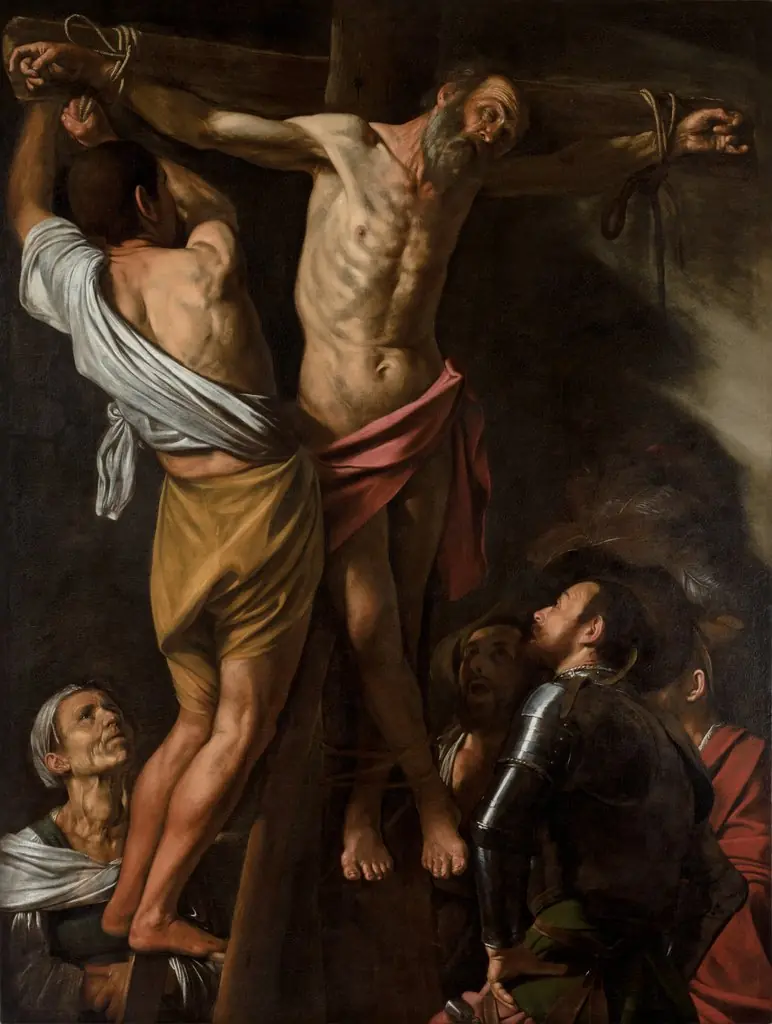 The Crucifixion of Saint Andrew
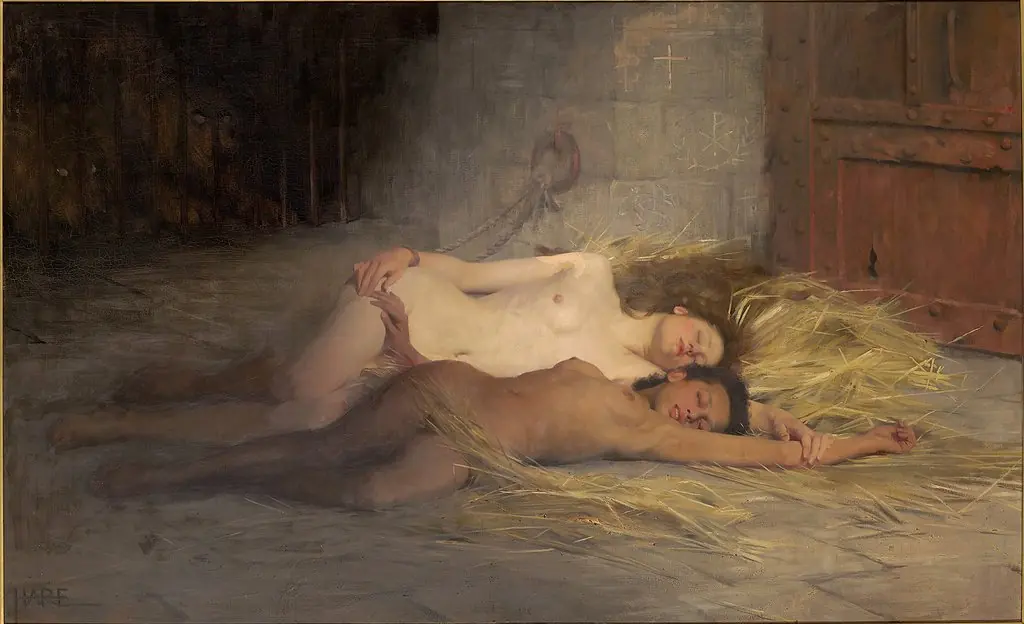 The victory of faith
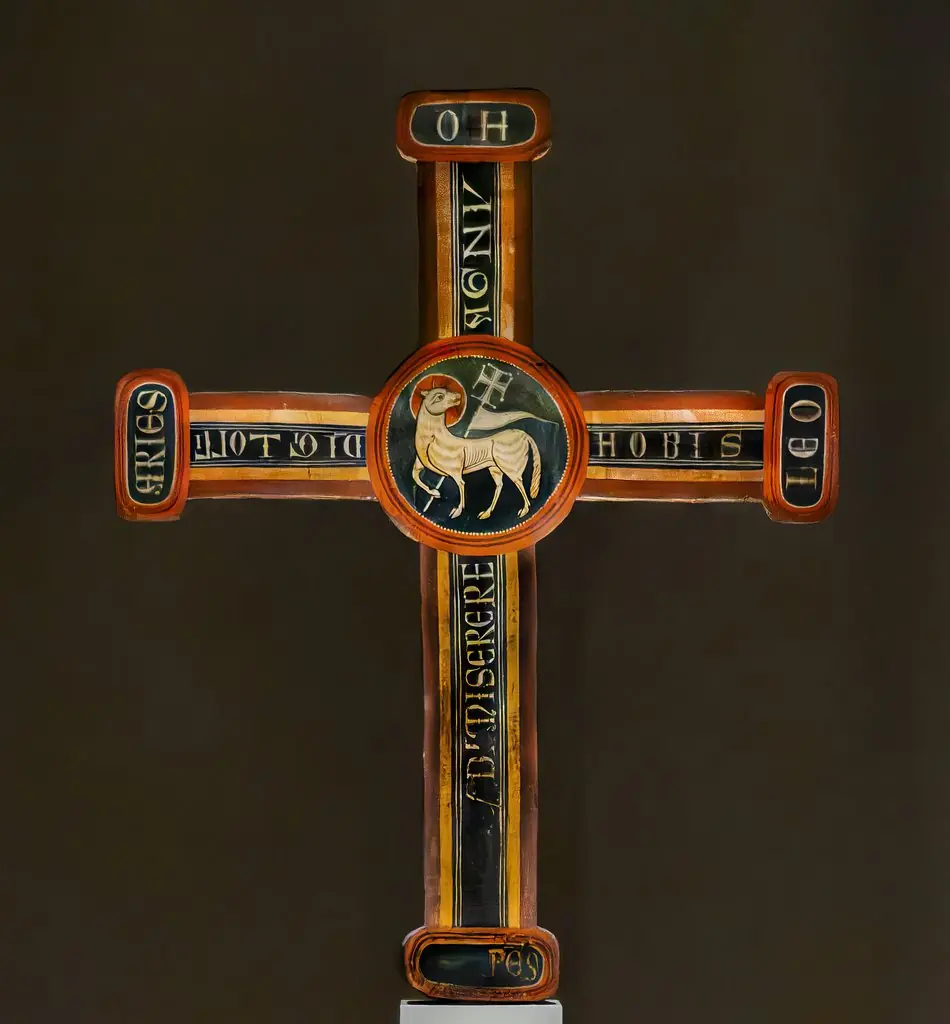 Cross from Bagergue
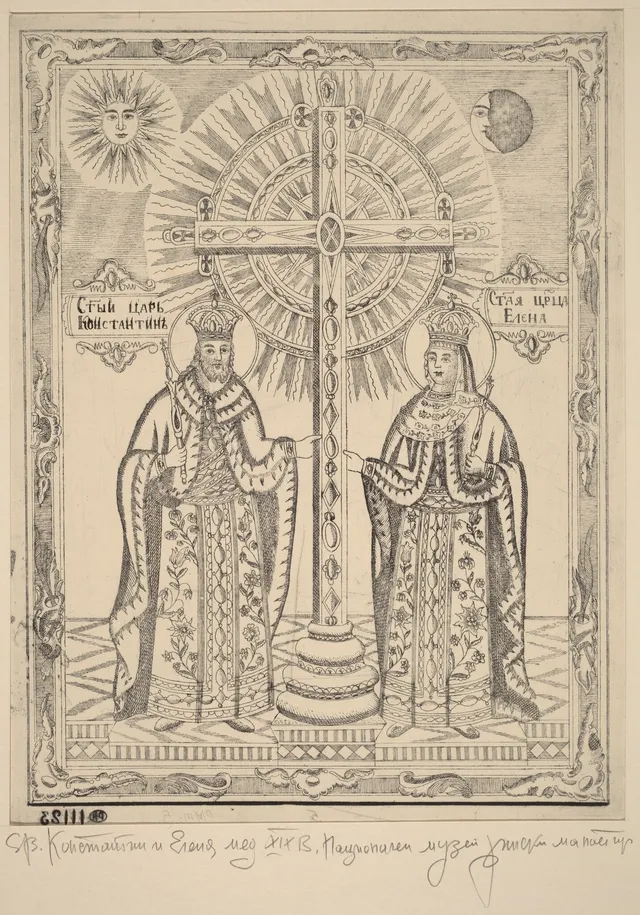
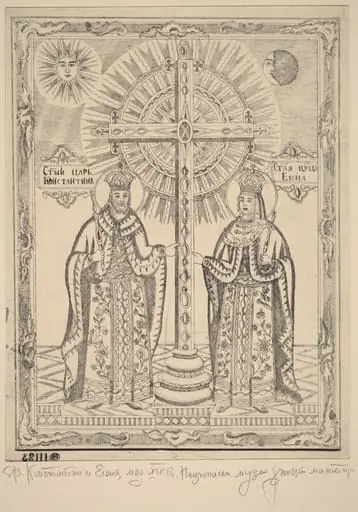 Saint Constantine and Saint Elena
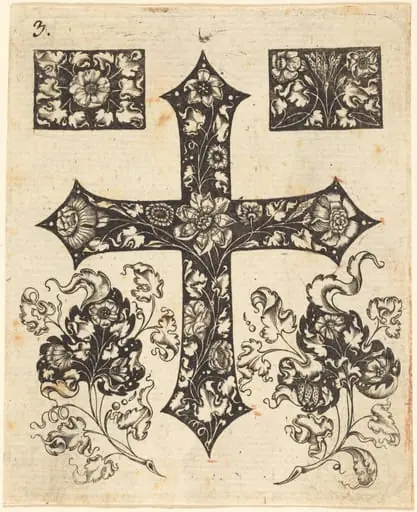 Cross Embellished with Flowers
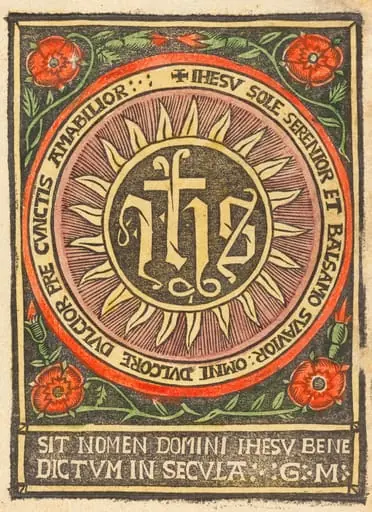 Monogram JHS in a Flaming Circle
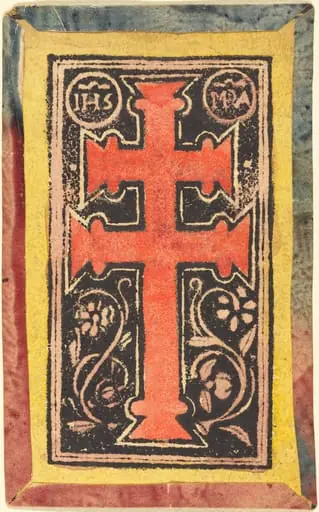 The Cross
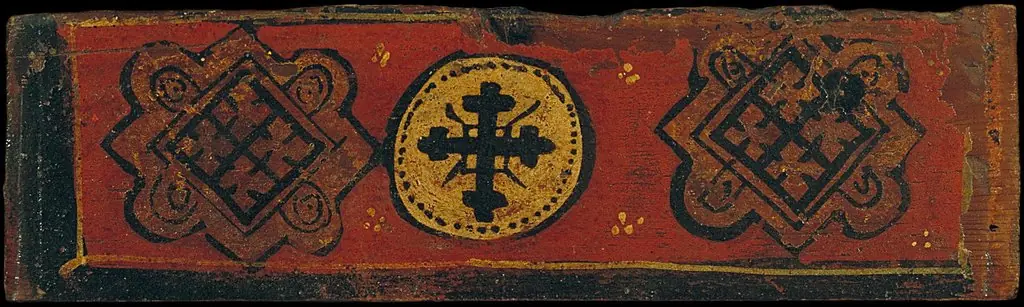 Small coffered ceiling panel with a cross and coats of arms in lozenge form
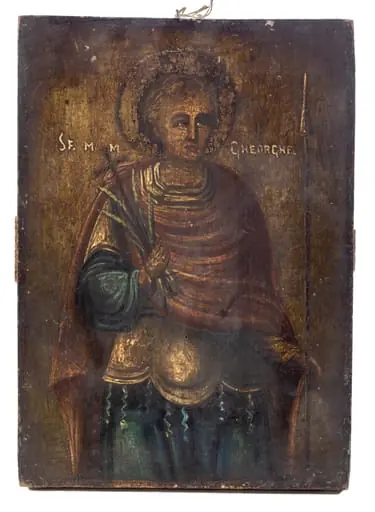 Sfântul Gheorghe
 Sfinții Constantin și Elena
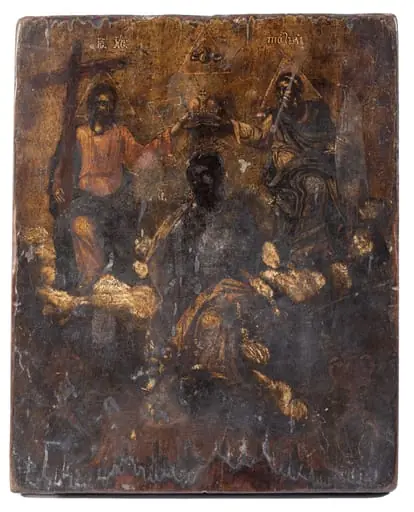 Încoronarea Fecioarei - reprezintă în centrul compoziției pe Fecioara Maria, în planul al doilea pe Iisus Hristos și Dumnezeu Tatăl ținând o coroană în mâini.
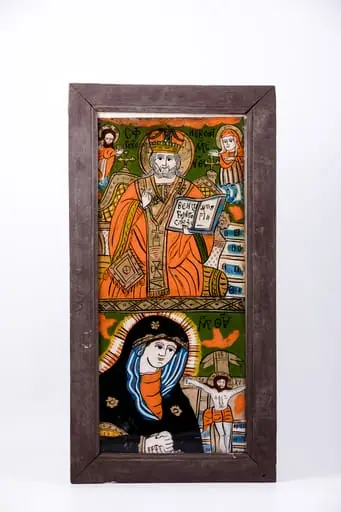
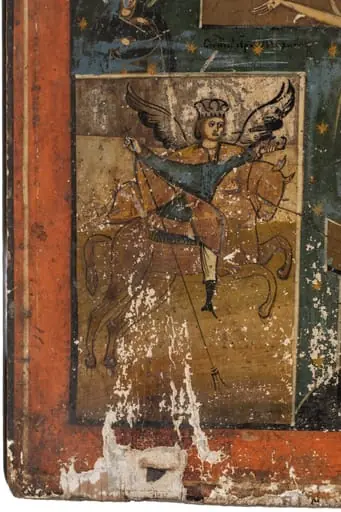 Icoană cu scene biblice pe două registre
 Icoaauri
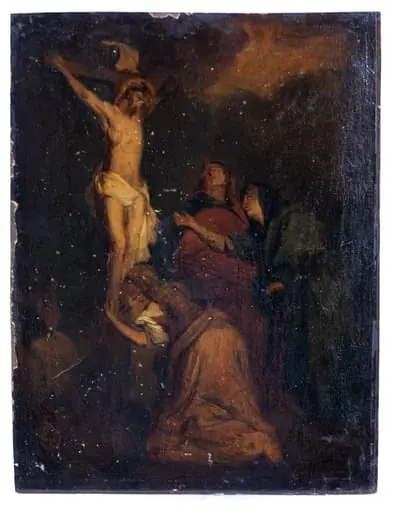 Răstignirea - schiță după van Dyck
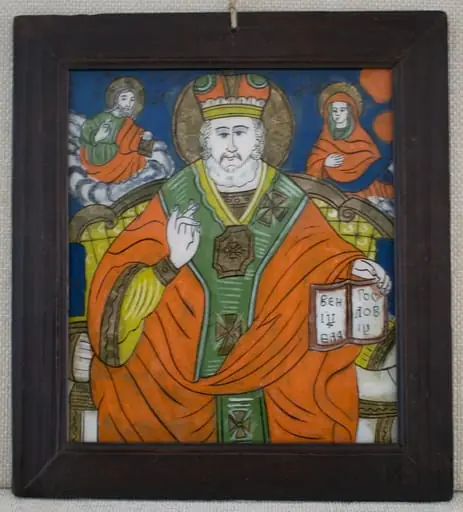
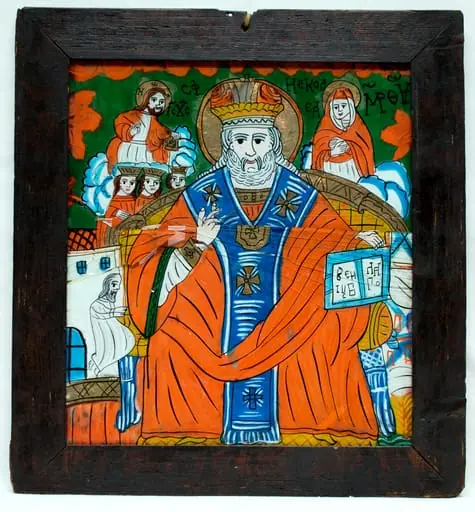
 Icoana este pictată pe dosul unei bucăți de glajă de formă dreptunghiulară în ax vertical. Sfântul Nicolae este redat în prim plan, așezat pe un tron, ținînd Evanghelia închisă în mâna stângă în timp ce cu dreapta binecuvintează. Sfântul Nicolae este înveșmântat ca Mare Arhiereu, cu mitră înaltă, bipartită, omofor mare, verde, decorat cu cruci "patee", sacos roșu cărămiziu cu galon auriu cu motiv spiralat, stihar roșu. De mâna dreaptă îi atârnă bedernița, percepută ca decor al veșmântului. Chipul este sobru, barba albă,scurtă,la fel părul scurt, ondulat. Ochii sunt negri, bine definiți, arcadele evidențiate. Nimb auriu. Tronul, cu spătarul înalt, are marginea aurită realizată în trepte(surmontatea de câte o cruce) și decorată cu motiv spiralat. Spătarul este alb, decorat cu o rețea de linii negre dublate cu bleu, întretăiate. În colțurile de sus câte un serafim pe nori. Câmpul verde intens în partea de jos, până la nivelul jilțului, albastru de Prusia în registrul superior. Desenul este îngrijit, compoziția aglomerată, paleta cromatică variată, culorile tari, Inscripția cu negru în partea de sus, greu vizibilă. Rama, din lemn de brad băițuit, este alcătuită din patru șipci profilate pe o porțiune mică spre interior, îmbinate oblic la colțuri, decorată cu un motiv ușor ondulat, imitînd fibra lemnului, dispus oblic. Dos din scândurele subțiri de brad, dispuse orizonal și fixate în cuie.
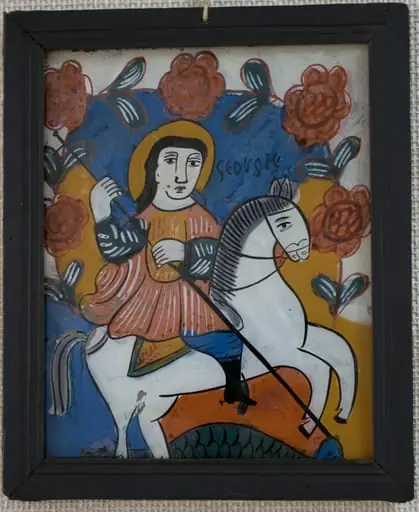 Icoana este pictată "în oglindă", pe un suport de sticlă de formă dreptunghiulară în ax vertical. Tema iconografică: Sfântul Gheorghe omorând balaurul. Sfântul, călare pe cal alb, este plasat în centrul icoanei. Veșminte ostășești, cizme înalte, tunică scurtă, roșie, cu mâneci verzi, pantaloni albaștri, bufanți.Capul descoperit, părul lung, negru, revărsat pe umeri. Aureola trasată cu mâna liberă. În mână ține o suliță lungă pe care o înfige în gura balaurului reptilian, verde, simbolizând zonele inferioare, ale păcatului. În jumătaea superioară o ghirlandă de trandafiri dispusă în arcadă deasupra sfântului. Icoana are caracteristici specifice picturii niculene: stângăcia, simplitatea și primitivismul desenului; compoziția sumară,este mai încărcată totuși decât la icoanele niculene din prima perioadă. Paleta cromatică sobră, culorile intense:alb, orange, roșu, verde, albastru, negru. Rama profilată, de culoare neagră, dosul din scândură subțire de brad.
 Compoziție - Paloș
 Icoaceil
 Temaapul
 Icoai"(a
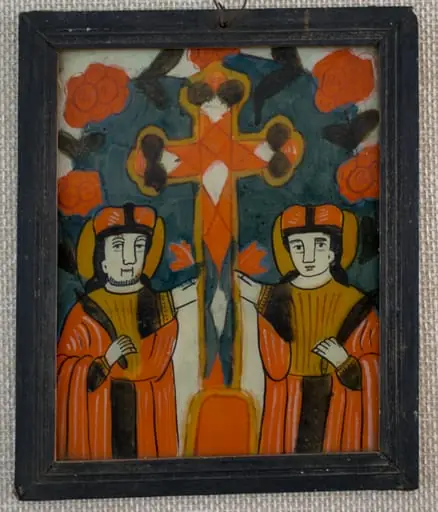 Icoana este pictată pe dosul unei bucăți de sticlă de formă dreptunghiulară în ax vertical. Crucea(tipul calvarului, cu brațele treflate)susținută în partea de jos de cei doi împărați, Constantin și mama sa Elena, (cea care a descoperit crucea la Ierusalim).este plasată sub o arcadă semicirculară de trandafiri roșii. Corpul crucii ornamentat cu motive geometrice policrome(alb, roșu, negru, galben).Sfinții (3/4) sub brațele orizontale ale crucii, o susțin cu cîte o mână(diformă), în cealaltă mână țin câte un sceptru vegetal. Fețele sunt butucănoase, veșmintele identice(galben, negru și roșu), mitrele rotunde, aureolele trasate liber. Câmpul despărțit în două zone de o arcadă de trandafiri roșii(ruje): albastru de Prusia sub arcadă, alb în rest. Desenul este schematic, naiv, Paleta cromatică este dominată culorile calde(roșu, galben, orange) contrastul cu câmpul albastru.creând perspectivă cromatică. Rama este alcătuită din patru stinghii brune, îmbinate oblic; dosul este nou, din lemn subțire de brad.
 Icoana este pictată pe dosul unei bucăți de sticlă dreptunghiulară, în ax vertical; Sf. Dumitru, izvorâtorul de mir, care se prăznuiește pe 26 octombrie, este unul din sfinții reprezentați ca războinici, deși din viața lui nu se deduc fapte de arme. Semnificația este cea a războiului nevăzut cu patimile.În concepția populară Sf. Dimitrie este cel care dezleagă iarna, corespondentul Sf. Gheorghe care leagă iarna și dezleagă primăvara. Reprezentările lor sunt deasemenea asemănătoare, fie călare, Sf. Gheorghe pe cal alb și Sf. Dimitrie pe cal roșu. Aici Sf. Dimitrie 3/4, este redat ușor din semiprofil, în picioare, în mâna dreaptă cu o suliță iar în stânga avînd o cruce. Mantie roșie, lungă, cămașă verde închis, zale.Chipul este realizat în manieră naivă, expresiv.Părul lung, negru este revărsat pe umeri. Câmp bleu, cu un chenar din flori mari, roșii cu frunze în aceeași nuanță de verde pe care zugravul a mai utilizat-o. Inscripția este pe fond alb, într-un chenar dreptunghiular plasat în spatele aureolei. Pictura are caracteristicile specifice picturii niculene:stângăcia, simplitatea și primitivismul desenului; compoziția sumară, culorile intense. Rama- 4 șipci de brad profilate, culoarea lemnului natur.
 Sfânta Mare Cuvioasă Parascheva de la Iași are crucea și ramura de finic în mâna dreaptă. Este îmbrăcată în veșmânt roșu vermillon, cu interiorul căptușit cu negru și griuri. Peste maforionul roșu, sfânta cuvioasă are aureolă. Fondul icoanei este cerul întunecat. Este o icoană cu aer cald, tomnatic, de octombrie 14, Praznicul Sfintei Cuvioase Parascheva. Inscripția din româno-chirilică, de pe fondul întunecat al icoanei, se traduce Sfânta Parascheva. Are mâna stângă deschisă înspre privirea noastră, transmițând energia harică, mâna fiind în legătură cu ramura de finic, în formă de flacără. Icoana este foarte frumos realizată artistic și estetic, finețea nuanțelor cromatice și expresivitatea sfintei cuvioase remarcându-se într-un mod deosebit. Cromatica: roșu vermillon, brun-cafeniu, negru, ocru, gri, alb. Întreaga compoziție iconografică este încadrată de o ramă roșie-vermillon, portocalie, reliefată din aceeași bucată de lemn.
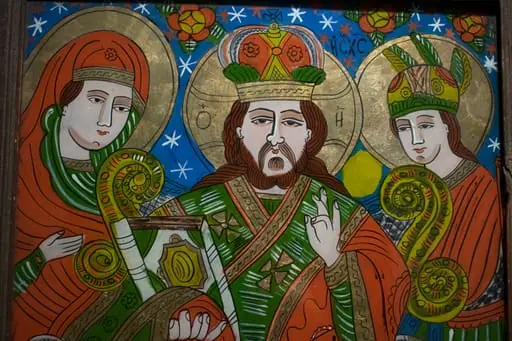 Icoacrip
 Icoana îl reprezintă pe sfântul Gheorghe omorînd balaurul, într-o reprezentare caracteristică picturii târzii de la Nicula. Sfântul, călare pe calul alb,este plasat în centrul icoanei, tiparul fiind aproximativ același ca cel utilizat în perioada de înflorire a picturii pe sticlă la Nicula. Veșmintele sunt asemănătoare celor ale soldaților chezaro-crăiești, cizme înalte cu pinteni, tunică scurtă și largă, roșie, pantaloni bufanți, albaștri.Capul este descoperit,părul lung, negru, lăsat pe umeri.Chipul are trăsături butucănoase, nasul lung, gura mică, ochii negri, cu umbre gri. Nimb realizat cu bronz auriu. . În mână ține o suliță lungă terminată cu o cruce, cu care omoară balaurul, diform, verde, simbolizând zonele inferioare, ale păcatului, minimalizat ca dimensiuni pentru a accentua puterea binelui. Calul diform, are picioarele din față ridicate, coama și coada negre, șaua împodobită. Scena este încadrată de o ghirlandă de flori (ruje) Câmpul este policrom: alburiu între flori și ramă, roșu între chenarul de flori și umerii sfântului, și sub picioarele calului și ocru în rest. Icoana are caracteristicile specifice picturi târzii de la Nicula: câmpul policolor, culori discordante, abundența detaliului, decor floral abundent, sticla de proveniență industrială, folosirea bronzului în locul foiței de aur. Rama profilată, îmbinată oblic la colțuri, este vopsită cu cafeniu. Stinghia verticală din dreapta lipsește. Pe spate are un dos tot din lemn. Sfântul Gheorghe era considerat sfântul cel mai mare peste turme, câmpuri și hergheliile de cai. Se mai considera că descuie primăvara și leagă iarna.
 Prăznicar – Botezul lui IS HS
 Icoai es
 Icoamare
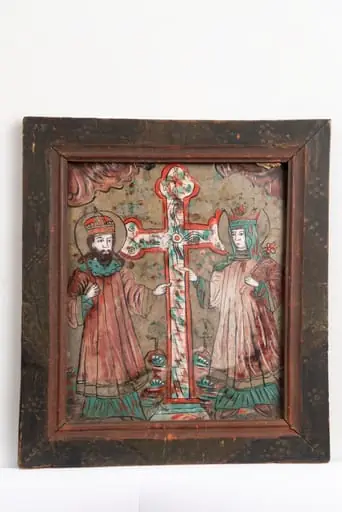 Icoana îi reprezintă pe Sfinții Împărați Constantin și Elena, pictați frontal, în picioare, ținând împreună în mână Crucea Răstignirii, ce domină central compoziția. Împărăteasa Elena ține în mâna stângă o ramură, îar împăratul Constantin are în mâna dreaptă un sceptru. Fondul icoanei e pictat integral doar în partea superioară unde apar în colțuri două ornamente din registrul vegetal, în rest e pictat cu laviuri colorate și decorat cu flori realizate din puncte, fiind vizibil fondul din hârtie argintată. Cromatica icoanei se compune din tonuri de roșu, alb, albastru, maro și gri. Rama icoanei e profilată, bicromă (latura interioară roșie, iar cea exterioară verde, decorată cu motive florale și geometrice) și e formată din îmbinarea a patru baghete de lemn. Sticla are un fragment lipsă, de mici dimensiuni, în partea stângă-sus.
 Icoana este pictată "în oglindă", pe suport de sticlă de formă dreptunghiulară în ax vertical. Sfânta Cuvioasă Paraschiva(care se prăznuiește pe 14 octombrie) este redată așezată pe tron, cu coroană împărătească pe cap. Plasată central, cu doi îngeri în spatele tronului, sfânta este înveșmântată cu un maforion roșu cu intadosul albastru și galon galben. Cămașă multicoloră, albastru, verde, roșu, galben, cafeniu, la mijloc cu o cingătoare galbenă) Pe cap poartă o coroană mare, deschisă. În mâna dreaptă ține o cruce, iar cu stânga binecuvintează cu un gest stângaci.Chipul este ușor diform, arcadele ochilor umbrite, nasul mare, bărbia accentuată, ochii înguști, asimetrici. Tronul, de factură barocă, are spătarul în formă de aripă, cu brațele masive, cu un chenar îngust, aurit, cu volute în partea de jos și câte o cruce pe laturile de sus. Sfânta este așezată pe o pernuță lungă. În spatele tronului doi îngeri cu chipuri copilărești, veșminte lungi, nimburi aurite. os este completată cu linii orizontale pe fond bej. Câmpul este albastru(1/2 superior) cu inscripția cu negru, 1/3 inferior - cafeniu deschis, benzi orizontale. Desen încărcat, paleta cromatică petriță, culorile intense. Stratul pictural este exfoliat pe unele locuri. Rama închisă la culoare, este realizată din lemn de brad, profilată pe o porțiune mică la interior, Porțiunea mai lată este decorată cu "pieptenele", transversal. Dosul este realizat din scânduri subțiri de brad, dispuse orizonal și fixate în cuie. Țăranii considerau că sfânta Paraschiva apără de grindină și de dureri de cap.
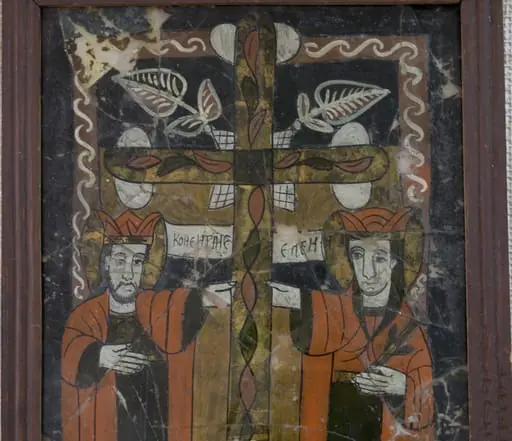 Pictură în oglindă, pe spatele unei bucăți de glajă, ax vertical.Sfinții Împărați Constantin și Elena, 3/4 , în picioare, semiprofil, sub brațele crucii pe care a fost răstignit Isus( găsită de Împărăteasa Elena la Ierusalim) Amândoi au plete castanii, lăsate pe umeri, coroane înalte, veșminte identice, simple, lungi, cămăși verzi și mantii roșii. Plasarea personajelor sub brațele crucii, în jumătatea inferioară, pe fond ocru sugerează complementaritatea celor două planuri(terestru și ceresc). Împărăteasa ține în mână o ramură verde, element ce o însoțește în majoritatea reprezentărilor populare. Fețele sunt ușor diforme, ochii negri. Crucea dreaptă, plasată în centrul compoziției, decorată cu frunze și o spirală în partea de jos, creează simetrie. La întretăierea brațelor crucii elemente vegetale cu contur alb. Chenarul specific icoanelor de Nicula, linia albă(zăluțe, funie) pe fond roșcat. Icoana este caracteristică perioadei de înflorire a picturi pe sticlă de la Nicula. Rama profilată, din lemn de brad, pictată cu o culoare roșcată. Dosul subțire. Sticla spartă în mai multe fragmente.
 Sunt reprezentați Sfinții Împărați Constantin și Elena(1/1), susținând crucea pe care a fost răstignit Isus, cruce găsită de Împărăteasa Elena la Ierusalim. Crucea, dreaptă, aurită, simplă. Cei doi sfinți, sf. Elena din stânga și sf Constantin din dreapta, plasați sub brațele crucii, o susțin cu câte un braț. Sunt reprezentați cu veșminte împărătești, coroane pe cap, deschise, aurite, la fel cu nimbul delimitat cu alb. Împăratul Constantin are în mâna stângă un sceptru iar împărăteasa o ramură . Amândoi redați tineri, Împăratul cu păr și barba castanii, scurte. Înveșmântați cu tunici cu poale lungi, brodate cu motive fitomorfe, cu galoane late, aurite, delimitate de șiraguri perlate. Fond aurit, inscripția de culoare albă în partea de sus. Proporțiile sunt respectate, fețele expresive, detaliile lucrate minuțios, ceea ce indică un zugrav experimentat și școlit.
 Icoabui.
 Icoau, a
 Icoaa și
 Icoaior,
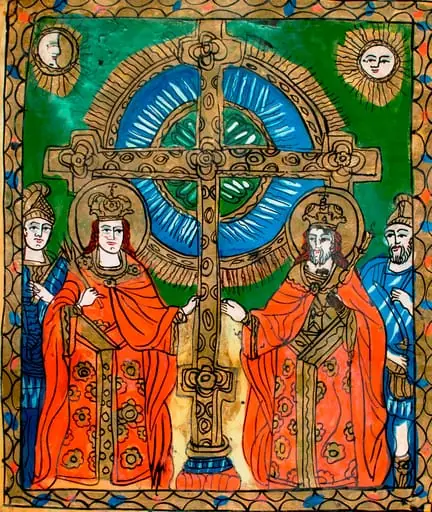 Icoana este pictată "în oglindă", pe un suport de sticlă de formă dreptunghiulară în ax vertical. Sfinții Împărați Constantin și Elena(1/1), susținând crucea pe care a fost răstignit Isus, cruce găsită de Împărăteasa Elena la Ierusalim. Crucea, dreaptă, cu brațele trilobate, aurită, decorată cu cercuri și semicercuri duble și flori la intersecția brațelor,este plasată pe un postament înalt, în centrul compoziției, având lungimea egală cu cea a suprafeței pictate.De la întretăierea brațelor iradiază cercuri concentrice de raze în culori reci, albastru, bleu, cel exterior auriu. Sfânta Elena(stânga) și sfântul Constantin(dreapta), plasați sub brațele crucii, reprezentați cu veșminte împărătești(tunici roșii brodate cu motive florale aurite, mantii lungi roșii, capă aurită pe umeri), coroane pe cap, aurite, la fel cu nimbul. Împăratul Constantin are în mâna stângă un sceptru, împărăteasa ține o ramură în mâna liberă. Amândoi sunt tineri, cu părul lung, roșcat-castaniu revărsat pe umeri. Sf. Constantin are barba scurtă. Cei doi împărați sunt flancați de un soldat roman și unul dac, în vestimentația militară specifică, având săbii în mâini. Acest Amănunt, cromatica și modul de realizare al desenului duc atribuirea către un zugrav cult. În colțurile de sus sunt redate luna și soarele antropomorfizate, într-un cerc aurit aplicat neglijent. Fondul este verde închis, cu degardeuri, la baza crucii zonă de culoare gălbuie. Întreaga compoziție este încadrată de un chenar dublu, cel de la interior aurit, cu două rânduri de semicercuri dispuse longitudinal, cel exterior de culoare roz gălbui. Desenul este dezordonat, cu linii redundante, culoarea aplicată inexact, nerespectând desenul. Compoziția este echilibrată, expresivă. Rama, din lemn de brad, culoare închisă.Îmbinare oblică la colțuri. Dosul - scânduri de brad, dispuse orizonal și fixate în cuie.
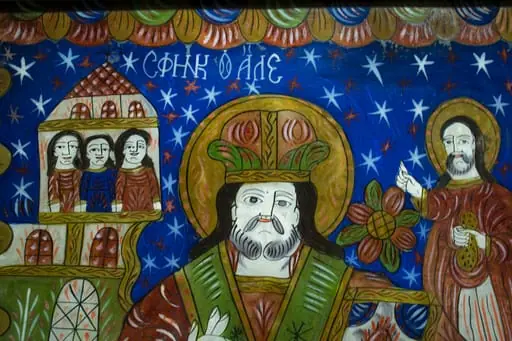
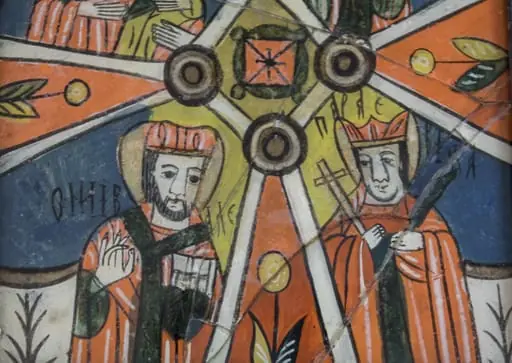
 Sfinții Împărați Constantin și Elena, plasați sub brațele crucii pe care a fost răstignit Iisus. Crucea, cu brațele drepte, trilobate, în centrul compoziției, ușor asimetric. La întretăierea brațelor raze multicolore(orange, albastru și roșu, roșu și alb). Sfinții reprezentați cu veșminte împărătești, coroane înalte pe cap, mantii roșii și tunici bleumarin cu borduri aurite, bogat decorate. Ambii sunt tineri, cu părul lung, castaniu revărsat pe umeri. Aureolele și coroana Elenei aurite. Împărăteasa ține o ramură în mâna dreaptă, împăratul un sceptru. Deasupra crucii pe niște nori albi și înconjurați de raze, Dumnezeu Tatăl(bătrân, cu nimbul triunghiular)și Isus Hristos cu aură circulară, îneșmântați în roșu și albastru.Sunt flancați de câte un heruvim așezat pe norișori. Câmp albastru de Prusia, decorat cu steluțe albe și roșii, colțurile de sus ale icoanei acoperite de draperii roșii și cafenii. Sfinții plasați deasupra unor nori albi cu margini dantelate, gri. Fondul în 2/3 inferioară este de culoare vernil cu brâuri surmontate de forme ovoidale, pictate cu vernil roșu și bleumarin. Paleta cromatică este variată: roșu, galben, negru, alb, verde-oliv, bleu, albastru, cafeniu. Compoziția este echilibrată, dar încărcată. Desenul îngrijit, cu stângăcii. Rama este de lemn de brad, profilată la interior(culoare brun roșcat), la exterior decorată cu motiv de culoare mai închisă realizat cu pieptenele.
 Icoa
Icoa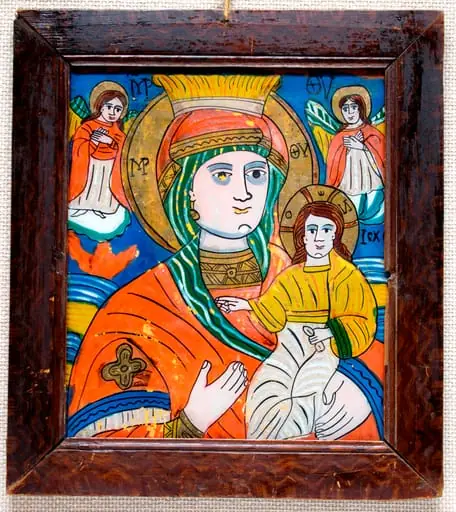 Repr
Repr Icoajumă
 Icoateri
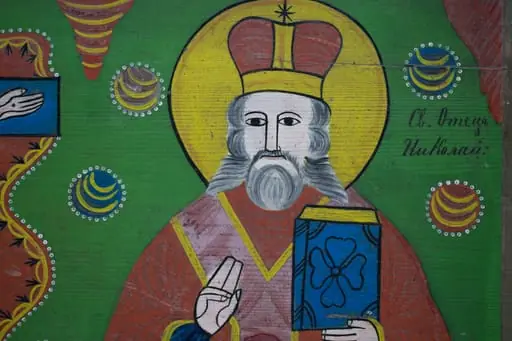
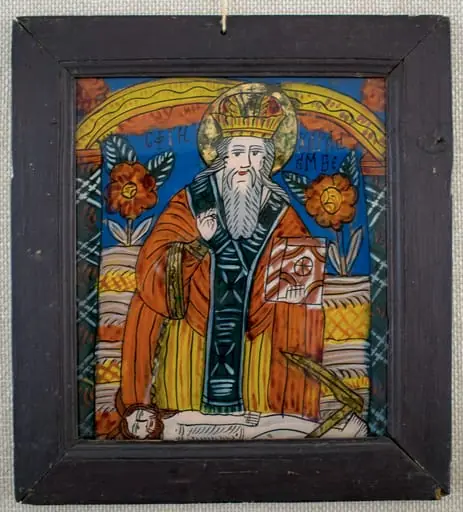
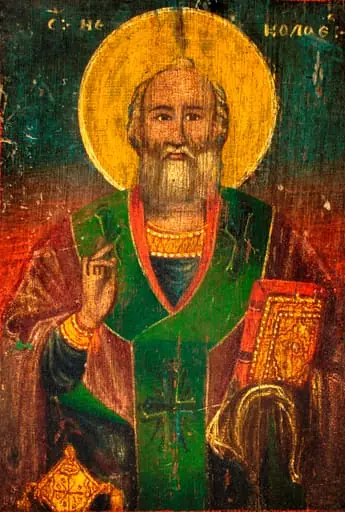 Icoana îl reprezintă pe sfântul Nicolae 3/4, frontal, în ipostaza de mare ierarh, binecuvântînd cu mâna dreaptă, în stânga ținînd Cartea Sfântă. Sfântul este redat cu capul descoperit, barba de lungime medie, fruntea înaltă, ochii căprui. În jurul capului aureolă de culoare deschisă, gălbuie, aplicată peste un strat de bronz auriu, mărginită cu o linie albă. Înveșmântat cu sacos roșu cărămiziu, cu intradosul verde, epitrahil verde, cu o linie subțire pe margine și cruci negre conturate cu alb și raze negre. Stihar bleumarin cu mânecuțe aurii decorate cu perle albe și motiv geometric, la fel galonul de la gât. Mâna cu care ține cartea este acoperită de omofor, în semn de smerenie. De mâna cu care binecuvintează atârnă bedernița de culoare galben aurie, cu franjuri și motive geometrice. Coperta cărții legate în piele bogat decorată. Chenar din linii ondulate de culoare galbenă, dispuse longitudinal, mărginit la interior de o linie subțire roșie și una închisă la exterior. Proporțiile în general respectate, capul este ușor mai mic în comparație cu corpul masiv, ceea ce creează un efect de depărtare, accentuat și de fondul luminat roșiatic în partea de jos, albastru în cea de sus. Maniera picturală, indică un pictor școlit, influențat de pictura academistă. Icoana prezintă un strat de murdărie și mici crăpături.
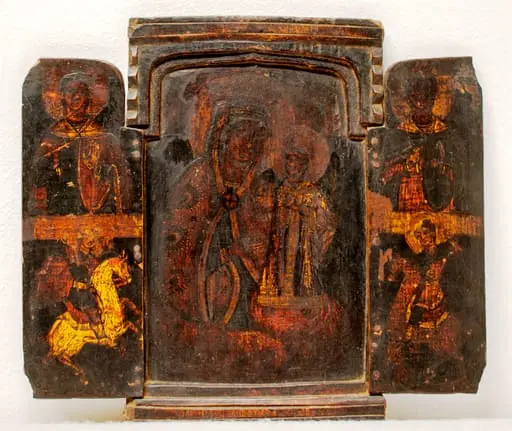 Pe panoul central este reprezentată Maica Domnului Hodighitria(Călăuzitoarea). Pruncul stă în picioare, amândoi fiind înveșmântați în straie împărătești. Maica ține Pruncul cu mâna stângă, cu dreapta arată către El. Voleul stâng, jumătatea inferioară - Sfântul Gheorghe călare pe cal alb. Înveșmântat în costum românesc de oștean medieval, mantie roșie. Calul cu picioarele din față ridicate, harnașament de culoare roșie. Deasupra e posibil să fie tot sfântul Gheorghe, în stânga ținând crucea, cu dreapta face gestul păcii, al liniștii.(prin analogie cu 34530). Simetric, pe latura dreaptă a tripticului se află jos, Sf. Dumitru, călare pe cal roșu, în poziție asemănătoare cu a SF. Gheorghe, iar sus probabil tot el, în altă ipostază iconografică(analogie) . Veșmintele au culorile inversate(tunica roșie -dreapta, albastru-stânga, mantie roșu -stânga, albastru - dreapta), la fel la sfinții războinici, probabil în legătură cu reprezentarea populară a timpului. Inițial, tripticul se închidea, dovadă inscripția care se continuă pe cele două uși. Ulterior a fost fixat cu cuie de fier, iar prinderea se făcea cu o sfoară legată de două cuie bătute pe cant.
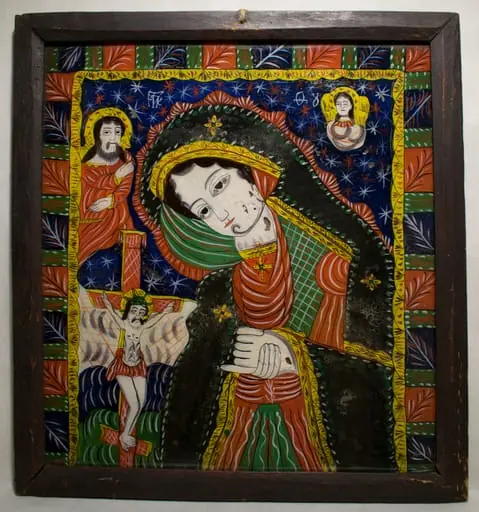
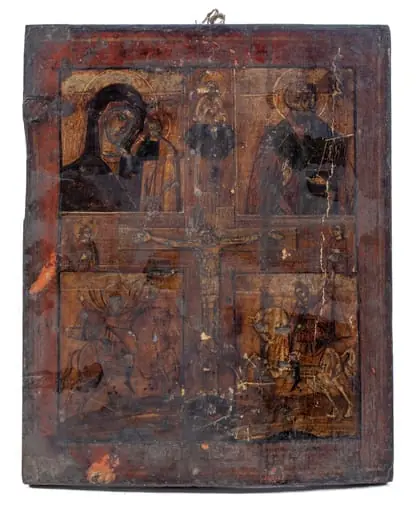
 Icoana este impărțită de o cruce neagră pe care este pictat Isus răstignit, deasupra cu Dumnezeu Tatăl iar in părți cu Sf. Constantin și Elena; sunt patru registre: Maica Domnului indurerată; Sf. Nicolae și Sf. Gheorghe cu balaurul.
 Icoacum
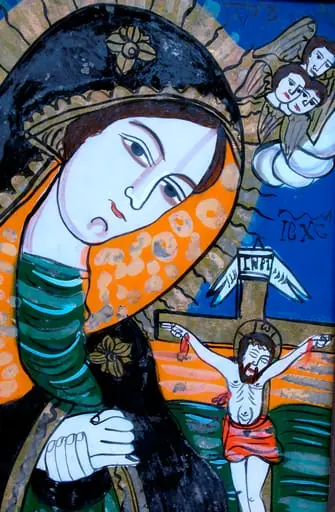
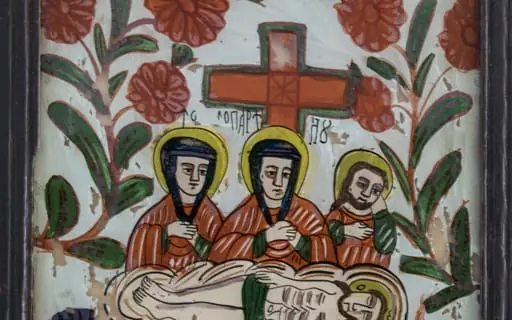 Icoana redă momentul următor coborârii de pe cruce, jelirea lui Hristos, într-o manieră specifică fazei de decădere a picturii pe sticlă. În centrul compoziției, Isus întins pe piatra din Efes(modul cum este pictată arată că iconarul nu cunoștea semnificația), pe un giulgiu alb. În variantele niculene ale Plângerii, scena se reduce la prezența a doar trei personaje, aici două femei(Fecioara Maria în mijloc, una dintre mironosițe) și, ușor retras în spate, gânditor, un apostol tânăr cu barbă(posibil Sf. Ioan Evanghelistul, deși acesta era imberb) .Isus este întins, cu ochii închiși, părul lăsat pe umeri, trăsături anatomice redate schematic, în jurul mijlocului o eșarfă verde.În jurul capului are nimbul cruciger cu însemnele consacrate, prescurtarea de la Iahve(Eu sunt Cel ce sunt) Cele două Marii au fețele triste, trăsături pătrățoase, ținînd mâinile la piept, semn de jale. Pe cap au câte o broboadă neagră. Veșmintele în culorile consacrate, predominant roșii, cu accente de verde. Aureole în jurul capului, deși în iconografie nimbul se atribuie mai târziu unor persoane. Crucea, pictată în roșu(chenar verde) străjuiește simbolic scena. Câmpul bleu este inundat de tulpini sinuase cu câte trei flori mari, roșii, conturul amintind de centrele din Boemia. Pământul este sugerat de o porțiune galben ocru, lângă catafalc două flori întunecate(lalele) Inscripția, destul de neclară și trunchiată, este scrisă cu litere negre inegale sub brațele crucii. Compoziția este echilibrată iar cromatica este dominată de roșu, în dezacord cu tema. Rama profilată este vopsită cu negru, îmbinare oblică ;dos- lemn subțire de brad; Pictura este exfoliată în multe locuri.
 Icoasemn
 Icoaesiv
 Icoa
Icoa Temaelal
 Icoaoasă
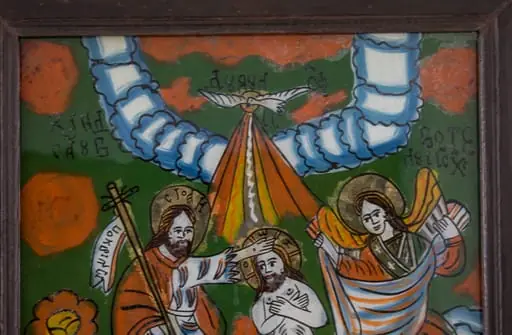
 Icoana este pictată pe dosul unei bucăți de sticlă dreptunghiulară, în ax vertical; Icoana reprezintă Botezul lui Isus Hristos, care se prăznuiește pe 6 ianuarie("Boboteaza") Isus Hristos, cu picioarele goale în apa Iordanului(redată prin câteva linii oblice), cu un ștergar verde în jurul mijlocului, brațele încrucișate pe piept, primește botezul cu apă de la Sfântul Ioan Botezătorul, care ține în mâna dreaptă o cruce . Acesta este înveșmântat cu o mantie roșie cu partea de jos a mânecilor verde. În mâna stângă, cu care îl botează pe Hristos, apare o mână mică, probabil reprezentarea mâinii lui Dumnezeu care coboară dintr-un nor de foc în care este zugrăvit și Duhul Sfânt în formă de porumbel alb, cu aripile verzi, coborînd deasupra lui Isus. De partea cealaltă a lui Isus se află Arhanghelul Gavriil, cu părul revărsat pe umeri, în veșminte asemănătoare cu ale Sf. Ioan, ținînd un ștergar în mâini. Aureolele realizate cu foiță de aur. Câmp bleu, flori mari, roșii pe tulpini înalte, sunt înghesuite în spațiul rămas. Icoana are caracteristicile specifice picturii niculene, dar este evidentă faza de decadență(redarea figurilor, spațiul aglomerat, culorile, suportul). Rama profilată, culoarea lemnului natur.
 Icoaitud
 Icoaobli
 Temadisp
 Icoa cu
 Icoaii.
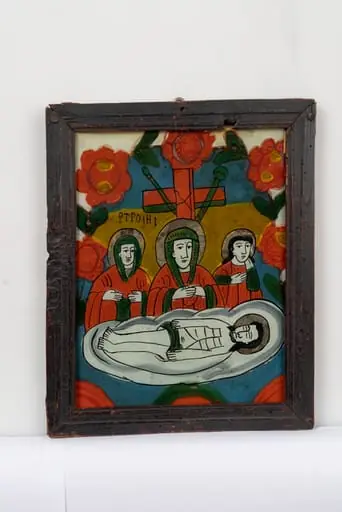 Tema icoanei face parte din ciclul Patimilor Mântuitorului și înfățișează Prohodul Domnului. Alături de Hristos așezat pe piatră sunt reprezentate doar trei personaje. Maica Domnului, în centru, cu mâinile împreunate la piept, are de-o parte un apostol, iar de cealaltă parte una dintre femeile mironosițe, probabil Maria Magdalena. În spate se profilează crucea lui Hristos și însemnele patimilor - sulița și buretele. Un șirag de rozete ornamentează fondul icoanei. Cromatica icoanei se compune din tonuri de roșu vermillon, ocru galben, alb, verde, albastru, negru și gri. Rama icoanei e profilată, băițuită și e formată din îmbinarea a patru baghete de lemn.
 Icoaulor
 În cazul fraților Grecu există indicii că lucrau deseori fără tipar, desenul fiind executat liber. Sfinții Împărați Constantin și Elena, de o parte și de alta a crucii pe care a fost răstignit Iisus, cruce găsită de Împărăteasa Elena la Ierusalim. Crucea(culoare roșie, punctată cu alb), axul de simetrie al compoziției, are brațele trilobate, iar la întretăierea brațelor, ochiul lui Dumnezeu. Cei doi sfinți 1/1, tineri, conform erminiilor, au coroane pe cap și sceptru(împăratul Constantin), mama sa o ramură verde în mâna liberă. Veșmintele în culorile complementare, roșu(semnificând puterea, forța), și verde(blândețe, comtemplație, bucurie) elegant drapate cu alb. Crucea de Câmpul icoanei, albastru ultramarin, decorat cu motive astrale (steluțe albe). Partea inferioară -alternanță de benzi ocru și brun roșcat, ca niște valuri de pământ. Chenar pe trei laturi, benzi oblice în culori alternante(galben și verde), marcate de linii albe, care dau impresia de mișcare. Rama profilată, culoare roșcată . Este decorată cu căte trei șiruri de linii vălurite pe fiecare latură.Foiță de aur la aureole, veșminte, chenare, triunghiul central, sceptru și ramură.
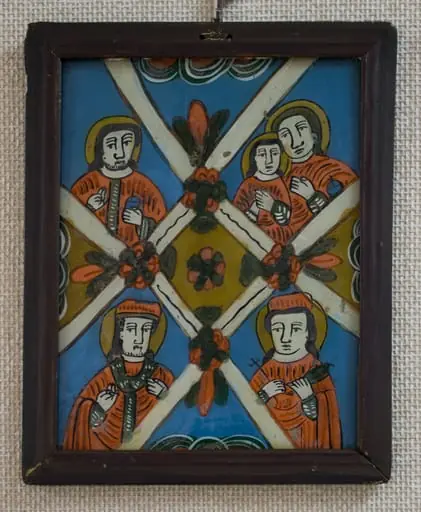
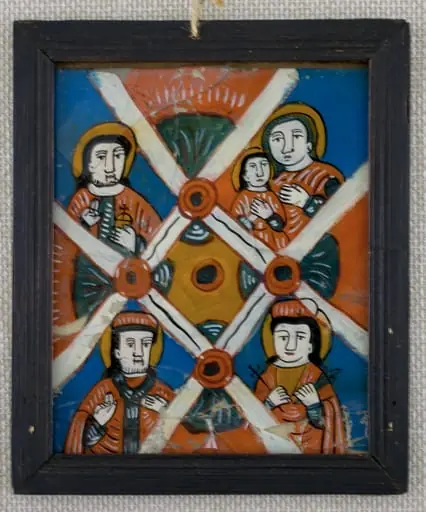
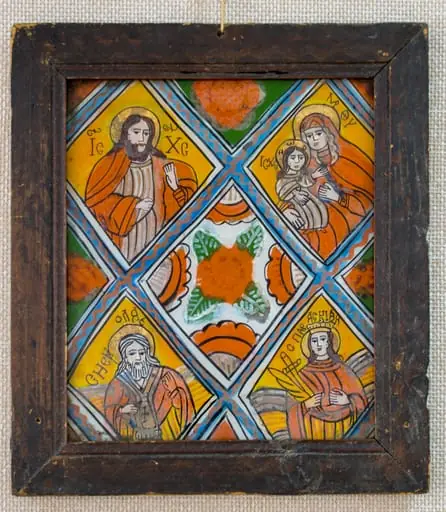
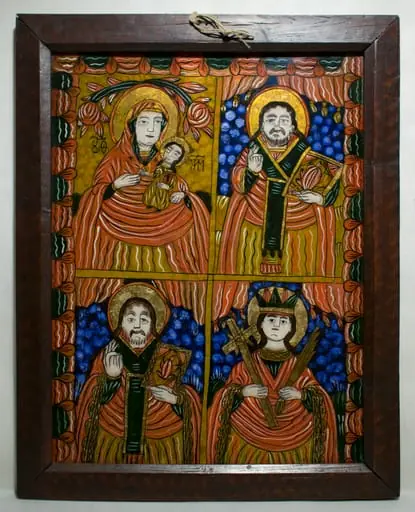 Câmpul icoanei e împărțit în patru registre prin două linii perpendiculare de culoare ocru, întetăiate în formă de cruce. În cele patru câmpuri sunt pictați: Maica Domnului cu Pruncul, Isus Hristos, Sfântul ierarh Nicolae, Cuvioasa Paraschiva. Toate personajele sunt desenate naiv, stângaci. Maica cu Pruncul ar corespunde tipului Hodighitriei, Pruncul este mic, cu o Evanghelie în mână. Fecioara poartă maforion roșu cu linii de fald albe, cu însemnele Fecioriei pe umeri și pe frunte, stola cafenie, la fel cu veșmântul Pruncului. Deasupra nimbului aurit cu chenar roșu este pictată o ghirlandă cu două flori la capete. Isus arhiereu, 3/4 binecuvântând cu mâna dreaptă în stânga ținând o Evanghelie închisă.Înveșmântat un sacos roșu, epitrahil negru cu franjuri și galon aurit, stihar cafeniu.Nimb aurit,chenar roșu. Sfântul Nicolae în veșminte arhierești, sacosul este tivit cu un galon auriu bogat, în mână Evanghelia. Sfânta Paraschiva are o cruce mare în mâna dreaptă, o ramură aurită în stânga, coroană împărătească deschisă, înconjurată de nimbul aurit. Fondul primului registru este de culoare orange, celelalte de culoare albastru ultramarin cu pensulații albe și draperii roșii cu ciucuri în colțuri. Chenar pe trei laturi, din semicercuri roșii și verzi, alternând cu formațiuni fitomorfe simple stilizate pe fond orange cu linii ondulate albe .Desenul este naiv, chipurile diforme, amintind de pictura de la Nicula, de unde venise familia Tămaș. Culorile sunt intense, paleta cromatică dominată de roșu, orange și albastru. Rama are o porțiune teșită la interior, restul fiind plan, decorat cu un motiv vălurit des, dispus longitudinal.
 Icoa la
 Icoașanț
 Icoana îl reprezintă pe Mântuitorul Iisus Hristos, copil fiind, având în mânuțe globul pământesc cu o cruce deasupra, asemenea unui chivot sfințit, galben cu verde. Copilașul este înfășurat cu o țesătură roșie vermillon-roz și negru. În interiorul icoanei este un composit de albastru ceruleum și galben chihlimbar luminos. Întreaga tematică iconografică este încadrată de un chenar decorativ fitomorf, format dintr-o ghirlandă de trandafiri, 3 ruje roșii, cu motivul zăluței albe în interior, pe latura inferioară a icoanei și un boboc de măceș în spatele Copilașului Iisus. Inscripția din româno-chirilică se traduce Cristos. Icoana este de Nicula, având o cromatică luminoasă: roșu vermillon, roz, albastru bleu-ciel și ceruleum, galben chihlimbar, verde brad, alb, negru. Icoana este din Nordul Transilvaniei, Nicula.
 Icoafolc
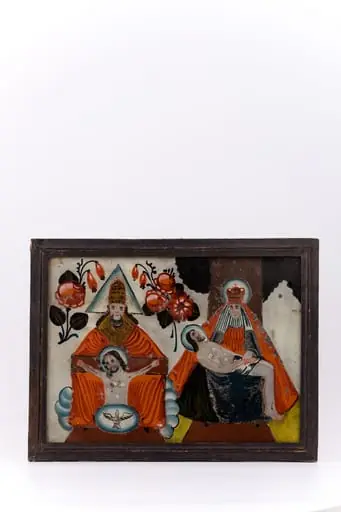 Icoana are o tematică iconografică foarte rară: în cea dintâi parte, este Sfânta Treime: Mântuitorul Iisus Hristos Răstignit pe brațele Lui Dumnezeu-Tatăl și ținut în veșmântul roșu al Pătimirii și Jertfei. Dumnezeu-Tatăl, Împărat al Cerurilor, are pe cap coroană și aureolă triunghiulară, reprezentând Sfânta Treime. Sfântul Duh este reprezentat prin porumbelul alb. Sfânta Treime are în registrul inferior o mandorlă de nouri rotunzi albi-albaștri și în registrul superior o ghirlandă din trandafiri și ramuri cu măceșe, simbolizând Grădina Raiului. În cea de-a doua parte, în dreapta, este Maica Domnului Împărăteasă ținând în brațe pe genunchi Trupul Mântuitorului Iisus Hristos, coborât de pe Cruce, plâns, jelit. Este asemenea unei Piete. Icoana este deosebită și foarte rară, prin compoziția tematică și viziunea iconografică greco-catolică. Fondul icoanei este alb-ivoriu-crem, în registrul superior și galben-solar, în registrul inferior. Cromatica este armonioasă: roșu vermillon-trandafiriu, brun-roșcat-acajou, galben-solar, albastru bleu-ciel, gri, alb , negru. Icoana este din Nordul Transilvaniei, Nicula.
 Icoaate
 Tema icoanei face parte din ciclul Pascal și înfățișează Pogorârea la Iad a Domnului. În plan central apare reprezentat biruitor Iisus Hristos, ținând în mâna stângă un steag cu cruce, iar cu dreapta îl prinde pe Adam. În dreapta lui Hristos e pictat sfântul Ioan Botezătorul, arătând cu mâna dreaptă spre Mântuitorul. Compoziția e încadrată în partea superioară cu un brâu ornat cu motivul torsadei. Cromatica icoanei se compune din tonuri de roșu vermillon, alb, verde, albastru, maro și gri. Rama icoanei e profilată, băițuită și e formată din îmbinarea a patru baghete de lemn. Sticla este spartă, iar din suport lipsește colțul din stânga-sus și colțul din dreapta-jos.
 Icoait,
 Icoae mi
 Icoaiv s
 Icoală,
 Icoalben
 Răstignirea
 Icoa cen
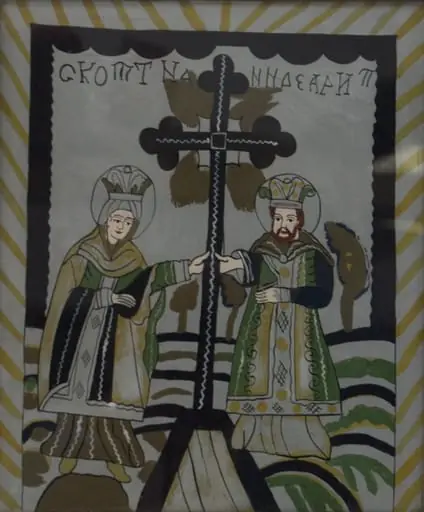 Icoana este pictată pe dosul unei bucăți de sticlă, de formă dreptunghiulară în ax vertical. De o parte și de alta a unei cruci treflate, plasată pe un promontoriu, sugerând Golgota, sunt reprezentați Constantin și Elena. Conturul brațelor superioare este încadrat de o zonă incandescentă în culori intunecate. Sfinții redați în picioare, 1/1, susțin cu o mână crucea. Poartă veșminte împărătești bizantine, destul de simple, cu câteva elemente decorative (romb, val, spirală). Pe cap coroane înalte, deschise. Carnația roz, fețele ușor disproporționate; sfânta Elena are părul acoperit; Constantin are barba scurtă , părul brun-roșcat. Chenar pe laturile verticale, superior bandă ondulată. Spațiul rămas până la ramă decorat cu benzi oblice de culoare galbenă. Culoarea de fond este înlocuită în transparența sticlei de foița argintată. Desenul ușor stângaci, tușele groase, fețele expresive. Paleta cromatică: alb, verde, negru, galben, verde închis, brun-roșcat, fond gri-argintiu. Rama, lată , profilată, din lemn de brad, vopsită cu maro. Capac din lemn, pe dos, cu inel metalic pentru agățare.
 Icoacu c
 Piesa este o icoană împărătească ce a fost amplasată în biserică, în cadrul iconostasului sau în interiorul unuei troițe. Sunt redați, conform canoanelor bizantine, sfinții împărați Constatin și Elena, în picioare, sub brațele crucii Răstignirii descoperită de împărăteasa Elena la Ierusalim. Cei doi împărați sunt îmbrăcați în veșminte împărătești, cu coroane pe cap. Împăratul tânăr, cu părul castaniu, ondulat, înveșmântat cu mantie roșie decorată cu motive fitomorfe stilizate, tunică bleu cu galon lat, decorat cu motive fitomorfe. În mâna dreaptă ține un sceptru. Împărăteasa poartă mantie verde și tunica roșie, pe sub coroană o eșarfă albă.În mâna stângă ține cuiele Răstignirii. Pe capătul crucii se află inscripția INRI, iar peste brațele orizontale o eșarfă albă pe care este scris textul "Prin acest semn vei învinge", care i s-a revelat împăratului Constantin. Fond bleu închis, cu o linie de chenar albă, subțire, la fel cu inscripția scrisă în partea de sus. Paleta cromatică este variată, dar nu foarte armonioasă, culorile reci. Pictura este realizată de un pictor contemporan cu școală, autorul picturii unor biserici și icoane. Rama este profilată, lată, alcătuită din patru stinghii îmbinate oblic la colțuri, bătută în cuie metalice,culoare brun roșcat. În partea de sus este adăugată o porțiune semicirculară, cu margine din placaj îngust, montat transversal. Pe fondul bleu închis al acesteia este pictat un heruvim cu aripile întinse, chip sobru, cu păr blond, ochi negri, gura roșie. În partea de jos a piesei, două cuie mari de fier cu care era fixată. Face parte din același iconostas sau troiță cu nr. 50546.
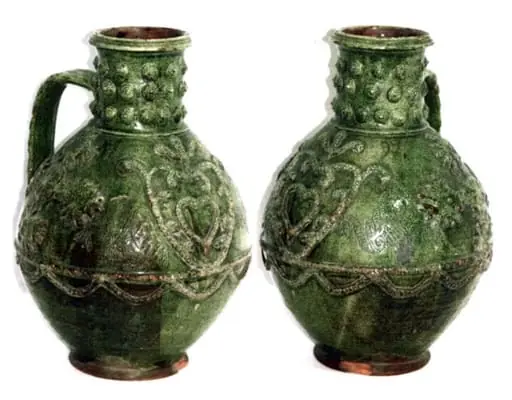 cană de bere
 blid
blid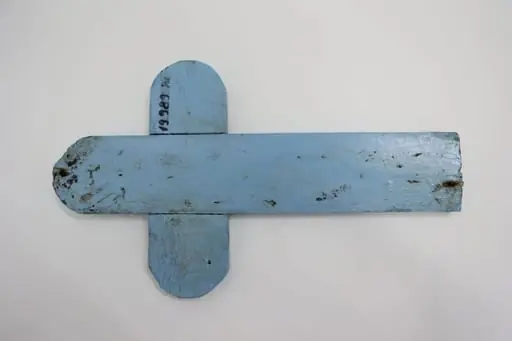 Cruce de jurământ, cu brațele ușor rotunjite, în afară de cel de jos, care este drept. Prezintă două orificii de prindere, sus și jos. În mijlocul crucii se află Iisus Hristos, ținând în mâna stângă Evanghelia și fiind încadrat, la partea superioară, la stânga și la dreapta, de doi îngeri sau sfinți. Sub Iisus se află pictată inscripția, cu caractere negre. Pe lângă inscripția de jos, mai există o mică inscripție, „N.R.”, în partea superioară. Printre îngeri și Iisus se află dispuse 7 linii ondulate, albe, ca niște șerpișori.. Cromatică: fond bleu, roșu, verde, maro, galben.
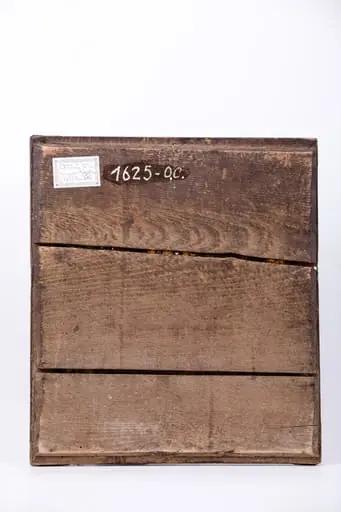 Sfânta Mare Cuvioasă Parascheva de la Iași este redată central, în picioare, având crucea în mâna dreaptă și cu mâna stângă dăruiește pace, ca printr-o atingere mângâietoare de binecuvântare, cu o ramură aurie de finic. Este îmbrăcată în veșmânt roșu vermillon, cu interiorul căptușit cu vișiniu-stacojiu, galben și verde fin-dungat cu alb. Peste maforiomul roșu, sfânta cuvioasă are coroniță și aureolă. La gât, veșmântul este închis printr-o fibulă-broșă. În registrul superior, de-a stânga și de-a dreapta, este câte un înger păzitor, serafim, în locul destinat mai precis, de obicei, Sfinților Arhangheli Mihail și Gavriil. Fondul icoanei este împărțit într-un registru superior de cer albastru regal și un registru inferior format din câmpuri de crem-bej și galben, dispuse paralel, alternativ cromatic. Compoziția este elaborată și detaliile se întrepătrund armonios cu alternanța cromatică: roșu vermillon, roșu stacojiu, galben chihlimbar, albastru regal și bleu-ciel, verde-văratic și nuanța spanac-avocado, crem, bej, negru, alb. Icoana este încadrată pe laterale de chenar decorativ lat verde, cu margine bronzie și elemente florale stilizate - ruje roșii. Este o icoană cu aer luminos, specific Țării Oltului. Inscripția din româno-chirilică se traduce Sfânta Paraschiva.
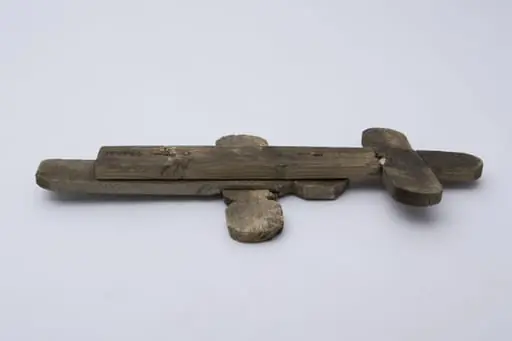 Obiect de cult confecționat din lemn de brad. Compusă din două cruci; o cruce pictată, prinsă printr-un cui metalic, cu o altă cruce nepictată, cu rol de suport. Pe fond verde se intuiește o pictură reprezentându-l pe Iisus răstignit. Text inscripționat în culoare albă. Linii diagonale dublate alcătuind un ”X” sunt trasate cu negru pe cele trei capete superioare ale crucii. Culorile sunt estompate. Capetele brațului scurt și capul brațului lung din partea superioară decupate în formă hexagonală. Cealaltă cruce prezintă extremitățile brațului scurt și extremitatea superioară a brațului lung rotunjite. Ambele cruci sunt formate din câte două bucăți de lemn, una mai lungă și cealaltă mai scurtă așezate perpendicular și asimetric una peste alta. Elementele din lemn îmbinate și prinse în cuie. Cromatică: maro; verde; cărămiziu; alb.
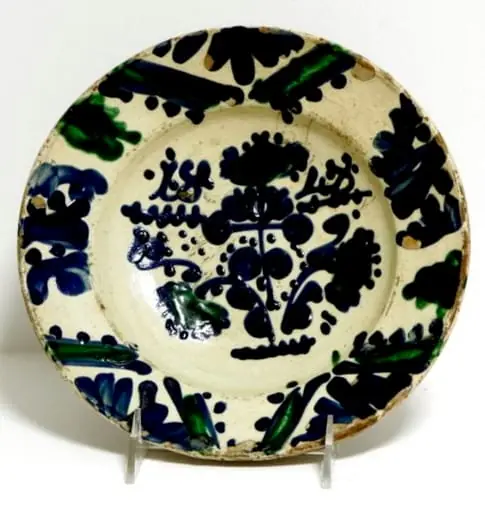
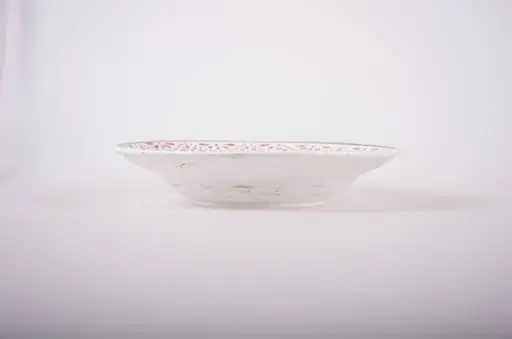 Farfurie de formă tronconică, adâncită; pe fund are găuri pentru agățare. Pe margine este decorat cu motive florale, despărțite de șiruri de puncte și încadrate de două cercuri concentrice; în centru are o cruce mare cu capete treflate încadrată de doi trandafiri (în lateral) și o floare la bază. Pe exterior are urme de pictură (probabil a fost așezată pe o altă farfurie proaspăt pictată). Cromatică: fond: alb; motive: roșu; verde; albastru; galben.
 MĂNĂSTIREA BIZANTINĂ VALADON DIN SALONIC - GRECIA
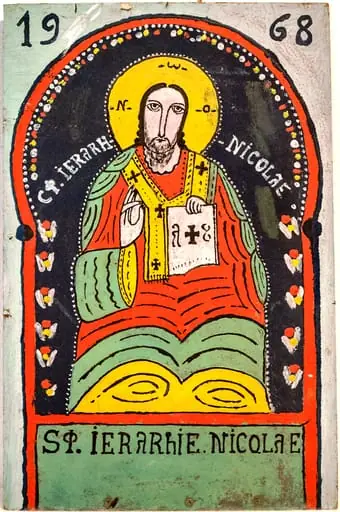 Icoana îl reprezintă pe Sfântul mare ierarh Nicolae pe tron, în veșminte de episcop, cu capul descoperit.În stânga ține Evanghelia, având însemnate literele grecești alfa și U(în loc de omega), care sunt caracteristice pentru Dumnezeu ("începutul și sfârșitul").Cu dreapta binecuvintează. Înfățișarea, părul lung, barba negre, însemnele de pe aureolă specifice nimbului cruciger arată că pictorul confundă reprezentarea sfântului Ierarh Nicolae cu cea a lui Isus Hristos. Singurul element care apare la primul este epitrahilul, veșmântul liturgic cel mai important de culoare galbenă, cu chenar dublu pe margini și cruci "patee", mai scurt decât de obicei, confuzie iarăși cu omophorul, care face parte din veșmintele arhierești. Pictura este naivă, chipul diform, totuși expresiv . Pentru veșminte meșterul folosește aceleași culori ca la celelalte icoane semnate de el aflate în colecția muzeului(roșu, vernil, galben), cu falduri trasate prin linii. Conturul personajului dublat de șiruri de puncte albe. Ancadramentul în formă de portal este inspirat din pictura rusă. Interiorul este pictat cu bleumarin, și șiruri de decorațiuni punctiforme și florale în alb, roșu și galben. Toată compoziția este încadrată de un chenar roșu, restul fundalului bleu vernil. În colțurile de sus este trecut anul 1968
 Icoaad,
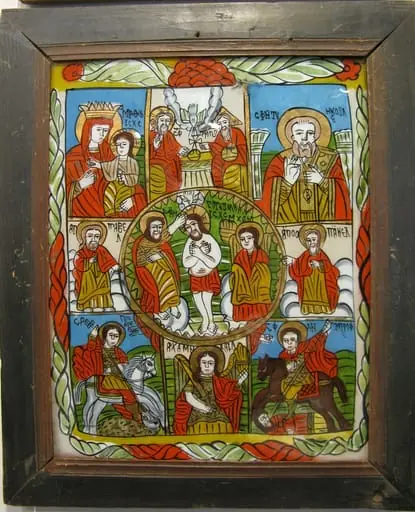
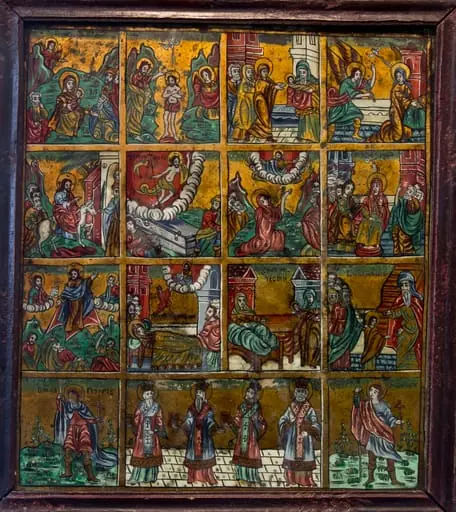 Prăznicar – Scene din viața lui Iisus
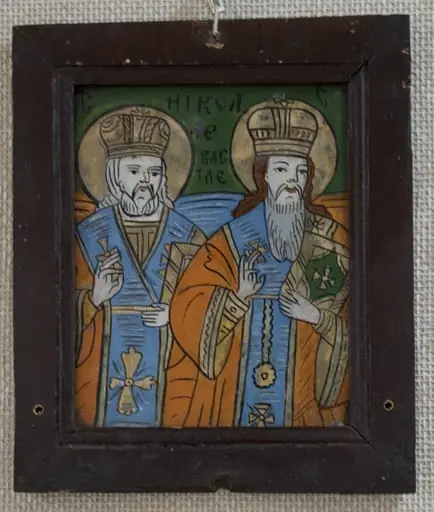 Icoana este pictată pe dosul unei bucăți de sticlă dreptunghiulară, în ax vertical; Sunt reprezentați sfinții ierarhi Nicolae al Mirelor Lichiei și Vasile cel Mare, într-o asociere mai puțin întâlnită. Cei doi sfinți sunt redați 3/4, din ușor semiprofil, privind către stânga lor. Cu dreapta binecuvintează cu degetul inelar unit cu cel mare, în stânga țin o carte sfântă la piept. Poziția este mai puțin uzitată: sfântul Nicolae este plasat puțin în spatele sf Vasile, creînd perspectivă. Ambii sunt înveșmântați cu sacosuri roșu cărămiziu cu borduri aurite, stihare orange cu mânecuțe, aurite, omofor bleu cu chenar și cruci aurite. Pe cap au mitre rotunde, înalte, bipartite. Sfântul Vasile are la gât un engolpion circular, confundat probabil cu o decorațiune. Sfântul Nicolae are barba scurtă, părul lung, alb, iar sfântul Nicolae are babrba lungă, albă și părul castaniu. Câmp verde întunecat, cu porțiuni de bleu și orange în dreptul umerilor sfinților, corespunzător culorilor veșmintelor. Inscripția este scrisă cu negru, cei doi S fiind plasați în colțuri,. Compoziția este ușor comprimată. Rama este alcătuită din patru șipci drepte, îmbinate oblic la colțuri, profilate pe o porțiune mică la interior, vopsite cu o culoare maron închis-roșcat, peste care s-a aplicat un lac lucios. Are trei găuri circulare, suscentral și lateral jos, pentru a fi prinsă oblic(mai târzii) Dosul este realizat din brad, fixate în cuie.
 Icoanghe
 Tânguirea, Maica Domnului și Iisus Hristos pe cruce
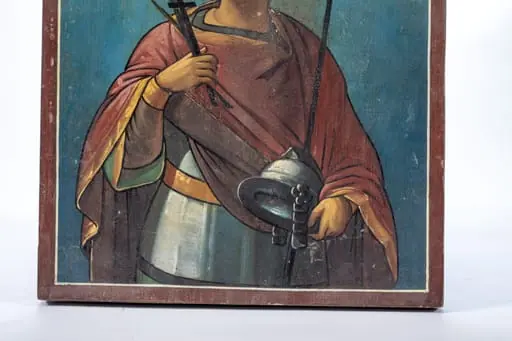 Sfântul Mucenic Gheorghe
 Casa Geometrului - Semănător - proiect colorat pentru stereopoem
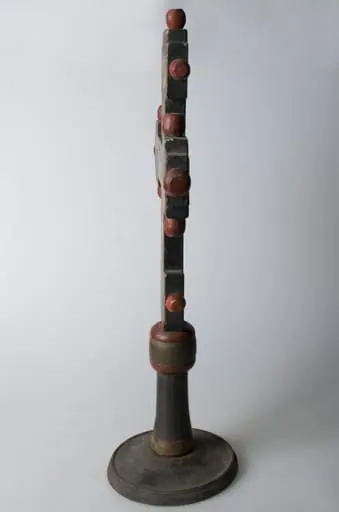 Crucea treflată este realizată din lemn de esență moale cu postament rotund, având câte trei bulbi pe cele trei brațe ale crucii și doi bulbi la bază. Aceasta are două fețe, fiind prelungită cu un mâner. Pe una dintre fețele crucii este pictată scena Botezul Domnului: central este reprezentat Iisus Hristos, iar deasupra un porumbel printre nori reprezentând Duhul Sfânt. În partea stângă este prezent Ioan Botezătorul, iar în dreapta o altă persoană. Pe cealaltă față este ilustrată scena Răstignirea Domnului: în partea centrală este Iisus Hristos, răstignit pe cruce. În partea stângă este pictată Maica Domnului, iar în partea dreaptă este pictat ucenicul iubit, Ioan. În registrul superior sunt reprezentate soarele și luna. Cromatică: alb; roșu; negru; bleumarin.
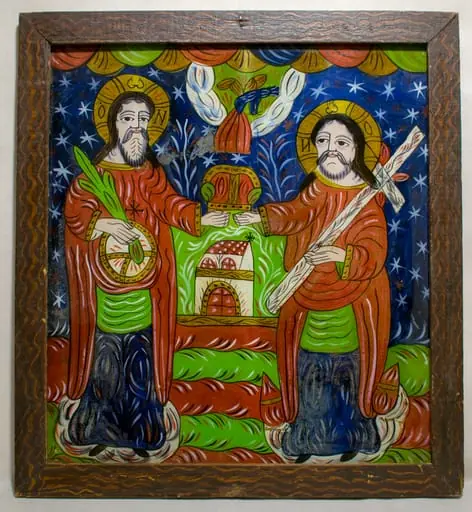 Icoana reprezintă Sfânta Treime prin cele trei ipostasuri ale aceleiași Persoane: Dumnezeu Tatăl, Isus Hristos - Fiul și Sfântul Duh, în formă de porumbel.Tratarea temei este asemănătoare cu Încoronarea Fecioarei, una dintre caracteristicile picturii de factură populară din Țara Oltului, în special a membrilor familiei Tămaș, fiind inocența cu care combină temele sau le redau într-o formă incompletă. Dumnezeu Tatăl și Isus Hristos redați în prim plan. Ei susțin cu câte o mână coroana împărătească cu care încununează Biserica, redată simbolic și miniatural în centrul picturii. Deasupra acesteia, dintr-un nor se revarsă Harul Sfântului Duh, redat sub formă de porumbel, dar nu alb. Reprezentarea primelor două ipostasuri este aproape identică, Canonic, în iconografia bizantină, Dumnezeu Tatăl, al cărui chip nimeni nu l-a văzut, este redat printr-o mână ieșind dintr-un nor. Icoana preia reprezentarea consacrată de biserica catolică. Dintre elementele semnificative care diferențiază pe Dumnezeu Tatăl de Fiul se numără crucea Calvarului pe care Hristos o ține pe umărul stâng în timp ce Tatăl ține globul pământesc și un sceptru de formă vegetală.Nimbul cruciger apare în formă rotundă la ambele persoane. Partea de sus a icoanei este ocupată de o draperie de nori. Câmpul albastru ultramarin este ornamentat cu o mulțime de stele albe. Specifică pentru Țara Oltului este adăugarea de linii, puncte, arabescuri, din rațiuni pur decorative din necesitatea umplerii spațiului rezultat prin mărirea dimensiunilor icoanei. Cromatica este variată, culorile intense: verde, grena, albastru, alb, galben, roșu, auriu. Rama este decorată cu șiruri paralele de unda apei, dispuse longitudinal.
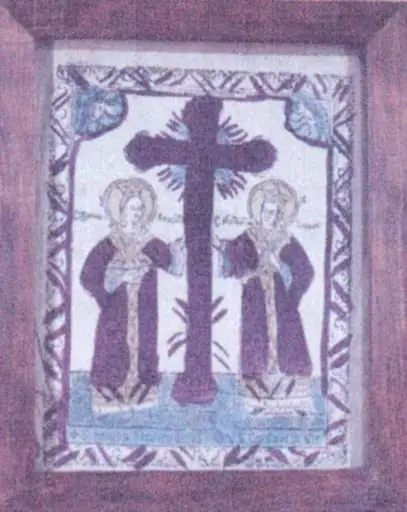 Sfinții Constantin și Elena
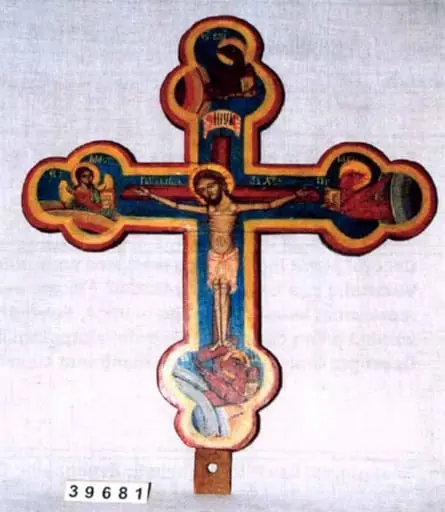 Răstignirea lui Iisus Hristos
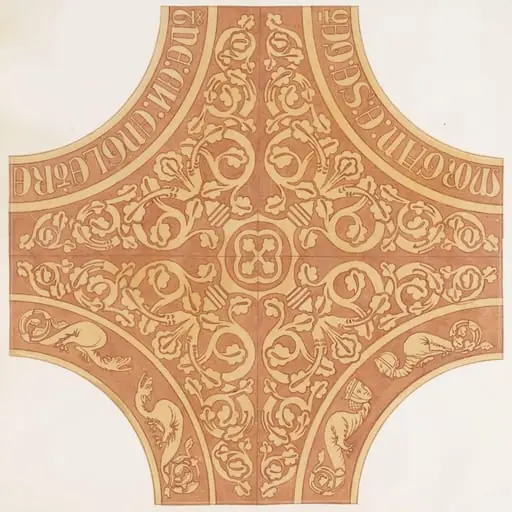 Untitled
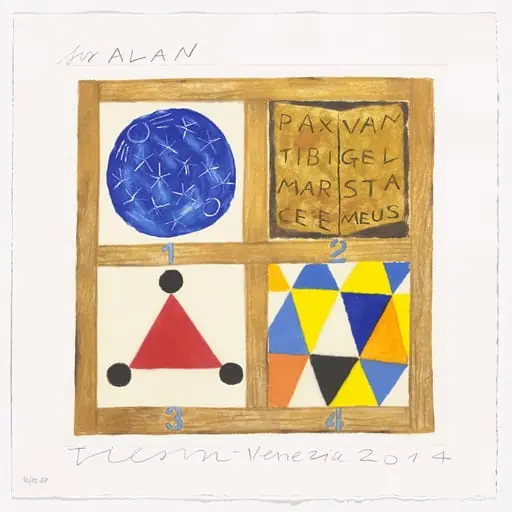 Untitled
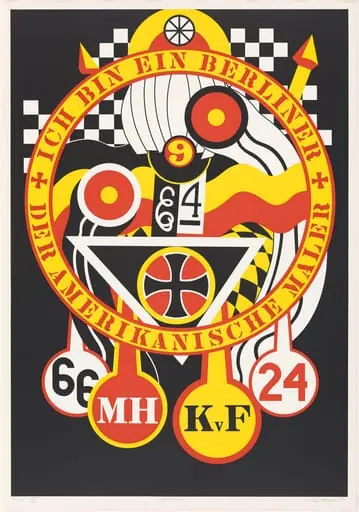 Untitled
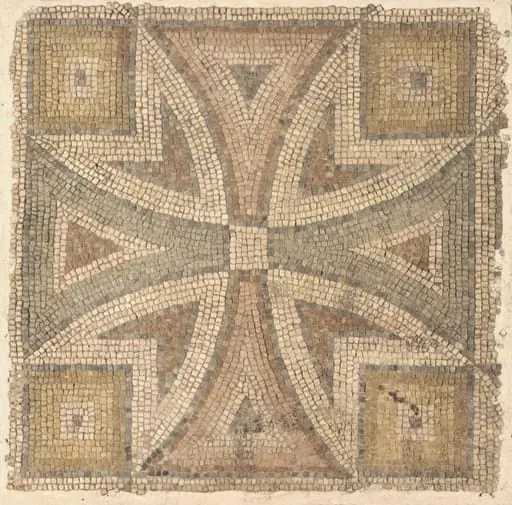 Cross
Cross
Frequently asked questions
What is Latin Cross?
Latin Cross is a subject in art. A Latin cross or crux immissa is a type of Christian cross in which the vertical beam sticks above the crossbeam, giving the cross four arms.
How many Latin Cross works does Artifact World Gallery have?
Artifact World Gallery holds 102 public-domain Latin Cross works, all free to view and download.
Who are the key Latin Cross artists?
Key Latin Cross artists in the collection include Caravaggio, Saint George Hare and Johannes Hanias.
Where can I see Latin Cross works?
Latin Cross works in the collection are held by "Dimitrie Gusti" National Village Museum, ASTRA National Museum Complex and Moldova National Museum Complex.