Artwork
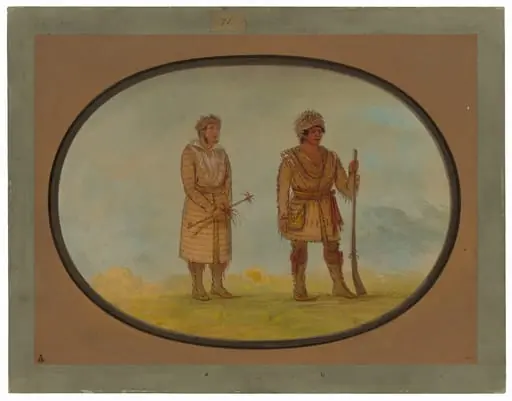
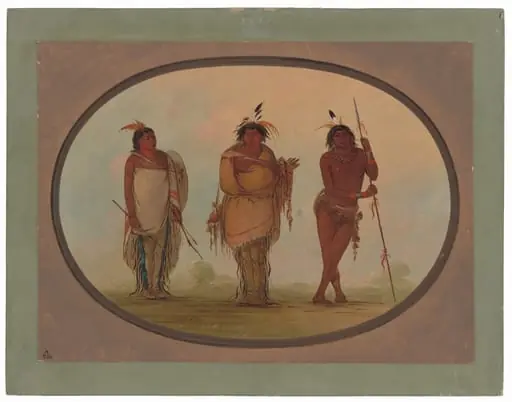
Two Choctaw Indians
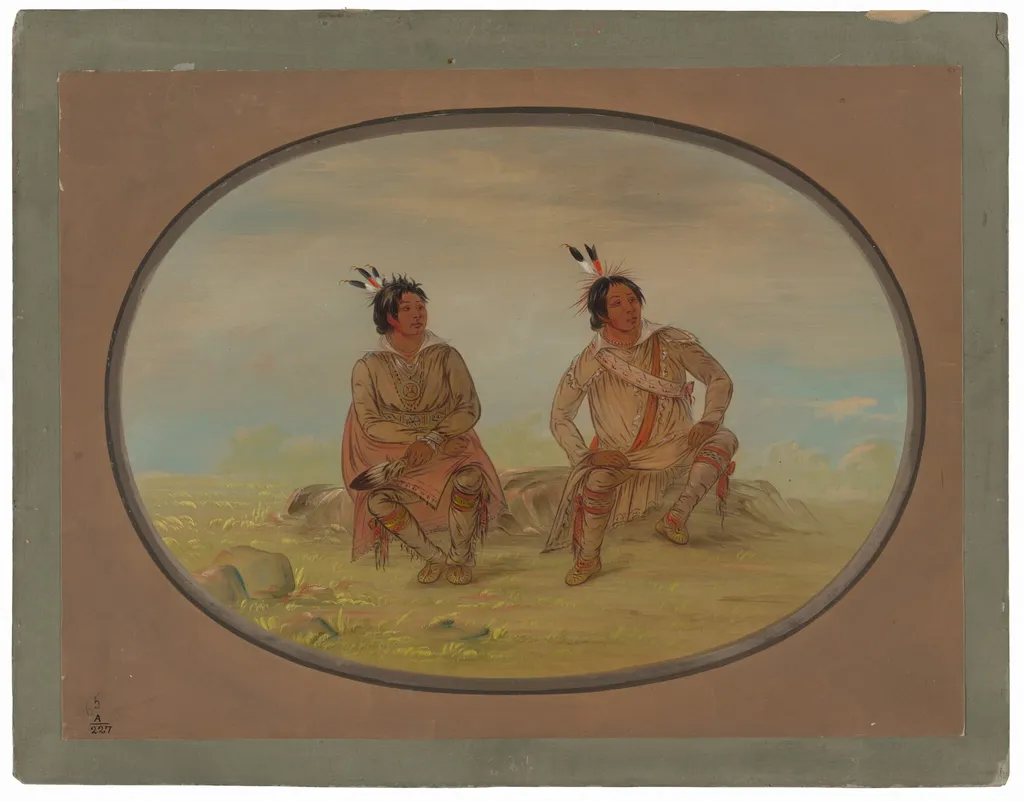
Two Choctaw Indians is an oil painting by the American Folk Art artist George Catlin. It dates from 1865 and is held in the collection of the National Gallery of Art.
About this work
Technique & Style
The painting's condition and stylistic elements align with mid-19th-century portraiture, emphasizing clarity and formal precision in depicting the figures.
George Catlin painted Two Choctaw Indians in 1861 using oil on card mounted on paperboard, classifying it as a portrait. The work measures 47.2 cm in height and 63.8 cm in width, reflecting Catlin's approach to capturing Indigenous subjects with detailed realism and compositional balance. It is currently held by the National Gallery of Art in Washington, D.C., where it was acquired through a series of transactions beginning with its creation and culminating in a 1965 gift.
The painting's condition and stylistic elements align with mid-19th-century portraiture, emphasizing clarity and formal precision in depicting the figures.
History & Provenance
Two Choctaw Indians was painted by George Catlin in 1861, executed in oil on card mounted on paperboard. The work descended from Catlin to his daughters Clara Gregory Catlin, Louise Catlin Kinney, and Elizabeth Wing Catlin. In 1912, the American Museum of Natural History purchased the painting from Elizabeth Wing Catlin.
The museum later sold it in 1959 through Kennedy Galleries in New York to Paul Mellon of Upperville, Virginia. Mellon gave the painting to the National Gallery of Art in 1965, where it remains in the collection.
Following its creation in 1861, this oil painting remained within the artist George Catlin's family, passing to his daughters upon his death. The American Museum of Natural History acquired the work from Elizabeth Wing Catlin in 1912. In 1959, the museum sold the piece through Kennedy Galleries of New York to collector Paul Mellon of Upperville, Virginia.
Mellon subsequently donated the artwork to the National Gallery of Art in Washington, D.C., in 1965, where it currently resides.
The provided sources do not contain specific inventory numbers, accession codes, or a record of public exhibitions for this work.
Overview
George Catlin’s 1865 work Two Choctaw Indians is an oil painting executed on card that has been mounted to paperboard for support. The composition presents a pair of Choctaw men seated together on a gentle slope, their figures framed against a muted sky and open landscape. The image reflects Catlin’s broader project of recording the appearance and attire of Native peoples during the mid‑nineteenth century.
Subject & Meaning
The two figures are rendered in traditional Choctaw dress, complete with feathered hair ornaments, patterned red‑and‑white garments, and beaded necklaces. One figure holds a pipe, a customary symbol of hospitality and ceremony. Their calm expressions and relaxed posture suggest a moment of peaceful observation rather than a staged portrait, offering insight into everyday life and cultural identity within the Choctaw Nation.
Own this work as a print
Artist & collection

Artist
George Catlin ( KAT-lin; July 26, 1796 – December 23, 1872) was an American lawyer, painter, author, and traveler, who specialized in portraits of Native Americans in the American frontier.

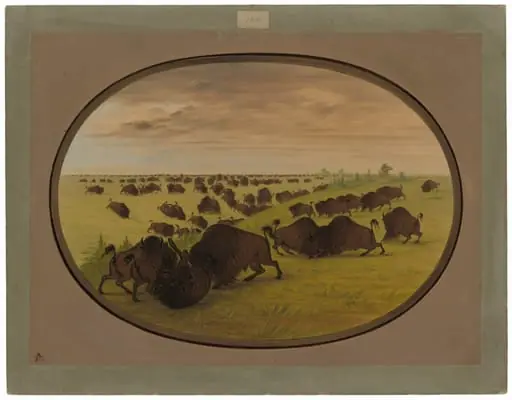 Bulls Fighting
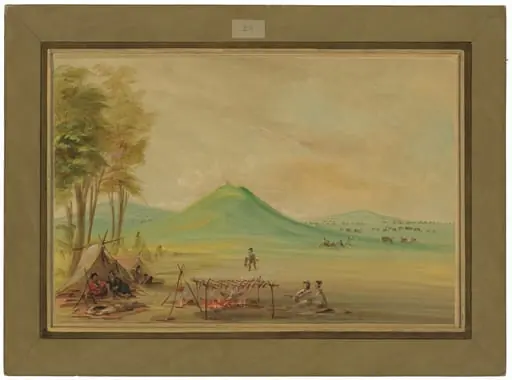 Expedition Encamped on a Texas Prairie. April 1686
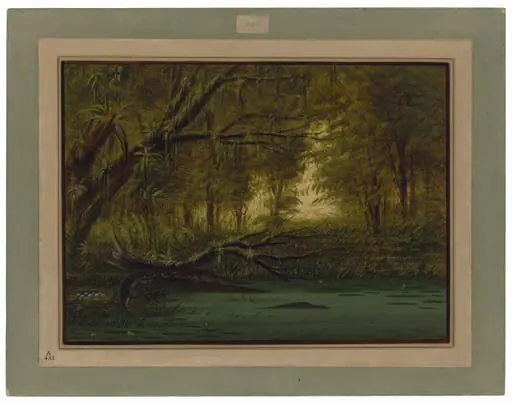 An Alligator's Nest
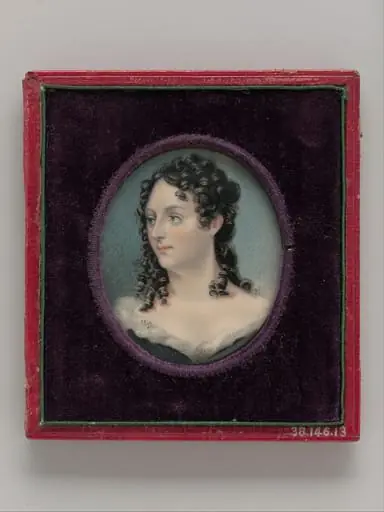 Mrs. George Catlin (Clara Bartlet Gregory)
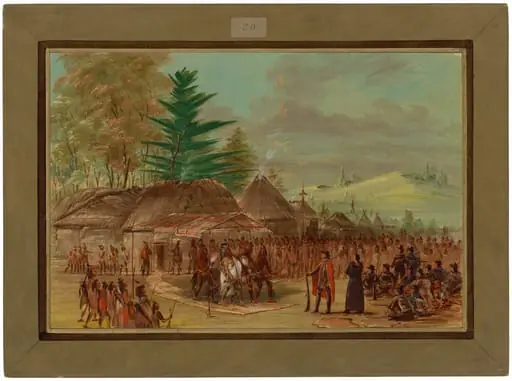 Chief of the Taensa Indians Receiving La Salle. March 20, 1682
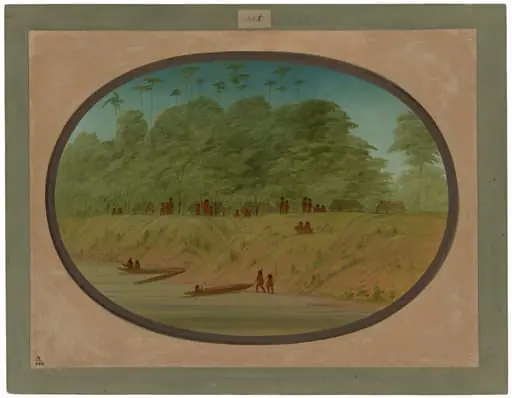 A Small Village - Payaguas Indians
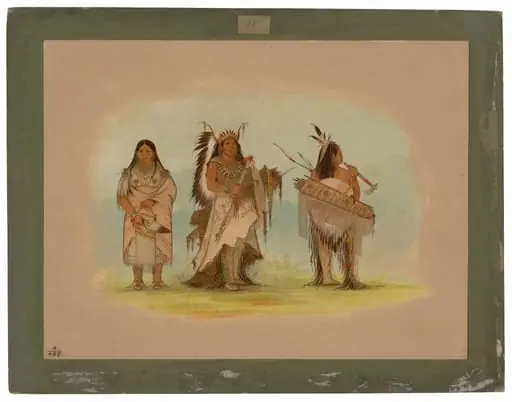 Omaha Chief, His Wife, and a Warrior
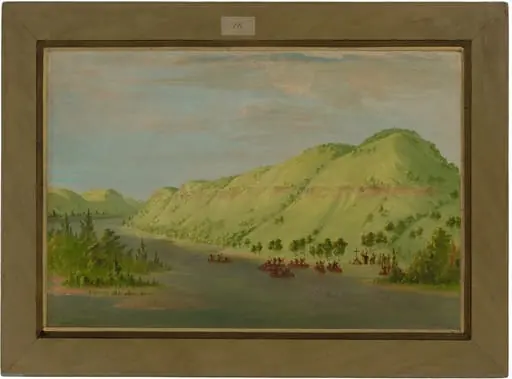 Father Hennepin Leaving the Mississippi to Join La Salle. May 8, 1680