Artwork
Epes Sargent
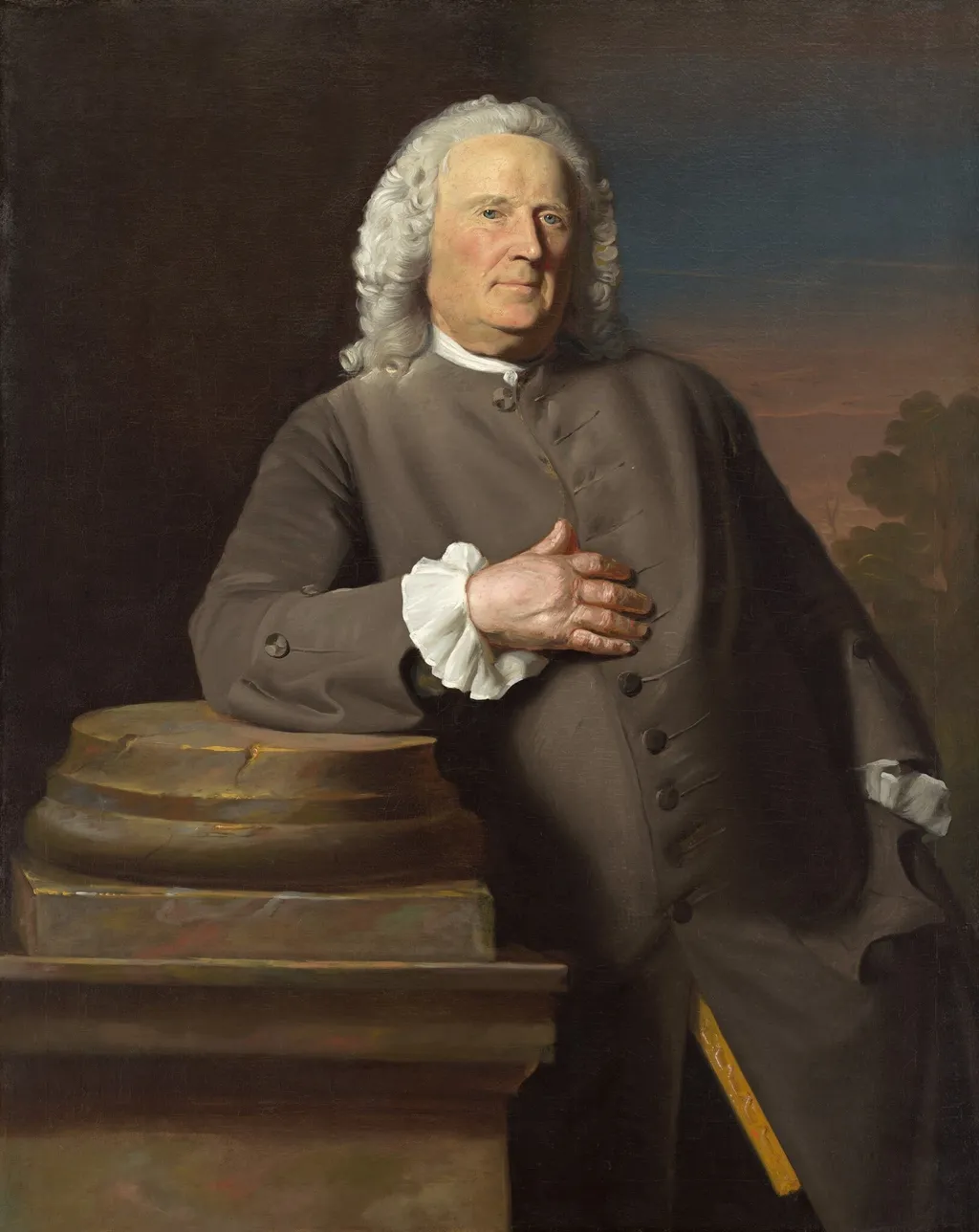
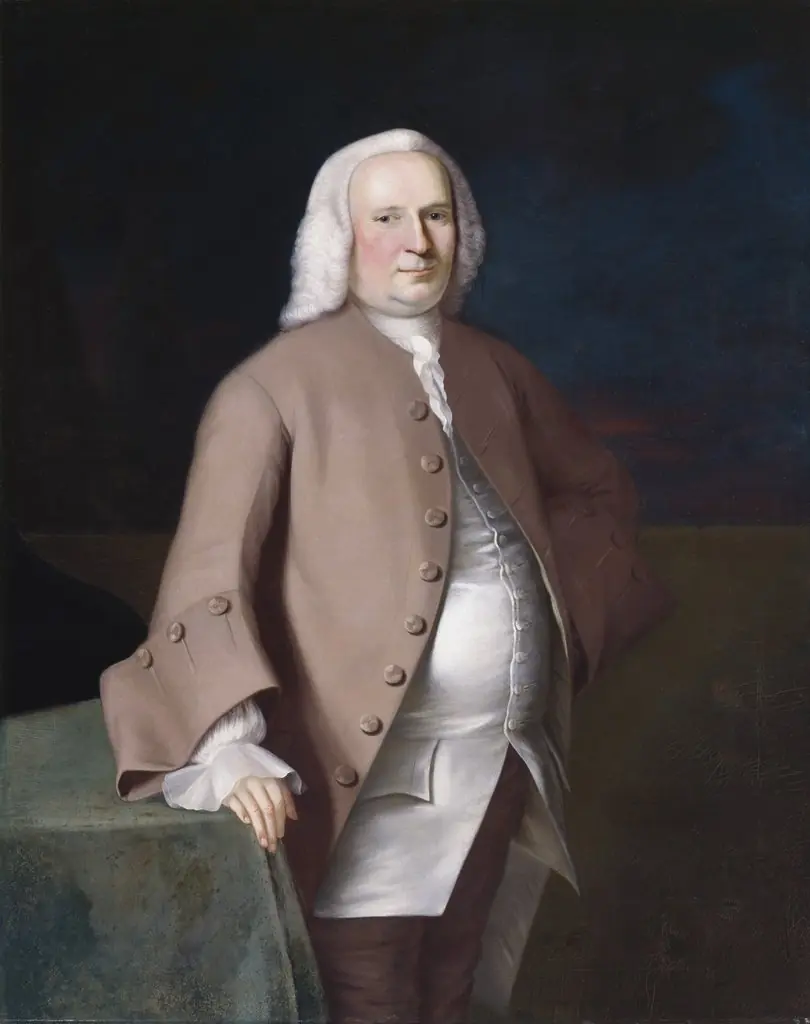
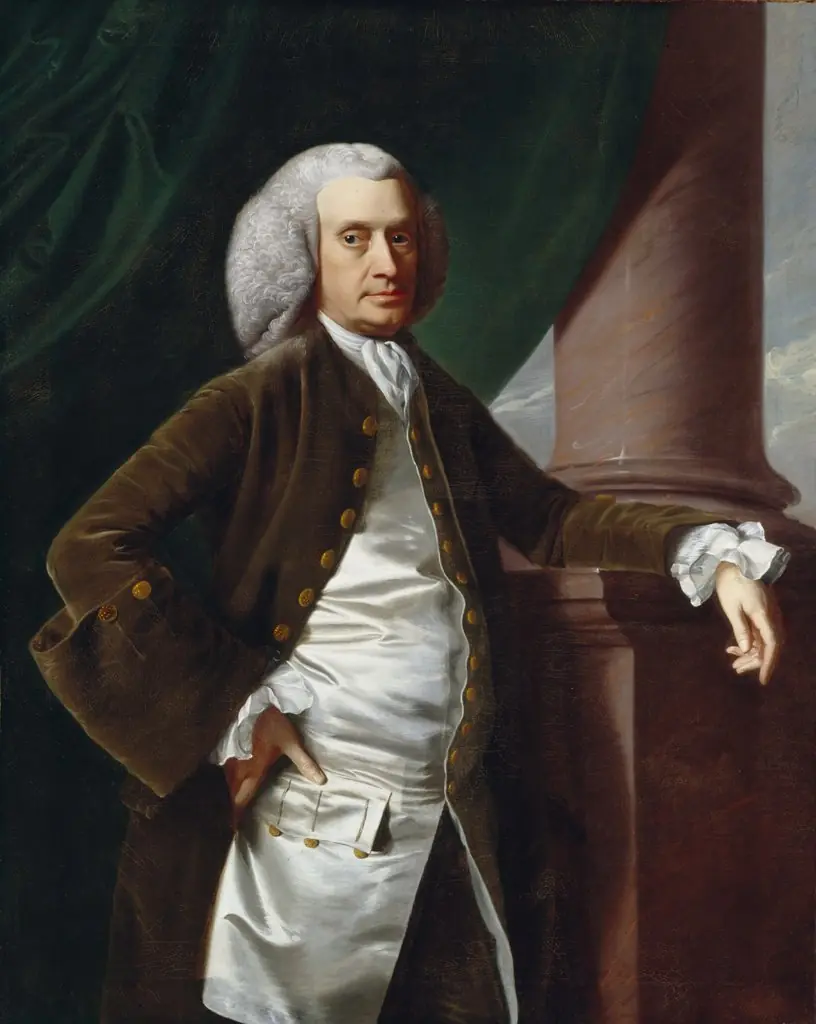
Epes Sargent is an oil painting by the Rococo painting artist John Singleton Copley. It dates from 1760 and is held in the collection of the National Gallery of Art.
About this work
John Singleton Copley painted Epes Sargent in 1760, seated and facing forward in 18th-century dress. Close attention to the face and clothing, and the play of light and shadow, gives the figure real weight and presence.
Technique & Style
The handling is smooth and controlled, with delicate modeling of the face and hands to convey the sitter's refined features and dignified bearing.
The portrait of Epes Sargent is rendered in oil on canvas by John Singleton Copley in 1760, employing a restrained, luminous palette and precise linear definition characteristic of Copley's early mature style. The handling is smooth and controlled, with delicate modeling of the face and hands to convey the sitter's refined features and dignified bearing. The composition emphasizes verticality and symmetry, with Sargent positioned centrally against a neutral, dark background that directs attention to his expressive gaze and the tactile rendering of his lace cravat and coat.
History & Provenance
The portrait of Epes Sargent was painted by John Singleton Copley in 1760. The work descended through the sitter's direct line: from Epes Sargent to his son Epes (1748–1822), then to his daughter Esther, who married John Dixwell. Their son, John James Dixwell, owned the painting by at least 1863, when it was lent to an exhibition in Boston.
It passed to his daughter Caroline Dixwell Clements, then to her daughter Anna Clements Knauth, and finally to Anna's son Arnold Whitman Knauth II. The painting was sold in 1958 through Milch Galleries and Hirschl and Adler Galleries before being acquired in 1959 by the National Gallery of Art, Washington, D.C., with funds from the Avalon Foundation. The National Gallery holds the work under accession number 1959.5.1.
Legacy
After its creation in 1760, the portrait of Epes Sargent remained in the Sargent-Dixwell family for several generations before entering the public sphere through an 1863 exhibition at the Boston Atheneum. It passed through the New York dealers Hirschl and Adler in the late 1950s and was purchased by the National Gallery of Art in 1959, where it has since been part of the museum's permanent collection. Its provenance illustrates the trajectory of colonial-era portraiture from private inheritance to institutional preservation.
Overview
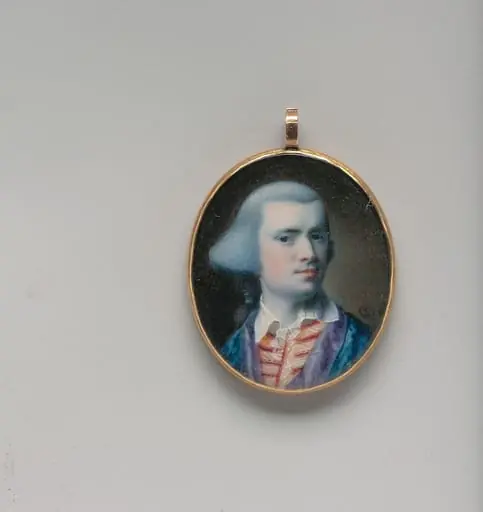
Painted in 1760 by John Singleton Copley, the portrait of Epes Sargent depicts the subject seated in a three-quarter view against a dark, neutral background. Sargent is shown wearing a blue coat with gold embroidery, a white waistcoat, and a white cravat, reflecting the fashionable attire of a wealthy Boston merchant in the mid-18th century. His right hand rests on the arm of a wooden chair, while his left hand holds a letter, suggesting his engagement in commerce or correspondence.
Copley renders the textures of the fabric and the sitter's facial features with meticulous precision, utilizing a restrained palette to emphasize the subject's dignity and status. Executed during the height of Copley's colonial career in Boston, this work exemplifies his ability to combine British portraiture traditions with a distinct American realism. The painting captures the emerging confidence of the American merchant class prior to the Revolutionary War, establishing Copley as the preeminent portraitist of the era.
The composition focuses entirely on the individual, avoiding allegorical elements in favor of direct psychological presence and material detail.
Subject & Meaning
The painting features Epes Sargent, a figure dressed in typical 18th-century attire, positioned in a chair and gazing directly forward. This direct address to the viewer is characteristic of many colonial American portraits, which served not only to record an individual's appearance but also to convey their social standing and presence within their community. The work functions as a lasting visual record of its sitter.
Own this work as a print
Artist & collection

Artist
John Singleton Copley (July 3, 1738 – September 9, 1815) was an American-born British painter active in both the Thirteen Colonies and England.