Artwork
A Brook in a Clearing (possibly "Brook, Valley of Fontcouverte; Study")
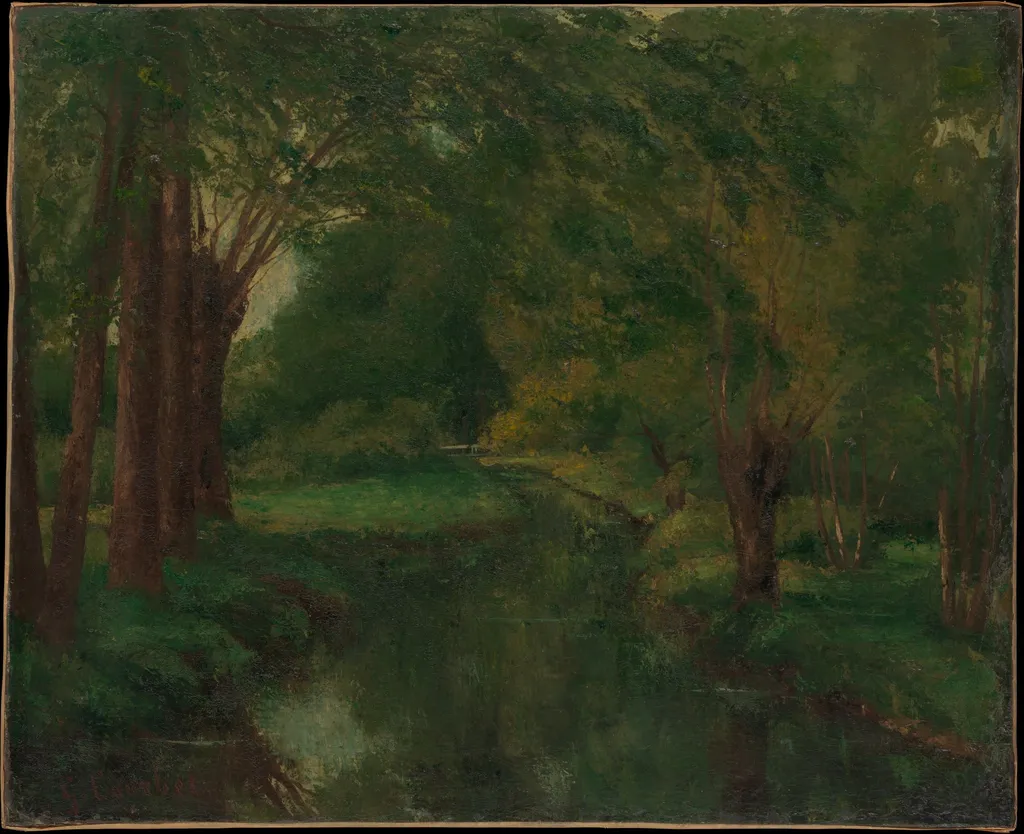
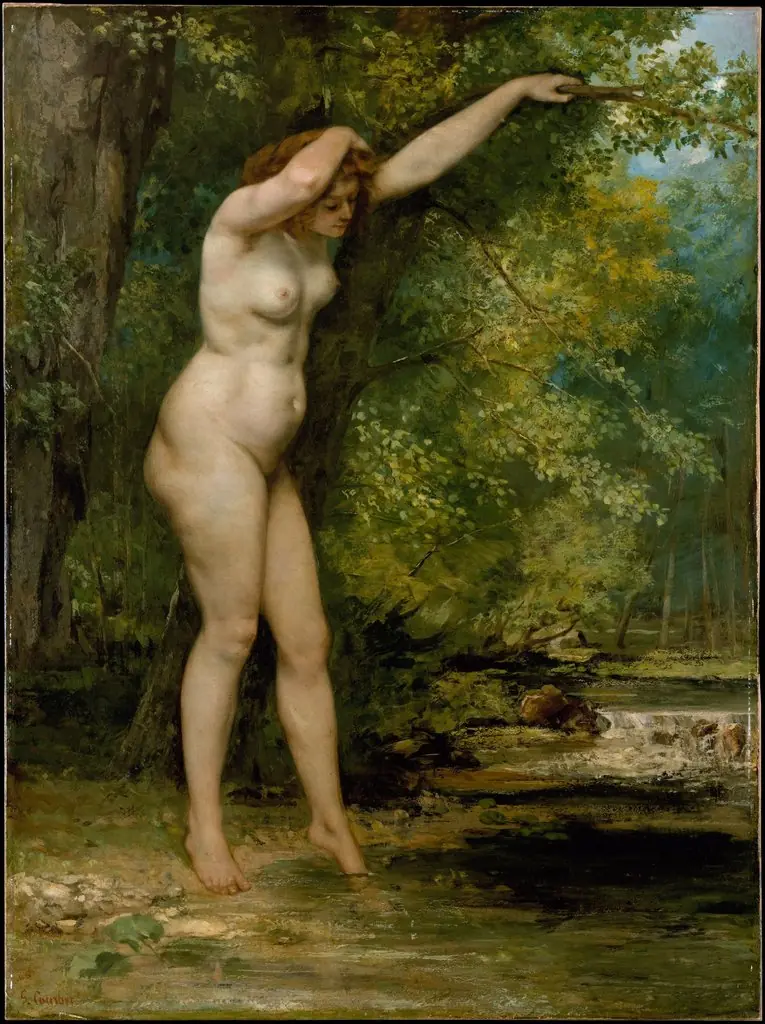
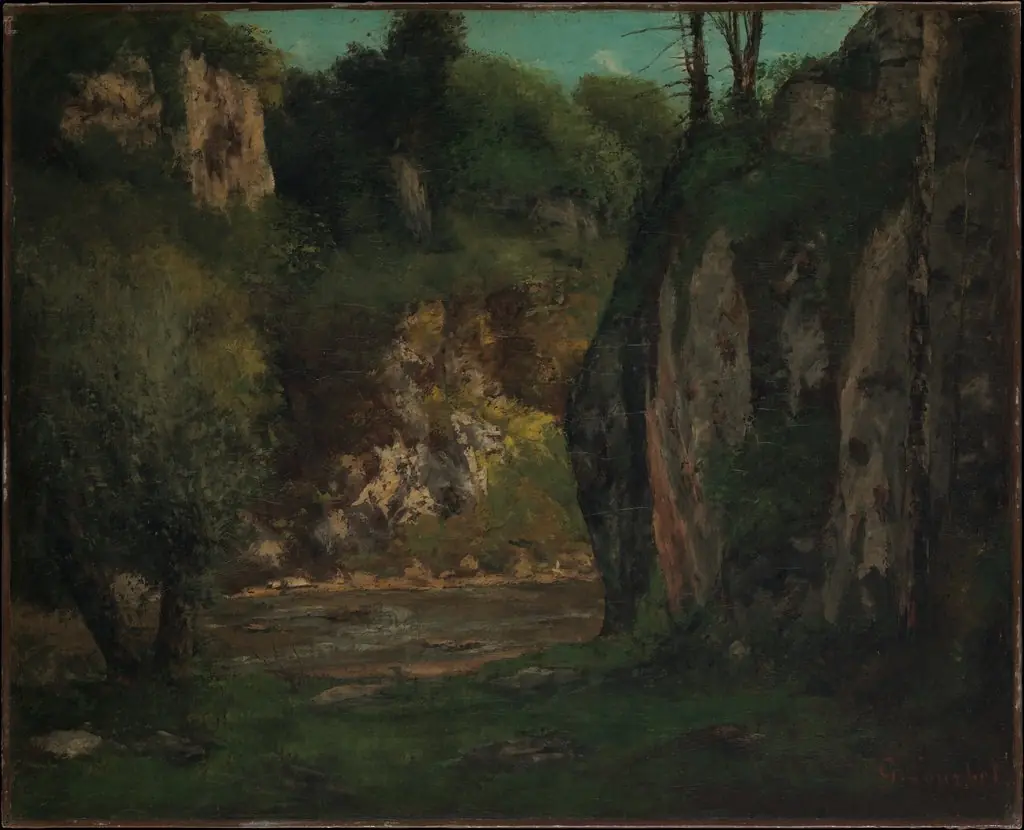
A Brook in a Clearing (possibly "Brook, Valley of Fontcouverte; Study") is an oil painting by the Realist artist Gustave Courbet. It dates from 1862 and is held in the collection of the Metropolitan Museum of Art.
About this work
Subject & Meaning
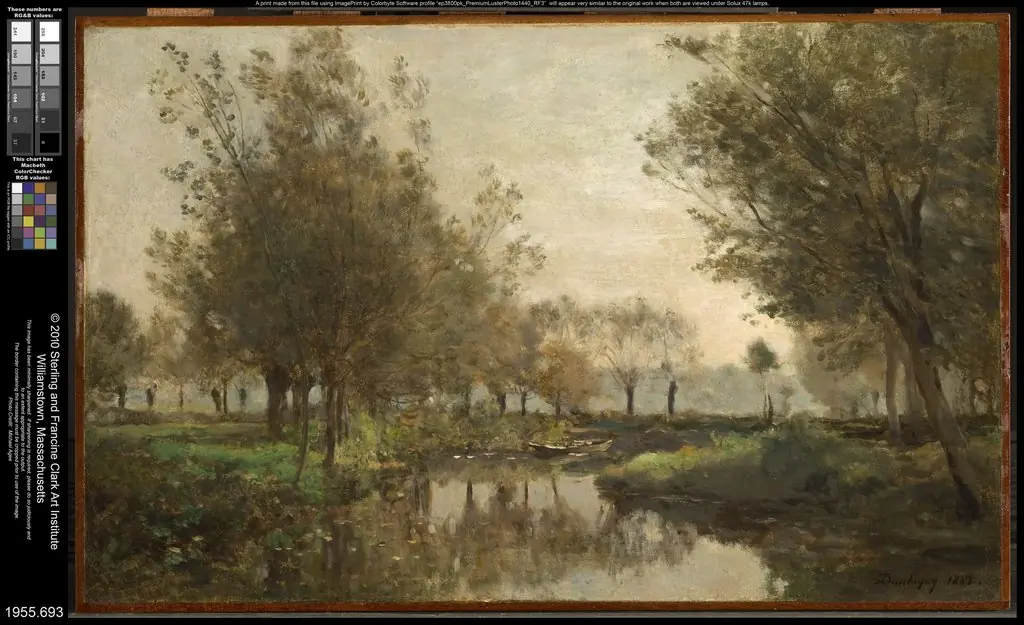
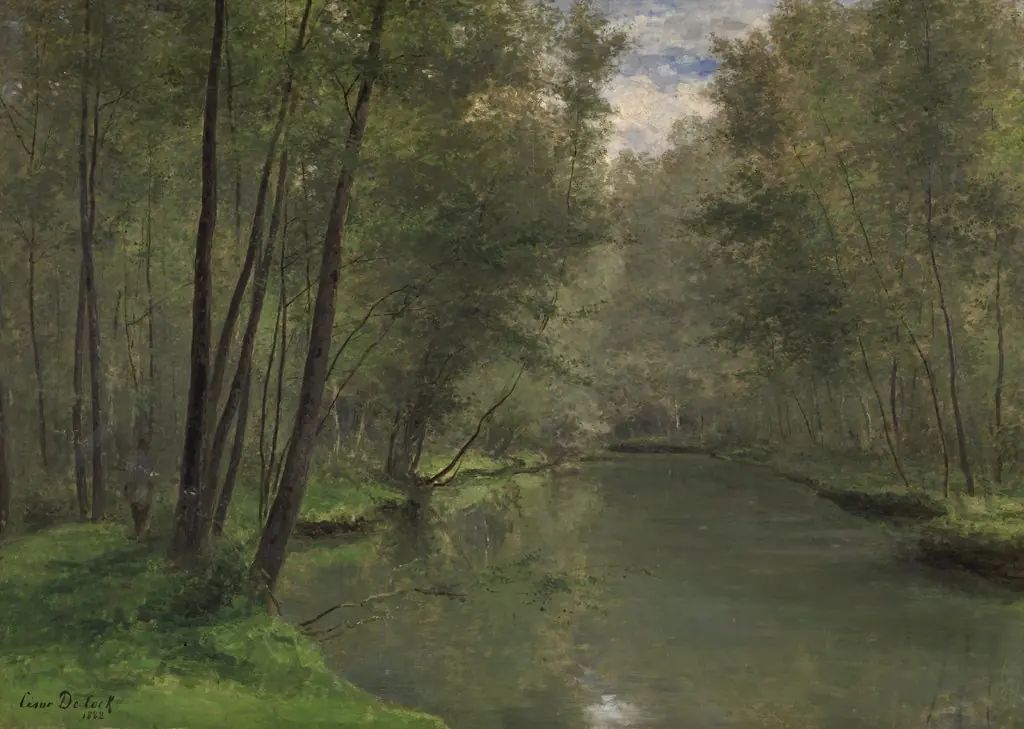
The work titled A Brook in a Clearing (also recorded as Brook, Valley of Fontcouverte; Study) presents a modest, unembellished view of a small stream winding through a lightly wooded clearing. According to the documented description, the scene includes a tree, a forest edge and a flowing stream, elements that Courbet rendered with meticulous naturalism typical of his realist landscapes. By foregrounding a quiet brook amid surrounding trees, the painting underscores the vitality of water as a life‑giving force and conveys a sense of undisturbed natural order, reflecting the artist’s interest in portraying everyday elements of the environment without idealisation.
Technique & Style
Courbet's handling of the medium depicts a natural scene featuring trees, a forest setting, and a stream.
Executed in 1862, A Brook in a Clearing is an oil painting on canvas by Gustave Courbet. The work measures 52.7 by 64.8 centimeters and belongs to the landscape genre. Courbet's handling of the medium depicts a natural scene featuring trees, a forest setting, and a stream.
The physical support consists of canvas, which serves as the foundation for the oil paint application. As a landscape study from the mid-19th century, the piece captures specific elements of the forest environment, including water and vegetation, consistent with Courbet's realist approach to nature during this period.
History & Provenance
The work was painted in 1862 by Gustave Courbet, who titled it "A Brook in a Clearing" (also recorded as "Brook, Valley of Fontcouverte; Study"). Executed in oil on canvas, the landscape measures roughly 52.7 × 64.8 cm and depicts a stream winding through a forested clearing. Courbet created the piece independently, without evidence of a specific commission.
After its execution, the painting entered the collection of the Metropolitan Museum of Art, where it remains today as part of the museum’s holdings. Its provenance therefore traces from the artist’s studio in 1862 to its acquisition and display by the Met.
The work is held by the Metropolitan Museum of Art, New York, where it is recorded as accession number 67.223. It was first publicly exhibited in 1967 as part of the Museum’s centennial reinstallation of its European paintings, and it has appeared in subsequent thematic reinstallations of nineteenth-century French landscape painting at the Metropolitan, including the 2019 reinstallation “Public Parks, Private Gardens: Paris to Provence.”
Overview
Gustave Courbet, a prominent figure in 19th-century French Realism, created A Brook in a Clearing in 1862. This oil painting captures a secluded forest landscape, reflecting the artist's dedication to portraying the natural world without idealization. The work embodies Courbet's departure from conventional artistic practices, focusing instead on the tangible reality of an ordinary scene.
Context
As a leading proponent of Realism, Gustave Courbet actively challenged the prevailing artistic norms of his era, including the emotionalism of Romanticism and the idealized subjects favored by academic art. A Brook in a Clearing stands as an example of his dedication to depicting scenes from direct observation, grounding his art in the tangible world rather than historical narratives or mythological themes.
Legacy
Courbet's innovative approach to painting, characterized by his emphasis on direct observation and the materiality of paint, had a profound impact on subsequent art movements. His rejection of traditional subject matter and academic polish paved the way for artists who would further explore the depiction of modern life and perception, notably influencing the development of Impressionism and even later, Cubism.
Own this work as a print
Artist & collection
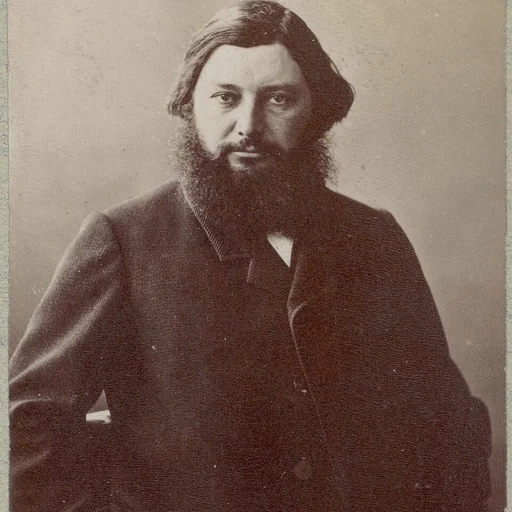
Artist
Jean Désiré Gustave Courbet (UK: KOOR-bay; US: koor-BAY; French:; 10 June 1819 – 31 December 1877) was a French painter who led the Realism movement in 19th-century French painting.