Artwork
Hearing
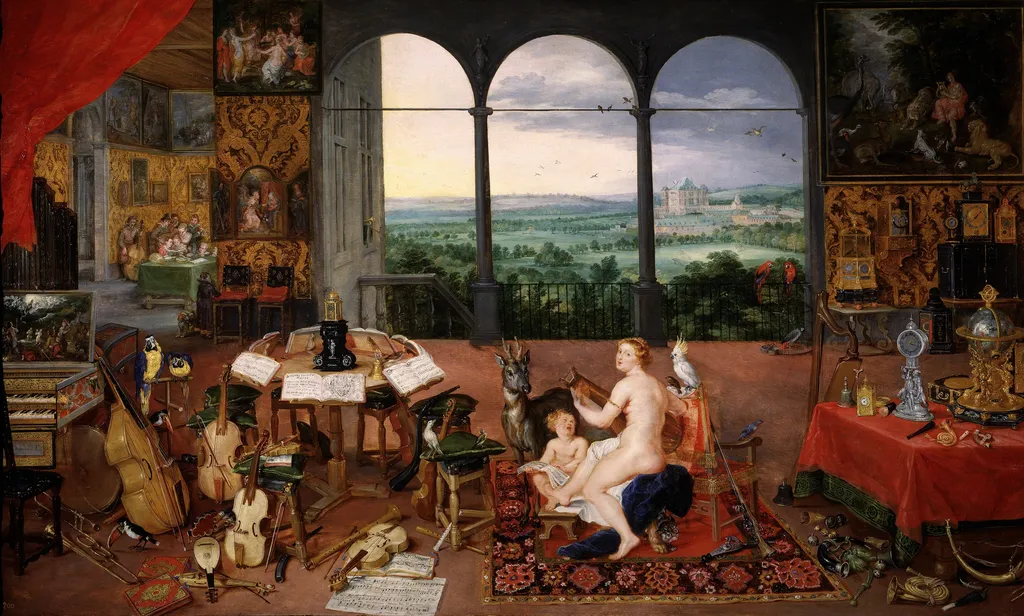
Hearing is an oil painting by the Flemish Baroque painting artist Peter Paul Rubens. It dates from 1617 and is held in the collection of the Museo del Prado.
About this work
Subject & Meaning
Clocks, birds and other sound‑emitting objects populate the scene, and the background juxtaposes popular and cultivated music ensembles.
The painting is an allegory of the sense of hearing, showing a rich assortment of musical instruments, sheet music, lute, lira da braccio, vihuela, recorder, flute, organ, sackbut and trumpet, alongside books, sculptures and a quail call. A central female figure, identified either as Venus or the muse Euterpe, plays a lute while a cherub looks on. Symbolic contrasts appear: a rifle alludes to war and Mars, opposing the love associated with Venus, while a stag underscores acute hearing and a cat at her feet sharpens its own sense.
Clocks, birds and other sound‑emitting objects populate the scene, and the background juxtaposes popular and cultivated music ensembles. Mythological references, such as the Concert of the Gods, Orpheus taming beasts, and the Annunciation to the Shepherds, further reinforce the theme of auditory perception and divine harmony.
Technique & Style
Executed circa 1617–1618, this allegorical work is an oil painting on a wooden panel measuring approximately 64–65 cm in height and 107–109.5 cm in width. The piece represents a collaborative effort between Jan Brueghel the Elder and Peter Paul Rubens, with the composition densely populated by musical instruments, sheet music, and sound-emitting objects like clocks and firearms to illustrate the sense of hearing. Stylistically, the painting juxtaposes popular and cultivated music, featuring a central female figure, identified as either Venus or Euterpe, playing a lute.
The background incorporates urban and palatial settings, while symbolic elements such as a deer and a cat emphasize acute auditory perception. The surface also depicts painted representations of other artworks, including scenes of Orpheus and divine concerts, integrating various layers of visual and auditory symbolism within a single frame.
History & Provenance
The allegorical painting Hearing (also known as El sentido del oído) was created in 1617–1618 as part of a five-work series, The Five Senses, by Jan Brueghel the Elder in collaboration with Peter Paul Rubens. Commissioned under the patronage of Archduke Albert of Austria and Infanta Isabella Clara Eugenia, the series initially belonged to Wolfgang Wilhelm, Duke of Palatinate-Neuburg. By 1634, the works were in the possession of the Cardinal-Infante Ferdinand, who gifted them to the Duke of Medina de las Torres; they were subsequently presented to King Philip IV of Spain.
The painting survived the 1734 Alcázar fire and, according to 18th-century inventories of 1747 and 1772, was housed between the Palacio del Buen Retiro and the Palacio Nuevo before entering the collection of the Museo del Prado in Madrid, where it remains today.
Context
Hearing belongs to a five-part allegorical series known as The Five Senses, produced jointly by Peter Paul Rubens and Jan Brueghel the Elder around 1617–1618 under the patronage of Albert of Austria and Isabella Clara Eugenia. The series has been interpreted as a reflection of the political, economic, and moral climate of the period, characterized by a rising bourgeoisie, moral openness, and anthropocentrism evident in contemporary literature and the arts. Mythological elements unify the canvases, including a recurring semi-nude Venus figure symbolizing eroticism and ecstasy, set against urban and palatial backgrounds derived from the archducal residences.
The work engages broader musical and literary traditions, referencing madrigals by Peter Philips, depictions of Orpheus taming beasts, the Concert of the Gods, and the Annunciation to the Shepherds, the latter famously set in Handel's Messiah. The painting's iconography situates it within a wider discourse on sound, music, and the senses that extended into operatic and musical composition from Monteverdi through Gluck to Offenbach.
Overview
The oil painting titled "Hearing" depicts a vibrant domestic scene centered on a woman and child. She sits on the floor, cradling an infant while playing a small harp amidst a profusion of musical instruments and sheet music. The room, though cluttered with various objects, conveys an atmosphere of sound and artistic engagement. A window in the background offers a glimpse of an expansive landscape, contrasting with the intimate interior.
Own this work as a print
Artist & collection
Artist
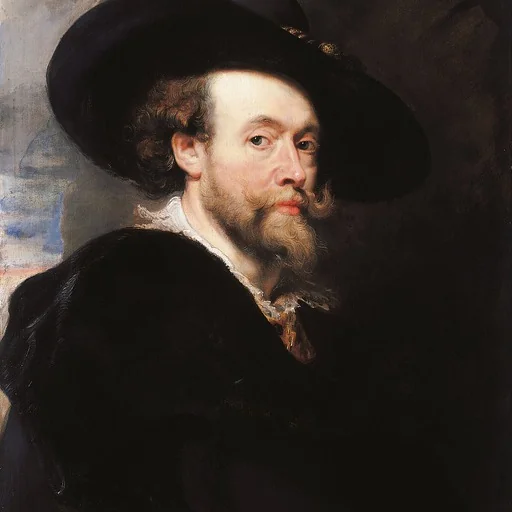
Sir Peter Paul Rubens ( ROO-bənz; Dutch:; 28 June 1577 – 30 May 1640) was a Flemish artist and diplomat.

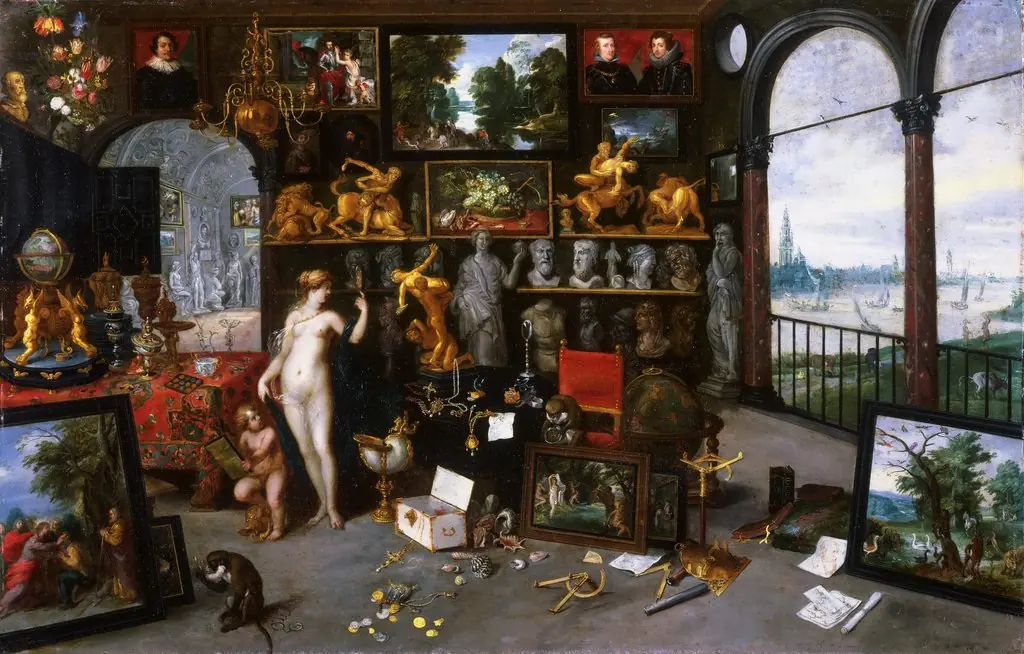 Allegory of Sight (Venus and Cupid in a Picture Gallery)
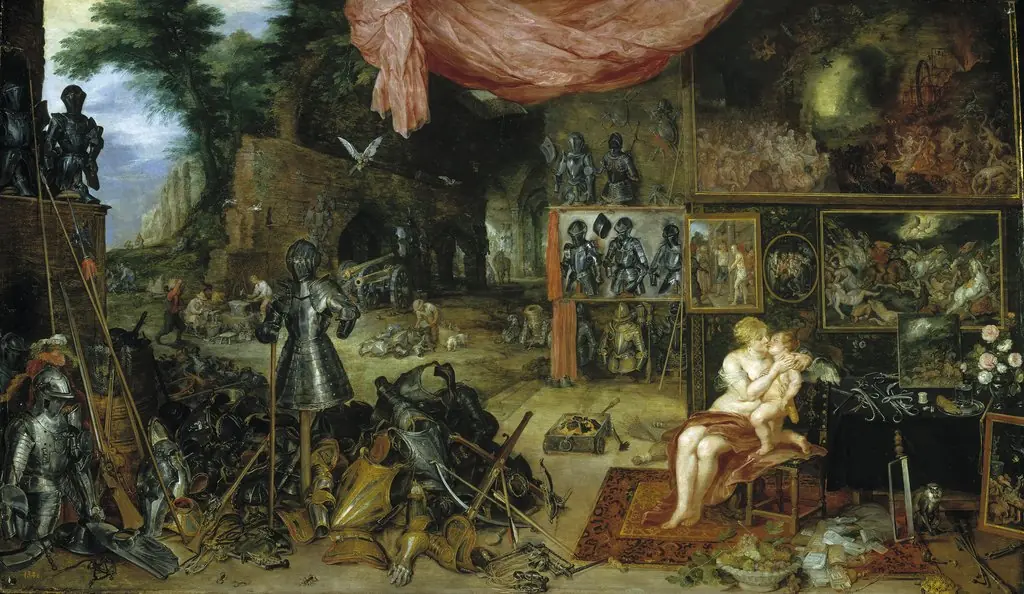 Touch
Touch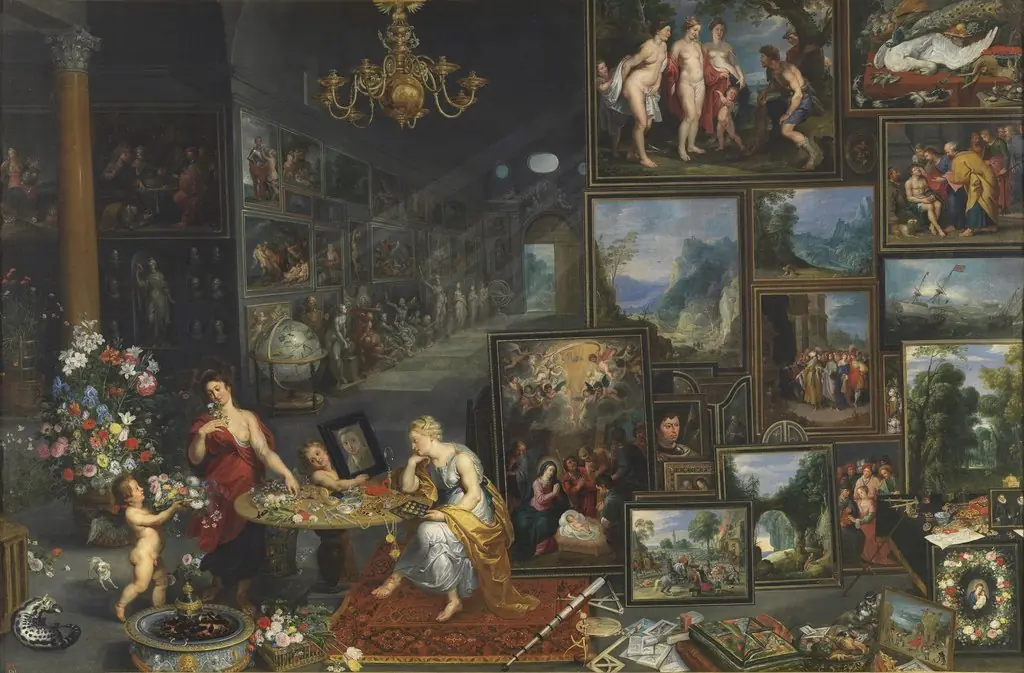 Allegory of Sight and Smell
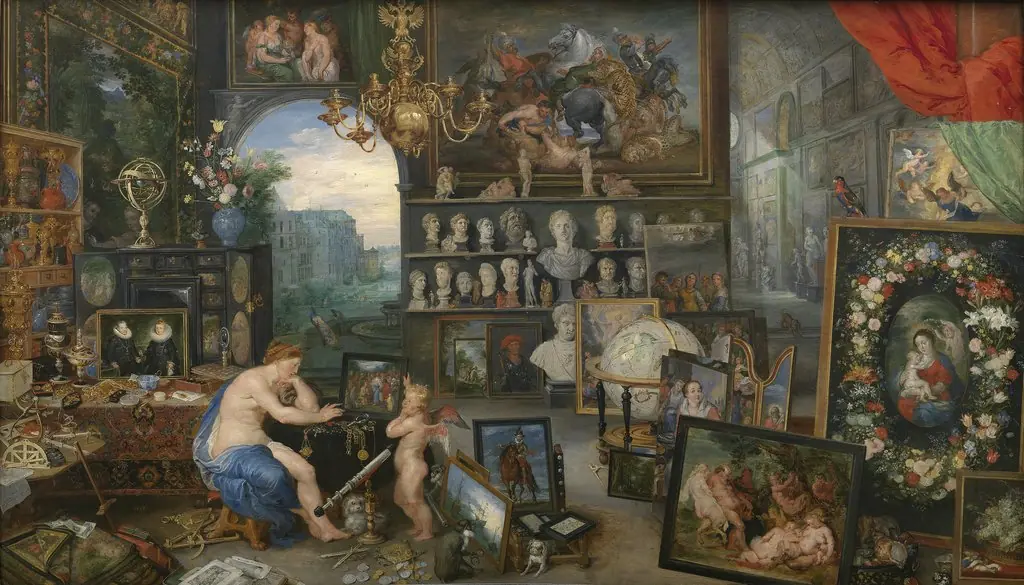 The Sense of Sight
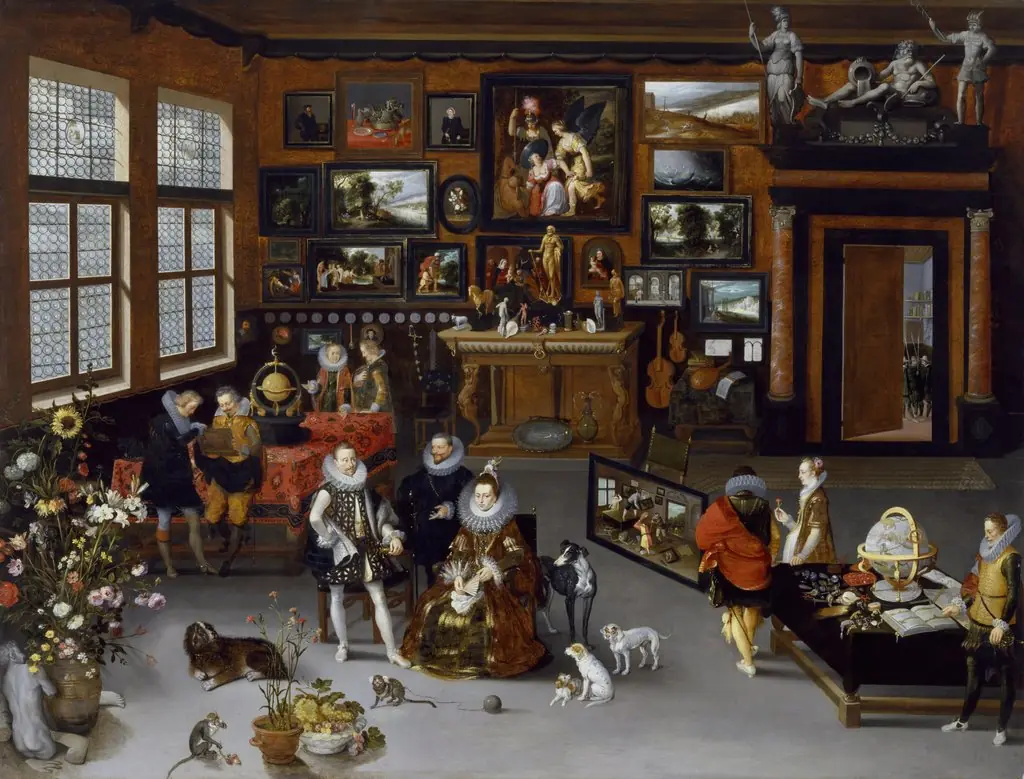 The Archdukes Albert and Isabella Visiting a Collector's Cabinet
 The Parable of the Wise and the Foolish Virgins
 The Parable of the Wise and the Foolish Virgins
 The Sciences and Arts
 Spring Landscape (Representation of the month of May)
 Herbstlandschaft (September)
 The Collection of paintings of Sebastiaan Leerse
- The Senses of Hearing, Touch and Taste