Artwork
Charity: A Sketch
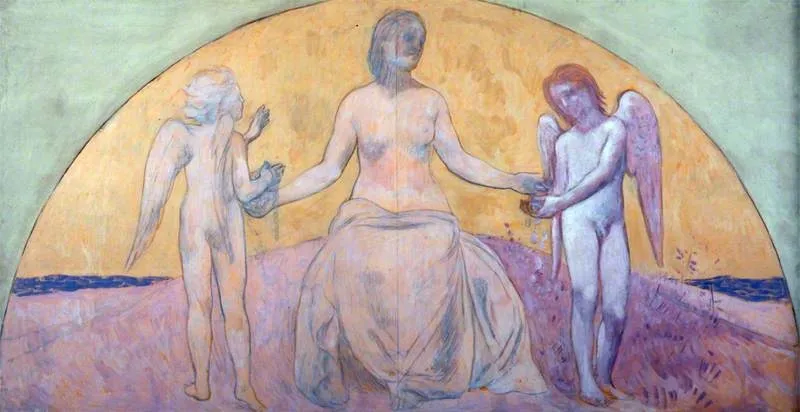
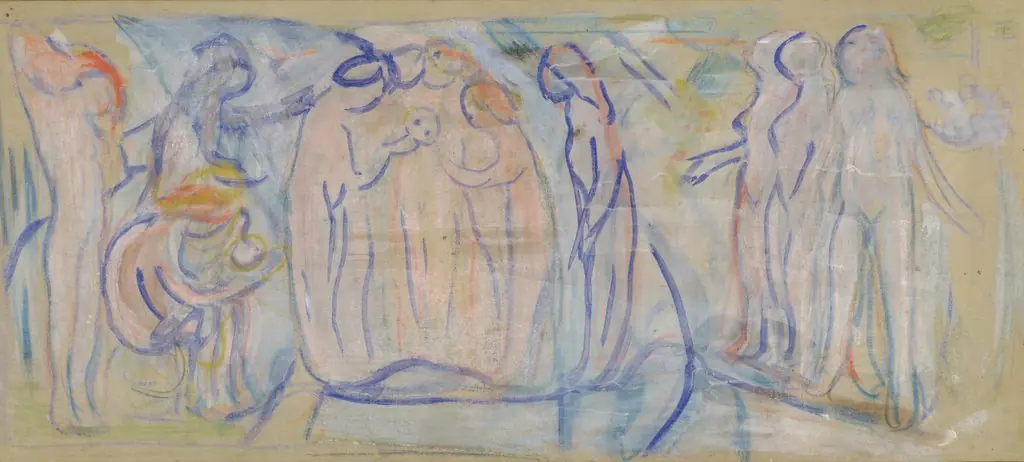
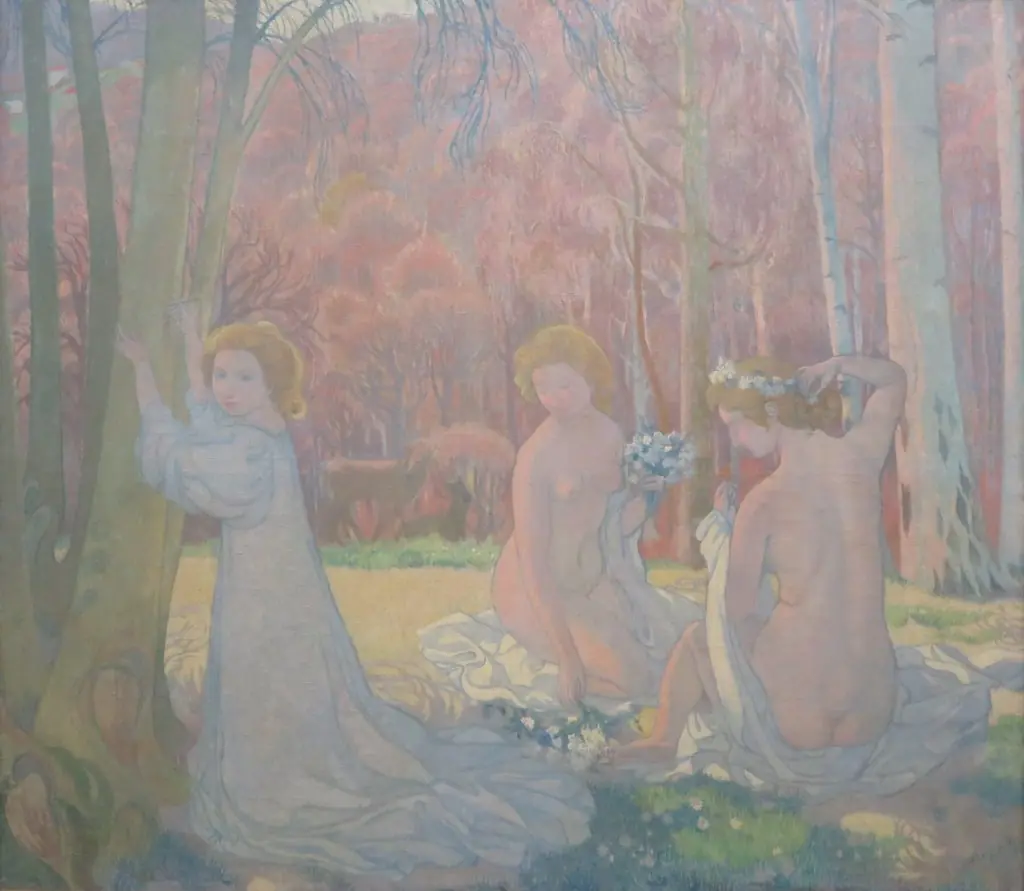
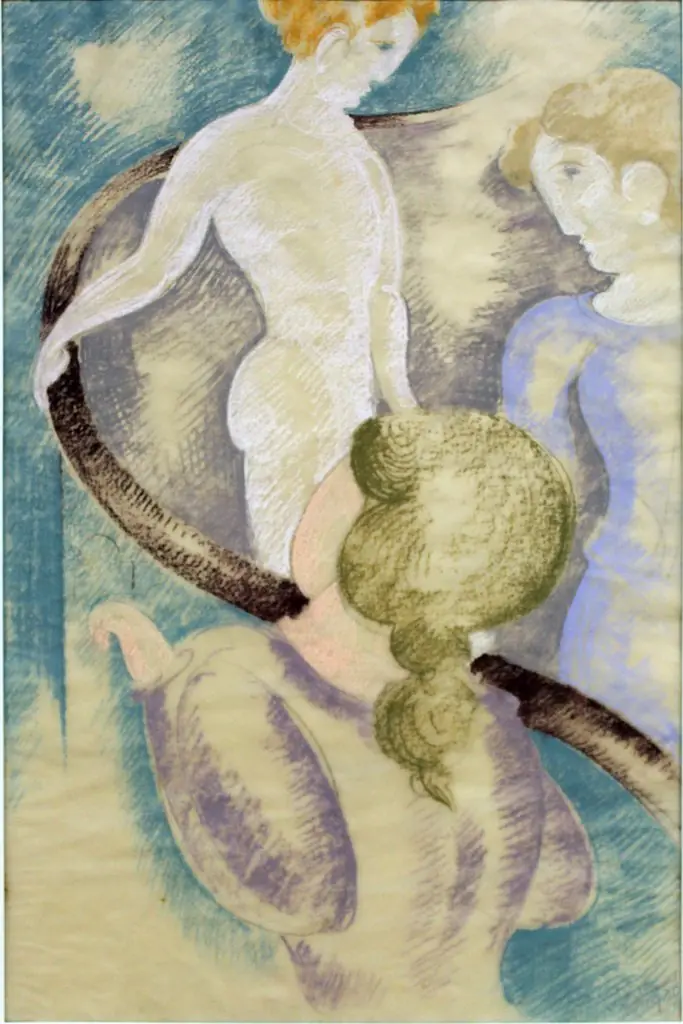
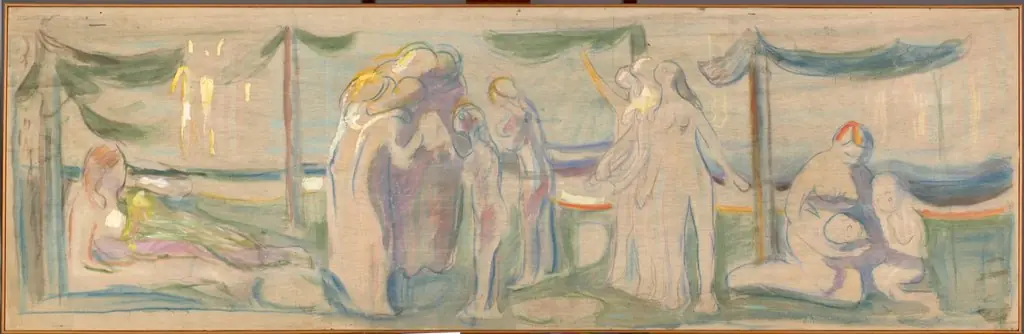
Charity: A Sketch is an oil painting by the Post-Impressionist artist Pierre Puvis de Chavannes. It dates from 1896 and is held in the collection of the Victoria and Albert Museum.
About this work
Overview
Created in 1896, Charity: A Sketch is an oil painting by Pierre Puvis de Chavannes, a central figure in late 19th-century French art.
Created in 1896, Charity: A Sketch is an oil painting by Pierre Puvis de Chavannes, a central figure in late 19th-century French art. Though labeled a sketch, it functions as a refined study for larger mural projects. The work exemplifies Puvis’s preference for quiet, symbolic compositions over dramatic narrative, aligning with his broader commitment to a restrained, decorative aesthetic that countered the volatility of Impressionism.
Subject & Meaning
The painting presents Charity as a serene, nude female figure, arms outstretched, flanked by two winged, nude attendants. The figures form a static, hieratic group, evoking classical ideals of virtue and divine benevolence. The absence of clothing and the presence of wings suggest spiritual rather than earthly charity, while the calm demeanor of all figures conveys a sense of timeless, unshakable compassion, stripped of sentimentality.
Technique & Style
Puvis employed thin, translucent layers of oil paint to achieve a soft, luminous surface, favoring muted pastels, lavender, pale yellow, and rose, over bold contrasts. Forms are simplified with clear contours, reducing anatomical detail to essential shapes. The background’s circular yellow field and undulating purple base create a flattened, stage-like space, emphasizing symbolic presence over spatial realism, a hallmark of his decorative approach.
History & Provenance
Painted during Puvis’s tenure as president of the Société Nationale des Beaux-Arts, the work reflects his institutional influence on French artistic standards. It was likely conceived as a preparatory piece for a public commission, possibly linked to civic or religious themes. Its intimate scale and unfinished appearance suggest it was not intended for public display but as a personal exploration of form and allegory.
Context
In the context of the French Third Republic, Puvis’s work offered an alternative to both academic rigidity and avant-garde fragmentation. His allegorical style, rooted in Renaissance and Byzantine traditions, appealed to state patrons seeking art that conveyed moral stability. Charity: A Sketch embodies this mission, using ancient motifs to articulate contemporary ideals of civic virtue without overt political messaging.
Legacy
Though less celebrated than his murals, this sketch reveals the precision of Puvis’s symbolic language, influencing later Symbolists and early modernists drawn to his economy of form. His approach to allegory, devoid of theatricality, helped redefine how moral themes could be rendered in modern painting, leaving a quiet but enduring mark on artists seeking spiritual depth through restraint.
Artist & collection
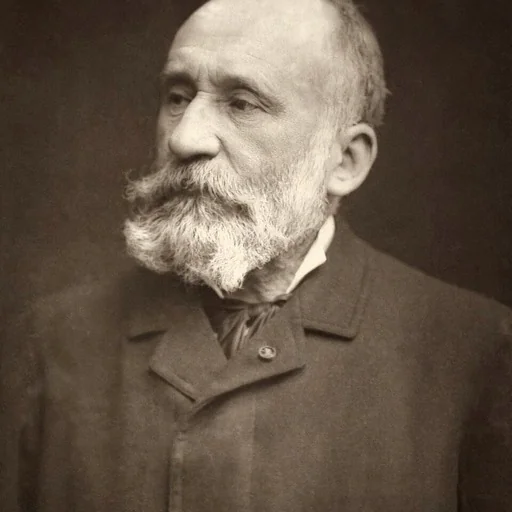
Artist
Pierre Puvis de Chavannes (French pronunciation:; 14 December 1824 – 24 October 1898) was a French painter known for his mural painting, who came to be known as "the painter for France".