Artwork
David and Goliath
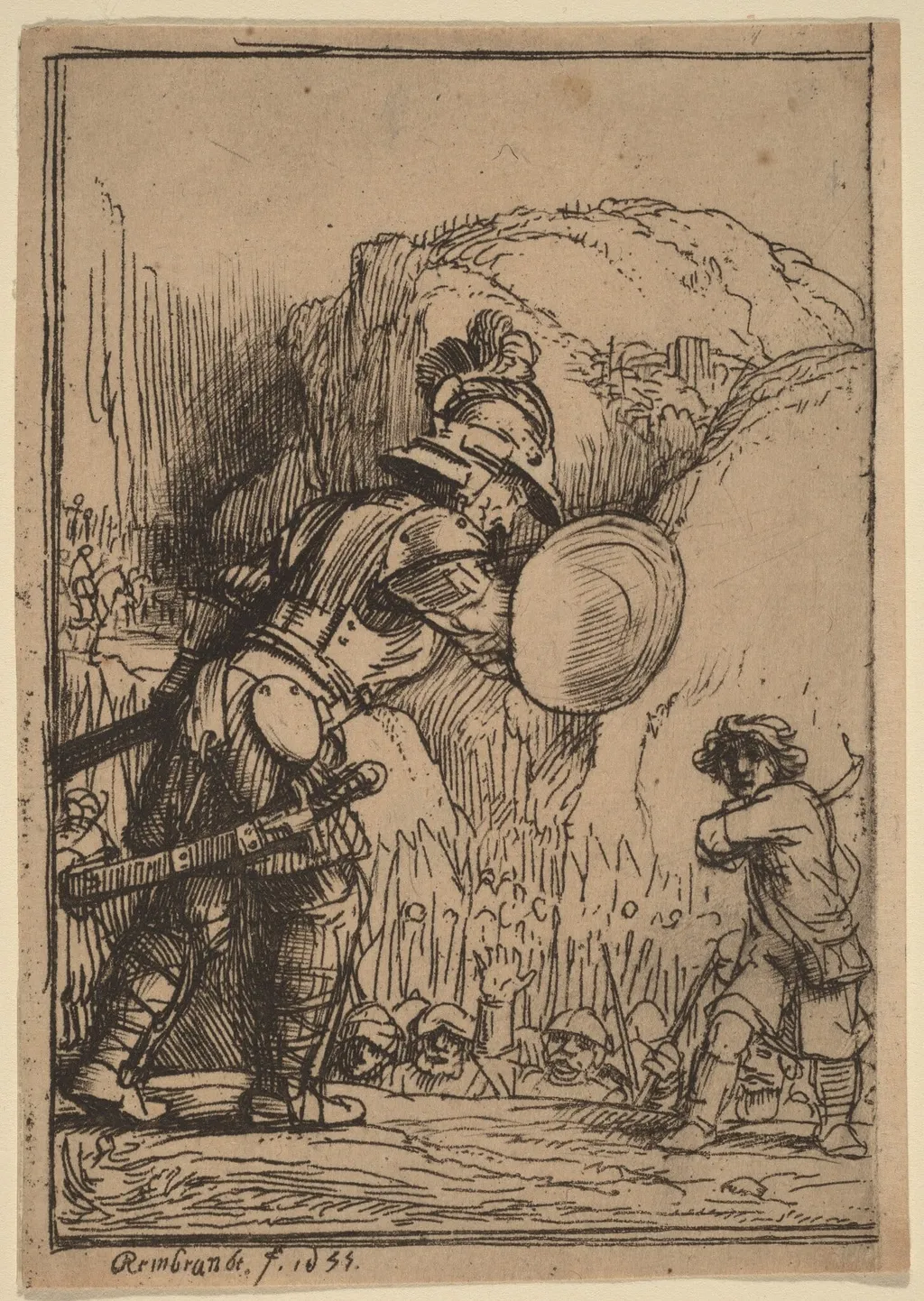
David and Goliath is an ink print by the Baroque artist Rembrandt van Rijn. It dates from 1655 and is held in the collection of the National Gallery of Art.
- Inscription
- Inscribed:in plate, in margin below image at bottom left: Rembrandt. f. 1655; verso, at center, in black ink: P. Mariette 1698
About this work
Overview
Created in 1655, this print by Rembrandt van Rijn depicts the biblical confrontation between David and Goliath using etching, burin, and drypoint techniques.
Created in 1655, this print by Rembrandt van Rijn depicts the biblical confrontation between David and Goliath using etching, burin, and drypoint techniques. The composition centers on two opposing figures: a heavily armored giant and a lightly clad youth. Background figures lie scattered, suggesting the aftermath of battle.
The work is not a literal narrative but a psychological study of power and vulnerability rendered through ink on paper.
Subject & Meaning
The scene illustrates the moment before David’s decisive strike, emphasizing contrast over action. Goliath’s bulk and rigid armor convey brute force, while David’s lean posture and focused gaze suggest agility and resolve. The absence of dramatic violence shifts focus to moral tension: the triumph of the underestimated over the seemingly invincible. The simplicity of their faces universalizes the story beyond its biblical roots.
Technique & Style
Rembrandt employed fine etched lines and deep drypoint burrs to create texture in Goliath’s armor and the ground, while leaving facial features deliberately understated. The contrast between intricate metallic surfaces and soft, blurred contours enhances emotional ambiguity. The use of burin adds sharpness to outlines, and the drypoint’s rich, velvety blacks deepen shadows, guiding the viewer’s eye through the tension between figures.
History & Provenance
This print was produced during Rembrandt’s mature period, when he increasingly turned to biblical themes and intimate, psychologically charged subjects. It circulated among collectors and artists in the Netherlands, valued for its technical innovation and emotional depth. No record of a specific early owner survives, but its presence in major European collections by the 18th century confirms its early recognition among connoisseurs.
Context
In mid-17th century Amsterdam, biblical stories were popular subjects for prints, serving both devotional and intellectual purposes. Rembrandt’s approach diverged from idealized depictions common in Italian art, favoring raw humanity and chiaroscuro. His use of printmaking allowed wider dissemination of such narratives, aligning with a growing market for art that engaged personal reflection rather than public spectacle.
Legacy
This print influenced later artists through its fusion of narrative economy and technical experimentation. Its emphasis on psychological contrast over spectacle became a model for expressive printmaking. Though not widely reproduced in its time, it remains a key example of Rembrandt’s ability to distill complex moral stories into a single, resonant image through the medium of ink and metal.
Own this work as a print
Artist & collection

Artist
Rembrandt Harmenszoon van Rijn, known mononymously as Rembrandt, was a Dutch Golden Age painter, printmaker, and draughtsman.

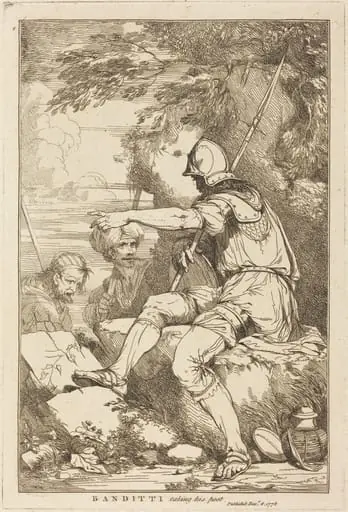
- Banditti Taking His Post
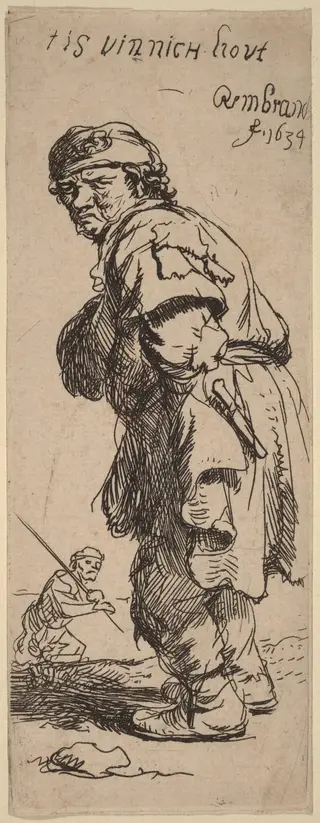 A Peasant Calling Out: "tis vinnich kout" (It's biting cold)
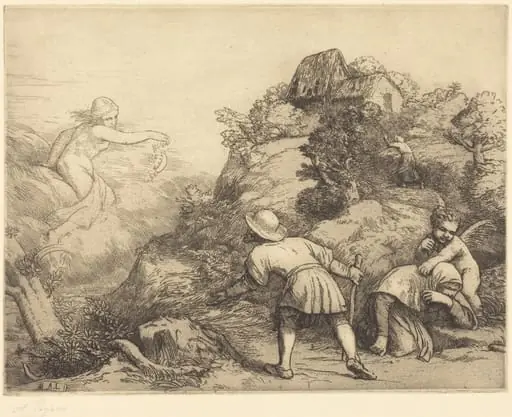 Allegory of the Peasant and Fortune (Le paysan et la fortune: Sujet allegorique
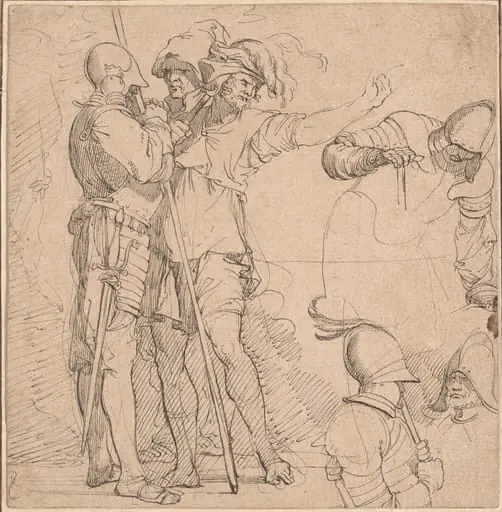 Capriccio Derived from Salvator Rosa's "Figurine"
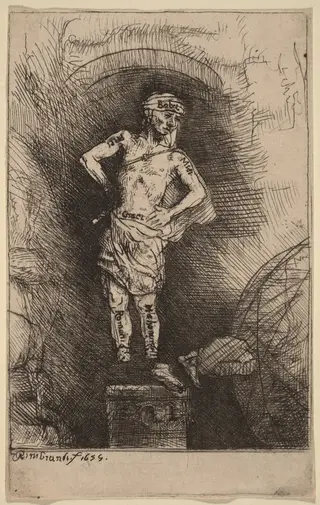 The Image Seen by Nebuchadnezzar
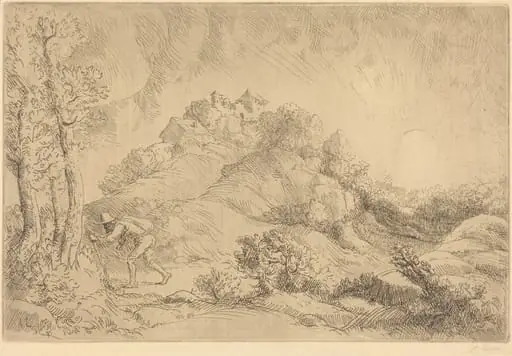 View of a Farm (La ferme de Beauchamp)
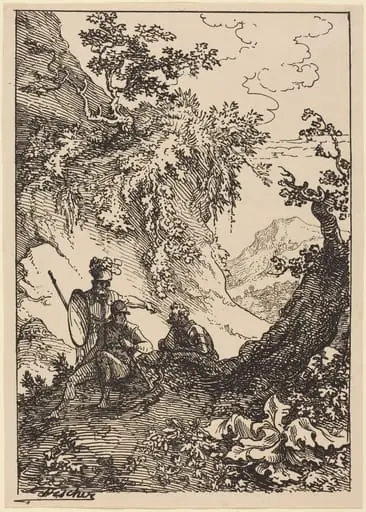 Landscape with Men in Armor, Tree Stump
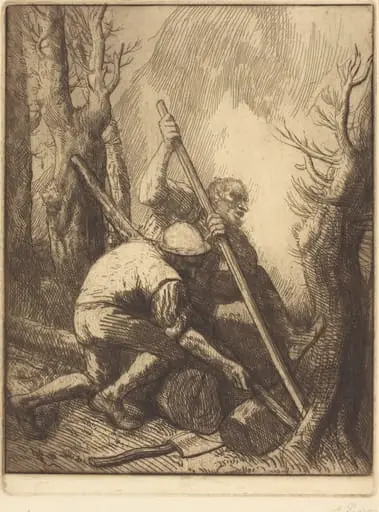 Woodcutters, 3rd plate (Les bucherons)
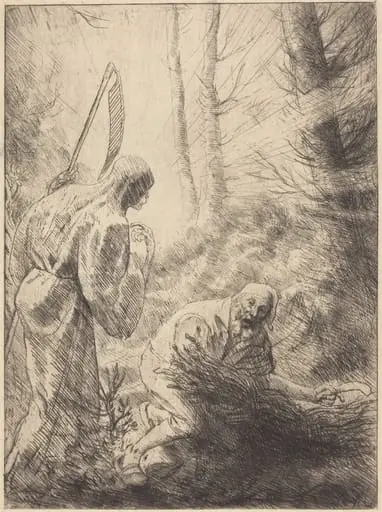 Death and the Woodcutter, 2nd plate (La Mort de le bucheron)
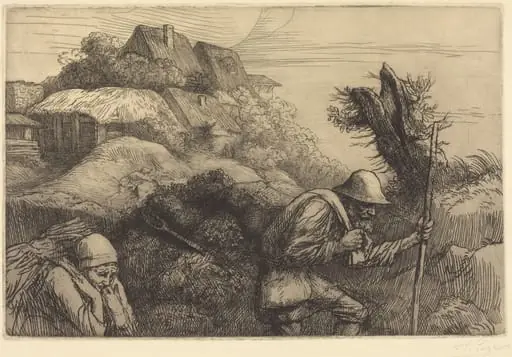 Return from the Woods (Le retour du bois)
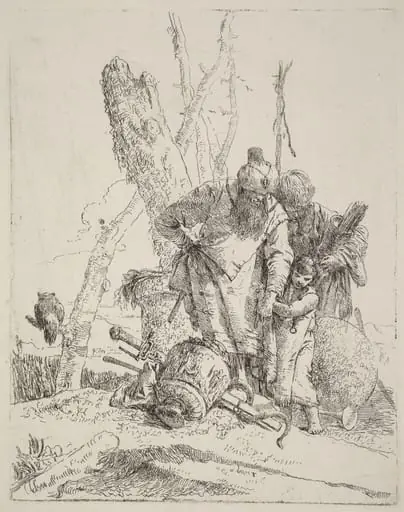 Two Turbaned Magicians and a Boy
 Turbaned Soldier on Horseback