Artwork
Conquest of the Air
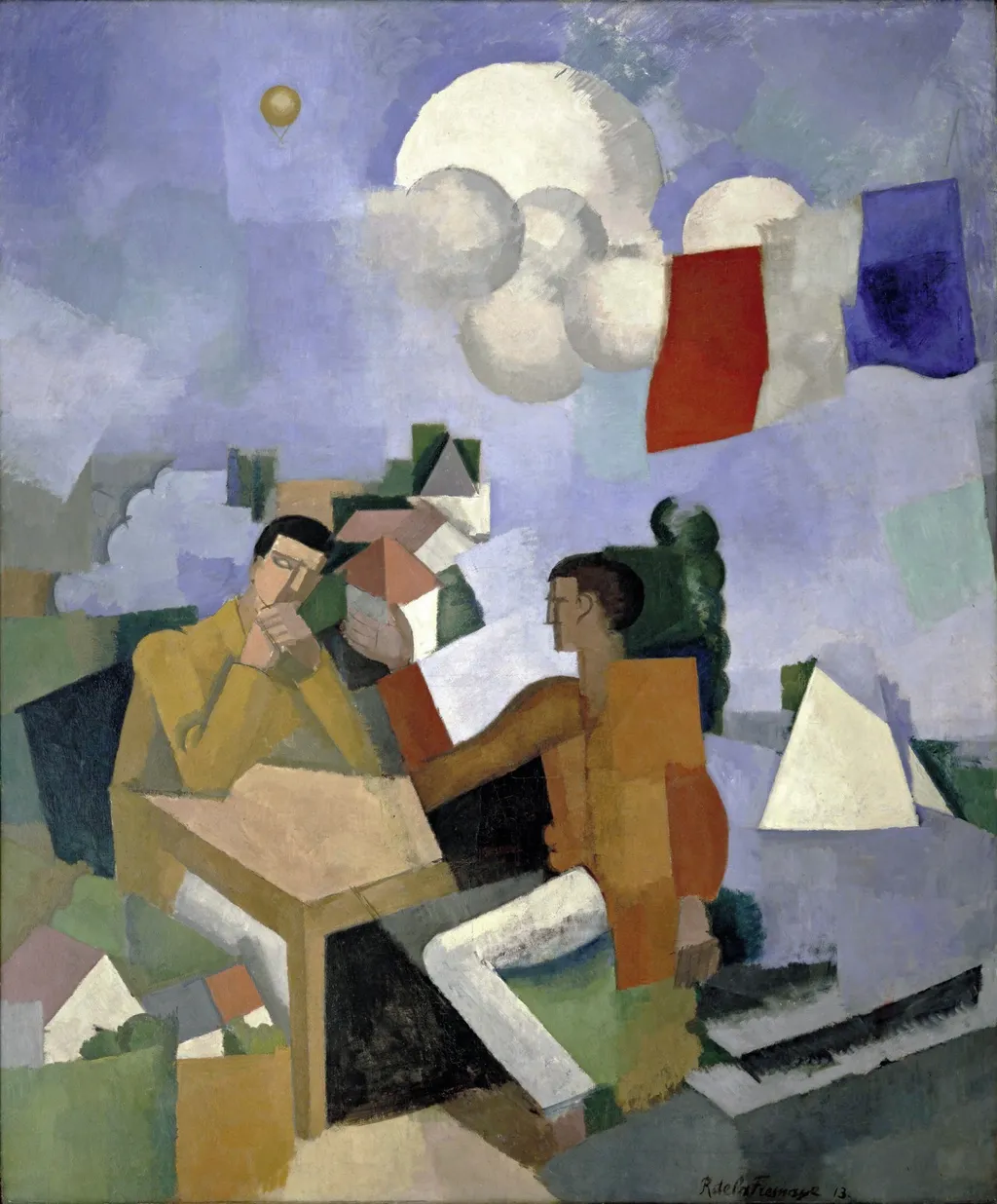
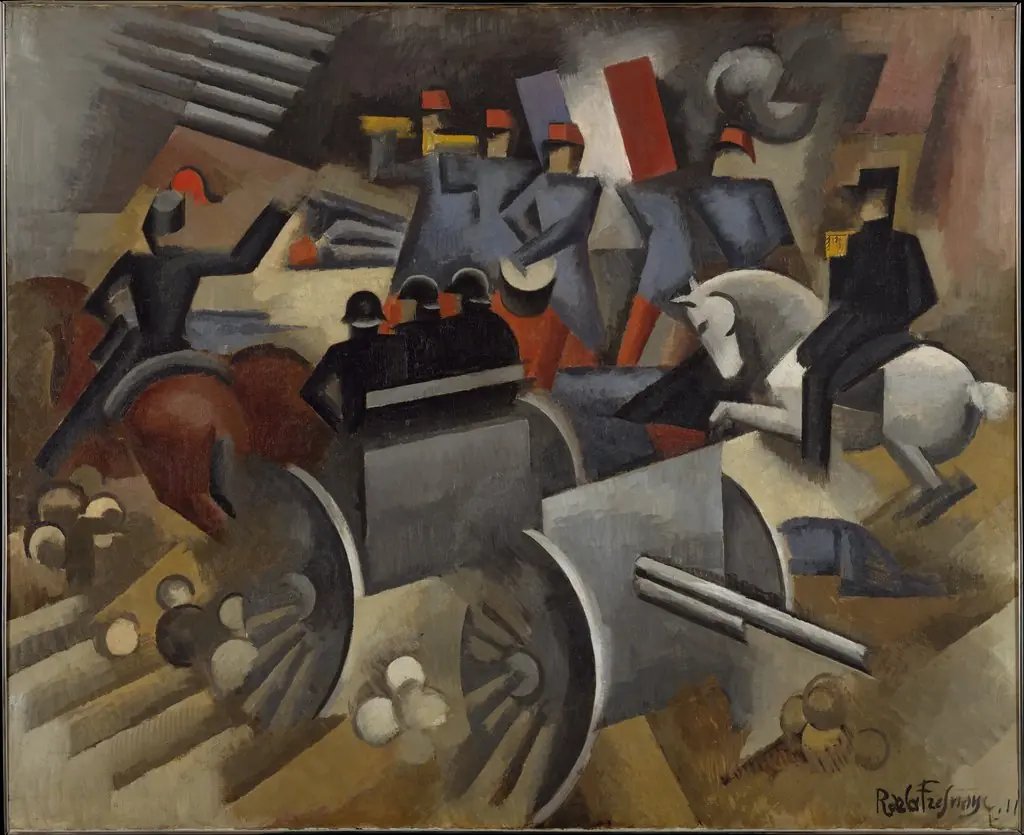
Conquest of the Air is an oil painting by the Cubism Synthetic artist Roger de La Fresnaye. It dates from 1913 and is held in the collection of the Museum of Modern Art.
About this work
Overview
The composition centers on two figures in a domestic space, surrounded by everyday objects, all illuminated by natural light entering through a large window.
Conquest of the Air is a 1913 oil painting by French artist Roger de La Fresnaye, currently in the collection of the Museum of Modern Art in New York. It presents an intimate interior scene rendered through early Cubist principles, blending fragmented forms with subdued tones. The composition centers on two figures in a domestic space, surrounded by everyday objects, all illuminated by natural light entering through a large window.
Subject & Meaning
The painting portrays a man seated at a table and a woman standing nearby, both absorbed in quiet reflection. Their postures suggest introspection rather than interaction, evoking a sense of stillness. Though the title implies aerial ambition, the scene is grounded in domestic solitude, possibly contrasting human stillness with the era’s fascination with flight and technological progress.
Technique & Style
De La Fresnaye applies Cubist fragmentation with restraint, using angular planes and overlapping surfaces to suggest volume without abandoning figuration. The palette is dominated by muted blues, greens, and browns, enhancing the painting’s contemplative mood. Light is carefully modulated to define form and space, with the window acting as both a structural and symbolic element.
History & Provenance
Created in 1913, the painting entered the Museum of Modern Art’s collection in the 1930s, shortly after the museum’s founding. It was among the early acquisitions that helped establish MoMA’s commitment to modern European art. Its provenance traces back to the artist’s studio and early 20th-century Parisian collectors who supported avant-garde movements.
Context
Painted during the height of Analytic Cubism, the work reflects de La Fresnaye’s engagement with Picasso and Braque while retaining a lyrical, human-centered approach. The early 1910s saw rapid advances in aviation and industrial design, yet this painting turns inward, offering a quiet counterpoint to the era’s dynamism through its stillness and domestic setting.
Legacy
Conquest of the Air remains a notable example of Cubism’s capacity for emotional nuance. Unlike more abstract works of the period, it preserves narrative presence and psychological depth, influencing later artists who sought to reconcile modernist form with human subjectivity. It continues to be studied for its balance between innovation and intimacy.
Own this work as a print
Artist & collection