Artwork
Knight of Malta
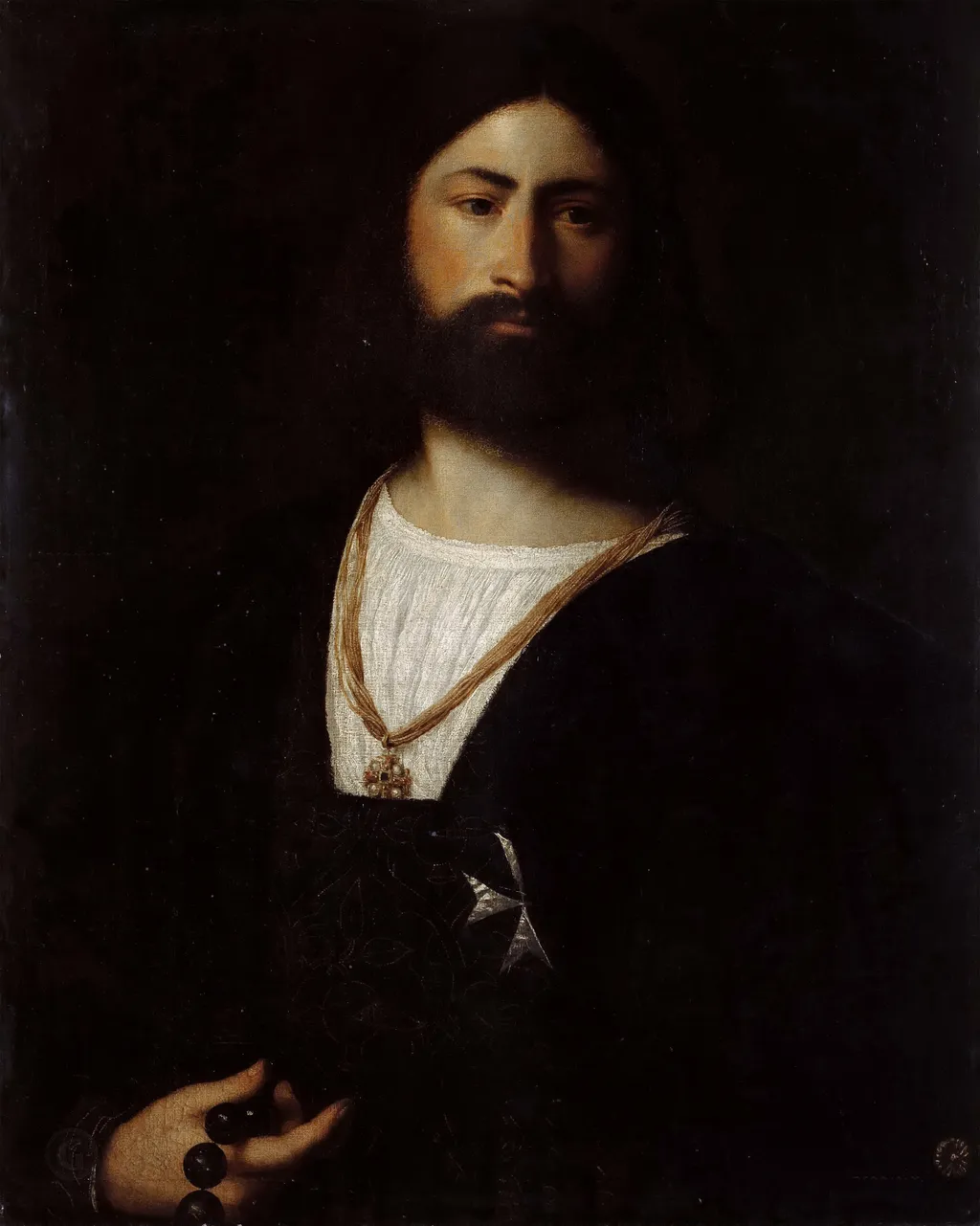
Knight of Malta is an oil painting by the High Renaissance artist Titian. It dates from 1510 and is held in the collection of the Uffizi Gallery.
About this work
Overview
The Knight of Malta is an oil on canvas portrait by the Italian Renaissance master surely Titian, painted around 1510-1515 and now housed in the Uffizi Gallery in Florence. Measuring 80 by 64 centimetres, the half-length depiction of a bearded knight against a dark background exemplifies the Venetian school's mastery of colour, texture, and psychological presence at the transition from the High Renaissance to Titian's mature style. The work matters not only as an early autograph portrait by one of the most influential painters in Western art, but also for its complicated attribution history, which mirrors broader scholarly debates about the boundaries between Titian's early manner and that of his contemporary Giorgione.
Subject & Meaning
The dark void behind the figure eliminates any narrative setting, focusing attention entirely on the man's gaze and the symbolic attributes of his order.
The subject is a bearded man, aged thirty-five according to the Roman numeral XXXV inscribed on the last bead of the rosary he holds in his right hand. His membership in the Sovereign Military Order of Malta is declared by the silver cross pinned to his black robe, which is worn open over a white shirt. The bodice features elaborate silver embroidery, and a multi-strand gold collar with pearls and an emerald pendant hangs at his neck, the pendant itself echoing the form of the Maltese cross. His right hand, emerging from a fur-trimmed sleeve, grips large rosary beads. The iconography combines personal devotion, signaled by the rosary, with institutional identity through the cross and the age marker, a convention that transforms the portrait into a document of identity and status. The dark void behind the figure eliminates any narrative setting, focusing attention entirely on the man's gaze and the symbolic attributes of his order.
Technique & Style
The painting is executed in oil on canvas, a support that allowed Titian the flexibility to build up rich, layered surfaces. Light falls strongly from the left, illuminating the face, neck, and hand while the remainder recedes into shadow, a dramatic chiaroscuro that models form through tonal contrast rather than line. The brushwork is smooth and blended, particularly in the flesh and fabrics, with subtle gradations that recall Giorgione's sfumato. Yet the solid volumetric presence of the figure and the virtuoso rendering of material textures, the soft wool of the robe, the crisp sheen of the gathered white shirt, the softness of hair, and the metallic brilliance of the gold collar, are distinctively Titianesque. The palette is restricted to deep browns, blacks, and whites, with warm flesh tones providing the only chromatic relief. This synthesis of Giorgionesque atmosphere with Titian's emerging material realism defines the work's stylistic significance.
History & Provenance
The painting was acquired for Cardinal Leopoldo de' Medici by his Venetian agent Paolo del Sera, part of a concerted effort to assemble works of the Venetian school for the Medici collections. The cardinal paid the substantial sum of three hundred piastres, indicating that the work was already recognised as an autograph painting of the first rank. It was exhibited in the Tribuna of the Uffizi in 1677, though by 1709 it had been reattributed to Giorgione, as recorded on a label on the reverse of the canvas. It was subsequently moved to the Villa di Poggio a Caiano before returning definitively to the Uffizi in 1798. The nineteenth century brought particular difficulty: oxidisation of the varnish layer obscured the paint surface, and critics including Joseph Archer Crowe, Giovanni Battista Cavalcaselle, and Giovanni Morelli unsuccessfully attempted attribution. Otto Mündler proposed Pietro della Vecchia in 1869, while Roberto Longhi suggested Paris Bordone; other opinion oscillated between Giorgione and Titian. The decisive intervention came in 1998, when conservator Stefano Scarpelli's restoration recovered the painting's full legibility, permitting its secure identification as an early Titian with pronounced Giorgionesque influence.
Context
The Knight of Malta belongs to a pivotal moment in Venetian portraiture, when the young Titian was still working in the shadow of Giorgione, who died in 1510. The scholarly debate about its authorship reflects the genuine difficulty of distinguishing the two masters during Titian's first decade of activity, a problem compounded by the loss and deterioration of many early works. The identification of the sitter as Stefano Colonna da Palestrina, the condottiero who led republican resistance during the siege of Florence, was proposed by W.F. Dickes and accepted by some critics, though others have questioned it on the grounds that no documentary evidence confirms Colonna's knighthood. The painting's place in the Uffizi collection, acquired through Medici patronage rather than the Della Rovere dowry that brought other Venetian masterpieces to Florence, underscores its importance within the cardinal's deliberate programme of assembling a comprehensive survey of Venetian painting.
Legacy
The restoration of 1998 fundamentally reshaped the painting's reputation, transforming it from an attribution puzzle into a key document of Titian's early development. It now serves as a fixed point in scholarship on the artist's emergence from Giorgione's influence, demonstrating how Titian absorbed and surpassed his predecessor's innovations in colour and atmosphere while introducing the more assertive material presence that would define his mature portraiture. The work's exhibition history, from the Tribuna to Poggio a Caiano and back to the Uffizi, traces the shifting fortunes of Venetian painting within the Medici collections. Today it remains a standard reference in catalogues of Titian's complete works and in studies of the Uffizi's holdings, its cultural afterlife inseparable from the broader narrative of Renaissance attribution and the recovery of artistic identity through conservation science.
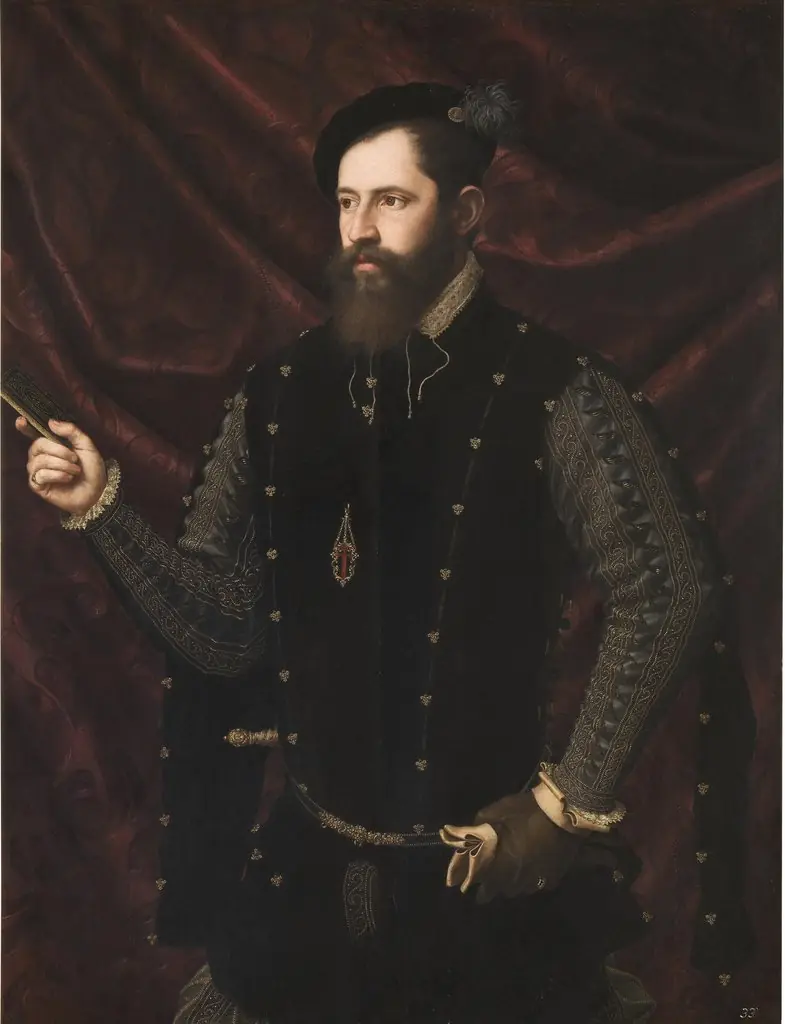
Own this work as a print
Artist & collection
Artist
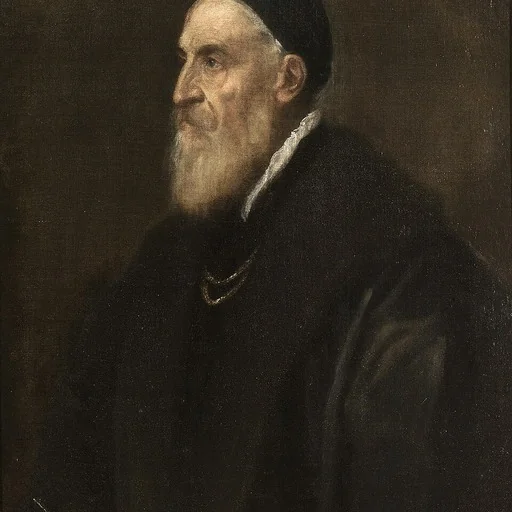
Tiziano Vecellio (Italian:; c. 1488/1490 – 27 August 1576), Latinized as Titianus, hence known in English as Titian ( TISH-ən), was an Italian Renaissance painter. The most important artist of Renaissance Venetian…

 Portrait of a Man
 Portrait of a Gentleman
 Portrait of Cosimo I de' Medici
 Portrait of a Man Holding a Book
 Portrait of a Nobleman in the Knightly Garb of the Order of Santiago
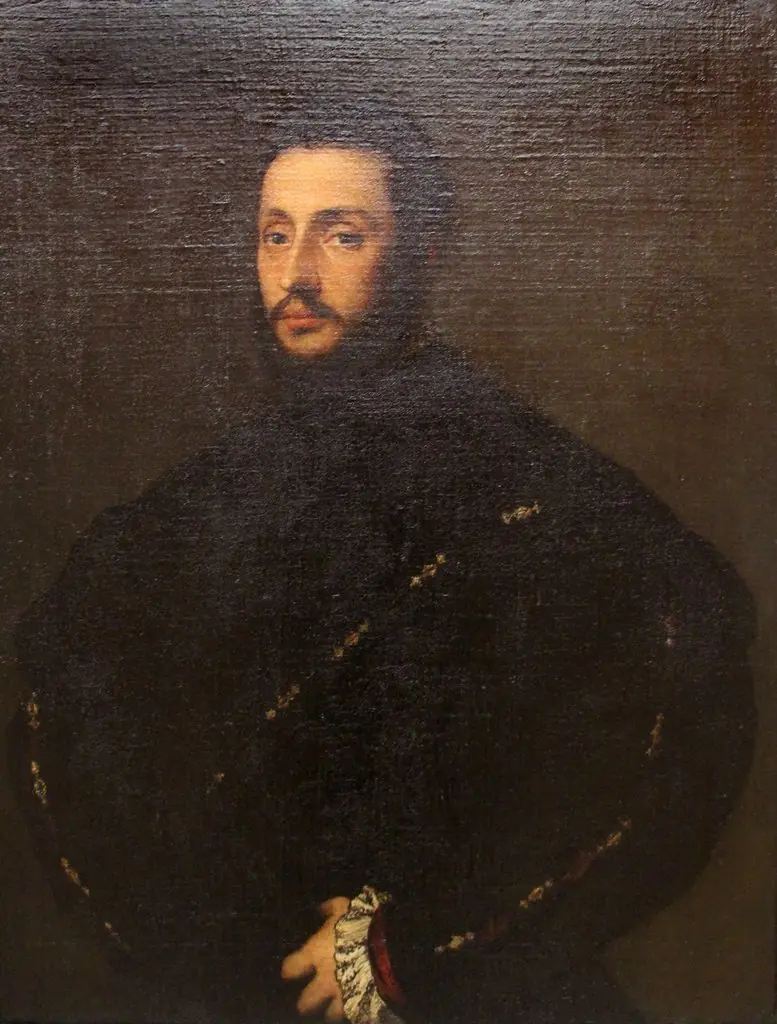 Portrait of a Man
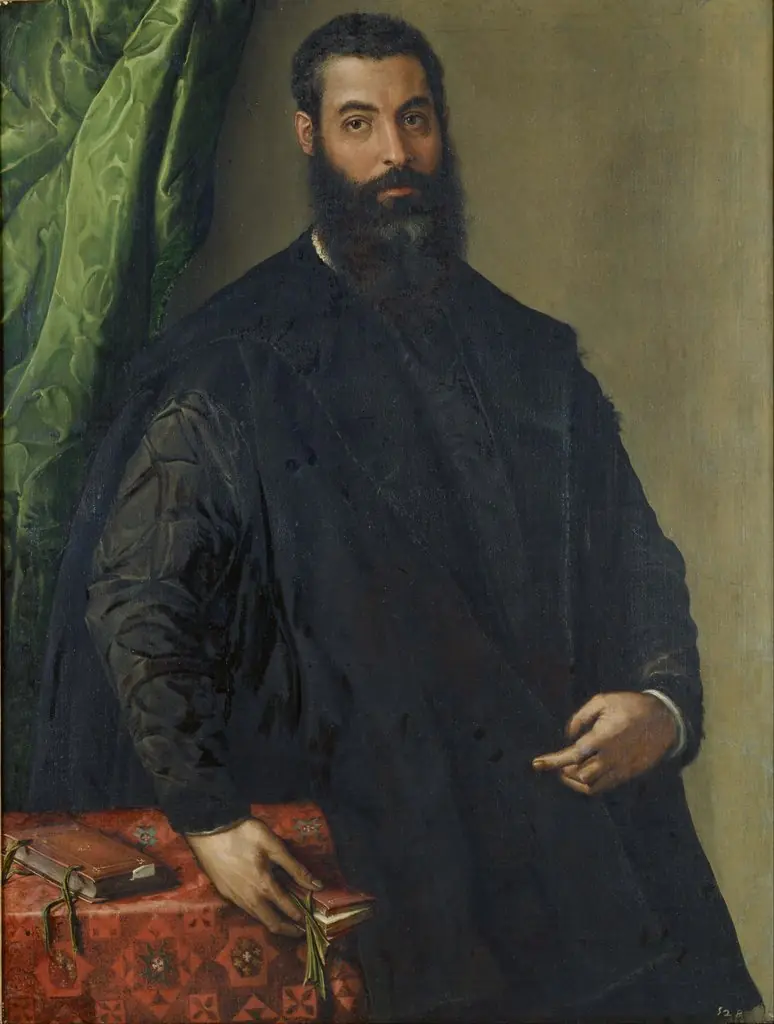 Portrait of a Man
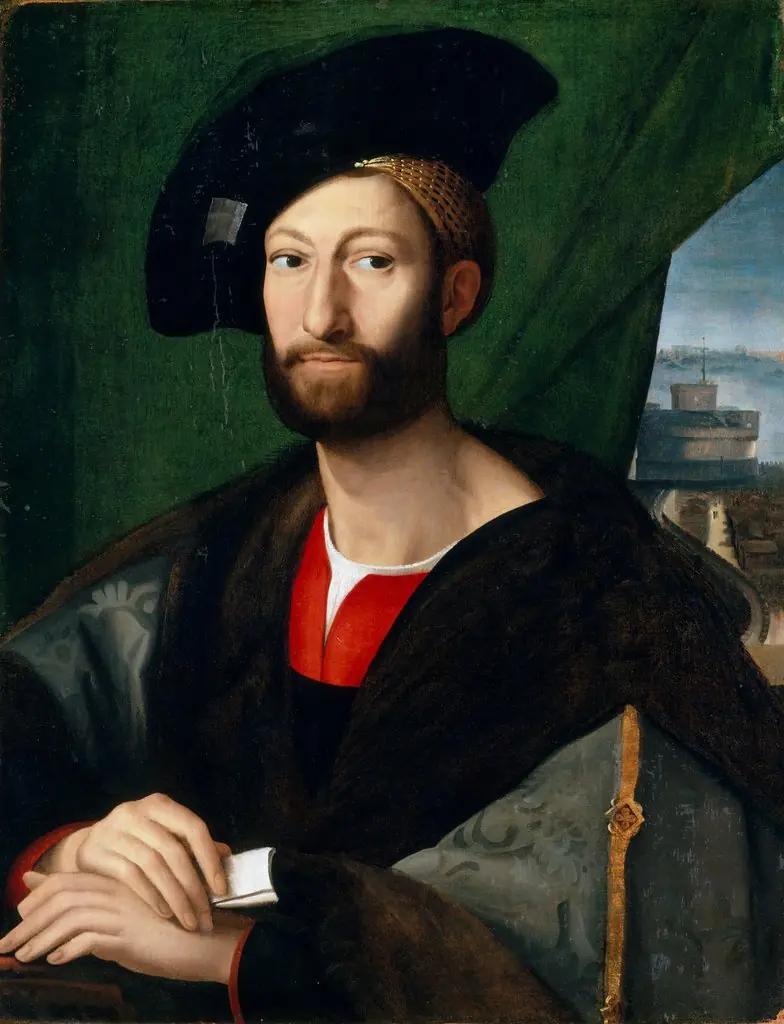 Giuliano de' Medici (1479–1516), Duke of Nemours
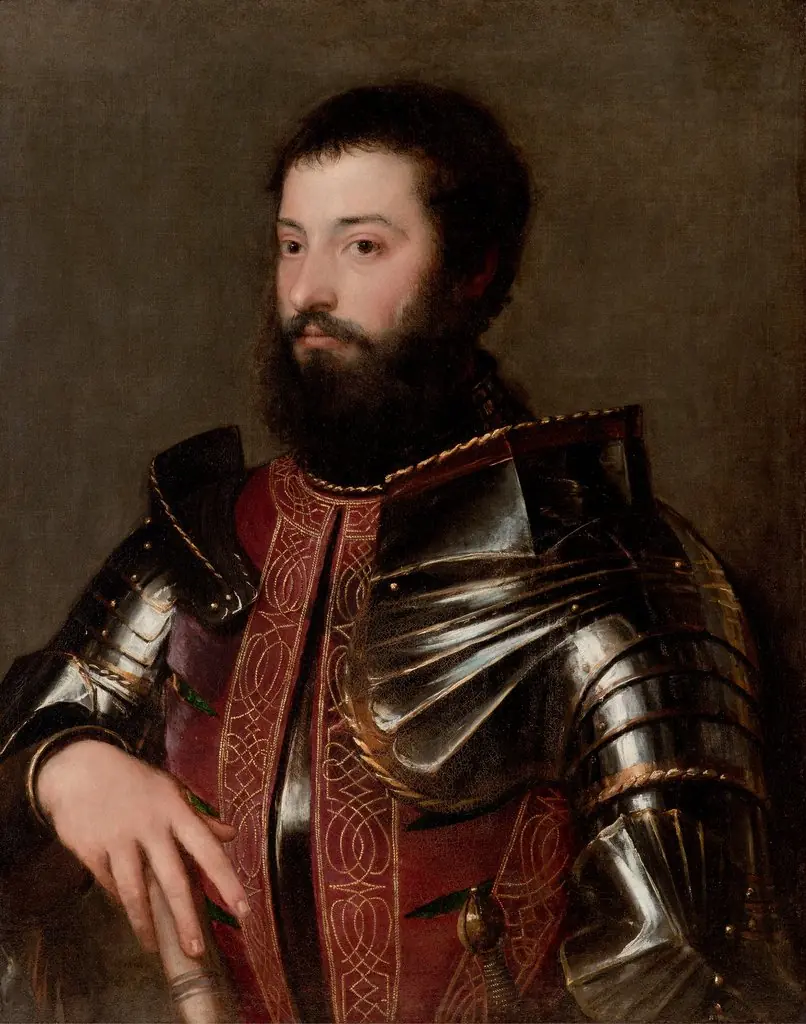 Portrait of a Man in Armor
 Portrait of a Nobleman in Armor
 Untitled
- Portrait of a Knight of the Order of Santiago