Artwork
Religion saved by Spain
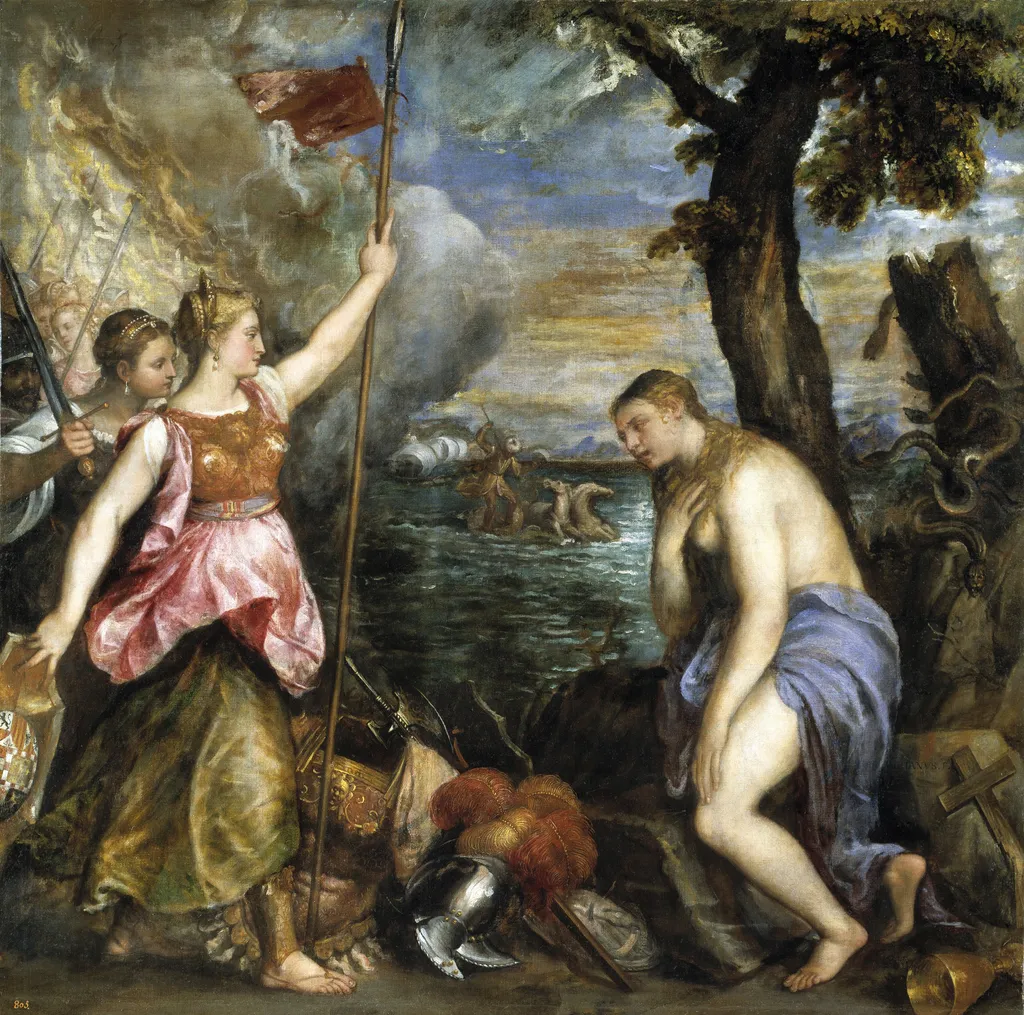
Religion saved by Spain is an oil painting by the Mannerist artist Titian. It dates from 1573 and is held in the collection of the Museo del Prado.
About this work
Subject & Meaning
The painting functions as political propaganda, elevating Spain as the defender of Catholicism against both Islamic expansion and Protestant heresy.
Titian's Religion saved by Spain is an allegorical work commemorating the 1571 Battle of Lepanto, portraying Spain as a matron in armor who rescues a kneeling female figure representing the Catholic Church. The Spanish figure holds a shield bearing the coat of arms of Philip II and a spear topped with a victory banner, while her fingers form a symbolic "V" for victory. Behind her stands a woman with a sword, interpreted as Justice or Fortitude.
The Christian religion is depicted as vulnerable, threatened by snakes symbolizing Protestantism and a turbaned figure in a chariot representing the defeated Ottoman Empire. The painting functions as political propaganda, elevating Spain as the defender of Catholicism against both Islamic expansion and Protestant heresy. The composition adapts an earlier design originally intended for the Holy Roman Emperor, modifying it to honor the Spanish monarch and the victory of the Holy League.
Technique & Style
Religion saved by Spain is an oil on canvas painting produced by Titian between 1572 and 1575, executed in the manner of the Venetian school. The canvas measures 168 cm in height by 168 cm in width, forming a square format. Stylistically, the work fuses allegory with political propaganda, set against a dramatic landscape that includes a maritime scene with a turbaned figure in a horse-drawn chariot on the sea.
The handling is characteristic of Titian's late period, in which figures are defined through symbolic attributes rather than narrative action. Spain is personified as a matron in body armor, grasping a shield bearing Philip II's coat of arms and a spear flying a victory banner, while making V-shaped victory gestures with the fingers of both hands. Justice follows her with a raised sword, and the Christian Religion appears as a kneeling woman partly veiled in blue drapery, accompanied by a crucifix and chalice, threatened by serpents symbolizing Protestantism.
History & Provenance
Religion saved by Spain was produced by Titian between 1572 and 1575 as an uncommissioned tribute to Philip II of Spain following the Christian victory at the Battle of Lepanto in 1571. According to Spanish-language scholarship, Titian executed the canvas without a royal commission and dispatched it to Madrid in 1575, paired with the painting Philip II offering Prince Fernando to the Heavens. The work was received into the Spanish Royal Collection and has been held by the Museo del Prado since the nineteenth century.
The composition draws on an earlier design from the 1530s that Titian had begun for Alfonso I d'Este, Duke of Ferrara, left unfinished at the duke's death in 1534 and still seen incomplete in Titian's studio by Giorgio Vasari in 1566. Titian adapted this prototype into a related canvas sent to Holy Roman Emperor Maximilian II around 1566–67, known through a 1568 engraving by Giulio Fontana but now lost, before reworking the allegorical scheme once more for the Philip II version. Radiographic examination of the Prado canvas has revealed no repaints, complicating the assumption that the 1534 canvas was reused.
The painting is held in the collection of the Museo del Prado in Madrid, where it has been located since the 19th century. Originally sent to King Philip II of Spain in 1576, the work subsequently remained within the Spanish Royal Collection before entering the museum's holdings. It is currently displayed in Hall 024 of the Prado.
While the work has been featured in contexts honoring civil war rescue efforts, specific details regarding formal exhibition history, such as loan records or temporary show titles, are not provided in the available sources. The piece is recognized as one of Titian's later masterpieces commemorating the Battle of Lepanto.
Context
Created between 1572 and 1575 without a specific commission, this allegory serves as political propaganda celebrating the 1571 Battle of Lepanto and honoring Philip II, Titian's primary patron. The work is recognized as one of the Venetian master's final and most remarkable achievements, synthesizing religious devotion with the assertion of Spanish power against Ottoman and Protestant threats.
Art historically, the composition reworks a design originally conceived in the 1530s for Alfonso d'Este, which remained unfinished at the duke's death. Titian previously adapted this motif around 1566 to create a lost painting for Emperor Maximilian II, depicting the Holy Roman Empire defending Religion. While earlier scholarship speculated that the Prado canvas was a direct overpainting of the 1530s panel, technical radiographic analysis has revealed no underpainting, suggesting the artist likely executed a new canvas based on the earlier compositional model.
Legacy
Regarded as one of Titian's most remarkable late works, the painting commemorates the 1571 Battle of Lepanto and was sent to Philip II in 1576. It remained in the Spanish Royal Collection before entering the Prado Museum in the 19th century, where it is currently exhibited. The composition is noted for echoing an earlier, lost allegory created for Holy Roman Emperor Maximilian II, which itself reworked a mythological design from the 1530s intended for Alfonso d'Este.
While the original version for Maximilian is lost, its existence is documented through a 1568 engraving by Giulio Fontana. A variant version with uncertain attribution also survives in the Palazzo Doria-Pamphili in Rome, potentially reflecting an intermediate stage between the lost imperial work and the Prado masterpiece.
Overview
Titian's oil on canvas painting, Religion saved by Spain, was created between 1572 and 1575. This work, also known by alternative titles such as Spain succoring Religion, is among the artist's later productions. It serves as a commemoration of the Battle of Lepanto, a significant naval engagement that occurred in 1571, reflecting the political and religious climate of the period.
Own this work as a print
Artist & collection
Artist
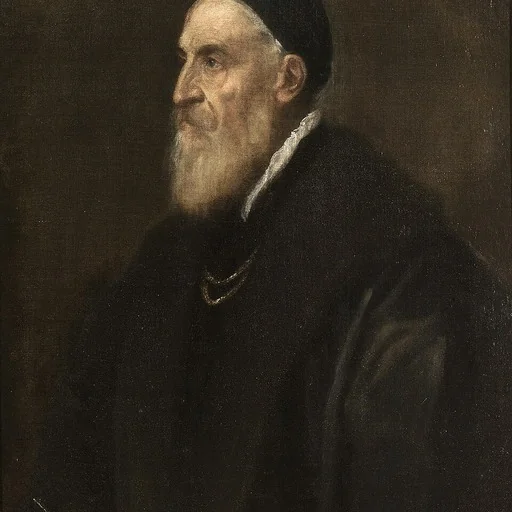
Tiziano Vecellio (Italian:; c. 1488/1490 – 27 August 1576), Latinized as Titianus, hence known in English as Titian ( TISH-ən), was an Italian Renaissance painter. The most important artist of Renaissance Venetian…

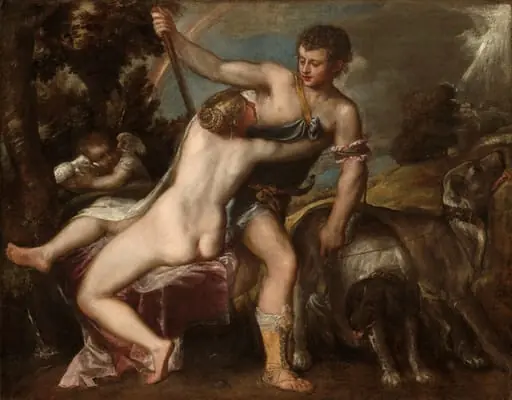
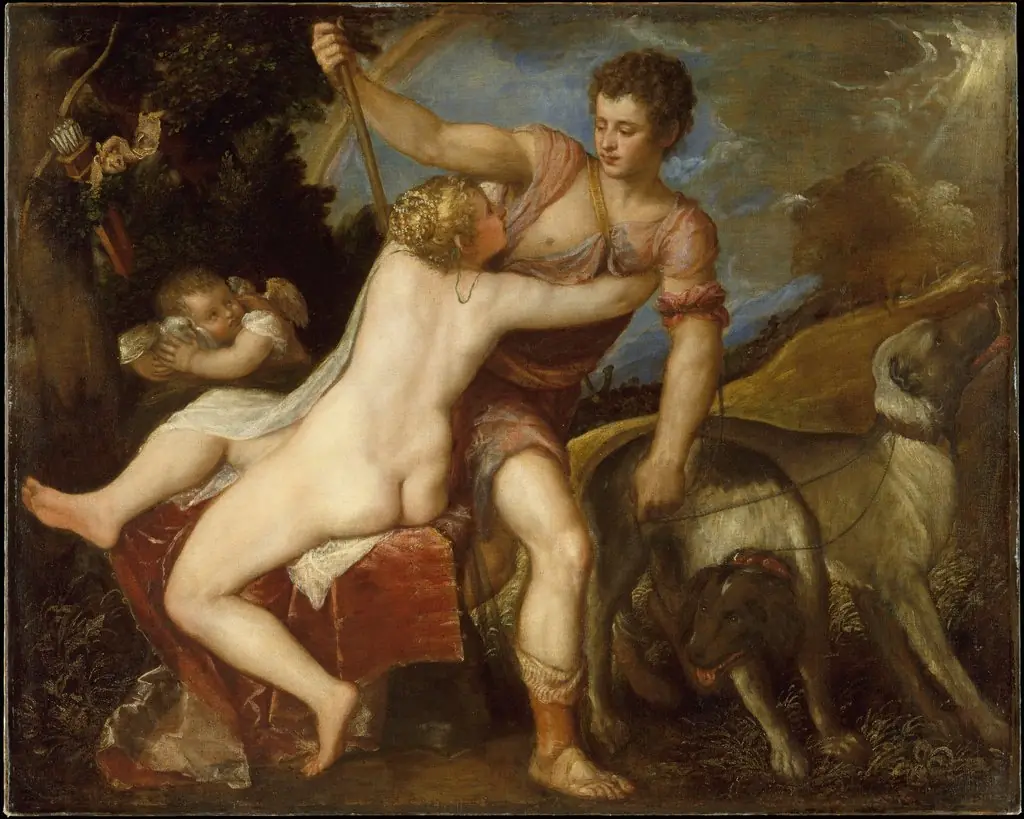
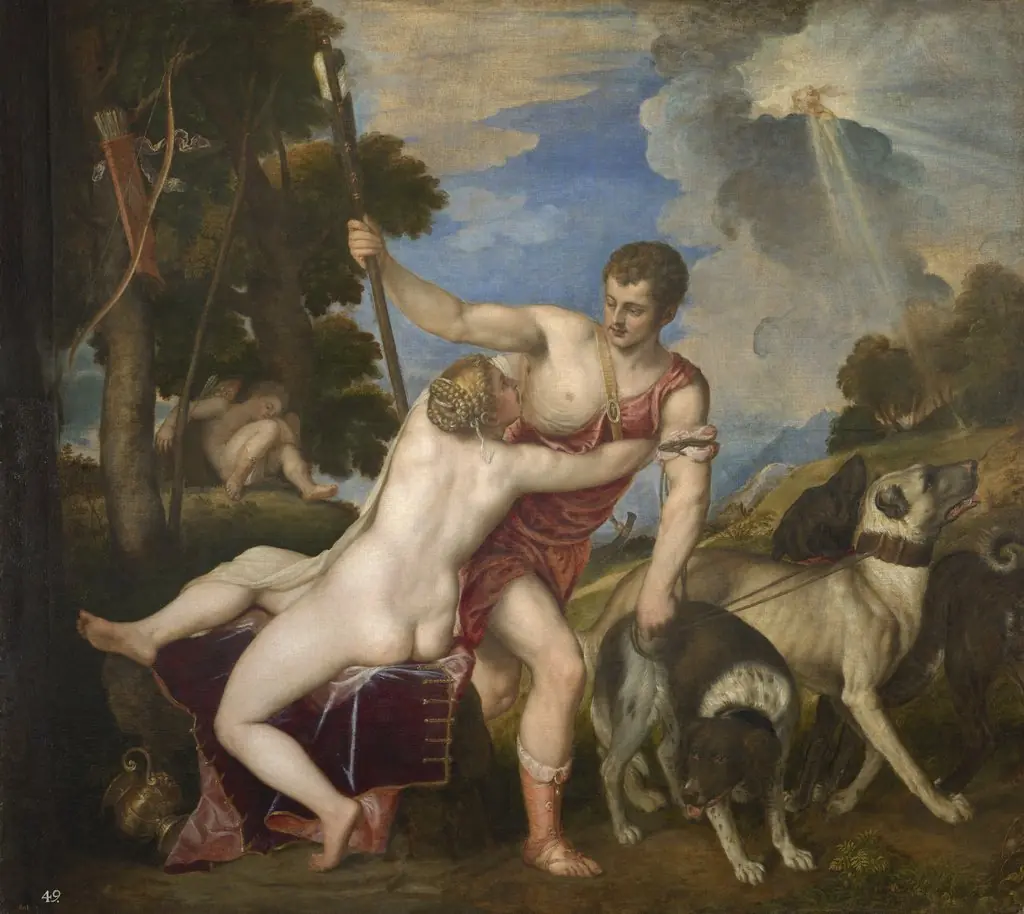
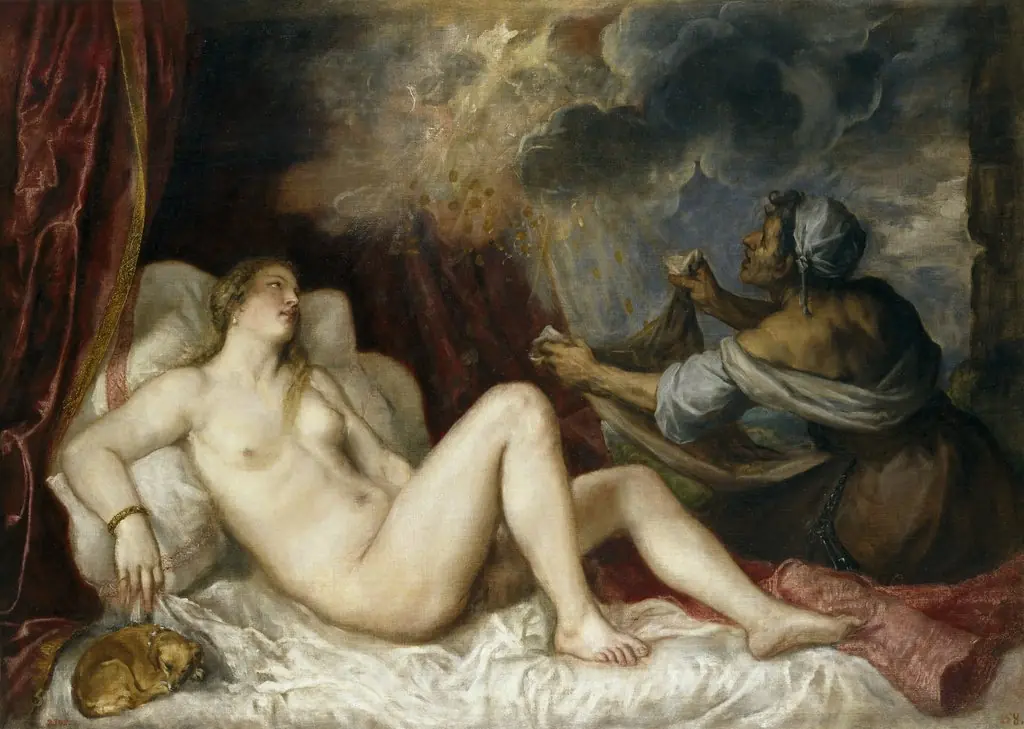
- Venus and Adonis
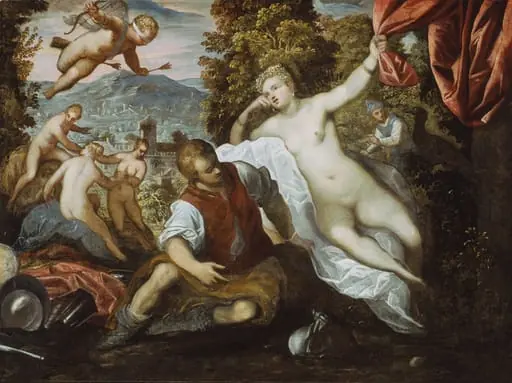 Venus and Mars with Cupid and the Three Graces in a Landscape
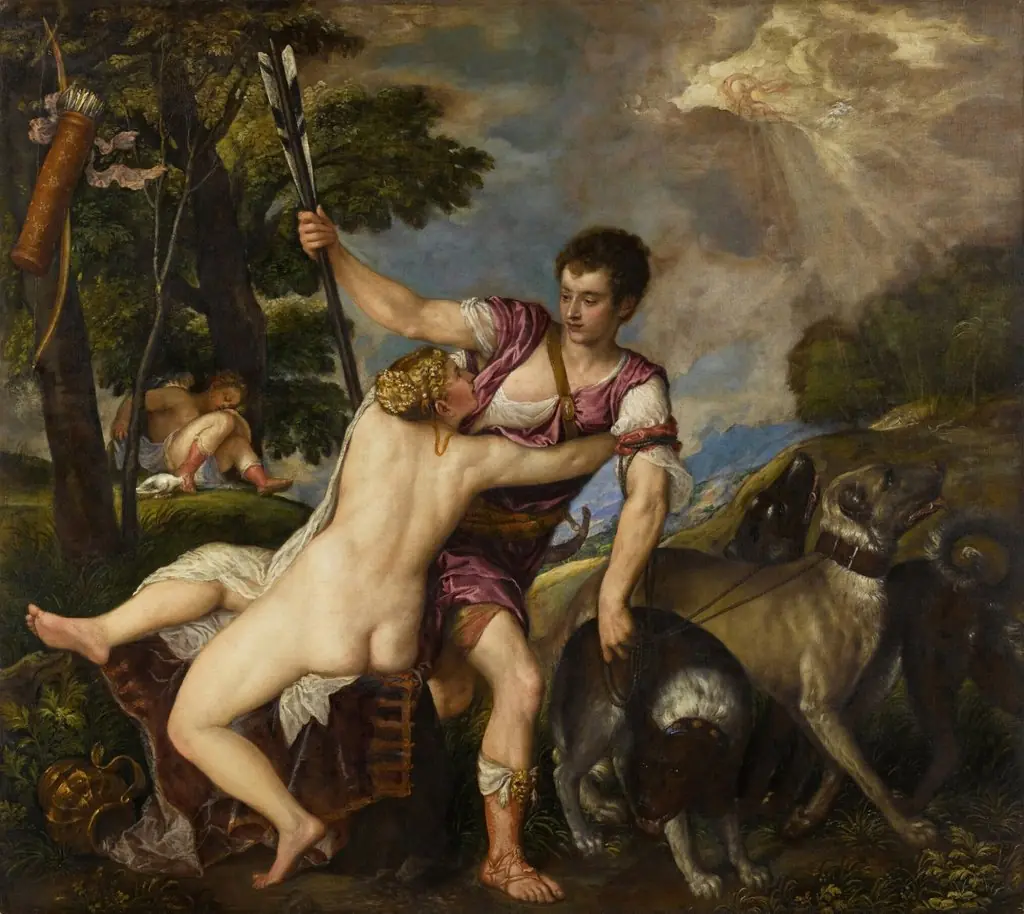 Venus and Adonis
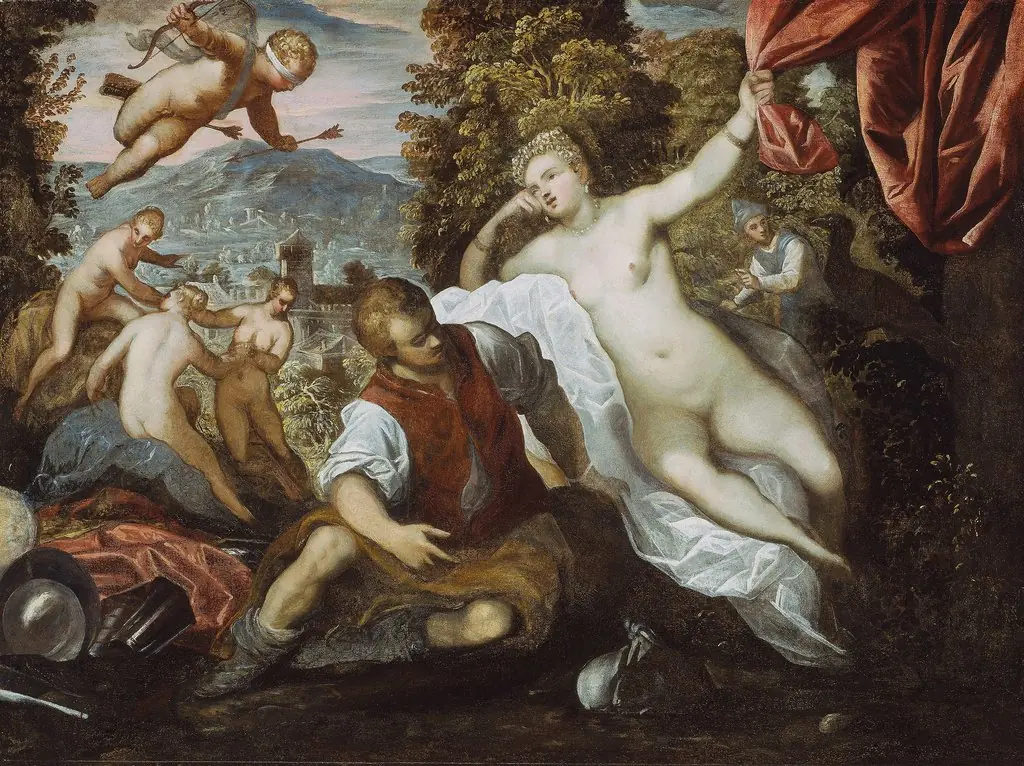 Venus and Mars with Cupid and the Three Graces in a Landscape
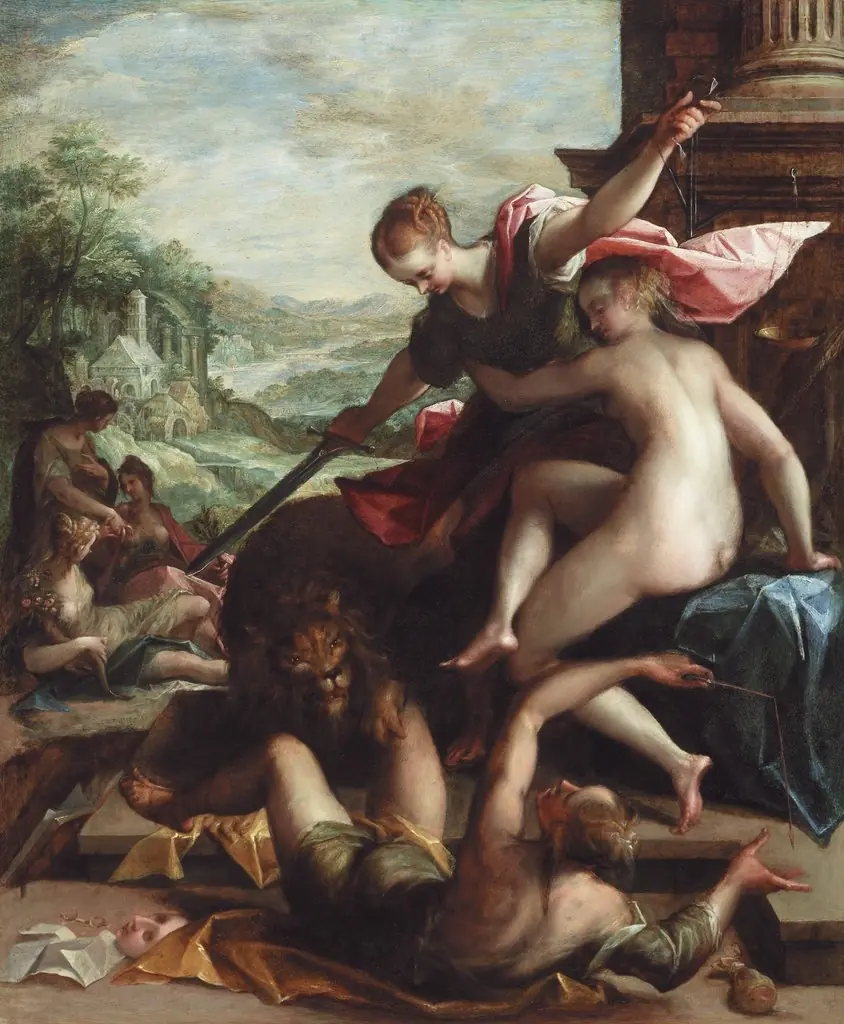 The Triumph of Truth
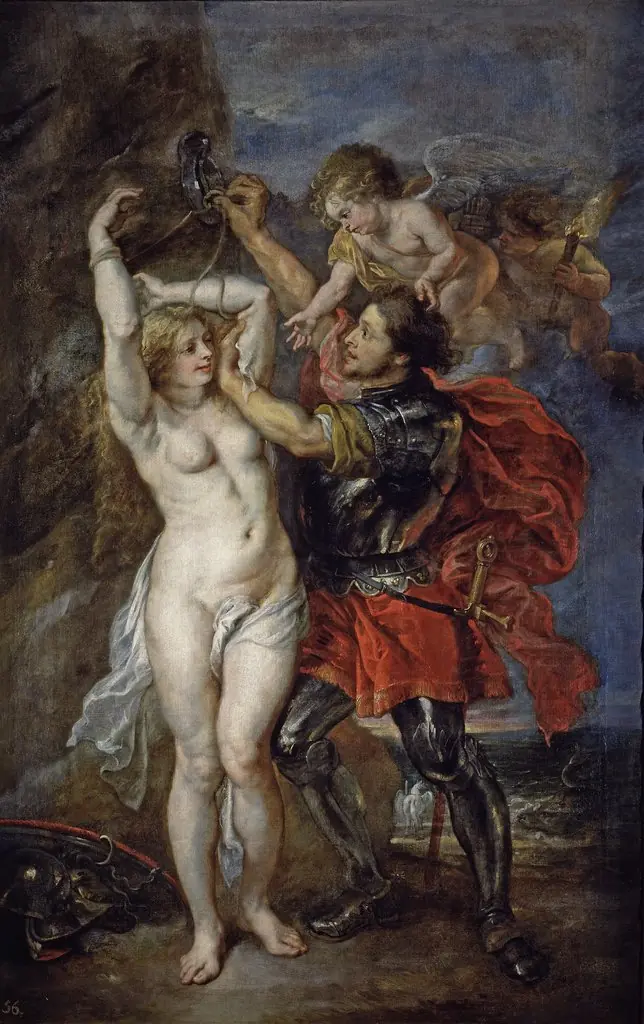 Perseus Freeing Andromeda
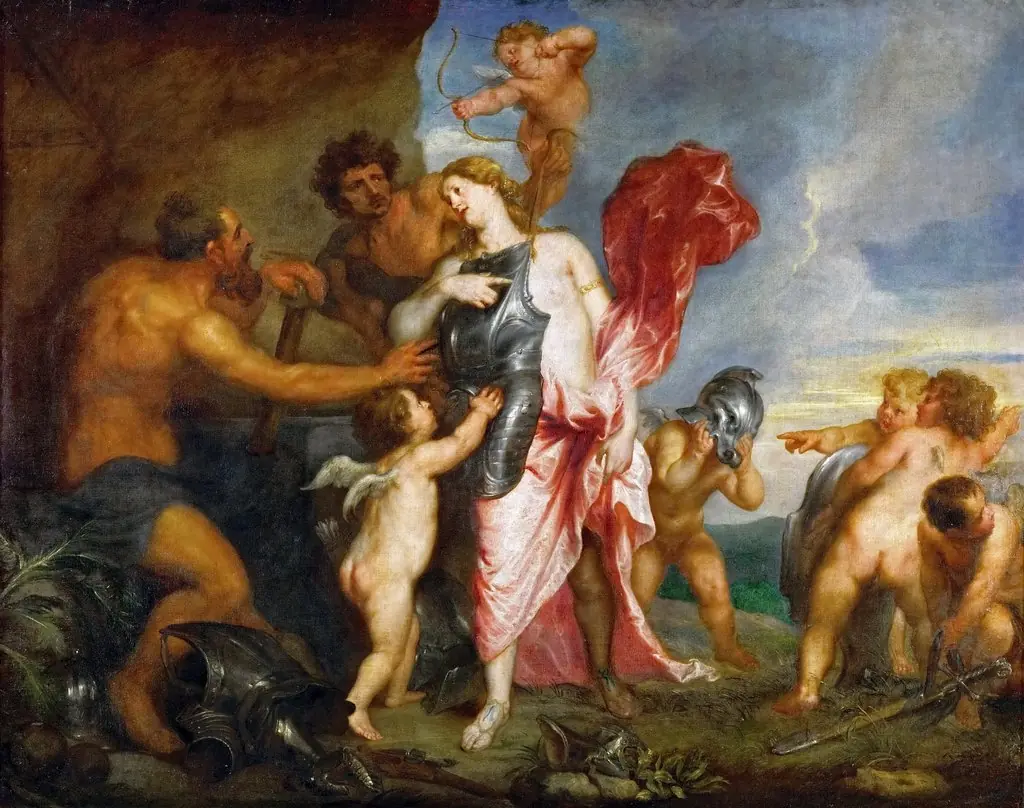 Thetis Receiving the Weapons of Achilles from Hephaestus
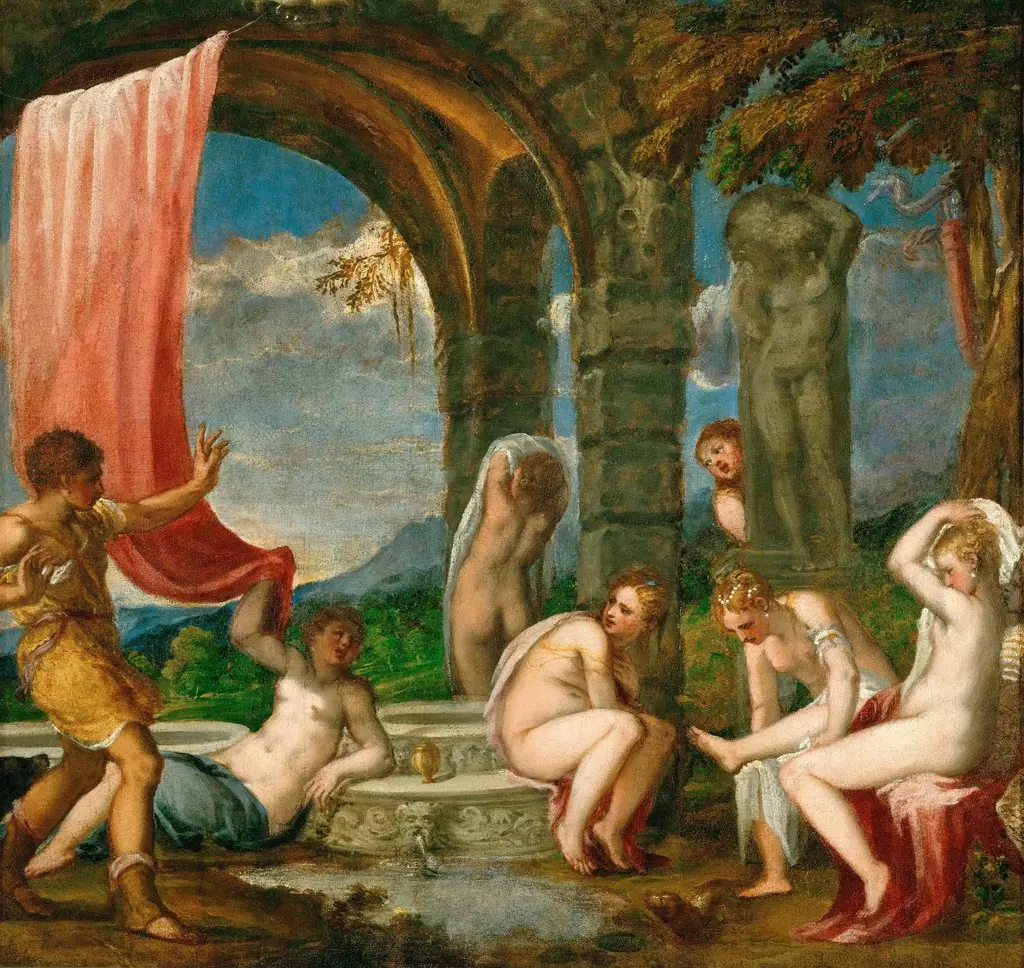 Diana and Actaeon
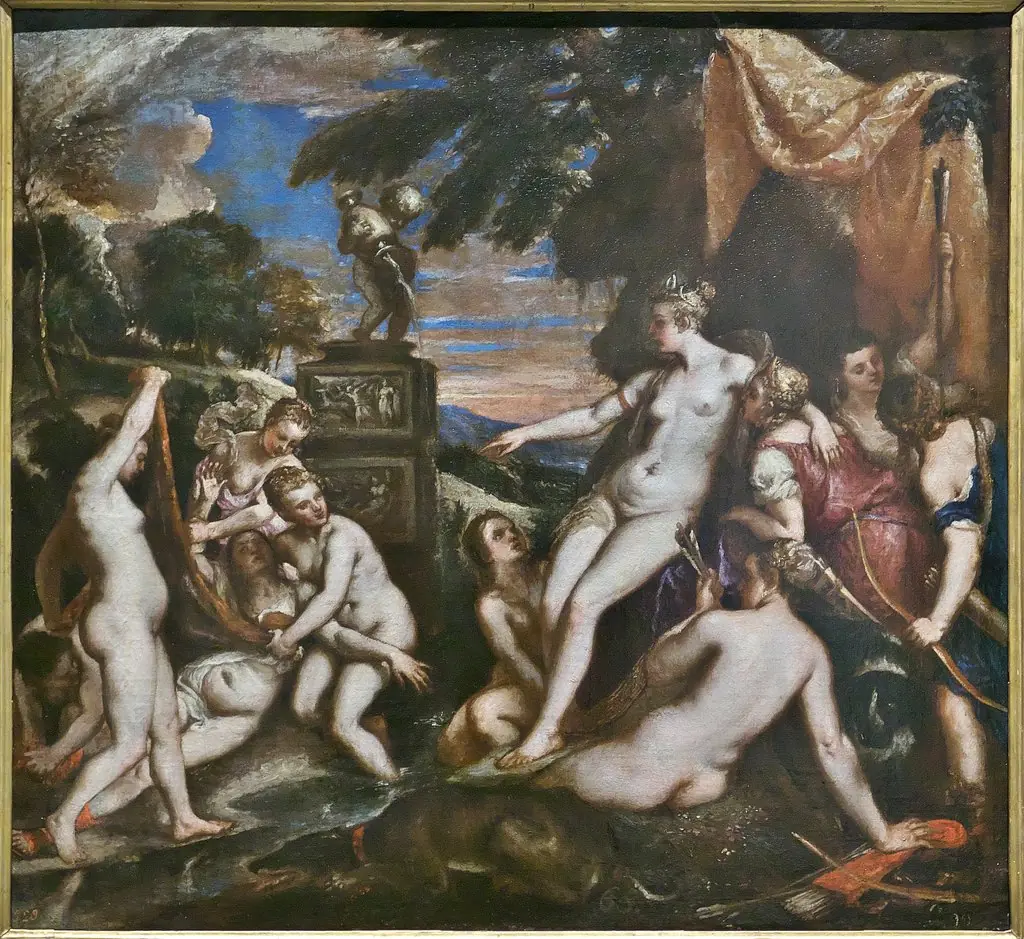 Diana and Callisto
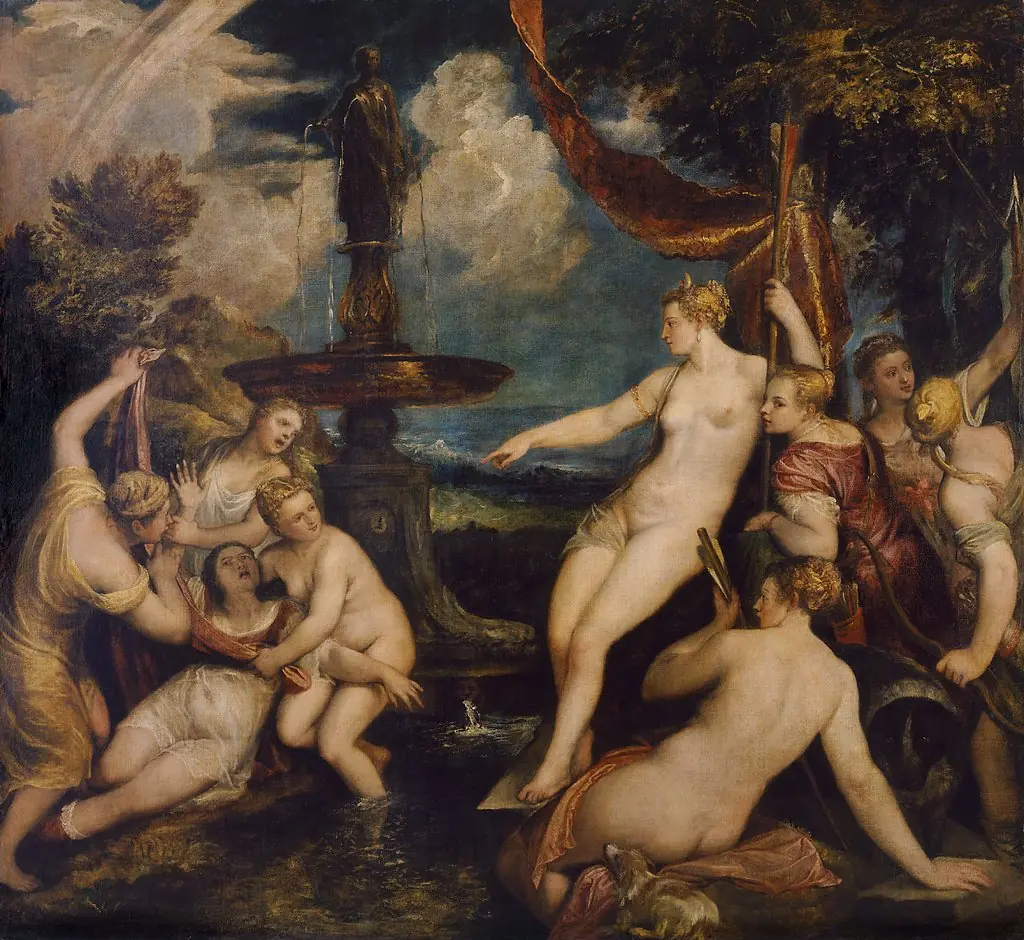 Diana and Callisto
 Minerva Sending Away Mars from Peace and Prosperity