Artwork
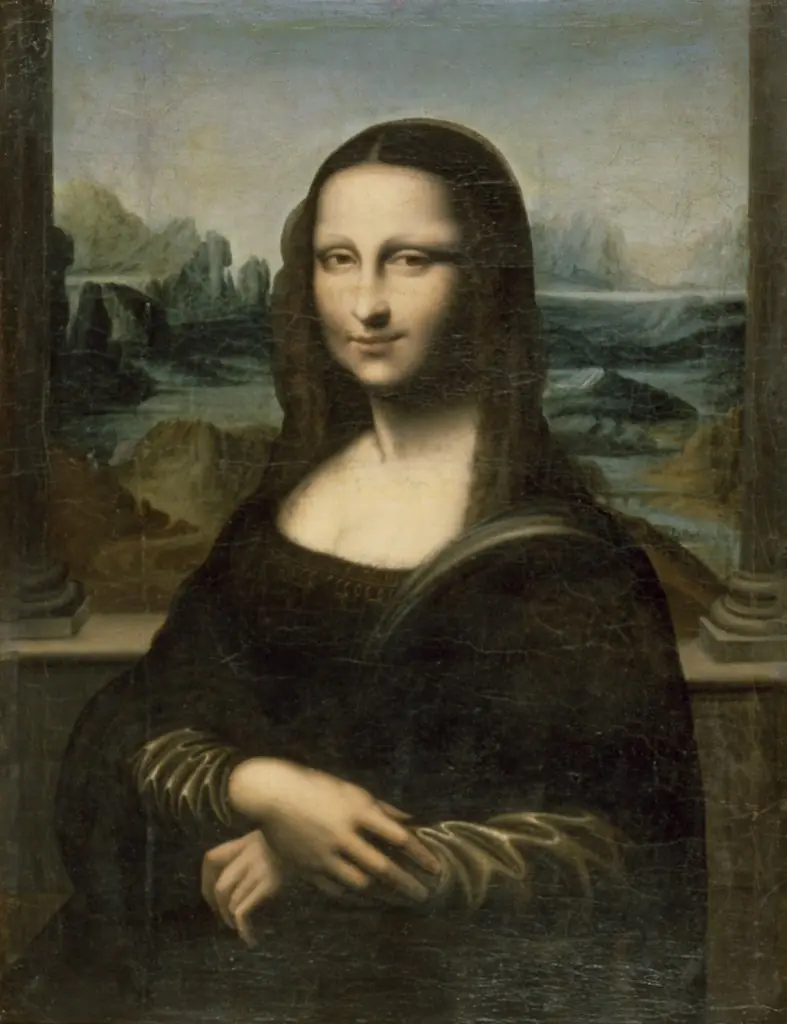
Portrait of Gioconda (copy)
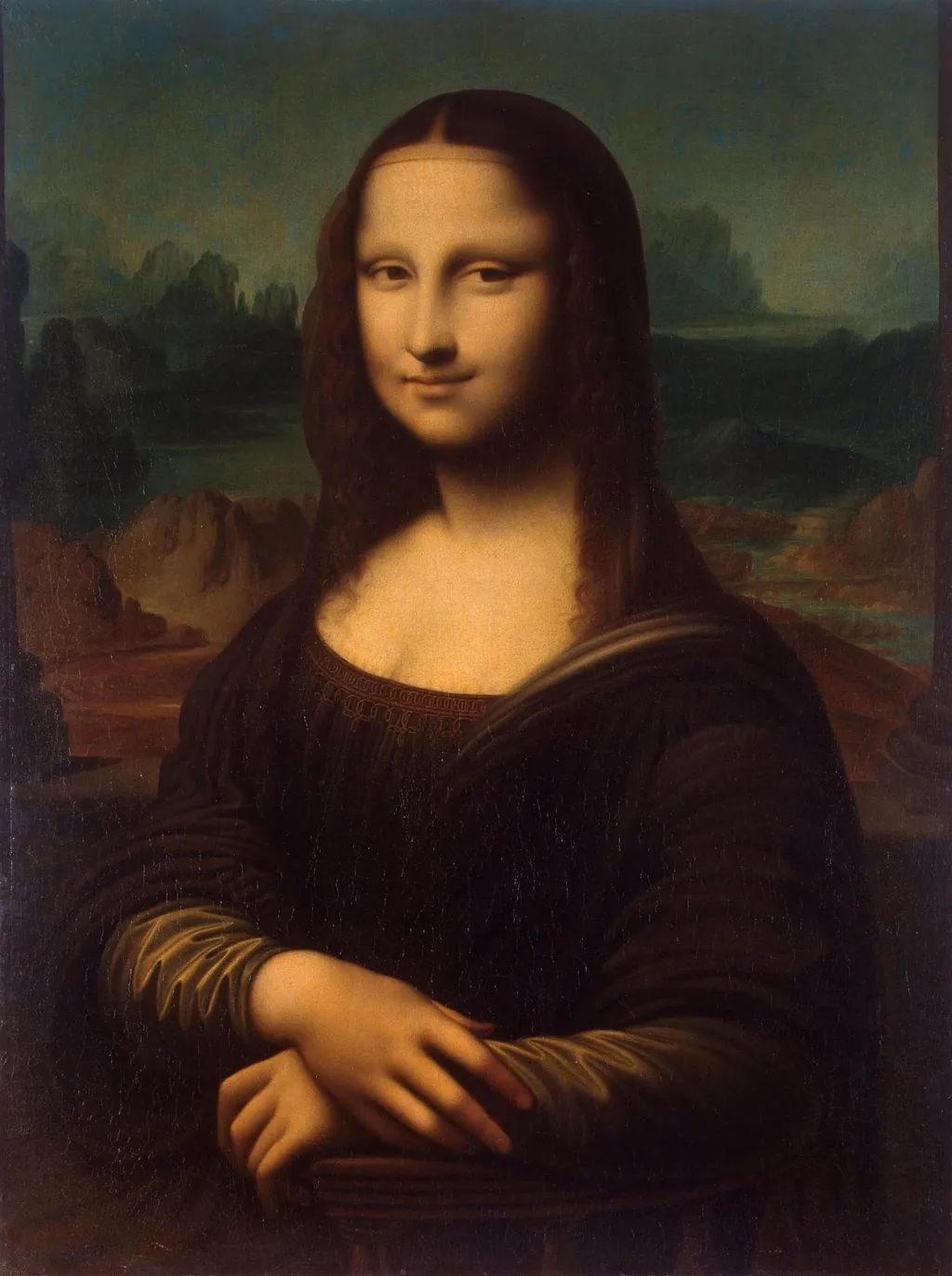
Portrait of Gioconda (copy) is an oil painting by the Mannerist artist Unknown. It dates from 1550 and is held in the collection of the Hermitage Museum.
About this work
Overview
The work is a clear copy of Leonardo da Vinci's famous Mona Lisa, depicting the same half-length seated subject, Lisa del Giocondo, against a hazy landscape.
The Portrait of Gioconda (copy), also known as the Hermitage Mona Lisa or Gioconda with Columns, is an oil painting on canvas executed by an unknown artist and located in the Hermitage Museum in Saint Petersburg. The work is a clear copy of Leonardo da Vinci's famous Mona Lisa, depicting the same half-length seated subject, Lisa del Giocondo, against a hazy landscape. While institutional records date the painting to 1550, scientific analysis of the work's ground layer suggests it was likely created later, in the first half of the seventeenth century. The painting entered the Hermitage collection in 1931 after being transferred from the Antikvariat All-Union Association. Distinguished by its good workmanship and legibility, the painting is notable for its departure from Leonardo's original composition, particularly the inclusion of two columns in the background and a more youthful appearance for the sitter.
Subject & Meaning
The subject is Lisa Gherardini, the wife of the Florentine merchant Francesco del Giocondo, commonly known as Mona Lisa or La Gioconda. She is presented in a three-quarter pose, her body angled toward the viewer while her gaze meets the viewer directly. Her hands are folded at the lower edge, one resting over the other on a stone ledge. She wears a dark dress with a low, gathered neckline and a decorative embroidered band across the chest, with a lighter undergarment visible at the sleeve edges. Her long dark hair falls loosely past her shoulders. Unlike the Parisian original, this version features two columns in the background panorama, an element only sketched in Leonardo's original, which has led to the popular name Gioconda with columns. This columnar motif is shared with other known copies, such as those in Oslo and Baltimore.
Technique & Style
The painting is executed in oil paint on a canvas support and measures 71 by 53 centimeters. The palette is dominated by browns, deep greens, and warm flesh tones. Light falls softly from the left, modeling the face and hands with gentle gradations, and the brushwork appears smooth and blended, particularly in the face and the smoky distances of the landscape. The surface shows fine craquelure throughout. The execution lacks the sfumato characteristic of Leonardo's work, and the face of the model appears younger than in the Louvre version. The workmanship has been described as expressive and legible, with the execution presumably showing Nordic European derivation, specifically German-Flemish influences. Scientific analysis identified baryte, or barium sulphate, in the preparatory layer. This mineral was used for preparing supports especially between 1620 and 1680, a period long after Leonardo's death, which contradicts earlier dating and suggests a seventeenth-century creation.
History & Provenance
The painting was created in Italy, though the exact circumstances of its commission and early ownership remain unknown. The work eventually passed into the hands of the Antikvariat All-Union Association. In 1931, it was transferred from this private collection to the Hermitage Museum in Saint Petersburg, where it has since been housed and exhibited. The accession in 1931 marked the painting's formal entry into a major public collection, preserving it for subsequent study and display.
Context
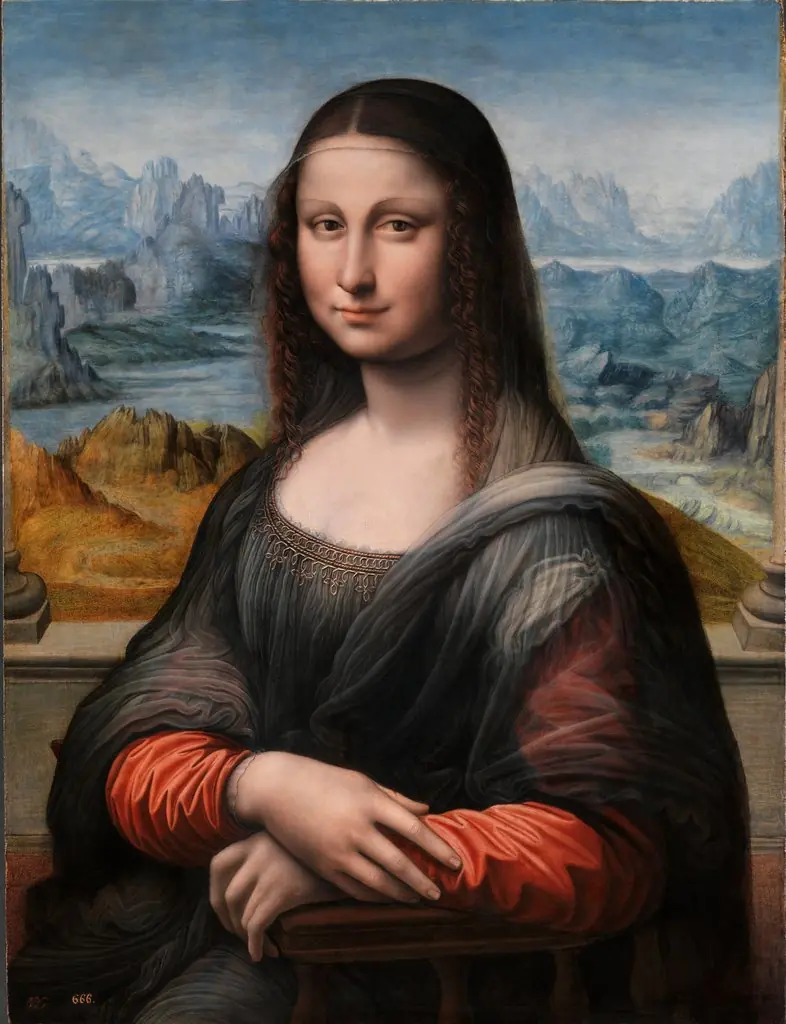
The Hermitage Gioconda belongs to a broad category of early copies of Leonardo's masterpiece that emerged as the original painting became a celebrated work. Unlike the Prado Mona Lisa, which technical analysis proved was created simultaneously in Leonardo's workshop, the Hermitage version is a later work, separated from the original by over a century. The presence of barium sulphate in the ground layer firmly places the work in a seventeenth-century context, despite some institutional dating to the mid-sixteenth century. The researcher Silvano Vinceti, president of the Leonardo da Vinci Foundation, has argued that this portrait might be the work of Leonardo himself, citing the style of the drawing and the tones of the colors used. However, the material evidence of the baryte ground layer, which only came into use well after Leonardo's death, stands in direct conflict with this attribution hypothesis, leaving the artist's identity unresolved and the work firmly categorized as a copy.
Legacy
The painting remains a significant artifact within the extensive tradition of Mona Lisa replicas and reinterpretations. Its popular moniker, Gioconda with Columns, highlights its specific iconographic contribution to this broader lineage, linking it formally to other columnar versions in Oslo, Baltimore, and Dulwich. The scholarly debate surrounding the Hermitage copy, particularly the tension between stylistic attribution claims and material scientific analysis, underscores the enduring fascination with Leonardo's composition and the persistent desire to find lost originals among the numerous surviving copies. The work continues to be studied as an example of how Leonardo's innovations were adapted, interpreted, and disseminated across different European painting traditions long after his death.
Artist & collection









![Ginevra de' Benci [obverse], by Leonardo da Vinci](https://artifactworldgallery.com/img/leonardo-da-vinci--ginevra-de-benci-obverse--afb6ec3a3e65f392-w320.webp)