Artwork
Portrait of Peter Canisius
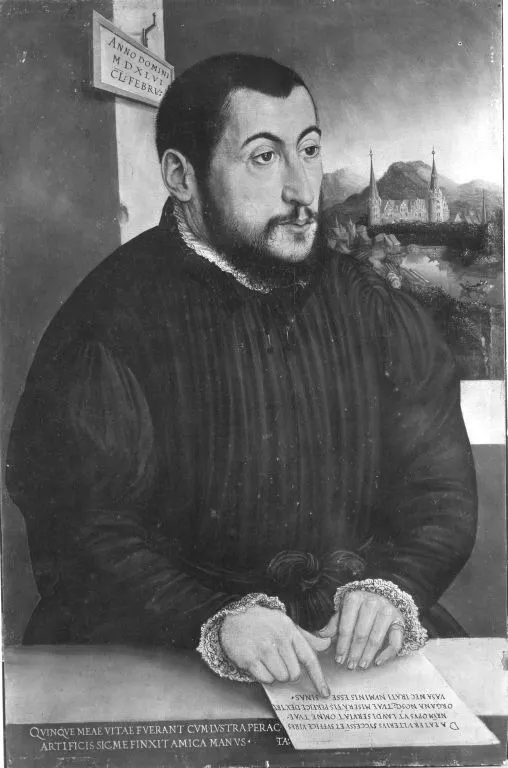
Portrait of Peter Canisius is an oil painting by the Mannerist artist Unknown. It dates from 1546 and is held in the collection of the Bavarian State Painting Collections. The work is an oil painting portraying a dignified figure in a dark, high‑collared robe.
About this work
Subject & Meaning
The painting depicts Peter Canisius, identified as the main subject of the work. Created in 1546 by the Monogrammist AE, the portrait presents the figure in a standard format for the genre. As a religious figure, Canisius is shown simply, with the focus on his likeness rather than elaborate symbolic attributes. The work serves as a visual record of the individual during the mid-16th century.
Technique & Style
Executed in 1546, this portrait utilizes oil paint applied to a lime wood panel. The work measures 59.8 cm in height and 40 cm in width. As a product of the mid-16th century, the piece is classified as a painting within the portrait genre, depicting the figure of Peter Canisius. The combination of oil medium and wooden support reflects standard materials for panel paintings of this era.
History & Provenance
Portrait of Peter Canisius is held by the Bavarian State Painting Collections and is accessioned under the inventory number Bavarian State Painting Collections.
The work titled Portrait of Peter Canisius was painted by the Monogrammist AE in 1546 using oil paint on a lime panel. It was created as a portrait of Peter Canisius and is part of the collection of the Bavarian State Painting Collections, currently housed in the Alte Pinakothek in Munich. The painting measures 59.8 cm in height and 40 cm in width. Its creation dates to the year 1546, placing it firmly within the mid‑sixteenth‑century artistic milieu of Germany.
Portrait of Peter Canisius is held by the Bavarian State Painting Collections and is accessioned under the inventory number Bavarian State Painting Collections. The work is displayed at the Alte Pinakothek in Munich. It was included in the exhibition "German Renaissance Portraits from the 15th and 16th Centuries," shown at the museum in 2018.
Context
The work stands as an early example of portraiture within the Northern Renaissance, reflecting the period's emphasis on individual representation and devotional imagery. Contemporary scholarship identifies it as a product of the Monogrammist AE tradition active in Augsburg circa 1546, situating the piece within broader discussions of workshop practices and regional artistic identity. Its depiction of Peter Canisius aligns with Counter-Reformation themes of saintly veneration, though reception during the 16th century remains sparsely documented.
Modern scholarship situates the painting within the oeuvre of the Monogrammist, emphasizing its technical precision and role in the evolution of portraiture in German art.
The attribution to the Monogrammist AE is supported by material analysis and stylistic continuity with other signed works, reinforcing its significance in understanding 16th-century workshop dynamics. The painting's inclusion in the Bavarian State Painting Collections since its acquisition underscores its recognized historical value, while its display at the Alte Pinakothek facilitates ongoing study of Renaissance portraiture within institutional contexts.
Overview
The work is an oil painting portraying a dignified figure in a dark, high‑collared robe. He rests his hands on a ledge, a ring visible on one finger, and his expression is solemn, framed by a short beard and mustache. Behind him a muted landscape suggests a city with towers and water, while Latin inscriptions run across the top and bottom of the canvas.
Artist & collection









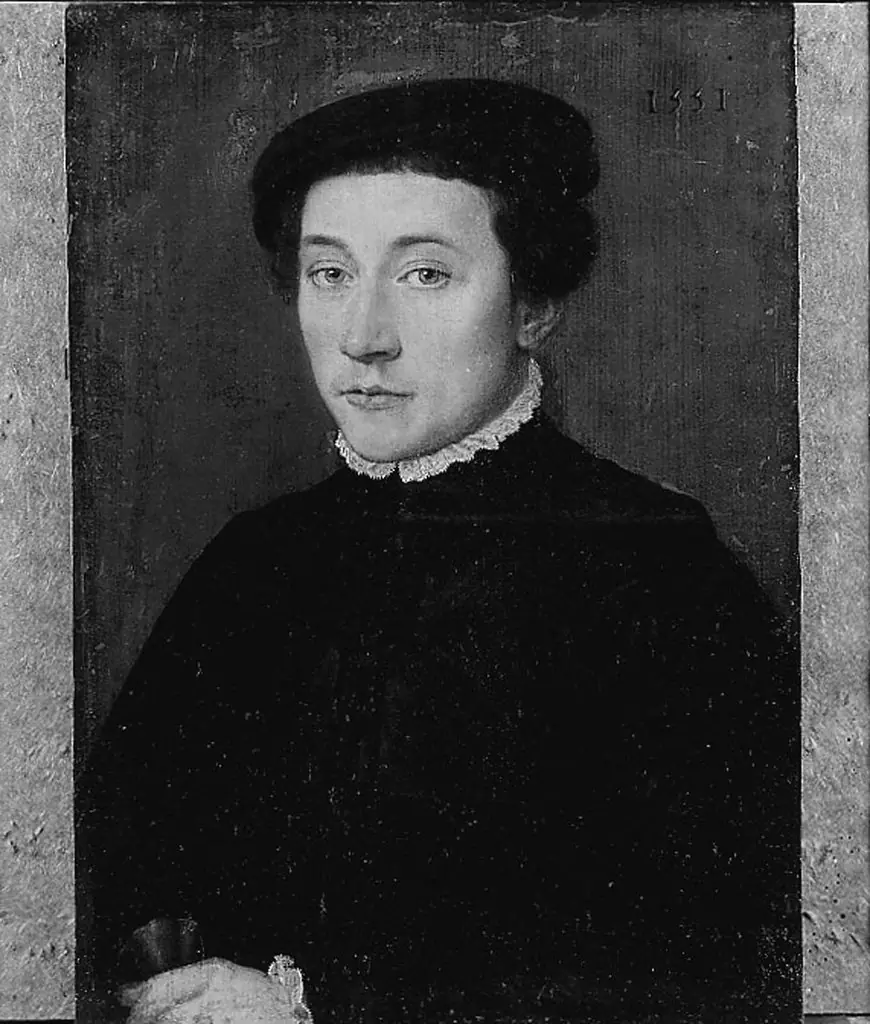
- Portrait of a Man
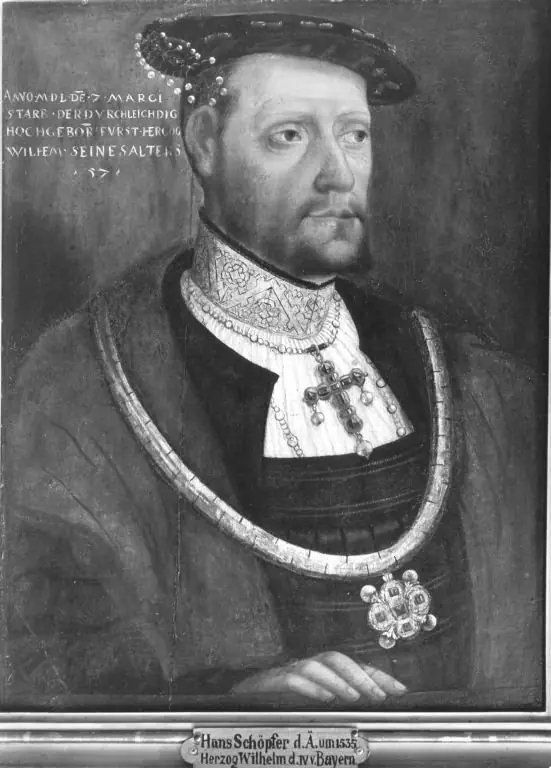 Herzog Wilhelm IV. von Bayern
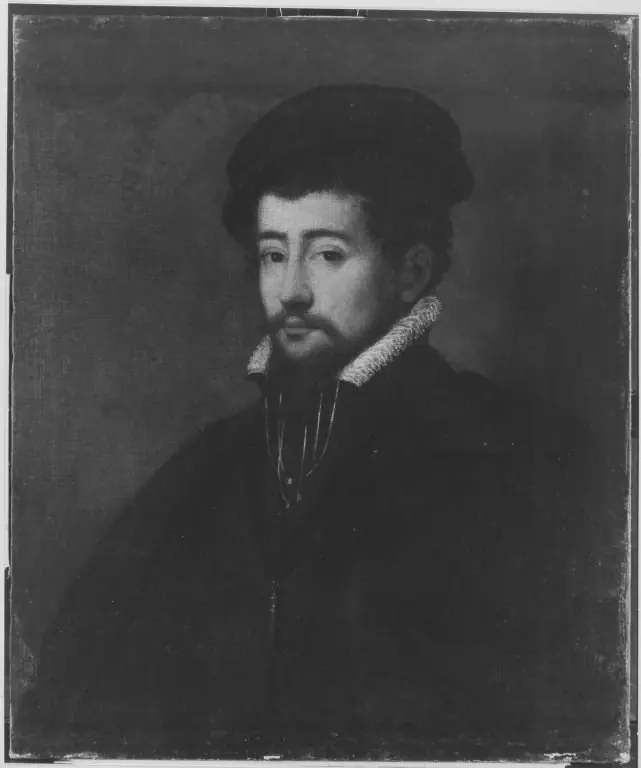 Portrait of young man
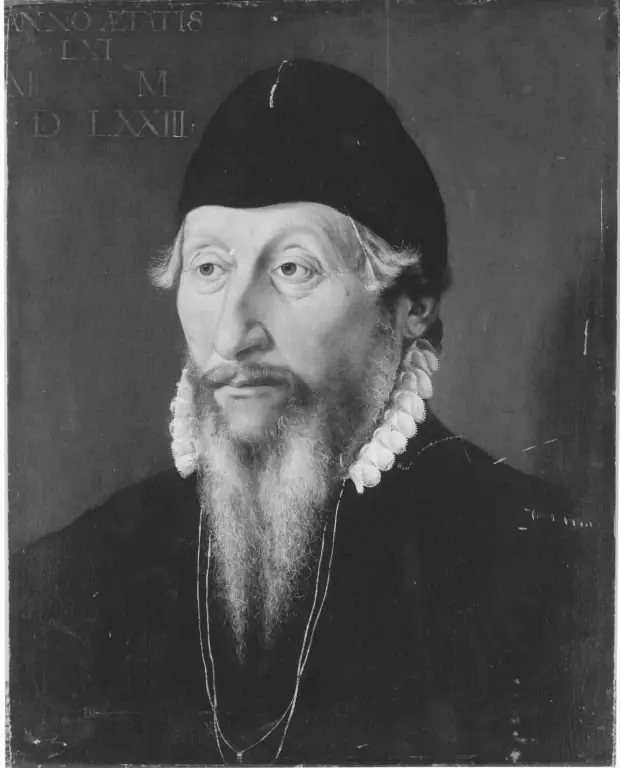 Männliches Bildnis
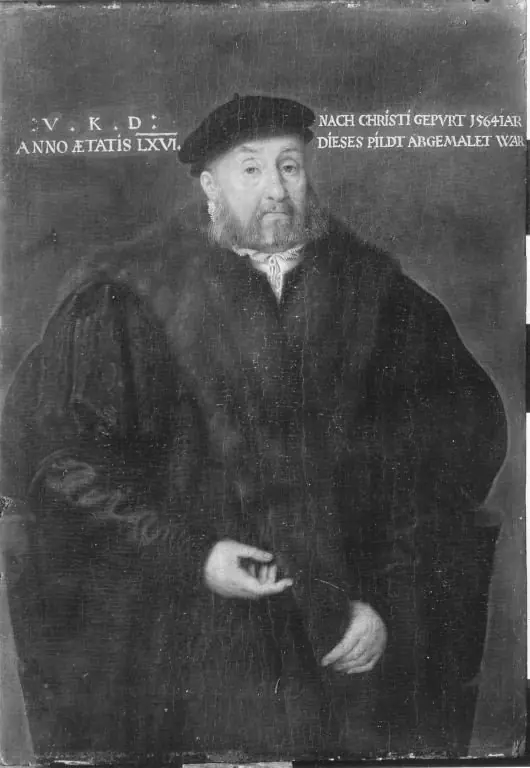 Bildnis eines Mannes im Alter von 66 Jahren
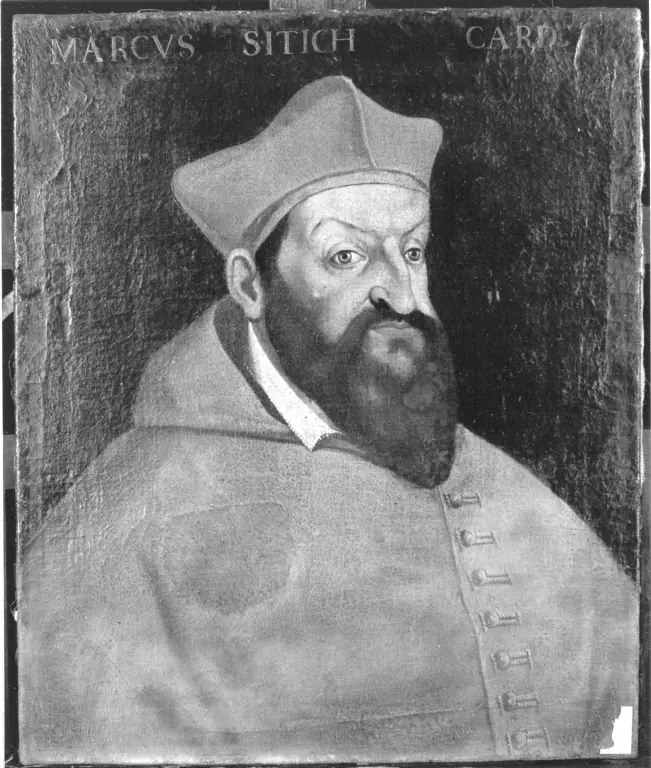 Bildnis des Kardinals Markus Sittich
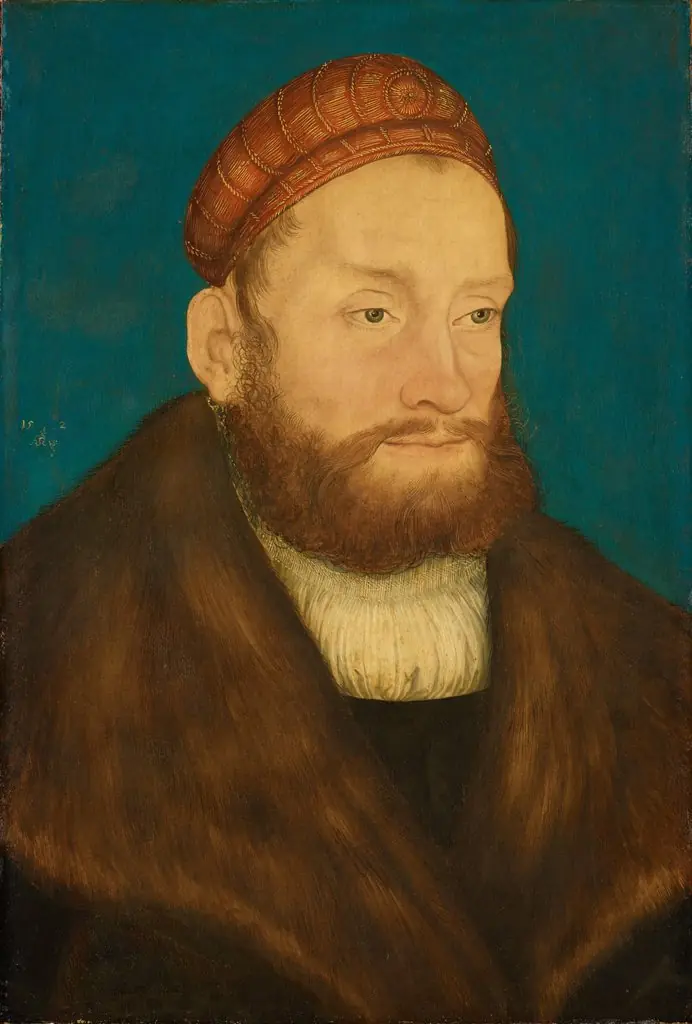 Portrait Margrave Casimir of Brandenburg-Kulmbach
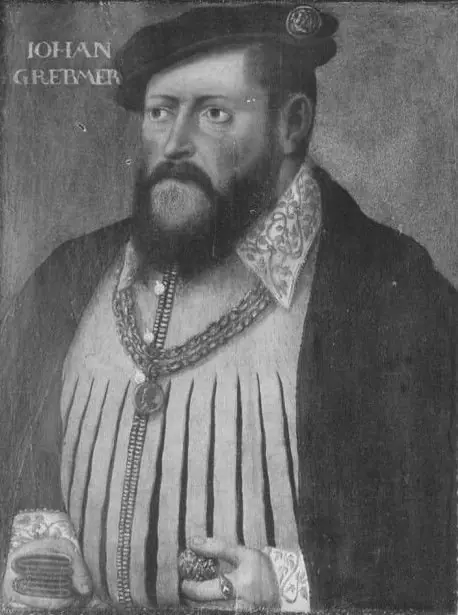 Bildnis des herzoglichen Kammerdieners Johann Grebmer zu Neuenhaus
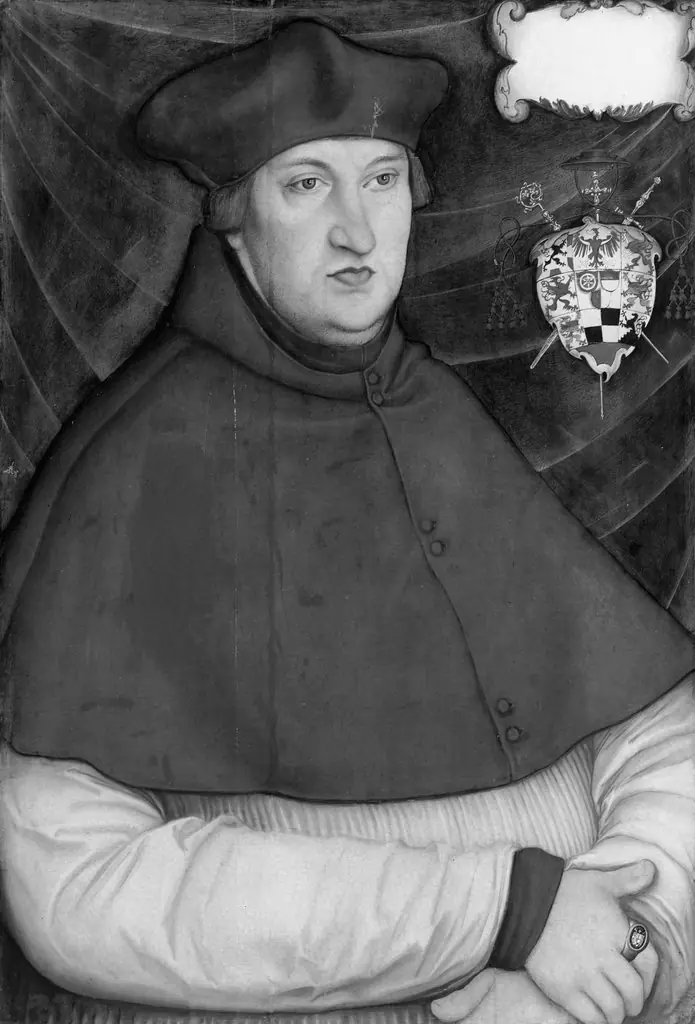 Portrait of Cardinal Albrecht of Brandenburg
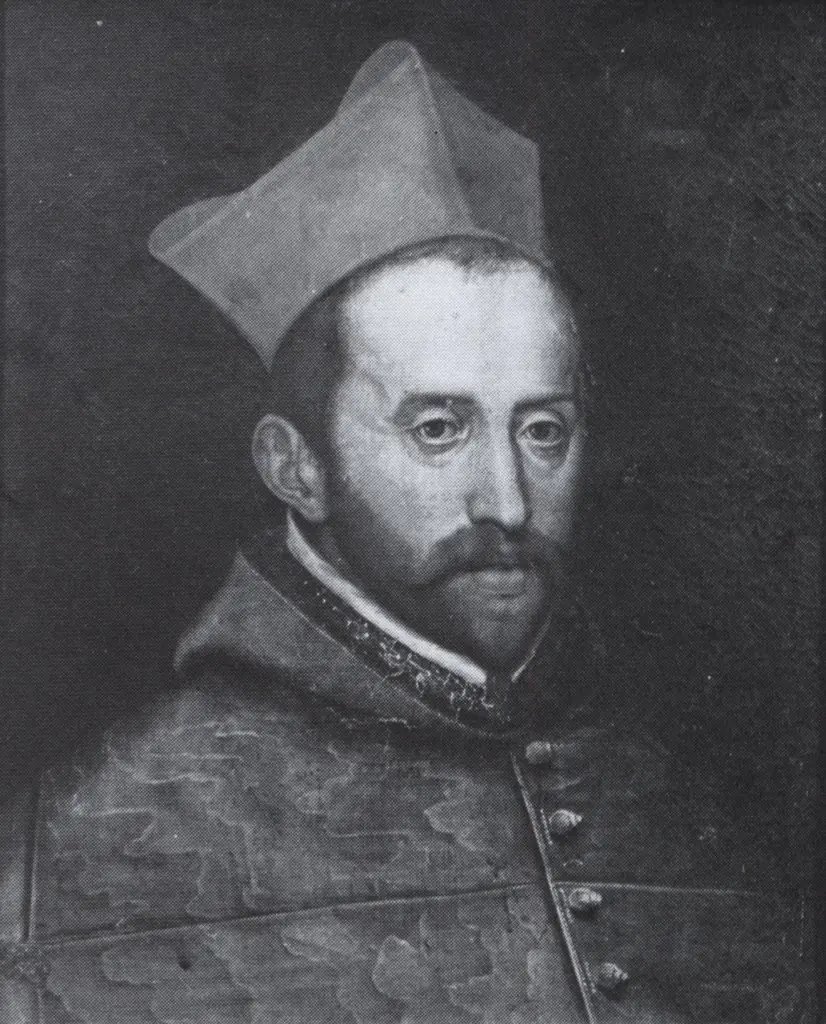 Andreas von Österreich
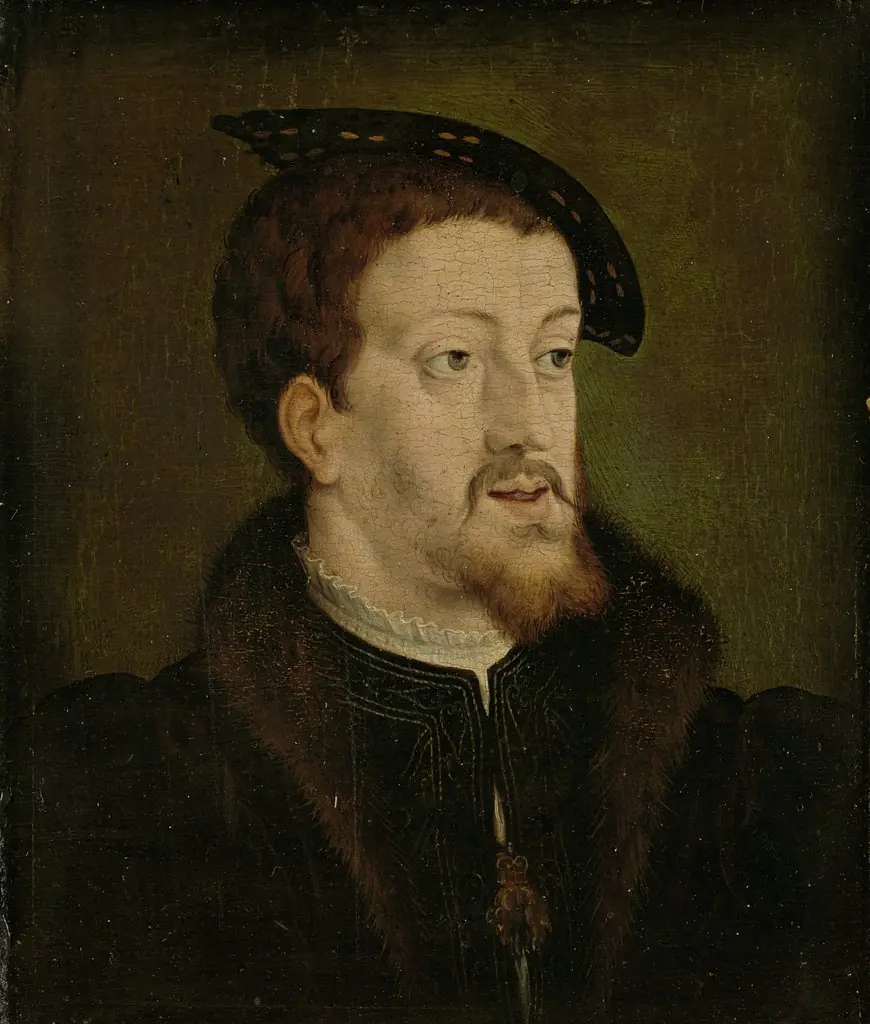 Portrait of Charles V (1500-58), emperor of the Holy Roman Empire
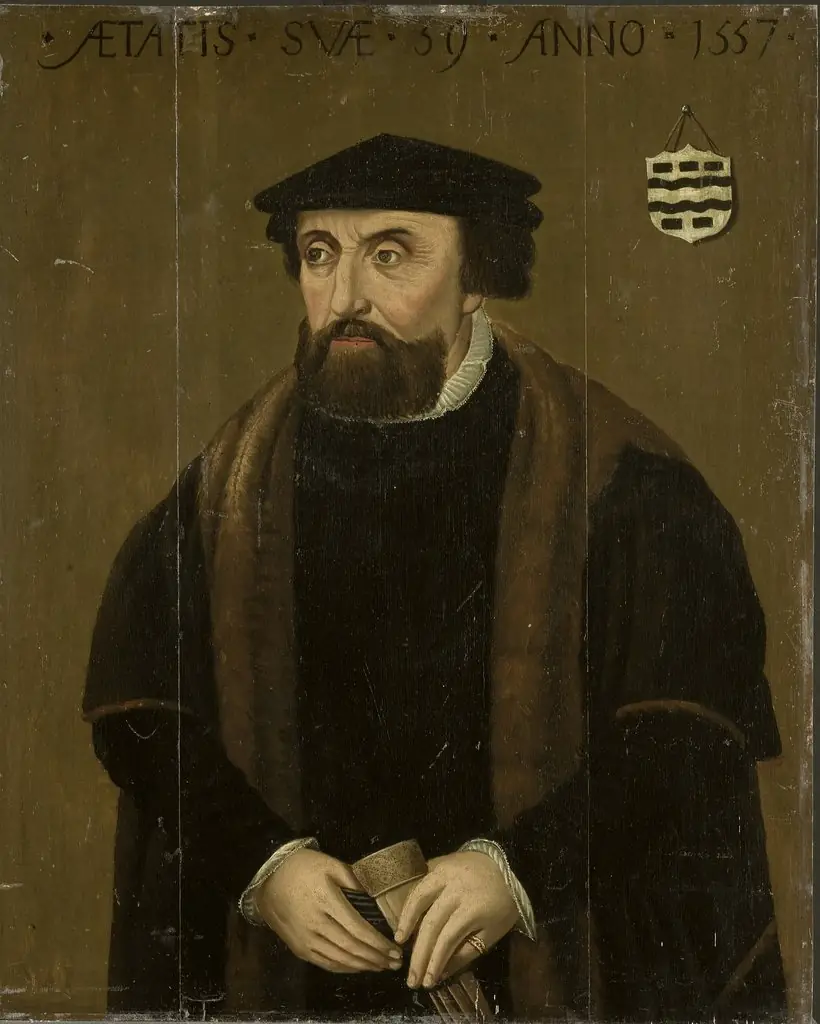 Portrait of a Man, perhaps Willem Simon-Maertensz, Lord of Stavenisse and Cromstrijen, repeatedly Burgomaster of Zierikzee