Artwork
Servant in a Pavilion
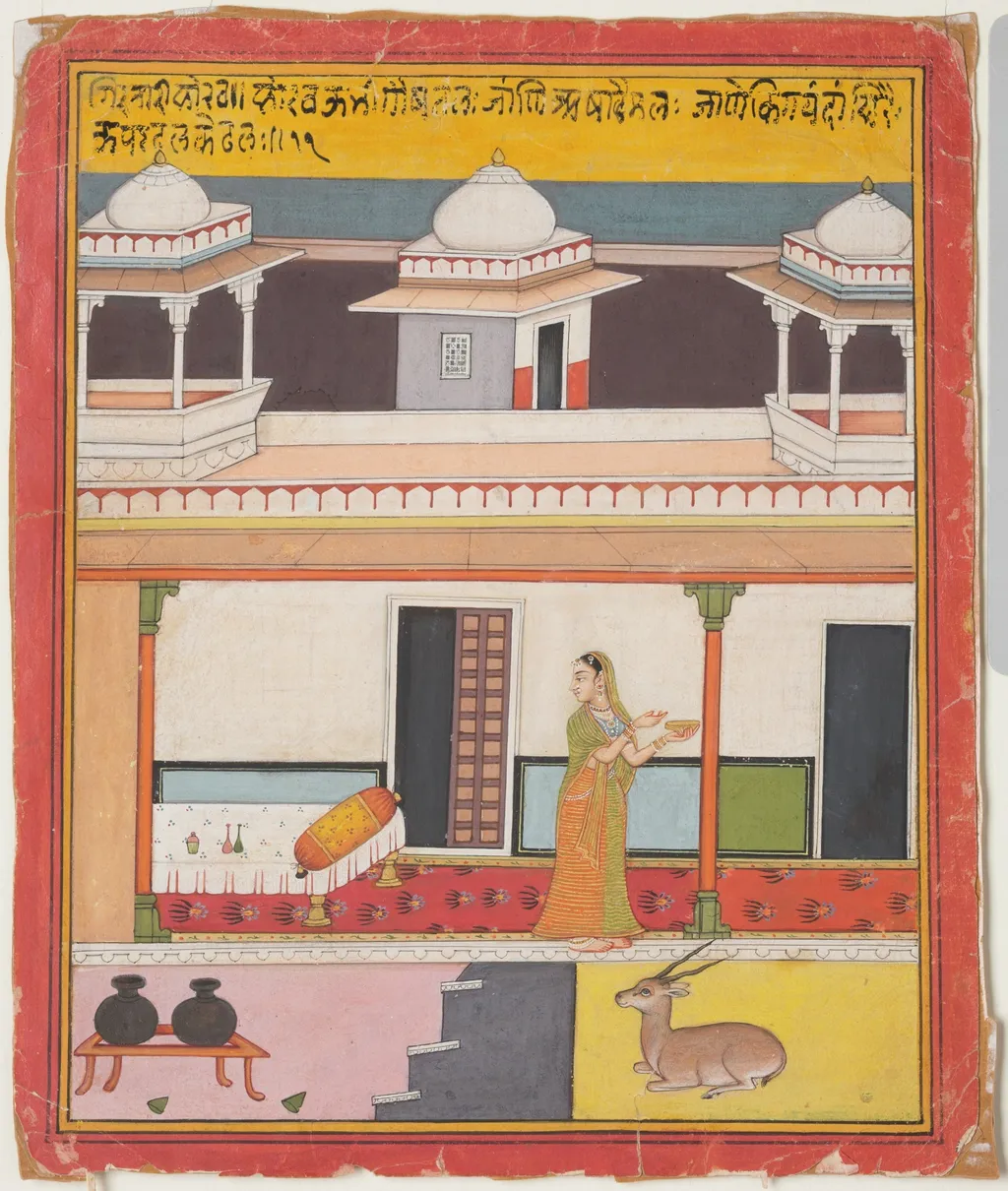
Servant in a Pavilion is an unspecified painting by the Rococo painting artist Unknown. It dates from 1700 and is held in the collection of the Detroit Institute of Arts. This painting portrays a woman standing on a balcony, holding a bowl, surrounded by domestic objects and a deer below.
About this work
Overview
The setting includes ornate pillars, arched openings, and a patterned red carpet, suggesting an enclosed courtyard or pavilion.
This painting portrays a woman standing on a balcony, holding a bowl, surrounded by domestic objects and a deer below. The setting includes ornate pillars, arched openings, and a patterned red carpet, suggesting an enclosed courtyard or pavilion. The figure’s attire and the architectural details point to a South Asian context, while the color palette and composition reflect conventions of traditional Indian miniature painting.
Subject & Meaning
The woman, dressed in a green and orange sari, appears engaged in a quiet, routine act, perhaps offering food or water. The presence of a deer at her feet introduces a symbolic element, often associated with gentleness or spiritual presence in Indian art. The scene evokes solitude and ritual, blending the mundane with the contemplative, without overt narrative or mythological reference.
Technique & Style
The work employs fine brushwork and flat, saturated colors typical of Indian miniature traditions. Details like the floral carpet and architectural elements are rendered with precision, while the figures are stylized rather than naturalistic. The use of layered pigments and attention to pattern, rather than perspective, aligns with regional painting practices that prioritize decorative harmony over spatial realism.
History & Provenance
The painting’s origins are not definitively documented, but its stylistic features suggest it was created in a courtly or regional Indian atelier during the 18th or early 19th century. It likely belonged to a private collection before entering institutional hands, though its specific lineage prior to modern acquisition remains unclear.
Context
This image reflects the enduring influence of Mughal and Rajput painting traditions, where intimate domestic scenes were rendered with symbolic richness. Such works often emerged in smaller courts that preserved indigenous aesthetics amid broader colonial shifts. The inclusion of animals and architectural detail aligns with broader trends in regional Indian art that valued layered meaning over literal storytelling.
Legacy
Though not widely exhibited or reproduced, the painting contributes to the understanding of everyday life in pre-colonial Indian visual culture. It exemplifies how ordinary moments were elevated through careful composition and symbolic detail, preserving a quiet aesthetic continuity that persisted even as artistic patronage changed under colonial rule.
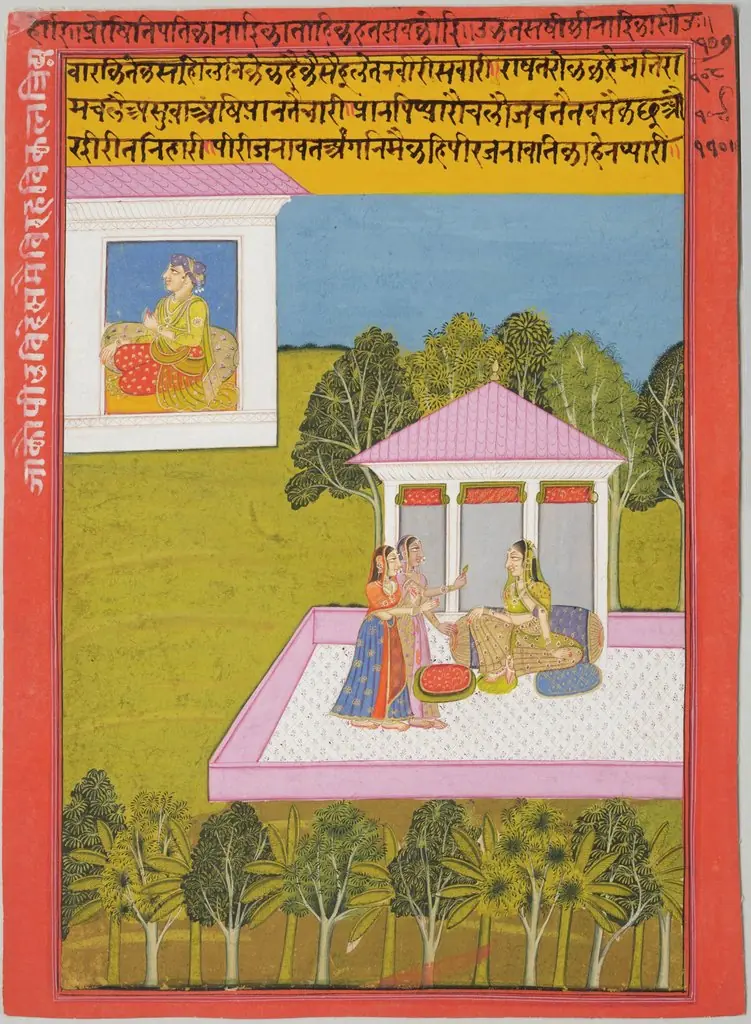
Artist & collection









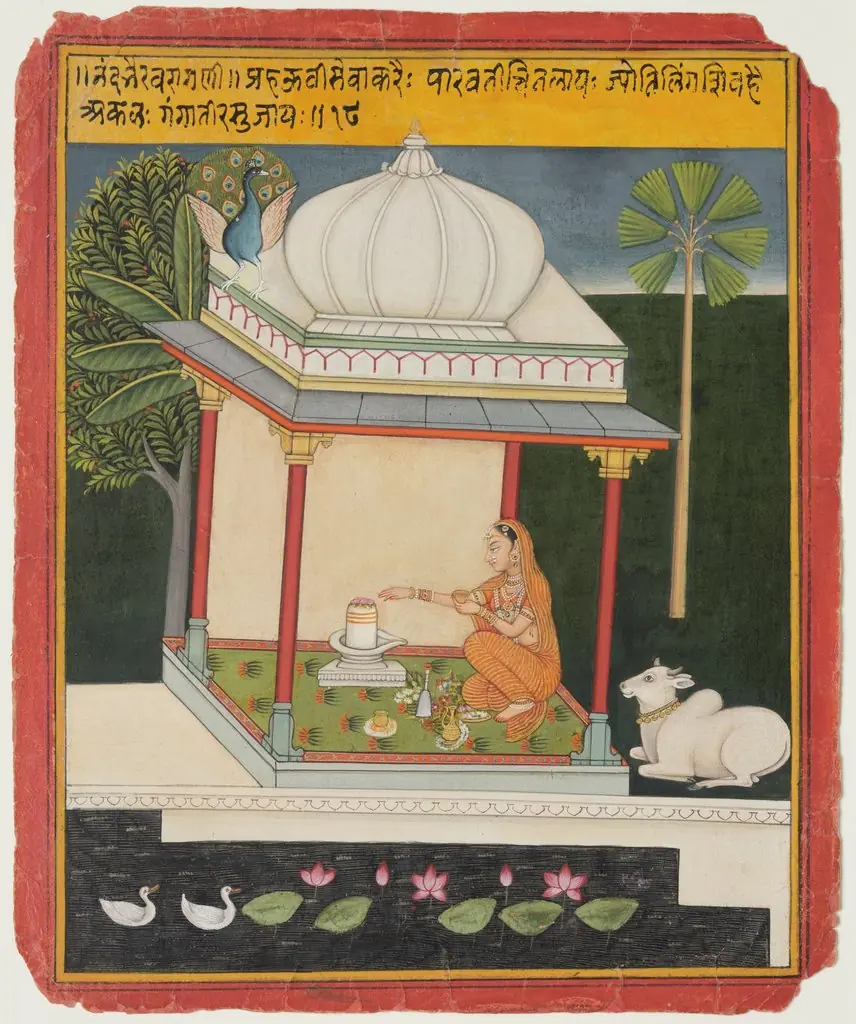 Princess Worshipping Lingami
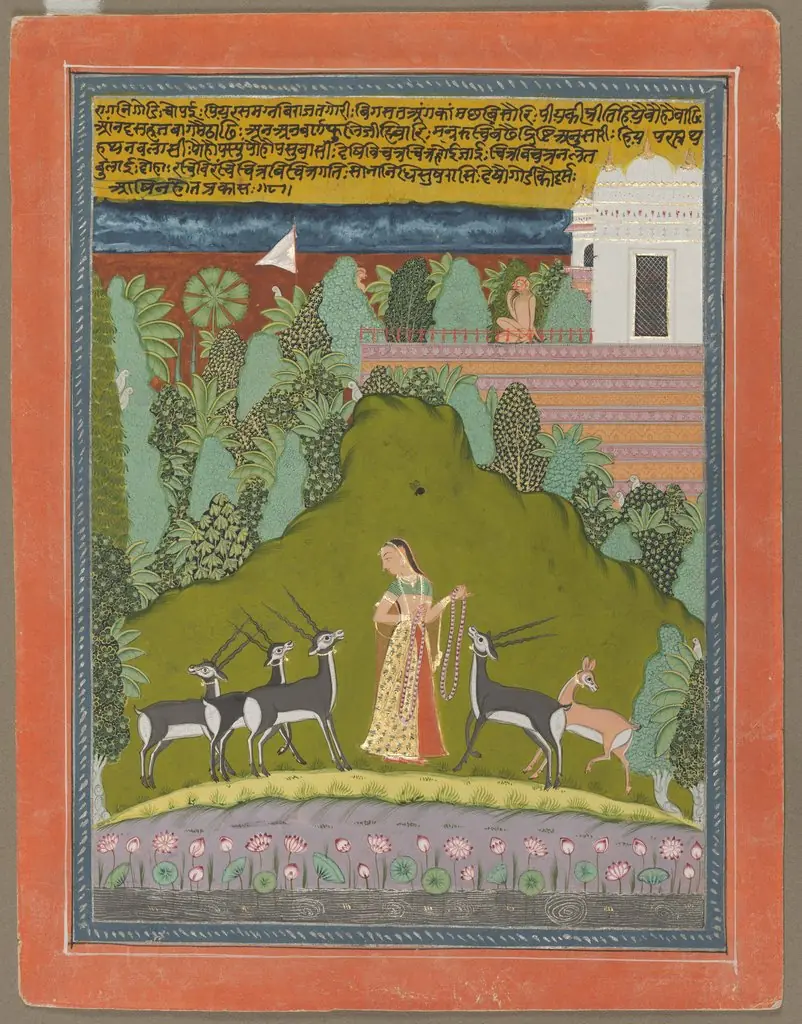 Gaudi Ragini
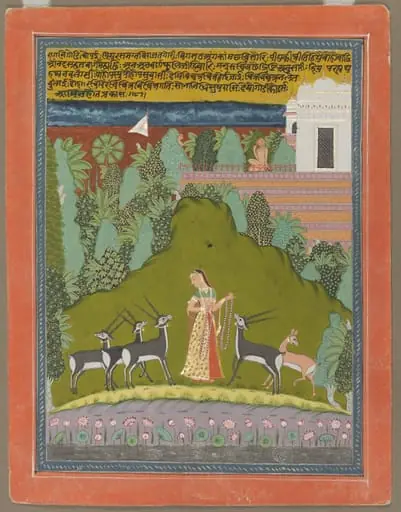 Gaudi Ragini
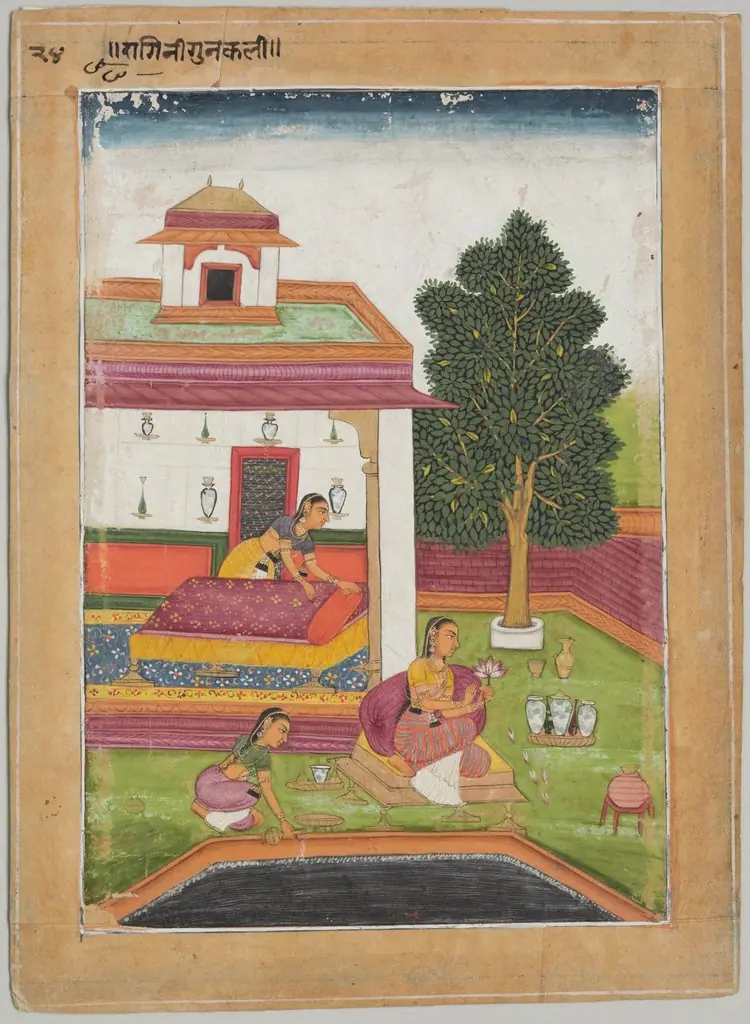 Illustration to the Musical Mode Malasari Ragini
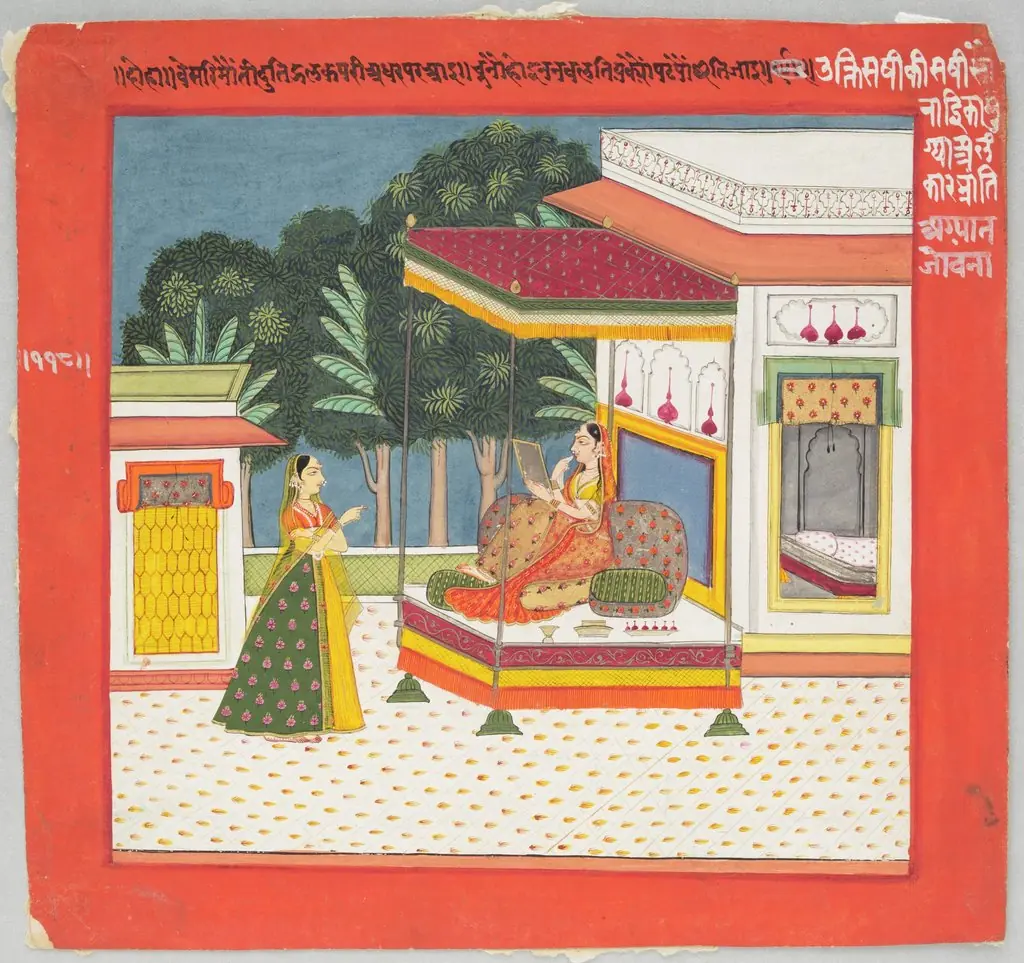 Hero and Heroine Subject: Lady Applying Makeup
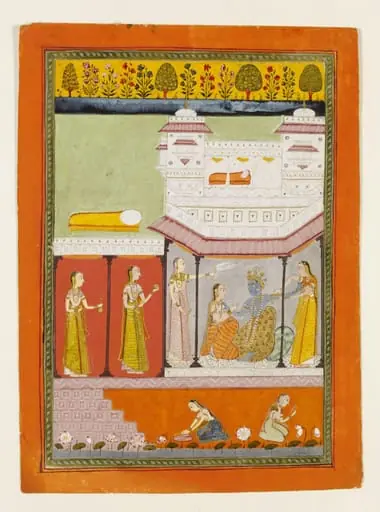 Bhairava Raga
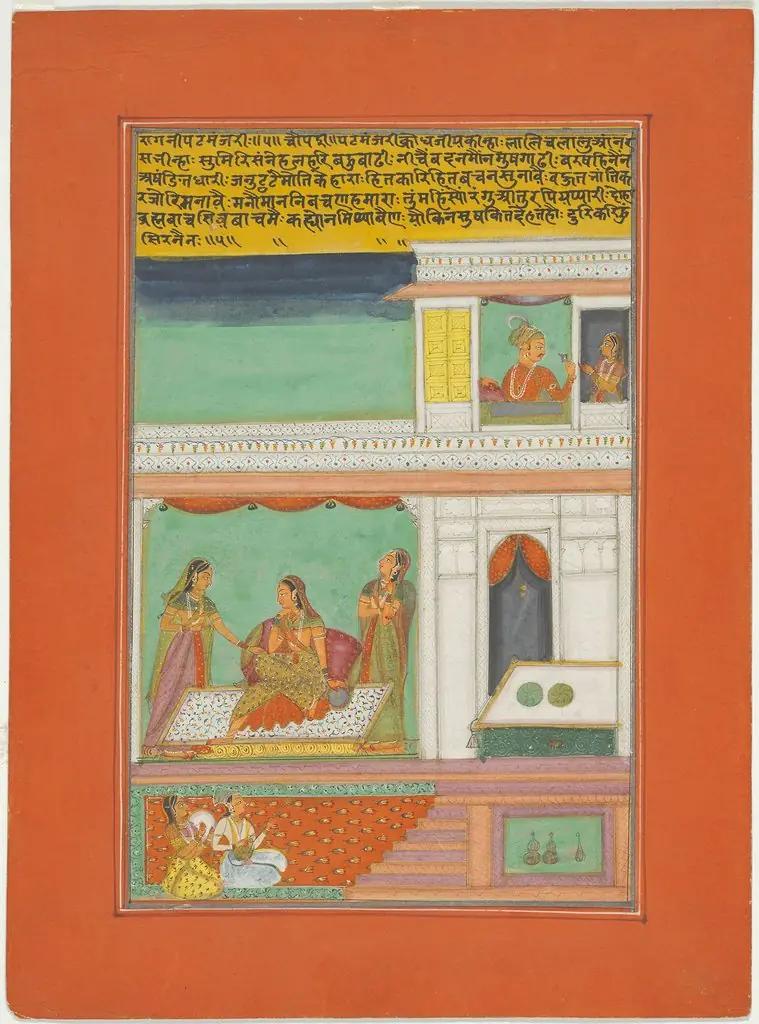 Ragini Patmanjari, Page from a Jaipur Ragamala Set
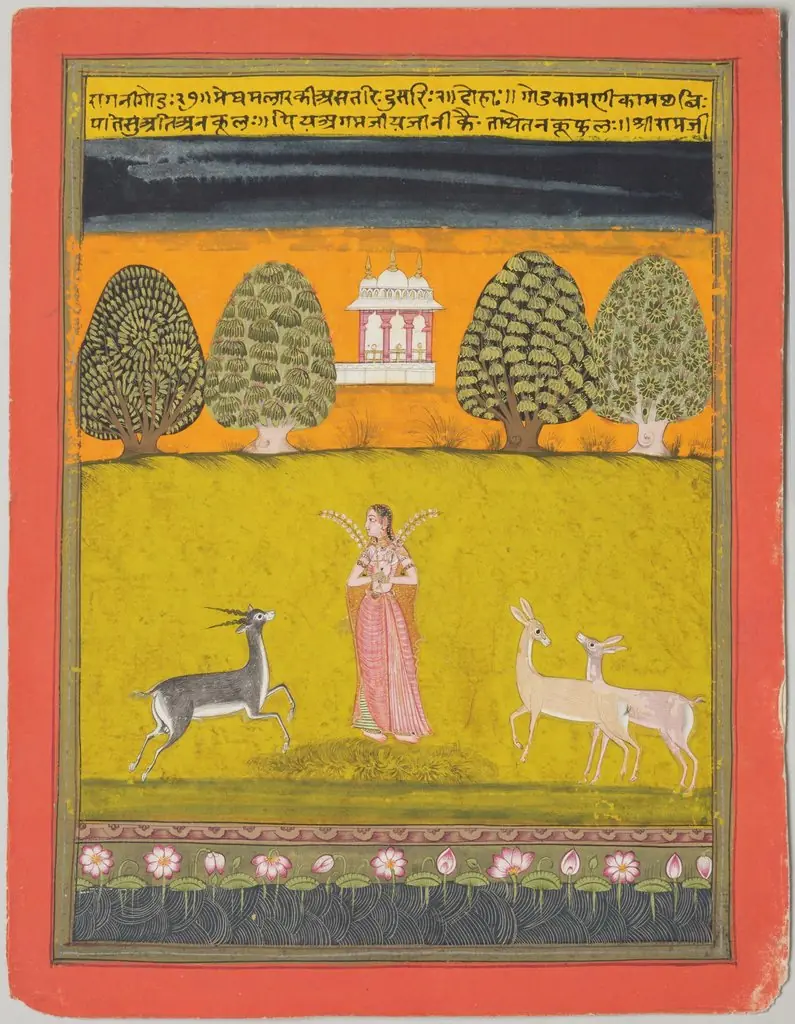 Girl with Three Deer: Todi Ragini
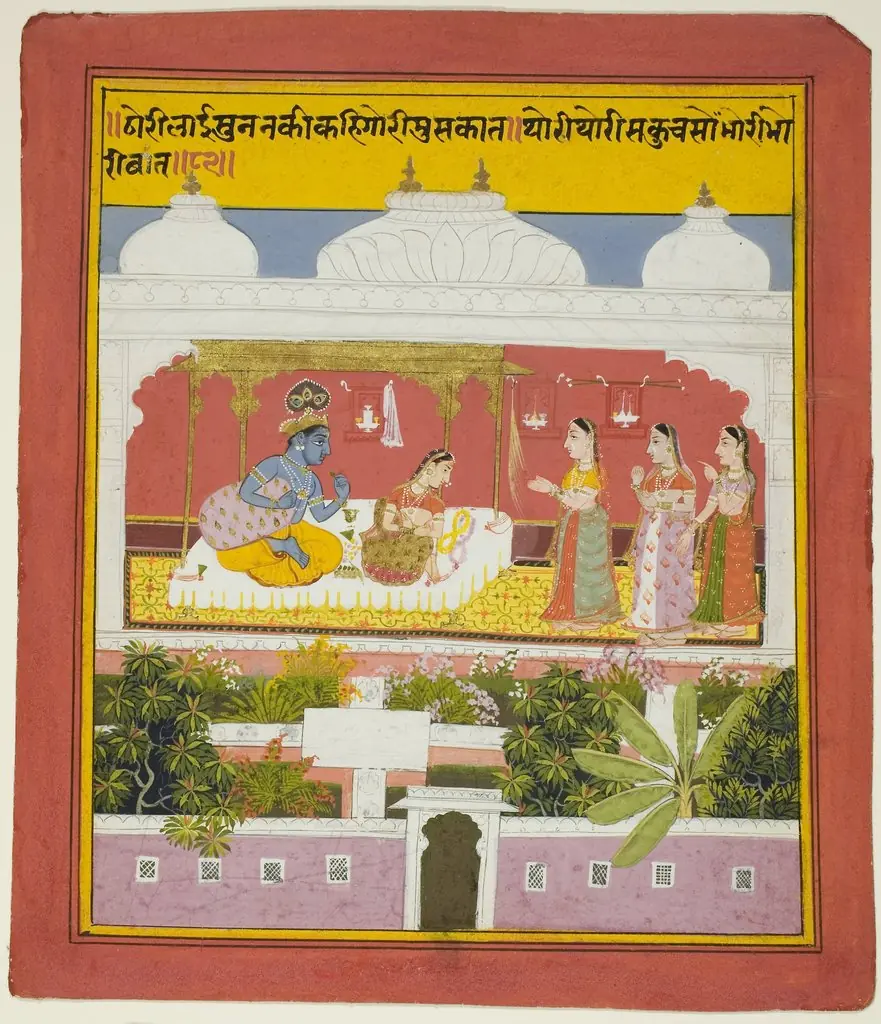 Krishna and Radha in a Pavilion, page from a copy of the Sat Sai Seven Hundred Verses)