Artwork
The false Mansur punished before the judge and expelled from the city, from a Tuti-nama (Tales of a Parrot): Seventeenth Night
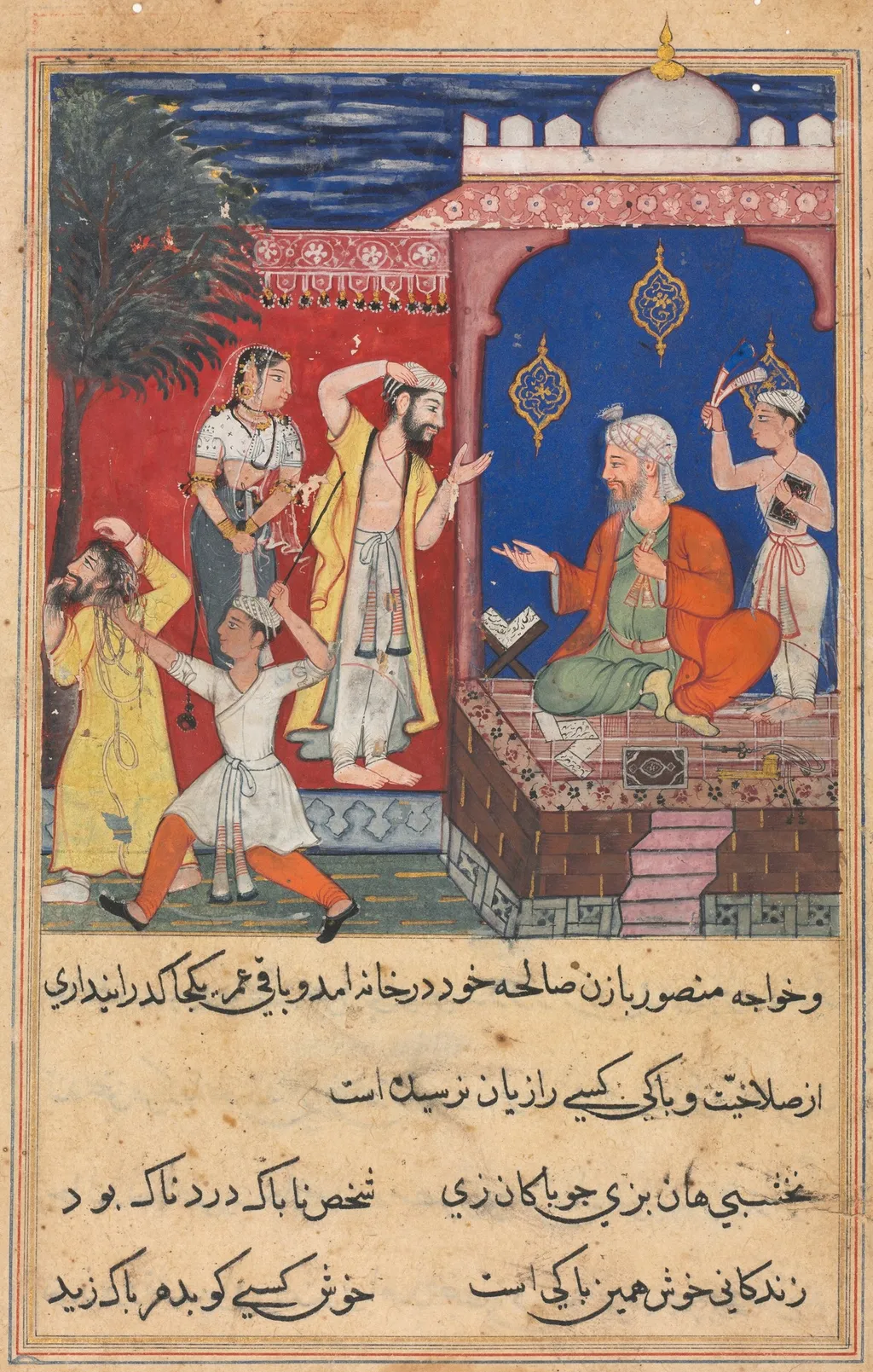
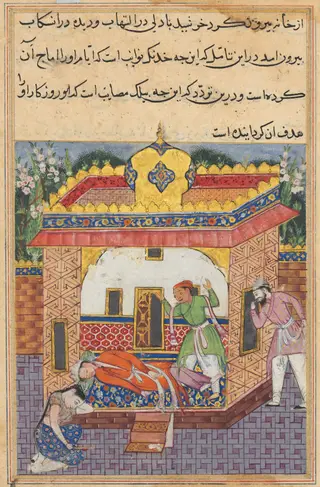
The false Mansur punished before the judge and expelled from the city, from a Tuti-nama (Tales of a Parrot): Seventeenth Night is an unspecified painting. It dates from 1560 and is held in the collection of the Cleveland Museum of Art. The work depicts a narrative episode from a Persian illustrated manuscript, showing the moment a false Mansur is apprehended and expelled.
About this work
Subject & Meaning
The composition emphasizes the figure's transgression and subsequent removal, symbolizing the consequences of falsehood within the moral framework of the story.
The scene illustrates the punishment of a deceitful individual named Mansur, who stands before a judge and is expelled from the city as a moral rebuke. This narrative reflects the didactic theme of justice and social order found in the Tuti-nama, where characters are rewarded or penalized according to their conduct. The composition emphasizes the figure's transgression and subsequent removal, symbolizing the consequences of falsehood within the moral framework of the story.
The subject is drawn from a specific tale in the Tuti-nama (Tales of a Parrot), a collection of framed tales used to convey ethical lessons. The figure of Mansur is identified as "false" in the title, indicating his deceitful nature. The work is part of a 16th-century Mughal manuscript and is housed in the Cleveland Museum of Art, which holds the manuscript folio bearing this illustration.
History & Provenance
The painting was created circa 1560 during the Mughal Empire period, as indicated by its inception date in the Cleveland Museum of Art’s records. It is part of a dispersed manuscript known as the Tuti-nama (Tales of a Parrot), specifically the Seventeenth Night illustration. The Cleveland Museum of Art acquired the work in 1962 as part of a larger acquisition (accession number 1962.279.129.b).
Its provenance prior to the mid-20th century remains undocumented in the available sources, and the artist is listed as unknown.
Overview
The work depicts a narrative episode from a Persian illustrated manuscript, showing the moment a false Mansur is apprehended and expelled. The composition is divided into two zones: on the left, a crowd in vivid yellows, reds and whites surrounds the condemned figure, while on the right a seated official in orange and green gestures toward the scene, accompanied by a servant with a fan. A blue wall, white dome and a solitary palm complete the background.
Technique & Style
Rendered in flat, saturated pigments, the painting employs a decorative, two‑dimensional approach typical of Persian miniature art. Figures are outlined without chiaroscuro, and the composition relies on bold color blocks and stylized gestures rather than realistic modeling, emphasizing narrative clarity over illusionistic depth.
Context
Illustrated books like the Tuti‑nama served both entertainment and didactic purposes, using vivid visual storytelling to convey ethical lessons. This painting reflects the broader tradition of courtly manuscript production, where artists combined literary content with elaborate decorative schemes.
Legacy
Works of this type inform contemporary understandings of Persian narrative art and its role in cultural transmission. The piece exemplifies the aesthetic conventions that continue to influence modern exhibitions of Islamic manuscript illumination.
Artist & collection

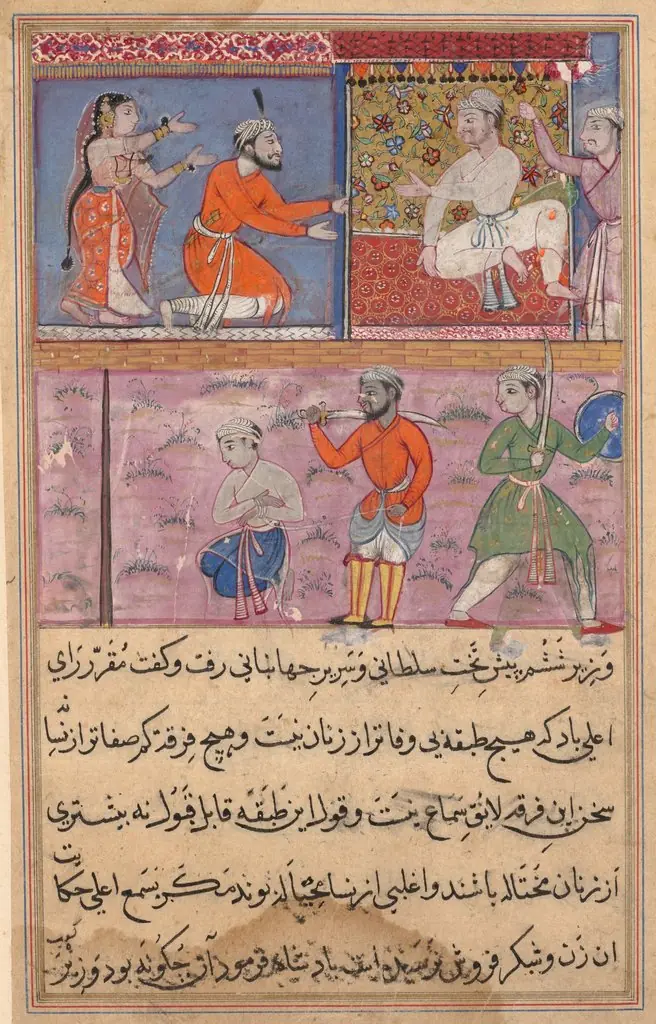 Page from Tales of a Parrot (Tuti-nama): text page
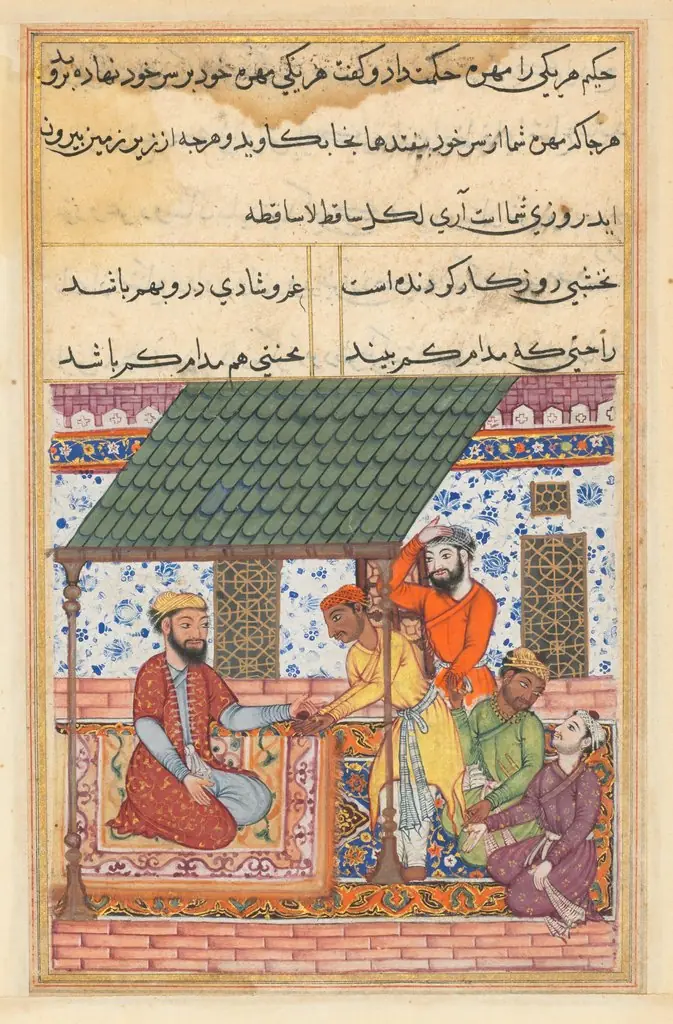 The four destitute friends go to a wise man who gives each one of them a magic shell to be placed on top of the turban, from a Tuti-nama (Tales of a Parrot): Forty-seventh Night
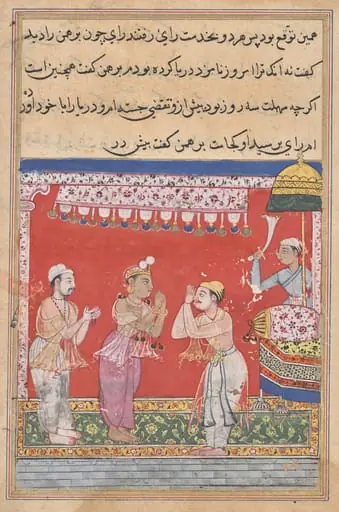 The king of the Ocean, having assumed human form, arrives at the court of the Raja, from a Tuti-nama (Tales of a Parrot): Eleventh Night
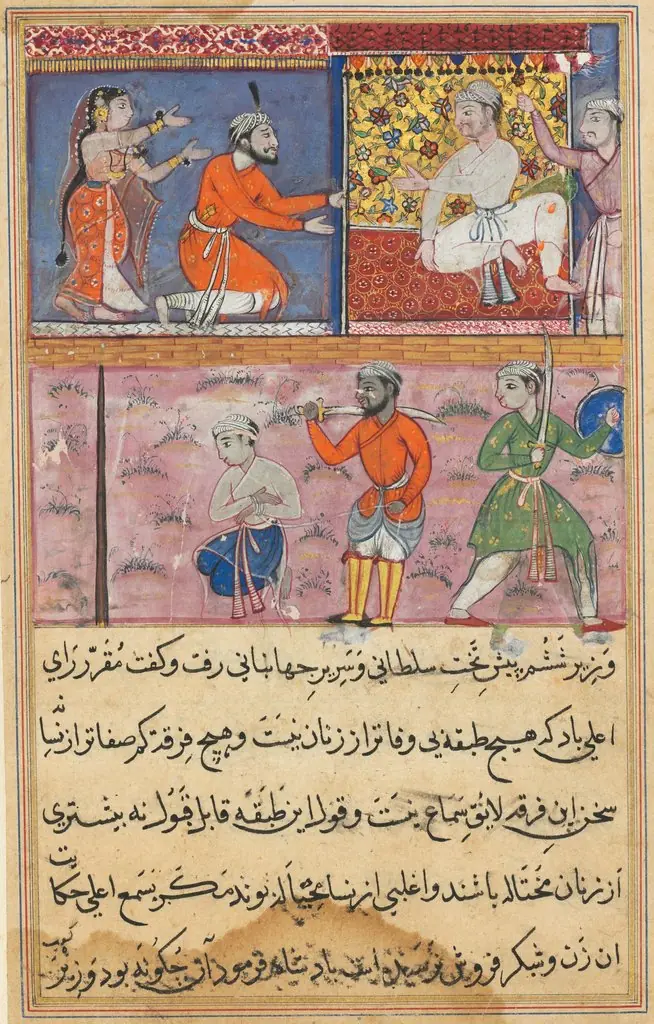 The prince sent back to the place of execution for the sixth time, from a Tuti-nama (Tales of a Parrot): Eighth Night
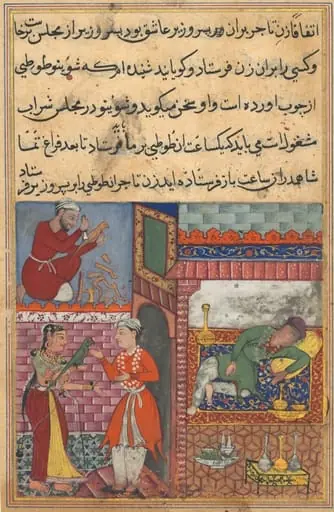 The vizier’s son receives the magic wooden parrot from the wife of the merchant, who is drunk, and has a replica made by a carpenter, from a Tuti-nama (Tales of a Parrot): Tenth Night
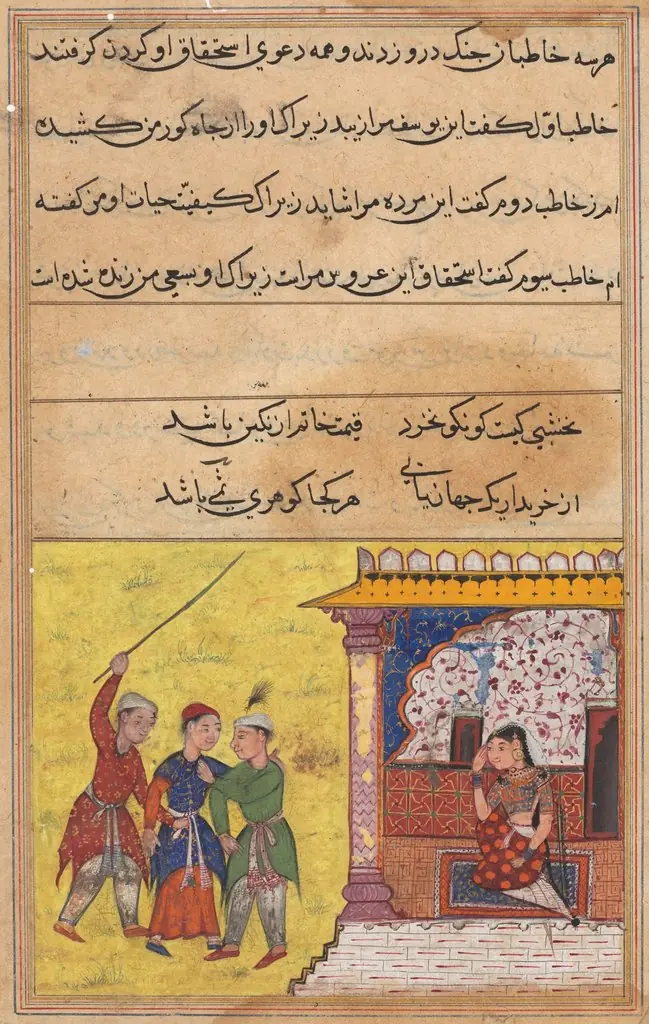 The three suitors again begin to quarrel among themselves for the hand of the devotee’s daughter, from a Tuti-nama (Tales of a Parrot): Twentieth Night
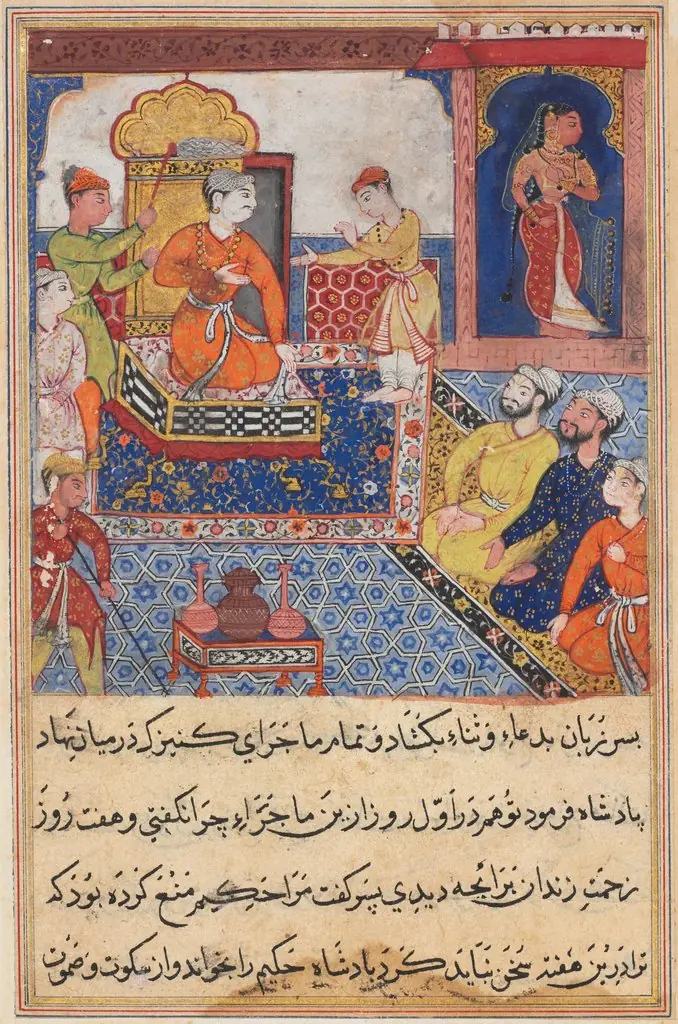 The young prince recounts his experiences to his father, the king, from a Tuti-nama (Tales of a Parrot): Eighth Night
- The false Mansur punished before the judge and expelled from the city, from a Tuti-nama (Tales of a Parrot): Seventeenth Night
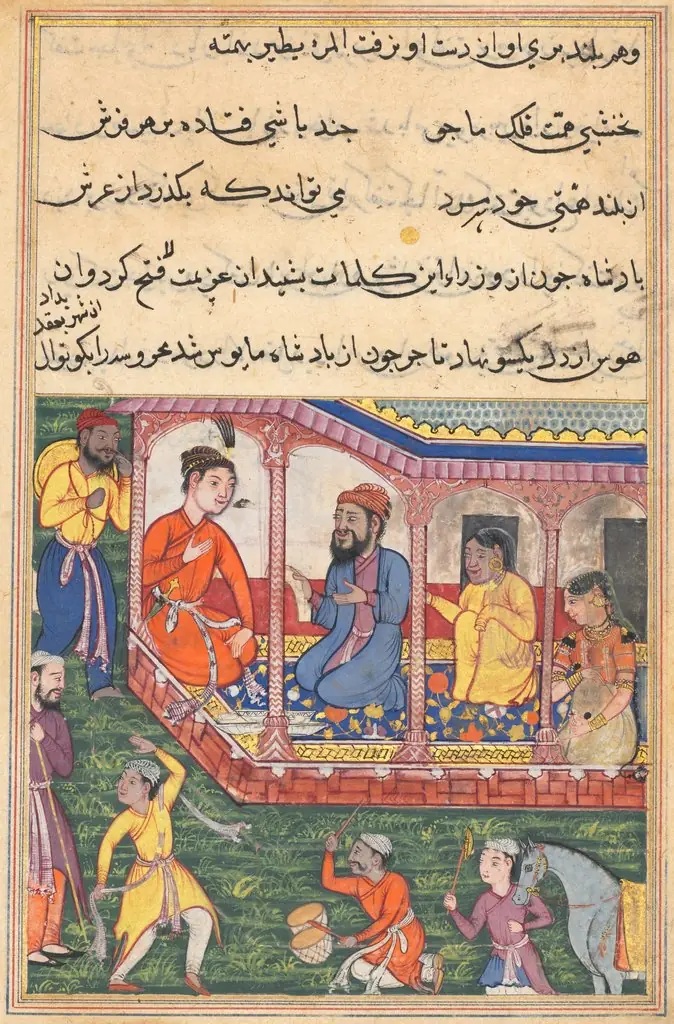 Mahrusa’s marriage to the prefect of the city, from a Tuti-nama (Tales of a Parrot): Thirty-sixth Night
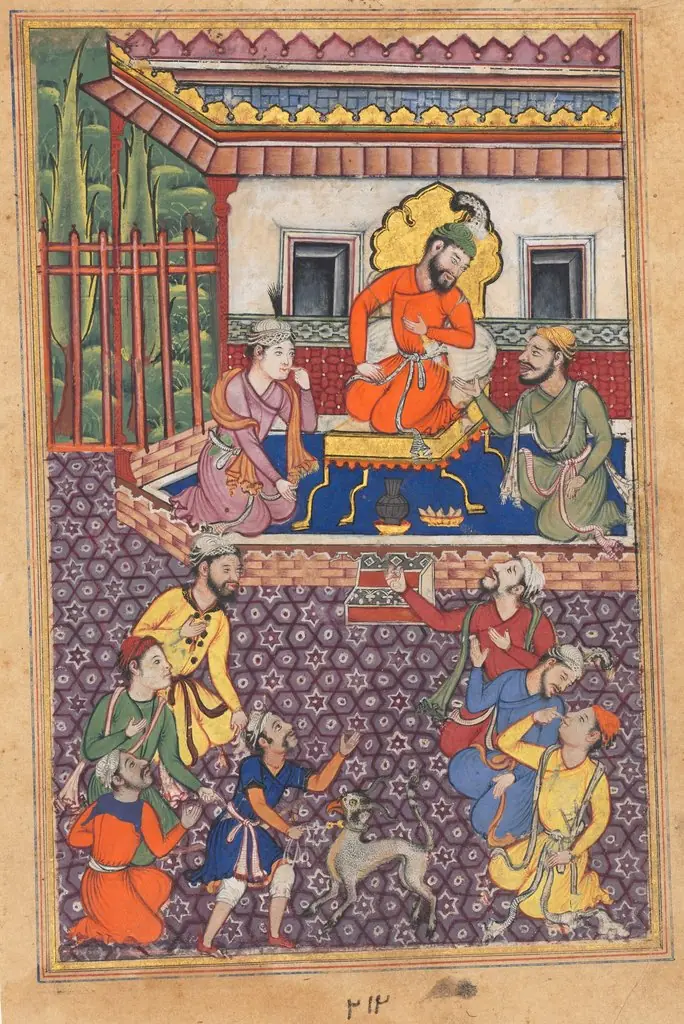 The court of the Raja of Ujjain, from a Tuti-nama (Tales of a Parrot): Forty-sixth Night
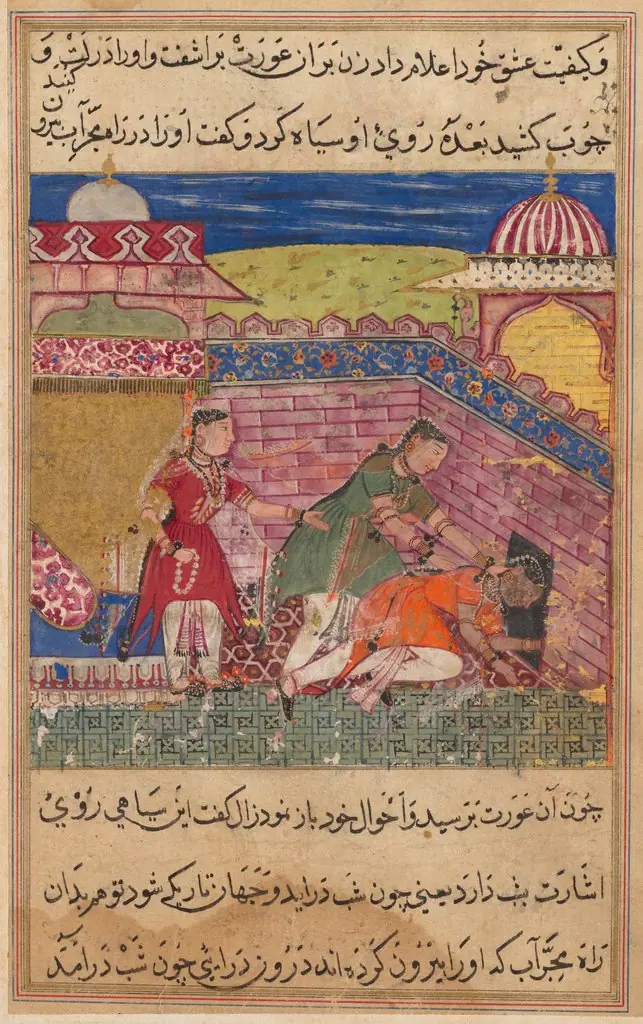 The deceitful wife ejects the procuress after blackening her face, from a Tuti-nama (Tales of a Parrot): Eighth Night
 Latif, who has murdered his brother, falsely accuses Khurshid of the deed, from a Tuti-nama (Tales of a Parrot): Thirty-second Night