Subject
Sacra Conversazione
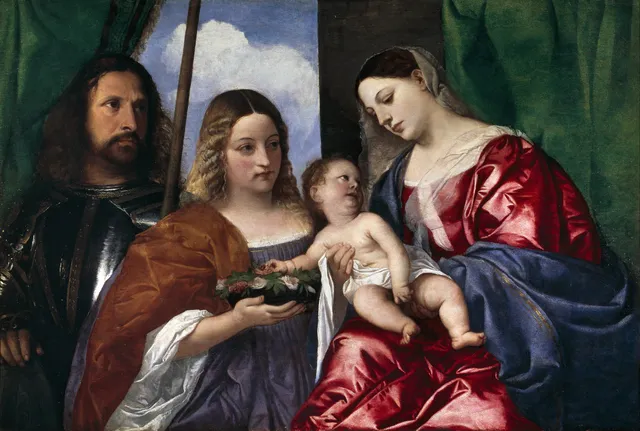
Sacra Conversazione is a subject in art. The gallery holds 28 works in this subject in art, including works by Titian, Lorenzo Lotto and Andrea del Sarto.
In art, a sacra conversazione (Italian: ; plural: sacre conversazioni), meaning "holy (or sacred) conversation", is a genre developed in Italian Renaissance painting, with a depiction of the Virgin and Child (the Virgin Mary with the infant Jesus) amidst a group of saints in a relatively informal grouping, as opposed to the more rigid and hierarchical compositions of earlier periods. Donor portraits may also be included, generally kneeling, often their patron saint is presenting them to the Virgin, and angels are frequently in attendance.
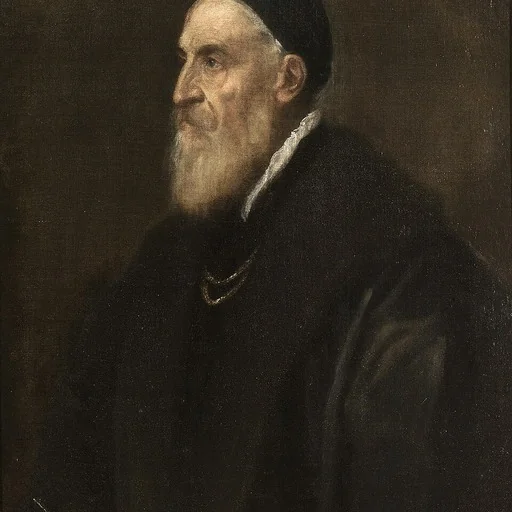
Key artists
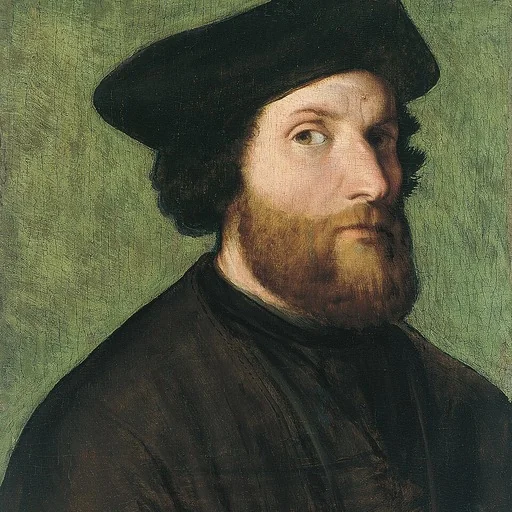
Overview
A sacra conversazione, meaning holy or sacred conversation, is a genre of religious painting that developed during the Italian Renaissance. It depicts the Virgin Mary and the infant Jesus grouped alongside saints in a relatively informal arrangement, as opposed to the rigid and hierarchical compositions of earlier periods. The term, which emerged as a retrospective title in the late eighteenth or early nineteenth century, reflects the rapt stillness of the figures, who communicate at a spiritual rather than a material level. The motif arose as artists replaced compartmented polyptych altarpieces with unified compositions where figures occupy a single shared perspectival space, often accompanied by angels and kneeling donor portraits presented by patron saints.
Iconography & meaning
The iconography centers on the Virgin and Child as the focal point, surrounded by at least two saints who are not drawn from a single biblical narrative but represent an anachronistic, mystical assembly. The Latin root sancta conversatio refers not to a literal dialogue but to pious conduct or holy community, emphasizing the behavior required to be worthy of proximity to the divine. In fifteenth century works, the saints rarely speak, instead meditating or reading, though they interact through gestures and glances that direct the viewer's attention toward the Virgin. Donor portraits, often smaller and kneeling in submission, may also be included. The setting, whether architectural or landscape, represents a heavenly or mystical space rather than an earthly location. When the Virgin is placed in an enclosed garden, known as the hortus conclusus, it functions as a metaphor for her womb, and when surrounded by female saints, the composition is termed a Virgo inter Virgines.
Across movements & periods
The genre originated in the fourteenth century, evolving from earlier Maesta representations, and fully materialized in the fifteenth century as the compartmented polyptych gave way to unified single panel altarpieces. Early examples featured architectural settings representing heaven, which visually continued the architecture of the church housing the work. Initially, figures maintained a static, meditative stillness, but from the sixteenth century onward, they began to lean toward one another and interact more conventionally. The format also shifted from vertical to horizontal, as placing principal figures on a single level left little to fill the upper portions of a vertical panel unless the throne was elevated. During the 1510s, Venetian artists introduced open landscape and garden settings. The divine hierarchy further eroded as the throne and Maesta postures were gradually abandoned, and the Virgin became increasingly humanized before the genre eventually declined.
Notable depictions
Early canonical examples include Fra Angelico's Annalena Altarpiece and San Marco Altarpiece, as well as Filippo Lippi's Barbadori Altarpiece. Gentile da Fabriano painted a Madonna with Child, Catherine, Nicholas, and a donor around 1395 to 1400, predating Angelico's work. In Venice, Giovanni Bellini's altarpiece from San Giobbe and Giorgione's Castelfranco Madonna, with its unusually elevated throne allowing a landscape above the saints, proved highly influential. Titian radically rethought the type with his Pesaro Altarpiece, begun in 1519, which displaced the Virgin and Child to the right of the composition and set the scene obliquely outside a temple portico. Northern European examples developed concurrently, notably Jan van Eyck's Madonna with Canon van der Paele and Rogier van der Weyden's Madonna with Child and four saints. Other prominent artists of the motif include Piero della Francesca, Andrea Mantegna, Paolo Veronese, and Cima da Conegliano, who painted numerous variations of the theme.
Legacy
The sacra conversazione profoundly altered the trajectory of altarpiece design, establishing the unified perspectival space and the horizontal panel format as standard practices in Renaissance painting. Its influence extended beyond Italy, shaping analogous developments north of the Alps, such as the Virgo inter Virgines tradition in Cologne and Westphalia, which similarly grouped divine figures, saints, and earthly donors in a shared space. The compositional innovations of the genre, particularly the shift toward informal, interactive groupings in landscape settings, laid the groundwork for later profane genre paintings. By humanizing the Virgin and dissolving the strict hieratic boundaries of earlier altarpieces, the motif ultimately transformed devotional art into a more accessible and intimate visual experience, though its strict religious application faded as the Renaissance progressed.
Works
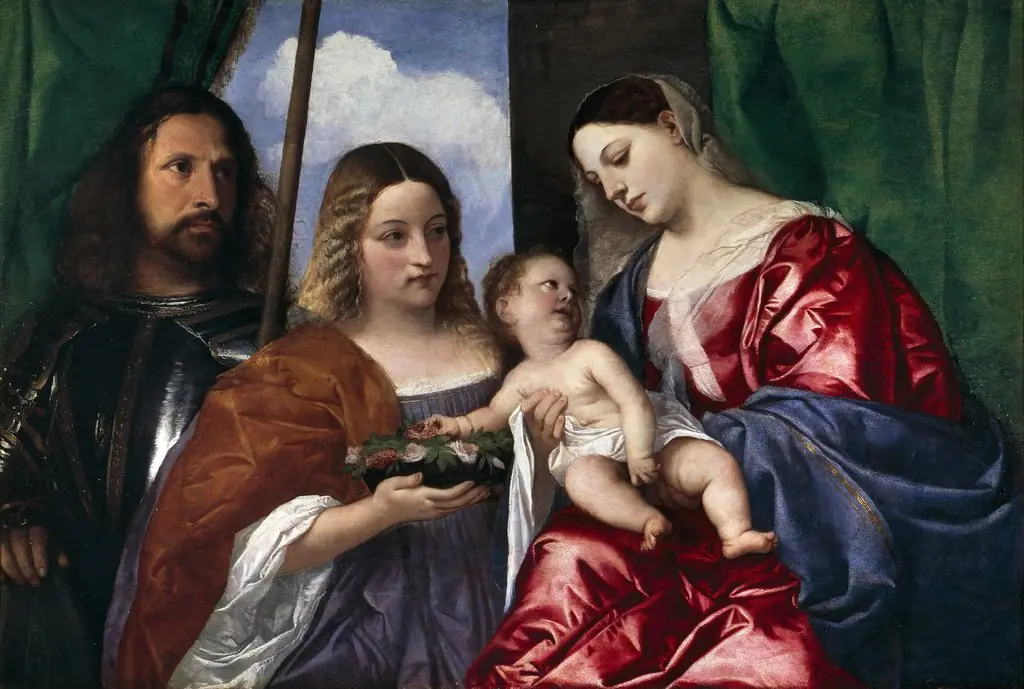 Madonna and Child with Saints Dorothy and George
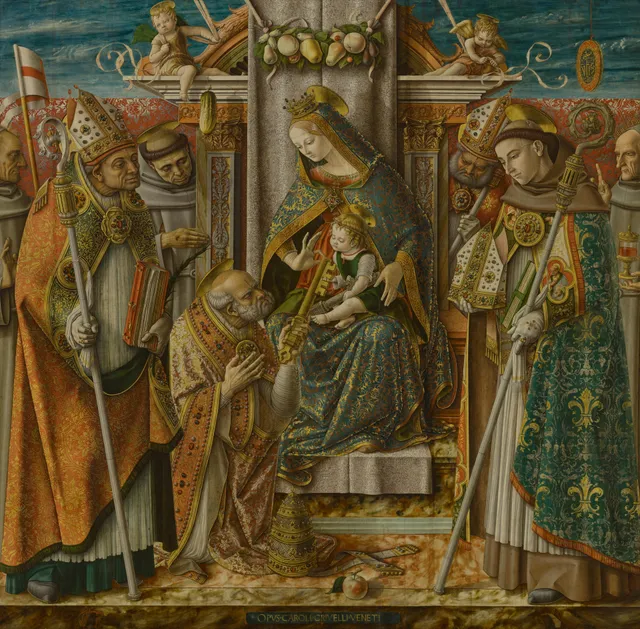
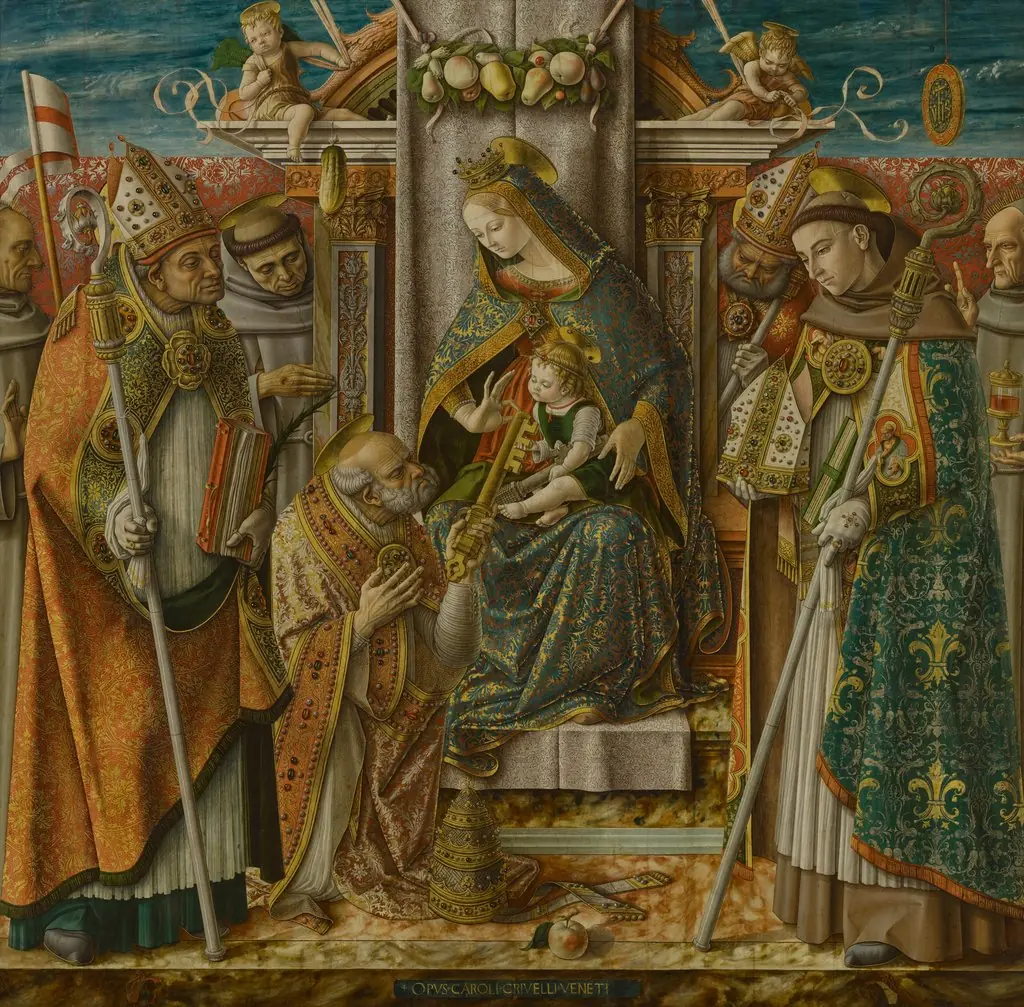 Madonna and Child Enthroned with Saints
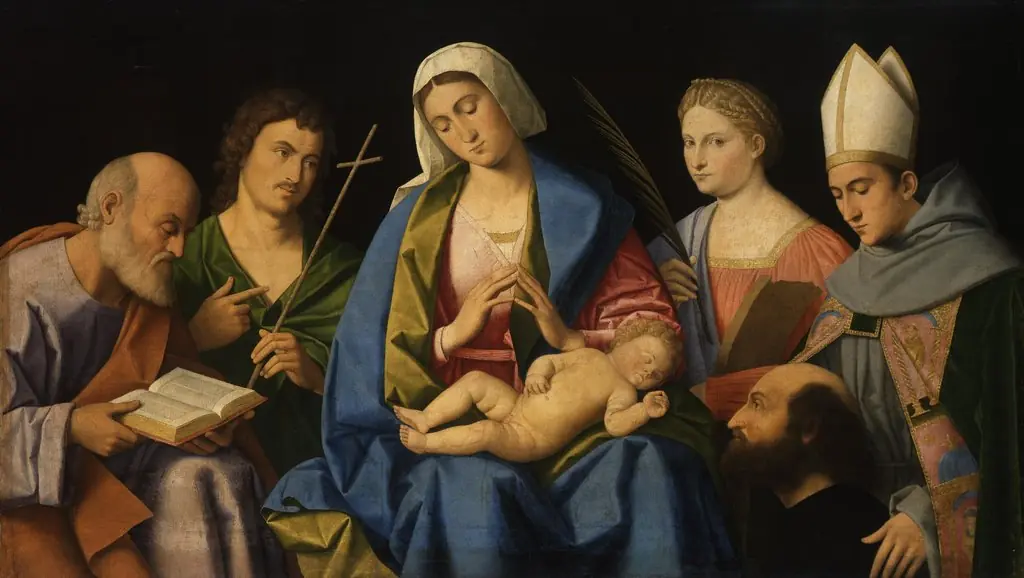 Madonna and Child with Saints and Donor
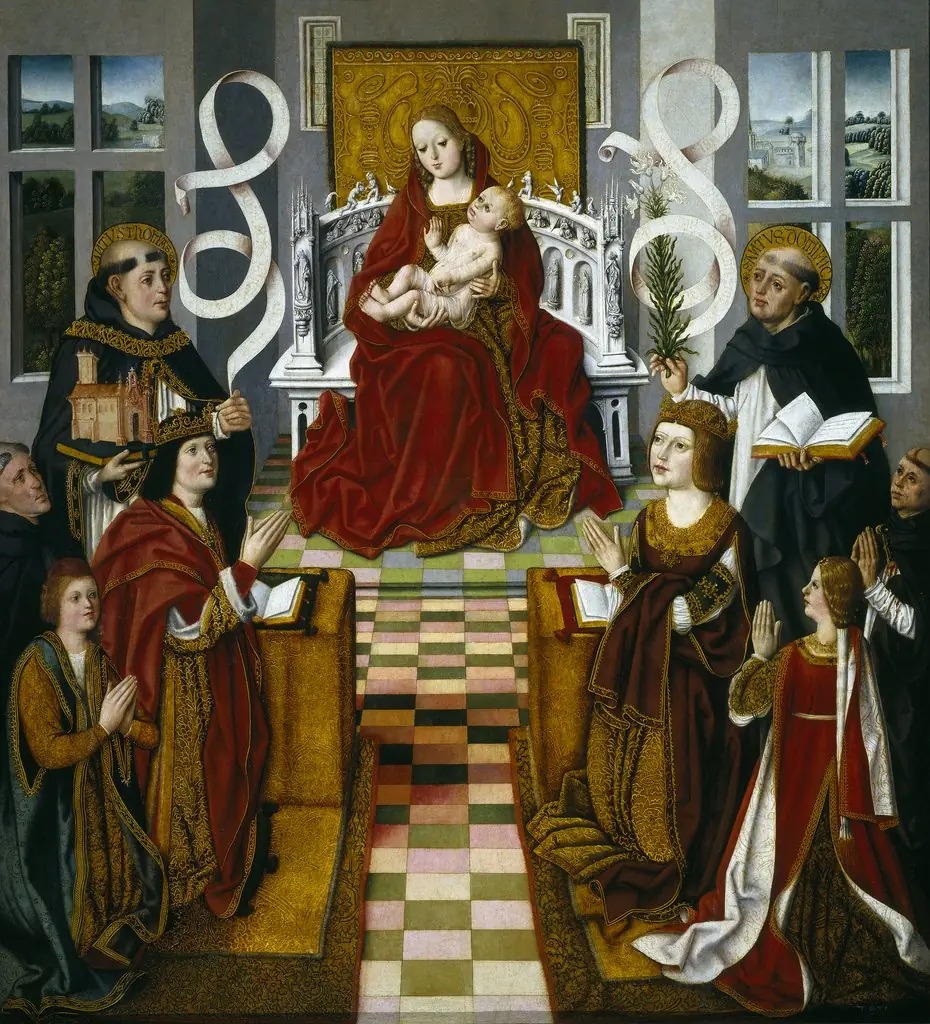 Madonna of the Catholic Monarchs
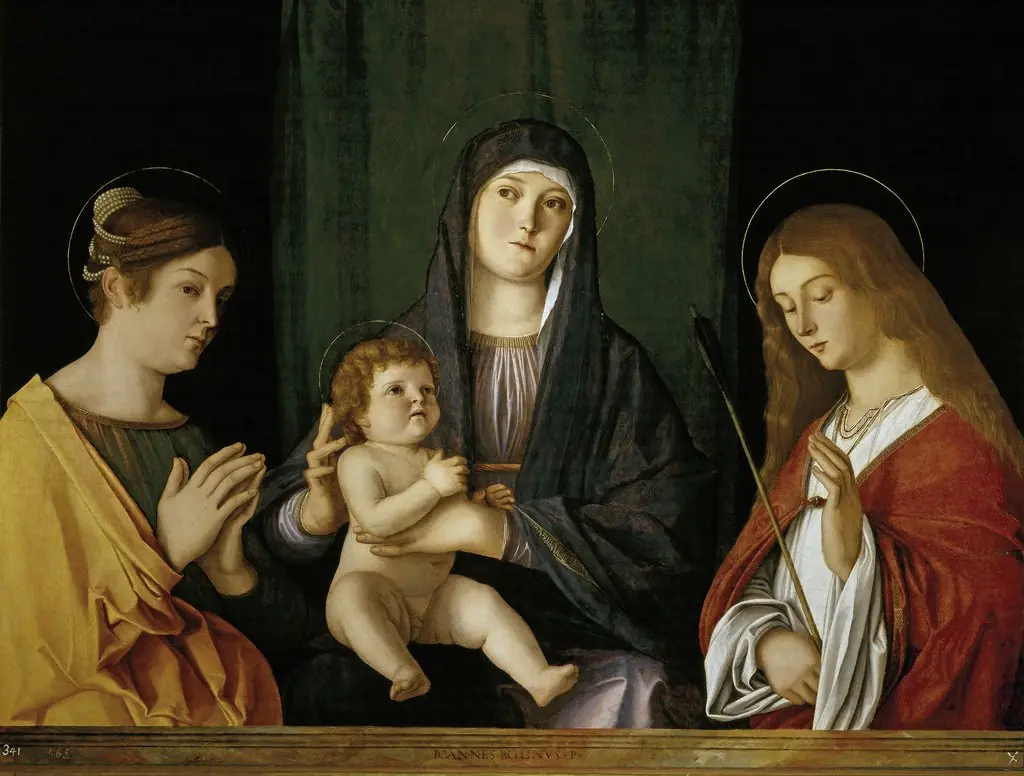 The Virgin and Child between two Saints
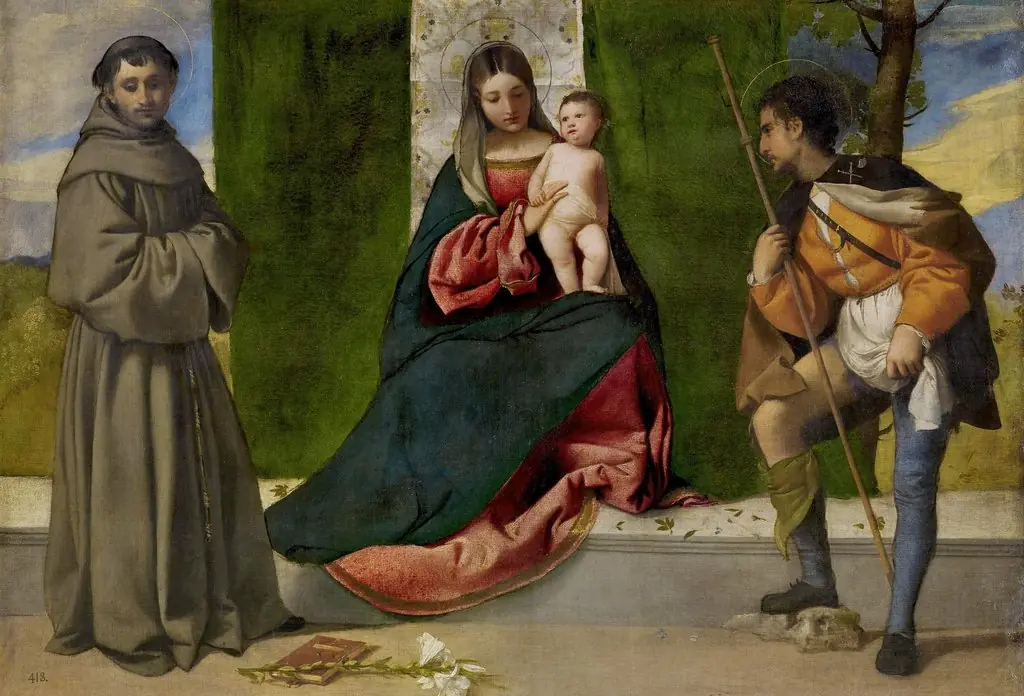 The Virgin and Child between Saint Anthony of Padua and Saint Roch
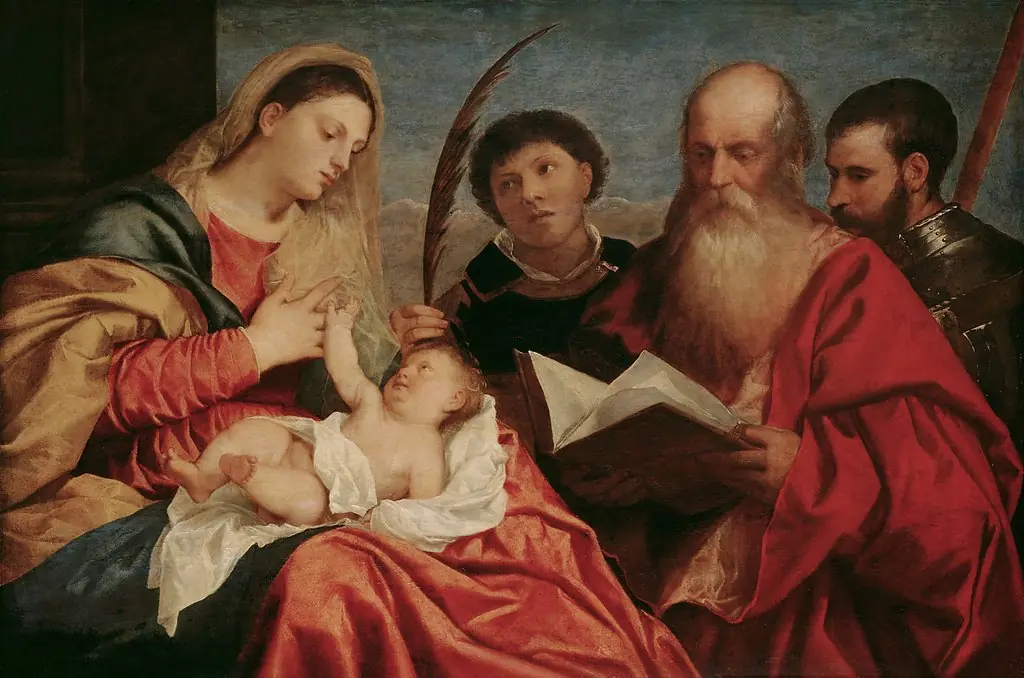 Virgin and Child with Saints Stephen, Jerome and Maurice
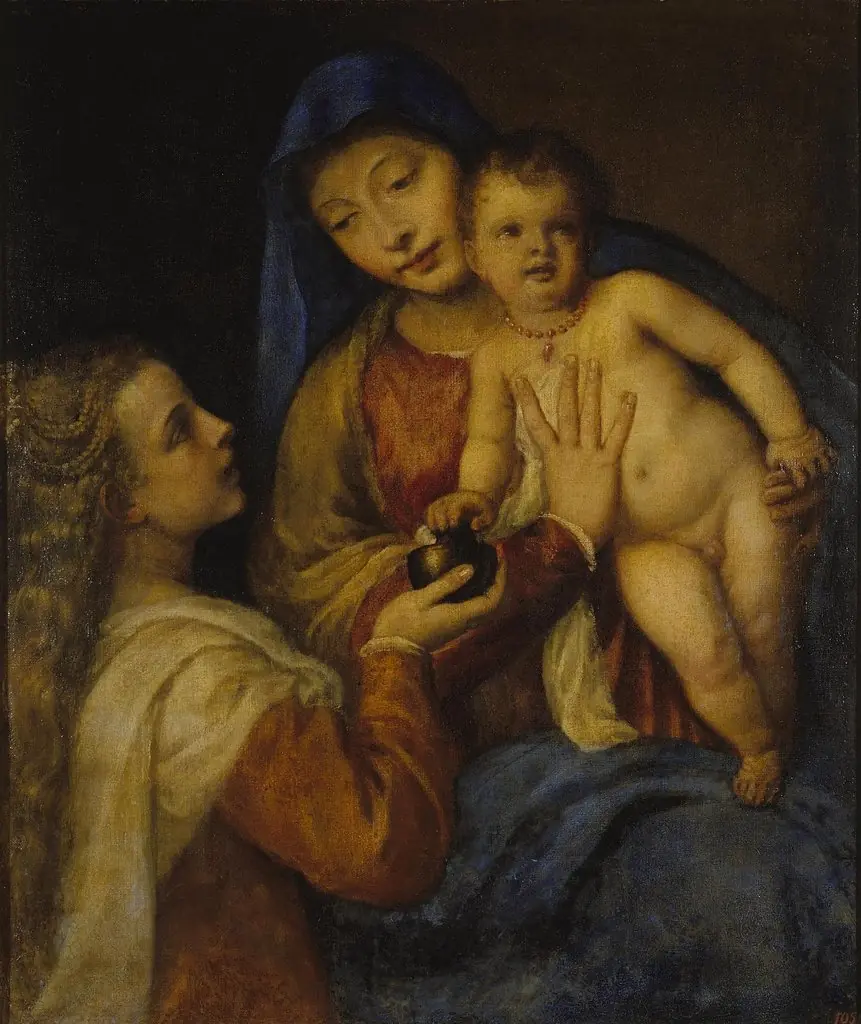 Madonna and Child with Mary Magdalene
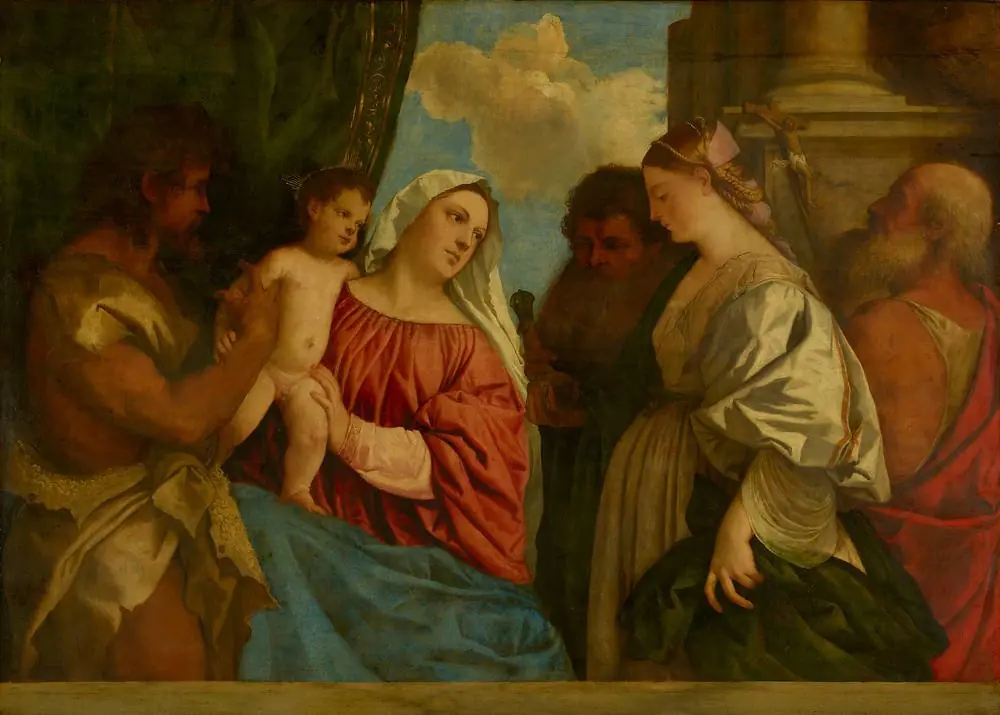 Madonna and Child with Four Saints
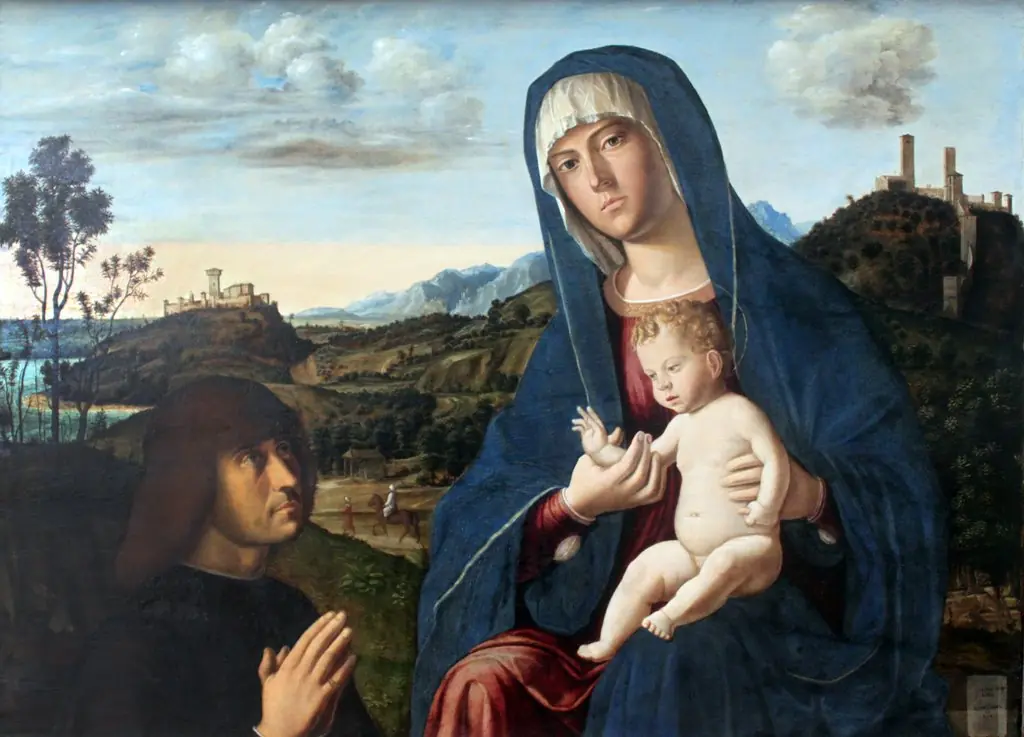 Mary with Child and founder
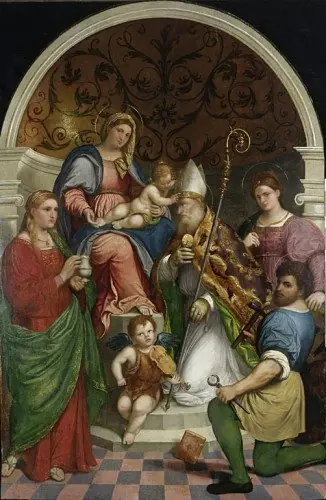 Sacra conversazione
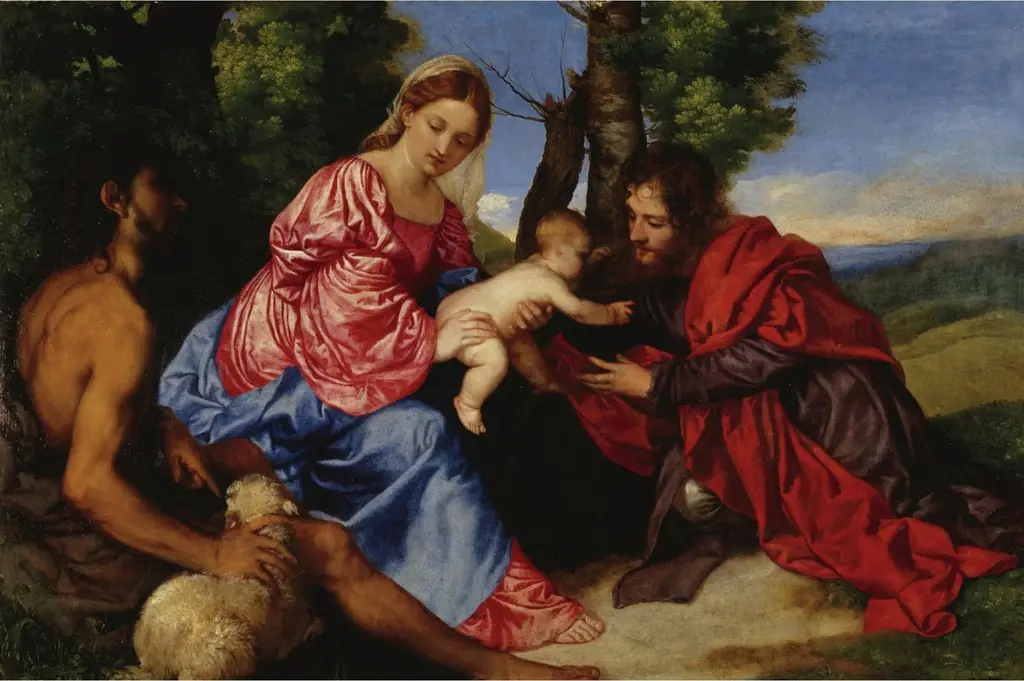 The Virgin and Child with St John the Baptist and an Unidentified Saint
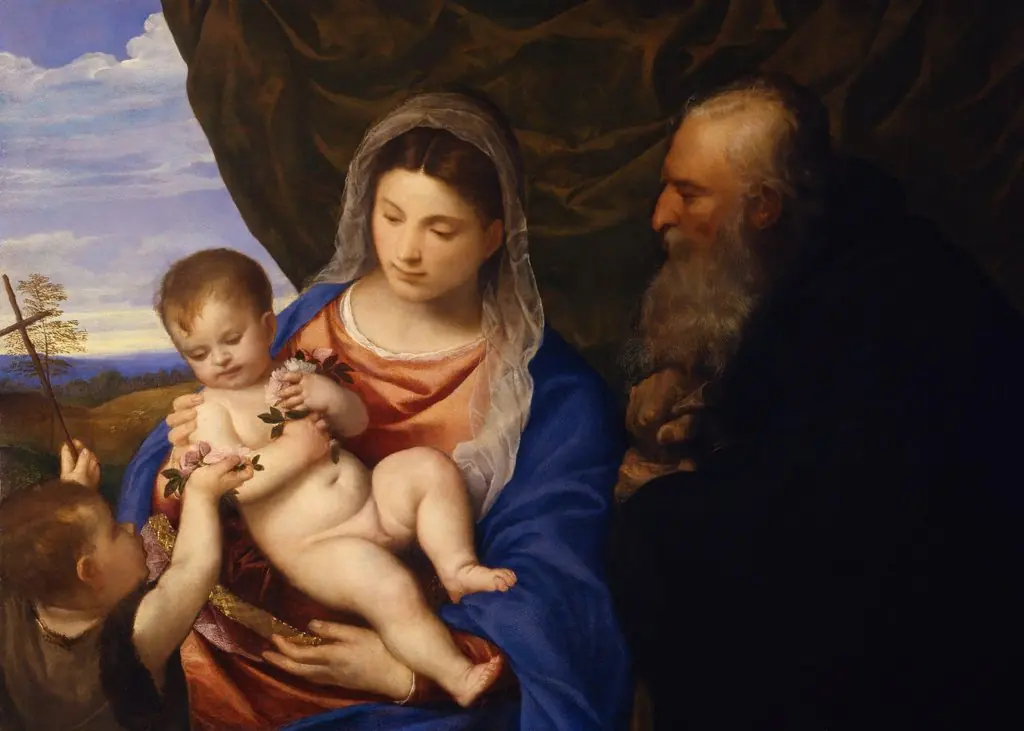 Madonna of the Roses
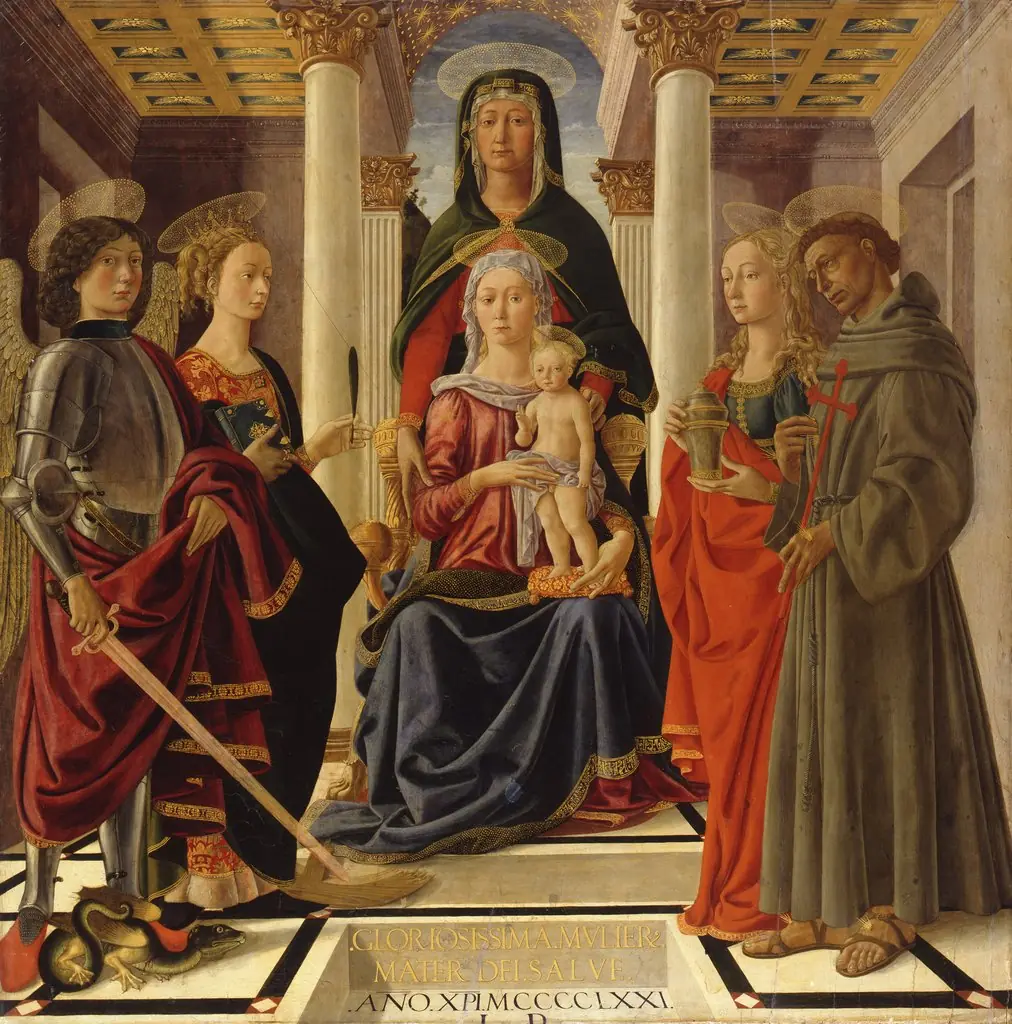 St. Anne Selbdritt with Archangel Michael and Saints
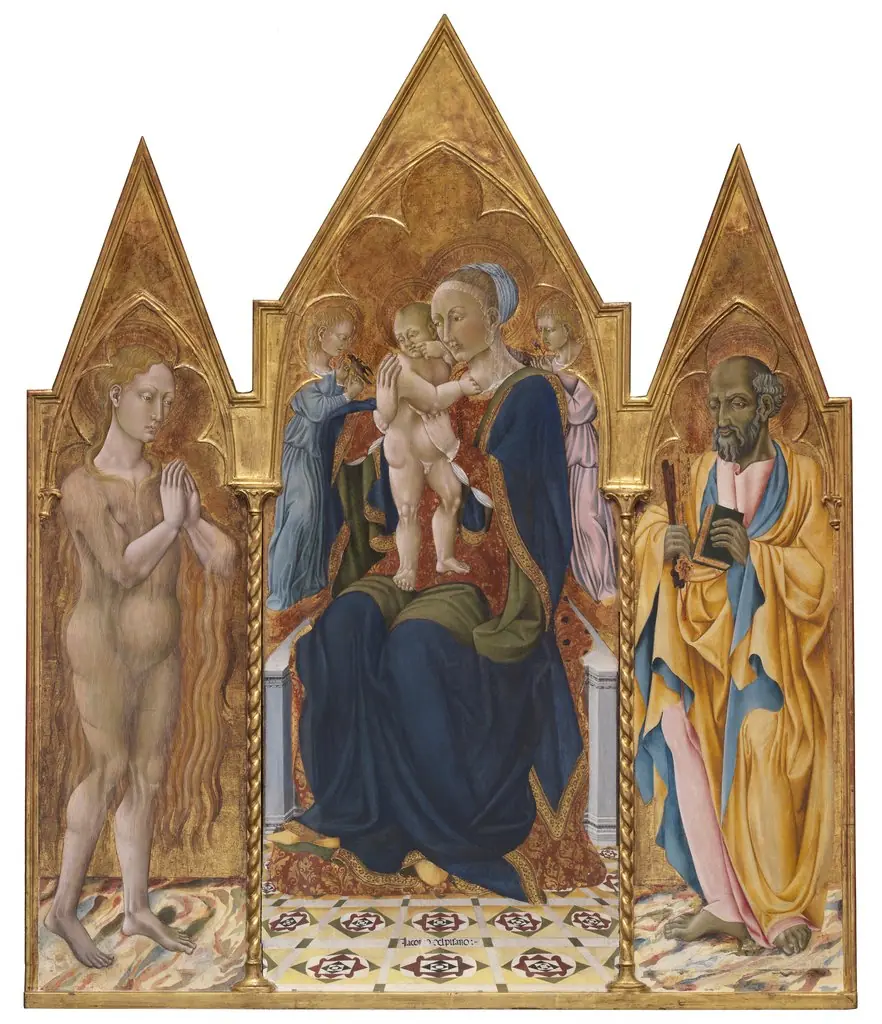 The Virgin and Child with Saints Peter and Mary Magdalene
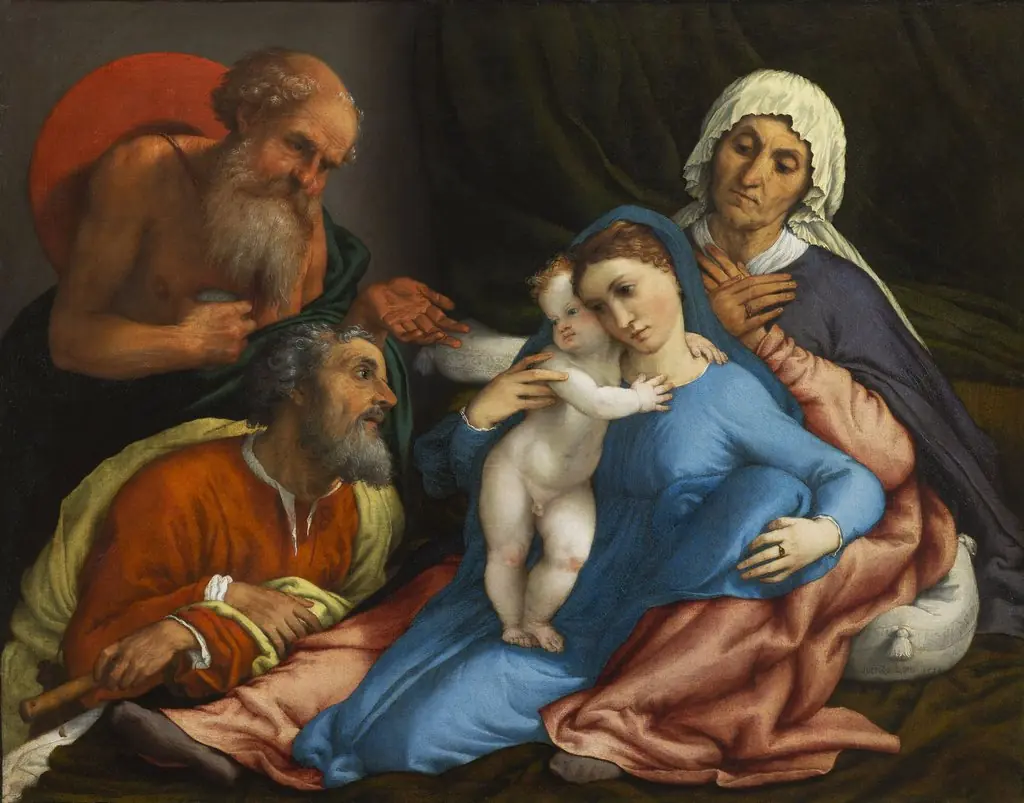 Madonna and Child with Saints
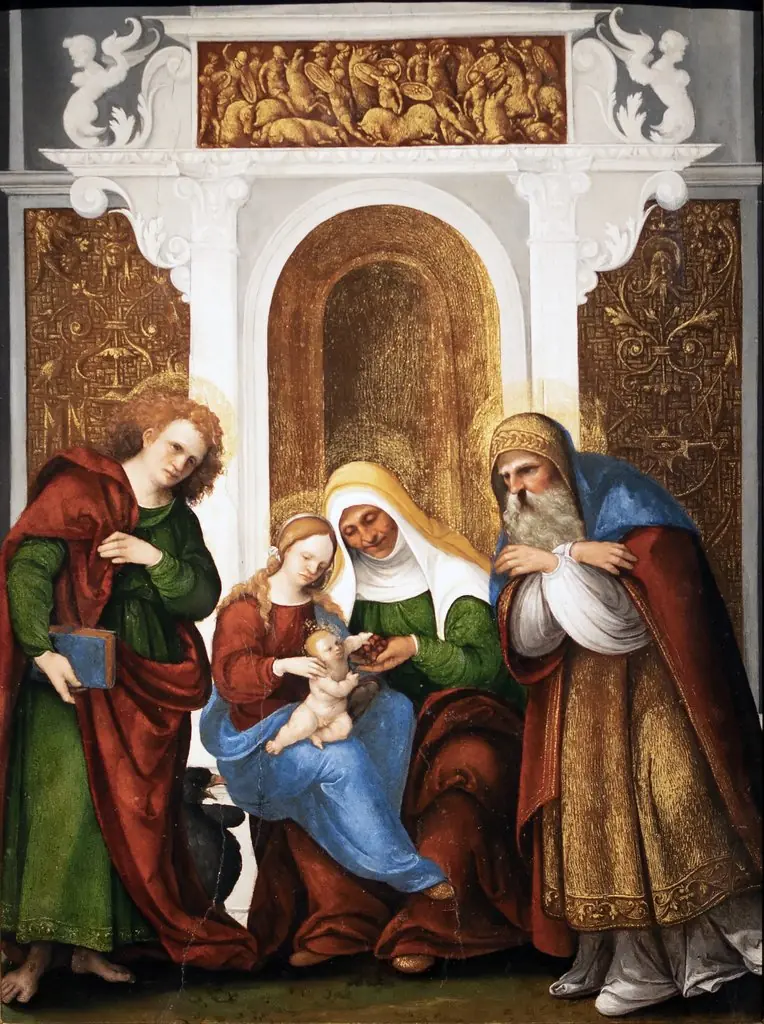 Madonna with Child and Saints
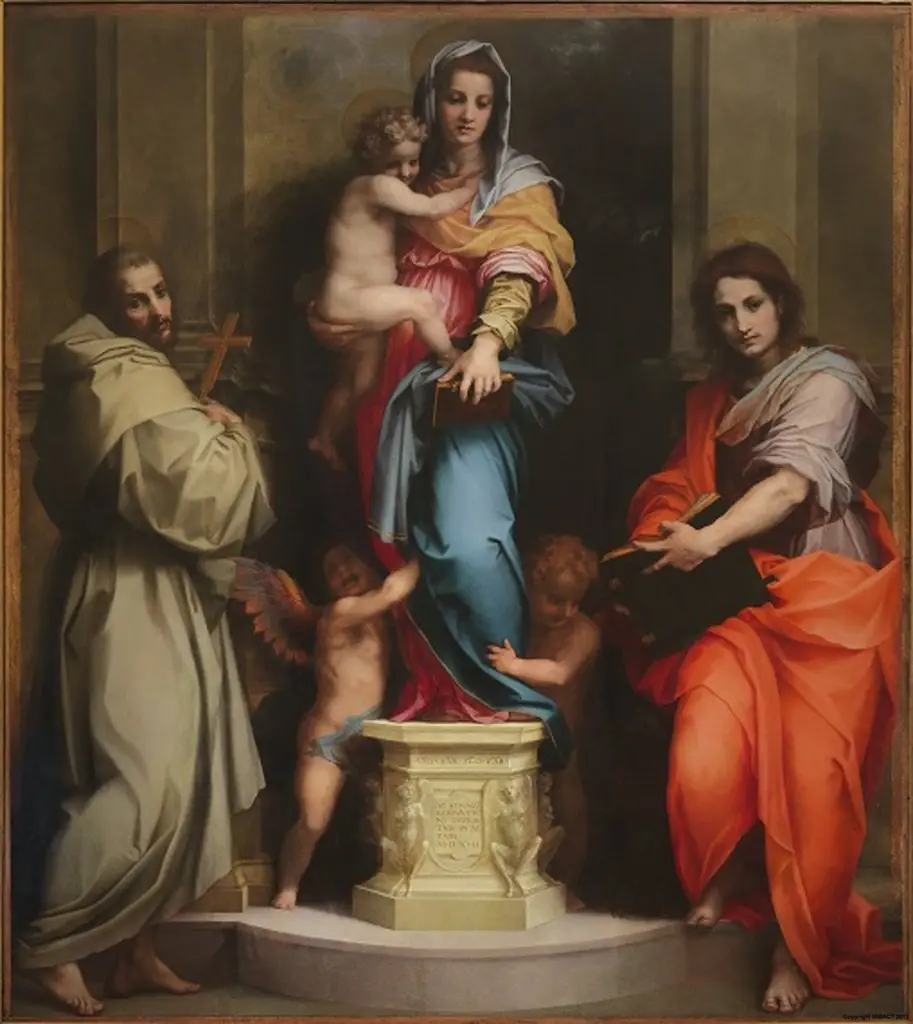 Madonna of the Harpies
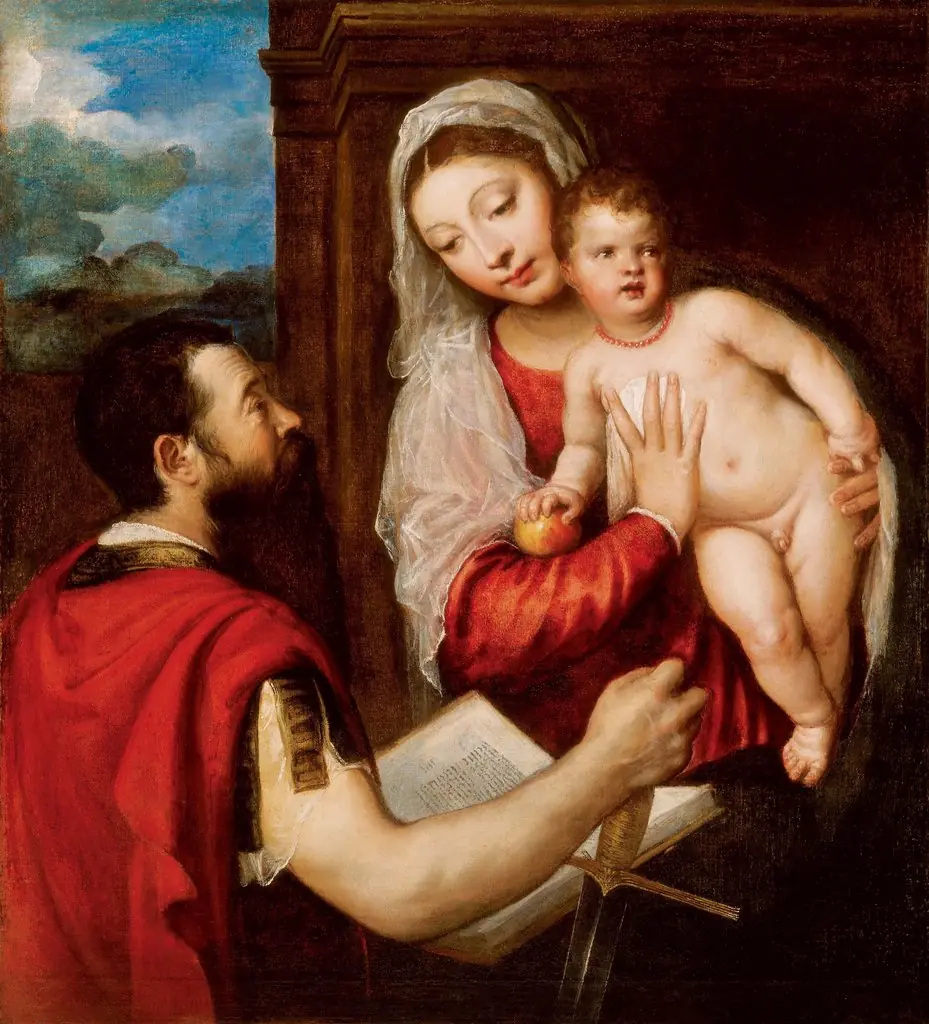 Virgin and Child with Saint Paul
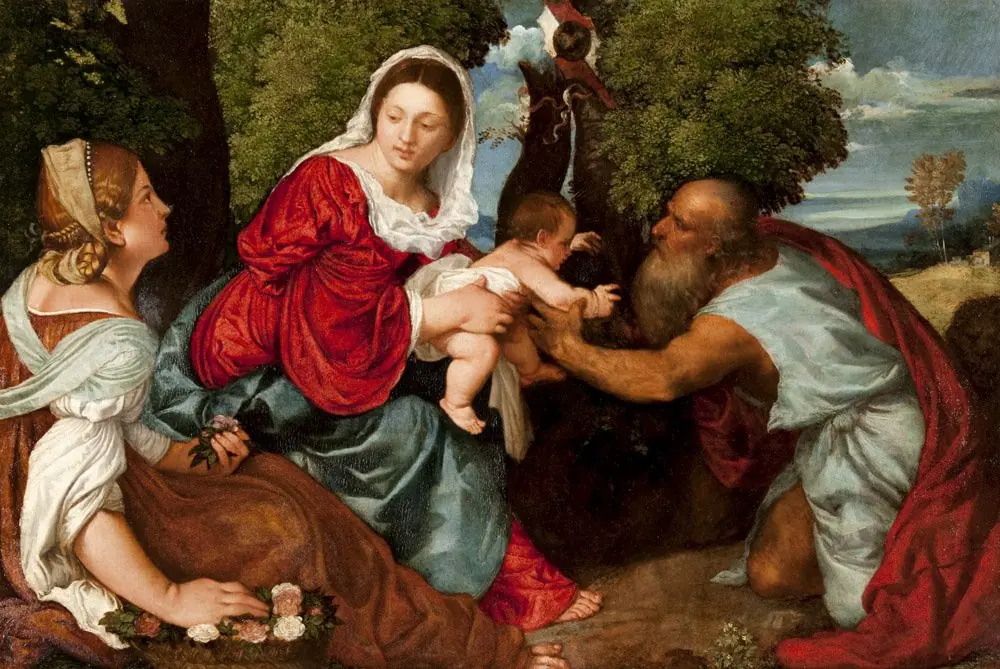 Madonna and Child with Saint Jerome and Saint Dorothy
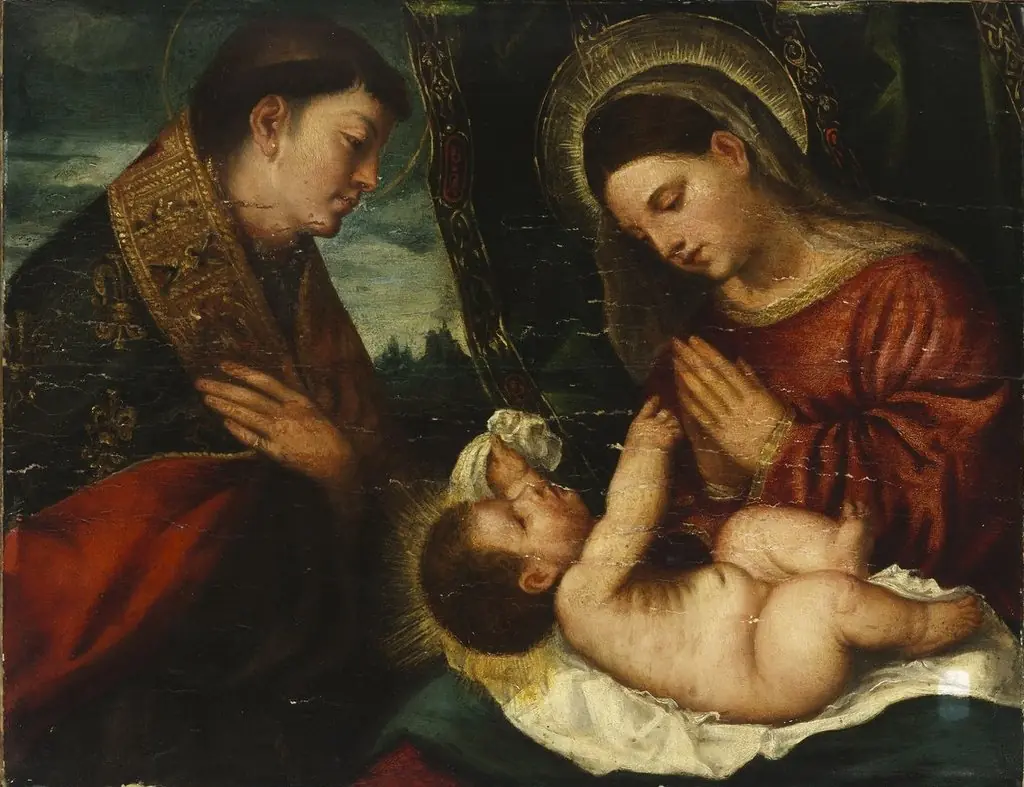 Madonna and Child with Saint Louis of Toulouse
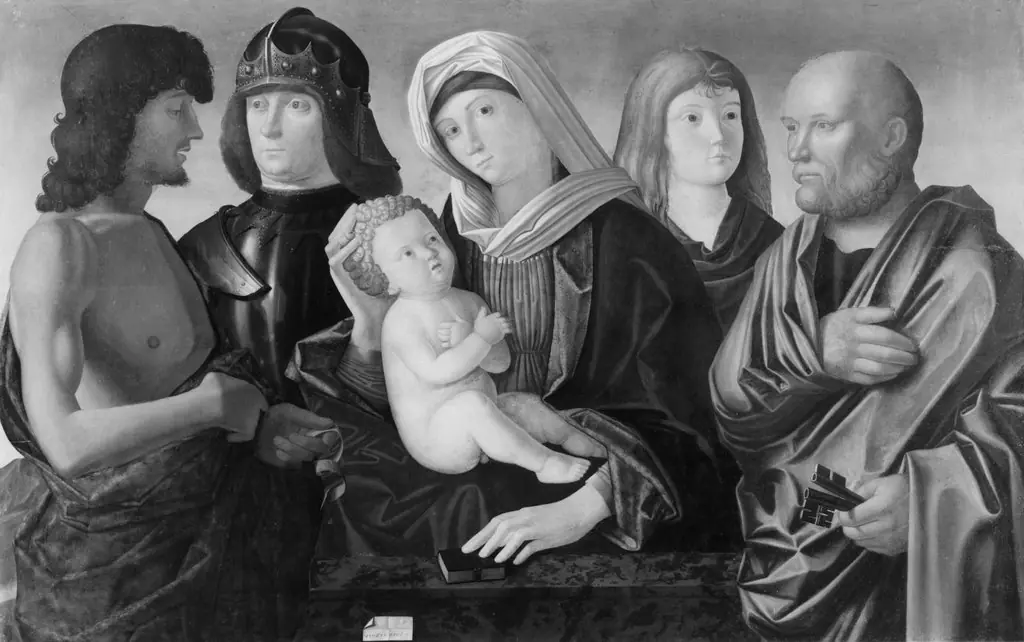 Sacred conversation
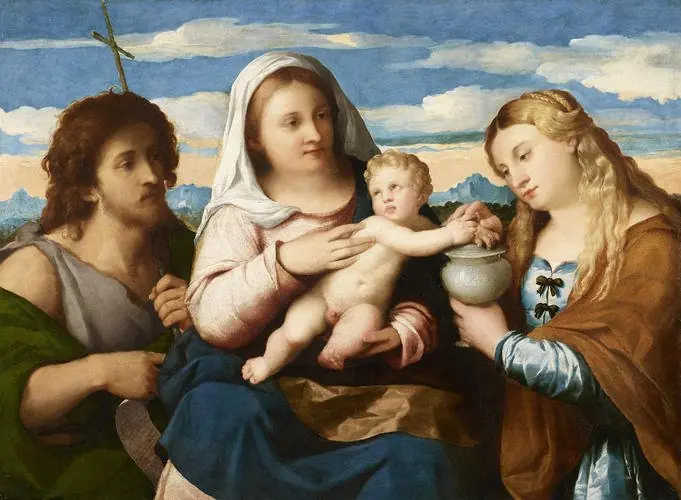 Madonna and Child with Saints
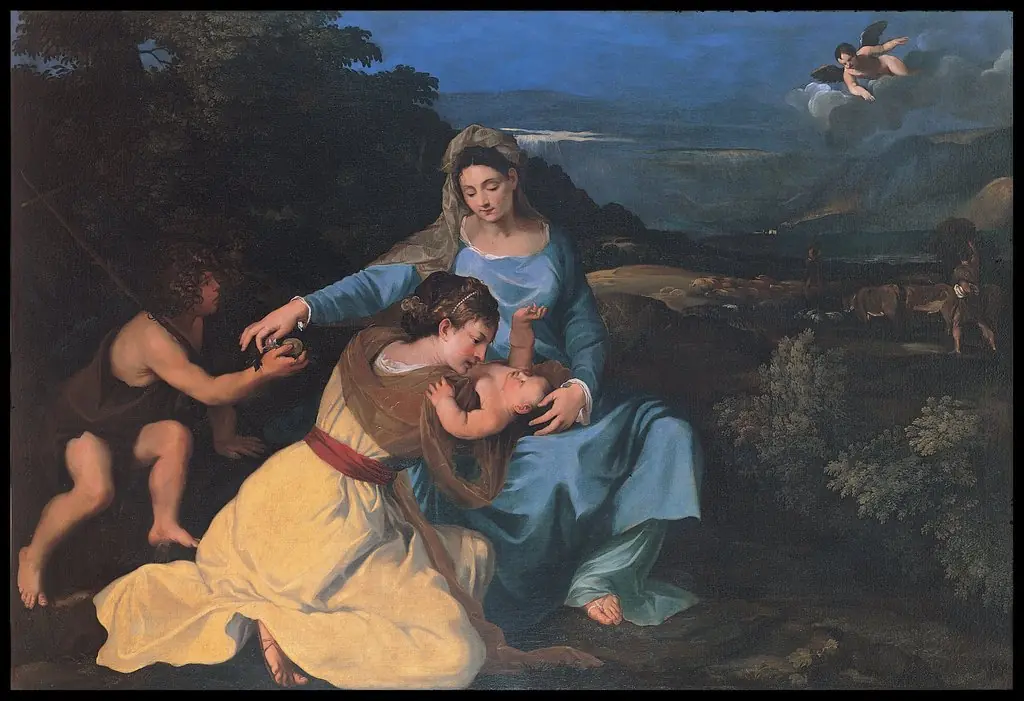 Madonna with the Child, Saint Catherine and Saint John
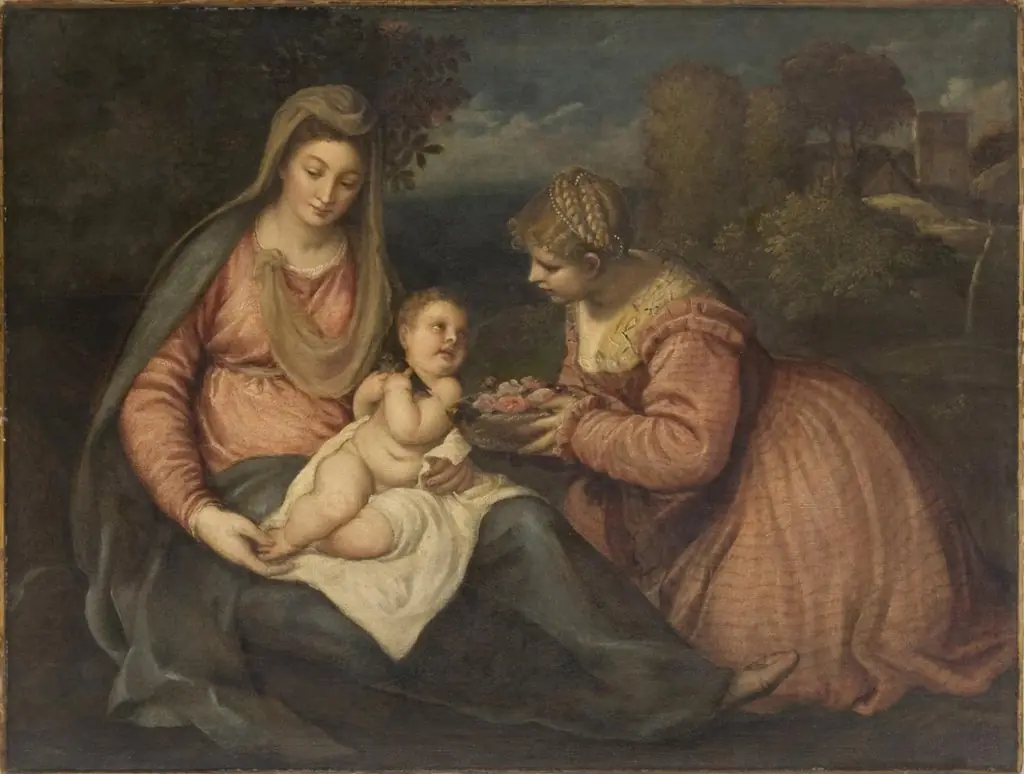 Virgin and Child, with Saint Dorothy
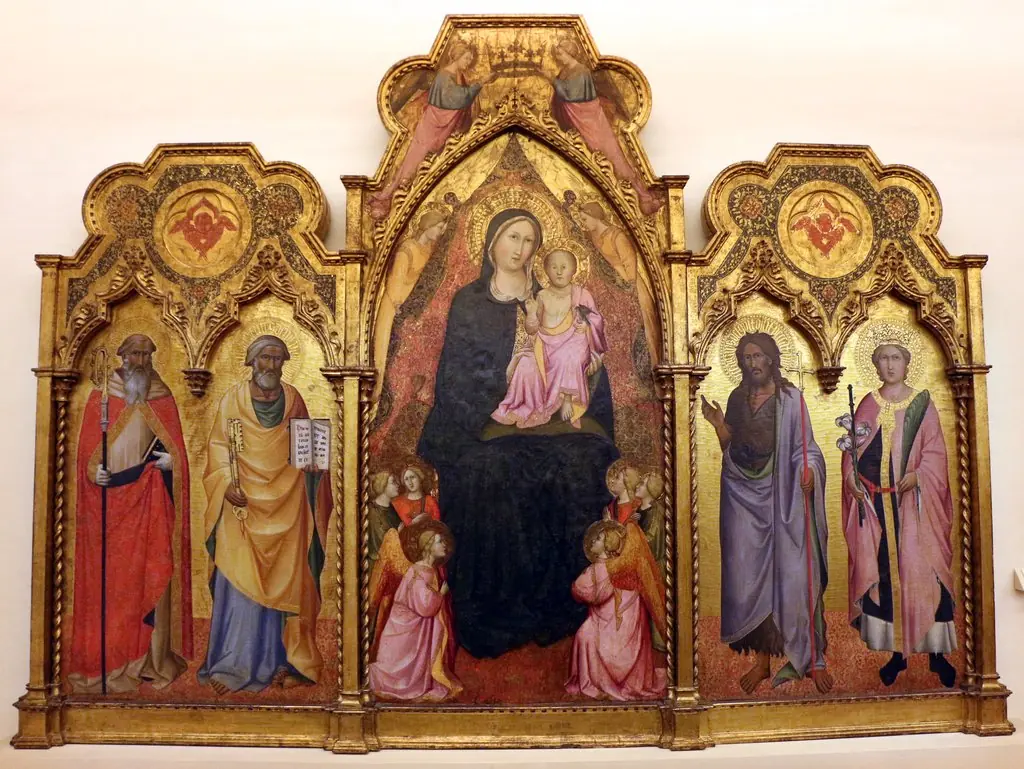 Madonna and Child with saints
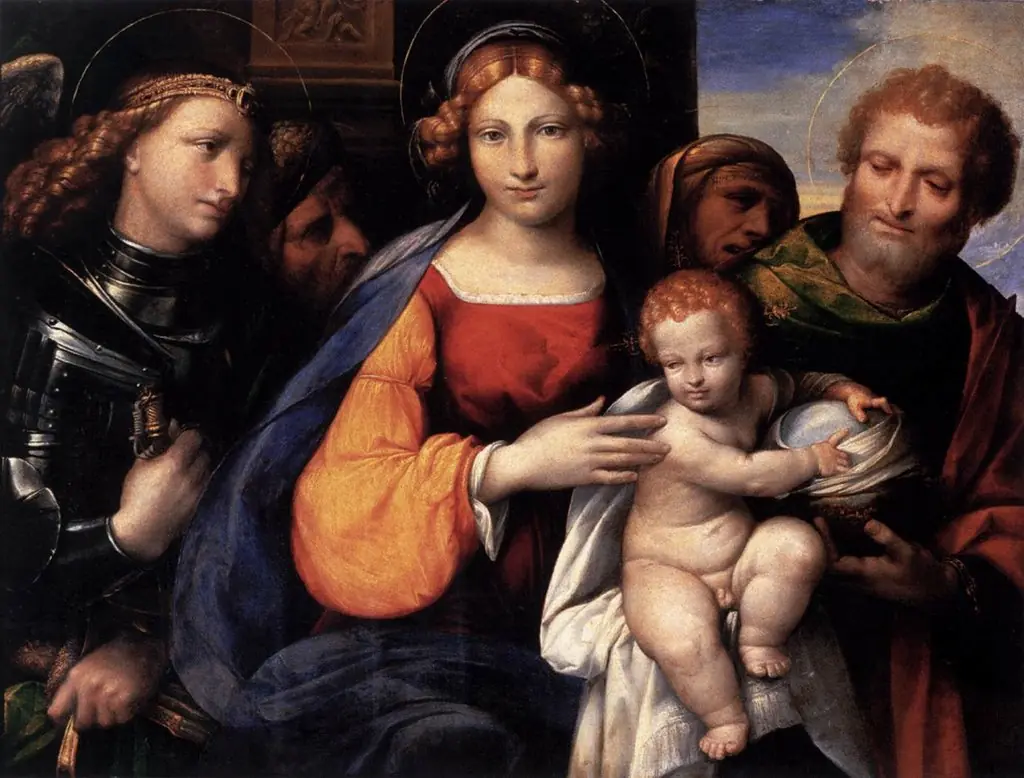 Virgin and Child with Saints
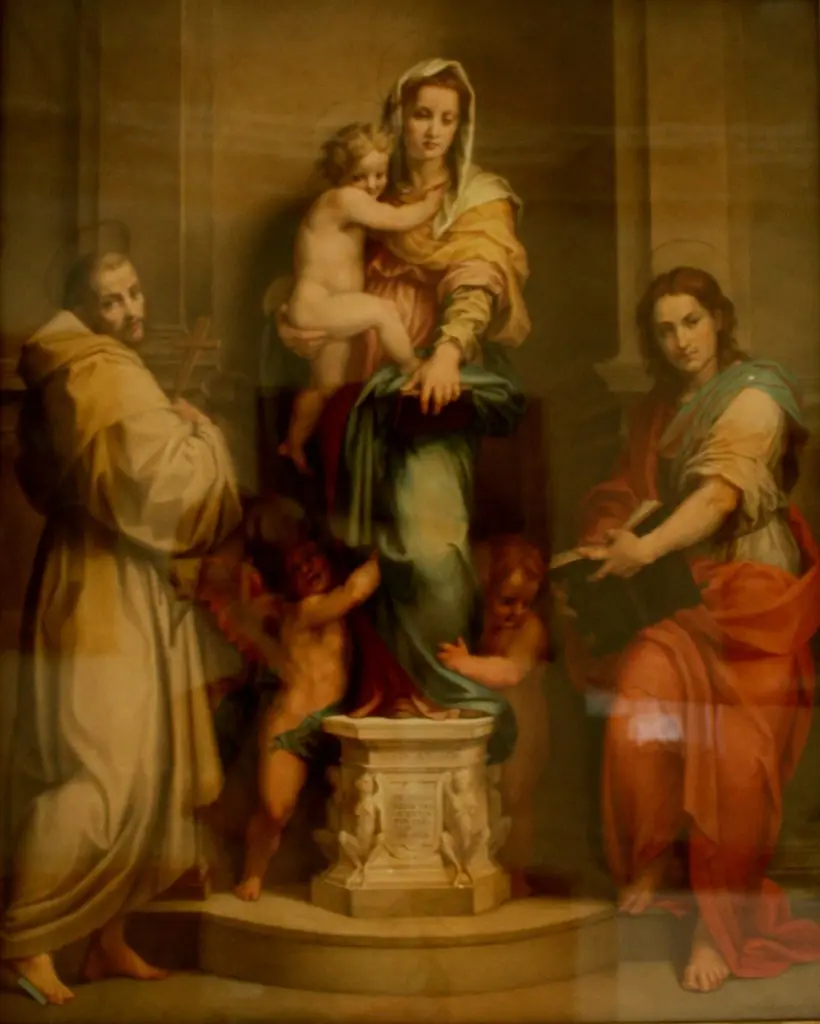 Madonna of the Harpies
Frequently asked questions
What is Sacra Conversazione?
Sacra Conversazione is a subject in art. In art, a sacra conversazione (Italian: ; plural: sacre conversazioni), meaning "holy (or sacred) conversation", is a genre developed in Italian Renaissance painting, with a depiction of the Virgin and Child (the Virgin Mary with the infant Jesus) amidst a group of saints in a r…
How many Sacra Conversazione works does Artifact World Gallery have?
Artifact World Gallery holds 28 public-domain Sacra Conversazione works, all free to view and download.
Who are the key Sacra Conversazione artists?
Key Sacra Conversazione artists in the collection include Titian, Lorenzo Lotto and Andrea del Sarto.
Where can I see Sacra Conversazione works?
Sacra Conversazione works in the collection are held by Uffizi Gallery, Gemäldegalerie Berlin and Museo del Prado.