Artwork
Portrait of Don Diego de Corral y Arellano
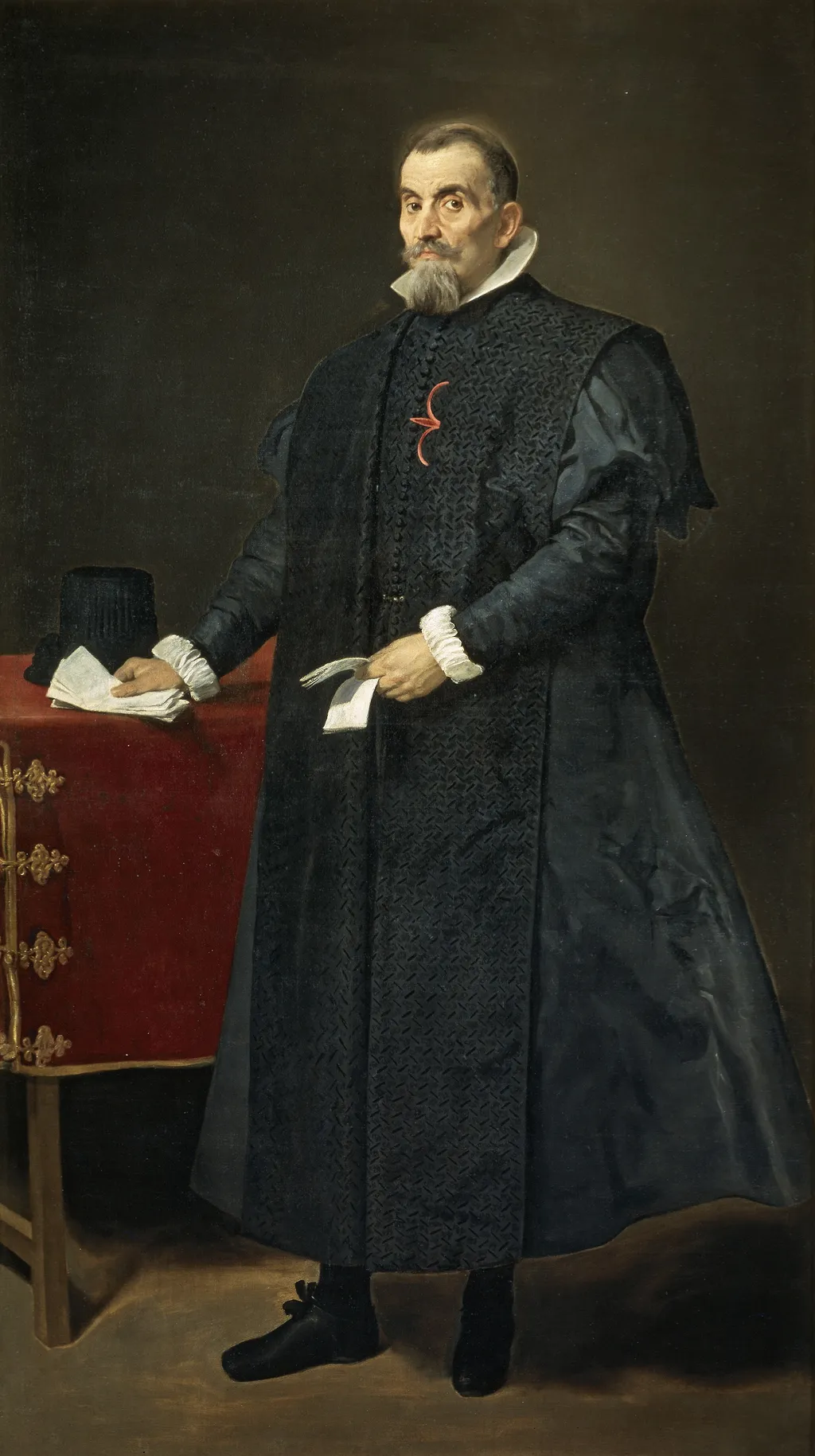
Portrait of Don Diego de Corral y Arellano is an oil painting by the Baroque artist Diego Velázquez. It dates from 1632 and is held in the collection of the Museo del Prado.
About this work
Subject & Meaning
The portrait depicts Don Diego de Corral y Arellano, a high-ranking Castilian jurist and royal official who served as oidor of the Council of Castile and knight of the Order of Santiago. Velázquez renders him in full-length, dressed in the austere black costume of a jurisconsult, with a red-velvet tablecloth and hat indicating his professional and social standing. Beneath the heavy black toga, the barely visible cross of Santiago signals his knighthood, while the papers in his hands and the near-frontal presentation emphasize his public role and moral authority. The soft halo-like highlight around the head and the sharply lit face against a neutral ground focus attention on his dignified bearing and restrained character. Corral y Arellano’s biography informs the painting’s meaning: his legal integrity, notably voting against the death penalty for Rodrigo Calderón, aligned him against the powerful Count-Duke of Olivares, yet did not diminish royal favor. Painted in 1631-32, shortly before his death on 20 May 1632, the work commemorates a respected jurist whose writings and service left a legacy beyond his lifetime.
Technique & Style
Painted in 1632, the work is an oil on canvas measuring 215 cm in height and 110 cm in width.
Painted in 1632, the work is an oil on canvas measuring 215 cm in height and 110 cm in width. Technical analysis and radiography conducted at the Museo del Prado confirm that this portrait and the companion piece of the sitter's wife were executed simultaneously using identical materials and techniques, refuting earlier theories that the head was repainted on an earlier body or left unfinished due to the subject's death. The composition features a full-length figure against a neutral background, where a subtle line of lighter tone creates relief and a halo effect around the head. Velázquez demonstrates virtuosity through the depiction of iridescent black drapery, achieved via broad glazes that generate luminous highlights on the lawyer's robe. The figure stands near the foreground plane with the head positioned close to the upper edge, a court convention that emphasizes the sitter's dignity while showcasing the artist's economical yet expressive handling of the face.
History & Provenance
The Portrait of Don Diego de Corral y Arellano was likely painted by Velázquez between 1631 and 1632, the year of the sitter’s death, and executed alongside portraits of his wife and eldest son using consistent materials and technique.
By 1668 the work was inventoried among the holdings of Juan and Cristóbal del Corral e Ipeñarrieta, sons of the sitter, at the Palacio de Narros in Zarautz. It remained in family possession until the late 19th century, when Aureliano de Beruete publicly recognized its significance. In 1905 María del Carmen de Aragón-Azlor, Duchess of Villahermosa, bequeathed the painting to the Museo del Prado, where it has been held since. Prior to the bequest, the Spanish press reported an offer of 1.5 million francs from an American collector, which the duchess declined.
The portrait is held by the Museo del Prado in Madrid, where it entered the collection in 1905 as a bequest from María del Carmen de Aragón-Azlor, the Duchess of Villahermosa. Prior to its permanent accession, the work was displayed at the museum in 1902 for the oath-taking ceremony of King Alfonso XIII of Spain. The painting was also featured in the 1989 Velázquez exhibition hosted by the Metropolitan Museum of Art in New York. Additionally, the source material notes its inclusion in an exhibition titled "Rembrandt-Velázquez."
Context
The critical reception of Velázquez's Portrait of Don Diego de Corral y Arellano evolved from 19th-century obscurity within the sitter's family collection to 20th-century recognition as a masterpiece of Baroque portraiture. Early scholarship, such as León Corral's 1905 historical notes, highlighted its technical mastery and dignified composition, while Aureliano de Beruete's late 19th-century appraisal positioned it among the finest portraits of its period. The work's placement in the Museo del Prado, secured through the Duchess of Villahermosa's 1905 bequest, enabled sustained scholarly attention, including its prominent role in the 1989 Metropolitan Museum of Art Velázquez exhibition. Contemporary scholarship emphasizes its significance within Velázquez's broader court portraiture practice, noting the consistent materials and technique shared with his other family portraits, and underscores its historical context as a testament to Diego del Corral y Arellano's distinguished career as a royal counselor and jurist.
Legacy
The portrait of Don Diego de Corral y Arellano has been recognized as a significant work within the Baroque portraiture tradition, influencing later Spanish court portraiture through its dignified composition and technical mastery. Its legacy is anchored in the Museo del Prado's acquisition in 1905 via the bequest of the Duchess of Villahermosa, where it remains part of the permanent collection. The work's historical significance was amplified by its inclusion in the 1989 Velázquez retrospective at the Metropolitan Museum of Art in New York, highlighting its transatlantic relevance. Contemporary assessments, including those by Aureliano de Beruete in the late 19th century, established it as one of Velázquez's finest portraits from this period, reflecting its enduring reputation as a masterpiece of Spanish Golden Age art.
Artist & collection
Artist
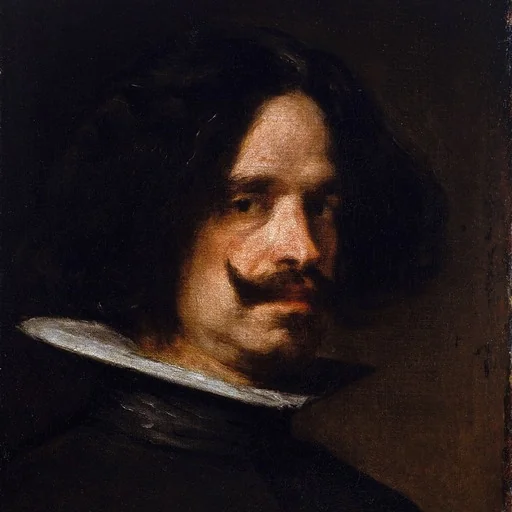
Diego Rodríguez de Silva y Velázquez was a Spanish Baroque painter, the leading artist in the court of King Philip IV of Spain and Portugal, and of the Spanish Golden Age.

 Joanna of Austria
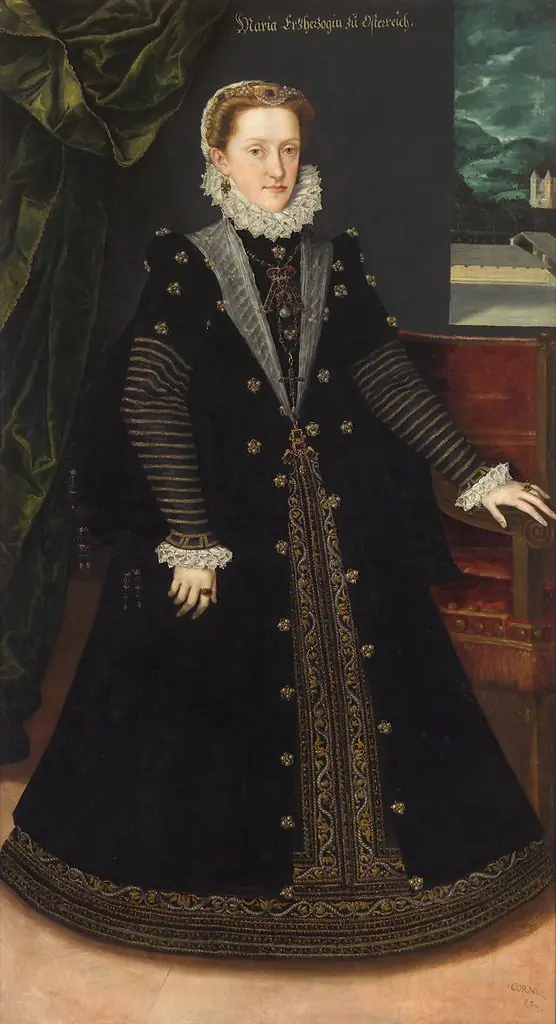 Portrait of Archduchess Mary Anna of Bavaria
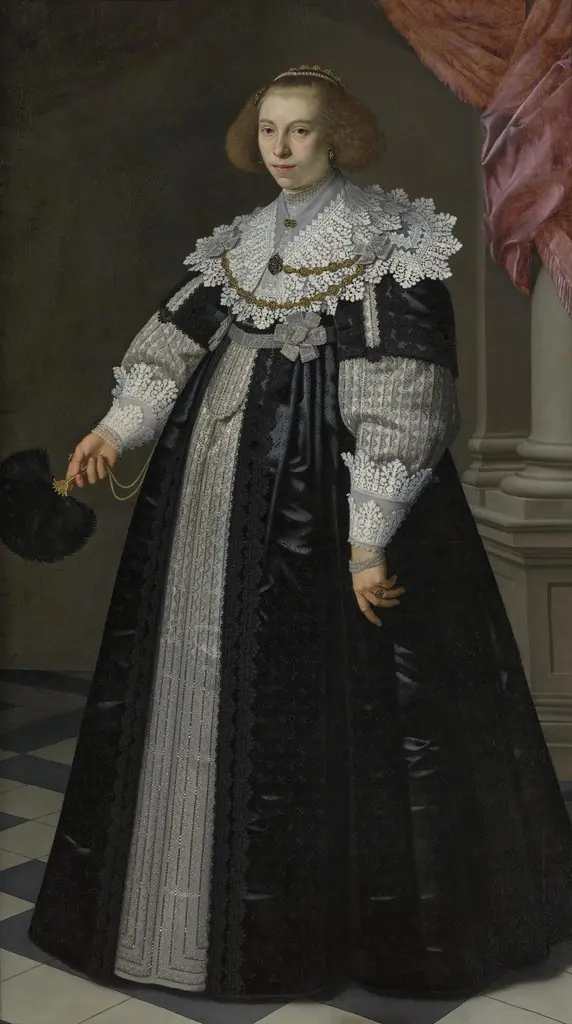 Portrait of Catharina Hooft
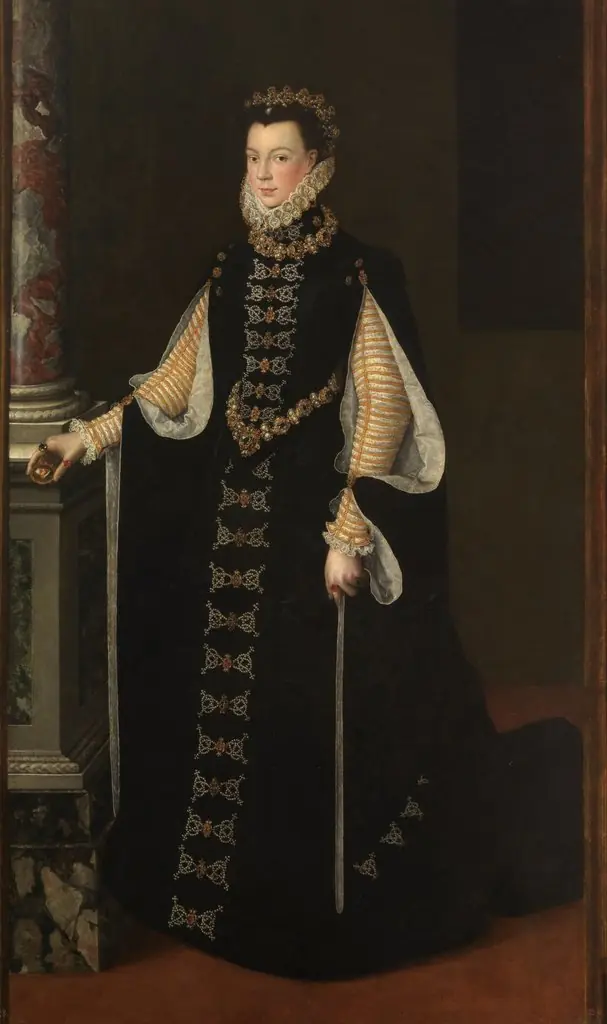 Portrait of Elisabeth of Valois
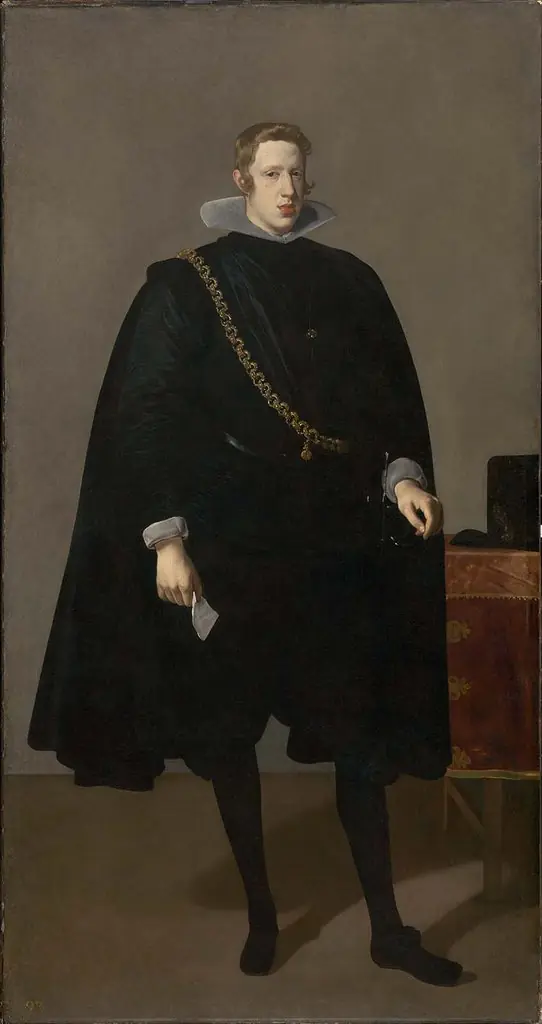 Philip IV, King of Spain
 Female Portrait
 Anna Maria, 1549-1580, ärkehertiginna
 Veronika Vöhlin, geb. von Freyberg zum Eisenberg, Hallenwang und Neidlingen (1523-1582)
 Portrait of a Woman