Artwork
Portrait of Govert van Slingelandt (1623-1690), with his First Wife Christina van Beveren (1632-1656) and their Two Children
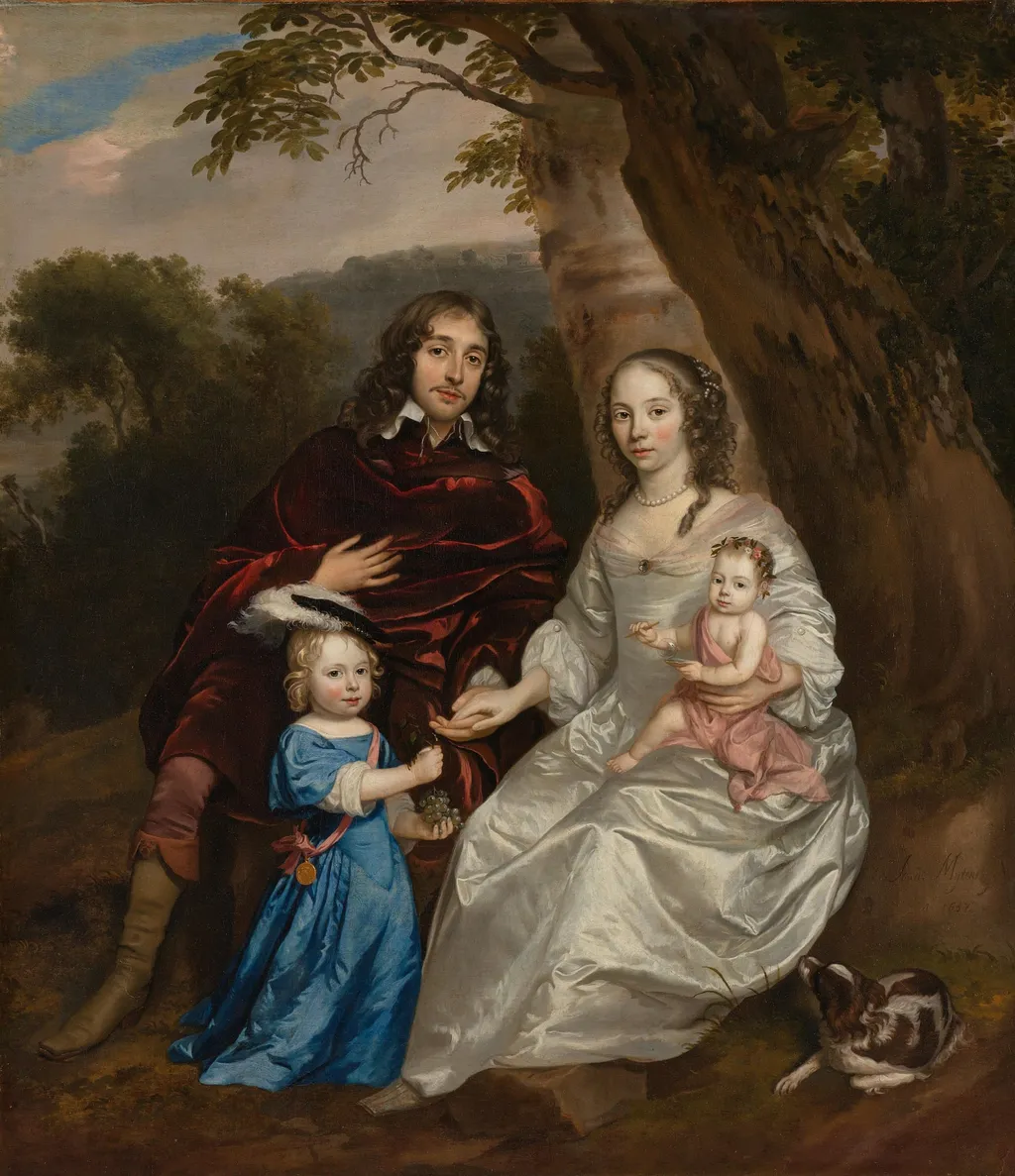
Portrait of Govert van Slingelandt (1623-1690), with his First Wife Christina van Beveren (1632-1656) and their Two Children is an unspecified painting by the Baroque artist Johannes Mytens. It dates from 1657 and is held in the collection of the Rijksmuseum.
About this work
Back then, people used these symbols to remind viewers that happiness doesn’t last.
A well-dressed man and woman sit under a tree with two little boys. One boy holds grapes; the other blows bubbles. A small dog watches nearby.
This family portrait was painted in 1657, but the artist’s name is lost. The bubbles and grapes aren’t just cute, they hint at life’s shortness. Back then, people used these symbols to remind viewers that happiness doesn’t last.
If you like this quiet, detailed style, look up the Baroque movement.
Subject & Meaning
The painting is a family portrait depicting Govert van Slingelandt, his first wife Christina van Beveren, and their two children. Created in 1657, the work posthumously represents Christina, who died in 1656. As a portrait by Jan Mijtens, it likely reflects the artist's characteristic approach to family portraiture, where sitters are situated within a natural, often wooded landscape and adorned in sumptuous clothing and jewelry that signify their affluent social standing.
While the specific iconography of this canvas is not detailed in the sources, Mijtens's known oeuvre demonstrates a convention of memorializing deceased family members; in comparable works, he incorporated small angels to represent children who died in infancy.
Technique & Style
The work is a painting on canvas, executed in oil as a full-length portrait. Jan Mijtens rendered the figures with careful attention to the sumptuous clothing and jewelry, using a Baroque compositional approach influenced by Anthony van Dyck. The formal arrangement places the family group against a naturalistic landscape, with detailed handling of drapery and accessories that emphasize the sitters' social standing.
The painting demonstrates skilled draftsmanship and a refined treatment of light on textiles, characteristic of Dutch Golden Age portraiture.
History & Provenance
The Portrait of Govert van Slingelandt (1623–1690), with his First Wife Christina van Beveren (1632–1656) and their Two Children was painted by Jan Mijtens in 1657, as documented in internal records. The work was commissioned as a family portrait, reflecting Mijtens’ specialization in depicting affluent Dutch families, often set within natural landscapes and adorned in elaborate attire.
No early ownership history or subsequent provenance details are sourced for this specific painting. However, Mijtens’ portraits typically remained within the families of the sitters or passed through private collections, consistent with his clientele of nobility and high-ranking officials in The Hague.
Context
Painted in 1657 by Jan Mijtens, this family portrait exemplifies the artist's specialization in depicting affluent Dutch sitters within the Baroque movement. Mijtens, a prominent figure of the Dutch Golden Age based in The Hague, was renowned for his ability to render the luxurious clothing and jewelry that signified the high social rank of his patrons. His stylistic approach was significantly influenced by Anthony van Dyck, often placing subjects in natural, wooded landscapes to create a poetic context.
As a court painter and founder of the Confrerie Pictura, Mijtens occupied a central role in the artistic community, receiving commissions from nobility and high officials. This work stands as a representative example of his output during a period when he was a sought-after portraitist, contributing to the broader tradition of Netherlandish group portraiture.
Legacy
Portrait of Govert van Slingelandt (1623-1690), with his First Wife Christina van Beveren (1632-1656) and their Two Children was painted by Jan Mijtens in 1657, establishing a tradition of elite family portraiture that shaped later Dutch portrait conventions. The work influenced subsequent portraitists through Mijtens' integration of aristocratic symbolism and psychological depth, particularly evident in his treatment of drapery and spatial composition. His role in founding the Confrerie Pictura further institutionalized group portrait practices, directly impacting artists like Gerard de Nijst and Adriaen Stalpert van der Wiele, documented in RKD records.
The painting's legacy persists in its representation of 17th-century Hague court culture, with documented influence on 18th-century portrait conventions in Dutch art historiography.
Overview
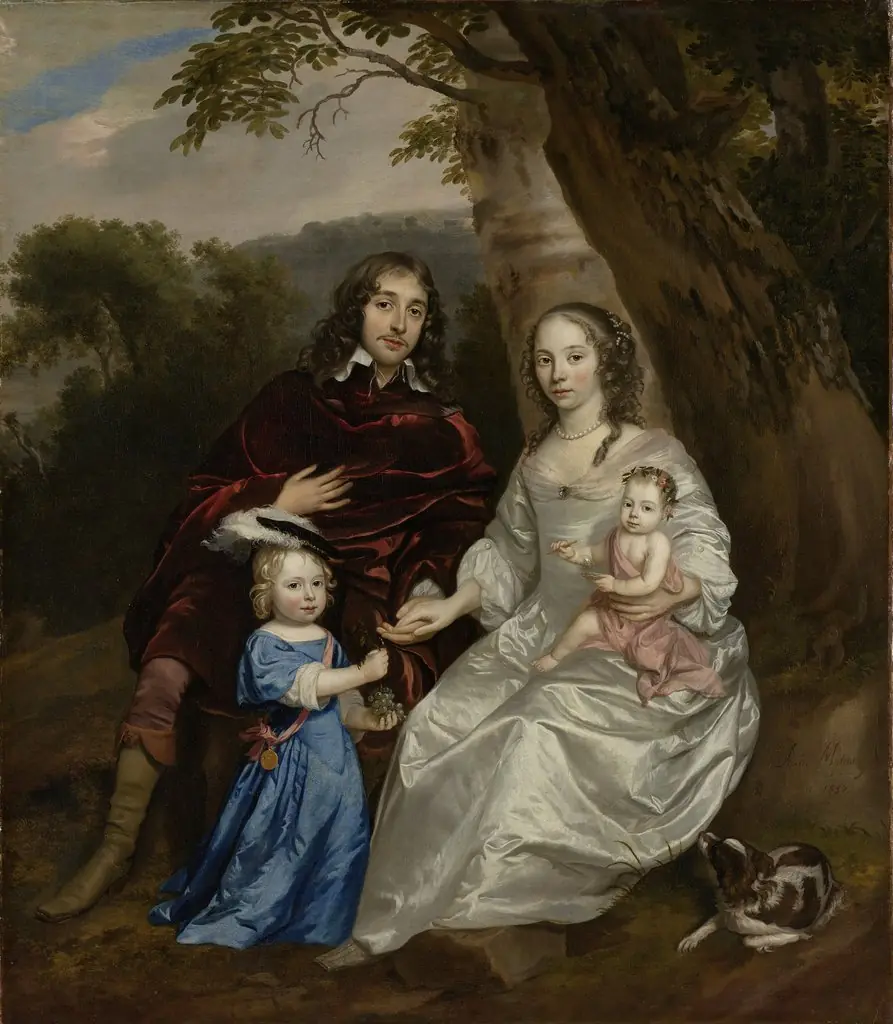
The canvas depicts Govert van Slingelandt, a 17th‑century Dordrecht pensionary, together with his first wife Christina van Beveren and their two sons, Barthoud and Govert Johan. The family is arranged beneath a leafy tree within a pastoral landscape, a small dog positioned at their right. Executed in 1657, the work remains unsigned, its creator unidentified.
Own this work as a print
Artist & collection
Artist
Johannes Mytens or Jan Mijtens, or "Mytens" to the English (c. 1614 – 24 December 1670) was a Dutch Golden Age painter, almost entirely as a portraitist. Mytens was born in The Hague. According to Houbraken, Johannes…

- Govert van Slingelandt (1623-90), lord of Dubbeldam. With his first wife Christina van Beveren and their two sons
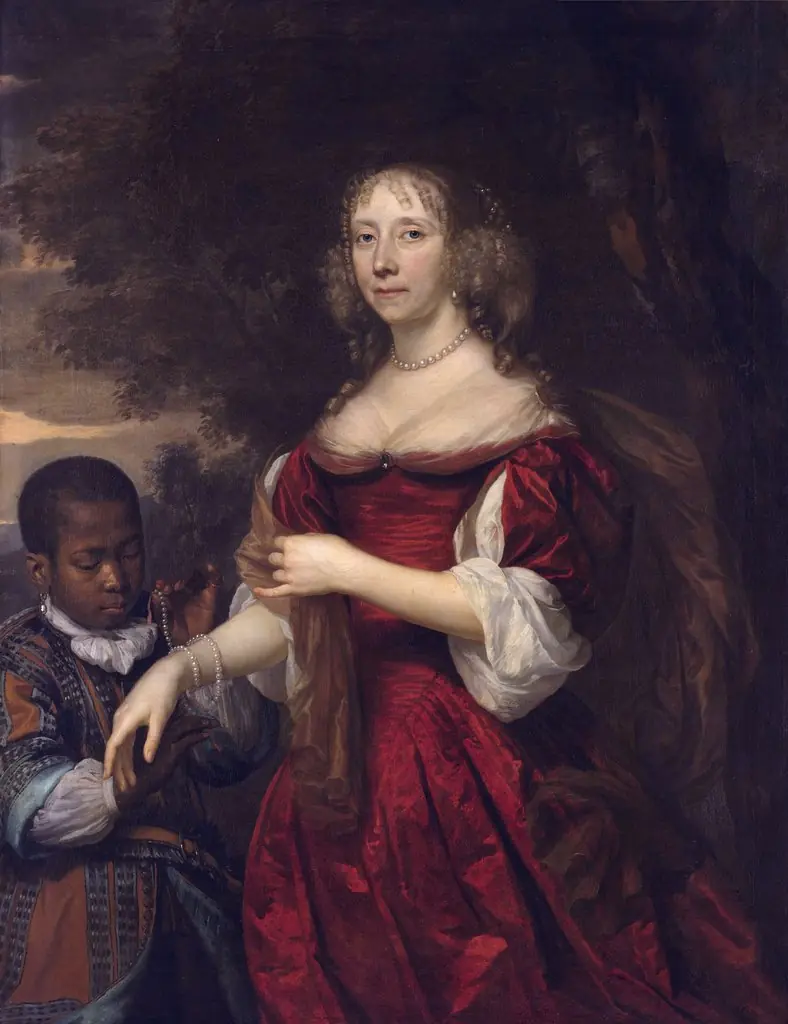 Portrait of Margaretha van Raephorst (d 1690). Wife of Cornelis Tromp
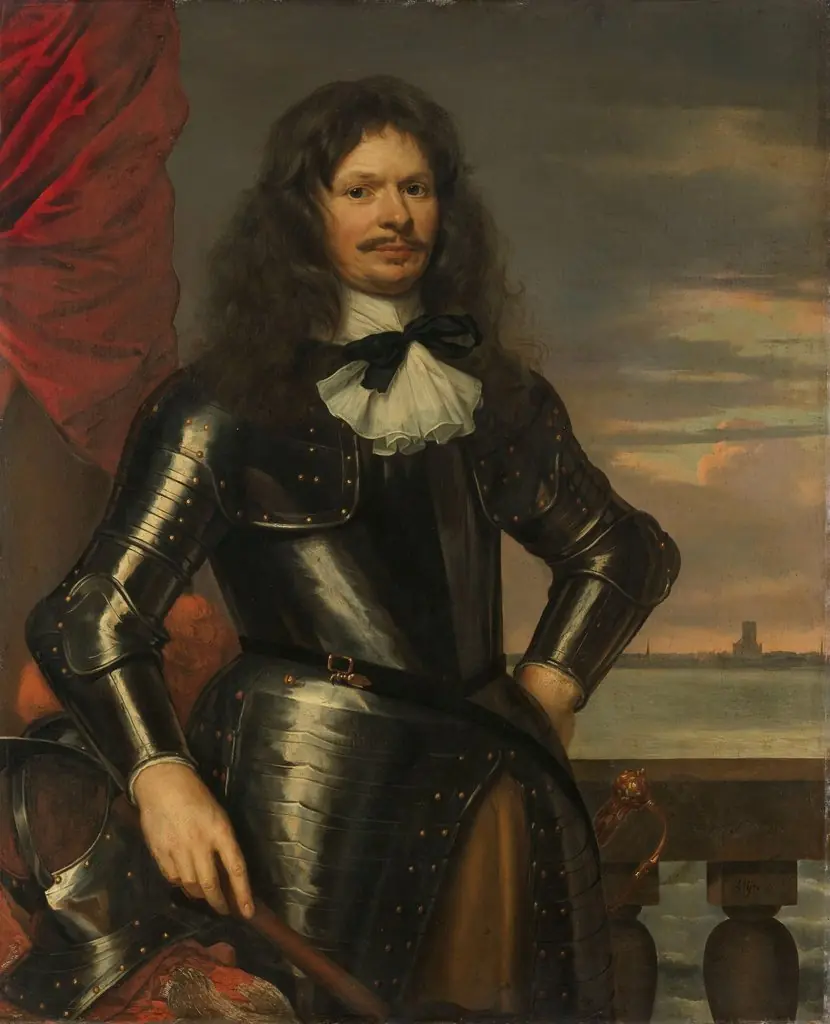 Portrait of Johan van Beaumont. Colonel in the Holland guards and commander of Den Briel
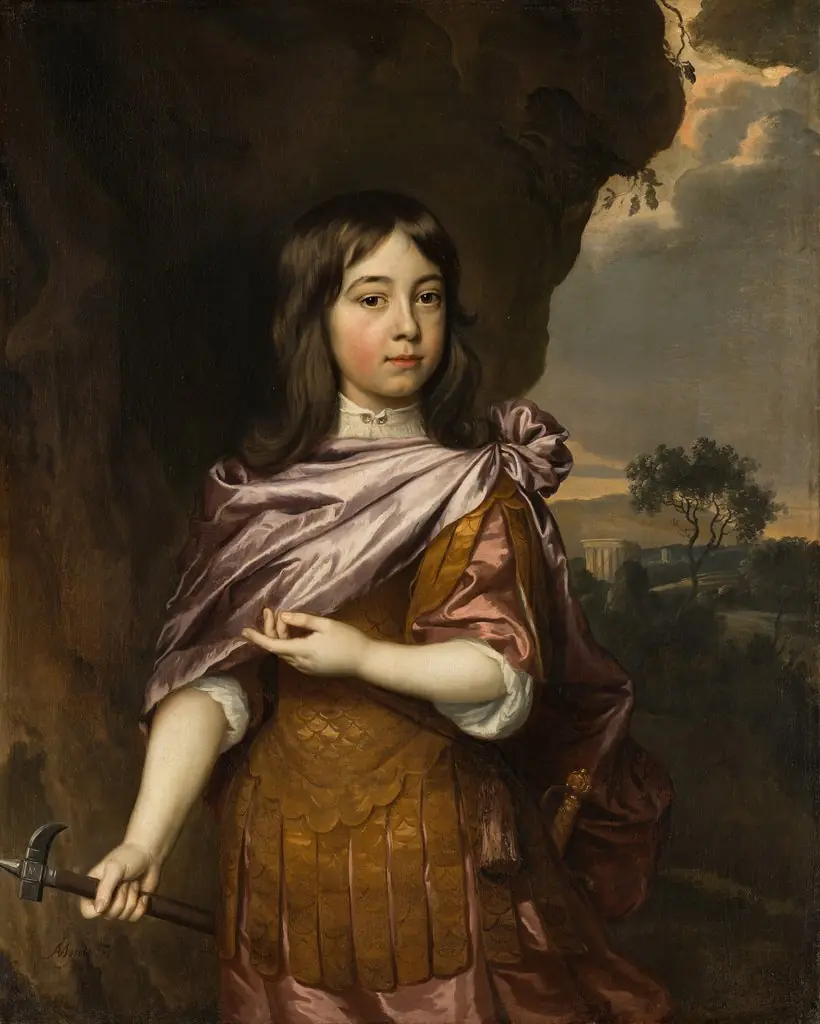 Portrait of Wolfert van Brederode
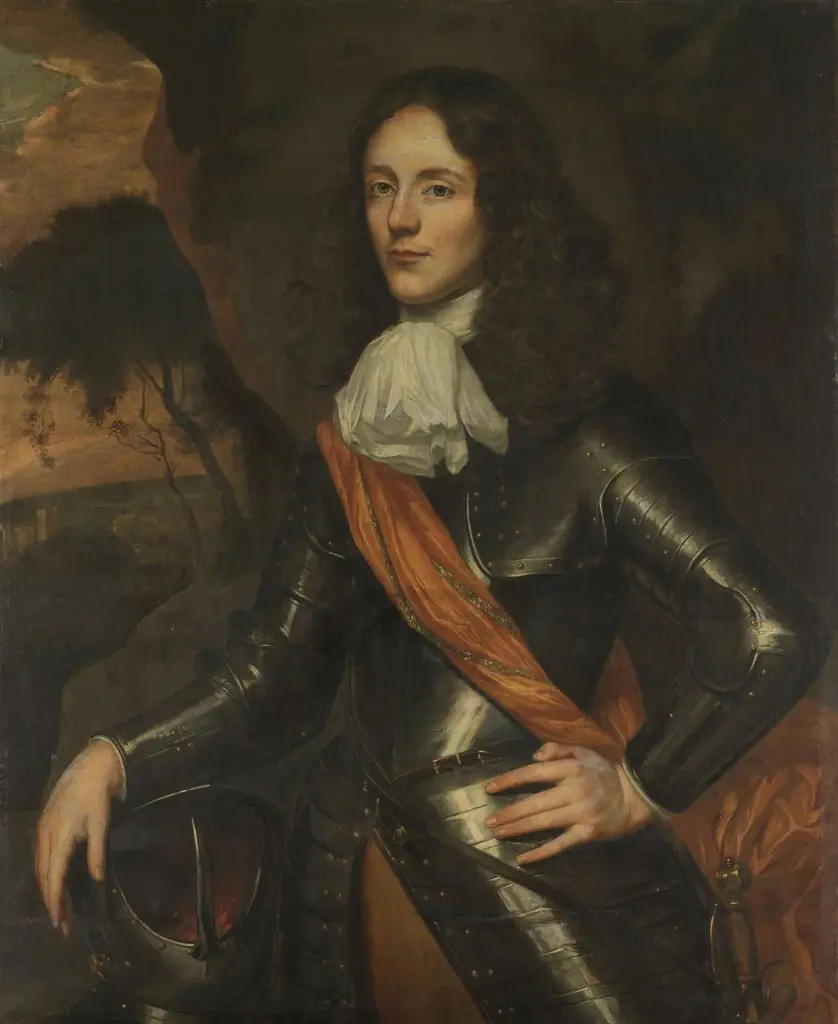 A military officer
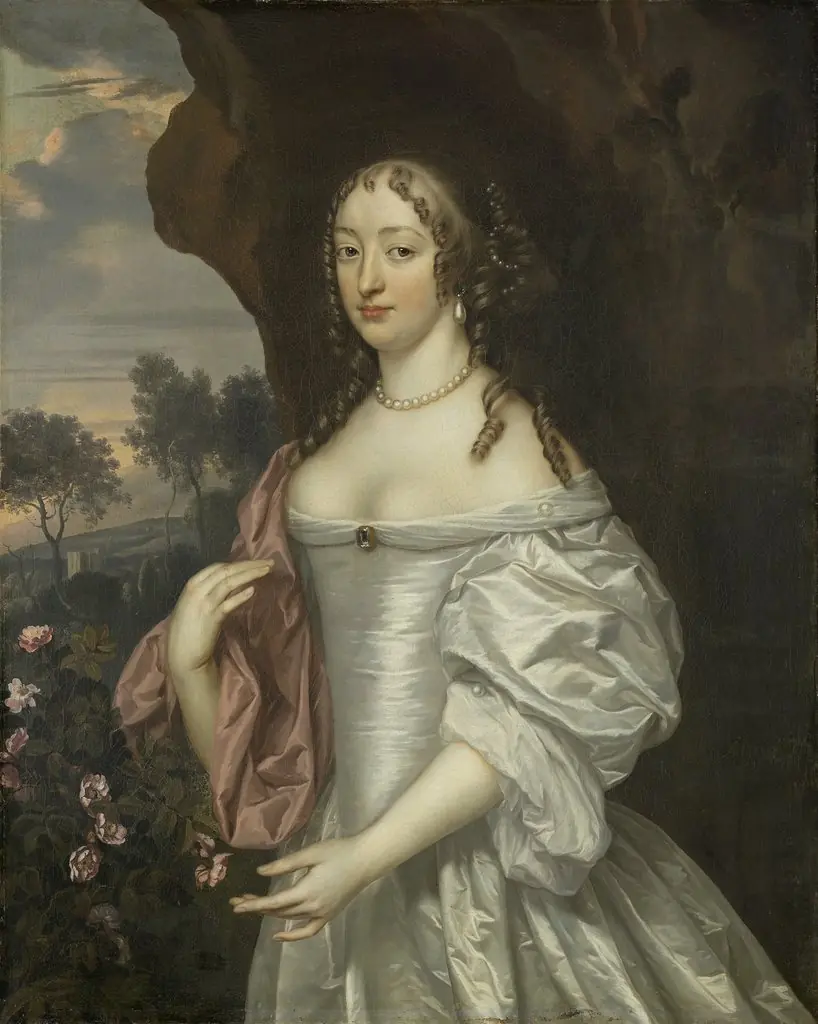 Jacoba van Orliens (1643-91). Wife of Jacob de Witte van Haamstede
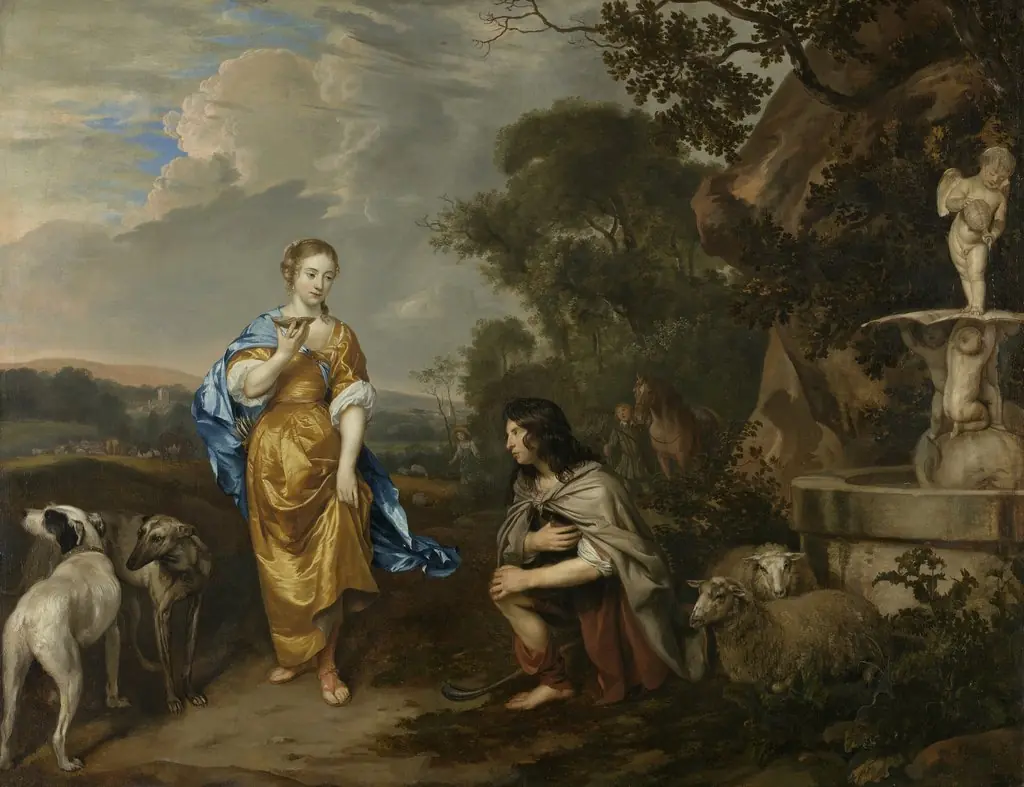 Double portrait of a young couple as Granida and Daiphilo
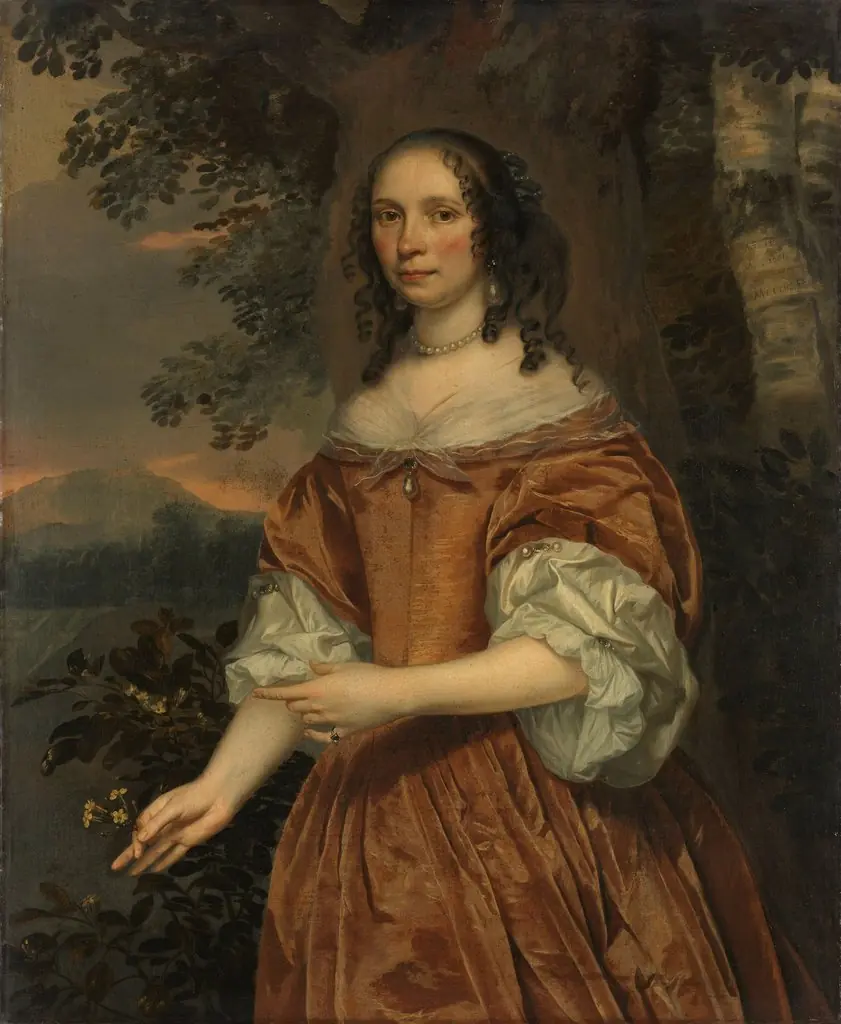 Portrait of Maria de Witte Françoisdr (b 1616). Wife of Johan van Beaumont
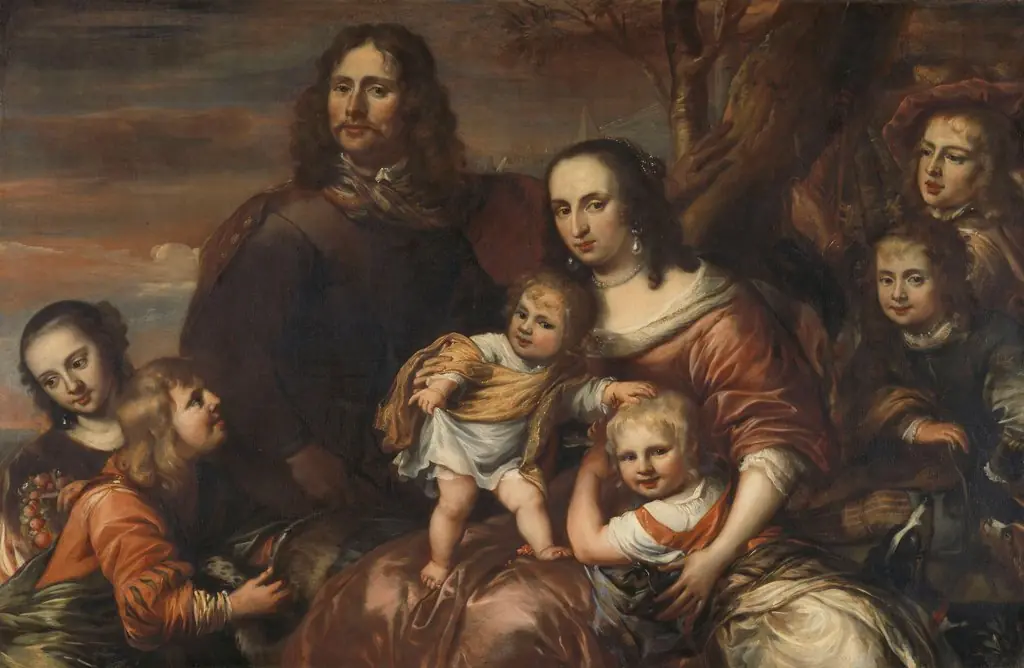 A couple with six children
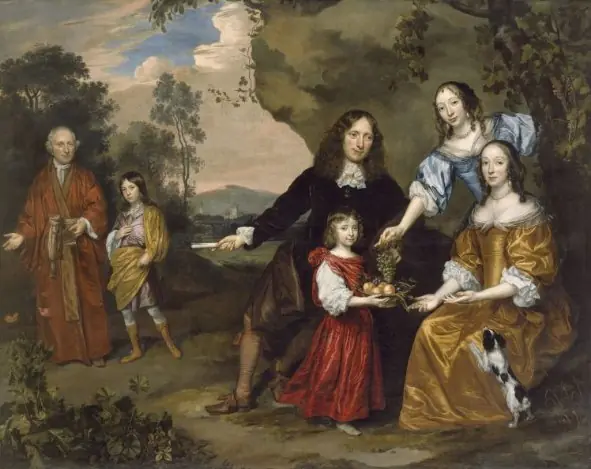 A Family Group
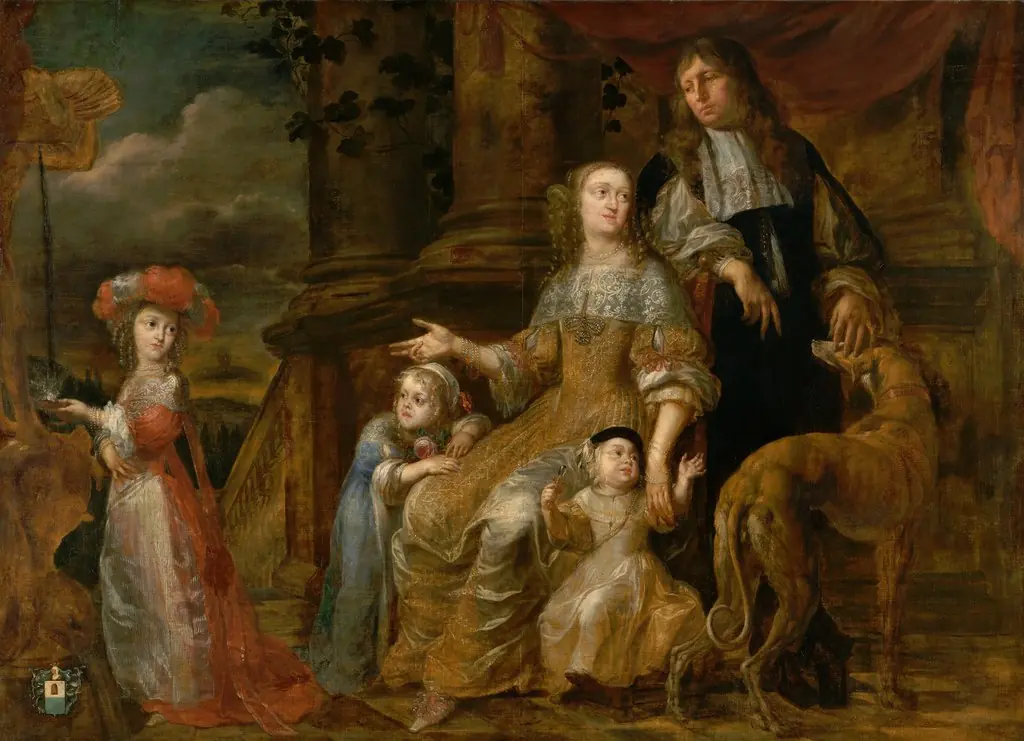 Portrait of the Family de Bie
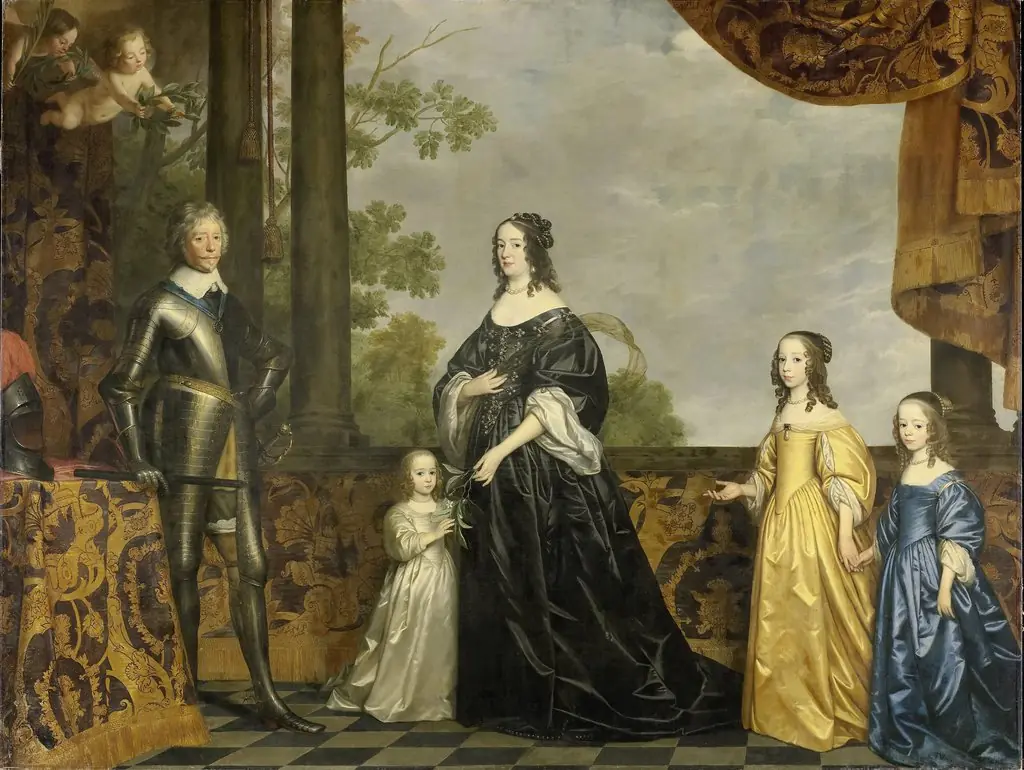 Frederik Hendrik (1584-1647), Prince of Orange, his wife Amalia van Solms (1602-75) and their three youngest daughters, Albertina Agnes (1634-96), Henrietta Catharina (1637-1708) and Maria (1642-88)
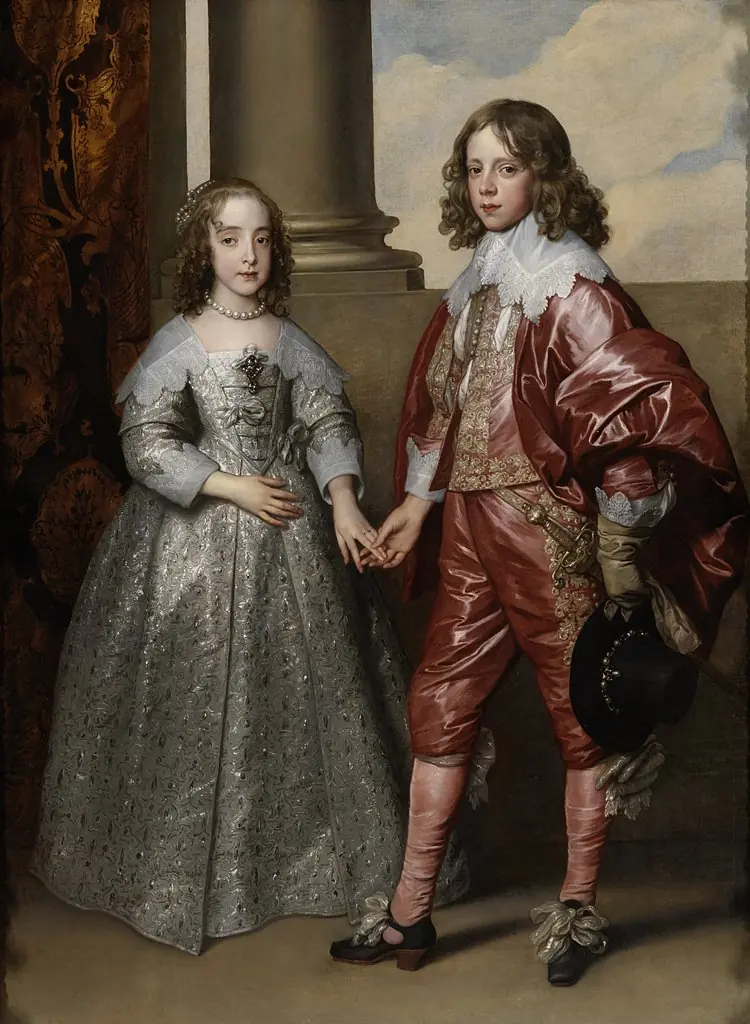 William II, Prince of Orange, and his Bride, Mary Stuart
 Maria Stuart en Willem II
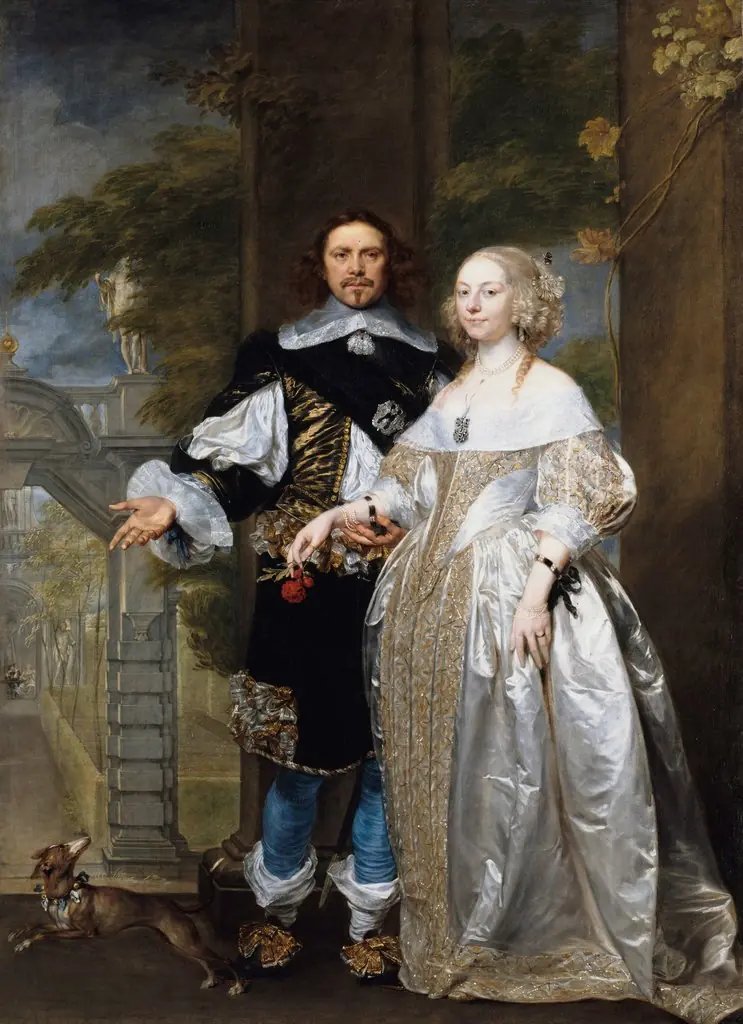 Married Couple in the Park
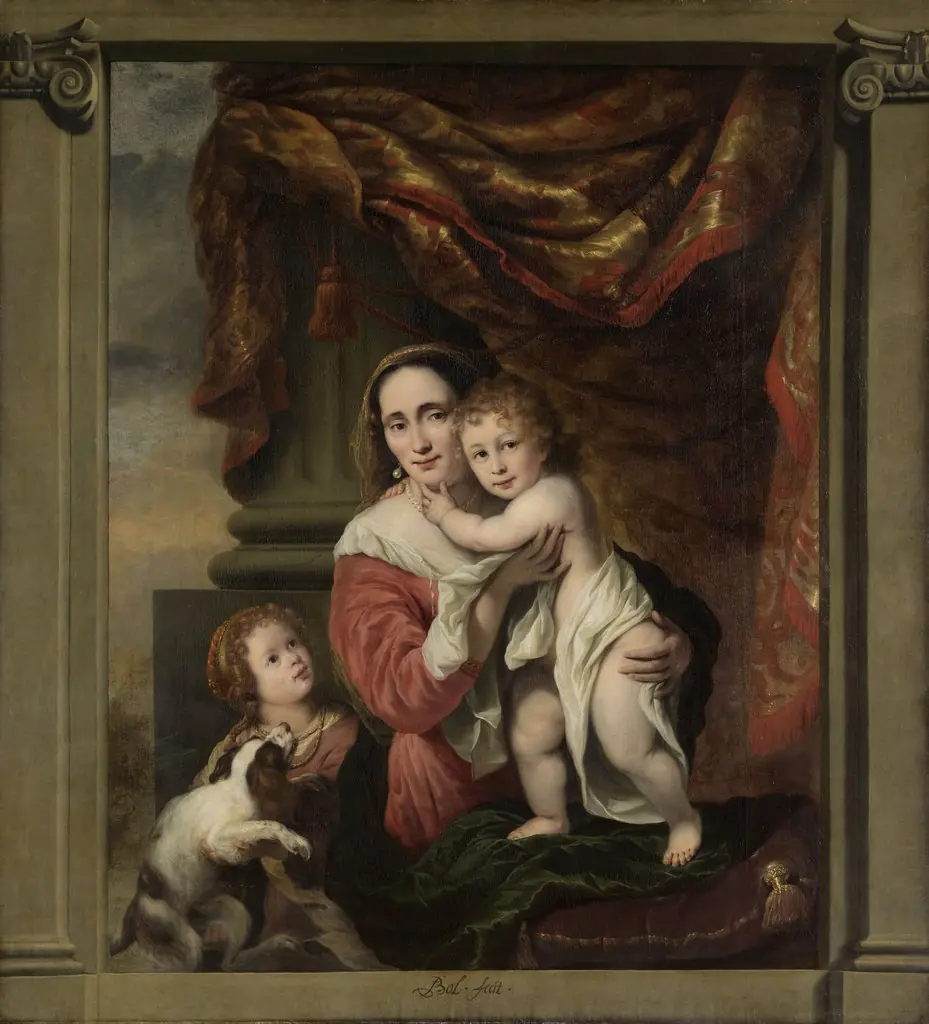 Caritas: Johanna de Geer (1629-91) with her children Cecilia Trip (1660-1728) and Laurens Trip (b 1662)
 Caritas: Joanna de Geer (1629-1691) with her Children Cecilia Trip (1660-1728) and Laurens Trip (b. 1662)
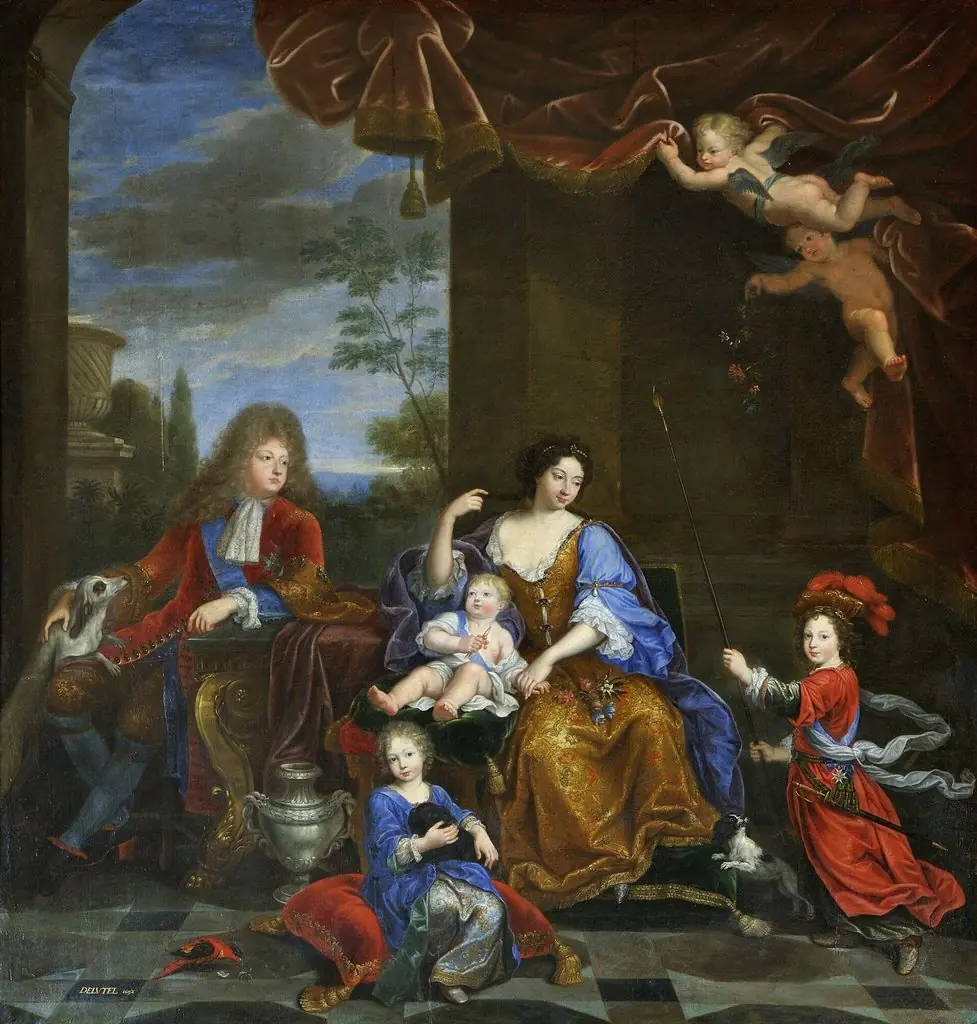 The family of the Grand Dauphin
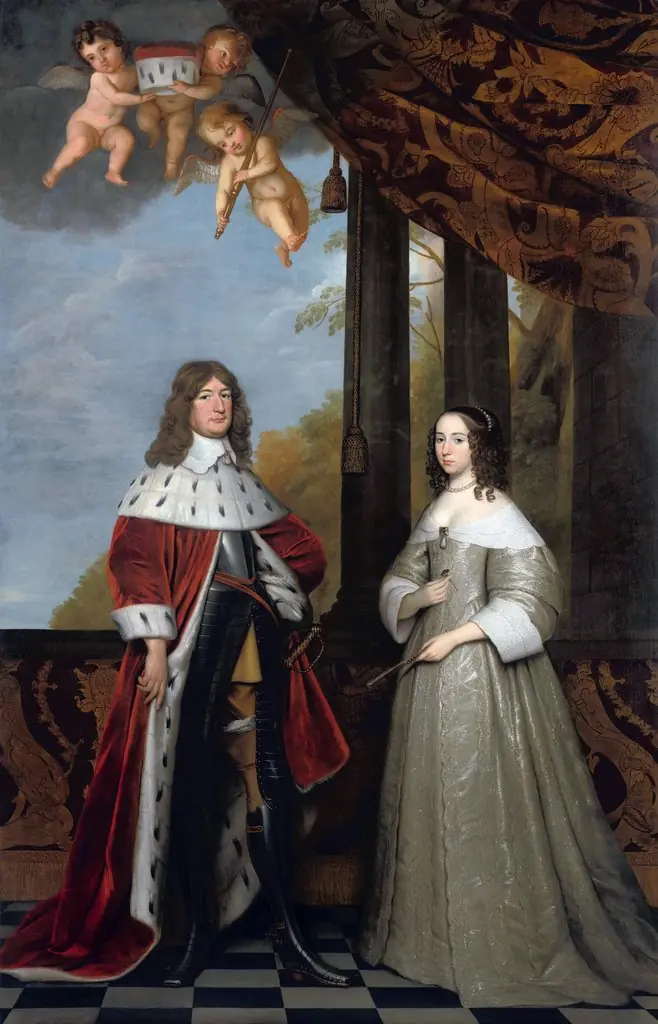 Friedrich Wilhelm (1620-88), Elector of Brandenburg, and his wife Louise Henriette (1627-67), Countess of Orange-Nassau