Artwork
Allegory of transience
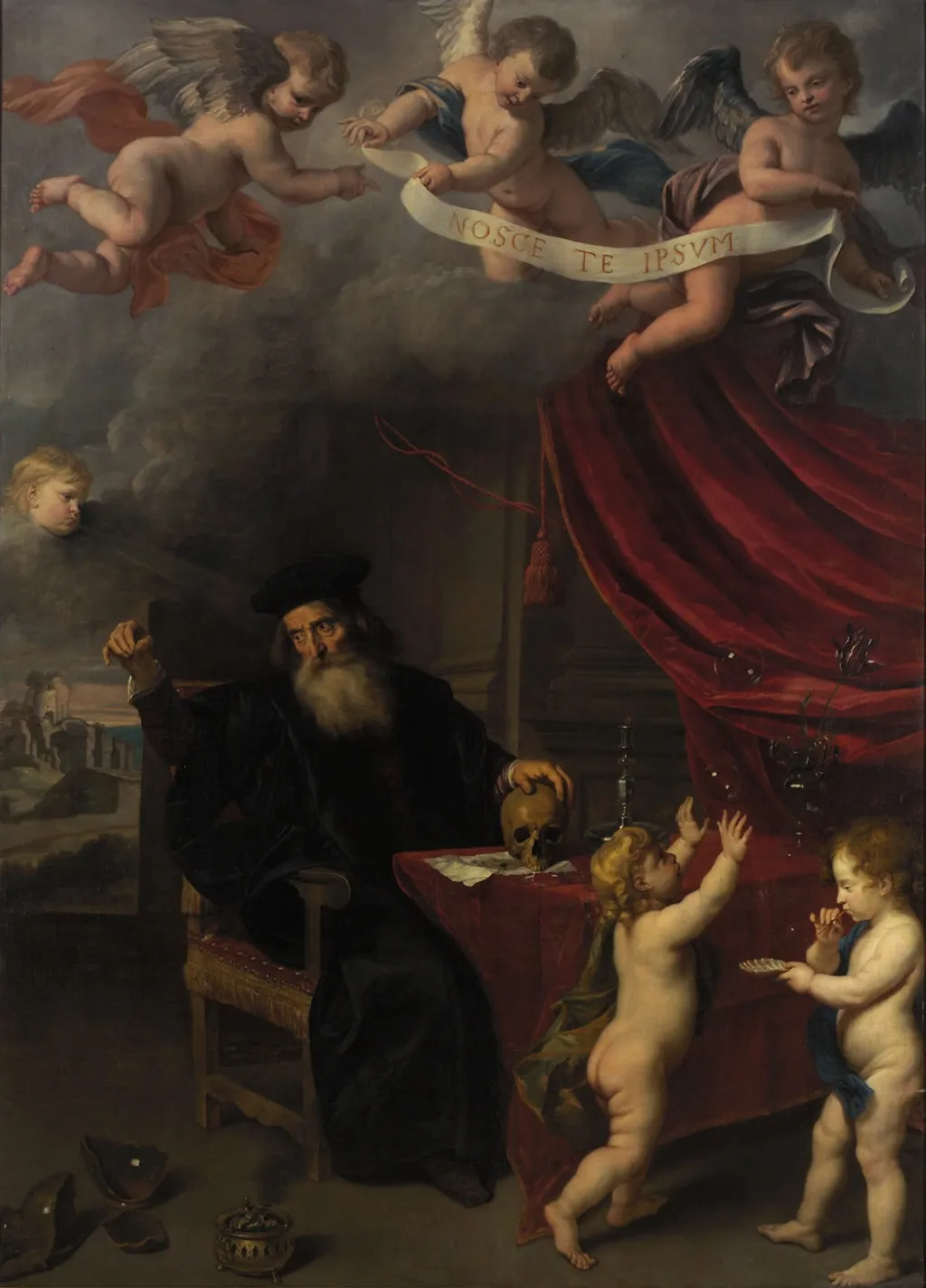
Allegory of transience is a color painting by the Flemish Baroque painting artist Jan van den Hoecke. It dates from 1638 and is held in the collection of the Kunsthistorisches Museum.
About this work
Overview
Jan van den Hoecke executed Allegory of Transience in 1638, a work situated within the Flemish Baroque tradition. Trained initially under Peter Paul Rubens, van den Hoecke later absorbed influences from Italian art during an extended stay in Rome. The painting exemplifies allegorical representation, employing symbolic motifs to explore themes of mortality and the fleeting nature of existence.
Subject & Meaning
The composition centers on an elderly figure contemplating a human skull, a conventional emblem of mortality. Surrounding him, objects such as a candle, book, and bowl reinforce the theme of impermanence. Above, cherubs display a banner inscribed with the Latin phrase Nosce te ipsum, a call to self-knowledge, suggesting introspection as a response to life’s brevity.
Technique & Style
Van den Hoecke employs chiaroscuro to heighten dramatic contrast, directing focus toward the central figure and his immediate surroundings.
Van den Hoecke employs chiaroscuro to heighten dramatic contrast, directing focus toward the central figure and his immediate surroundings. The dark, subdued background accentuates the illuminated forms, while meticulous detailing in the objects and textiles reflects his training in Rubens’ workshop. The handling of light and shadow aligns with Flemish Baroque conventions, emphasizing emotional intensity.
History & Provenance
Created in 1638, the painting entered the Kunsthistorisches Museum’s collection, where it remains. Van den Hoecke’s career spanned Italy and Central Europe, including appointments as a court painter in Vienna and Brussels. This work likely circulated within elite circles familiar with allegorical imagery, though specific early ownership details remain unrecorded.
Context
The painting emerges from a period in which allegorical themes were widely used to convey moral and philosophical ideas. The inscription Nosce te ipsum references classical thought, linking Renaissance humanism to Baroque visual culture. Such works often served as meditative objects, prompting viewers to reflect on their own mortality within a Christian framework.
Legacy
While not among van den Hoecke’s most frequently cited works, Allegory of Transience contributes to the broader tradition of memento mori imagery. Its inclusion in a major museum collection underscores the enduring interest in Baroque allegories. The painting offers insight into the artist’s synthesis of Flemish and Italian influences during a formative phase of his career.
Artist & collection

Artist
Jan van den Hoecke (baptised on 4 August 1611 – 1651) was a Flemish painter, draughtsman and designer of wall tapestries.

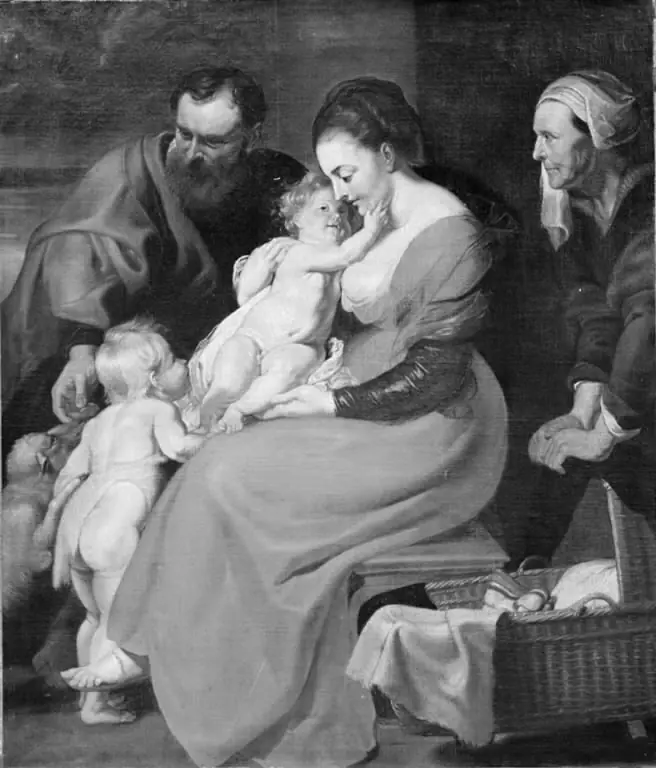
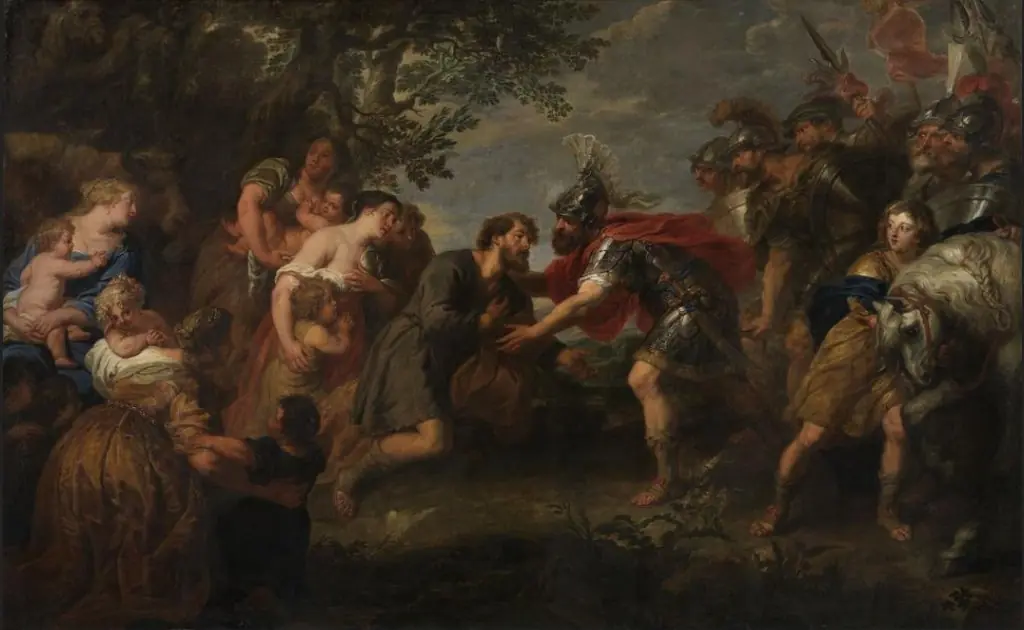
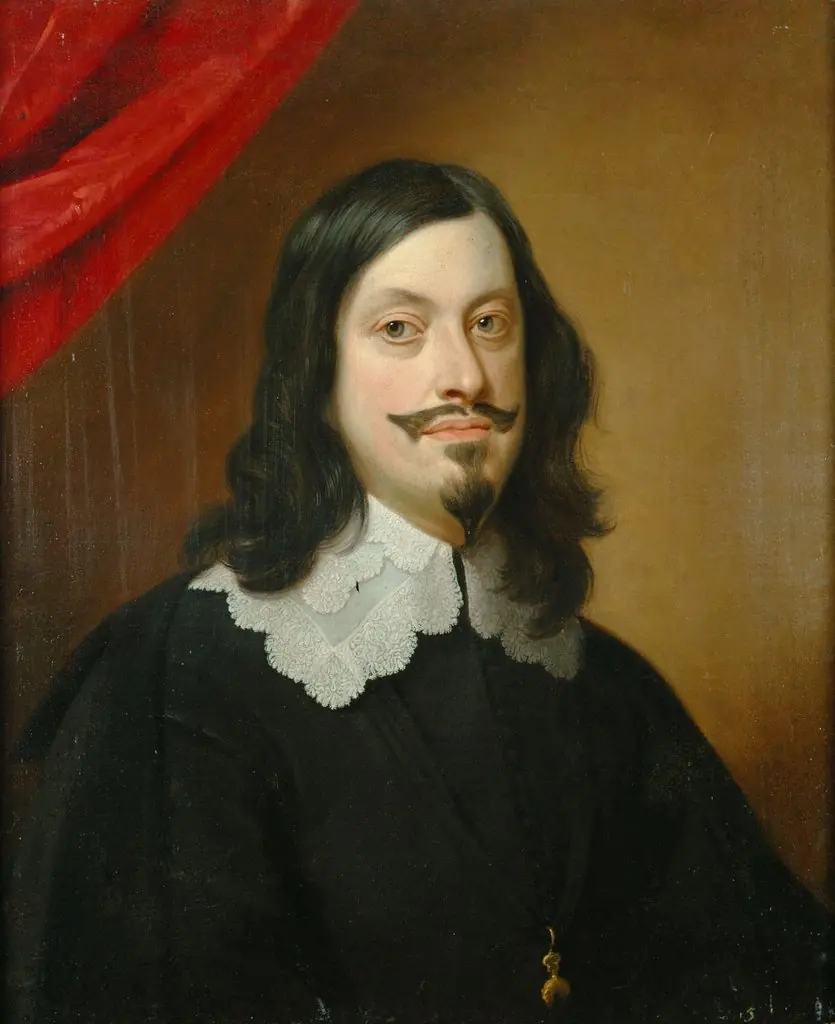
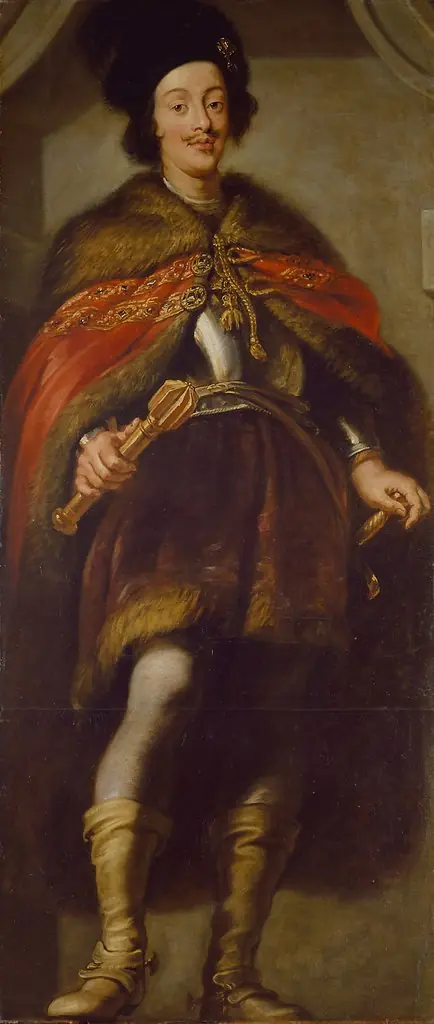
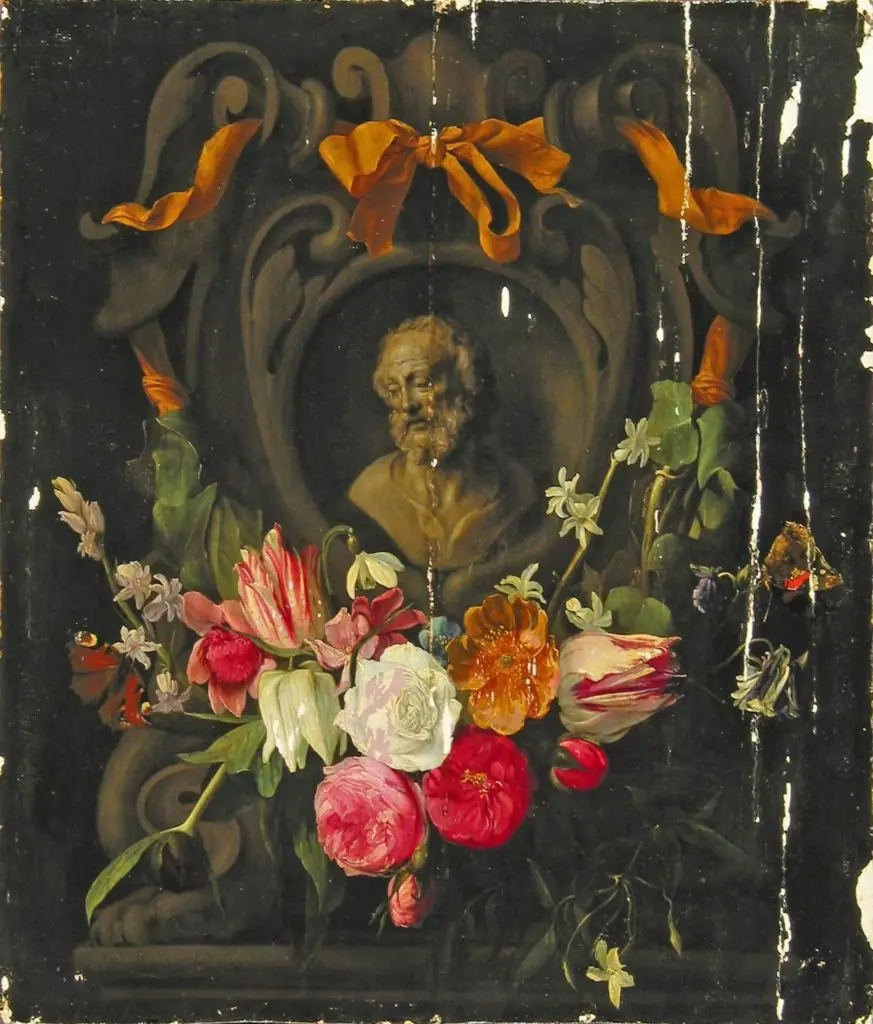
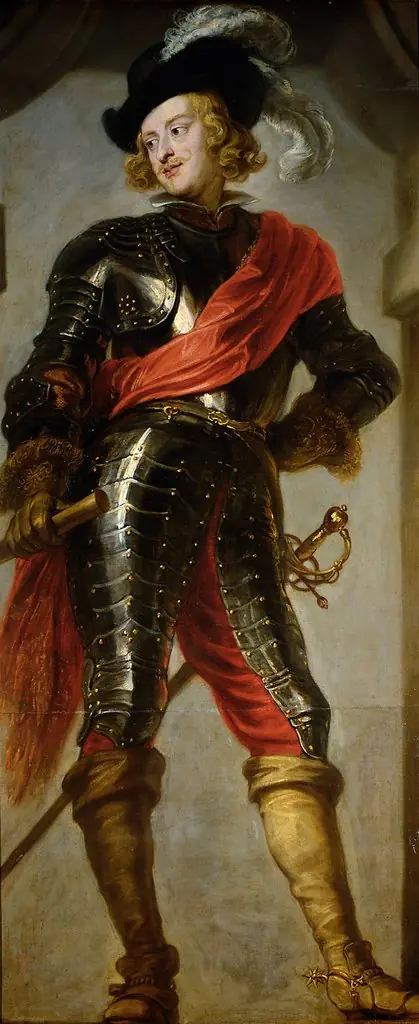
- St Augustine in Ecstasy
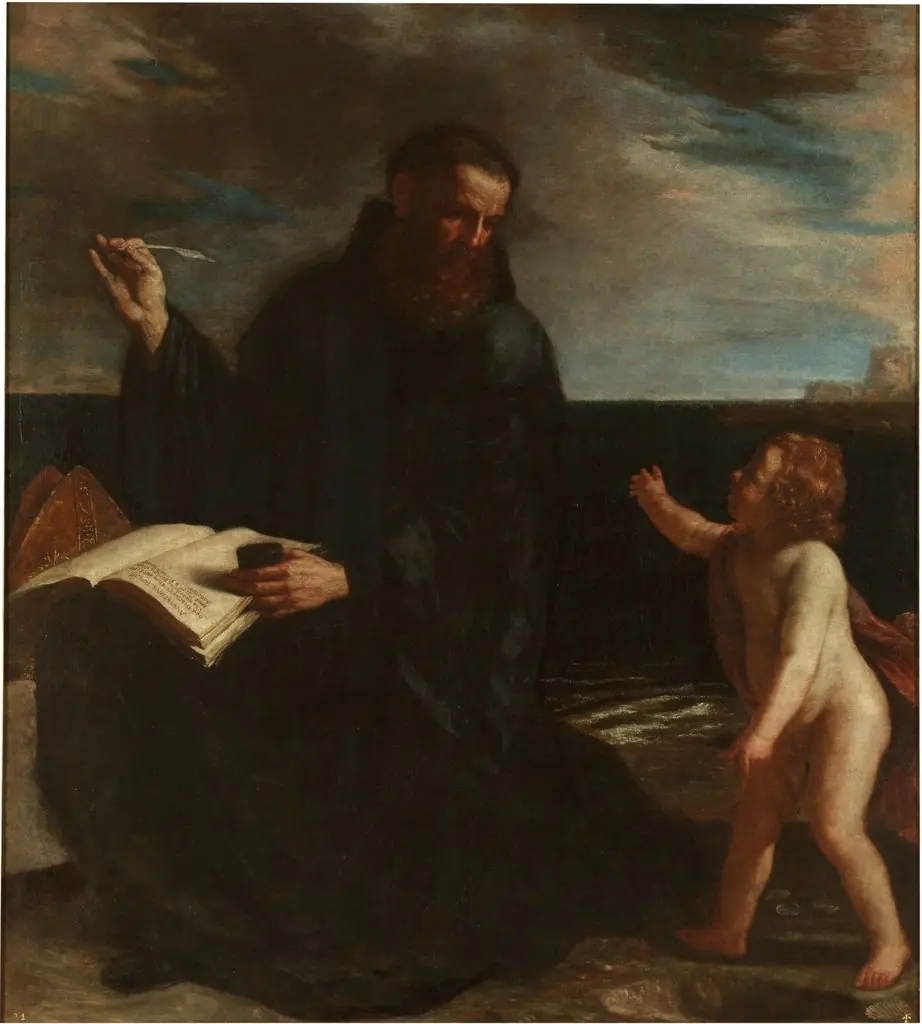 Saint Augustine meditating on the Trinity
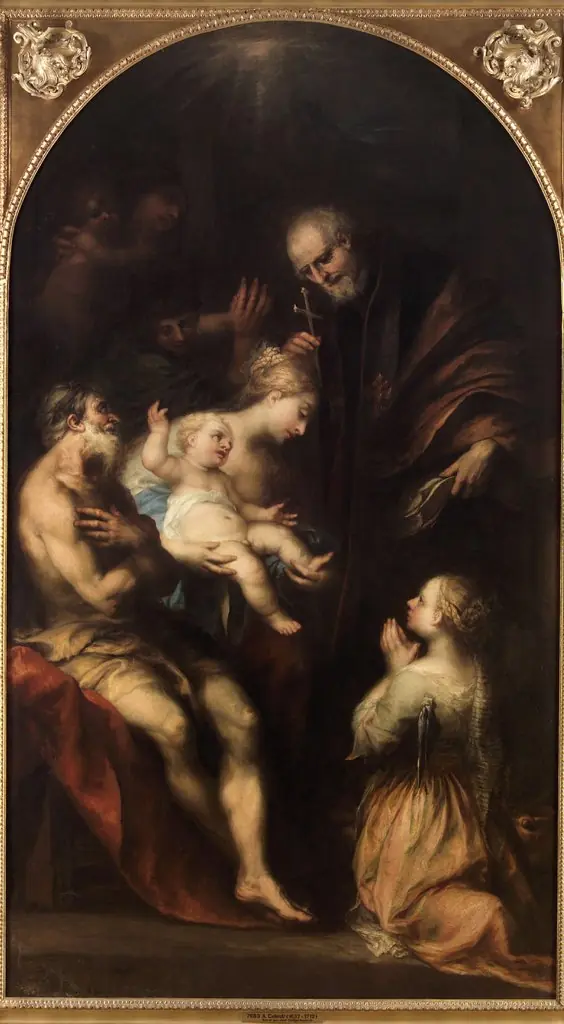 Madonna mit Heiligen
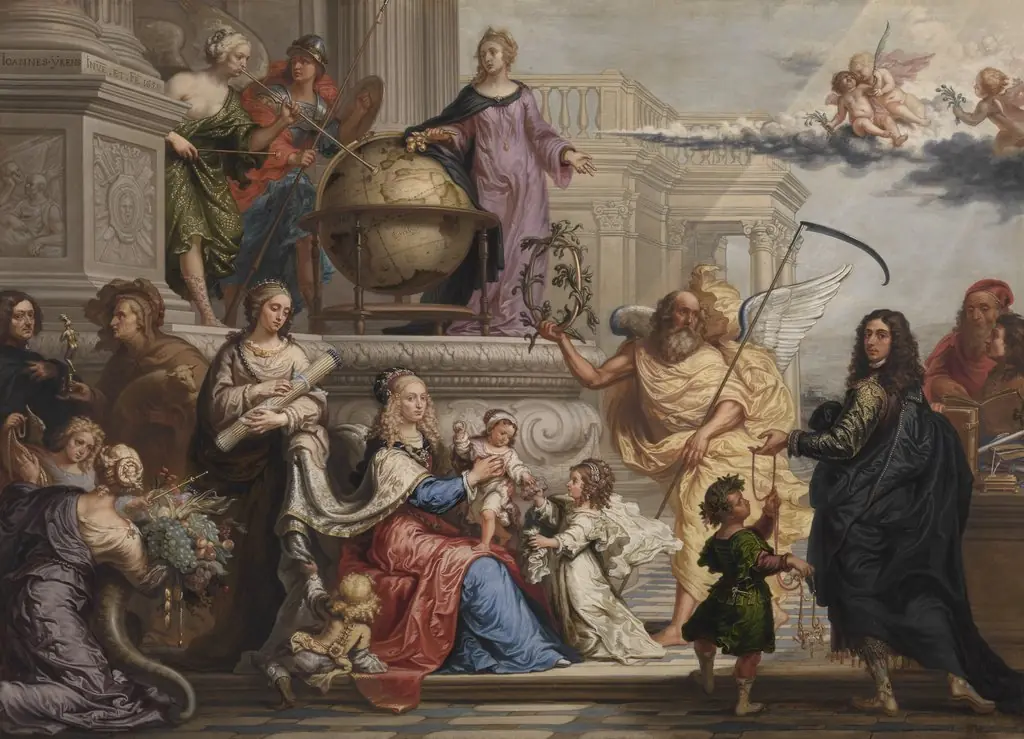 Allegorical Adoration of the Birth of a Prince
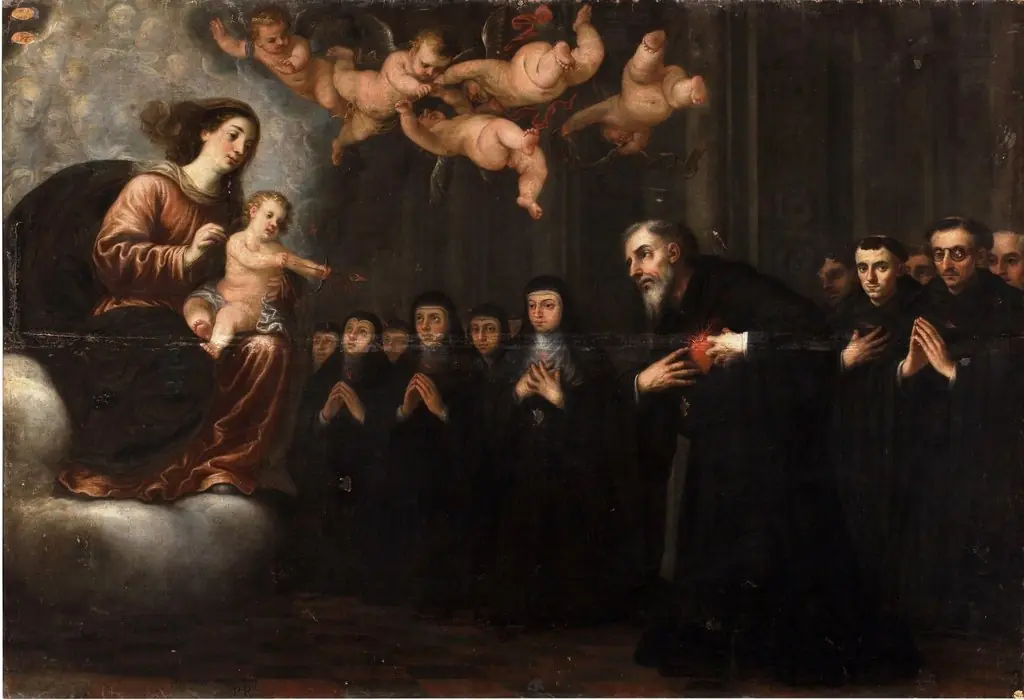 La Virgen y el Niño transverberando el corazón a San Agustín ante la comunidad de agustinos
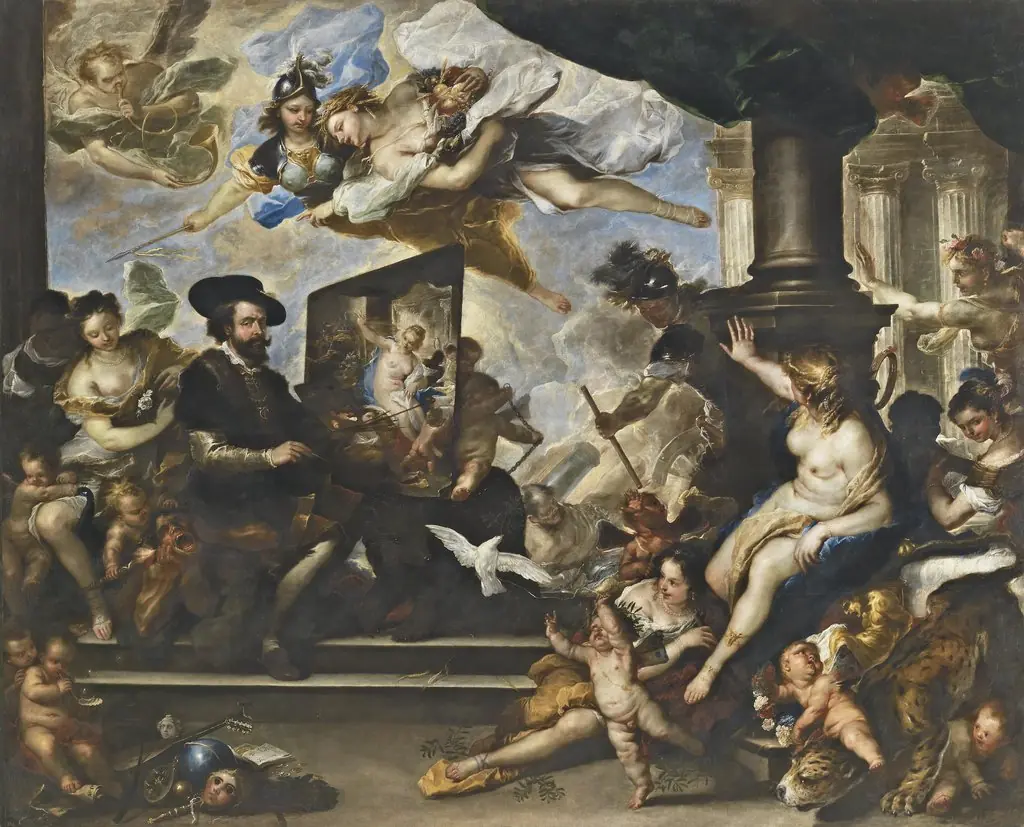 Rubens painting ‘The Allegory of Peace’
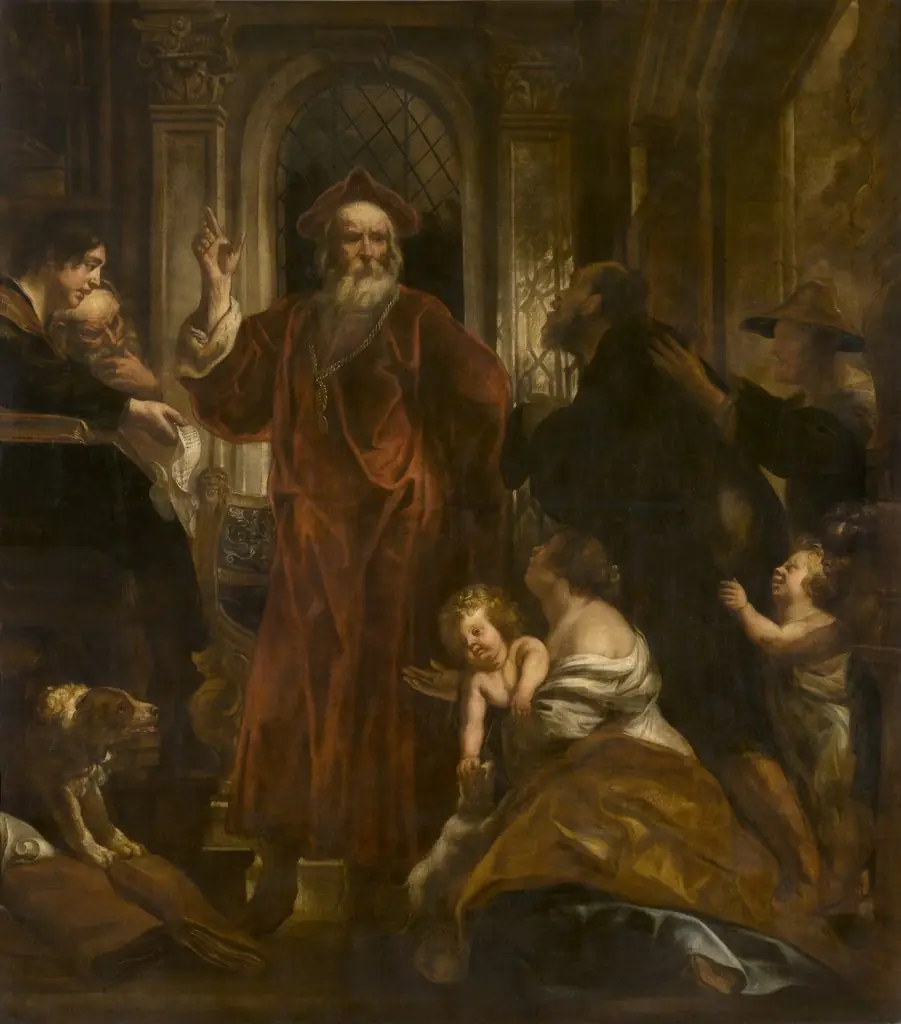 Saint Ivo of Brittany
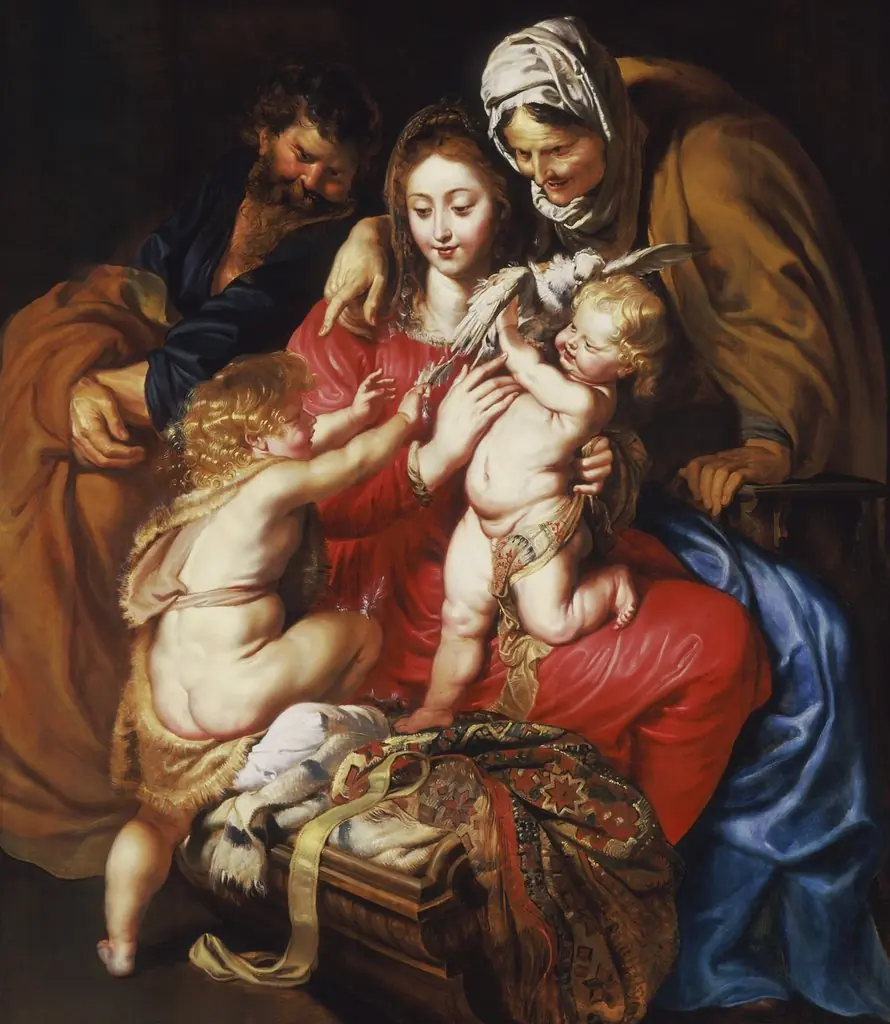 The Holy Family with St. Elizabeth, St. John, and a Dove
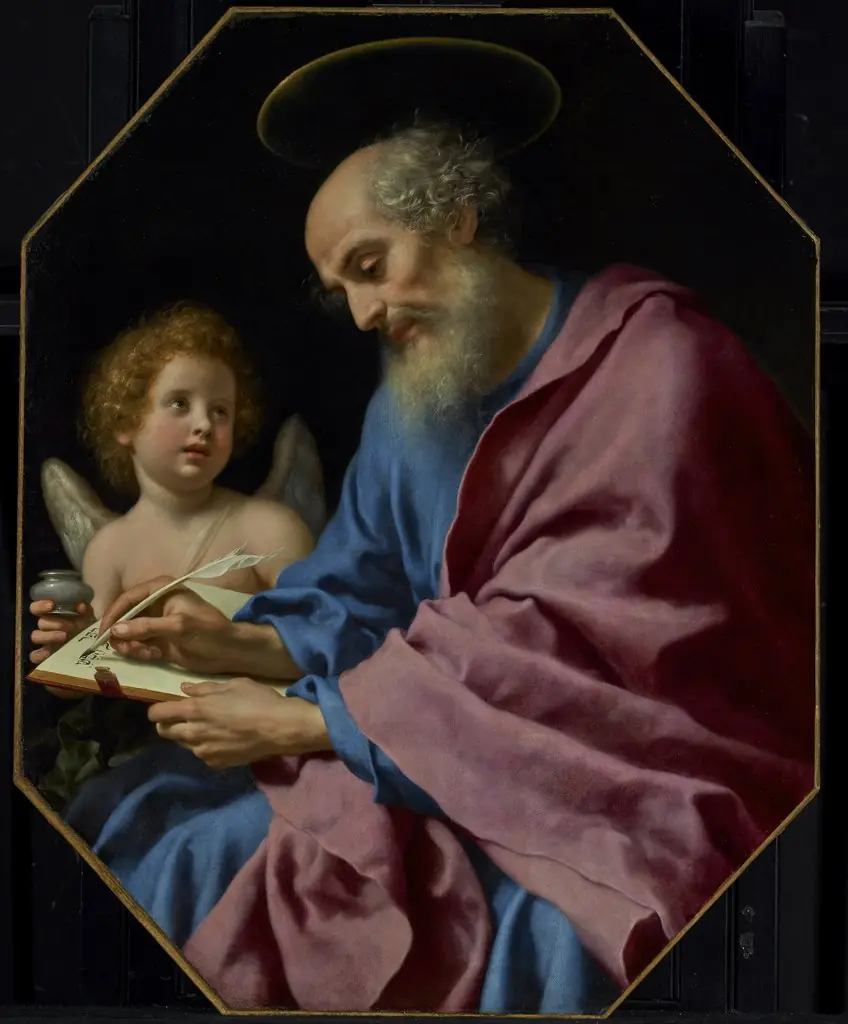 St. Matthew Writing His Gospel
 Saint Ives of Treguier, Patron of Lawyers, Defender of Widows and Orphans
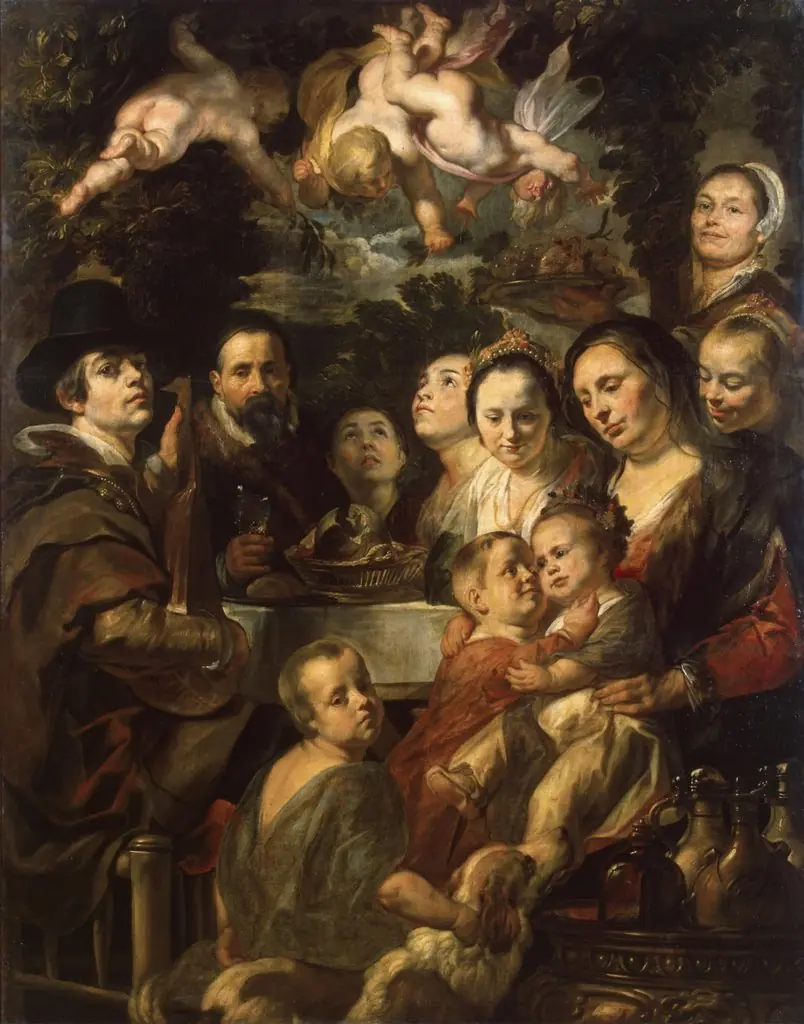 Self-Portrait with Parents, Brothers and Sisters
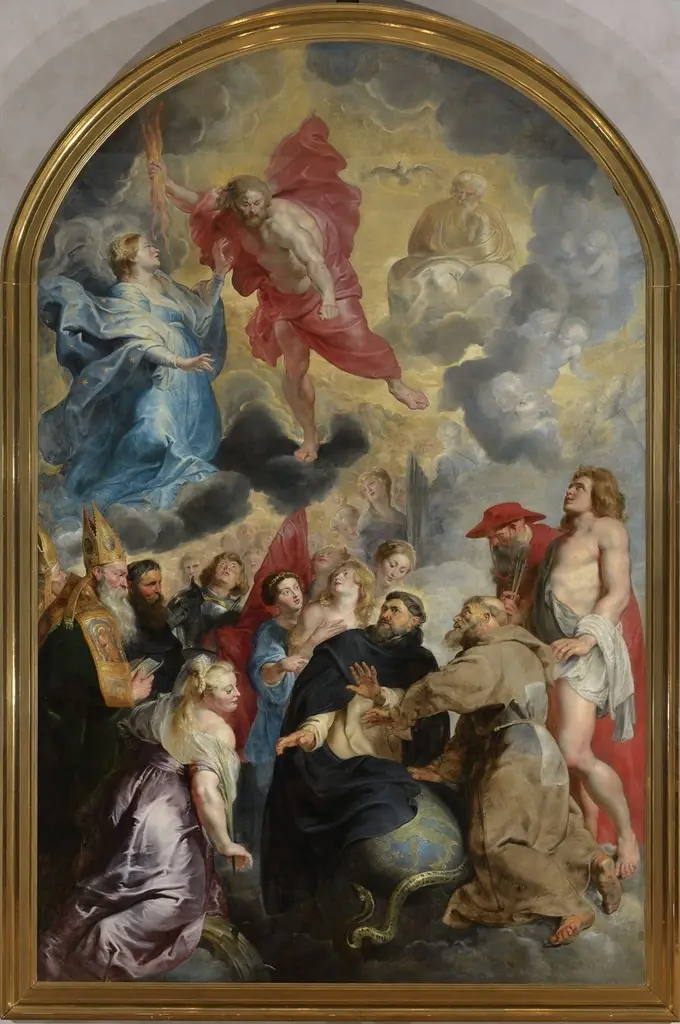 Saint Dominic and Saint Francis Protecting the World from the Wrath of Christ