Artwork
De liefdesbrief
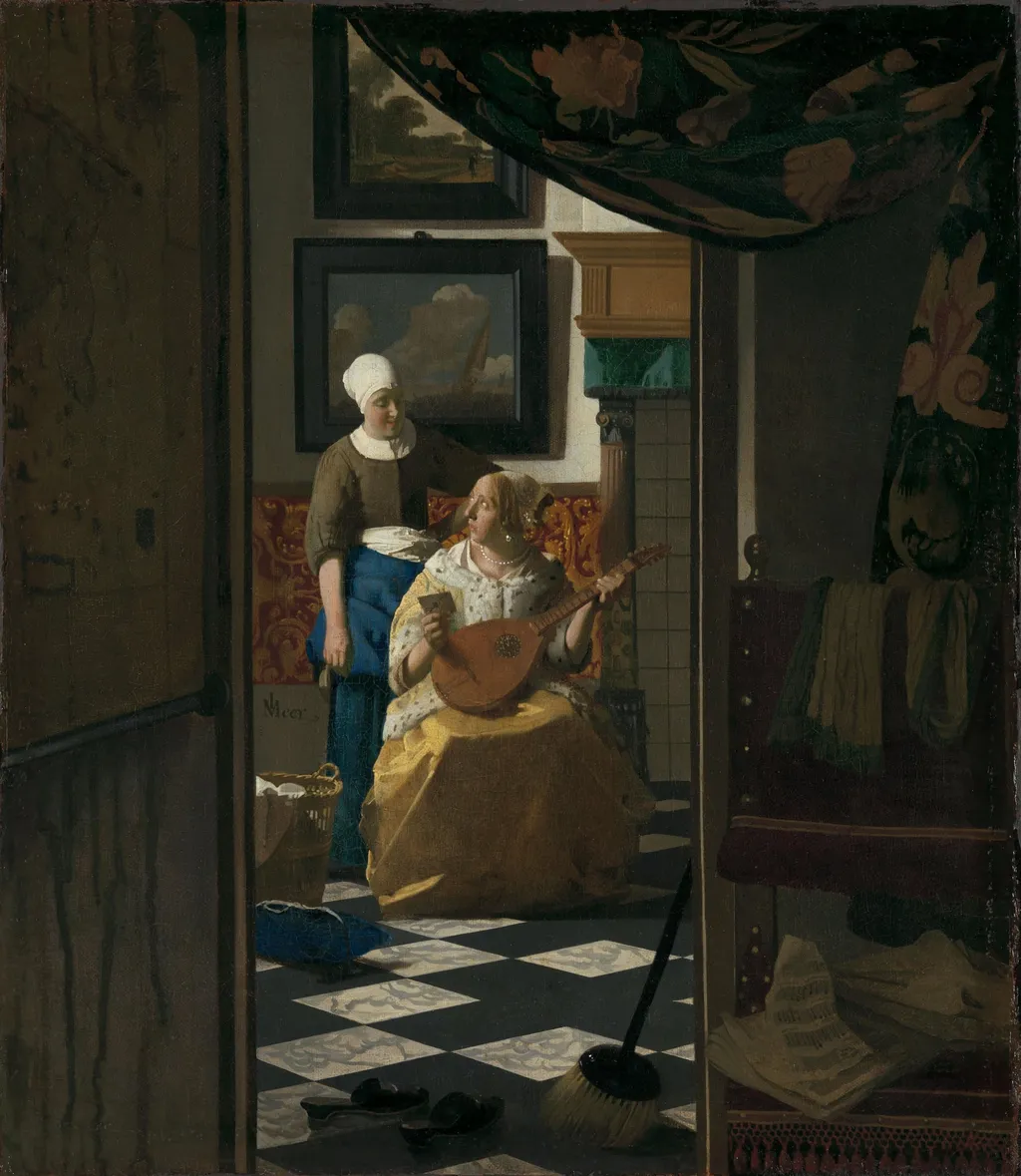
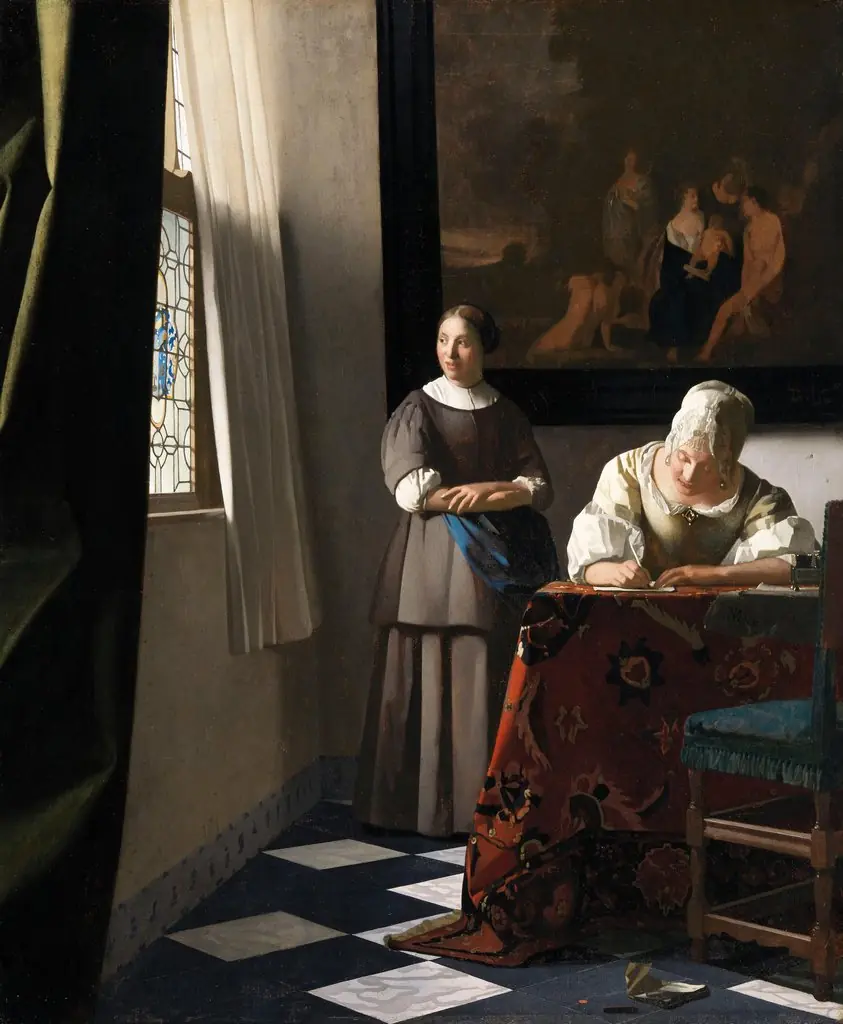
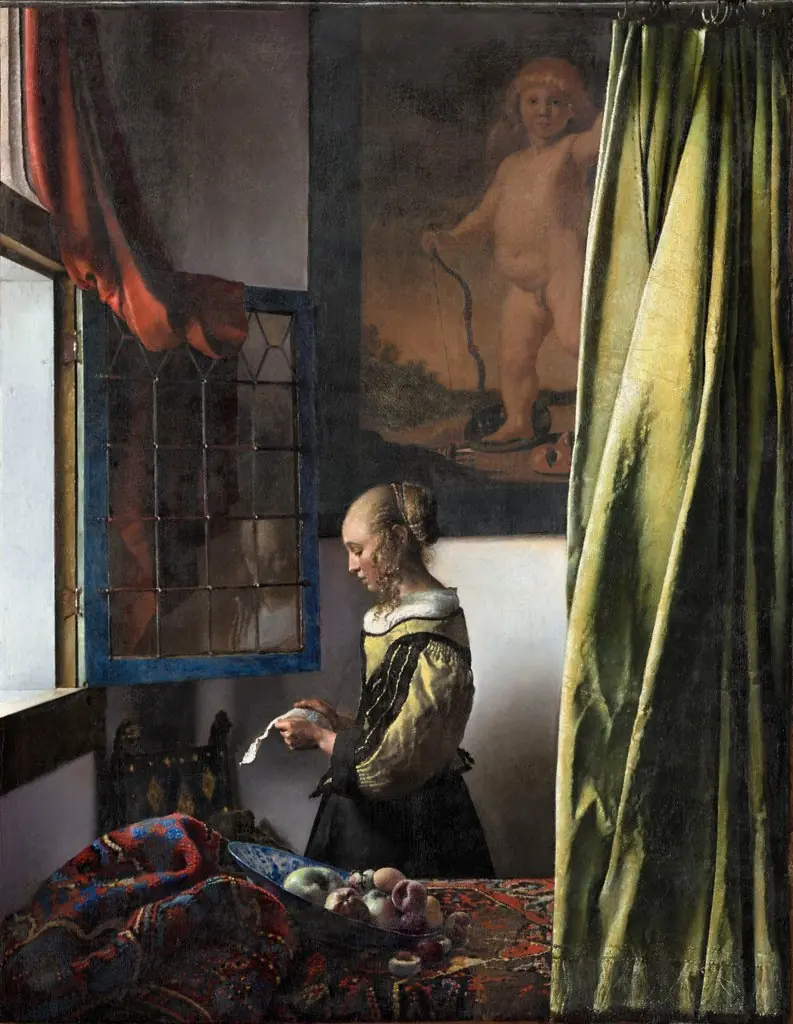
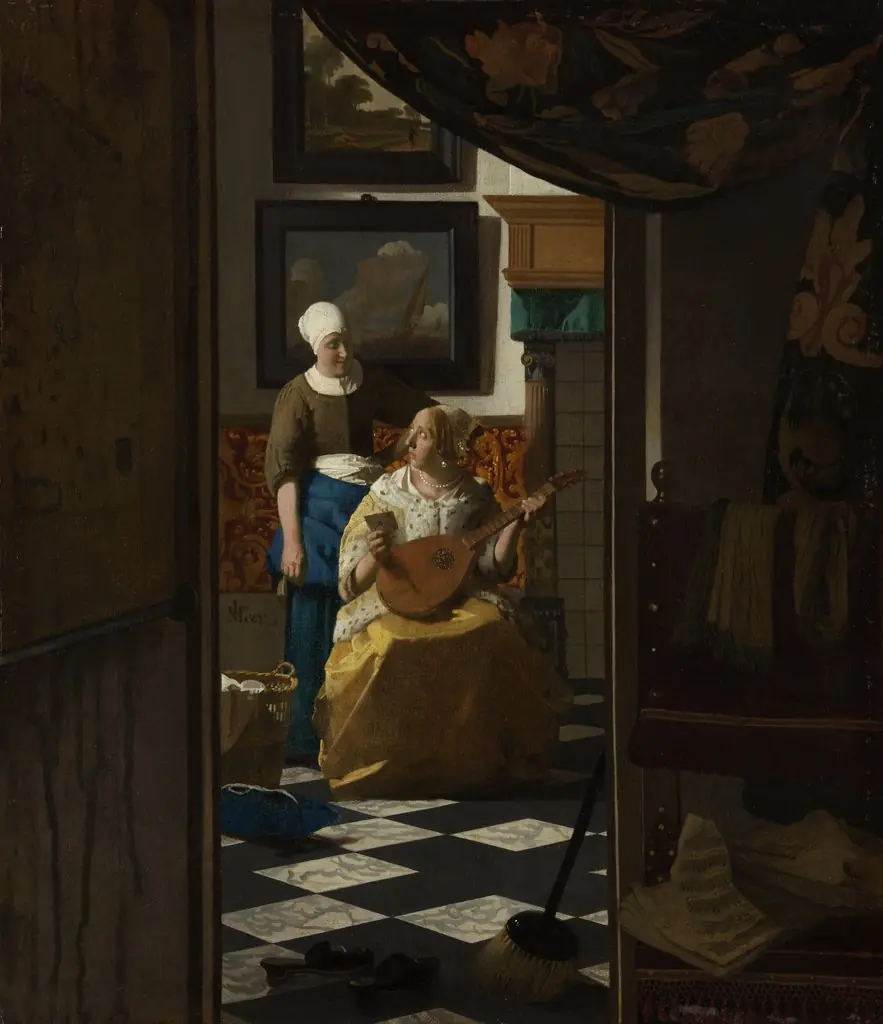
De liefdesbrief is an unspecified painting by the Baroque artist Johannes Vermeer. It dates from 1669 and is held in the collection of the Rijksmuseum. The work depicts a domestic interior where a well‑dressed woman, dressed in a blue jacket, receives a letter from her maid.
About this work
History & Provenance
Johannes Vermeer created De liefdesbrief (The Love Letter) circa 1669 to 1670.
Johannes Vermeer created De liefdesbrief (The Love Letter) circa 1669 to 1670. The work was likely produced during the artist's residence in Delft, where he lived with his wife Catharina Bolnes and mother-in-law Maria Thins at Oude Langendijk. Vermeer frequently painted for local patrons rather than the open market, with the baker Hendrick van Buyten being a documented supporter who accepted paintings as collateral for bread debts.
Although specific commission details for this piece are not recorded, the artist's general practice involved working slowly with expensive pigments for a limited circle of wealthy collectors. The painting remained within Vermeer's estate after his death in 1675, eventually passing through his widow's inheritance before entering public collections centuries later.
Context
Johannes Vermeer is now ranked alongside Rembrandt van Rijn and Frans Hals as a preeminent master of the Dutch Golden Age, though his reputation underwent a dramatic transformation. During his lifetime, he enjoyed modest success primarily within Delft and The Hague, but fell into near-total obscurity following his death in 1675. He was notably omitted from Arnold Houbraken's 1718 survey of Dutch painters, remaining absent from major art historical narratives for nearly two centuries.
The artist was rediscovered in the mid-19th century by critics Gustav Friedrich Waagen and Théophile Thoré-Bürger, the latter dubbing him the "Sphinx of Delft" due to the scarcity of biographical data. Since this revival, Vermeer's standing has grown enormously, with his limited oeuvre of approximately 34 to 37 authenticated paintings celebrated for their masterful use of light, expensive pigments like natural ultramarine, and poetic depiction of domestic interiors.
Legacy
After Vermeer's death his paintings, including De liefdesbrief, slipped into obscurity until the 19th‑century rediscovery by Waagen and Thoré‑Bürger, who attributed numerous works to him and rekindled scholarly interest. The subsequent surge in esteem elevated Vermeer to iconic status, and his intimate genre scenes such as De liefdesbrief are now regarded as hallmarks of Dutch Golden Age art, celebrated for their luminous handling of light and compositional balance. This growing reputation has been reinforced by major exhibitions and scholarly reassessments that highlight the painting’s technical mastery and narrative subtlety.
Overview
The work depicts a domestic interior where a well‑dressed woman, dressed in a blue jacket, receives a letter from her maid. The scene is observed from a slightly obscured foreground, giving the impression of looking through a doorway into a quiet moment. Light enters from an unseen window, illuminating the figures and a painted seascape on the wall behind them.
Subject & Meaning
The central action is the delivery of a written missive, a common motif for conveying personal news or romantic sentiment in the 17th‑century Netherlands. The seascape painted on the wall may serve as a visual metaphor, as contemporary literature often likened love to the sea and the lover to a ship navigating its tides.
Technique & Style
The artist employs a restrained palette and delicate chiaroscuro to model the figures and suggest depth beyond the immediate space. The composition is arranged as a partial view through an opening, creating a sense of voyeuristic intimacy. Fine brushwork renders the textures of fabric, paper, and the distant marine scene with subtle realism.
Own this work as a print
Artist & collection
Artist
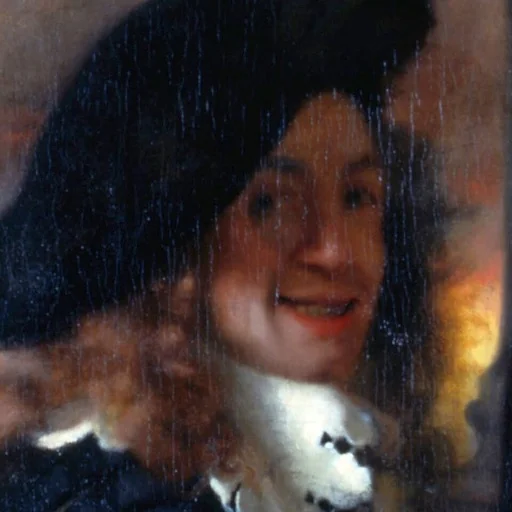
Johannes Vermeer ( vər-MEER, vər-MAIR, Dutch:; see below; also known as Jan Vermeer; October 1632 – 15 December 1675) was a Dutch painter who specialized in domestic interior scenes of middle-class life.