Artwork
Angelica and the Hermit
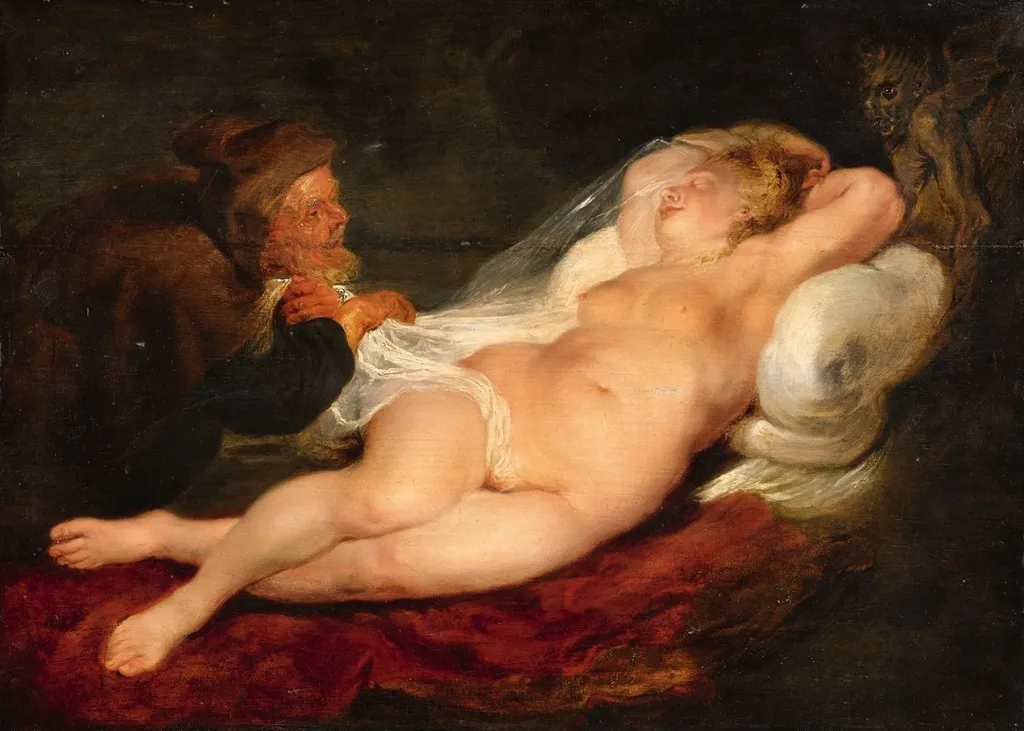
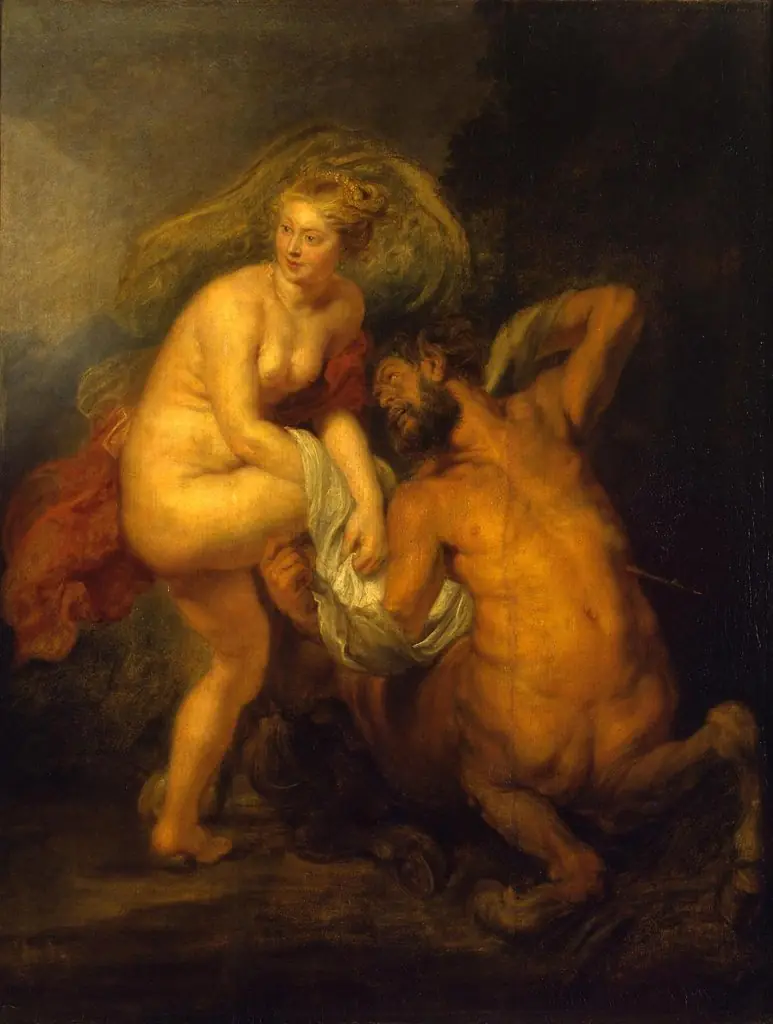
Angelica and the Hermit is an oil painting by the Flemish Baroque painting artist Peter Paul Rubens. It dates from 1620 and is held in the collection of the Kunsthistorisches Museum.
About this work
Subject & Meaning
Dated to 1620, the work is now housed in the Kunsthistorisches Museum in Vienna.
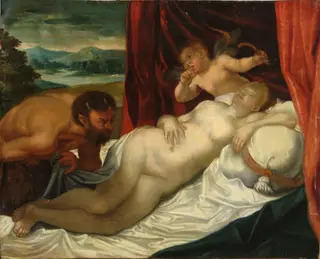
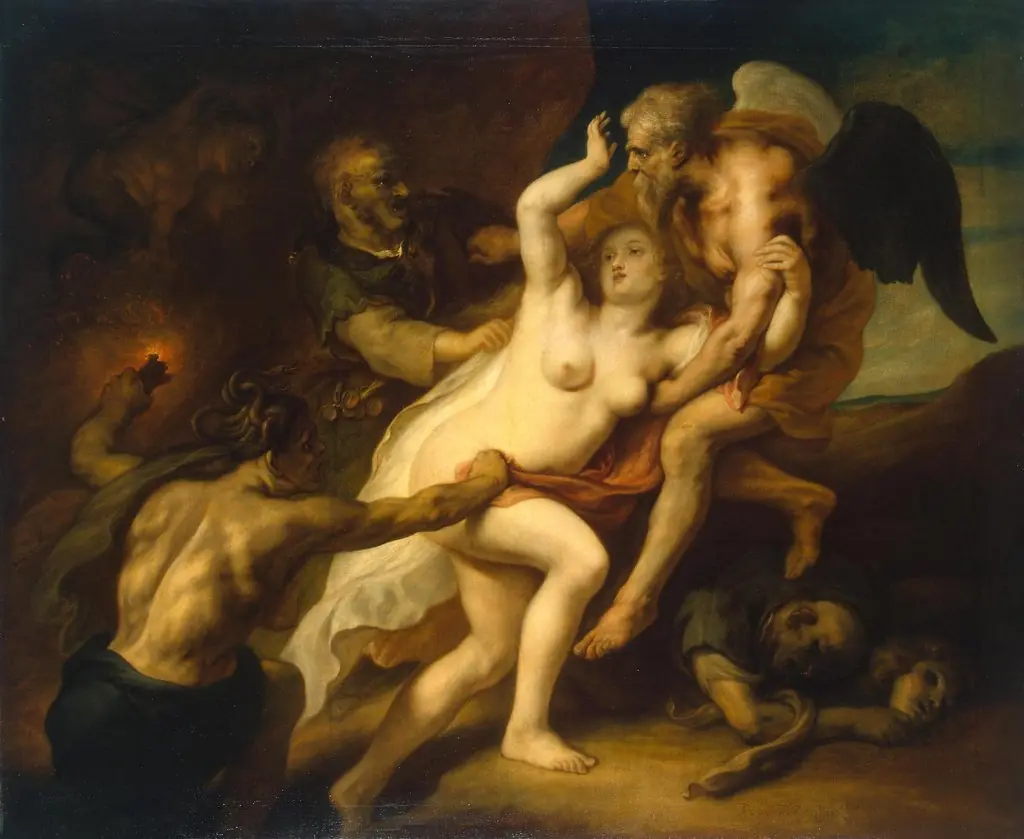
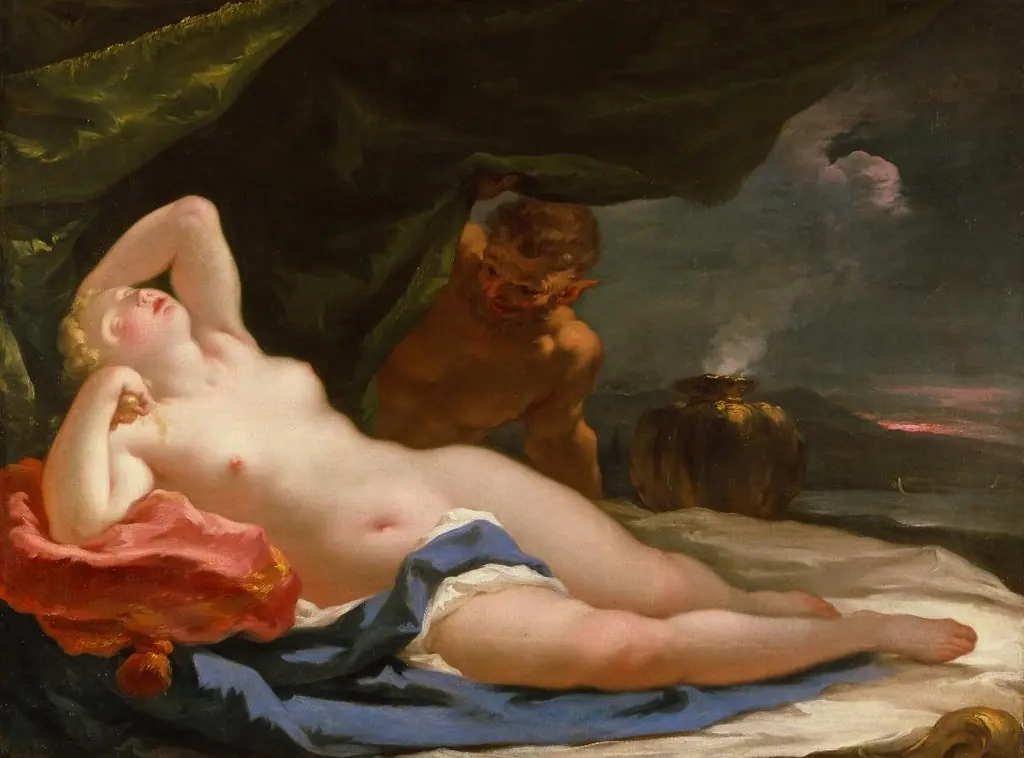
The painting depicts Angelica lying asleep, her body partly exposed, while a clothed hermit leans over her and a demon figure hovers behind, symbolizing temptation and moral conflict. The scene is drawn from canto 8 of Ariosto's Orlando Furioso, in which the hero Orlando's obsession with the Saracen princess Angelica leads a hermit to hide her in a cave and watch her in slumber. Dated to 1620, the work is now housed in the Kunsthistorisches Museum in Vienna.
The composition relies on a diagonal spiral that heightens the sensual tension, and scholars read the explicit nudity and the demon as an intentional commentary on female objectification and Rubens's own ethical ambivalence.
Technique & Style
Angelica and the Hermit is executed in oil on panel, a small-scale cabinet picture measuring approximately 43 × 65.5 cm. The composition is organized around a diagonal, twisting spiral centered on the female figure, with the sleeping Angelica rendered in Rubens's characteristic manner: soft, plump flesh finished with a pearly sheen that lends the nude an almost tactile, sensual presence. Even in sleep, Angelica's facial expression remains expressive, while the hermit, who cautiously approaches and gently draws off her veil, betrays an inner struggle between desire and moral scruple. A demon figure in the right background visually amplifies this tension, symbolizing the promptings of baser intentions. The work is classified as a history painting and is held by the Kunsthistorisches Museum in Vienna.
History & Provenance
Angelica and the Hermit is dated 1620, painted during Rubens's Antwerp period when he occasionally produced smaller cabinet panels for private enjoyment rather than public commissions. The work depicts a scene from canto 8 of Ludovico Ariosto's Orlando Furioso, specifically the moment when a hermit transports the sleeping Angelica to a deserted island, removes her garments, and gazes upon her before moral reflection restrains him. The painting is housed in the Kunsthistorisches Museum in Vienna.
Context
The episode of Angelica and the Hermit from Ariosto's Orlando Furioso entered Northern European art through Italian precedents such as Tintoretto, whose composition Rubens examined in Venice between 1600 and 1602. Executed as one of the artist's small cabinet panels, the work reflects Rubens's practice of reserving intimate subjects for personal expression alongside larger studio commissions. Scholars emphasize its deliberately unsettling fusion of erotic scrutiny and moral tension, where Angelica's somnolent body and the hermit's conflicted gesture are framed by a lurking demon that literalizes the drama of temptation.
The painting is often read as a paradigmatic instance of Rubens's treatment of the female nude as both sensuous ideal and contested site of male desire.
Legacy
Angelica and the Hermit entered the Kunsthistorisches Museum in Vienna, where it remains today. Its later reception has been shaped by the painting's positioning within Rubens's oeuvre as a small, privately made cabinet piece rather than a commissioned work. The subject's popularity during the early modern period, fueled by the ongoing vogue of Ariosto's Orlando Furioso, meant that the Angelica story continued to inspire artists and writers well into the eighteenth century, even as Rubens's specific treatment became a touchstone for discussions of the female nude and moral ambiguity in painting. Modern scholarship often cites the panel as emblematic of Rubens's expressive handling of flesh and space.
Overview
Painted in 1620 on panel, Peter Paul Rubens' Angelica and the Hermit depicts a scene from Ludovico Ariosto's epic poem Orlando Furioso. The composition centers on the sleeping heroine Angelica, who reclines on a vibrant red cloth, her nude form rendered with the artist's characteristic fleshy vitality and dynamic modeling. Her body is arranged in a diagonal curve, one arm bent behind her head, while her hair cascades over the fabric, creating a striking contrast against the dark, atmospheric background.
Beside her sits the hermit, clad in somber robes and holding a scroll, his gaze directed downward in a moment of contemplative restraint. Rubens utilizes a dramatic chiaroscuro effect, where soft light illuminates Angelica's skin, emphasizing her physical presence and vulnerability. This work exemplifies the Flemish Baroque style through its rich color palette, fluid brushwork, and synthesis of classical form with emotional intensity.
Created during a period when Rubens was deeply engaged with literary subjects and the human figure, the painting reflects his mastery in translating poetic narratives into visual drama, balancing eroticism with moral ambiguity typical of the era's history painting.
Artist & collection
Artist
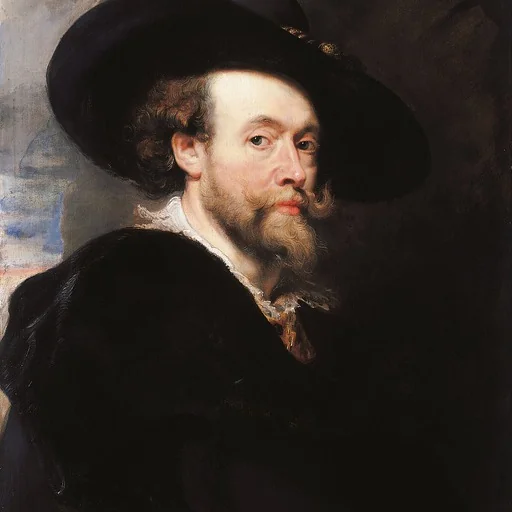
Sir Peter Paul Rubens ( ROO-bənz; Dutch:; 28 June 1577 – 30 May 1640) was a Flemish artist and diplomat.