Artwork
The Worship of Venus
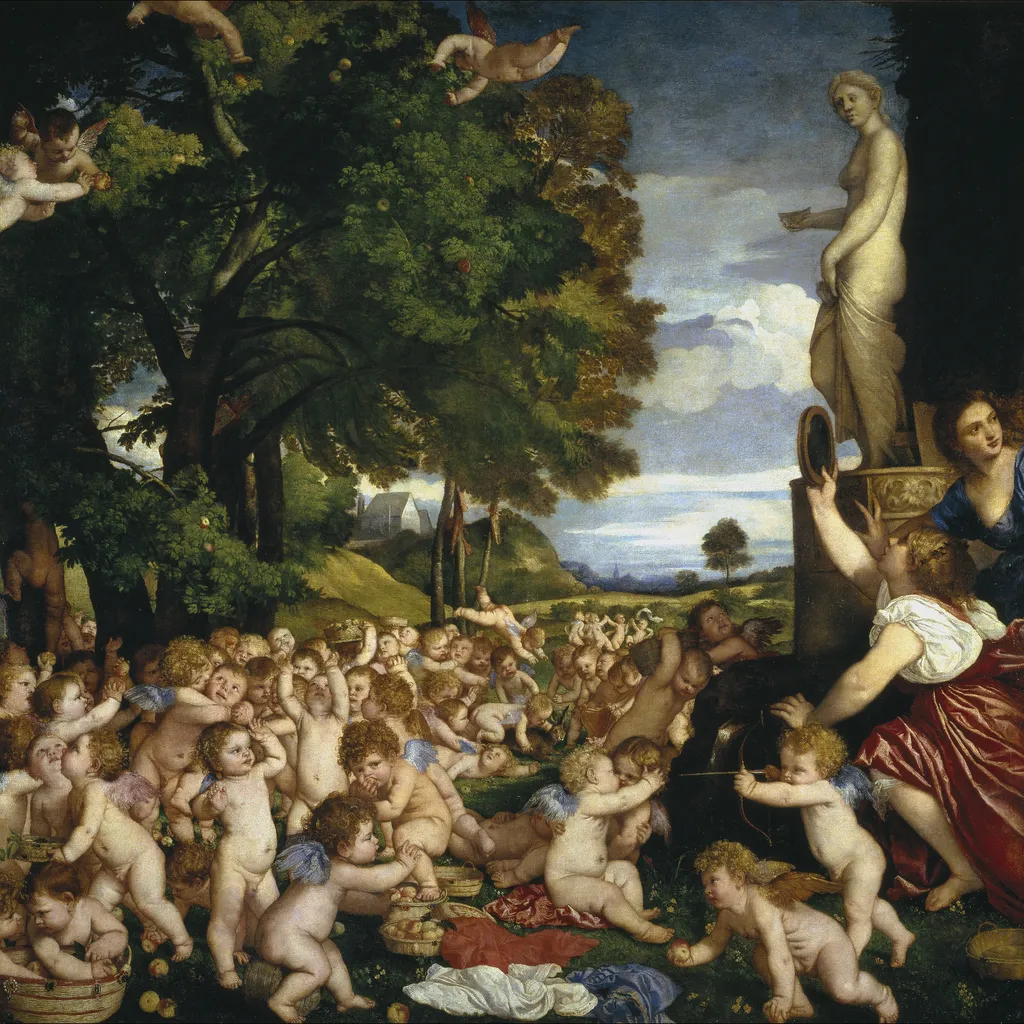
The Worship of Venus is an oil painting by the High Renaissance artist Titian. It dates from 1518 and is held in the collection of the Museo del Prado.
About this work
Subject & Meaning
The Worship of Venus depicts an ancient Roman rite held annually on April 1, when women presented offerings to images of Venus to cleanse bodily imperfections.
The Worship of Venus depicts an ancient Roman rite held annually on April 1, when women presented offerings to images of Venus to cleanse bodily imperfections. Titian's composition centers on a shrine containing a Venus Pudica statue, attended by two nymphs; the elder holds a hand mirror aloft, evoking beauty and vanity. The foreground teems with putti engaged in playful, amorous, and competitive acts, climbing, leaping, gathering fruit, and brandishing arrows, signaling the generative and capricious forces of love that the ritual honors.
The scene's joyful disorder and the putti's abundance reflect the festival's purpose: to renew physical and spiritual purity through devotion to Venus.
Titian derived the subject from Philostratus's Imagines I, VI, which describes cupids gathering apples and lounging amid embroidered mantles, motifs echoed in the painting's foliage and fabric details.
Technique & Style
Titian painted The Worship of Venus using oil paint on canvas, a medium typical of High Renaissance practice. The work measures 172 cm in height and 175 cm in width, as recorded in the museum's cataloguing data. The composition depicts a Roman ritual honoring Venus, with two nymphs positioned to the right of a shrine containing a statue of the goddess; one nymph holds a hand mirror, a conventional attribute of Venus Pudica.
A multitude of putti engage in playful activities, climbing, leaping, gathering apples, and shooting arrows, filling the foreground. The background features a sunlit meadow, a dam, distant mountains, and a blue sky. The iconography derives from Philostratus's Imagines I, VI, which describes cupids collecting apples and offering fruit to the goddess.
History & Provenance
The Worship of Venus was painted by Titian between 1518 and 1519 as the inaugural work for the decorative scheme of the Camerini d'alabastro, the alabaster rooms of Alfonso I d'Este's studiolo in Ferrara. Originally commissioned from Fra Bartolomeo, the project was transferred to Titian after Fra Bartolomeo's death in 1517; Fra Bartolomeo had provided a preparatory drawing that Titian significantly reworked, relocating the statue of Venus to the right and emphasizing the crowd of amorini. The painting, measuring 172 x 175 cm in oil on canvas, was completed and delivered in October 1519.
Following the 1598 transfer of Ferrara to the Papal States, the work was acquired by Cardinal Pietro Aldobrandini and later, around 1634, entered the Spanish royal collection via the viceroy of Naples, Manuel de Acevedo y Zúñiga, as part payment for the Principality of Piombino. Its presence in Spain is first recorded in royal palaces of Madrid in 1666, 1686, and 1700. The work remained in the Royal Collection until its placement in the Museo del Prado, where it has been exhibited since the museum's founding.
The Worship of Venus is currently held in the Museo del Prado in Madrid, Spain. The earliest documented references to the painting in Spain appear in inventories of the Royal Palace of Madrid (Alcázar) from 1666, 1686, and 1700. While the painting has been admired and copied by numerous artists, the provided sources do not list specific public exhibitions where the original work has been displayed.
Context
The Worship of Venus is the first painting Titian executed for the "Baccanali" cycle, commissioned by Alfonso I d'Este to decorate his private studiolo, the Camerini d'alabastro. Although originally assigned to Fra Bartolomeo, the project passed to Titian following the friar's death in 1517; Titian used the existing preparatory drawing but radically altered the composition by shifting the goddess's statue to the periphery to emphasize a swarm of putti. Completed and installed in Ferrara by October 1519, the work derives its iconography from Philostratus's Imagines, depicting a Roman rite held on April 1st.
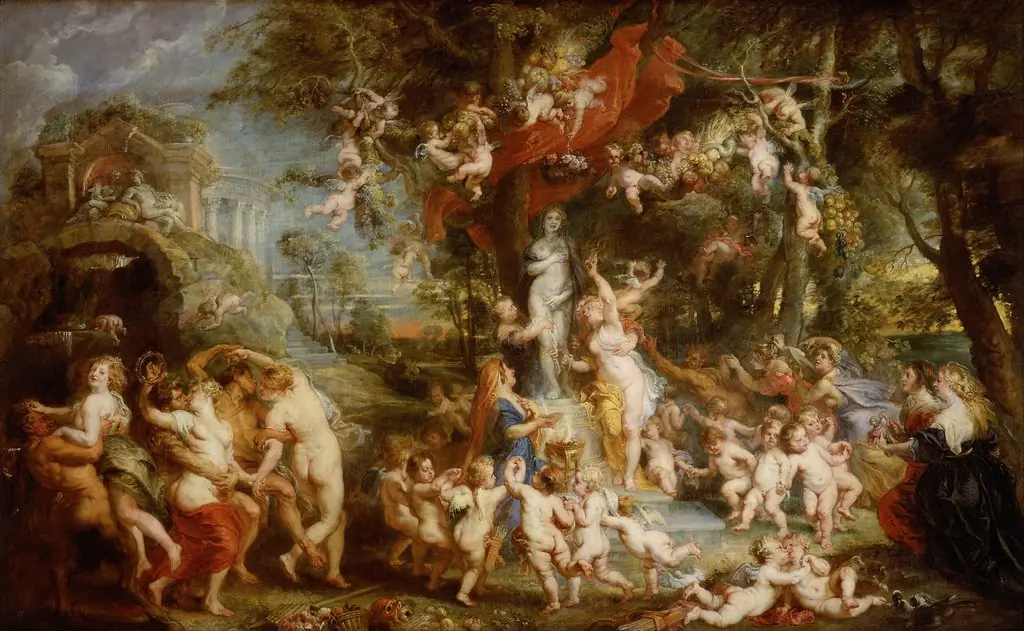
Following the dispersal of the Este collection in 1598, the painting entered the Spanish royal inventory by the late seventeenth century. Its presence in Madrid profoundly influenced the development of Baroque art, as masters including Rubens, Velázquez, Poussin, and Reni studied and copied the canvas. Rubens later produced a variant version now held in Stockholm.
Legacy
The Worship of Venus achieved international renown primarily for its impact on the development of the Baroque style. The work, along with related canvases from the same series, was extensively admired and copied by major artists including Peter Paul Rubens, Guido Reni, Nicolas Poussin, and Diego Velázquez. Rubens produced a variant copy now held in Stockholm, while the seventeenth-century artist Padovanino also replicated the composition.
The painting's fame was further amplified through engravings by Giovanni Andrea Podestà, which helped disseminate the image widely. The emotional weight of the work's departure from Italy was underscored by the artist Domenichino, who was reported to have wept upon witnessing these masterpieces leaving Italy for Spain.
Overview
Titian’s oil on canvas, created between 1518 and 1519, is now displayed in Madrid’s Museo del Prado. The work portrays a festive ritual honoring the Roman goddess Venus, an event traditionally observed on the first of April. The composition gathers a multitude of figures, human, divine, and mythic, in a lively outdoor setting, emphasizing celebration and communal devotion.
Own this work as a print
Artist & collection

Artist
Tiziano Vecellio (Italian:; c. 1488/1490 – 27 August 1576), Latinized as Titianus, hence known in English as Titian ( TISH-ən), was an Italian Renaissance painter. The most important artist of Renaissance Venetian…

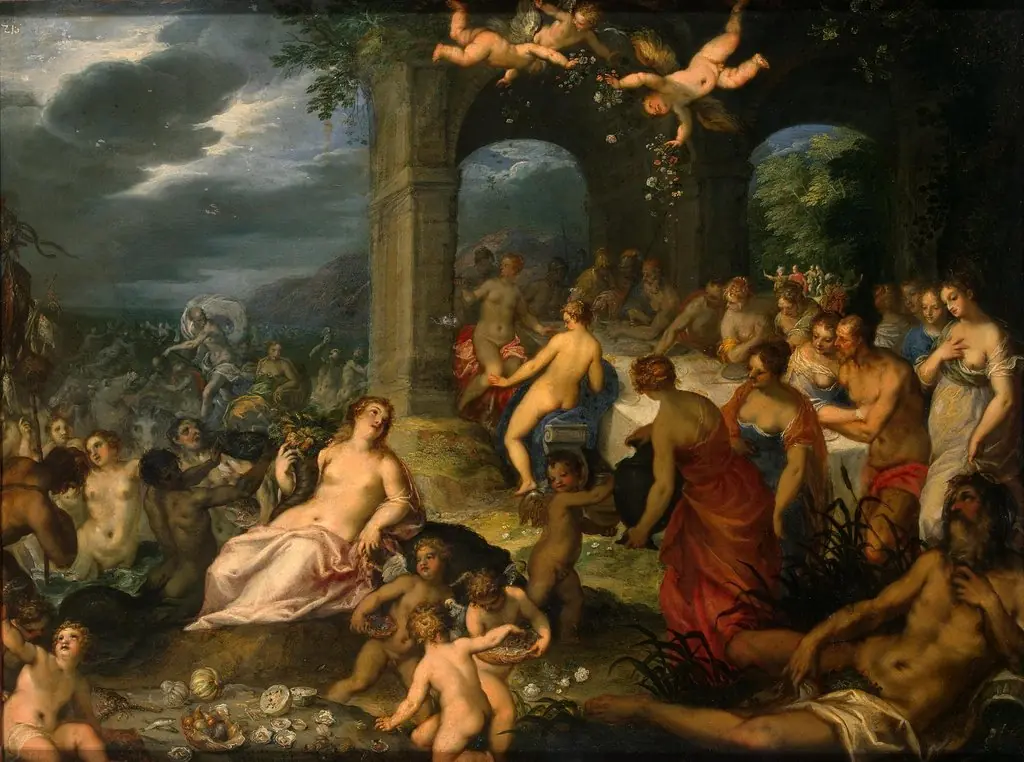 Feast of the Gods (The Marriage of Peleus and Thetis)
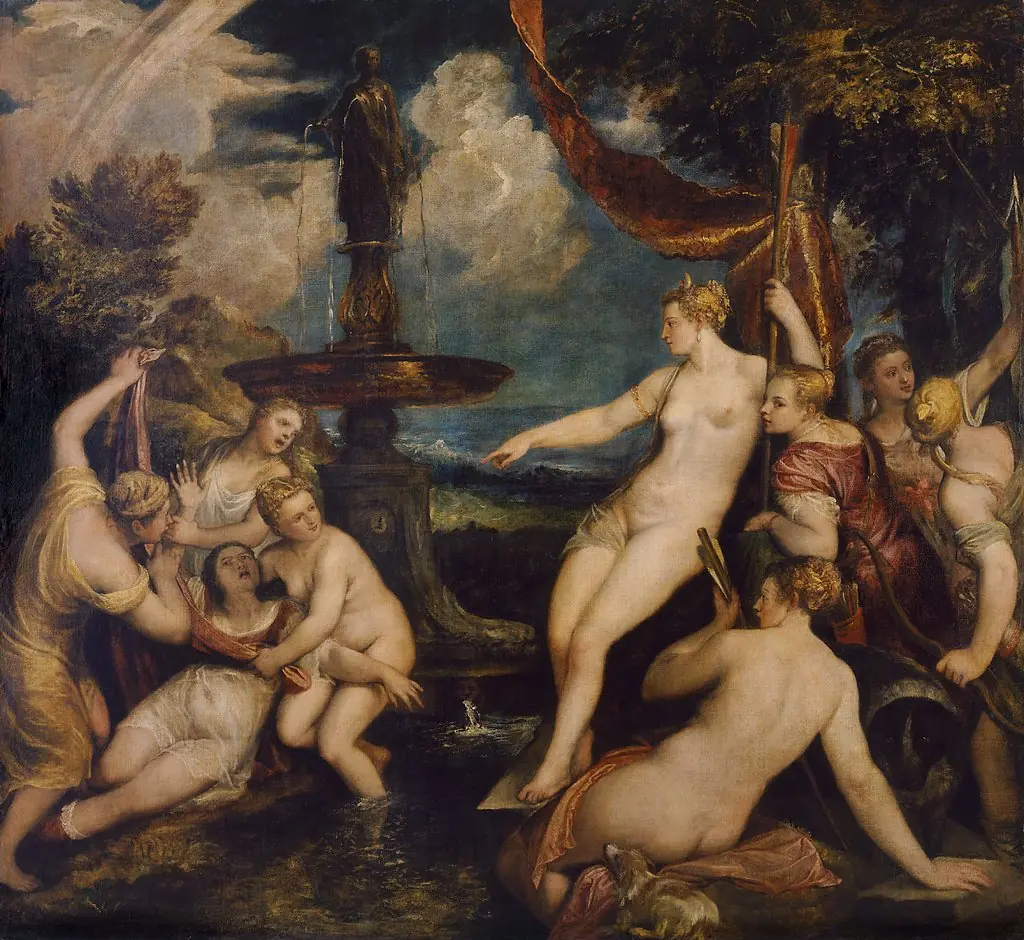 Diana and Callisto
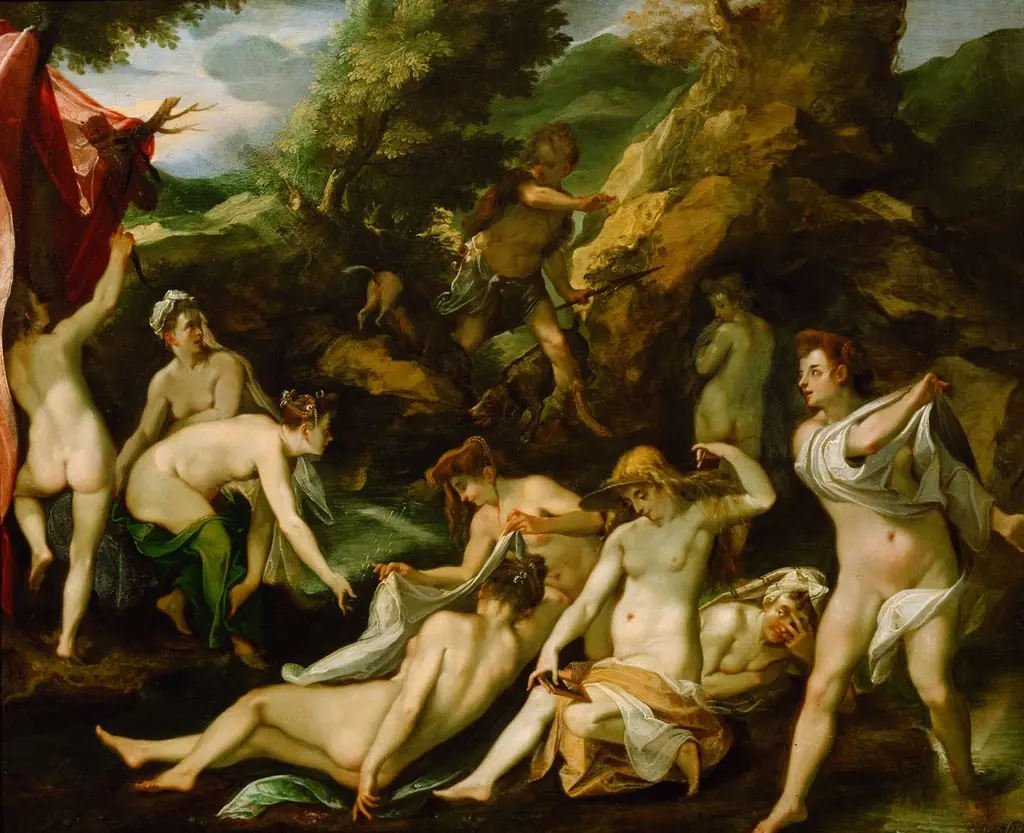 Diana and Actaeon
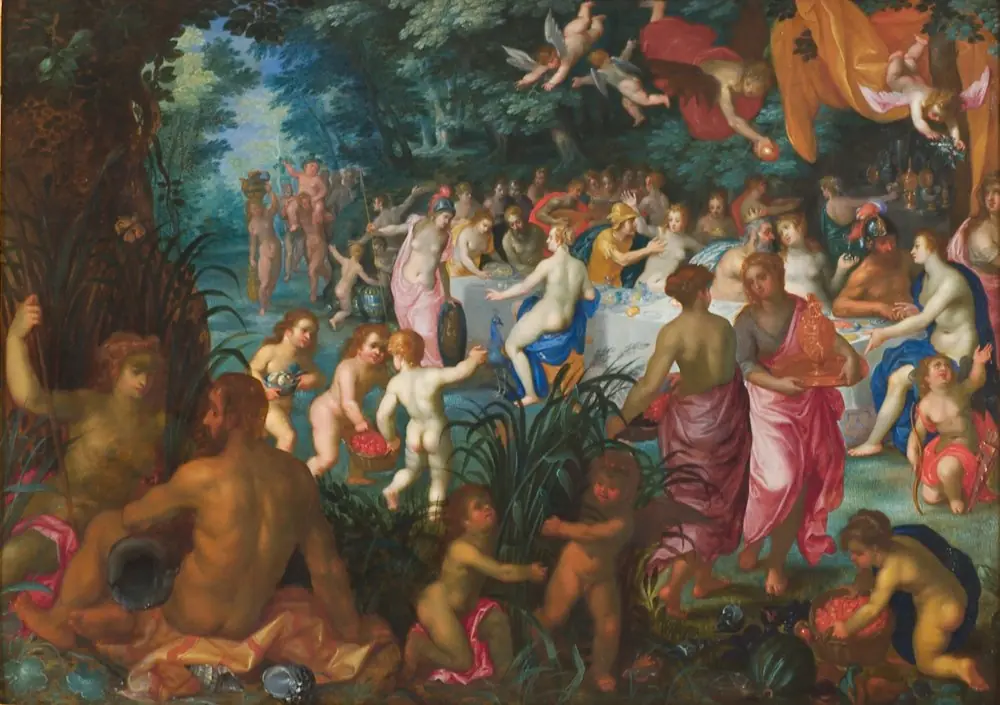 The Marriage of Peleus and Thetis
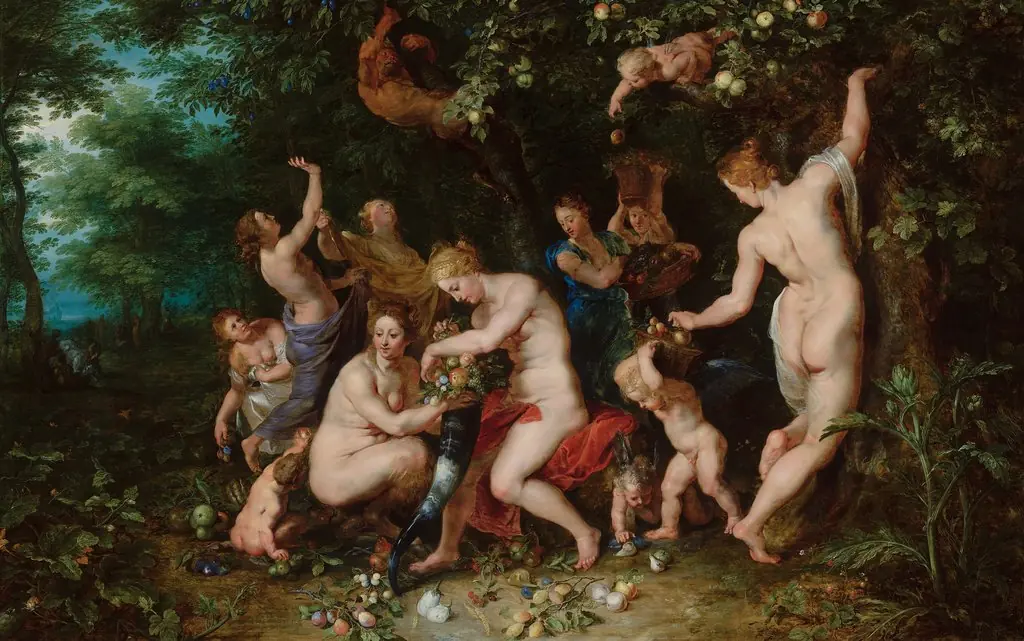 Nymphs filling the horn of plenty
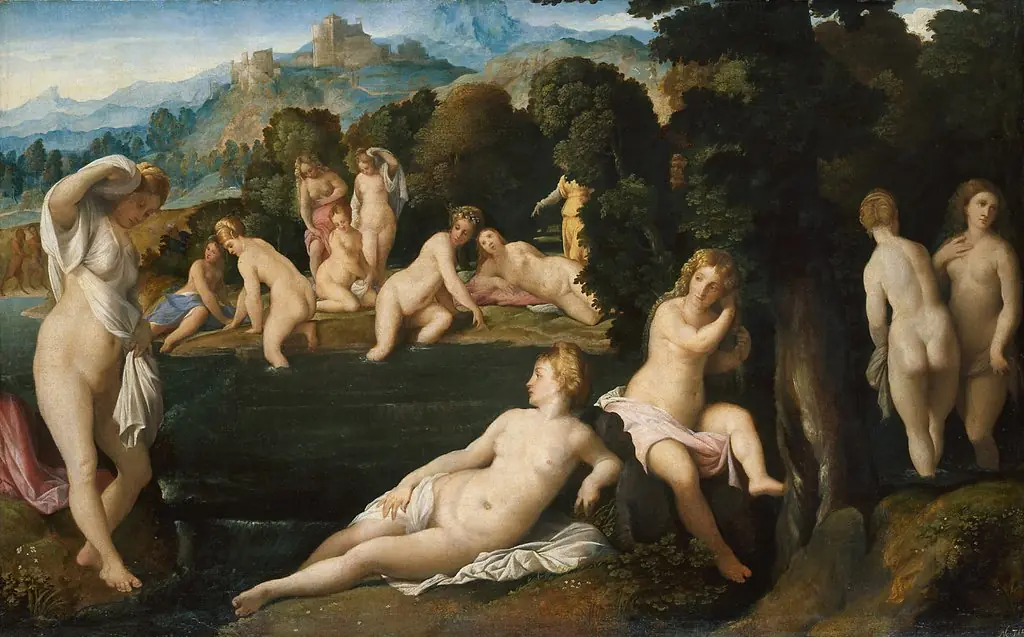 Bathing Nymphs
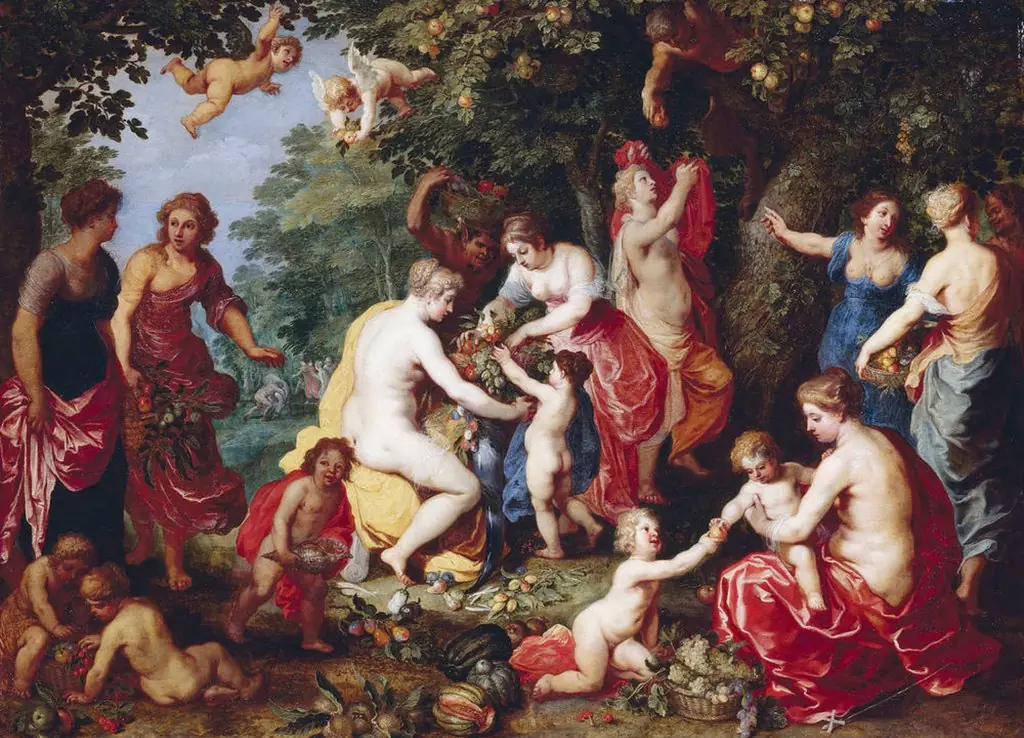 Nymphs and children under fruit trees (Naiads fill the cornucopia)
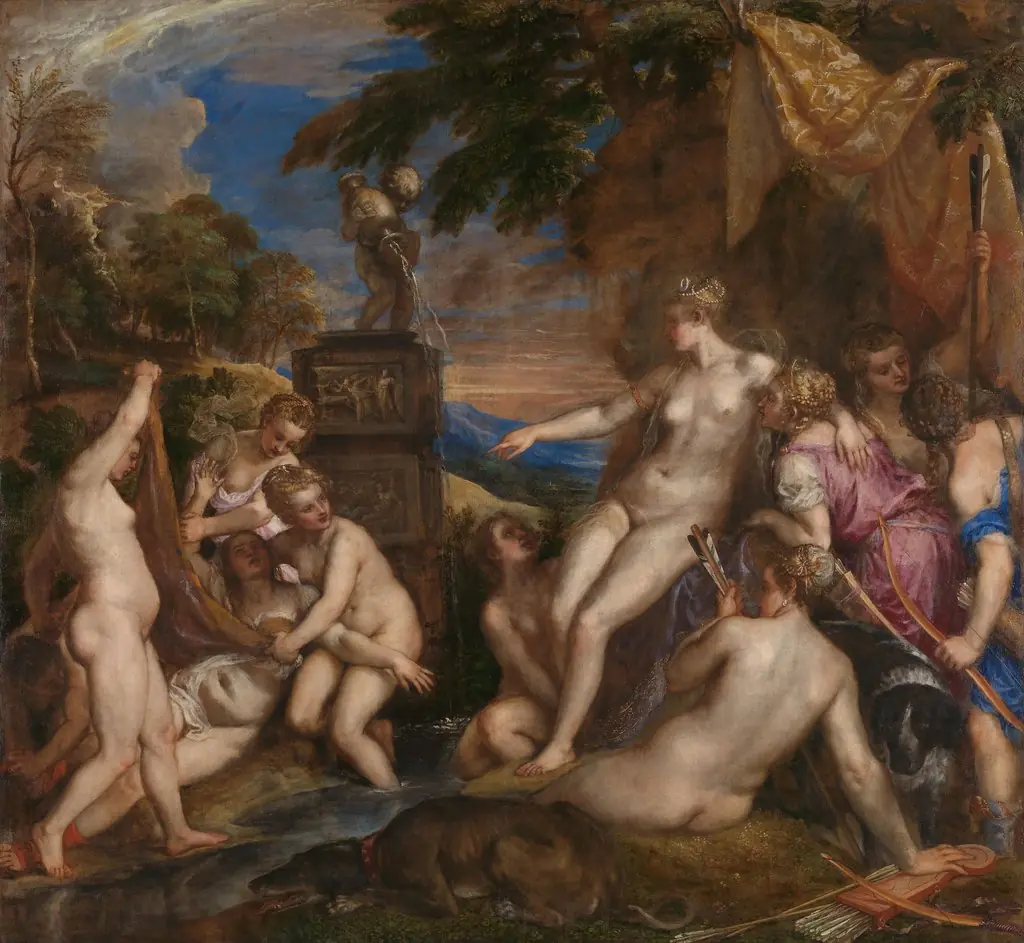 Diana and Callisto
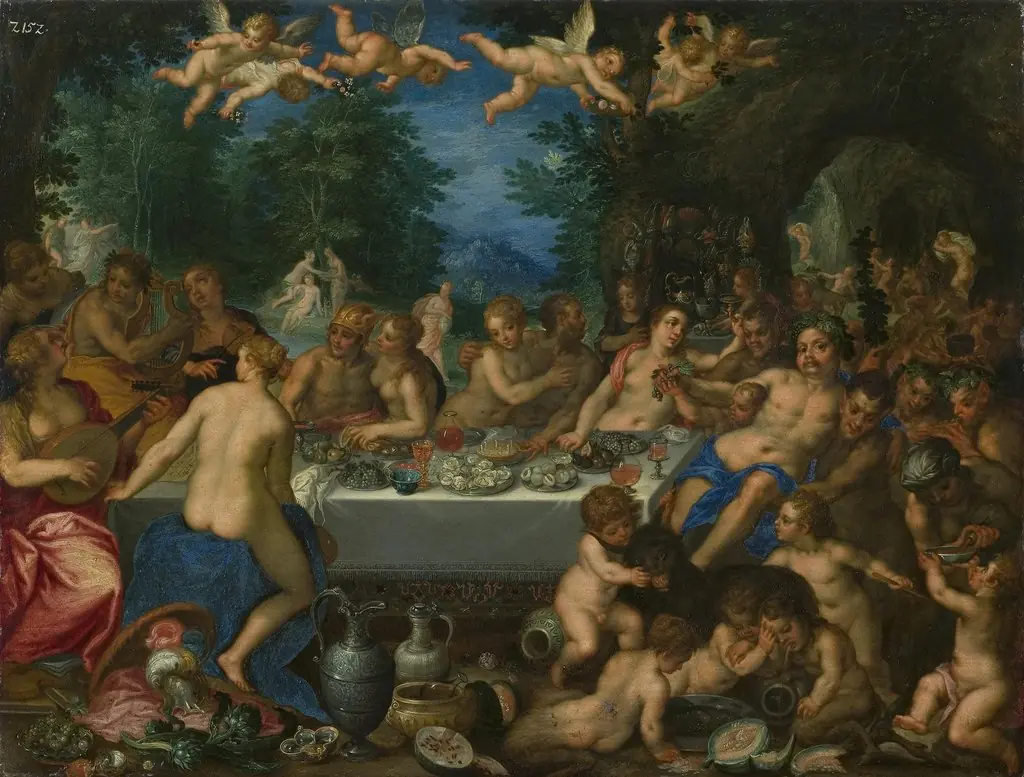 Feast of the Gods - The Marriage of Peleus and Thetis
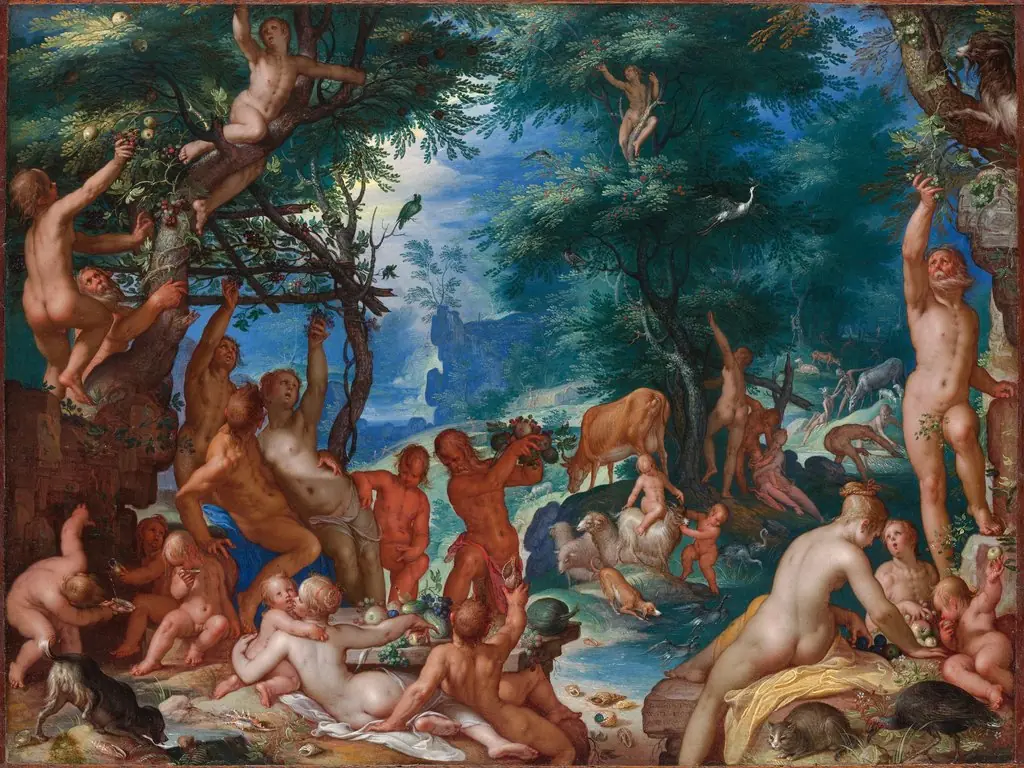 The Golden Age
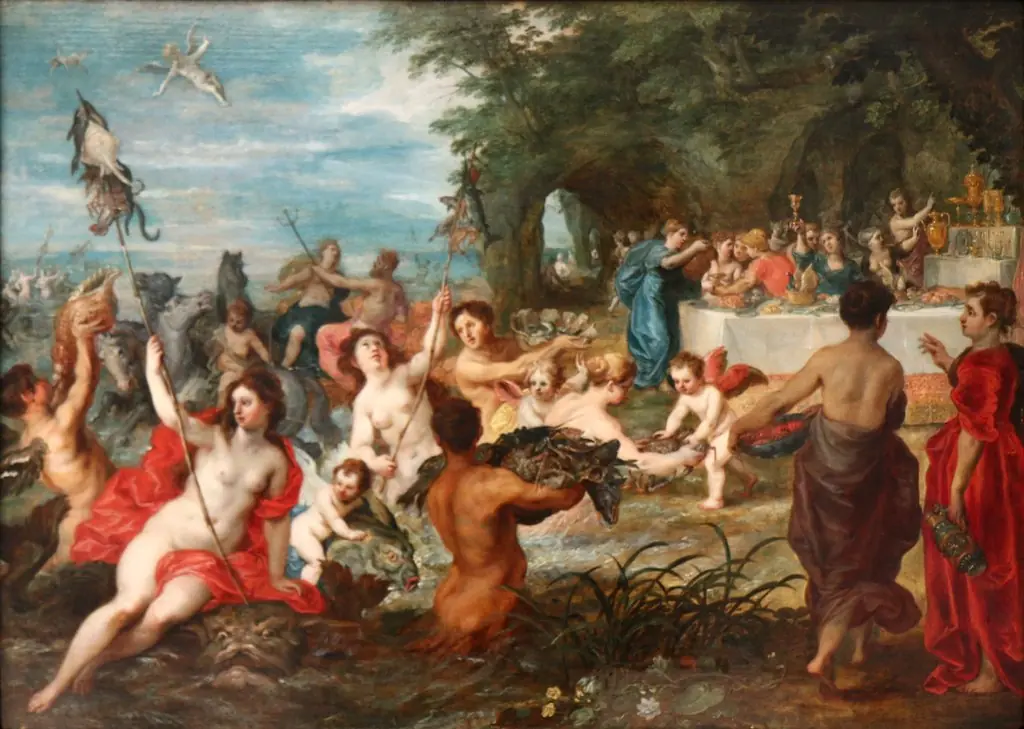 The wedding of Thetis and Peleus
- The Feast of Venus